
Reviewed · MARRAKECH TOURS
Marrakesh: Guided Street Food Tasting by Locals
The best part of this evening walk is the way food gets you into the real rhythm of Marrakech. You move from Jemaa el-Fnaa into the Mellah, market lanes, and small eateries, tasting the dishes locals actually talk about, not just the food set out for tourists. I especially like the wide range of stops, from cactus fruit and pastries to slow-roasted lamb, and the chance to finish dinner above the square with mint tea.
I also like that the guide does more than point at plates. You learn how tagine differs from tangia, see how méchoui is cooked in an underground oven, and pick up a local recipe to take home. The main drawback is simple: this is a walking tour through narrow, uneven Medina lanes, so it is not suitable for people with mobility impairments.
Key points at a glance
- About 10 to 11 food stops: Expect a substantial evening meal, not a few token samples.
- A proper route through the Medina: The walk links Jemaa el-Fnaa, Souk Semmarine, the Mellah, food markets, and side streets.
- Local guides set the tone: Guides such as Mo, Ali, and Mohamed are praised for their humor, warmth, and knowledge of Moroccan food and culture.
- Food comes with context: You learn about tagine, tangia, kofte, méchoui, Moroccan salads, olives, dates, pastries, and almond drink.
- Rooftop finish: Mint tea and a view over a courtyard or Jemaa el-Fnaa give the evening a relaxed ending.
- Best booked early in your stay: The tour can help you choose which dishes and food stalls to revisit later.
Starting at Café de France and Jemaa el-Fnaa
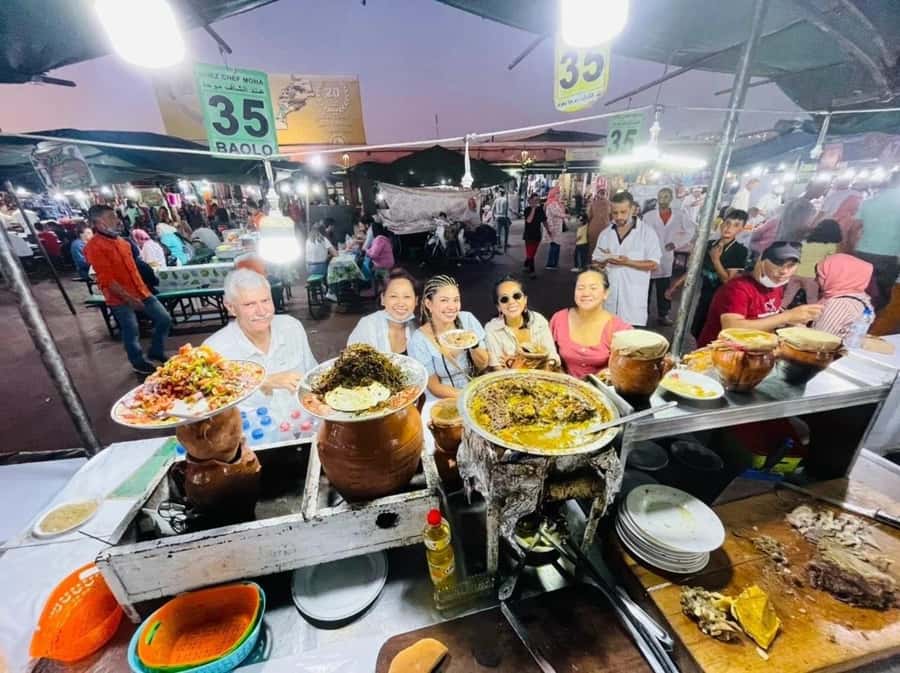
Meet your guide in front of Hôtel Restaurant Café de France, facing Jemaa el-Fnaa. This is a useful starting point because the square is easy to recognize and already gives you a dramatic first look at Marrakech after sunset.
Jemaa el-Fnaa is the city’s great public stage. Food stalls, performers, shoppers, and sellers fill the area, while the surrounding cafés provide a high view over the action. Your guide uses the square as a doorway into the Medina rather than treating it as the entire show.
The first portion lasts about 30 minutes and includes time to walk, stop for photographs, and hear about the square. I like this arrangement because you get your bearings before entering the tighter lanes. The only catch is that the square can feel intense, especially at night. Keep close to your guide and stay aware of the group when the crowds thicken.
This is also where a local guide matters most. A first-time visitor can easily confuse a food stall aimed at tourists with a place serving everyday Moroccan cooking. The guide helps you read the scene, explains what you are seeing, and gets the evening moving without leaving you to guess where to go.
A few other Marrakesh days worth comparing
- From Marrakech: Merzouga 3-Day Desert Safari with Food
★ 4.7 · 12,232 reviews - Marrakech: Street Food Tour by Night
★ 4.8 · 2,838 reviews - From Marrakech: Zagora 2-Day Desert Safari with Food & Camp
★ 4.5 · 1,137 reviews
Through the food market toward the Mellah
From the square, the route heads toward the Mellah and through the main food market. Here, the food is still in its raw and working form: fresh fruit, vegetables, meat, and poultry laid out for evening shopping.
This is one of the more useful parts of the experience because it shows how Moroccan meals begin. You may watch shoppers bargain over ingredients, see pastries being prepared, and notice the spices that shape the food later served at the small restaurants.
The market is not a polished food hall. Expect narrow passages, strong smells, busy stalls, and the ordinary mess of a working market. That is precisely its value, but it may not suit you if you want a calm, sit-down tasting from the start.
Your guide brings the market to life with small details about home cooking and local habits. You might hear how different tagines are prepared or why certain ingredients appear together. This makes the later tastings easier to understand. Instead of sampling an unfamiliar dish and moving on, you begin to see where it fits in Moroccan daily life.
Sweet pastries, tagine, and the first proper tastings
The food arrives in stages. Early tastings include sweet pastries and small local snacks, followed by more filling dishes. One of the central foods is tagine, including a charcoal-baked version that gives the dish a distinct cooking story.
You learn that tagine is not one fixed recipe. The name can refer to the earthen cooking vessel as well as the dish prepared inside it, and the ingredients and method can vary. Your guide explains these differences and shares tips about how Moroccan families prepare tagine at home.
The meal builds slowly, which is a good design for a food walk. You have time to notice flavors rather than sitting down immediately to one large plate. At the same time, the portions are generous. Several people found themselves stuffed by the end, so do not arrive after a large lunch if you want to try everything.
You also receive a local recipe as a take-home souvenir. It is a small detail, but a useful one. Food tours can disappear into memory once the trip ends, while a recipe gives you a way to recreate part of the evening.
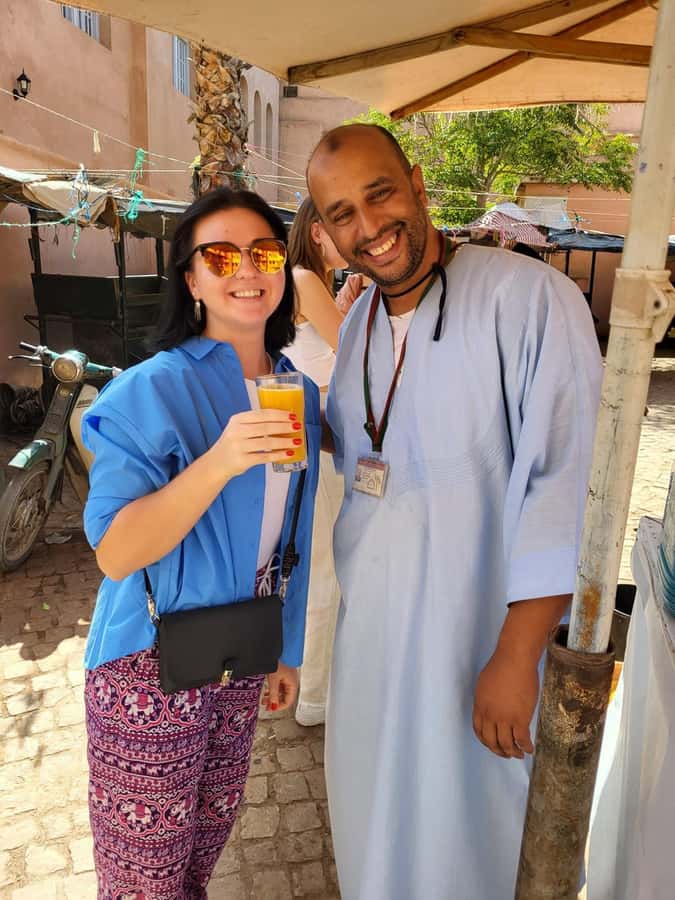
A refreshing almond-based drink adds a break from the savory food. This is a popular local drink, and it gives you something different from the mint tea served later. If you enjoy trying foods you might not order alone, this is the sort of stop that makes the tour worthwhile.
Souk Semmarine and the side streets most people miss
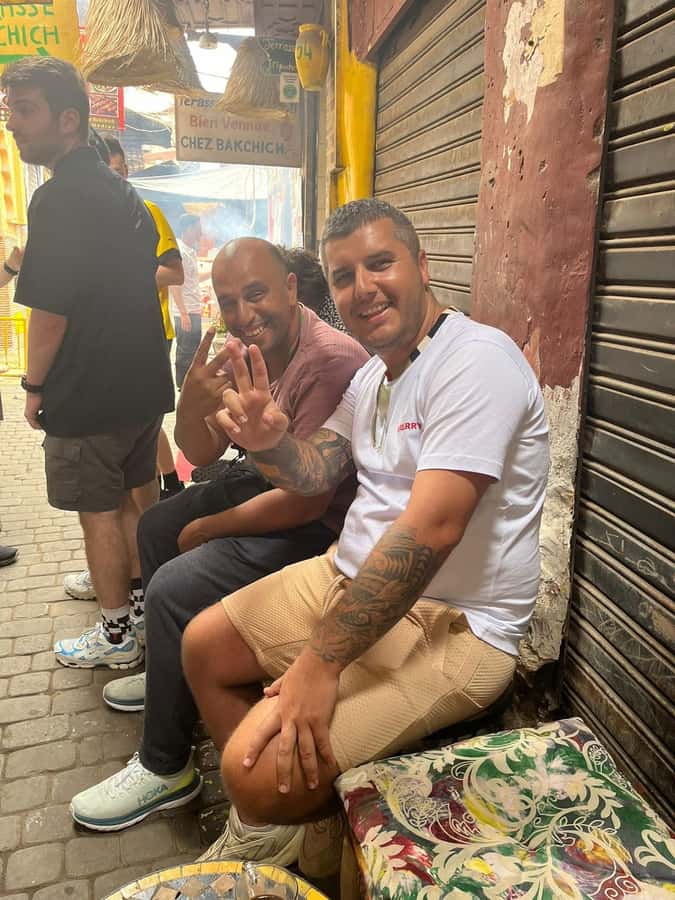
The route continues into Souk Semmarine and the surrounding lanes. This section combines food with the everyday theater of the Medina: spice aromas, displays of olives and dates, shopfronts, craftspeople, and alleys that seem to change direction every few minutes.
A guide helps here for practical reasons. The souks are easy to enter and harder to understand. You can walk for an hour and still miss the small food stalls tucked away from the main flow. The tour takes you to places that are not obvious from the busiest shopping lanes.
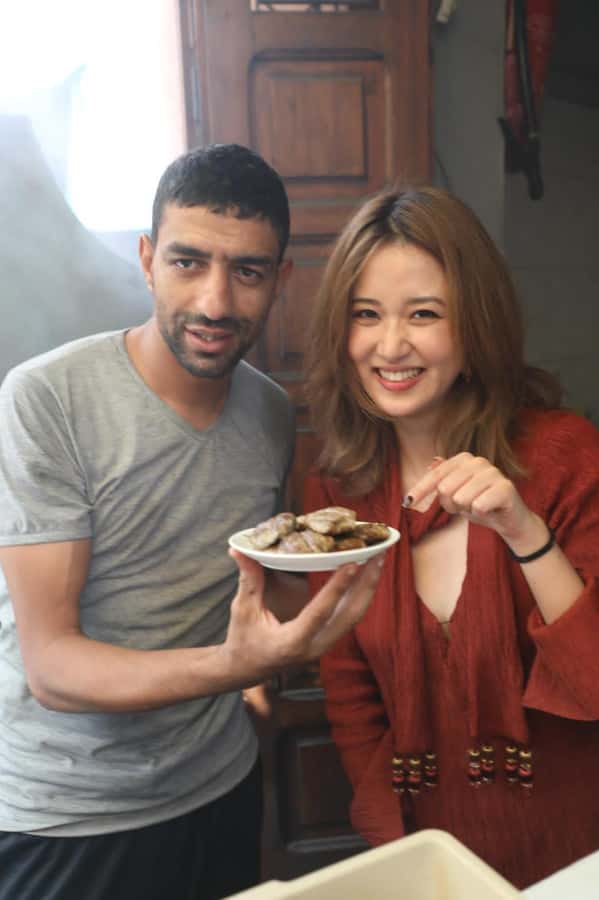
Expect tastings of marinated olives and dates, along with other seasonal items. The dates are described as especially sweet, while the olives show how much variety can come from a simple bowl of preserved fruit. These are not flashy dishes, but they are central to the local table.
The walking surface and layout deserve attention. The Medina has narrow, maze-like streets, and the tour keeps moving between stops. Wear comfortable shoes and avoid bringing anything bulky. Since hotel pickup is not included, you also need to make your own way to Café de France at the start and return there at the end.
Same city, a completely different day out:
- Marrakech: Agafay Desert Sunset, Camel Ride, and Dinner Show
★ 4.6 · 35,119 reviews - From Marrakech: Ouzoud Waterfalls Guided Hike and Boat Trip
★ 4.7 · 33,630 reviews - Marrakech: Agafay Desert Quad & Camel Rides with Dinner Show
★ 4.8 · 27,382 reviews - Marrakech: Agafay Desert Quad Biking Tour with Dinner-Show
★ 4.8 · 16,569 reviews
Méchoui, tangia, kofte, and fresh bread
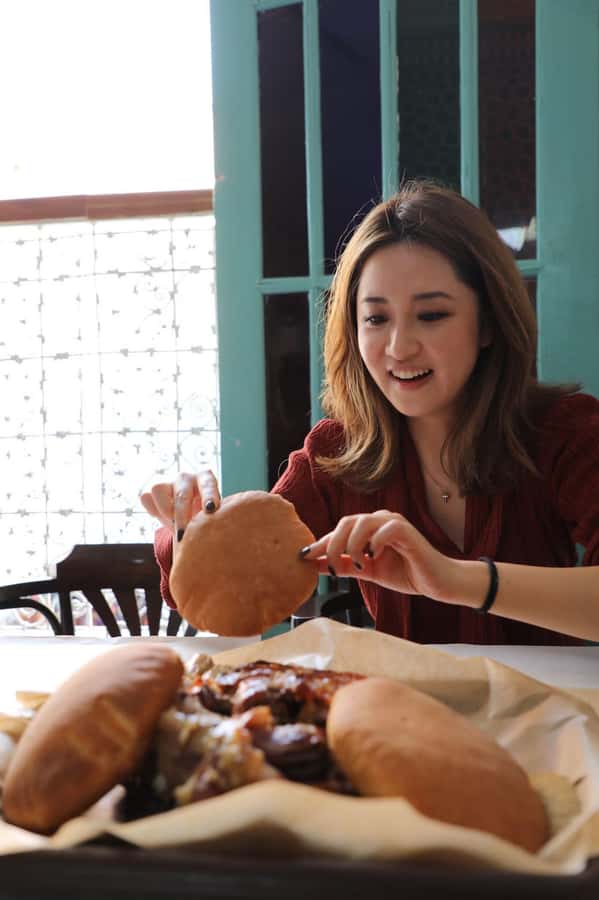
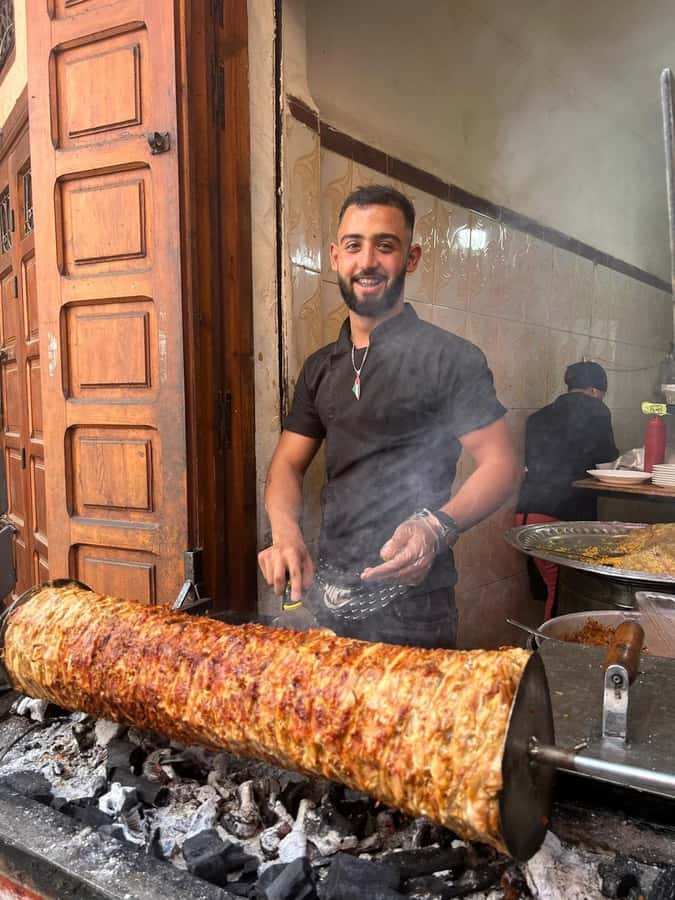
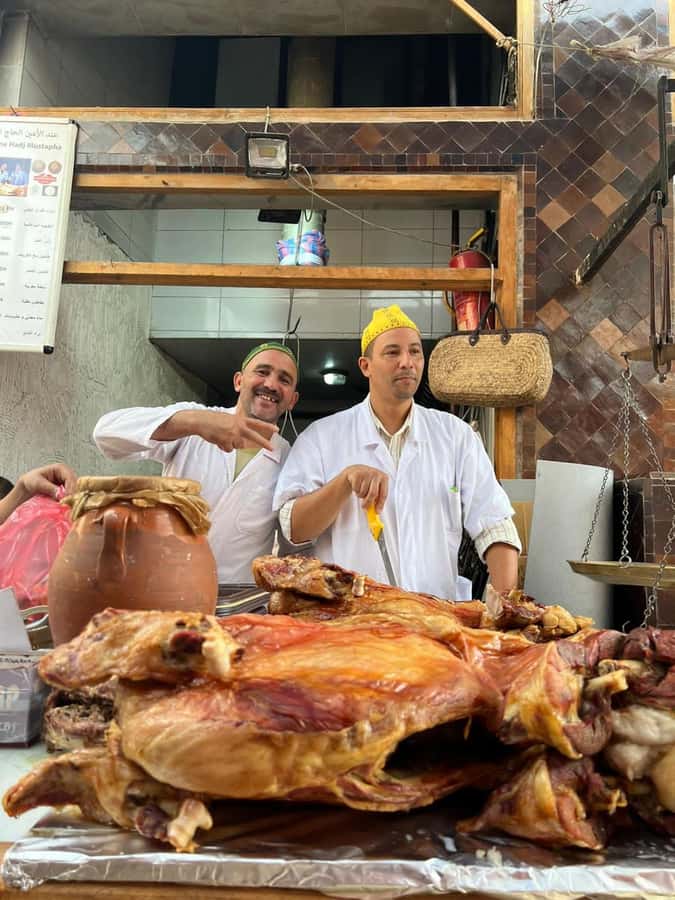
One of the most memorable food moments is watching a méchoui maker slow-roast a whole lamb in a traditional underground oven. This is more than a quick sample. It gives you a look at an old cooking method and the patience behind the dish.
The tour then visits a small local eatery for tangia and kofte served with freshly baked bread. Tangia is closely associated with Marrakech, and seeing it alongside kofte gives you a useful comparison between two very different preparations. Kofte brings seasoned ground meat to the table, while tangia is known for its slow cooking and concentrated flavor.
Fresh bread is important here. It is not just a side item to fill the plate. Bread is part of how you eat many Moroccan dishes, and it helps turn small portions into a proper meal.
This stop also shows why the experience is more than a checklist of samples. You see cooking methods, learn dish names in English, French, or Arabic, and hear about the regional influences that shape Marrakech food. Guides Mo, Ali, and Mohamed are singled out for being funny, warm, and eager to explain both the food and the city.
The social side can be good too. Shared groups have included around 10 people of different ages, with the guide making an effort to include everyone. A private option is available if you want a quieter pace or have strong preferences about the evening.
Salads, spices, and the final rooftop meal
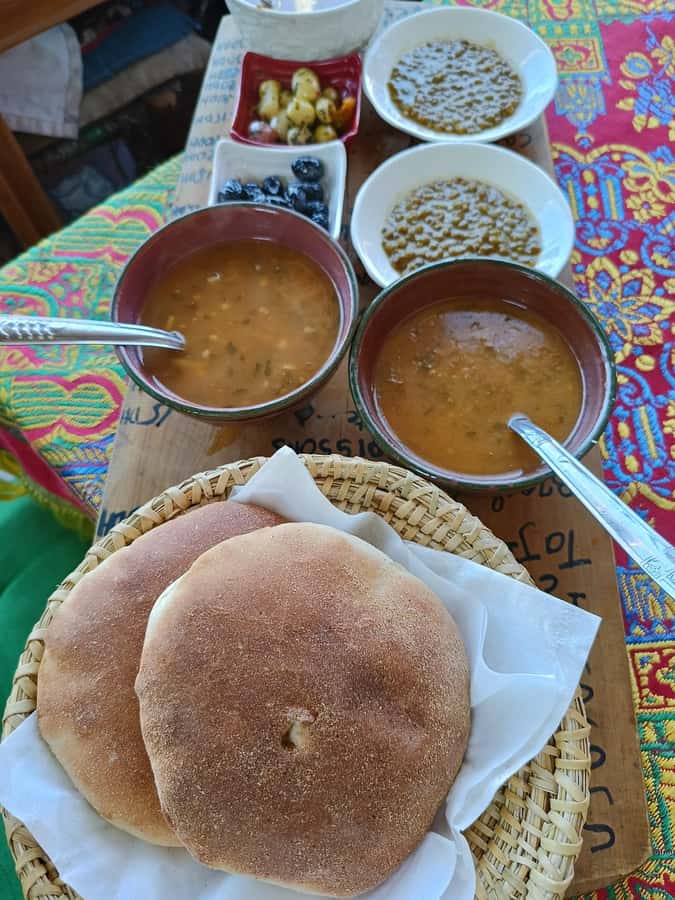
As the walk continues, you taste traditional Moroccan salads made from seasonal ingredients. The word salad may suggest a simple side dish, but these preparations can bring together cooked vegetables, herbs, spices, and contrasting textures.
Saffron, cumin, and fresh herbs are part of the sensory education here. Your guide explains the seasonings as you eat, giving you a clearer sense of why Moroccan food can taste layered without being heavy at every stop.
The final meal takes place at a cozy rooftop café, with mint tea served at the end. Depending on the evening, the view may look over a courtyard decorated with rugs, mosaic lamps, and fountains, or toward the activity around Jemaa el-Fnaa. Either way, it is a welcome pause after several hours on foot.
Some tours finish with a full tagine at the rooftop restaurant. This is where the earlier samples come together into a proper dinner. By this point, you will likely have tasted enough to make an informed choice about what you want to order again during the rest of your stay.
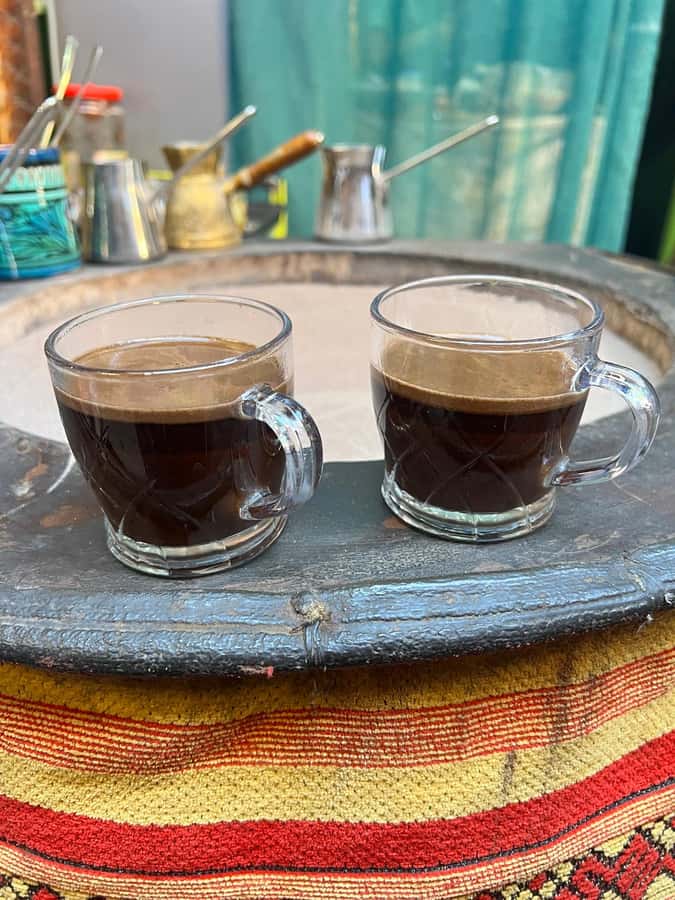
Mint tea is the right closing drink. It is fragrant, sweet, and familiar across Morocco, yet it feels different when served at the end of a long evening walk. You can sit, take in the surroundings, and let the Medina become less confusing than it was three hours earlier.
What $47 buys you
At $47 per person, this is not the cheapest way to eat in Marrakech. You could spend less by choosing one market stall or a simple local restaurant. The value comes from the range of food, the guide, and the access to places you may not find on your own.
Food and drinks are included, and the tastings can amount to a full dinner. The evening may include 10 or 11 stops, beginning with small snacks and building toward a rooftop meal. That makes the price easier to justify than a tour offering only a few bites.
You are also paying for translation and explanation. A dish such as tangia or méchoui can be delicious without context, but the story of how it is cooked and where it fits into Marrakech culture adds something lasting. The recipe to take home is another modest benefit.
The shared tour should give you the best value if you are happy meeting other people. The private version makes more sense for families, couples, or anyone who wants more control over the pace. The available languages are English, French, and Arabic.
The tour lasts three hours. That is long enough for a meaningful meal and city walk, but short enough to fit into an evening itinerary. I would book it early in your Marrakech stay. You can return to the stalls and eateries that suit your taste once you know what you are looking at.
Practical tips for a smoother evening
Arrive hungry, but not uncomfortable. The food is plentiful, and a heavy lunch can make it hard to reach the later stops.
Wear supportive shoes. You will walk through the Medina, souks, and side streets, with no hotel pickup or drop-off included. The activity is not suitable for people with mobility impairments.
Keep your group in sight. Night markets are busy, and the route passes through narrow lanes. A small bag is easier to manage than a large daypack.
Bring an open mind about texture and preparation. The tour includes familiar foods such as tagine, bread, dates, and mint tea, but it can also include less familiar offerings and unusual local snacks. You are not required to purchase anything at the herbalist stop that may be included as an extra, but the visit can add another look at local products and remedies.
If you have strong dietary needs, check the arrangements before booking. The supplied details describe the food and languages but do not specify a full range of dietary accommodations.
Cancellation is flexible up to 24 hours before the activity for a full refund, and you can reserve now and pay later. Starting times vary, so check availability for your date.
Who will enjoy this Marrakech food walk?
I would recommend it to first-time visitors who want a guided introduction to Jemaa el-Fnaa and the Medina. It is especially useful if you are unsure what to eat, nervous about choosing stalls, or interested in how food connects with Moroccan customs.
It also suits hungry people. This is not a light tasting built around one or two samples. Several dishes appear across the evening, and the final rooftop meal can leave you very full.
You will get the most from it if you enjoy walking, conversation, and a little uncertainty about the next bite. The guide may take you down lanes you would not choose alone, and the experience depends on being comfortable with markets rather than formal restaurant service.
I would skip it if you need step-free access, dislike crowded evening streets, or prefer to choose every dish yourself. It is also less useful if your only goal is a single rooftop dinner, since much of the value lies in the walk and the stops before the final meal.
Should you book it?
Book this tour if you want a generous introduction to Marrakech food, local market life, and the Medina after dark. The strongest reasons are the number of tastings, the guides’ personal approach, and the chance to see everything from a méchoui oven to a small eatery serving tangia and kofte.
The best strategy is to schedule it on your first or second evening. You will learn what to order, which places deserve a return visit, and how to move through the souks with more confidence. At $47, the cost is fair if you treat it as both dinner and a three-hour guided walk.
Skip it only if walking through crowded, uneven lanes is a problem or if you want a quiet restaurant meal. For most food-focused visitors, this is a practical and filling way to make sense of Marrakech one bite at a time.
FAQ
Where does the Marrakech street food tour start?
Meet your guide in front of Café de France at Hôtel Restaurant Café de France, beside Jemaa el-Fnaa Square.
How long does the food tour last?
The activity lasts three hours. Check availability for the starting time on your chosen date.
What food and drinks are included?
The experience includes food and drinks such as tagine, pastries, dates, marinated olives, tangia, kofte, Moroccan salads, an almond-based drink, and mint tea. The exact tastings can vary by stop.
Is hotel pickup and drop-off included?
No. You must make your own way to the meeting point at Café de France, and the tour returns there at the end.
Which languages does the guide speak?
Live guides are available in English, French, and Arabic.
Can I cancel or pay later?
You can cancel up to 24 hours in advance for a full refund. Reserve now and pay later is also available.
Just listed out of Marrakesh
- Marrakech: Ouzoud Waterfalls Trip, Guide & Boat + Lunch★ 4.7 · 33 reviews
- Marrakech: Vibrant Dinner Show at The Lotus Club★ 3.9 · 33 reviews
- From Marrakech: Small Group To Essaouira & Medina Day Trip★ 4.3 · 33 reviews
- From Marrakech: 3-Day Merzouga and Sahara Desert Tour★ 4.5 · 33 reviews
- Marrakech: Private Souks Tour with Tea and Traditional Snack★ 4.6 · 33 reviews
- Marrakech: Medina Souks, Hidden Markets and Shopping Tour★ 4.8 · 33 reviews
- 2 Days Desert Agafay and Atlas Mountains Trek From Marrakech★ 3.8 · 33 reviews
- Agadir/Taghazout : Marrakech Guided Tour old Medina & Souks★ 3.7 · 34 reviews
Marrakech Tours, compared.

Agafay Desert Sunset, Camel Ride, and Dinner Show
Read our review →

Agafay Desert Quad & Camel Rides with Dinner Show
Read our review →
Agafay Desert Quad Biking Tour with Dinner-Show
Read our review →
Atlas Mountains, Ourika Valley, Waterfall & Lunch
Read our review →


Quad Bike Tour to Palm Oasis and Jbilat Desert
Read our review →Browse the lists this tour appears in