
Reviewed · MARRAKECH TOURS
Marrakech: Private Souks Tour with Tea and Traditional Snack
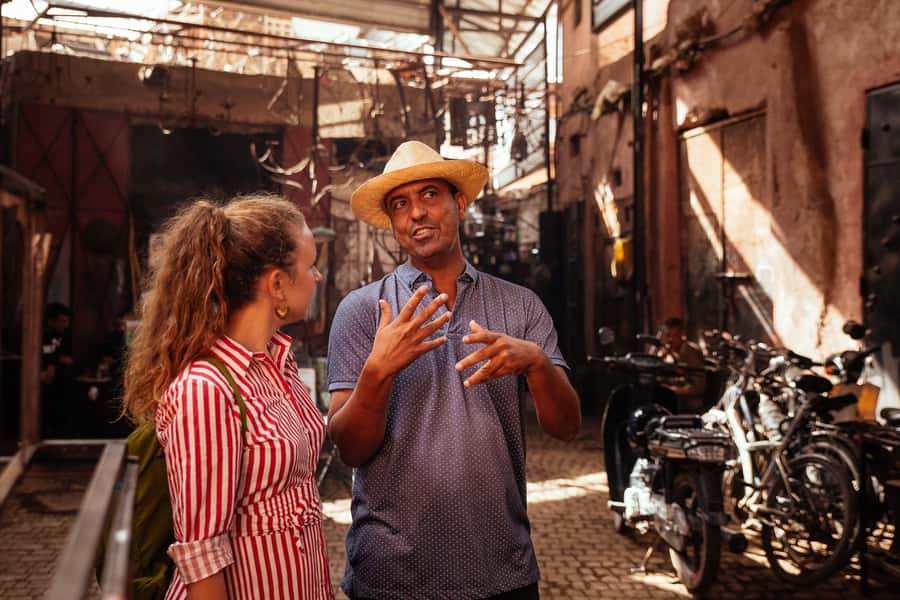
Marrakech’s souks are easiest to enjoy once someone helps you read the maze. This private tour begins in the old Jewish quarter, moves through the spice market and Jemaa el-Fnaa, then slips into workshops and back lanes that are easy to miss on your own. A local guide gives the Medina some shape, instead of leaving you to follow the loudest shopkeeper.
I like the personal pace and the chance to ask for specific interests, from carpets and ceramics to leather or metalwork. I also like the stop at a women’s cooperative for people with disabilities, followed by Moroccan tea and a msemmen pancake. The main consideration is that the tour is on foot through narrow, uneven lanes, so it is not suitable for wheelchair users or people with mobility impairments.
Key points at a glance
- Start in the Mellah: Meet your guide at Le Tanjia Restaurant on Mellah Square and learn how Marrakech’s old Jewish quarter fits into the city’s story.
- See the working souks: Watch tile makers, slipper makers, leather workers, metalworkers, and other artisans at work.
- Visit a women’s cooperative: Browse hand-stitched clothing made from natural fabrics while supporting a local social enterprise.
- Follow a flexible private route: Guides can adjust the walk toward shopping interests, craft workshops, local provisions, or photography.
- Take a proper Moroccan pause: The tour includes a non-alcoholic drink, specifically traditional tea with msemmen.
- Finish at Jemaa el-Fnaa: Get practical suggestions from your guide before returning to the square independently.
What this private Marrakech souks tour is really like
This is not simply a shopping walk. It is a three-and-a-half-hour introduction to how the Medina works, with time for craft, food, people-watching, and basic orientation.
You meet in front of Le Tanjia Restaurant on Mellah Square. There is no hotel pickup or drop-off, so plan your route to the meeting point in advance. Once you find your guide, the private format makes it easy to explain what you want from the outing. You can ask for more workshops, more photography stops, or more time around fabrics, jewelry, spices, and household goods.
That flexibility matters in Marrakech. A fixed group tour has to keep everyone moving. Here, guides have adjusted routes for people who wanted to see local supply areas, courtyards, craftsmen, or particular types of goods. The tour still has a planned path, but it is not locked to a rigid script.
The experience is offered with a live English-speaking guide. Several guides named in praise for this activity include Omar, Adil, Abdelghani, and Ghani. The exact guide depends on your booking, but the strongest pattern is clear: visitors valued friendly hosts who could answer questions, keep the pace comfortable, and point out trusted sellers.
A few other Marrakesh days worth comparing
- Marrakech: Bahia Palace, Saadian Tombs, Souk and Medina Tour
★ 4.7 · 4,974 reviews - Marrakech: Ben Youssef, Secret Garden, & Souks Walking Tour
★ 4.6 · 2,802 reviews - Marrakech: Colorful Medina Souks Guided Walking Tour
★ 4.7 · 2,470 reviews
From the Mellah to the spice souk
Beginning in the Mellah gives the tour a useful historical frame. Marrakech’s old Jewish quarter is not just a meeting point. It introduces you to one of the city’s distinct historic districts before you enter the commercial heart of the souks.
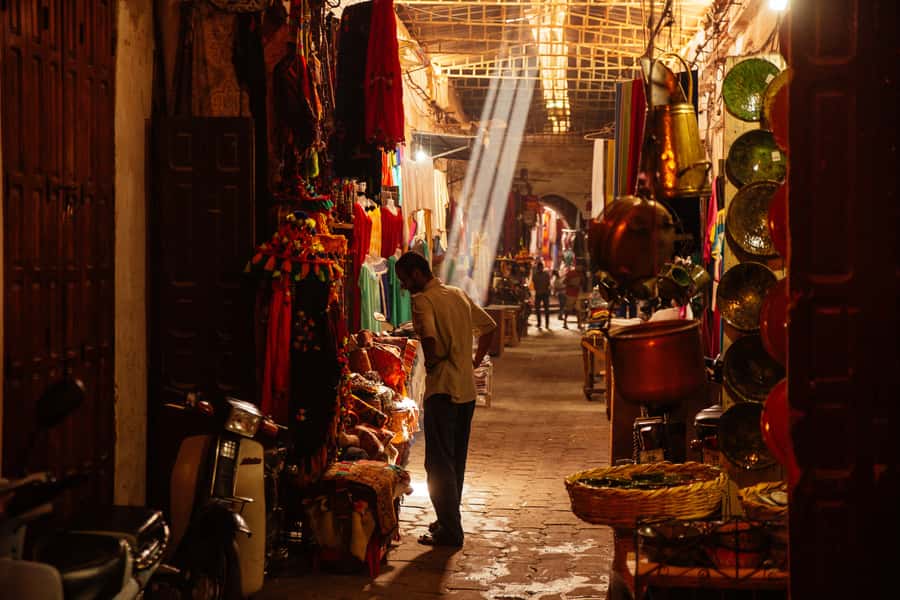
From there, you move toward the spice market. Expect narrow lanes, small stalls, strong colors, and shelves of products that can be hard to identify at first glance. Your guide explains the role of speciality spices and helps you understand what you are seeing rather than treating the market as a quick photo stop.
This is a good place to ask questions about buying. A private guide can explain the difference between browsing and serious shopping, point out sellers they trust, and help you slow down when the sales pitch becomes tiring. One highly praised guide was specifically valued for steering a visitor toward dependable vendors.
That does not mean you need to buy anything. The tour includes shopping areas because they are central to daily life in Marrakech, but you remain free to look, ask, compare, and move on. If you are concerned about pressure, say so at the start. A private guide has more room to protect your time than a shop-led excursion.
Jemaa el-Fnaa, Marrakech’s great public stage
The route soon reaches Jemaa el-Fnaa, the square at the center of Marrakech. This is where the city’s public energy gathers, with food stalls, musicians, snake charmers, and other street artists.
The square can feel like a lot at once. You may be more interested in watching people than stopping at every stall, and that is fine. Your guide can help you understand the square’s role as a meeting place and point out activity without forcing you into a particular purchase or performance.
This part of the outing also gives you a chance to get your bearings. The souks branch out from the square in many directions, and returning here at the end makes the route easier to remember. The finish is useful because your guide can suggest where to go next, then leave you to continue around Marrakech on your own.
Keep personal belongings close in crowded areas, as you would in any busy public square. The tour provides local context and company, but it does not turn Jemaa el-Fnaa into a quiet place. If you want calm, the artisan lanes later in the route may suit you better.
A meaningful stop at the women’s cooperative
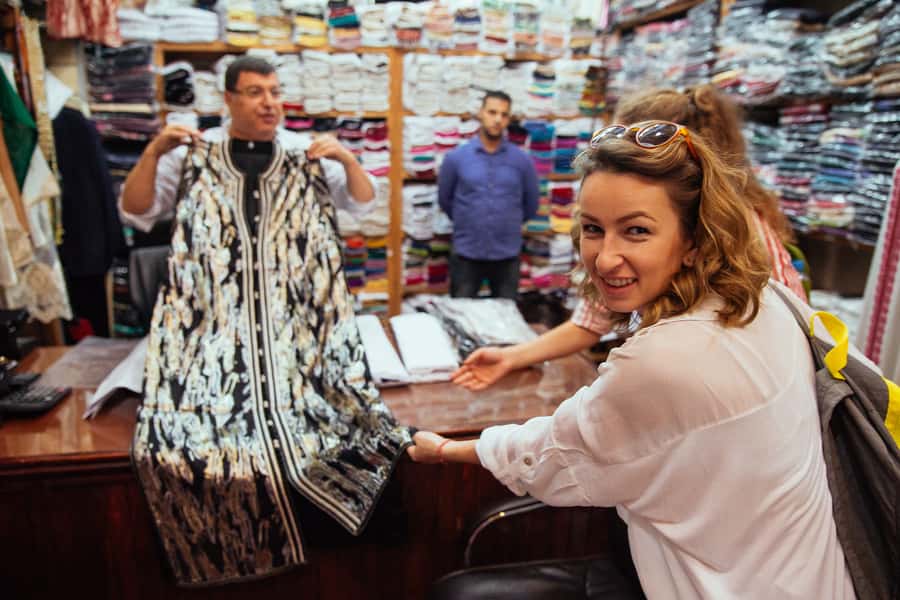
One of the most distinctive stops is a local cooperative for women with disabilities. Here you can see hand-stitched clothing made from natural fabrics.
This stop adds a social and human side to the shopping experience. Instead of seeing finished products only as souvenirs, you get a closer look at the labor and skill behind them. Fabrics, stitching, and clothing also give you a different view of Moroccan craft than the more familiar carpets, slippers, or ceramics.
The cooperative may be especially appealing if you prefer purchases with a clear social purpose. Still, treat it as a place to learn and browse, not as an obligation to buy. The value is in meeting the makers and seeing the work, even if you leave without a package tucked under your arm.
Ask your guide about the materials and production methods. The information provided for this activity specifically highlights natural fabrics and hand stitching, so this is a good point to focus on texture, technique, and the time involved in making each item.
Same city, a completely different day out:
- Marrakech: Agafay Desert Sunset, Camel Ride, and Dinner Show
★ 4.6 · 35,119 reviews - From Marrakech: Ouzoud Waterfalls Guided Hike and Boat Trip
★ 4.7 · 33,630 reviews - Marrakech: Agafay Desert Quad & Camel Rides with Dinner Show
★ 4.8 · 27,382 reviews - Marrakech: Agafay Desert Quad Biking Tour with Dinner-Show
★ 4.8 · 16,569 reviews
The back lanes and working artisans
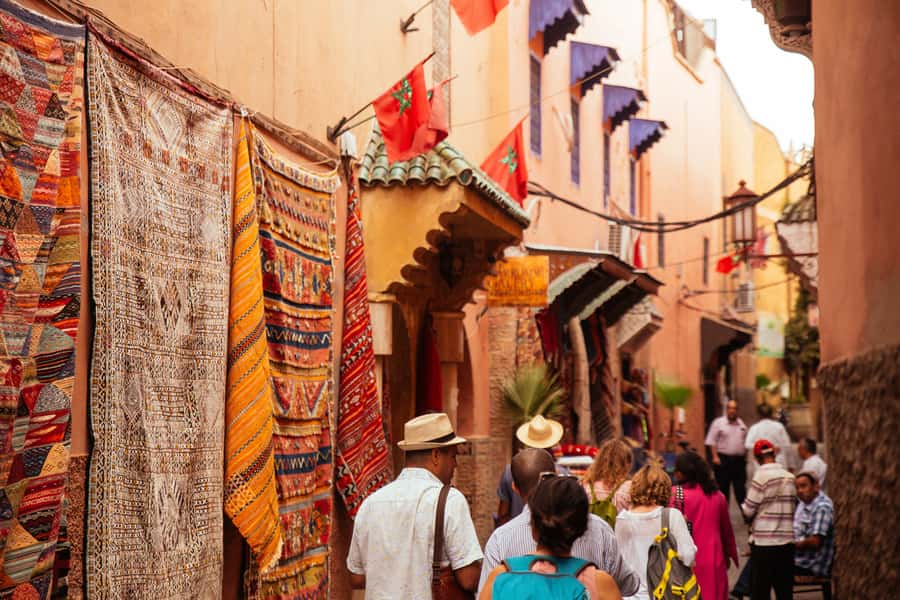
After Jemaa el-Fnaa and the cooperative, the walk leads farther into the souks. This is where the tour becomes more than a circuit of famous stalls.
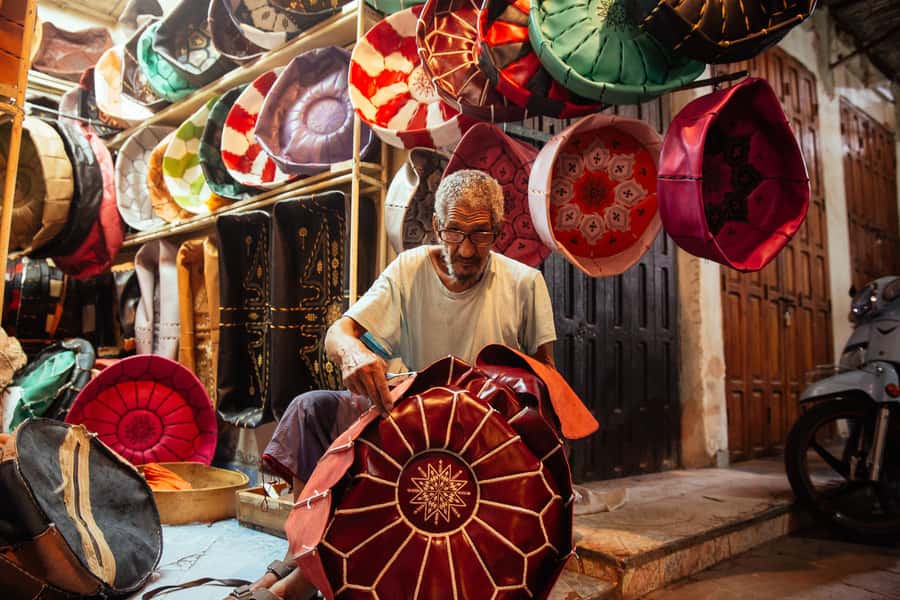
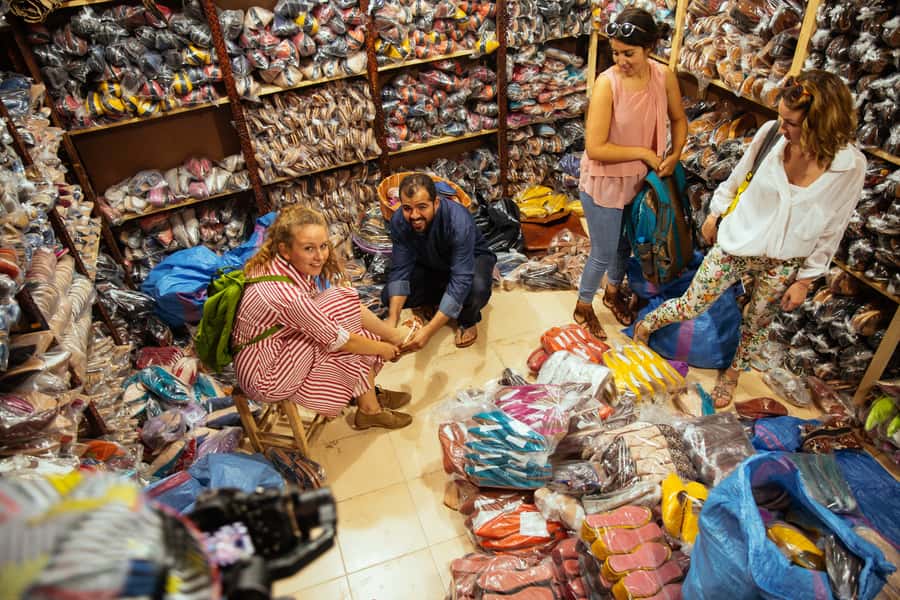
You may see tile makers, slipper makers, leather workers, and metalworkers at their benches. You might also pass places where residents buy everyday provisions or where people live behind the commercial lanes. These details help you see the Medina as a working neighborhood, not an open-air shop built for sightseeing.
The craft stops are likely to interest you even if you are not shopping. Watching an object take shape gives meaning to the finished goods stacked in nearby stores. A painted ceramic, leather item, slipper, or metal piece is easier to judge when you have seen the hands and tools involved.
You can also ask for time to take photographs. Guides associated with this tour have been praised for waiting while people took many pictures and asked questions. That is important here, since the best moments may be small: a workbench, a pile of materials, a narrow doorway, or a craftsperson concentrating on a single detail.
The lanes are also the tour’s chief physical challenge. Expect plenty of walking through tight spaces and streets that may not be smooth. Wear comfortable shoes, leave bulky luggage behind, and do not book this experience if uneven walking is difficult for you.
Tea, msemmen, and Moroccan hospitality
At some point in the route, you stop for a fresh cup of traditional Moroccan tea and msemmen, a local pancake. The activity includes one non-alcoholic drink, while additional food and drinks are not included.
This is a small stop, but it gives the tour a welcome change of pace. You have time to sit or pause with your guide, ask questions, and talk through what you have seen. In a market filled with movement and sales talk, a shared cup of tea makes the outing feel more personal.
Msemmen is a useful introduction to Moroccan food without turning the tour into a full meal. If you arrive hungry, do not assume this snack will replace lunch. Extra food and drinks are at your own expense.
Use this break to ask for final shopping advice. You can discuss which goods are practical to carry, where to return later, or which parts of the souks deserve another look. The private setting makes these conversations easier than on a large group walk.
How much personal attention should you expect?
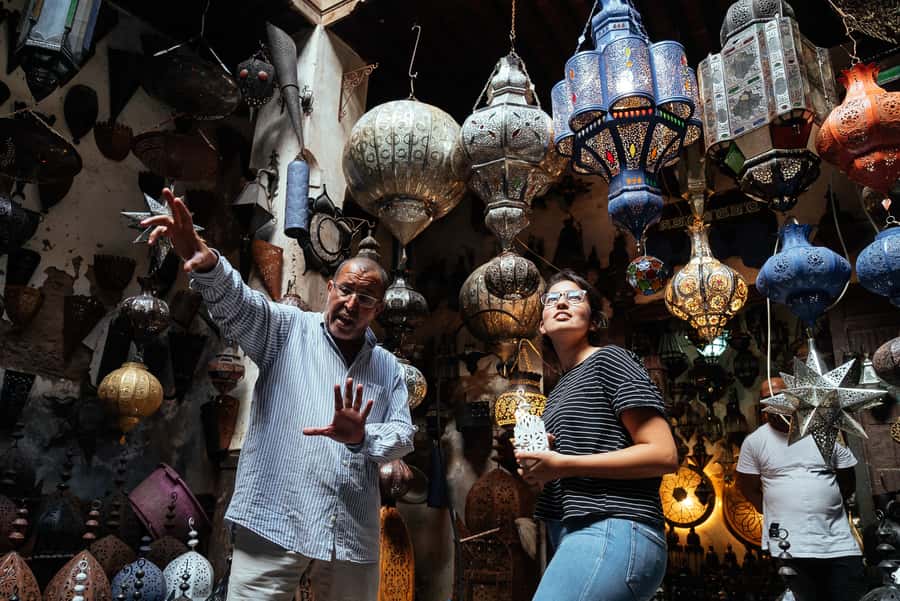
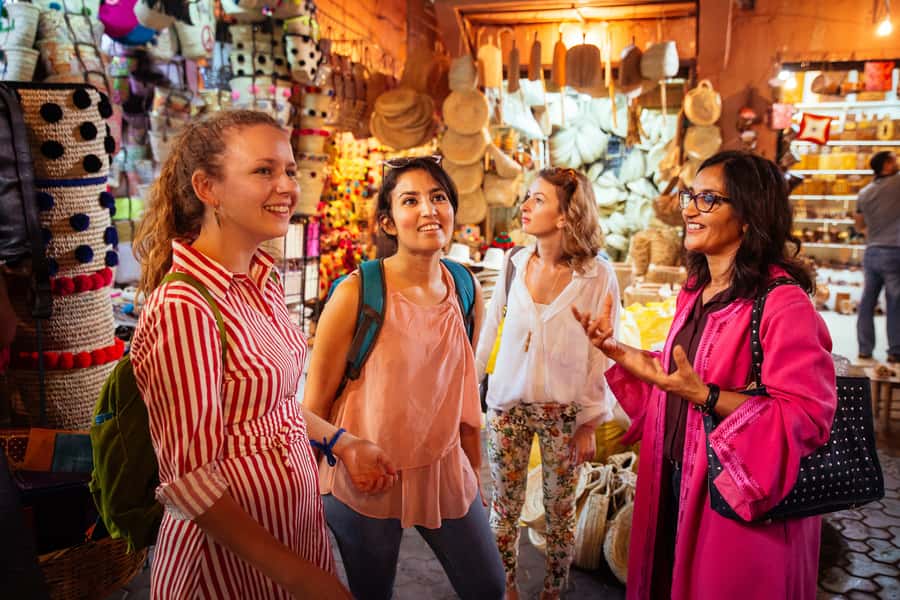
The group is private, so you are not sharing the guide with strangers. That is the biggest reason to consider this experience over a standard group tour.
A private guide can change the pace if you need more time for photographs or less time in shops. Families can ask for a route that suits different ages. First-time visitors can focus on orientation and confidence. Experienced shoppers can spend more time on particular crafts.
The guide’s manner matters. Names such as Omar, Adil, Abdelghani, and Ghani appear in the positive feedback connected with this experience, with praise for clear English, patience, humor, and a willingness to adapt. One guide waited 20 minutes when the group was delayed, then kept the walk comfortable when the visitors arrived tired.
You should still state your preferences early. Tell the guide if you want to avoid shopping, if you have a strict budget, or if you are especially interested in carpets, spices, jewelry, fabrics, food, or workshops. The more direct you are, the more useful the private format becomes.
Is $56 good value for 210 minutes?
At $56 per person, this is not the cheapest way to wander through Marrakech. You can enter the souks for free, and independent exploration costs nothing beyond what you choose to buy.
The price makes more sense if you want orientation, cultural explanation, and help navigating the commercial side of the Medina. You are paying for a private guide over 210 minutes, not for transport or a large meal. The included tea and msemmen are a pleasant extra, but they are not the main reason to book.
I see the strongest value for first-time visitors, solo visitors who want company, and small groups who would rather not negotiate the souks alone. It can also be worthwhile for anyone with limited time in Marrakech, since the route combines the Mellah, spice souk, Jemaa el-Fnaa, artisan areas, and a cooperative in one outing.
The value is weaker if you already know the Medina well or mainly want an unstructured shopping afternoon. In that case, you may prefer to explore independently and spend the $56 on a meal or purchases.
Practical advice before you go
Wear comfortable shoes. The walk lasts three and a half hours and includes narrow souk lanes, so sandals or stiff footwear may become uncomfortable.
Arrive at Le Tanjia Restaurant on Mellah Square with enough time to find the meeting point. Pickup and drop-off are not included, and the activity ends back at Jemaa el-Fnaa rather than at your hotel.
Bring a small bag, water if you prefer to carry your own, and room for anything you decide to buy. Extra drinks and food are not included.
If you are worried about being pushed into shops, discuss that with your guide at the beginning. The private format allows for a more direct conversation about how you want the tour handled.
This is not suitable for wheelchair users or people with mobility impairments. The souks are a difficult setting for wheels and for anyone who struggles with prolonged walking.
The cancellation policy is generous: you can cancel up to 24 hours before the experience for a full refund. You can also reserve now and pay later, which helps if your Marrakech plans are still shifting.
Who should book this Marrakech souks experience?
Book it if you want a structured first look at the Medina without giving up personal attention. The mix of history, craft, shopping advice, street life, and tea makes it broader than a simple market visit.
It is particularly suited to four women traveling together, solo visitors who want extra confidence, families, and anyone who likes to ask many questions. The private route can be adjusted, and the guide can take you beyond the main stalls into workshops and local lanes.
Skip it if you dislike walking, have limited mobility, or want to avoid all commercial stops. Also think twice if you prefer to explore at your own speed and do not need help with directions or vendors.
For most first visits, I think the tour is a sensible introduction. It gives you a map in your head, a better idea of what you are seeing, and enough free time afterward to return to the souks with greater confidence.
FAQ
Where does the tour meet?
Your host meets you in front of Le Tanjia Restaurant on Mellah Square in Marrakech’s old Jewish quarter.
How long does the experience last?
The tour lasts 210 minutes, or three and a half hours.
Is this a private tour?
Yes. The activity is offered for a private group with a live English-speaking guide.
What places are included in the route?
The route begins in the Mellah, continues through the spice souk and Jemaa el-Fnaa, visits a local women’s cooperative, and explores artisan lanes before finishing at Jemaa el-Fnaa.
Is tea and food included?
One non-alcoholic drink is included. The planned refreshment is traditional Moroccan tea with msemmen, a local pancake. Extra food and drinks are not included.
Is hotel pickup available?
No. Pickup and drop-off are not included. You need to make your own way to the meeting point.
Is the tour suitable for wheelchair users?
No. The activity is not suitable for wheelchair users or people with mobility impairments. Comfortable shoes are recommended.
Just listed out of Marrakesh
- Marrakech: Ouzoud Waterfalls Trip, Guide & Boat + Lunch★ 4.7 · 33 reviews
- Marrakech: Vibrant Dinner Show at The Lotus Club★ 3.9 · 33 reviews
- From Marrakech: Small Group To Essaouira & Medina Day Trip★ 4.3 · 33 reviews
- From Marrakech: 3-Day Merzouga and Sahara Desert Tour★ 4.5 · 33 reviews
- Marrakech: Medina Souks, Hidden Markets and Shopping Tour★ 4.8 · 33 reviews
- 2 Days Desert Agafay and Atlas Mountains Trek From Marrakech★ 3.8 · 33 reviews
- Agadir/Taghazout : Marrakech Guided Tour old Medina & Souks★ 3.7 · 34 reviews
- From Marakkesh: Half Day Buggy Adventure in Agafay Desert★ 4.1 · 35 reviews
Marrakech Tours, compared.

Agafay Desert Sunset, Camel Ride, and Dinner Show
Read our review →

Agafay Desert Quad & Camel Rides with Dinner Show
Read our review →
Agafay Desert Quad Biking Tour with Dinner-Show
Read our review →
Atlas Mountains, Ourika Valley, Waterfall & Lunch
Read our review →


Quad Bike Tour to Palm Oasis and Jbilat Desert
Read our review →Browse the lists this tour appears in