
Reviewed · ATLAS MOUNTAINS DAY TRIPS
Marrakesh: 2-Day Mt. Toubkal Trek with 1-Night Stay & Meals
Mount Toubkal is not a gentle day hike with a summit photo at the end. This is a fast, demanding mountain trip that takes you from Marrakesh to the High Atlas, up from Imlil at 1,740 meters to a refuge at 3,207 meters, then onto North Africa’s highest peak before returning the same day. I like the clear sense of achievement and the chance to see Moroccan mountain life around Aremd and Sidi Chamarouch.
I also like the way the trip handles the practical details. Your guide, cook, transport, refuge bed, and meals are bundled into the $122 price, and equipment such as gloves, headlamps, walking poles, and sleeping bags can be rented if needed. The main drawback is the schedule: summit day can last 10 to 12 hours, and cold, snow, wind, altitude, or poor fitness can stop you before the top.
Key points to know before booking
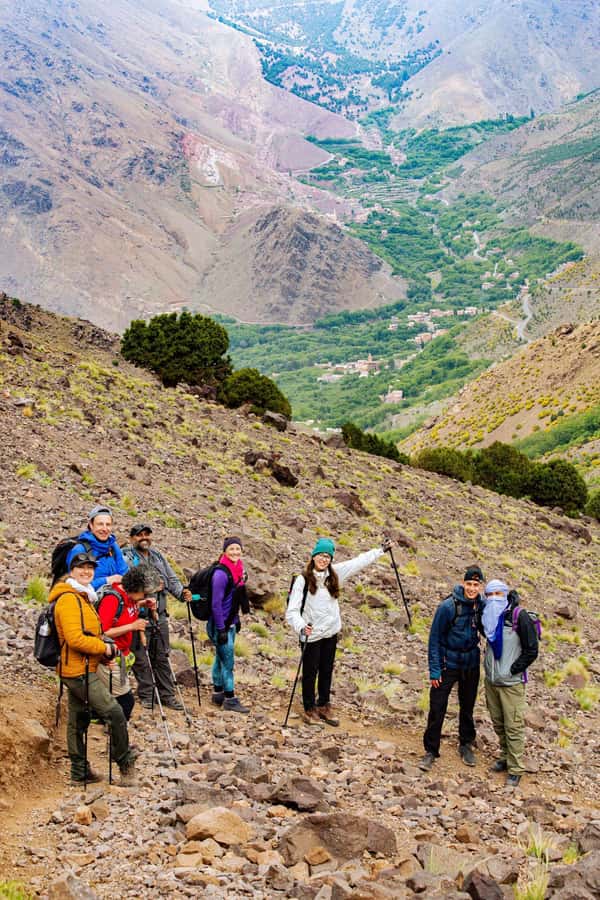
- A sunrise summit attempt: You leave the refuge around 3:00 or 4:00 in the morning, depending on the group and conditions, to reach the summit in time for first light.
- A steep altitude gain: Day one climbs from 1,740 meters in Imlil to 3,207 meters at the Toubkal Refuge over roughly five to six hours.
- Simple refuge sleeping: Expect dormitory-style bunk beds, sometimes with many people in one room. Earplugs are a smart addition.
- Warm Moroccan meals: Breakfast, two lunches, and dinner are included, with hot tea and freshly prepared food supplied along the way.
- Guides who watch the group: Guides including Ayoub, Oussama, Hamza, Brahim, Hicham, and Mustapha have been praised for pacing, encouragement, and helping people turn back safely when needed.
- Good value, but not a soft adventure: At $122 per person, the package is inexpensive for transport, guiding, lodging, meals, and seasonal mule support, but you still need suitable clothing, insurance, and basic mountain fitness.
Leaving Marrakesh for Imlil at 1,740 meters
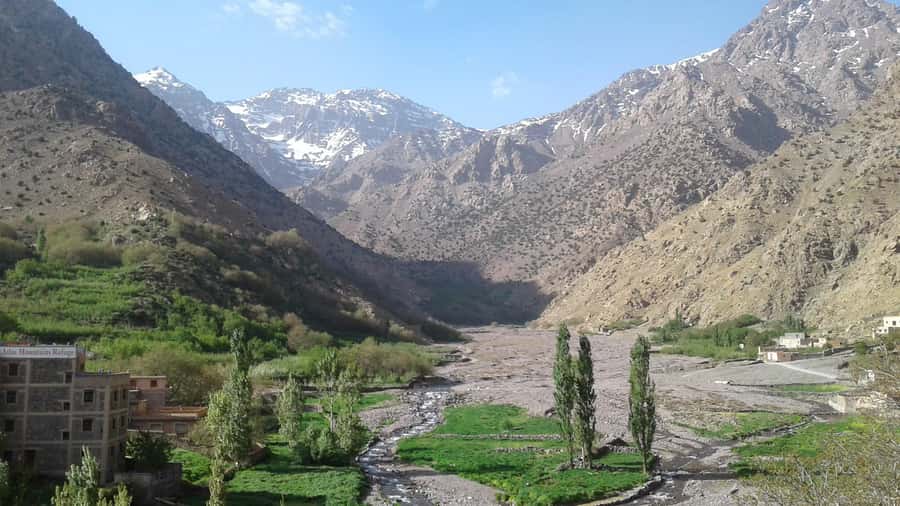
The trip begins with pickup from your accommodation in Marrakesh. The vehicle cannot reach every street in the Medina, so you need to provide your hotel address and meet at the nearest accessible point. Several pickup points are close to the souks, and communication is handled through WhatsApp before departure.
The drive takes you away from the city and toward Imlil Valley, the practical starting point for the trek. This transfer matters because it turns a city break into a mountain route in one morning. You do not need to arrange a separate taxi or find your way to Imlil alone.
Transport has generally been described as punctual and easy, though one person had a breakdown on the way out. The vehicle got moving again, and the return transfer was reported as more comfortable. I would treat the minibus as functional rather than luxurious. Bring water, keep valuables close, and expect Moroccan road travel rather than a private-car experience.
At Imlil, you meet the local mountain team and sort out your pack. From April through November, a mule carries luggage, which lets you walk with a lighter daypack. You should still carry your essentials, including water, warm layers, medication, a phone, and anything you need during the day.
More Hiking Tours in Marrakech
- From Marrakech: Ouzoud Waterfalls Guided Hike and Boat Trip
★ 4.7 · 33,630 reviews - From Marrakech: Atlas Mountains Full-Day Hiking Trip w Lunch
★ 4.8 · 7,417 reviews - Marrakech: Ourika Valley Trip with Waterfall Hike
★ 4.6 · 6,792 reviews
Aït Mizane Valley, Aremd, and Sidi Chamarouch
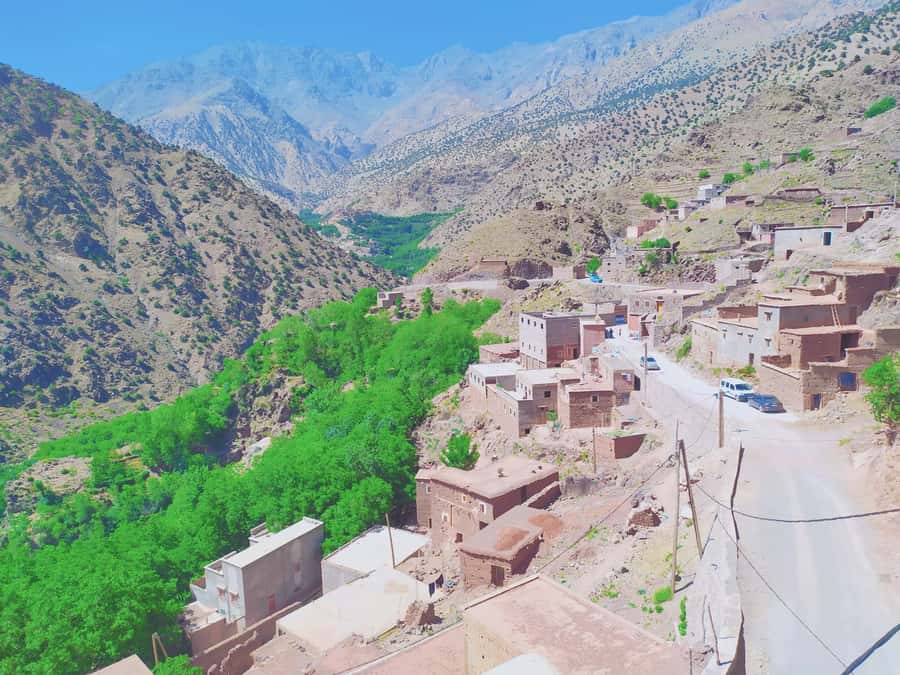
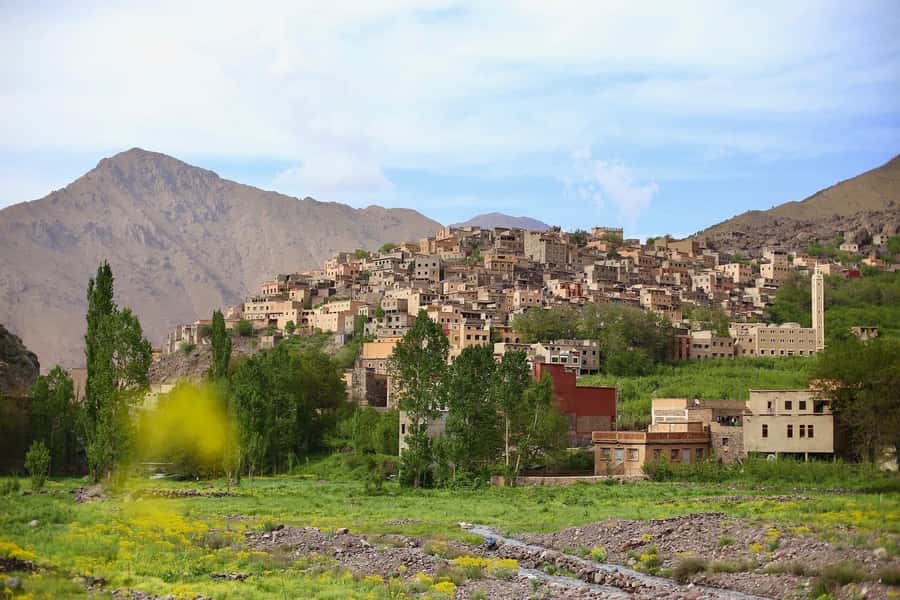
The first walking section follows the valley of Aït Mizane toward Aremd. The route is a steady climb rather than a technical rock climb, but the uphill work begins quickly. You pass through mountain settlements and see the scenery change as the valley narrows and the trail rises.
Aremd gives the route a human scale. This is not just a trail through empty hills. You are walking through an inhabited part of the High Atlas, with local guides, mule support, roadside stops, and Moroccan food woven into the day.
The path continues to Sidi Chamarouch, a well-known sanctuary area, with a nearby waterfall. This is a useful rest point before the harder climb to the refuge. You might find fresh orange juice, snacks, or drinks available along the route, so carry some Moroccan dirhams in small notes.
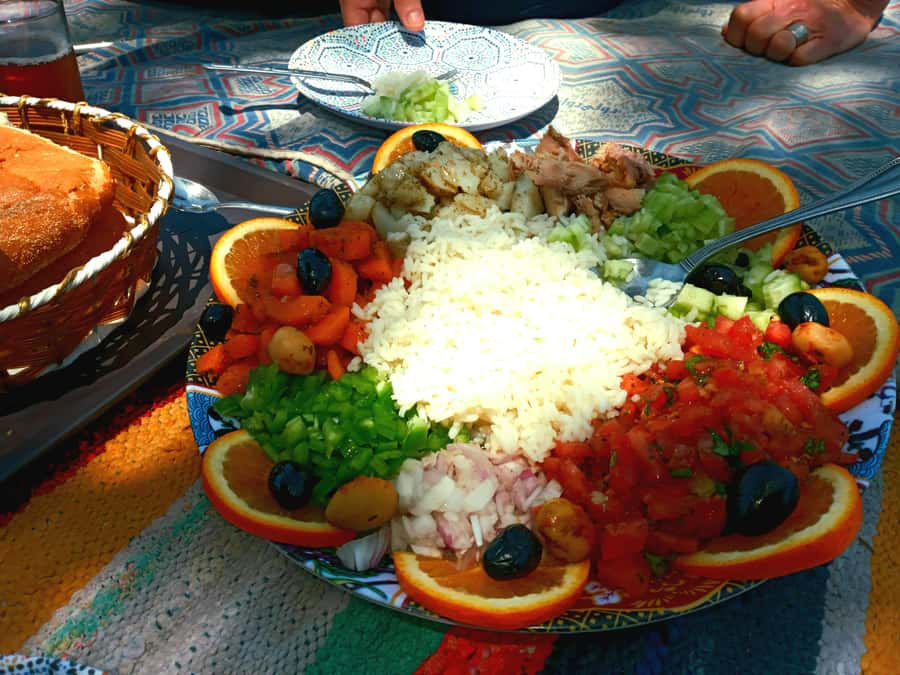
Lunch is included and can be served during the day, often after a few hours of walking. The meals are a real strength of the arrangement. You can expect fresh, warm Moroccan food rather than only packaged trail snacks, along with peppermint tea at some stops. One person felt the portions at the refuge could be larger, so hungry hikers should carry a few extra snacks.
The five to six hour climb to Toubkal Refuge
From Imlil, the first day takes about five to six hours to reach the Toubkal Refuge. You gain roughly 1,467 meters in altitude, so the distance alone does not tell the whole story. The steady climb, sun, rocky footing, and thinner air make this a demanding day for anyone unused to mountains.
The final section follows steeper paths toward the refuge at 3,207 meters. Your guide should set the pace for the group, but the group may include people with very different levels of fitness. Some accounts describe a fast pace with larger groups, while others praise guides for frequent breaks and careful adjustment.
This is where a good guide matters most. Guides such as Ayoub, Oussama, Hicham, Nouredin, Brahim, Hamza, and Mustapha have been singled out for keeping groups together, helping tired walkers, and escorting people back when they could not continue. You should tell your guide early if you feel unwell. Do not wait until a small problem becomes a serious one.
The refuge is basic but useful. Think mountain hostel, not hotel. You sleep in a shared dormitory with bunk beds, and some rooms can hold a large group. Beds are close together, and one snorer can affect an entire room, so pack earplugs. Proper toilets and hot showers have been reported, but comfort remains simple.
Dinner is included, and warm food, tea, and sometimes a fire make the refuge feel welcoming after the climb. You may also rent a sleeping bag if you do not have one. In colder months, you can rent winter clothing and other essentials from the local team.
The pre-dawn climb to the summit
The second day starts early. Very early. Depending on the group and season, breakfast may come around 2:30 or 3:00 in the morning, followed by the summit climb at about 3:00 or 4:00.
The reason is worth the lost sleep: an early start can put you near the summit for sunrise. A September group left around 3:40 and reached the summit at about 7:15. Another group reached the top at 9:15 after starting at 4:00. Timing changes with weather, pace, breaks, and the group’s condition.
The climb is rougher than the first day. You cross streams and work over rocky ground, with steep sections that feel harder in the dark and cold. A headlamp is essential for the early start, and it can be rented if you do not bring one.
Altitude becomes a serious factor here. One fit hiker described struggling with panic and exhaustion, while another had to stop before reaching the summit because of altitude. That does not mean the trip is unsafe when properly managed, but it does mean you should not treat it as an ordinary walking tour.
The cold can be intense even after a warm Marrakesh day. In November, water bottles froze at the summit. Strong wind and snowstorms have also prevented summit attempts. Mountain police can decide what is safe from hour to hour, so reaching the top is never guaranteed.
That safety judgment is a good reason to choose a guided climb. A December group could not summit because of extreme temperatures, high wind, and snow. The guide split the group sensibly, taking continuing hikers onward while another guide escorted two people back to safety. The mountain does not care how much you paid or how badly you want the photograph.
A few other Marrakesh days worth comparing
- Marrakech: Atlas Mountains, Ourika Valley, Waterfall & Lunch
★ 4.8 · 15,834 reviews - From Marrakech: Atlas Mountains Day Trip with Camel Ride
★ 4.8 · 4,709 reviews - Marrakesh: Ourika Valley & Atlas Mountains, Day Trip + Lunch
★ 4.9 · 1,865 reviews - Marrakech: Atlas Mountains, Camel Ride, Waterfalls, & Lunch
★ 4.9 · 1,351 reviews
Views from the Toubkal summit
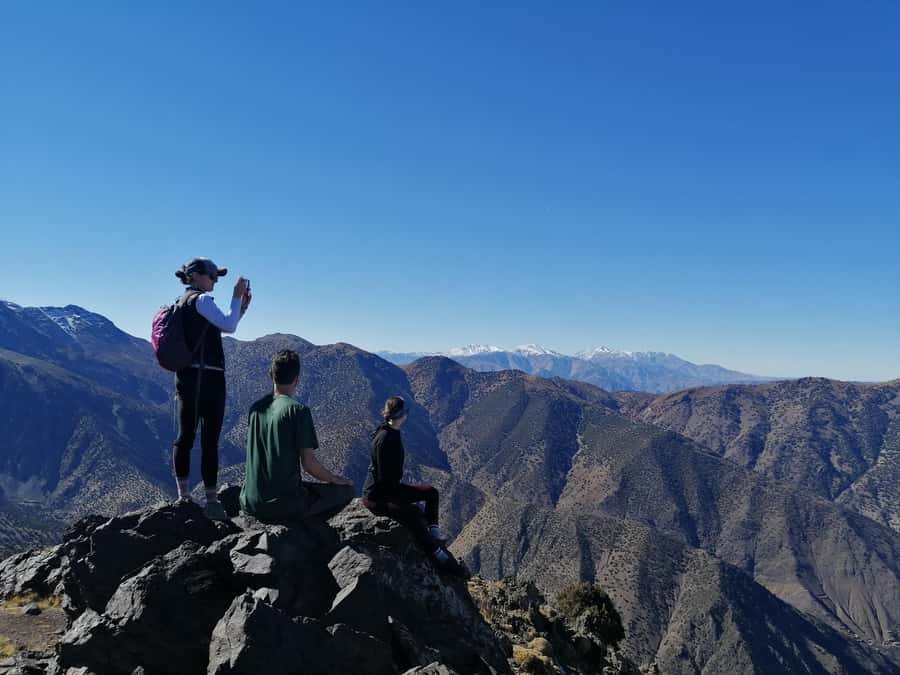
The summit section gives you the big reward. From the upper plateau and summit area, you can look across the High Atlas and toward the plain of Marrakesh to the north. Southward, the view reaches toward the Anti-Atlas and the Sahara.
Sunrise is the emotional high point of the trip. You are cold, tired, and probably awake before most of Marrakesh, but the first light over the mountains gives the climb a clear purpose. You normally have a short break at the top for photographs and a rest before starting down.
Do not plan on a long, relaxed summit picnic. Wind, low temperatures, and the need to descend make the stop brief. Wear gloves, bring a jacket, cover your head, and keep your camera or phone protected from the cold.
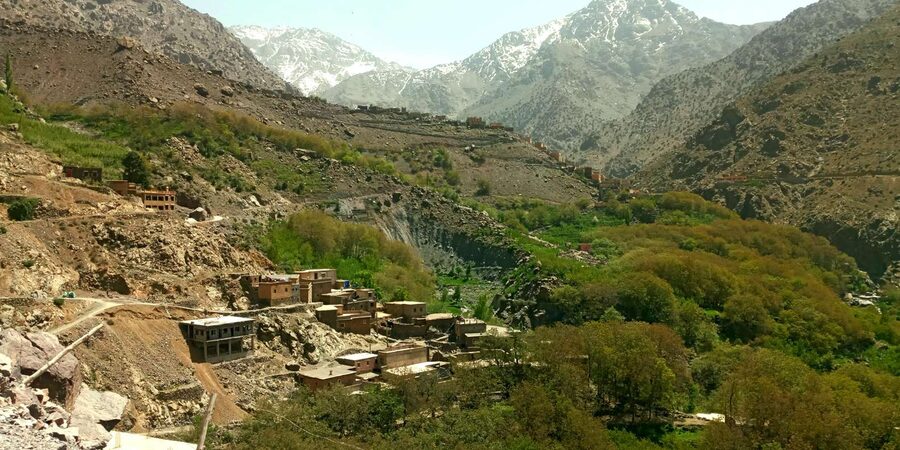
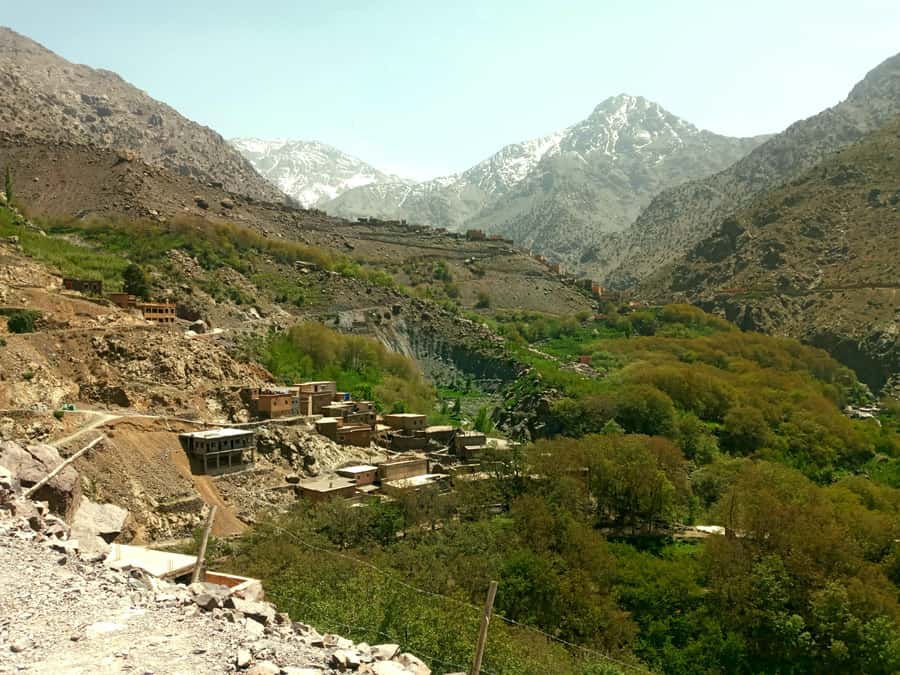
The summit view is only part of the reward. The scenery changes on every turn, from the valley and villages below to bare slopes, streams, rocks, and broad mountain views. You get a much stronger sense of the High Atlas than you would from a city-based day trip.
The long descent to Imlil
After the summit, you descend to the refuge for lunch, then continue down toward Imlil. This is where many people discover that going downhill is not easy. Knees and ankles take a beating, and fatigue can make rocky steps awkward.
The full second day is listed at about 10 to 12 hours of walking. Some hikers have covered close to 27 kilometers on summit day, depending on the exact route and pace. You should plan for a very long day, not a quick morning climb followed by an easy afternoon.
Your guide’s job is especially important during the descent. The group needs to stay together, and anyone struggling should not be left to manage the trail alone. The supplied experiences repeatedly praise guides for checking on the whole group, adapting the pace, and helping people who needed to turn back.
Once you reach Imlil at 1,740 meters, transport takes you back to Marrakesh. Expect to feel tired. If you have evening plans in the city, leave plenty of time and do not book anything that depends on arriving at a precise hour.
Food, equipment, and what the $122 price covers
The $122 price is strong value if you need a complete package. It includes hotel pickup and drop-off in Marrakesh, transport, a local guide, one refuge night, breakfast, two lunches, and dinner. From April through November, a mule carries luggage.
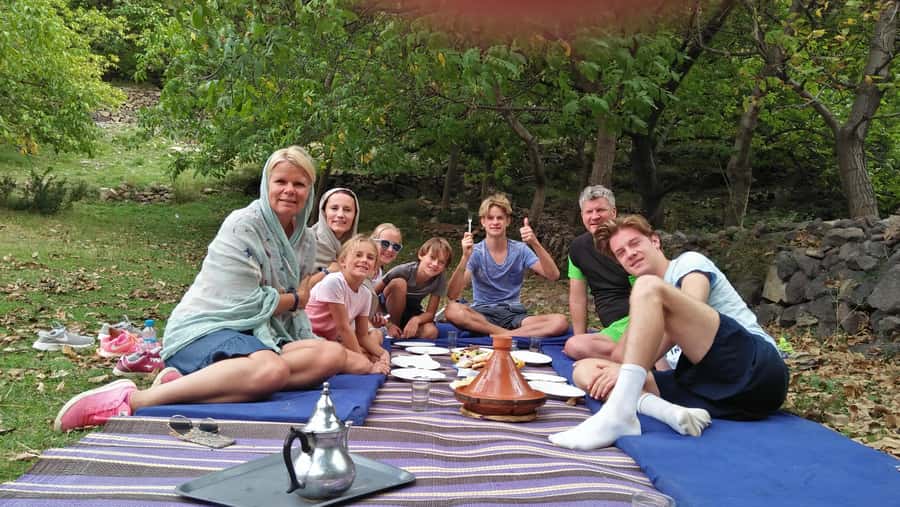
The food is more than a minor convenience. Warm meals give you fuel on a demanding route, and the cook or porter prepares food at the refuge and along the trek. Fresh meals, Moroccan dishes, tea, and soup have all been part of the experience. You should still bring personal snacks and cash for drinks or food stops.
Trekking gear is not included. Bring comfortable hiking shoes or proper hiking boots, a jacket, gloves, a hat, a change of clothes, a daypack, and a charged phone. A first aid kit and travel insurance are also listed as essentials.
Rental equipment is available for items such as sleeping bags, gloves, headlamps, walking poles, and cold-weather clothing. Reported prices included about 5 euros for gloves or lamps and 10 euros for a sleeping bag, though you should confirm current rates before setting out.
The mule support reduces the weight you carry, but it does not remove the need to pack sensibly. A lighter pack makes the long ascent and descent noticeably easier. Keep your passport and cash with you, and do not assume the mule will be beside you at every moment.
Group size, languages, and guide support
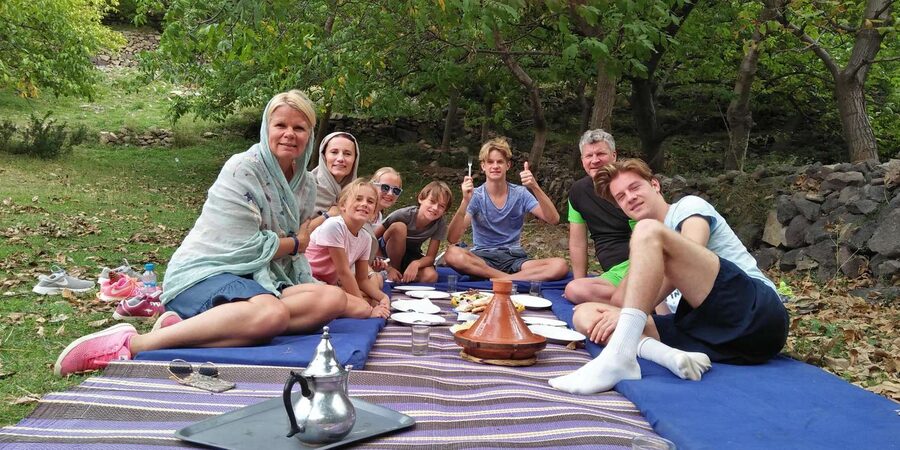
The group is limited to 16 people, though several guides may share the work. That is small enough to meet people from different countries, but large enough for the pace to reflect mixed ability.
English, French, Spanish, and Arabic guiding is available. An optional audio guide is listed in English, French, and Spanish. Spoken English may vary by guide, but the practical side of the trip appears to rely on clear directions, group checks, and hands-on support.
The most praised feature is the guide team. Ayoub is repeatedly described as calm, encouraging, and good at setting a pace. Oussama has been praised for helping tired hikers and responding when someone felt anxious. Hicham, Nouredin, Brahim, Hamza, Mustapha, and others have also been credited with humor, safety checks, and strong group care.
Guide quality can vary because you are not booking a specific named person. Still, the pattern is clear: the operator places real weight on local mountain staff. That matters more here than polished commentary or a fancy vehicle.
Who should book this Toubkal trek?
I would choose this trip if you are reasonably fit, comfortable walking uphill for hours, and willing to accept a basic refuge and an uncertain summit. You do not need to be an elite mountaineer, but you should have some hiking experience and prepare for steep ground, altitude, cold, and a very long second day.
I would not choose it for a relaxed introduction to Morocco, a family outing with young children, or a first-ever hike. The activity is not suitable for children under 12 or people over 70. If you are unsure about your fitness, the two-day schedule gives you little recovery time.
The trip suits a solo visitor who wants company. With a maximum of 16 people, you may end up sharing the evening with an international group, eating together at the refuge, and encouraging one another on the climb. That social side is part of the experience, though anyone needing privacy or a quiet night may find the dormitory tiring.
The booking terms are useful for uncertain plans. You can cancel up to 24 hours before departure for a full refund, and reserve now while paying later. Pickup is included, but you must give the operator your Marrakesh accommodation address and follow the assigned meeting point.
Should you book the two-day Mount Toubkal trek?
Book it if you want a demanding, well-supported mountain challenge at a low package price. You get the High Atlas, Aremd, Sidi Chamarouch, a refuge night, hot meals, a local guide, and a chance to watch sunrise from near the highest point in North Africa.
Do not book it simply because it is cheap or because the summit photographs look easy. Train beforehand, bring proper layers, protect your hands, carry cash and snacks, and accept that weather or altitude may turn the summit into a future attempt.
For a fit visitor with two free days in Marrakesh, I think this is a strong choice. The guides and organization receive especially high marks, and the $122 cost covers the parts that are hardest to arrange alone. Just understand the deal: simple shelter, hard walking, early mornings, and real mountain conditions in exchange for an experience that can become the highlight of your Morocco trip.
FAQ
How long does the Mount Toubkal trek take?
The experience lasts two days. Day one involves about five to six hours of trekking from Imlil to the Toubkal Refuge. Summit day takes about 10 to 12 hours, including the climb to the summit and the return to Imlil.
Where does the trek begin?
Transport takes you from Marrakesh to Imlil Valley. The walking route begins in Imlil at about 1,740 meters.
Where do I sleep?
You spend one night at the Toubkal Refuge, located at about 3,207 meters. Accommodation is in shared dormitory-style bunk rooms.
Are meals included?
Yes. The package includes one breakfast, two lunches, and one dinner. Drinks are not included, so bring cash for water, tea, snacks, or other purchases along the route.
Is trekking equipment provided?
Trekking gear is not included, but some items can be rented. Available rentals may include sleeping bags, gloves, headlamps, walking poles, and cold-weather clothing.
Is a mule included?
A mule is included to carry luggage from April through November. You should still carry a daypack with your personal essentials.
What languages are available for the guide?
Live guides are available in English, French, Spanish, and Arabic. An optional audio guide is listed in English, French, and Spanish.
More Hikes in Marrakesh
- Marrakech: ourika valley lunch & guided hike to waterfalls
★ 4.9 · 3,737 reviews - Marrakesh: Ouzoud Waterfalls Trip with Hike & Boat Option
★ 4.9 · 1,435 reviews - Marrakech: Atlas Mountains & Valleys Waterfall Hike w/ Lunch
★ 4.8 · 1,236 reviews - From Marrakesh: Atlas Mountains Talamrout Summit Day Hike
★ 4.9 · 835 reviews
More 2-Day Experiences in Marrakesh
- From Marrakech: 2-Day Sahara Tour to Zagora & Ait Ben Haddou
★ 4.4 · 1,925 reviews - From Marrakech: 2-Days luxurious experience to Zagora Desert
★ 4.9 · 1,502 reviews - From Marrakech: Zagora 2-Day Desert Safari with Food & Camp
★ 4.5 · 1,137 reviews - Marrakech/Ouarzazate: 2-Day Desert with Camel, 4×4 & Meals
★ 4.6 · 926 reviews
Just listed out of Marrakesh
- Marrakech: Ouzoud Waterfalls Trip, Guide & Boat + Lunch★ 4.7 · 33 reviews
- Marrakech: Vibrant Dinner Show at The Lotus Club★ 3.9 · 33 reviews
- From Marrakech: 3-Day Merzouga and Sahara Desert Tour★ 4.5 · 33 reviews
- Marrakech: Private Souks Tour with Tea and Traditional Snack★ 4.6 · 33 reviews
- From Marrakech: Small Group To Essaouira & Medina Day Trip★ 4.3 · 33 reviews
- Marrakech: Medina Souks, Hidden Markets and Shopping Tour★ 4.8 · 33 reviews
- 2 Days Desert Agafay and Atlas Mountains Trek From Marrakech★ 3.8 · 33 reviews
- Agadir/Taghazout : Marrakech Guided Tour old Medina & Souks★ 3.7 · 34 reviews
Atlas Mountains Day Trips, compared.
Atlas Mountains, Ourika Valley, Waterfall & Lunch
Read our review →
Ourika Waterfalls, Atlas Mountains, Guide + Lunch
Read our review →
Atlas Mountains & Agafay Desert Tour w Camel Ride
Read our review →
Atlas Mountains, Waterfalls, Ourika Valley +Lunch
Read our review →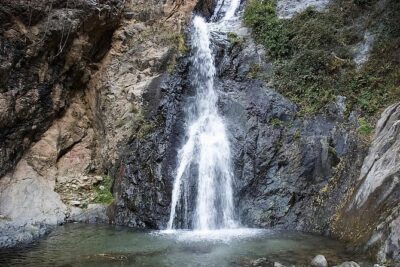
Atlas Mountains & 5 Valleys Tour from Marrakech – All inclusive –
Read our review →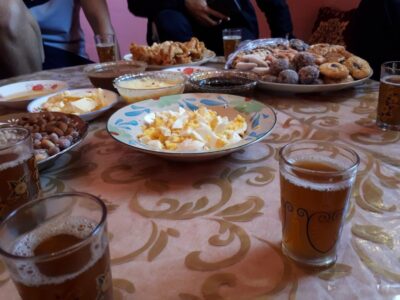
Agadir or Taghazout: Paradise Valley Atlas Mountains Tour
Read our review →Browse the lists this tour appears in