
Reviewed · MARRAKECH TOURS
Marrakech: Moroccan Cooking Class with Market Visit and Meal
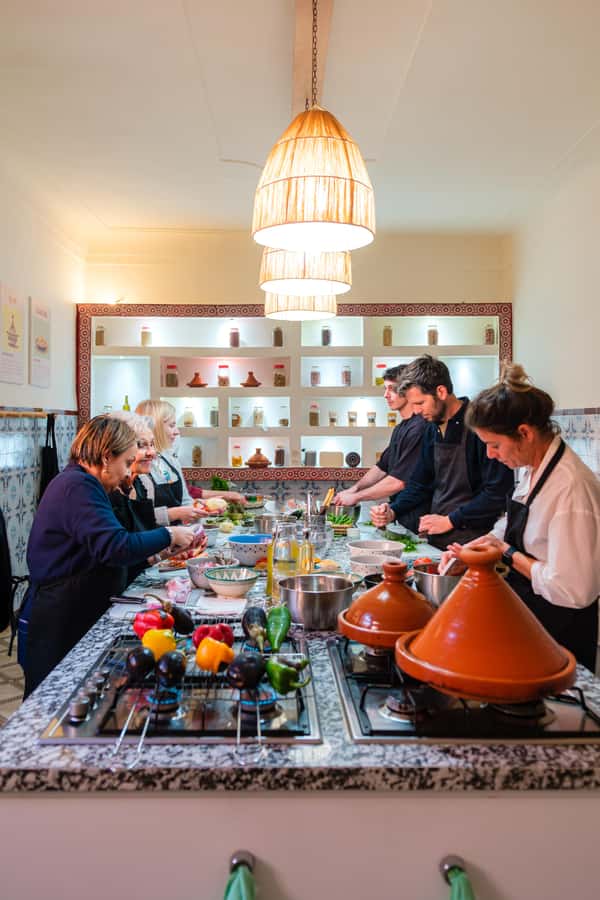
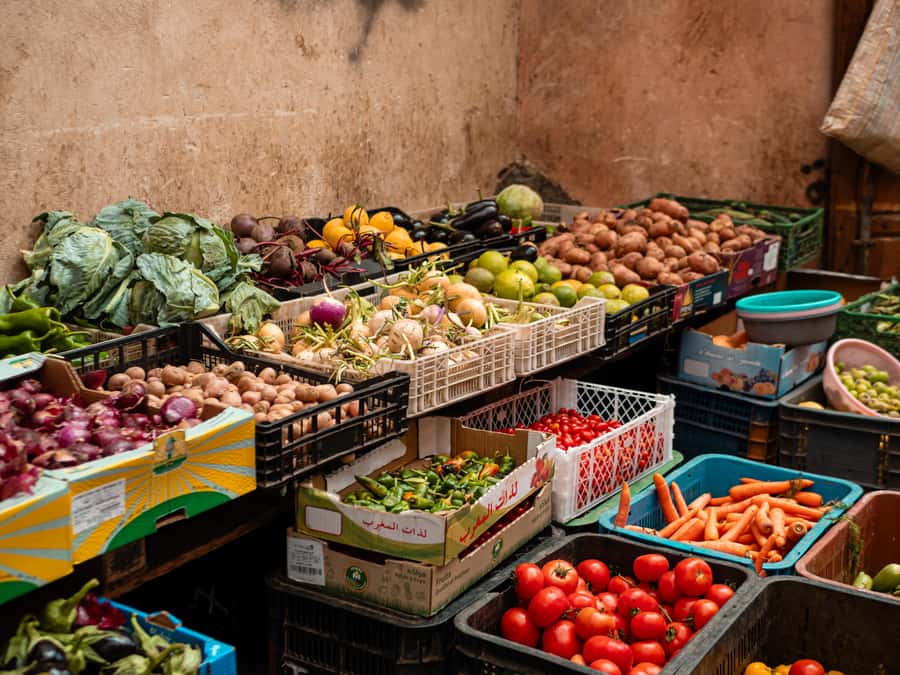
The best part of this Marrakech cooking class happens before anyone turns on the stove. In the morning, you walk into a local market with your guide, help choose the chicken, vegetables, herbs, and other ingredients, then return to prepare and eat the meal together.
I like the small group size, capped at 10, because you get real jobs to do instead of standing behind a demonstration. I also like the mix of practical cooking and cultural detail, from spice use to halal food traditions. The main consideration is simple: the market visit is available only in the morning, so the 4:30 pm class gives you the kitchen but not the market.
Key points to know before booking
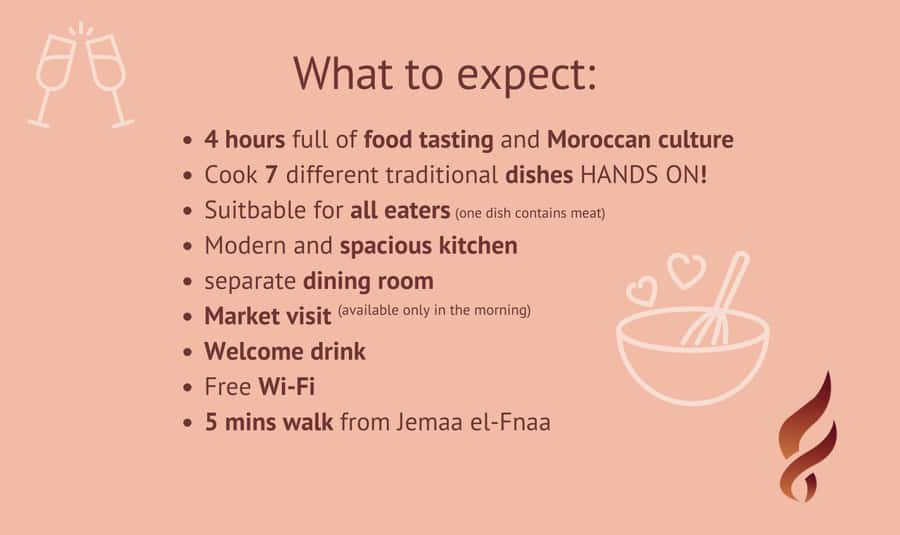
- The morning class includes market shopping: At 10:30 am, you help select fresh produce, chicken, herbs, spices, and other ingredients before cooking.
- You prepare a full Moroccan meal: The menu can include tajines, Moroccan salads, zaalouk, taktouka, dessert, tea, and side dishes.
- Local women lead the class: Instructors including Leyla, Kaoutar, Fatiha, Fatima, Bouchra, and their assistants teach family-style recipes and techniques.
- The class is genuinely hands-on: You chop, season, prepare, and help cook rather than simply watch a chef work.
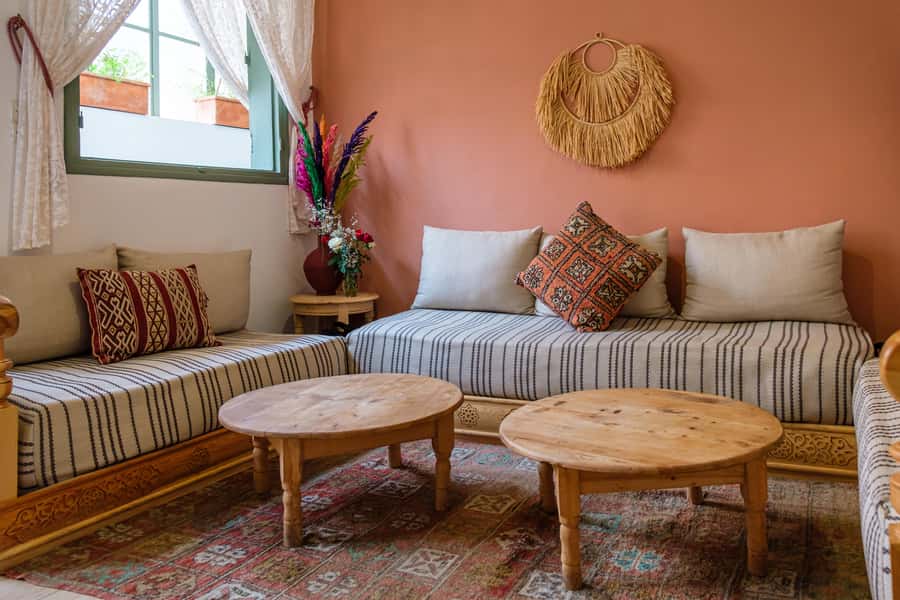
- You eat what you make: Lunch or dinner is served in a comfortable Moroccan salon after the cooking is complete.
- Recipes arrive by email: A PDF of the dishes used in class lets you try the menu again at home.
From the Medina meeting point to the kitchen
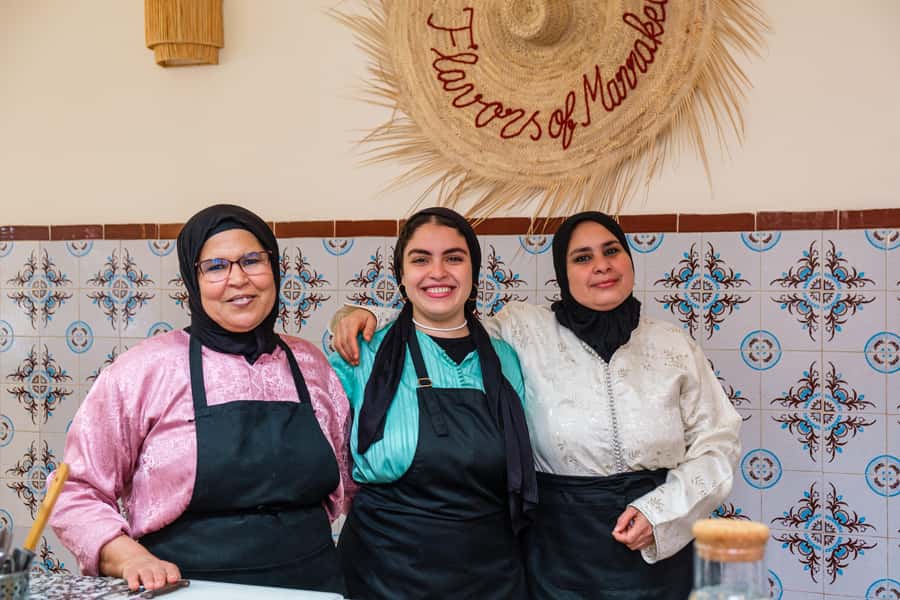
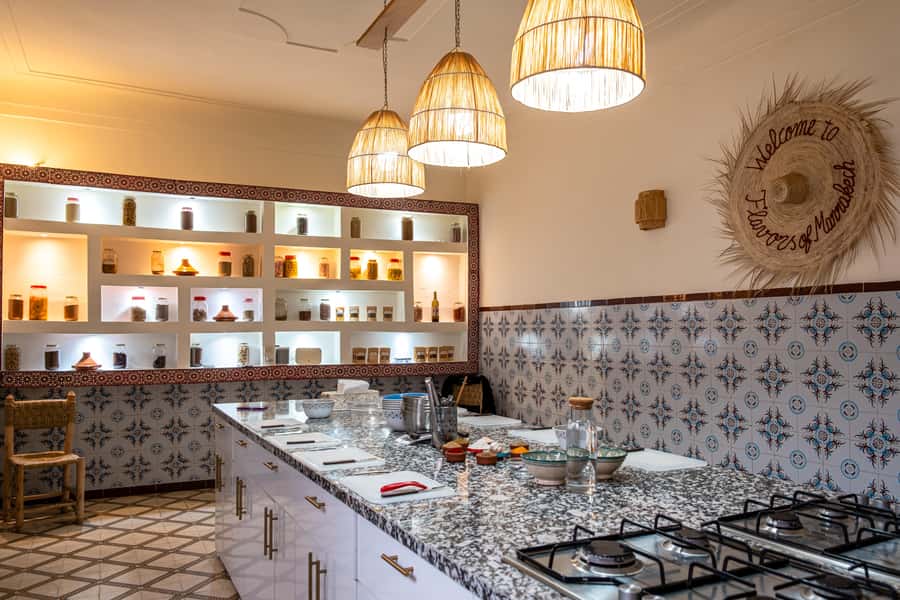
The class meets at Flavors of Marrakech, next to the BIM store. That detail matters in the Medina, where finding a business by a street address alone can be difficult. Look for the Flavors of Marrakech sign, enter, and meet the staff inside.
You are responsible for getting to the meeting point. Transportation to and from the activity is not included, so allow time to walk there from your accommodation or from the main square, Jemaa el-Fna. The location is described as central and within a short walk of the square, but you should still use the exact meeting instructions supplied when you book.
The setting is part of the appeal. The kitchen is spacious, bright, well equipped, and designed for a small group to work around the preparation areas. After cooking, you move to a nicely arranged salon or dining space. This gives the class a clear rhythm: market, kitchen, table.
The atmosphere is informal without feeling disorganized. Instructors have been praised for keeping the group involved, explaining each stage clearly, and helping people with different levels of cooking experience. You do not need to be a confident cook. The class is built around guidance and shared tasks.
More Cooking Classes in Marrakech
- Marrakech: Moroccan Cooking Class with Pickup
★ 4.6 · 1,862 reviews - Marrakech: Traditional Moroccan Cooking Class & Market Visit
★ 4.8 · 1,861 reviews - Marrakesh: Moroccan Dishes Cooking Class with a Local Chef
★ 5.0 · 1,615 reviews
Why the 10:30 am market visit is worth choosing
If you want the fullest version of the experience, book the morning start at 10:30 am. The class begins with tea, then a short walk to a local market to buy the food that will become your lunch.
This is more useful than a simple sightseeing stop. You see the ingredients in their everyday setting and take part in choosing them. Depending on the menu, you may help select vegetables, herbs, chicken, fresh filo dough, and other items. One group was given baskets and assigned produce to collect, which made the shopping feel like part of the class rather than a quick stop for the instructor to do errands.
The market also adds context to Moroccan food. Kaoutar, who is sometimes called Cookie or Kooky, has explained food preparation, halal butchering, and the way ingredients are selected. This can be an eye-opening part of the morning, but it is also worth knowing that halal slaughter may be discussed or visible during the market visit. If that subject could make you uncomfortable, keep it in mind when deciding.
After shopping, you return to the kitchen while the ingredients are washed and prepared. There may be a short tea break before the hands-on work begins. The pace is practical, with the cooking steps arranged so that dishes can simmer or bake while you work on the next part of the meal.
The afternoon session begins at 4:30 pm and does not include the market. It is the better fit if you prefer an evening meal, have already spent time in the souks, or want to keep your morning free. It is not the better choice if selecting the ingredients and seeing the market are central to your plans.
What you actually cook during four hours
The exact menu can vary, but the class is designed around several parts of a Moroccan meal rather than one dish. You may prepare two tajines, starters such as Moroccan salad, zaalouk, and taktouka, and an almond or filo pastry dessert. Tea is also part of the experience.
Tajine is the main lesson. You learn how ingredients are layered, seasoned, and cooked in the distinctive cone-shaped pot. A common combination is chicken with preserved lemon, while another tajine may use vegetables. The point is not just following a recipe. You learn how Moroccan cooks build flavor with cumin, paprika, saffron, ras el hanout, herbs, and other seasonings.
The class also shows you that Moroccan food is not only about tajine. Zaalouk, made with cooked vegetables, and taktouka, a pepper and tomato dish, bring different textures and seasonings to the meal. Preparing several small dishes helps you understand how a Moroccan table is put together.
Dessert gives the session another change of pace. Some groups have prepared almond filo pastry, while other menus may use a different sweet dish. If you have a nut allergy, tell the team before cooking. One participant reported receiving a nut-free dessert substitution, but you should still raise dietary needs clearly in advance rather than rely on an adjustment at the last minute.
The instructors guide you through chopping, seasoning, arranging, and timing. Assistants help keep the work moving, particularly when several dishes need attention at once. The result is a class where you are busy, but not left to guess what comes next.
The instructors make the class feel personal
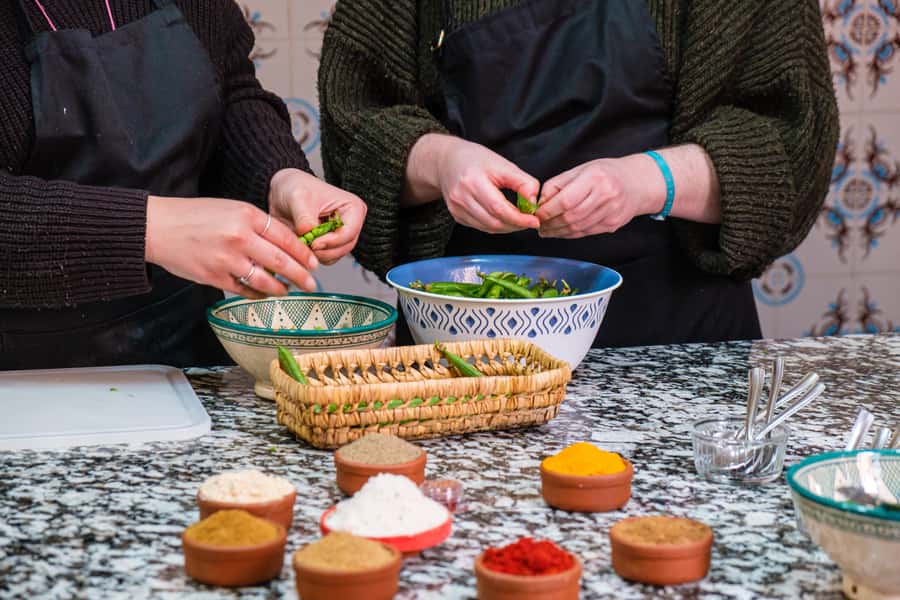
The team is a major part of the experience. The class has been led by cooks and hosts including Leyla, Kaoutar, Fatiha, Fatima, Bouchra, Fatiha, and Saida, with additional assistants helping in the market and kitchen. Names and staffing can change, but the format remains centered on local cooks teaching food they know well.
Kaoutar has been singled out for her clear teaching, humor, music, and lively personality. Leyla has provided useful explanations of Moroccan culture and cuisine, while Bouchra and Fatiha have been praised for patience and careful guidance. Several sessions have been run by women sharing recipes described as passed down through their families.
You can expect plenty of conversation while you work. The discussion may cover spices, food customs, ingredient preparation, and Moroccan culture. English and Arabic are listed as the available languages. Some instructors also use more than one language while making sure everyone can follow along.
The tone is friendly and social. People who arrive as separate couples or families often work at the same table and share the final meal. That is useful if you want a cultural activity with conversation, not just a technical lesson.
Still, this is a group class, not a private chef lesson. With up to 10 participants, you will share tasks and equipment. The size is small enough for personal help, but if you want complete control of every dish, a private class would be a different type of experience. No private option is specified here.
More Markets in Marrakech
- Moroccan Cooking Class & Marrakech Market Visit with Chef Khmisa
★ 5.0 · 1,504 reviews - Evening Marrakech: Gastronomic and Market Tour Inside the Medina
★ 4.5 · 283 reviews - Moroccan Cooking Class with Market Visit and Meal
★ 5.0 · 196 reviews
Market to table is the real value
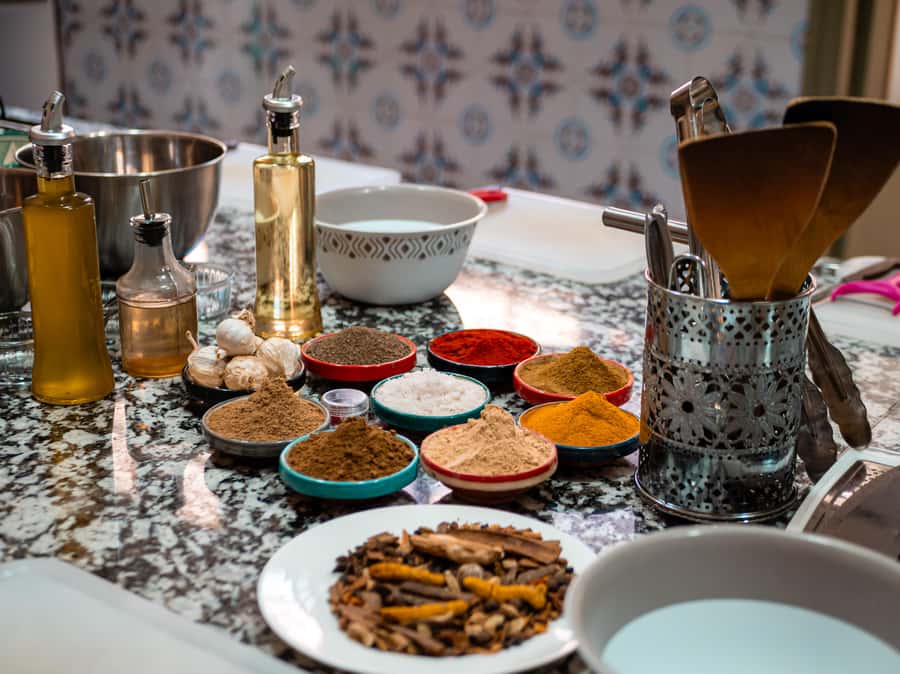
At $57 per person, this is not the cheapest way to eat lunch or dinner in Marrakech. You can find a meal for much less. The value comes from the four-hour structure and the number of parts included: a guide, the cooking lesson, ingredients, tools, tea and coffee, bottled mineral water, the meal, Wi-Fi, and a recipe PDF.
You are also paying for access to a local market and for instruction that helps you understand what you are eating elsewhere in Morocco. If you plan to order tajine repeatedly during your trip, learning how the spices, vegetables, and cooking method work can make those restaurant meals more interesting.
The final meal is not an extra tasting. It is the food you helped prepare, served in the salon after the group has finished cooking. That creates a satisfying link between the market and the table. You see the raw ingredients, take part in preparing them, then sit down to eat the finished dishes.
The menu can produce a generous amount of food. Several sessions included multiple starters, two tajines, dessert, and tea. For many people, lunch or dinner alone would not justify $57, but the class, instruction, market visit, and recipes make the price easier to defend.
A practical look at the four-hour rhythm
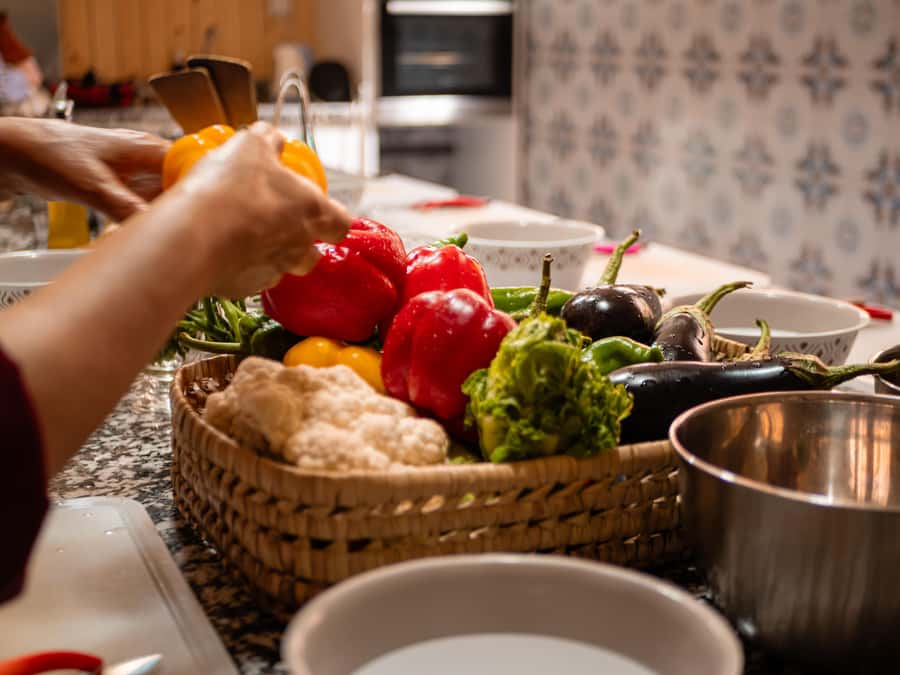
The morning generally follows this pattern:
- Tea and an introduction to the class
- A walk to the local market
- Selection of vegetables, herbs, chicken, and other ingredients
- Return to the cooking school
- Preparation of tajines, salads, starters, and dessert
- Short breaks while food cooks
- A shared lunch in the salon
- Recipes sent by email after the class
The evening version follows the same kitchen and dining format but starts at 4:30 pm and skips the market. The total duration is four hours, so the schedule gives enough time for preparation, cooking, and a proper meal rather than a rushed demonstration.
Wear comfortable clothes. You may spend time standing, chopping, and moving around the kitchen, though the available information does not set out a detailed accessibility policy. Bring a camera if you want pictures of the market, ingredients, or finished dishes, but ask before photographing people.
The cooking school provides the tools and ingredients. Coffee, tea, and bottled mineral water are included, which is helpful during a long kitchen session. Free Wi-Fi is also available, though it is not a reason to choose the class.
Free cancellation is available up to 24 hours before the start for a full refund. You can also reserve and pay later, which is useful when your Marrakech plans are still shifting.
Who will enjoy this class most
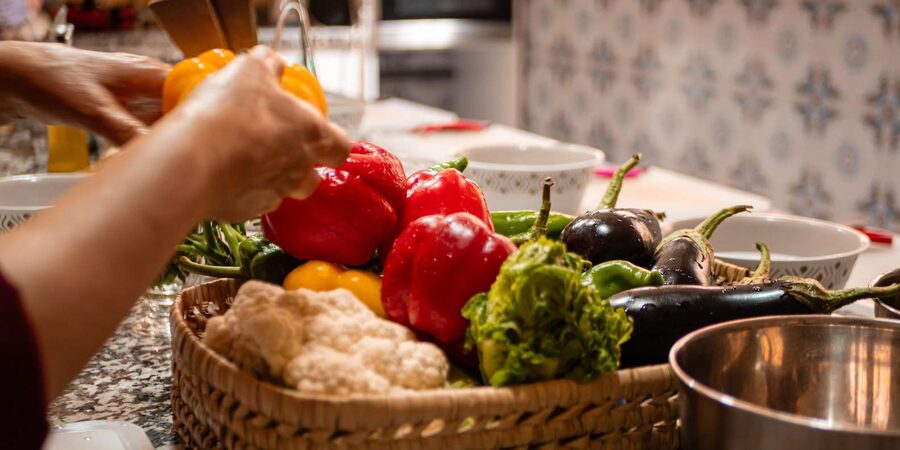
I would choose this for anyone who wants to understand Moroccan food beyond ordering it in a restaurant. It works especially well for couples, families, first-time cooks, and people who enjoy meeting others around a table.
Children can take part, though the activity is still a four-hour cooking session with chopping and hot cookware. One nine-year-old joined a class and enjoyed it, but parents should decide if their child will be comfortable following kitchen instructions.
The class also suits people who are not especially interested in cooking. The market, food customs, spice explanations, and shared meal make it a cultural activity as much as a lesson. You can come for the social setting and still leave with a better sense of how Moroccan meals are built.
Food restrictions need advance attention. The supplied information confirms that a nut-free dessert substitution has been made in at least one class, but it does not provide a complete allergy or dietary policy. Contact the provider before booking if you need vegetarian, vegan, gluten-free, halal, or other specific arrangements.
You should skip this if you want a quiet, private meal with no participation. You also may prefer the evening session if you do not want a market visit. The morning class offers more, but it also takes up most of the first half of your day.
What you take home besides the recipes
The PDF recipe file is one of the most useful extras. It gives you a chance to recreate the dishes after returning home, when the memory of the class is still fresh. Keep an eye on your inbox after the activity, and check your spam folder if it does not arrive promptly.
One person reported not receiving the recipes because of internet problems, so it is sensible to save the menu details during the class. You can also ask the team to confirm your email address before leaving.
The bigger takeaway is technique. You learn how Moroccan cooks use spice blends, how vegetables are prepared for salads and side dishes, and how tajine cooking depends on slow, measured preparation. Those lessons are more valuable than a single recipe because you can apply them to other dishes.
Should you book Flavors of Marrakech?
Yes, if you want a hands-on cultural activity with a proper meal at the end. The strongest version is the 10:30 am class, when you walk to the market, help choose the ingredients, and return to cook lunch. The four-hour length, small group, local instructors, and recipe PDF make $57 a fair price for more than just a meal.
Choose the 4:30 pm class if dinner fits your schedule better or you have already explored the souks. Just remember that the market visit is not included in the afternoon.
I would book this early in a Marrakech stay. You will gain useful background for the rest of your meals, and the class gives you a relaxed break from the Medina’s busy streets. Bring comfortable clothes, arrive at Flavors of Marrakech next to BIM, and come ready to chop, season, ask questions, and eat what you make.
FAQ
How long does the Marrakech cooking class last?
The class lasts four hours.
What time does the morning class begin?
The morning session starts at 10:30 am.
What time does the evening class begin?
The evening session starts at 4:30 pm.
Is the market visit included in every session?
No. The local market visit is included with the morning session only.
Where is the meeting point?
Meet at Flavors of Marrakech, located next to the BIM store. Look for the Flavors of Marrakech sign and enter to meet the staff.
What languages are available?
The live guides speak English and Arabic.
What is included in the price?
The price includes the guide, cooking class, ingredients, cooking tools, meal, coffee, tea, bottled mineral water, Wi-Fi, and a PDF of the recipes used.
Is transportation included?
No. Transportation to and from the activity is not included.
Can I cancel the booking?
Yes. You can cancel up to 24 hours in advance for a full refund. You can also reserve now and pay later.
More Cooking Classes in Marrakesh
- Marrakech: Moroccan Cooking Class with a Local Family
★ 4.9 · 668 reviews - Marrakech: Moroccan Cuisine Cooking Class in Local Home
★ 4.8 · 508 reviews - Marrakech: Moroccan Cooking Workshop at La Maison Arabe
★ 5.0 · 446 reviews - Marrakech: Tajine Cooking Class in a Traditional Riad
★ 4.8 · 424 reviews
More Shopping Tours in Marrakech
- Marrakech: Exclusive Private Shopping Adventure in The souks
★ 4.9 · 77 reviews - Marrakech & Souk Shopping Tour.
★ 4.8 · 62 reviews - Marrakech: Hidden Souks Shopping Tour with Private Guide
★ 4.1 · 53 reviews - Marrakech: Medina Souks, Hidden Markets and Shopping Tour
★ 4.8 · 33 reviews
Just listed out of Marrakesh
- Marrakech: Ouzoud Waterfalls Trip, Guide & Boat + Lunch★ 4.7 · 33 reviews
- Marrakech: Vibrant Dinner Show at The Lotus Club★ 3.9 · 33 reviews
- From Marrakech: Small Group To Essaouira & Medina Day Trip★ 4.3 · 33 reviews
- From Marrakech: 3-Day Merzouga and Sahara Desert Tour★ 4.5 · 33 reviews
- Marrakech: Private Souks Tour with Tea and Traditional Snack★ 4.6 · 33 reviews
- Marrakech: Medina Souks, Hidden Markets and Shopping Tour★ 4.8 · 33 reviews
- 2 Days Desert Agafay and Atlas Mountains Trek From Marrakech★ 3.8 · 33 reviews
- Agadir/Taghazout : Marrakech Guided Tour old Medina & Souks★ 3.7 · 34 reviews
Marrakech Tours, compared.

Agafay Desert Sunset, Camel Ride, and Dinner Show
Read our review →
Agafay Desert Quad & Camel Rides with Dinner Show
Read our review →
Agafay Desert Quad Biking Tour with Dinner-Show
Read our review →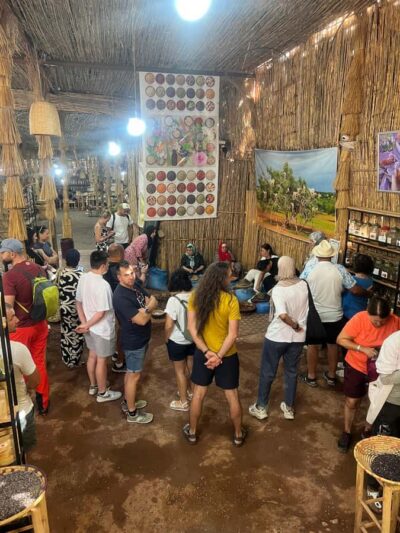
Atlas Mountains, Ourika Valley, Waterfall & Lunch
Read our review →

Quad Bike Tour to Palm Oasis and Jbilat Desert
Read our review →Browse the lists this tour appears in