
Reviewed · MARRAKECH TOURS
Evening Marrakech: Gastronomic and Market Tour Inside the Medina
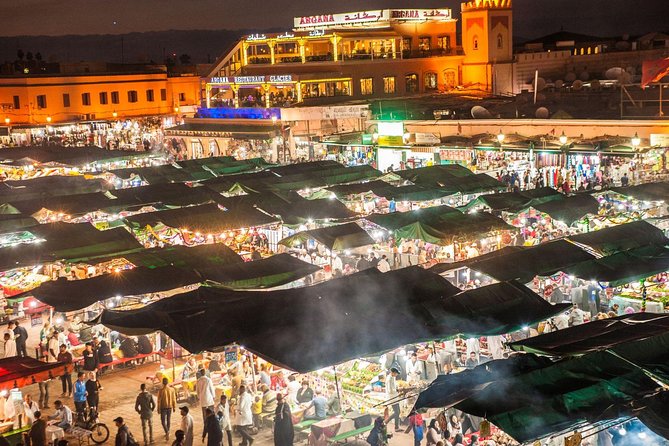
Marrakech’s food culture makes the most sense after sunset, when Djemaa El Fna fills with smoke, lantern light, storytellers, and food stalls. This 3.5-hour walk takes you beyond the square to spice sellers, meat counters, souks, and local dishes such as ghoulal, a herbal snail soup.
I like the way the tour gives you a safe introduction to the Medina, especially if you arrive in Marrakech feeling lost in its maze. I also like the small maximum of 12 people and the chance to ask guides such as Atika, Brahim, Jihad, or Ibrahim about food, customs, bargaining, and getting around.
The main caution is that this is a street-food experience, not a polished restaurant crawl. Some stops are very simple, and the amount and quality of food can vary. If you need gluten-free food, this tour is not suitable, and you should report vegetarian or vegan needs at least 24 hours ahead.
Key points to know before booking
- Snail soup is part of the food adventure: Ghoulal is a real local specialty, served with herbs and spices.
- The evening ends with dinner in Djemaa El Fna: You eat as the square reaches its loudest and most theatrical hour.
- You visit working markets, not only tourist shops: The route includes meat stalls, spice sellers, Mellah Market, and Souk Semmarine.
- The group is capped at 12 people: That usually gives you a better chance to hear the guide and ask questions.
- The tour is best early in your stay: It helps you get your bearings in the Medina and gives you ideas for later meals.
- Food expectations should stay flexible: The experience is local and informal, with mixed reports about cleanliness, portion size, and value.
Starting at Djemaa El Fna after sunset
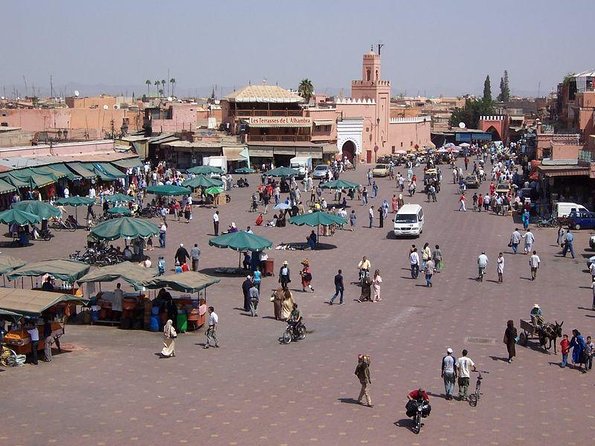
The meeting point is Hôtel Restaurant Café de France at Djemaa El Fna, with a 6:00 pm start. This is a practical location, since the square is the heart of the old Medina and easy to recognize, though it can feel confusing at first. Look for your guide carefully, since one concern raised about the meeting was that the guide was not easy to identify.
The tour begins with roughly 15 minutes in the square. During the day, Djemaa El Fna has one personality. At night, it changes quickly as food stalls light up and crowds arrive for snacks, wandering, and entertainment.
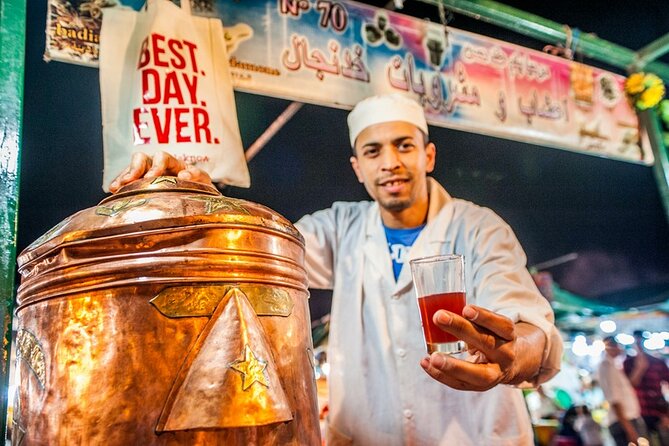
You might see storytellers, dancers, water sellers, snake charmers, and other performers. The square can be thrilling, but it can also be noisy and crowded. Having a local guide beside you matters here. The best guides do more than point at the action. Brahim, Atika, Jihad, Yousif, and Ibrahim were each praised for explaining local customs, food, clothing, women’s traditions, and practical Medina etiquette.
If this is your first evening in Marrakech, the timing is useful. You get an immediate sense of how the city works after dark, without having to choose your first food stall alone.
More Markets in Marrakech
- Marrakech: Traditional Moroccan Cooking Class & Market Visit
★ 4.8 · 1,861 reviews - Moroccan Cooking Class & Marrakech Market Visit with Chef Khmisa
★ 5.0 · 1,504 reviews - Marrakech: Moroccan Cooking Class with Market Visit and Meal
★ 4.9 · 347 reviews
Riad Zitoun Jdid and the quieter edges of the Medina
From the square, the walk continues into Riad Zitoun Jdid for about 15 minutes. This area has traditional riads, small bistros, hammams, pottery shops, kaftans, leather bags, and rooftop terraces.
The route also passes near the Bahia Palace and Dar Si Siad Museum, though the tour does not include admission to either attraction. The point here is not sightseeing inside a palace. It is seeing how homes, shops, restaurants, and old religious sites share the same narrow streets.
I find this part useful because it gives food a cultural setting. Moroccan cooking is not separate from the market or the home. The same spices sold in small piles along the street later appear in tagines, soups, meat dishes, and tea.
Do not expect a long history lecture at every corner. The tour moves at a walking pace, with food and everyday life as its main subjects. You will have time to ask questions, but the depth depends heavily on the person leading your group.
Mellah Market and the business of buying food
The 45-minute stop in Mellah is one of the more useful parts of the evening. Mellah was once the city’s Jewish quarter, and the area still includes the Lazama Synagogue and Miaara Jewish cemetery. The tour focuses more on the market streets than on formal sightseeing, but the setting adds important context.
At Mellah Market, you see produce and meat being bought for local kitchens. The route includes a poultry and beef market where you can watch buyers and sellers bargain. This is not staged entertainment. Haggling is part of daily commerce, and watching it gives you a better sense of how food reaches the table.
You may find this stop confronting if you prefer a tidy, modern market. Meat displays can be direct and unvarnished. That is part of the reason the experience feels different from a standard restaurant tour, but it is also why I would not recommend it to anyone uncomfortable around raw meat or animal parts.
The market visit also helps explain why certain Moroccan dishes use every part of the animal. Sheep’s head and cow’s hoof are not novelty foods invented for tourists. They belong to a wider cooking tradition where thrift, flavor, and texture all matter.
Moroccan spices from saffron to turmeric
The spice market is the tour’s strongest teaching stop. You see colorful piles of saffron, paprika, cardamom, anise, cumin, and turmeric while your guide explains how they are used.
Moroccan food is not simply hot or heavily spiced. Spices often add perfume, warmth, sweetness, earthiness, or color. Cumin may accompany meat or vegetables. Anise can bring a sweet herbal note. Turmeric adds color and a gentle earthiness. Saffron is prized for its fragrance and costs more than many everyday spices.
This is also where a good guide can save you money later. The tour includes practical tips about souks and food areas, including help with future purchases. You still need to compare prices and avoid buying anything you do not want, but a little context makes the spice stalls easier to understand.
The tour is not designed as a shopping trip. You should not feel pressured to buy. Its value is in learning what you are looking at before you return to the souks on your own.
More Shopping Tours in Marrakech
- Marrakesh: Guided Souk Shopping Tour with a Local Guide
★ 4.9 · 651 reviews - Shopping in the Souks of Marrakech Private Tour
★ 5.0 · 620 reviews - Souks Shopping Tours
★ 5.0 · 395 reviews - Marrakech Shopping Tours : Private Souks Tour
★ 5.0 · 345 reviews
Three market tastings, including ghoulal
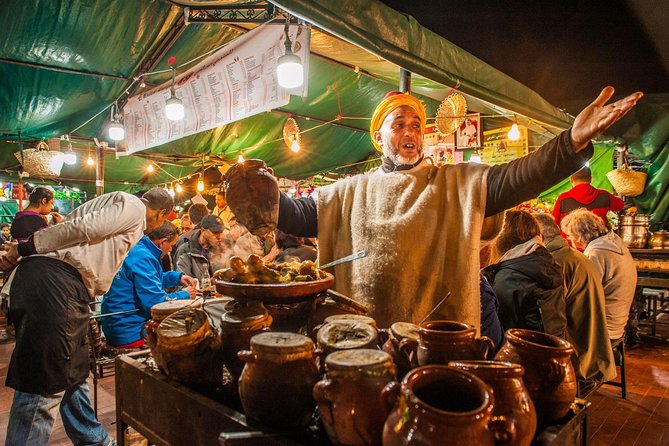
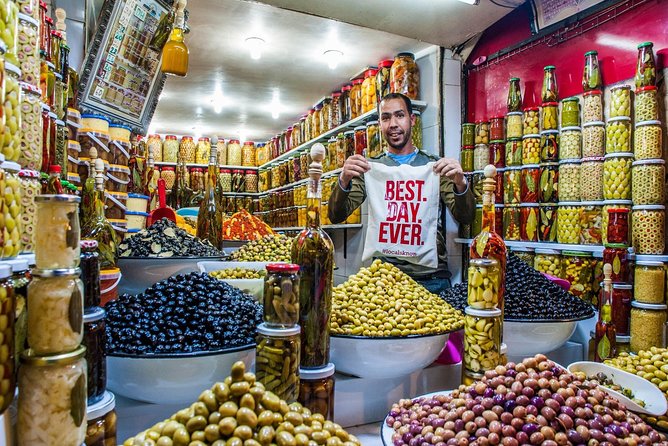
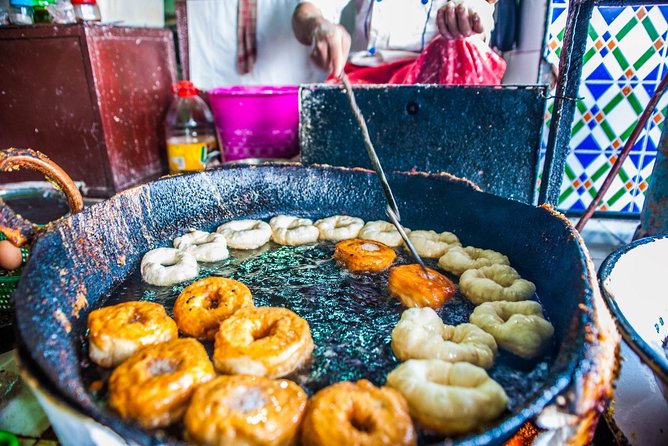
The experience includes three typical tastings in the market, followed by a local dinner. The exact mix can vary, but the food stops may include nuts, olives, pastries, harira soup, spiced sardines, and other Moroccan specialties.
Ghoulal, or Moroccan snail soup, is the most unusual tasting. It is served hot with herbs and spices and is eaten from small bowls. The flavor is often more herbal and peppery than strongly fishy or earthy, but your reaction will depend on your taste.
The tour may also introduce you to sheep’s head or cow’s hoof. These are traditional foods, but you are not required to eat every dish. If you are curious, try a small amount. If not, tell the guide plainly and move on.
Portions can be modest. One poor experience described a tiny shared plate of bones as dinner, while other experiences included several types of food and a satisfying meal. I would book this for variety and access, not because it replaces a full evening of dining at a carefully chosen restaurant.
Food safety deserves common sense. Eat food that is served hot when possible, use hand sanitizer if you carry it, and tell the guide quickly if something does not suit you. The tour provider says it can cater to vegetarians and vegans with 24 hours’ notice, but it cannot cater to gluten intolerance.
Chez Lamine and the famous meat pots
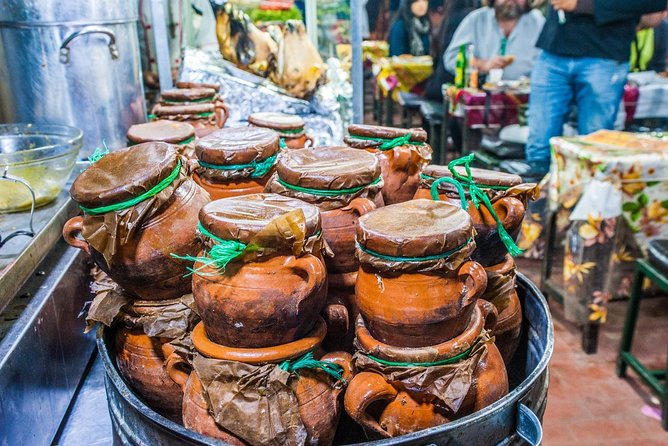
The longer food stop is at Chez Lamine Hadj Mustapha, located in Mechoui Alley behind the Alhambra restaurant in Djemaa El Fna. The stand is easy to recognize by its sheep’s heads and tangia cooking pots.
The stand is known for mechoui and beef cooked in pots. Tangia is associated with slow cooking and the use of hot ashes, producing tender meat and concentrated juices. The bread is useful here, since it soaks up the juices at the bottom of the bowl.
This stop is not elegant. It is a basic local food counter in a very public setting. That may be exactly what you want, especially if you prefer to see how ordinary meals are served rather than sit in a decorated riad.
It is also the point where expectations matter most. Some people consider the meal authentic and delicious. Others find the food too plain or the portion too small for the price. The tour includes dinner, but additional food and drinks are not included, so bring some flexibility if you expect a large meal.
Souk Semmarine and dinner at the square
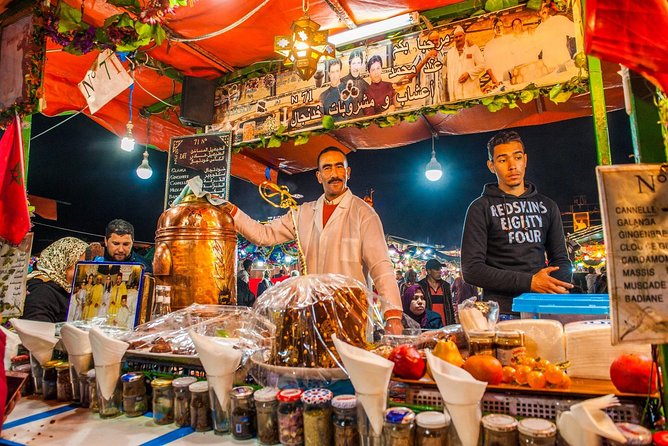
Souk Semmarine is the main shopping artery of the Medina. The final hour of the walking route takes you through a corridor of stalls selling the usual souk goods, with food, crafts, clothing, and household items competing for your attention.
The souk can feel intense. Sellers may call out, scooters may pass through narrow lanes, and the route can be hard to follow on your own. That is why this tour works well near the start of a Marrakech stay. After one guided walk, the Medina’s layout feels less mysterious.
The evening finishes with a traditional Moroccan dinner in or near Djemaa El Fna. You eat while the square reaches its peak, with entertainers, food stands, peddlers, and crowds all around you.
This is the tour’s big payoff, but it is also the least quiet meal you will have in Marrakech. If you want a peaceful dinner with slow service and careful presentation, choose a restaurant instead. If you want to eat while the city performs around you, this setting is hard to match.
What the $46.08 price really buys you
At $46.08 per person, the tour is not cheap for a meal in Marrakech. The food alone may not equal the price, especially if you receive small tastings or do not enjoy the more traditional dishes.
You are paying for access, direction, and interpretation. The guide takes you to places you might pass without noticing, explains ingredients, handles the route through crowded streets, and gives you practical advice for later meals and shopping.
The small-group limit of 12 improves the value. A strong guide can answer questions and adjust the pace. Several guides, including Atika, Brahim, Jihad, and Ibrahim, were praised for clear explanations and friendly help. One private booking received especially positive feedback because the guide could tailor the food to one person’s dietary needs.
Still, results can vary. Some accounts describe an attentive guide and a generous range of tastings. Others describe a late start, little commentary, cold soup, poor hygiene, or an underwhelming dinner. That inconsistency is the biggest reason to book with realistic expectations.
The tour is carbon neutral and operated by an eco-certified company, which may matter to you when comparing similar activities. Group discounts are available, and confirmation is sent at booking.
Who should book this food walk?
I would choose this tour if you are visiting Marrakech for the first time, enjoy trying unfamiliar food, and want help finding your way through the Medina. It is especially useful on your first or second night, when you need a basic map of the square and souks.
It suits curious eaters who are willing to sample snails, sardines, soups, olives, pastries, and traditional meat dishes. You can always decline a particular bite, but this is not the right activity if you want only familiar food.
Families can join, and children under six are free. The walk is also a good match for solo visitors who want company without booking a fully private guide.
I would hesitate if your main goal is fine dining, a large meal, strict food control, or a quiet evening. Anyone with gluten intolerance should skip it. Vegetarians and vegans should give notice at least 24 hours in advance.
The tour has a 4.7 rating from 283 ratings, with 92 percent recommending it. Those numbers suggest a strong overall experience, but the low ratings point to a real issue: the guide and food stops can shape the evening more than the printed plan does.
Should you book the Marrakech Gastronomic and Market Tour?
Book it if you want an active, informal introduction to Marrakech food and Medina life, and you are comfortable with simple stalls and unfamiliar dishes. Its best features are the local market route, the spice lesson, the small group, and dinner in Djemaa El Fna at the height of the evening.
I would book it early in your stay and treat the $46.08 as the cost of a guided orientation with food, not as the price of a three-course restaurant meal. If possible, confirm the meeting details and your dietary needs before the 6:00 pm start.
For adventurous eaters, this can be a memorable first look at Marrakech. For cautious diners seeking polished service, it may feel basic and overpriced.
FAQ
How long does the tour last?
The tour lasts about 3 hours and 30 minutes, including the market tastings and traditional dinner.
What time does the tour start?
The tour starts at 6:00 pm.
Where does the tour meet?
The meeting point is Hôtel Restaurant Café de France at Djemaa El Fna, Rue des Banques, Marrakech.
Where does the tour end?
The activity ends back at the meeting point.
How many people can join the group?
The tour has a maximum of 12 travelers.
What food is included?
The price includes three typical market tastings and an authentic local dinner. Additional food is not included.
Is snail soup included?
Ghoulal, or Moroccan snail soup, is included as one of the specialties you may try during the tour.
Can vegetarians and vegans join?
Yes. The tour can cater to vegetarians and vegans, but you must provide the request at least 24 hours before the tour begins.
Can the tour cater to gluten intolerance?
No. The tour cannot cater to gluten intolerance.
Are young children allowed?
Yes. The tour is child-friendly, and children under six may join free of charge.
Is hotel pickup included?
No. Hotel pickup and drop-off are not included.
Can I cancel for a refund?
Yes. You can cancel at least 24 hours before the local start time for a full refund. Cancellations or changes made within 24 hours are not refunded or accepted.
More Shopping Trips in Marrakech
- Marrakech: Exclusive Private Shopping Adventure in The souks
★ 5.0 · 200 reviews - Moroccan Cooking Class with Market Visit and Meal
★ 5.0 · 196 reviews - Medina Of Marrakesh Shopping Tour
★ 3.5 · 97 reviews - Marrakech: Exclusive Private Shopping Adventure in The souks
★ 4.9 · 77 reviews
More Medina & Souk Walking Tours in Marrakech
- Marrakech: Bahia Palace, Saadian Tombs, Souk and Medina Tour
★ 4.7 · 4,974 reviews - Marrakech: Ben Youssef, Secret Garden, & Souks Walking Tour
★ 4.6 · 2,802 reviews - Marrakech: Colorful Medina Souks Guided Walking Tour
★ 4.7 · 2,470 reviews - Marrakech: Saadian Tombs & Bahia Palace, Medina Guided Tour
★ 4.6 · 1,989 reviews
Just listed out of Marrakech
- Marrakech: Ouzoud Waterfalls Trip, Guide & Boat + Lunch★ 4.7 · 33 reviews
- From Marrakech: Ourika Valley Trip, Waterfall Hike & Lunch★ 4.4 · 33 reviews
- Magical Dinner show and Quad bike In Agafay Desert Marrakech★ 4.5 · 33 reviews
- Moroccan Hands on traditional pastries & Tea class in Marrakech★ 4.5 · 33 reviews
- Marrakech: Quad excursion to the palm grove and Jbilets desert★ 4.5 · 33 reviews
- Marrakech: Vibrant Dinner Show at The Lotus Club★ 3.9 · 33 reviews
- From Marrakech: Small Group To Essaouira & Medina Day Trip★ 4.3 · 33 reviews
- From Marrakech: 3-Day Merzouga and Sahara Desert Tour★ 4.5 · 33 reviews
Marrakech Tours, compared.

Agafay Desert Sunset, Camel Ride, and Dinner Show
Read our review →
Agafay Desert Quad & Camel Rides with Dinner Show
Read our review →
Agafay Desert Quad Biking Tour with Dinner-Show
Read our review →
Atlas Mountains, Ourika Valley, Waterfall & Lunch
Read our review →

Quad Bike Tour to Palm Oasis and Jbilat Desert
Read our review →Browse the lists this tour appears in