
Reviewed · MARRAKECH TOURS
Marrakech: Moroccan Cooking Class with Amazing Local Chef!
Marrakech’s best cooking lesson is less about watching a chef perform and more about getting your hands busy. In four hours, you’ll prepare two Moroccan salads, a tagine, msemmen bread, and dessert, then sit down to eat what you made.
I like the warm opening: mint tea, pastries, and a welcome that feels personal rather than formal. I also like the clear, practical teaching from local chefs such as Chafik, Mehdi, Fatima, and Laila, who explain both the food and the family traditions behind it.
The one thing to consider is the meeting point. ArtEscape Marrakech, at door 312, may not have an outside sign, so use Google Maps and ring the bell. Confirm any pickup details before you go, since the standard instructions direct you to make your own way there.
Key points to know before you book
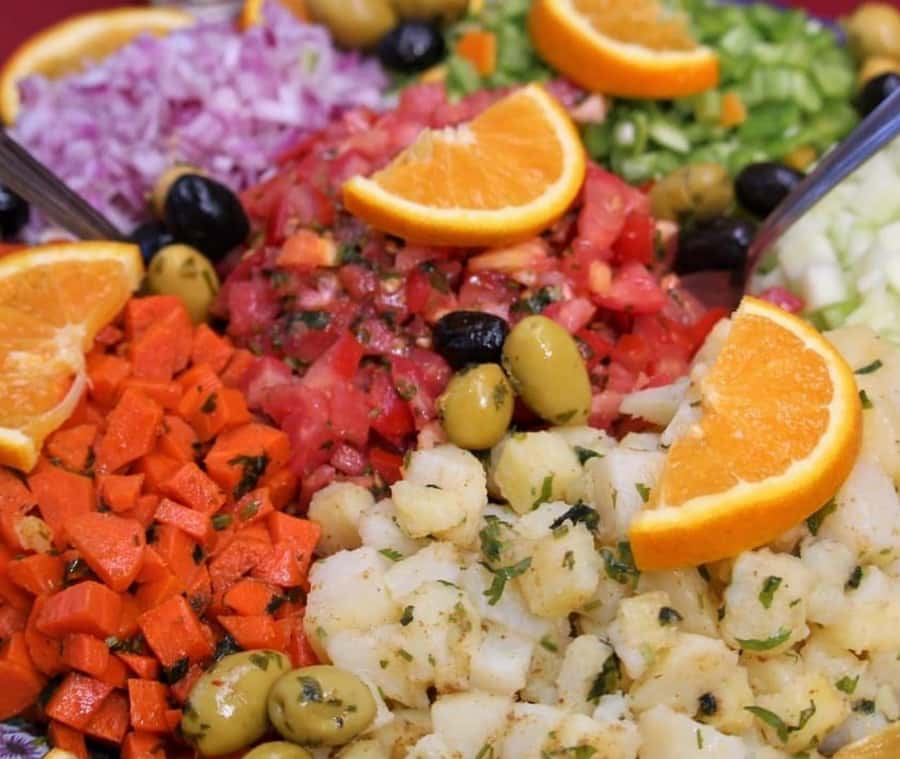
- You cook four parts of the meal: Two salads, a tagine of your choice, msemmen flatbread, and a dessert or sweet finish.
- The class is hands-on: You prepare ingredients, arrange tagines, make bread, and eat the finished meal together.
- The welcome sets the tone: Mint tea and pastries introduce Moroccan hospitality before the cooking begins.
- You learn family-style techniques: The chef explains spice balance, clay-pot cooking, bread making, and food customs.
- The session suits mixed groups: English, French, and Arabic support helps families and international groups take part.
- The practical details matter: The morning class runs from 10:30 a.m. to 2:30 p.m., and comfortable shoes are a good idea.
A four-hour route from tea ceremony to shared meal
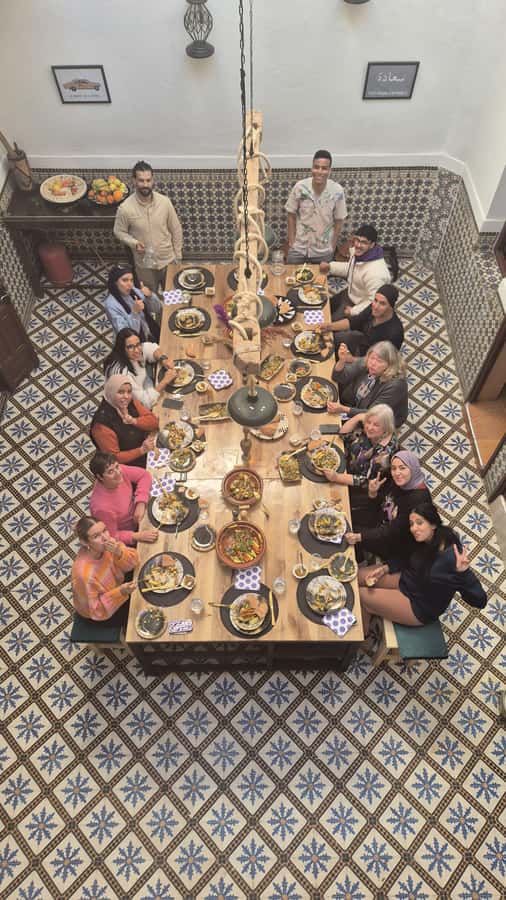
This experience follows a sensible rhythm. You arrive, settle in with tea, cook several dishes, and finish by sharing the food at the table.
The morning session runs from 10:30 a.m. to 2:30 p.m. Allow a little extra time before the start. The instructions ask you to arrive 15 minutes early, which gives you time for the welcome tea and introduction rather than rushing straight to the chopping board.
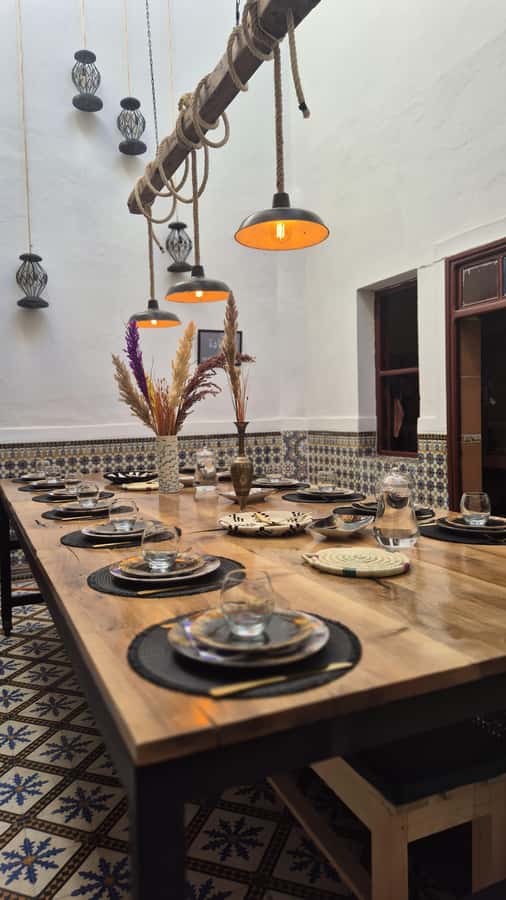
The setting is a traditional riad in Marrakech or a farmhouse, depending on the session. The location is part of the appeal. You are not simply standing in a classroom with a printed recipe. You cook in a setting designed to feel connected to Moroccan home life and hospitality.
The group atmosphere also matters. Some sessions are small enough for close attention, and one booking had a private-feeling class with plenty of time for questions. Group size can vary, so you should not assume every class will be private. Still, the format is built around participation rather than passive demonstration.
More Cooking Classes in Marrakech
- Marrakech: Moroccan Cooking Class with Pickup
★ 4.6 · 1,862 reviews - Marrakech: Traditional Moroccan Cooking Class & Market Visit
★ 4.8 · 1,861 reviews - Marrakesh: Moroccan Dishes Cooking Class with a Local Chef
★ 5.0 · 1,615 reviews
Mint tea, pastries, and a proper Moroccan welcome
The first taste is mint tea with pastries. This is not filler while people arrive. In Morocco, offering tea is a social ritual, and starting here gives you a little context before the practical work begins.
You get time to meet the chef and the other people in the group. That gentle beginning helps families and solo participants settle in, especially if they do not often cook with strangers.
The class is conducted in English, French, and Arabic. The exact balance will depend on the group, but the multilingual format is useful when people have different first languages. Instructions are meant to be clear and step by step, so you do not need prior cooking experience.
Several of the chefs are praised for their warmth and humor. Chafik, in particular, is described as patient and good at explaining the details without making the process feel difficult. Fatima, Laila, and Chaima also help create a friendly atmosphere. You should expect a class led by people who want you involved, not a stern professional kitchen.
Preparing two Moroccan salads

The salad course gives you an easy introduction to Moroccan flavor. Rather than presenting one large dish, the class includes two Moroccan salads, allowing you to see how vegetables, seasoning, and texture are handled in different ways.
This is a useful part of the lesson because Moroccan meals often include several small dishes alongside a main course. The salads are not treated as an afterthought. They help build a table with contrast: fresh vegetables, seasoned mixtures, sauces, and bread for scooping.
The exact salads can vary. One session included vegetable salads, while another prepared dishes alongside chicken and vegetable tagines. Do not book expecting a fixed menu down to every ingredient. Seasonal produce, dietary needs, and the chef’s plan can affect what appears on the table.
You work with fresh ingredients and cooking utensils supplied by the organizers. The value here is practical. You see how ingredients are prepared and seasoned, then you get to taste the result as part of the full meal.
Arranging the tagine and learning slow cooking
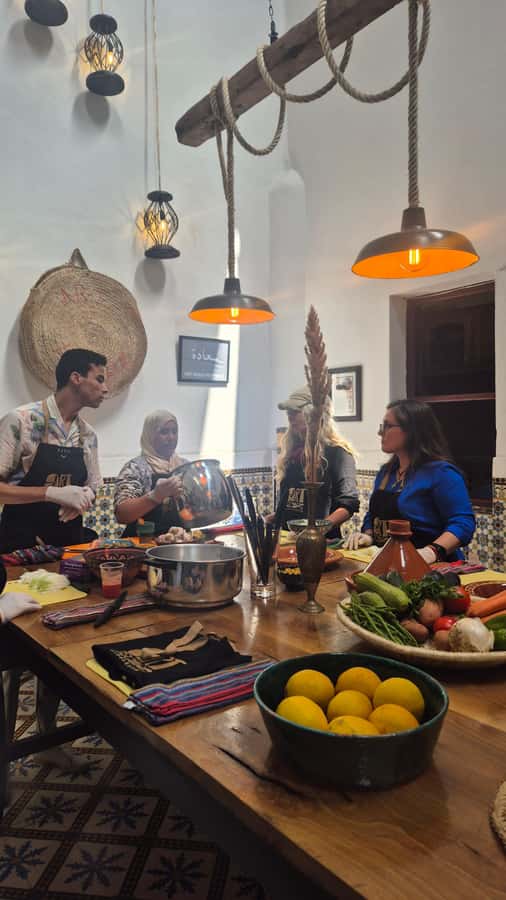
The tagine is the main event for many people, and the class gives you a chance to see how this famous dish is built before it reaches the table.
You prepare the ingredients, arrange them in the clay pots, and learn how the dish cooks slowly. The chef explains how Moroccan cooks balance spices so the food has aroma and depth without becoming a blast of heat.
That distinction is important. Moroccan cooking is often about fragrance, sweetness, savory notes, and gentle spice rather than sheer chili power. A good lesson helps you understand that cumin, herbs, preserved flavors, and other seasonings each have a role.
You can choose a tagine, with chicken and vegetable versions appearing in the menu examples. Vegetarian options are available, but you should state your needs when booking. If you have allergies or dietary restrictions, tell the organizers in advance rather than waiting until the class begins.
The clay pot is also part of the cultural lesson. It is not just an attractive serving dish. The shape supports slow cooking and creates the tender texture associated with tagine. Watching the pots cook while you move on to the bread gives the session a natural pace.
More cooking classes out of Marrakesh:
- Marrakech: Moroccan Cooking Class with a Local Family
★ 4.9 · 668 reviews - Marrakech: Moroccan Cuisine Cooking Class in Local Home
★ 4.8 · 508 reviews - Marrakech: Moroccan Cooking Workshop at La Maison Arabe
★ 5.0 · 446 reviews - Marrakech: Tajine Cooking Class in a Traditional Riad
★ 4.8 · 424 reviews
Making msemmen, the flaky Moroccan flatbread
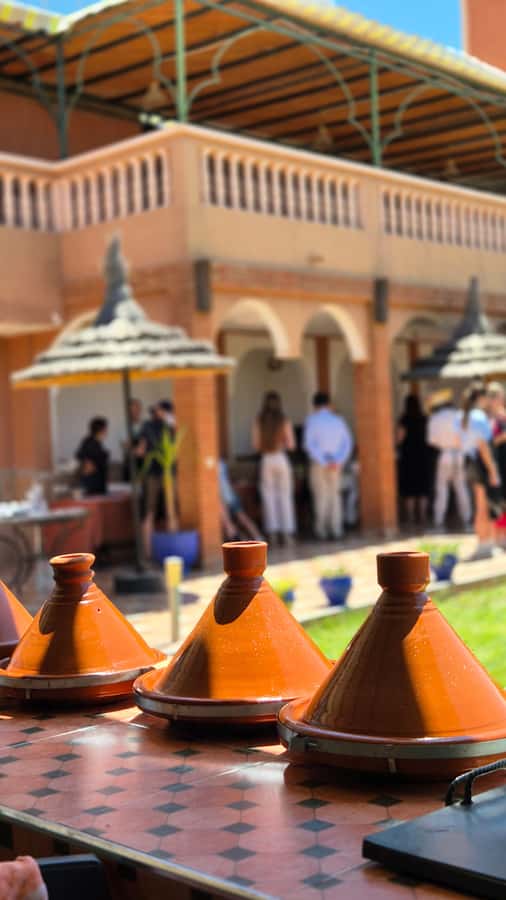
The bread lesson is one of the most useful parts of the experience. Msemmen is a Moroccan flatbread with a layered, flaky texture, and making it requires a different kind of skill from preparing a salad or tagine.
You shape the dough, work with semolina flour, and cook your own piece. The process may look simple when an experienced cook does it, but the folding and handling take attention. That is precisely why it is worth learning in person.
The bread is served with accompaniments such as honey, nut butter, and sunflower oil. It can be enjoyed while the tagines finish cooking, so you get something fresh to eat during the waiting period.
This is also a recipe you can try at home. Recipe cards are included, and the cooking class is designed to give you more than a pleasant meal. You leave with instructions and a better sense of how the dough should feel and how the bread should cook.
Wear comfortable shoes. You will be on your feet for much of the preparation, and loose, practical clothing makes more sense than dressing for a formal lunch. Aprons are used during the class, but cooking still involves flour, oil, and food preparation.
The sweet finish and what may appear on the table
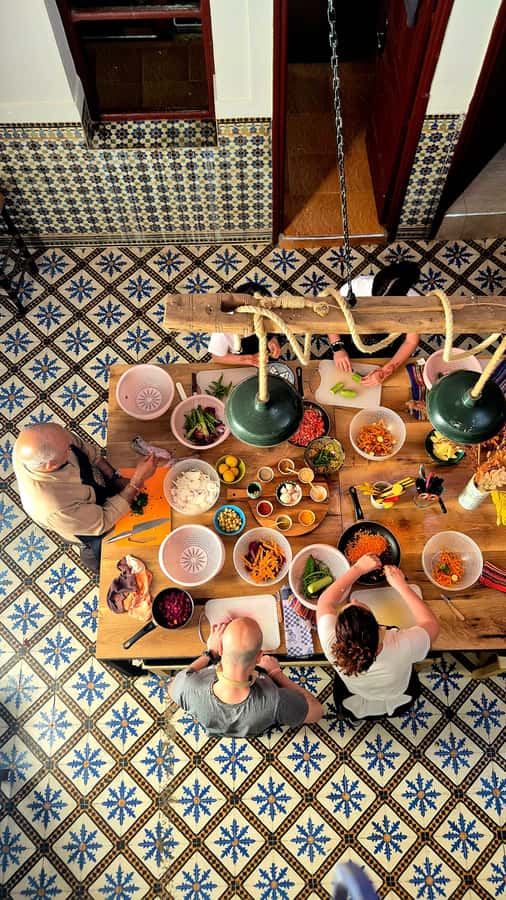
The final course is described as a dessert, though the exact finish may vary. Moroccan pastries can appear, and a blended beetroot, orange, lemon, and mint juice has also been served as a sweet ending.
This is the one part of the menu where you should keep expectations flexible. If you are hoping for a complex pastry lesson, the dessert may not always be the most elaborate course. The main teaching focus is the tagine, salads, and msemmen.
Still, the juice is a clever Moroccan-style finish. Beetroot gives it color and earthiness, while orange, lemon, and mint brighten it. It is a lighter ending after a meal that includes bread and a slow-cooked main dish.
If dessert is especially important to you, ask what will be prepared on your date. That small question can help you decide if the menu suits your tastes.
Sitting down to eat what you prepared
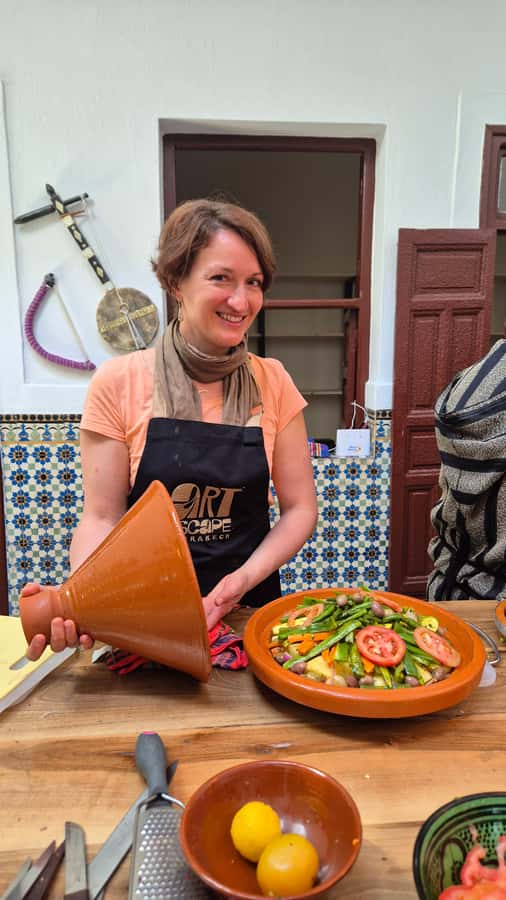
After the cooking, you sit together and eat the meal. This shared dining time is more than a reward for finishing the work. It lets you compare the different parts of the meal and understand how Moroccan dishes are meant to sit together.
The tagine provides the warm center. The salads bring freshness. Msemmen adds a rich, flaky bite, and mint tea keeps the Moroccan rhythm going. You can taste the seasoning with the benefit of having handled each ingredient yourself.
I find this format more useful than a restaurant meal when you want to learn. In a restaurant, you can enjoy a good tagine but may not know why it tastes the way it does. Here, you have seen the preparation, asked questions, and watched the dish develop.
The staff also take care of clearing and washing during parts of the meal, allowing you to sit at the table with the group. That keeps the final stage relaxed and social rather than turning it into another chore.
What makes the cultural side worthwhile
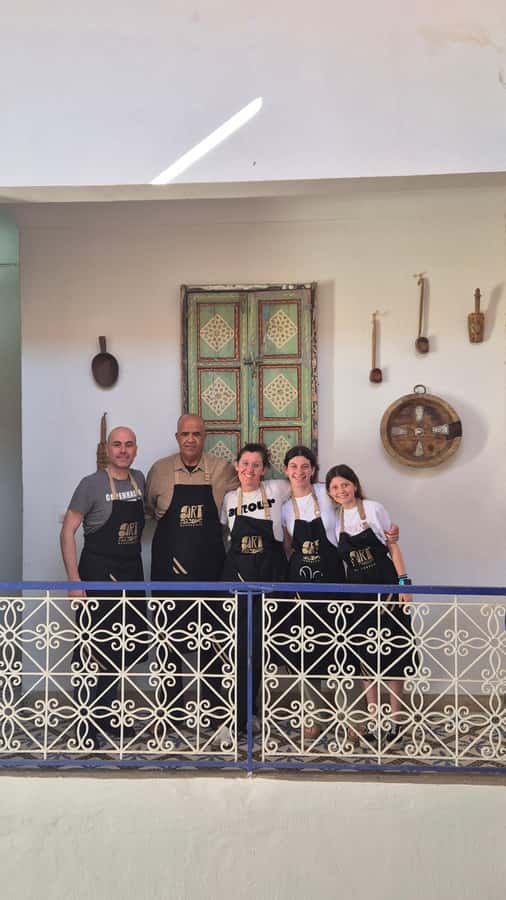
The best part of this experience is the connection between cooking and daily life. The chef shares stories about family traditions, Berber cooking methods, Moroccan food customs, and the influence of North African and Mediterranean flavors.
You are not simply collecting dishes. You are learning why Moroccan meals often involve sharing, why bread is central to the table, and how food traditions pass from one generation to the next.
The Berber techniques are especially meaningful for people who want more than a standard tourist menu. The class presents cooking as a family skill shaped over time, rather than as a set of exotic ingredients arranged for visitors.
The conversations also seem to be part of the lesson. You can ask questions about the food, the spices, and Moroccan family life. For children and teenagers, that can make the culture easier to understand than a museum display or a formal lecture.
The location and finding door 312
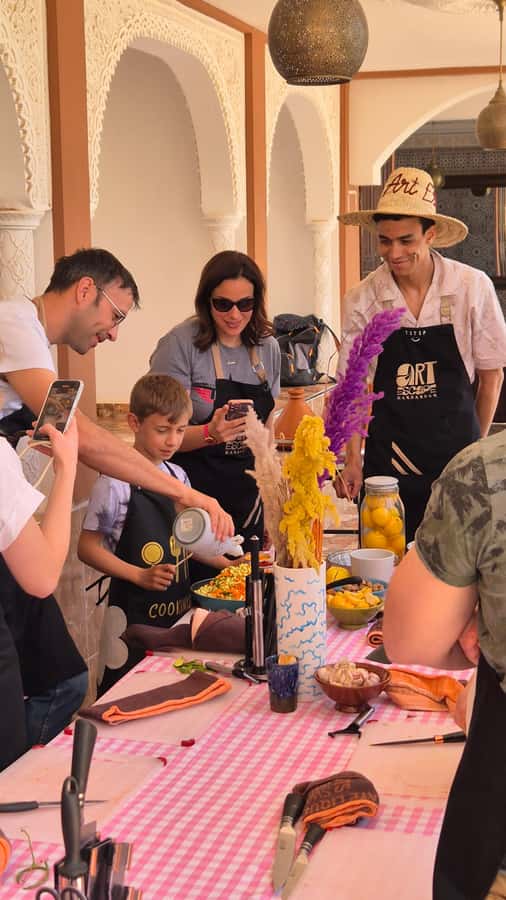
The meeting instructions are clear, but you need to pay attention. Enter ArtEscape Marrakech into Google Maps for the exact pin and aim for door number 312.
The building may not currently have an exterior sign. If you arrive and think you are in the wrong place, ring the bell rather than walking away. This is a small detail, but it can prevent an unnecessary delay.
Uber and InDrive are suggested as easier options than regular taxis. The standard meeting arrangement is to make your own way to the location, so check your booking carefully if you expect a hotel pickup. Some sessions have included pickup and drop-off, but you should not assume that is part of every reservation.
The class is wheelchair accessible. If accessibility is important for your visit, provide accurate contact details and any special requests when booking so the team can confirm the arrangements.
Is $45 a fair price?
At $45 per person, this is a strong value if you want both a meal and a useful activity. The price includes the chef, ingredients, utensils, tea ceremony, four-course cooking session, shared meal, mint tea, and recipe cards.
You are also paying for several hours of attention and cultural explanation. A typical restaurant meal gives you food for one sitting. This class gives you techniques you can repeat, including tagine preparation and msemmen bread.
The value is greatest for couples, families, and small groups who enjoy taking part rather than simply being served. It also works well for a rainy or very hot day when an indoor cooking activity gives your Marrakech schedule a change of pace.
Transport may affect the total cost. Since the meeting point instructions encourage Uber or InDrive, budget for your own ride unless pickup has been confirmed. That is not a serious flaw, but it is worth checking before you compare this class with an option that includes transfers.
Who should book this cooking class?
This is a good choice for first-time visitors who want an introduction to Moroccan food without needing specialist cooking skills. The step-by-step guidance makes it accessible, and the meal gives you an immediate reward.
Families are a natural fit. Teenagers can chop, shape bread, and help assemble the tagine, while the shared table creates an easy way to spend time together. Babies under one year old are not suitable for the activity, and the four-hour duration may be tiring for very young children.
Vegetarians can take part, provided they communicate their needs in advance. The menu includes vegetable tagine options, but allergies and restrictions should be discussed during booking.
You should also book if you like meeting people from different countries. Cooking gives a group something simple to do together, and the multilingual staff help make participation easier.
This may not be your best pick if you want a short demonstration, a highly formal chef-led lesson, or a guaranteed elaborate dessert. It is a relaxed, social class with several dishes, not a professional culinary certificate.
Practical advice for a smoother morning
Arrive 15 minutes early for the tea and introduction. Use Google Maps rather than relying only on street signs, and remember door 312.
Wear comfortable shoes and bring a camera if you want photos of the setting, ingredients, and finished dishes. Pets, alcohol, and drugs are not allowed.
Tell the organizers about allergies, vegetarian needs, and other dietary requests at the time of booking. The chef can then plan the session more effectively.
The activity has free cancellation up to 24 hours before the start, and you can reserve now and pay later. That is useful when your Marrakech plans are still moving, but you should still confirm the meeting details after booking.
Should you book it?
I would book this class if you want a friendly, hands-on introduction to Moroccan cooking and have four hours to spare. The strongest reasons are the personal teaching, the chance to make msemmen and tagine yourself, and the shared meal in a traditional setting.
The main cautions are simple: confirm transport, expect the dessert to vary, and allow time to find an unsigned entrance. At $45, the combination of food, instruction, tea, cultural stories, and take-home recipes makes this a worthwhile Marrakech activity for families, couples, and curious home cooks.
FAQ
How long does the Moroccan cooking class last?
The class lasts four hours. The morning session runs from 10:30 a.m. to 2:30 p.m.
What dishes will I prepare?
You will prepare two Moroccan salads, a tagine of your choice, Moroccan msemmen bread, and a dessert or sweet finish. The exact dessert may vary.
Which languages are spoken during the activity?
The guide or chef can conduct the activity in English, French, or Arabic.
Is a vegetarian option available?
Yes, vegetarian options are available. Tell the organizers about vegetarian needs, allergies, or other dietary restrictions when booking.
Where is the meeting point?
Use Google Maps and search for ArtEscape Marrakech for the exact location. The door number is 312, and you should arrive 15 minutes early. The building may not have an outside sign, so ring the bell when you arrive.
Can I cancel or pay later?
You can cancel up to 24 hours before the activity for a full refund. Reserve now and pay later is also available.
More Workshops in Marrakesh
- Marrakech: Pottery Workshop with Moroccan Tea
★ 4.8 · 756 reviews - Marrakech: Moroccan Cooking Class with Market Visit and Meal
★ 4.9 · 347 reviews - Marrakech: Atlas Mountains Cooking Class with Berber Family
★ 4.9 · 299 reviews - Marrakech: Moroccan Cooking Class for vegetarians and vegan
★ 4.9 · 156 reviews
Just listed out of Marrakesh
- Marrakech: Ouzoud Waterfalls Trip, Guide & Boat + Lunch★ 4.7 · 33 reviews
- Marrakech: Vibrant Dinner Show at The Lotus Club★ 3.9 · 33 reviews
- From Marrakech: Small Group To Essaouira & Medina Day Trip★ 4.3 · 33 reviews
- From Marrakech: 3-Day Merzouga and Sahara Desert Tour★ 4.5 · 33 reviews
- Marrakech: Private Souks Tour with Tea and Traditional Snack★ 4.6 · 33 reviews
- Marrakech: Medina Souks, Hidden Markets and Shopping Tour★ 4.8 · 33 reviews
- 2 Days Desert Agafay and Atlas Mountains Trek From Marrakech★ 3.8 · 33 reviews
- Agadir/Taghazout : Marrakech Guided Tour old Medina & Souks★ 3.7 · 34 reviews
Marrakech Tours, compared.

Agafay Desert Sunset, Camel Ride, and Dinner Show
Read our review →

Agafay Desert Quad & Camel Rides with Dinner Show
Read our review →
Agafay Desert Quad Biking Tour with Dinner-Show
Read our review →
Atlas Mountains, Ourika Valley, Waterfall & Lunch
Read our review →


Quad Bike Tour to Palm Oasis and Jbilat Desert
Read our review →Browse the lists this tour appears in