
Reviewed · MARRAKECH TOURS
Marrakech: Medina and Souks Walking Tour
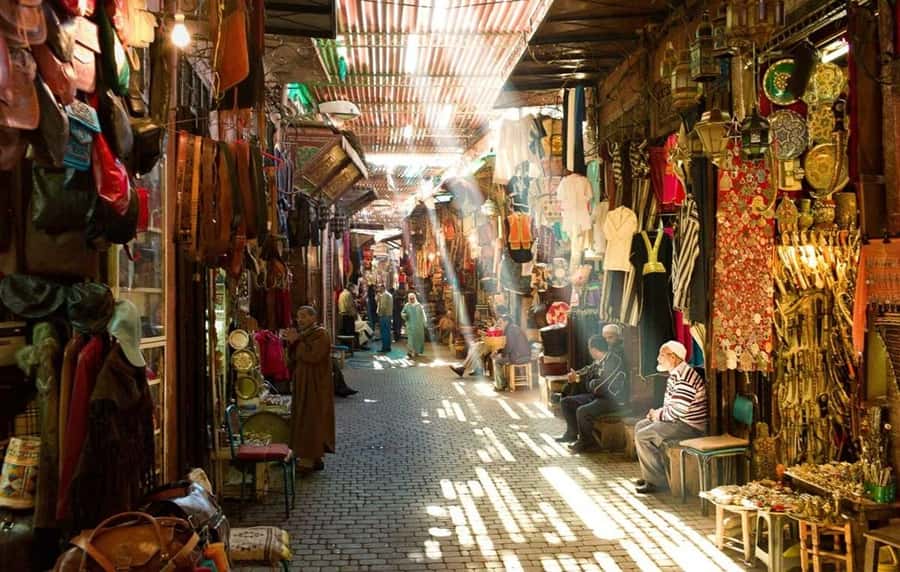
Marrakech’s souks make more sense when someone local leads you through them. This private walk takes you beyond the main lanes to working artisan shops, old bakeries, food stalls, leather workshops, blacksmiths, and stores chosen around what you actually want to see or buy.
I like the personal format, since your guide can focus on Berber jewelry, rugs, leather, ceramics, caftans, lanterns, or spices instead of dragging you through every shop in town. I also like the practical help with bargaining, shopping discounts, hotel delivery, and rug shipping.
The main drawback is that this is a shopping-centered walk, not a broad sightseeing tour of Marrakech. You will also need to handle narrow lanes, uneven walking surfaces, persistent sales pitches, and the meeting point at Café de France without hotel pickup.
Key points at a glance
- Private route through the medina: Your guide adjusts the walk to your interests and shopping list.
- Workshops, not only storefronts: See leather workers, blacksmiths, carpet makers, and other craftspeople at work.
- Useful shopping support: Guides can help with prices, direct you toward shops within your budget, and arrange delivery of purchases to your hotel or riad.
- A taste of everyday Marrakech: The route includes food souks, vegetables, fruit, baked goods, an old bakery, spices, and herbal remedies.
- Rooftop tea with a view: The walk ends with local tea on a terrace overlooking the medina.
- Plan for maze-like streets: Comfortable shoes and a sun hat are sensible, and you return to the starting point.
Starting at Café de France in Djemaa el-Fna
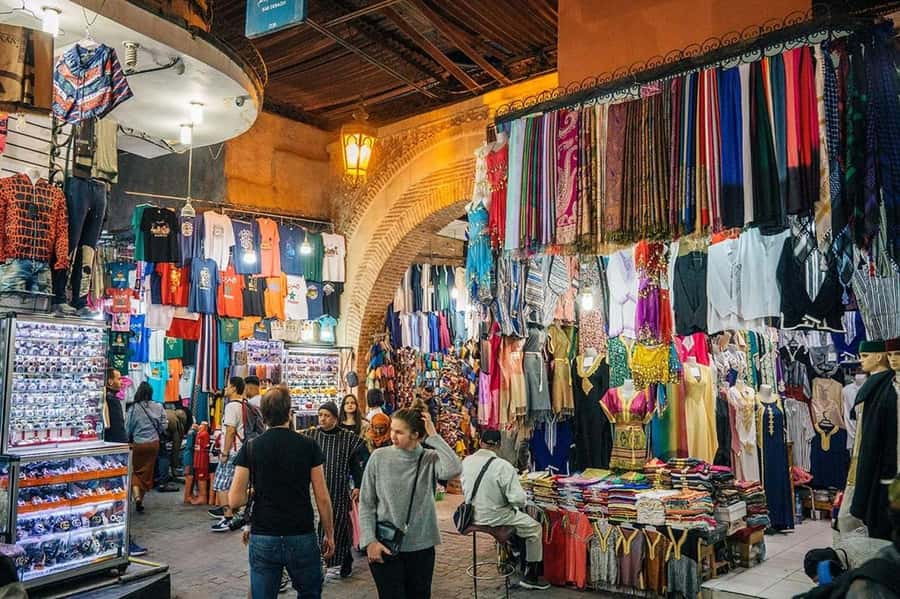
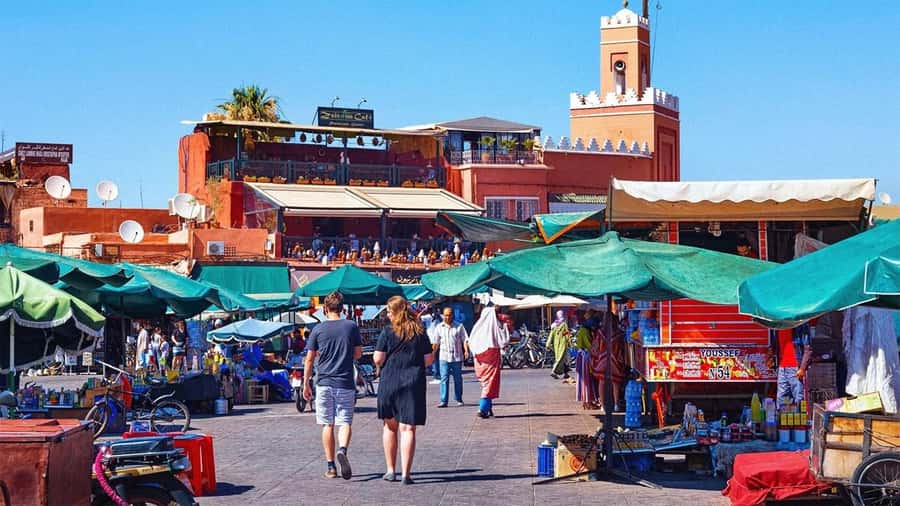
You meet your private English-speaking guide in front of Café de France, in Marrakech’s main square. This is a practical launch point, but it is also one of the busiest places in the old city, so arrive with the café clearly in mind and allow enough time to locate your guide.
The tour does not include hotel pickup. You make your own way to the square, then return there at the end. That arrangement keeps the price at $36 per person reasonable, but it means you should plan your route before setting out.
A private guide makes a real difference from the first turn. The medina is a network of narrow lanes that can feel confusing even when you are holding a map. A local guide can steer you away from the main traffic and toward smaller workshops and shops that fit your interests.
The guides used for this experience include people such as Mohammed, also called Mo or Muhammad by different customers, Abdel, Ali, and Chafiq. Your assigned guide may be someone else, but the repeated pattern is clear: ask at the start for the kind of afternoon you want. If you hope to buy a rug, focus on food markets, or avoid major shopping stops, say so early.
More Walking Tours in Marrakech
- Marrakech: Ben Youssef, Secret Garden, & Souks Walking Tour
★ 4.6 · 2,802 reviews - Marrakech: Colorful Medina Souks Guided Walking Tour
★ 4.7 · 2,470 reviews - Marrakech: Medina by Night Walking Tour with Moroccan Tea
★ 4.6 · 586 reviews
Through food stalls and old bakeries
The first part of the walk can introduce you to the medina as a living neighborhood rather than just a market for souvenirs. You pass stalls selling vegetables, fruit, and baked goods, with the route moving through the everyday food trade that keeps the old city working.
An old bakery is one of the most appealing stops. It offers a glimpse of traditional food production and a setting that can feel far removed from the polished cafés around the square. You may see how local bread fits into daily life, though the exact details of what you see depend on the day and the route your guide chooses.
This section helps put the shopping into context. A souk is not simply one large bazaar filled with identical goods. Different lanes and work areas serve different trades, and a guide can explain how those pieces fit together.
The food stops are observational rather than a meal. Food is not included in the $36 price, so you should budget separately if you decide to buy something along the way. The tour includes tea later, but it does not promise tastings or lunch.
Finding the craft behind the merchandise
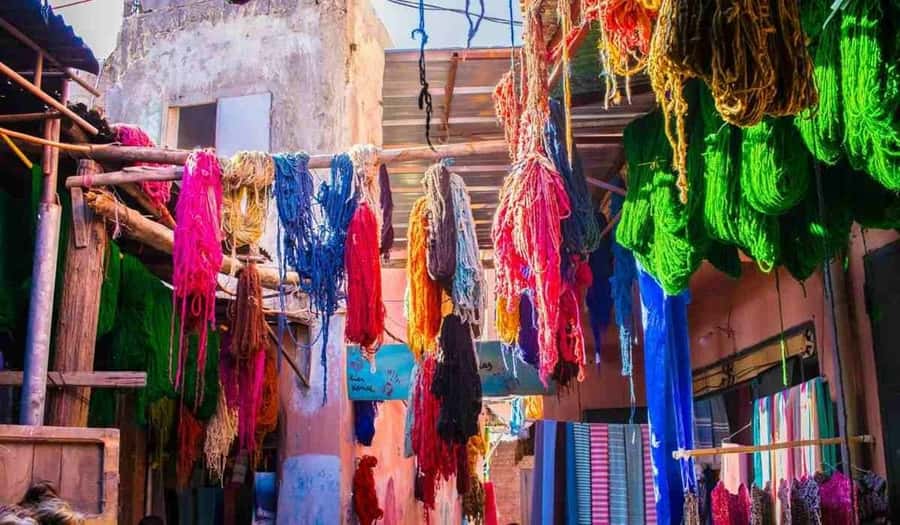
The strongest part of the experience is the attention to how goods are made. Instead of seeing only finished products on shelves, you visit an artisanal complex and workshops where craftspeople work with leather, metal, textiles, ceramics, and other materials.
You might watch leather craftsmen, blacksmiths, or carpet workers at their trades. The point is not a formal museum demonstration. You are seeing working businesses, which makes the visit more direct, though it also means the pace and activity can vary.
Your guide explains the skills involved and gives you a chance to interact with the artisans. That personal contact matters when you are deciding if a piece is handmade, assessing its quality, or simply trying to understand the labor behind an item.
I especially like this approach for shoppers who want more than a decorative object with a vague origin story. Seeing a craftsperson at work can help you ask better questions about materials, construction, tribal patterns, and care.
Keep your expectations sensible. A workshop visit is not a guarantee that every item is made on site, and you should still inspect what you buy. Ask your guide to explain the difference between locally made goods and merchandise brought in for resale.
Shopping for Berber jewelry, rugs, and leather
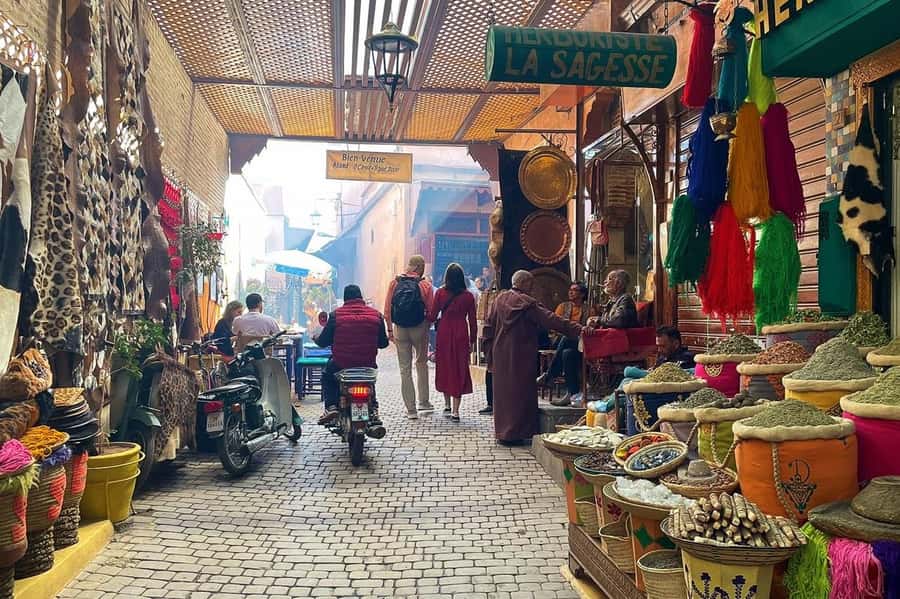
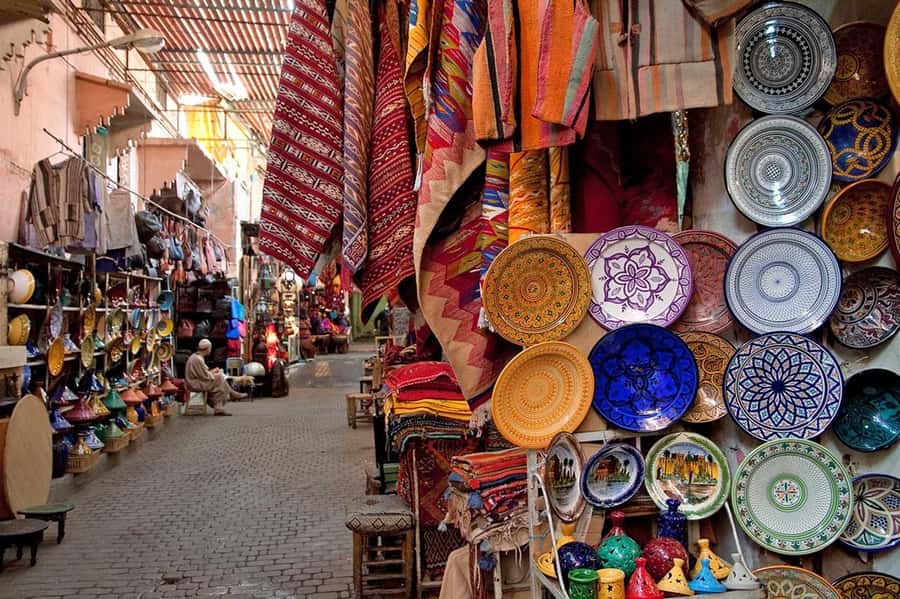
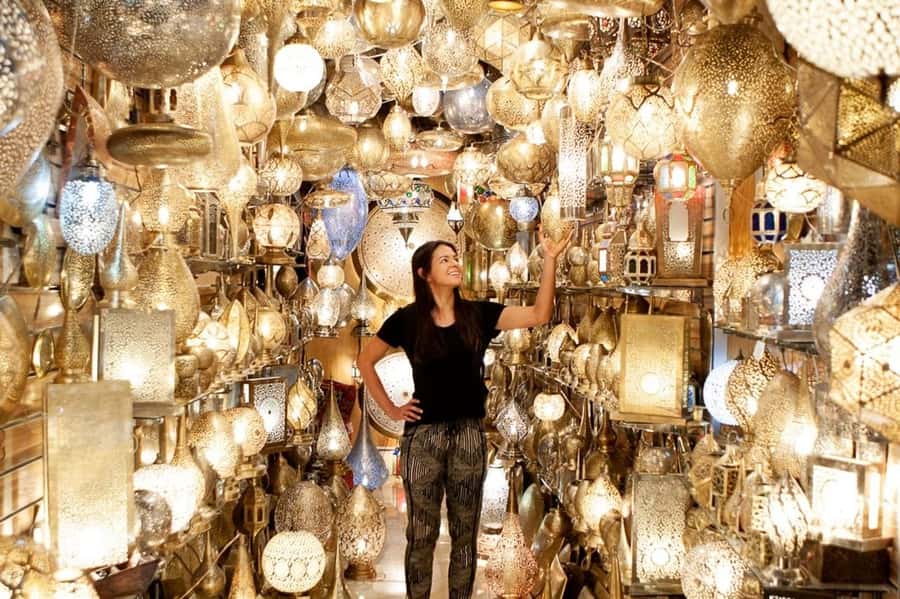
The range of goods is broad. Depending on your interests, you may browse Berber jewelry, ceramics, caftans, leather bags, teapots, lanterns, carpets, and rugs linked to different Berber tribes.
This is where the private format earns its keep. You can tell your guide what you hope to purchase, your preferred style, and your budget. The guide can then take you to suitable stores instead of wasting time in places that do not match your plans.
Several guide comments make the practical benefit clear: the guide acts as a buffer between you and sellers, helps you avoid being pushed into a purchase, and can help negotiate a fairer price. That does not remove the need to bargain, but it gives you a local ally who knows the shopkeepers.
You should still remain in charge of your wallet. A guide may receive cooperation from stores, and the tour includes shopping discounts, but you should compare items and prices before agreeing to buy. A discount is useful only if the starting price and quality make sense.
For rugs, take your time. Look at the weave, colors, size, condition, and design. Ask where the rug was made and what the pattern means if that information matters to you. Shipping for rugs is included, which can make a larger purchase easier, and goods from the market can be delivered to your hotel or riad.
Delivery and shipping are valuable if you are staying in Marrakech for a while, but confirm the arrangements before paying. Make sure you understand what is being sent, where it is going, and what paperwork or contact details are required.
A few other Marrakesh days worth comparing
- Marrakech: Bahia Palace, Saadian Tombs, Souk and Medina Tour
★ 4.7 · 4,974 reviews - Marrakech: Saadian Tombs & Bahia Palace, Medina Guided Tour
★ 4.6 · 1,989 reviews - Marrakech Monuments & Souks 3-Hour Tour
★ 3.8 · 1,540 reviews - Marrakech: Bahia Palace, Madrasa Ben Youssef and Medina Tour
★ 4.7 · 1,347 reviews
A visit to the herbalist
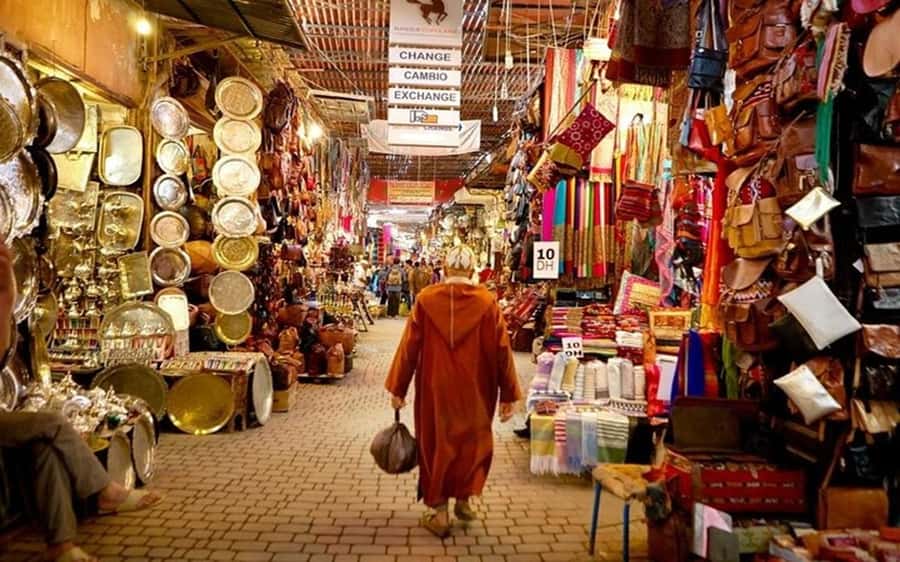
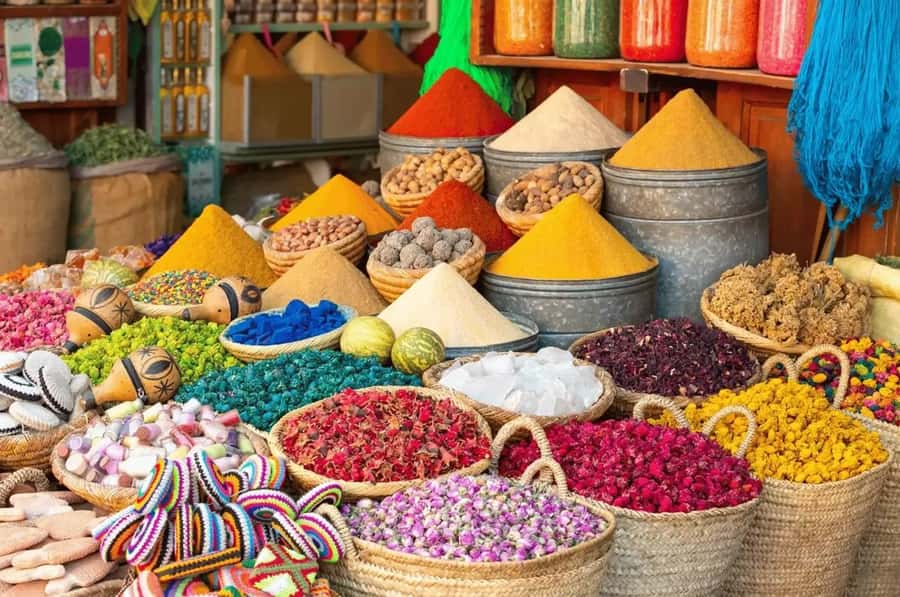
The herbalist stop shifts the focus from decorative crafts to spices, cooking, and traditional remedies. You learn about ingredients used in Moroccan food and products associated with alternative medicine.
This can be an interesting way to understand how scent, flavor, and plant products fit into local commerce. It is also a place to listen carefully. Products described as traditional remedies should not automatically be treated as medical advice, and you should ask questions about what you are buying.
If you are interested in spices, this is a useful point to discuss how to use them at home. If you are not shopping for herbs or remedies, tell your guide. Since the tour is private, the stop can be more relevant when your interests are clear.
As with every shopping stop, do not feel obliged to purchase anything. The value is in the explanation and the chance to inspect products with a local guide nearby.
Rooftop tea above the medina
Near the end, you sit on a rooftop terrace and drink local tea with your guide. After the close lanes and constant movement of the souks, this pause gives you time to sort through what you have seen and ask final questions.
The rooftop view is a simple but effective finish. From above, the medina’s dense arrangement becomes easier to understand, and you get a calmer look at the old city than you can from street level.
Tea is included. Food is not, so do not expect a full café stop or meal. The terrace is best understood as a quiet closing moment rather than a separate sightseeing attraction.
I would use this time to review purchases, confirm delivery details, and ask your guide for advice about returning to the square or finding another part of the old city. Since the activity ends back at the meeting point, you can continue exploring Djemaa el-Fna afterward or make your own way back to your accommodation.
What the $36 price really buys
At $36 per person, this is a fair price if you want help navigating, shopping, and speaking with local sellers. You are paying for a private local guide, not transportation, meals, or entry tickets to a long list of monuments.
The value is strongest for a first visit to Marrakech, especially if you plan to buy something substantial. A guide who can point you toward appropriate stores, help with bargaining, and arrange delivery may save time and reduce costly shopping mistakes.
The price is less compelling if you prefer to browse alone or have no interest in crafts and shopping. You can walk through many public souks without booking a tour, although you will not have the same guidance through the maze or the same help with sellers.
The included shopping discounts may add value, but treat them as a bonus rather than the main reason to book. The real benefit is the tailored route and the human explanation of the crafts.
The tour also offers reserve now and pay later booking, with free cancellation up to 24 hours before the activity. Those terms help if your Marrakech plans are still changing.
Walking conditions and useful preparation
Wear comfortable shoes. The route uses narrow, winding streets, and you may spend much of the time on your feet while moving between shops and workshops.
A sun hat is also recommended. The medina contains shaded lanes, but you should not count on shade throughout the walk. Bring water as well, even though one guide supplied water during the experience described by a customer.
The route is not presented as a formal mobility-focused tour. One guide, Mohammed, made the walk easier for a wheelchair user, which suggests that some adjustments may be possible. Still, you should discuss access needs when booking, since the medina’s tight lanes and walking surfaces can vary.
You should also dress for a busy market setting and keep your belongings secure. The guide can help keep street sellers from crowding you, but you still need to watch your bag and make your own choices.
The guide matters more than the itinerary
The listed stops are useful, but the quality of this experience depends heavily on your guide. A good guide makes the souks feel understandable without turning every stop into a sales pitch.
The strongest guide traits shown here are patience, humor, clear English, local knowledge, and a willingness to wait while you look, try on, or compare items. Ali is praised for being patient during shopping, while Chafiq is noted for practical tips and a funny manner. Mohammed is repeatedly associated with strong local knowledge, help with prices, and a friendly relationship with sellers.
Names are not a guarantee, since guide assignments can change. Still, when you meet your guide, explain your priorities in plain terms. Say what you want to buy, what you do not want to buy, how much time you have, and whether you prefer workshops, food markets, or general wandering.
A private tour also lets you slow down. You are not tied to the pace of a large group, and the guide does not need to move on while you examine a carpet or try on a caftan.
Who should book this Marrakech walk
I would recommend it to a first-time visitor who wants an introduction to the medina without getting lost. It is also a strong choice for anyone hoping to buy a rug, leather goods, jewelry, ceramics, or home decorations and wanting local help.
It suits curious shoppers who care about production, not just finished goods. The artisan visits, old bakery, herbalist, and food souks give the afternoon more substance than a simple store-to-store outing.
Families and small private groups may appreciate the flexible pace. The guide can spend more time explaining a craft or waiting during a purchase. Someone using a wheelchair should contact the provider before booking to discuss the route and access in detail.
I would skip it if you dislike shopping, bargaining, or close market lanes. In that case, a tour centered on palaces, gardens, museums, or historic buildings would better match your interests.
Should you book the souks walking tour?
Book this experience if you want a practical, personal way into Marrakech’s medina and expect to shop. At $36 per person, the combination of a private guide, artisan access, shopping help, delivery options, and rooftop tea offers solid value.
Go in with a plan, but keep some room for surprises. Tell your guide what interests you, set a budget, inspect goods carefully, and do not buy simply because a seller is persuasive.
The best reason to book is not the promise of a perfect bargain. It is having a local person help you understand what you are seeing, guide you through the maze, and make the souks feel manageable.
FAQ
Where does the tour start?
Meet your private guide in front of Café de France in the main square of Marrakech.
Where does the tour end?
The activity ends back at the meeting point in front of Café de France.
Is hotel pickup included?
No. Hotel pickup and drop-off are not included, so you must make your own way to the meeting point.
Is the tour private?
Yes. You are escorted by a private local guide, and the route can be tailored to your interests.
What language is the tour offered in?
The tour is offered in English.
What kinds of goods can I shop for?
You may shop for Berber jewelry, ceramics, caftans, leather bags, teapots, lanterns, carpets, and rugs, along with other specialty goods.
Can I see artisans working?
Yes. The tour includes visits to artisan areas where you can see craftspeople working and learn about their techniques.
Is tea included?
Yes. Local tea on a rooftop terrace is included. Food is not included.
What should I bring?
Bring comfortable shoes and a sun hat. The tour involves walking through narrow, winding streets in the medina.
More Walking Tours in Marrakesh
- Marrakech: Authentic Moroccan Food Walking Tour & Dinner
★ 4.8 · 261 reviews - Marrakech: Monuments, Souks and Medina Guided Walking Tour
★ 4.8 · 208 reviews - Marrakech: Souk by Night Medina Guided Walking Tour.
★ 4.3 · 166 reviews - Marrakech: 3-Hour Monuments, Souks & Old Medina Walking Tour
★ 4.7 · 133 reviews
Just listed out of Marrakesh
- Marrakech: Ouzoud Waterfalls Trip, Guide & Boat + Lunch★ 4.7 · 33 reviews
- Marrakech: Vibrant Dinner Show at The Lotus Club★ 3.9 · 33 reviews
- From Marrakech: Small Group To Essaouira & Medina Day Trip★ 4.3 · 33 reviews
- From Marrakech: 3-Day Merzouga and Sahara Desert Tour★ 4.5 · 33 reviews
- Marrakech: Private Souks Tour with Tea and Traditional Snack★ 4.6 · 33 reviews
- Marrakech: Medina Souks, Hidden Markets and Shopping Tour★ 4.8 · 33 reviews
- 2 Days Desert Agafay and Atlas Mountains Trek From Marrakech★ 3.8 · 33 reviews
- Agadir/Taghazout : Marrakech Guided Tour old Medina & Souks★ 3.7 · 34 reviews
Marrakech Tours, compared.

Agafay Desert Sunset, Camel Ride, and Dinner Show
Read our review →

Agafay Desert Quad & Camel Rides with Dinner Show
Read our review →
Agafay Desert Quad Biking Tour with Dinner-Show
Read our review →
Atlas Mountains, Ourika Valley, Waterfall & Lunch
Read our review →


Quad Bike Tour to Palm Oasis and Jbilat Desert
Read our review →Browse the lists this tour appears in