
Reviewed · MARRAKECH TOURS
Marrakech: Authentic Moroccan Food Walking Tour & Dinner
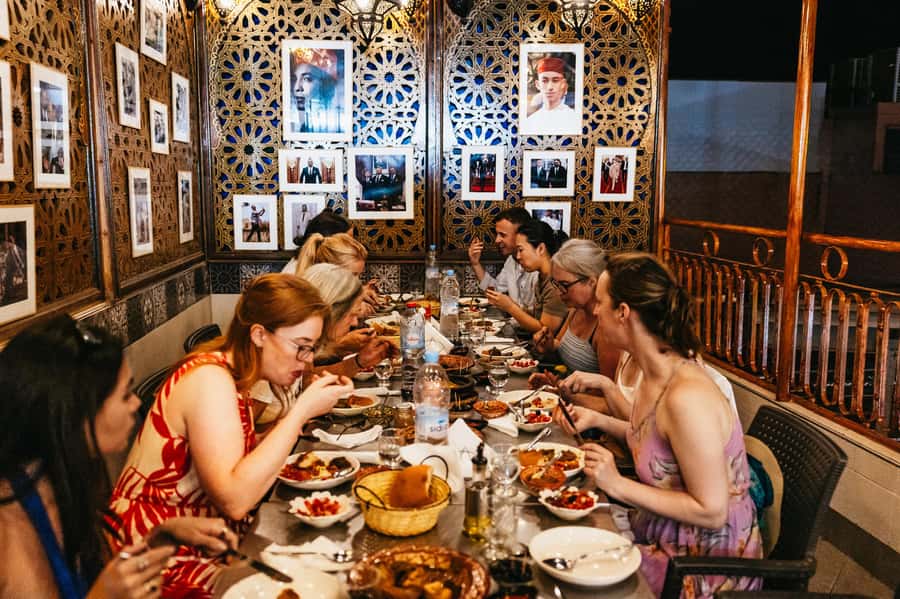
Marrakech’s food culture makes the most sense one small bite at a time. This three-hour walk leads you through the Old Medina, from street stalls and modest local eateries to a sit-down meal. You may try snails in herbal broth, sheep’s head seasoned with cumin, fresh fruit drinks, pastries, olives, and the famous Harira and Chebakia pairing.
I like two things in particular. First, the guide takes you to places you might pass without noticing, including food stalls and small shops used by local families. Second, the food comes with useful cultural context, from Ramadan customs to the role of dried fruit, nuts, tea, and shared dishes at Moroccan gatherings.
The main consideration is the quantity. This is not a light nibble tour. With up to 13 tastings plus dinner, you should eat little beforehand and expect plenty of walking, crowded Medina lanes, and some adventurous flavors. Dinner is also not available during Ramadan, so check exactly what your evening includes.
Key points to know before you book
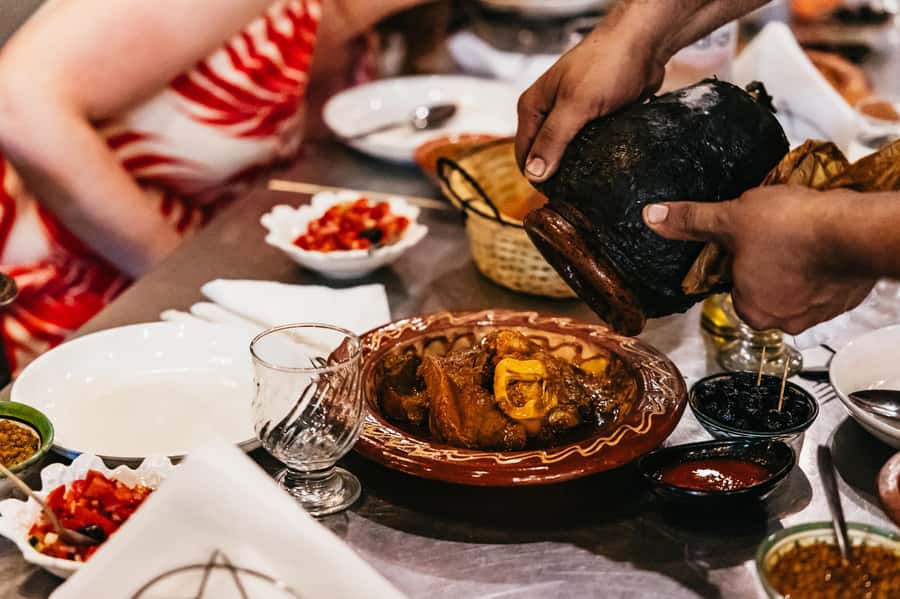
- A full meal disguised as a tasting walk: Small snacks build toward Tajine or an open-air Moroccan barbecue.
- The route can change: Your guide, the season, and the evening’s pace determine which of two food routes you follow.
- Yaya is a frequent guide: Other named guides include Ali, Rachid, Mehdi, and Mohammed, with a strong focus on humor and local stories.
- Expect unusual food: Babouche snails and, on one route, steamed sheep’s head are possible stops.
- A smart first activity in Marrakech: The walk helps you understand Medina food stalls and feel more at ease ordering later.
- Bring good walking shoes and an empty stomach: Hotel pickup is not included, and you meet outside Poste du Maroc.
Starting outside Poste du Maroc in the Medina
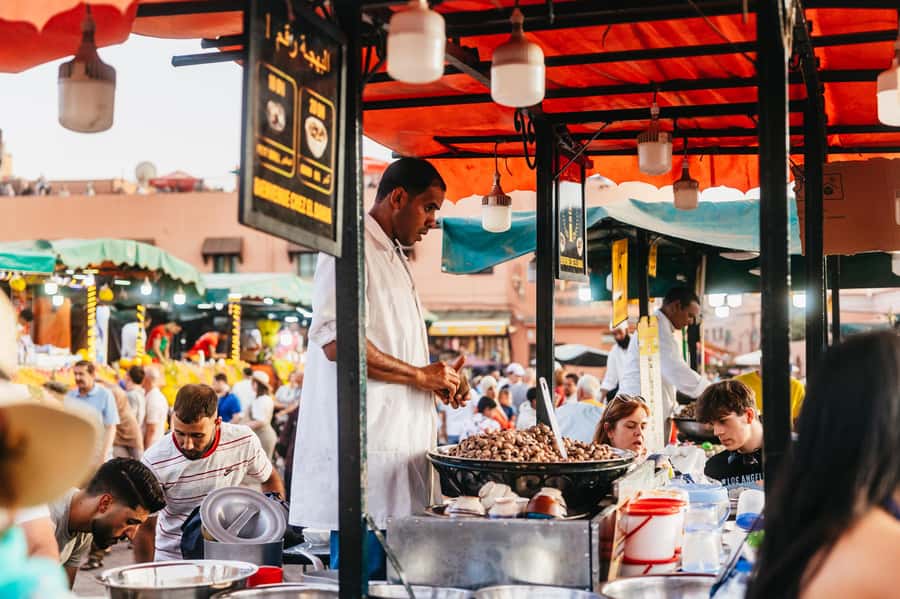
The meeting point is in front of Poste du Maroc on Rue Beni Marine. That is a practical central starting place, but give yourself time to find it. You are meeting in the Medina, where signs can be easy to miss and streets quickly become confusing once you leave the main roads.
Your guide leads the group on foot into Marrakech’s Old Medina. There is no hotel pickup or drop-off, so you need to reach the post office yourself and return to the same area at the end.
The tour lasts three hours and is conducted in English. The walking is part of the point. You are not simply being driven between restaurants, so wear shoes that can handle uneven streets and stand up to an evening of strolling.
The pace appears to be friendly rather than rushed. Guides such as Yaya are praised for making people feel comfortable, answering questions beyond food, and keeping a group together while moving through the souks. That matters in Marrakech, especially if this is your first evening in the city.
More Walking Tours in Marrakech
- Marrakech: Ben Youssef, Secret Garden, & Souks Walking Tour
★ 4.6 · 2,802 reviews - Marrakech: Colorful Medina Souks Guided Walking Tour
★ 4.7 · 2,470 reviews - Marrakech: Medina by Night Walking Tour with Moroccan Tea
★ 4.6 · 586 reviews
Two routes, one very full evening
You do not receive one fixed menu. The operator uses two possible routes, and the exact sequence depends on the guide, season, and flow of the night.
That flexibility is useful because food availability changes. It also means you should not book this expecting every single dish listed below. You will get a broad selection, but the precise stops may differ.
Both routes include the basic idea of the experience: local snacks, sweets, drinks, explanations, and a proper dinner. The strongest feature is the range. You move from soup to pastries, from savory pancakes to grilled meat, instead of eating one large dish and calling it a food tour.
Route one: Harira, snails, pastries, and Tajine
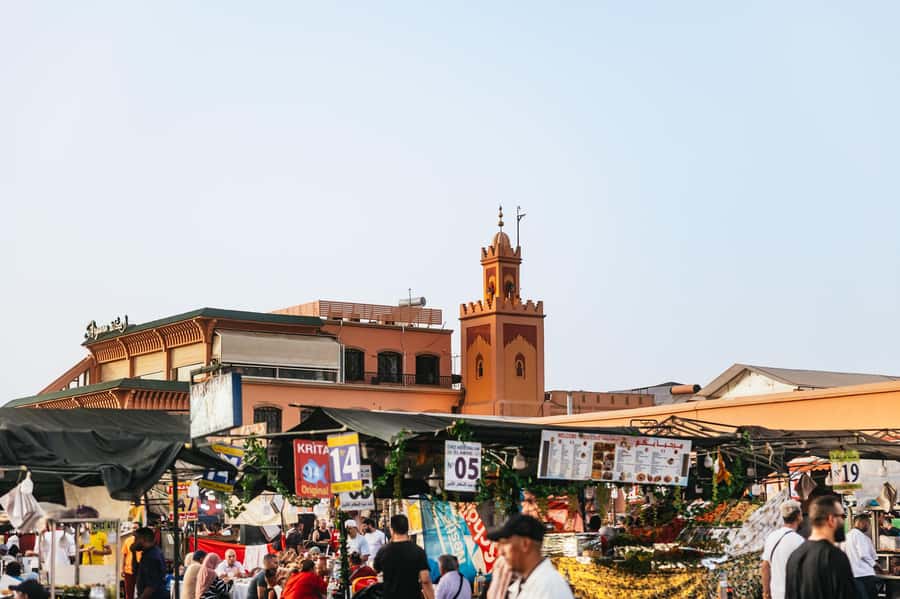
One possible evening begins with Moroccan coconut macaroons, a soft, sweet treat especially popular with children. They offer an easy introduction to local sweets before the more distinctive dishes arrive.
Kaab Ghzal, sometimes translated as gazelle ankles, follows. These pastries contain almond paste scented with orange blossom water. The flavor is floral and nutty rather than heavily sugary, and the pastry gives you a good sense of how common almond and orange blossom are in Moroccan desserts.
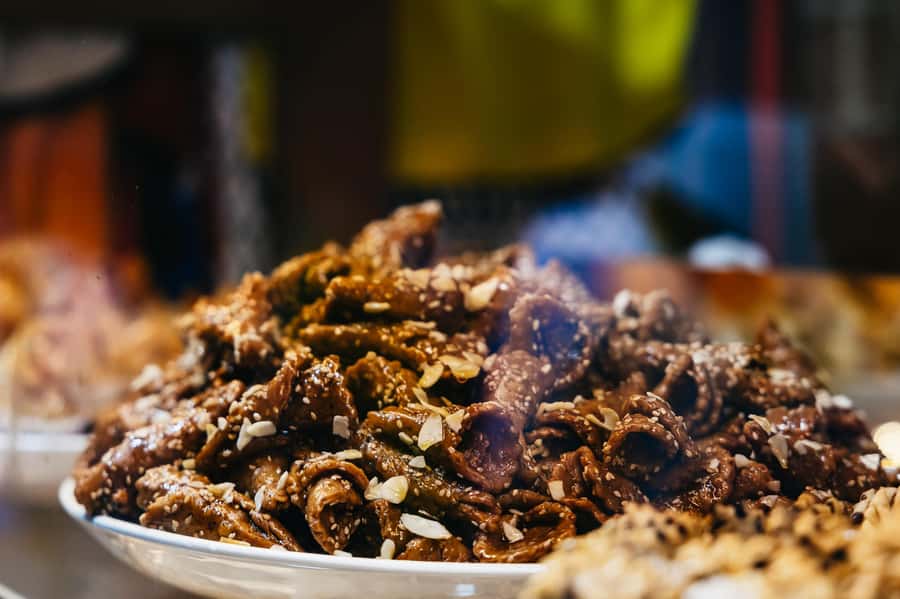
Harira is one of the most meaningful stops. This traditional soup is served with dates and Chebakia, a sesame-coated pastry covered in honey. Together, they are strongly linked to breaking the fast during Ramadan. Even outside Ramadan, the pairing gives you a small window into Moroccan family and religious customs.
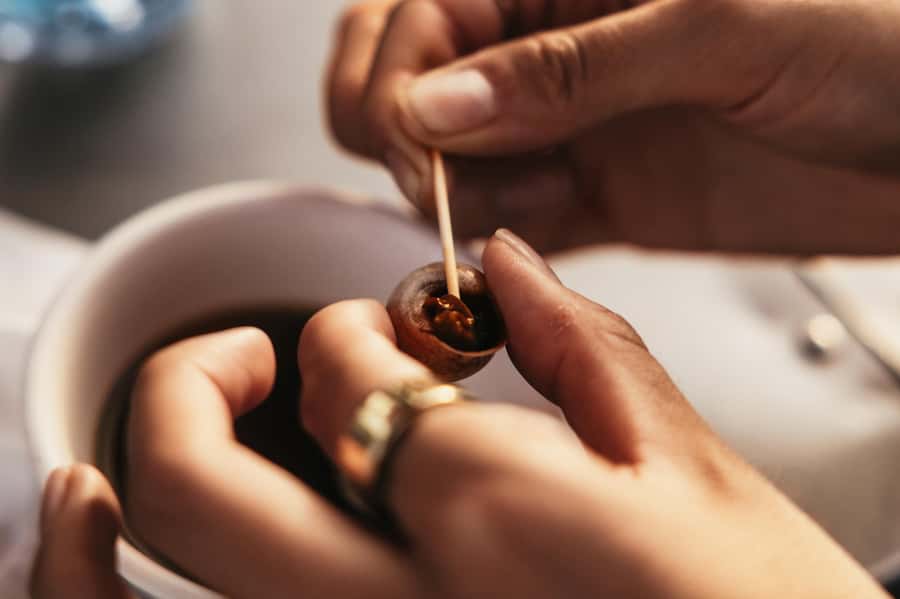
The more adventurous stop is Babbouche, Moroccan snails slowly cooked in an aromatic herbal broth. You can focus on the broth if the snails are outside your comfort zone, but this is the kind of food you are unlikely to order confidently without someone explaining how locals eat it.
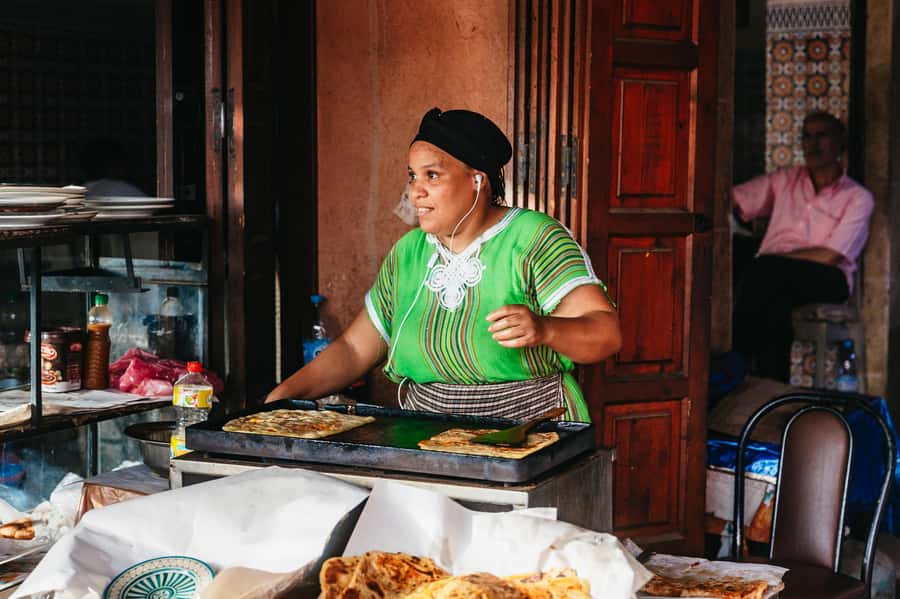
Mint tea and Msemmen bring the group back to familiar territory. Msemmen is a pan-fried Moroccan pancake, often served with honey and sometimes cheese. It is crisp at the edges, soft inside, and one of the most useful foods to recognize during the rest of your stay.
Fakya is a festive mix of dried fruits and nuts, commonly shared during celebrations. It may seem simple, but it shows how Moroccan food is also about offering and sharing, not just plated meals.
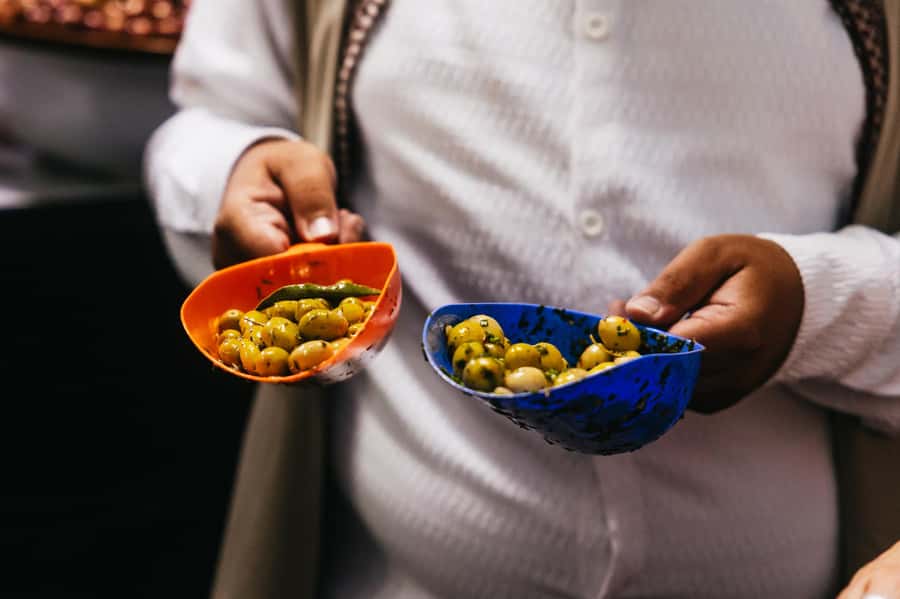
You will also taste Moroccan olives. The selection may include smooth green olives and red olives mixed with parsley and cilantro. These are small bites, but they provide a useful contrast to the sweets and soup.
Dinner on this route is served at a cozy local restaurant. The meal includes a fresh Moroccan salad and a hearty Tajine, followed by Raïb, a homemade yogurt. The Tajine is the substantial part of the evening, so do not treat the earlier tastings as a warm-up for a normal dinner. They are already most of a meal.
Route two: stuffed Msemen, Sfenj, and open-air grilling
The second route starts with Msemen Amer, Moroccan pancakes filled with savory ingredients, often spiced vegetables. This version gives you a different idea of the pancake than the honey and cheese preparation on the first route.
Harira and Chebakia appear here as well. The soup is a familiar thread between the routes, and the sweet, crunchy pastry makes the combination particularly satisfying.
Makkla bel Kefta is Morocco’s answer to the general idea of Shakshouka: eggs and spiced ingredients cooked together in a savory dish. It is warm, filling, and more substantial than many street snacks.
Sfenj is another highlight. These Moroccan donuts are golden and crisp outside, airy and chewy inside. They are a classic street food snack, and you may find them more appealing than the more unusual offerings because they are easy to understand and freshly cooked.
Lhindiya, or cactus fruit, adds a cool and refreshing break. It is associated with hot weather and provides welcome contrast after fried foods and spiced dishes.
The boldest item on this route is Rass Mbekher, delicately steamed sheep’s head seasoned with cumin. It is sometimes replaced by local Chawarma, made with chicken or crispy falafel. The substitution means the precise experience is not guaranteed, but you should be ready for the possibility of a dish that asks you to be curious.
Panaché is a colorful smoothie made with seasonal fruit. Khoudenjal, a hot herbal drink made from galangal root, closes the tasting section on this route. It is used as a comforting drink in cold weather and is associated with digestion.
Dinner is an open-air Chwa, or Moroccan barbecue, with grilled beef, turkey, and liver. If you prefer a grilled meal to Tajine, this route may suit you better. The mix of meats is generous, and liver has a stronger flavor than the other options.
A few other Marrakesh days worth comparing
- From Marrakech: Merzouga 3-Day Desert Safari with Food
★ 4.7 · 12,232 reviews - Marrakech: Street Food Tour by Night
★ 4.8 · 2,838 reviews - From Marrakech: Zagora 2-Day Desert Safari with Food & Camp
★ 4.5 · 1,137 reviews - Marrakech: Jemma El Fnaa Food Tour with Dinner
★ 4.7 · 394 reviews
The herbalist stop adds context between bites
Depending on timing, the group may stop at a traditional herbalist’s shop. This is not described as a full formal visit, but it can provide a useful pause, a restroom break, and a chance to hear about Moroccan spices and herbal products.
You may also sip mint tea there. That short stop helps break up the eating, which is important on a tour with this many tastings. It also shifts the focus from food as a meal to food as part of everyday household life.
Keep your expectations sensible. The herbalist visit is an occasional part of the route, not a guaranteed centerpiece. Treat it as a bonus rather than a reason to book.
What the guides add to the food
The food is the hook, but the guide makes the evening work. The strongest guide names appearing repeatedly in the experience are Yaya or Yahya, Ali, Rachid, Mehdi, and Mohammed. Your assigned guide can vary, so do not book on the assumption that one particular person will lead your group.
The guide’s job is more than translating menu items. You can expect explanations of food customs, local eating habits, the souks, and parts of Marrakech’s past and present. Yaya, in particular, is described as funny, welcoming, and good at making a mixed group feel like old friends. Ali is noted for personal stories and a relaxed manner, while Rachid is praised for explaining each food and sharing practical city advice.
That local connection has real value. On your own, you might hesitate before approaching a crowded stall or choosing something unfamiliar. With a guide, you can ask what a dish is, how it is eaten, and why people order it.
The group format can also be social. One account describes enjoying a larger group because it created an easy way to meet people from different parts of the world. The trade-off is that a larger group may take longer to move between stops, and not every person will want to eat at the same pace.
Why this works well as your first Marrakech activity
I would place this tour near the start of a Marrakech visit. It teaches you what common foods look like, how the evening food scene works, and how to move through the Medina with more confidence.
The Medina can feel hectic during a first visit. A guide-led walk gives you a gentle introduction to the lanes, stalls, and souks without asking you to make every decision alone. You also get practical advice that can help with later meals and city wandering.
Several dishes are easy to recognize afterward. If you enjoy Msemmen, Sfenj, Harira, olives, or Moroccan mint tea, you can look for them again. One useful sign of value is that some people returned to favorite stops the following day. That is exactly what I want from a food walk: not just a pleasant evening, but a short list of places and dishes I can use afterward.
Price, portions, and value at $52
At $52 per person, the tour is not the cheapest way to eat in Marrakech. You could certainly buy individual street foods for less. The comparison is not really fair, though, because this price also covers an English-speaking certified local guide, multiple tastings, tea, cultural explanations, and a full dinner.
The value is strongest if you are curious but cautious. You are paying to find places you might not choose alone, taste a wide spread of food, and avoid spending your first few evenings guessing what to order.
The quantity is another part of the equation. The experience can include 13 tastings plus dinner, according to one account, and several people specifically advise skipping lunch or eating very little beforehand. If you are looking for a small sampling followed by a modest dinner, this may be too much.
Vegetarians should mention their needs when booking or at the start. The food program has enough variety that substitutions may be possible, and one vegetarian account describes the guide taking care to provide alternatives. Still, the dinner route and exact dishes can change, so ask clearly rather than assuming every stop will suit you.
Ramadan, timing, and practical details
During Ramadan, the evening can coincide with sunset, when fasting ends. That can make the timing especially meaningful because you may see the Harira, dates, and Chebakia custom in its proper setting.
There is one important limitation: dinner is not available during Ramadan according to the activity details. The tasting route may still follow a special evening rhythm, but confirm what is included for your date before paying.
Starting times vary, so check availability. The activity is three hours, but you should allow extra time before the meeting point and avoid scheduling another tight appointment immediately afterward. Food tours rarely end with you feeling ready to sprint across town.
Free cancellation is available until 24 hours before the start time, and you can reserve now and pay later. Those terms are useful if your Marrakech plans are still shifting, but they do not change the need to confirm the meeting point and the dinner format.
Who should book this food walk?
This is a strong choice for first-time visitors, curious eaters, couples, families with older children, and anyone who wants food to open the door to local culture. Children enjoyed the sweets and some of the more playful stops, while adults can focus on the history, customs, and more unusual dishes.
It suits social visitors who like sharing food with a group. It also works for people who want a guide with humor rather than a formal lecture.
You may want another kind of activity if you have limited mobility, dislike walking in crowded lanes, or prefer to choose every dish yourself. Comfortable shoes are specifically recommended, and the tour does not include transportation.
It is also not ideal for a very light eater. The combination of snacks, drinks, and dinner is the central feature, not a minor extra.
Should you book the Marrakech food tour?
I would book it if you want a practical introduction to Moroccan food and do not mind a large meal spread across many stops. The biggest strengths are the local food stalls, the warm guide style, the cultural explanations, and the chance to try dishes you might otherwise overlook.
Book it early in your stay, bring comfortable shoes, eat very little beforehand, and stay open to at least one unfamiliar bite. At $52, you are paying more than you would for random street food, but you are also buying direction, context, and a full evening in the Medina.
Skip it if you want a quiet restaurant dinner, a fixed menu, or a short walk with only familiar foods. For everyone else, this is a generous and useful way to get your bearings through Marrakech’s cooking.
FAQ
Where does the Marrakech food tour meet?
Meet your guide in front of Poste du Maroc on Rue Beni Marine in Marrakech.
How long does the food tour last?
The walking tour lasts three hours.
Where does the tour finish?
The tour returns to Poste du Maroc, the same area as the starting point.
Is hotel pickup included?
No. Hotel pickup and drop-off are not included, so you need to reach the meeting point yourself.
What language is the tour conducted in?
The live tour guide speaks English.
What food might I taste?
Possible tastings include Harira, Chebakia, Msemmen, Babouche snails, Moroccan pastries, coconut macaroons, olives, dried fruit, nuts, Sfenj, cactus fruit, Panaché, and Khoudenjal. The exact foods depend on the route.
Is dinner included?
Yes. Dinner is either a Tajine with Moroccan salad and Raïb at a local restaurant, or an open-air Moroccan barbecue with grilled meats. Dinner is not available during Ramadan.
Can the route change?
Yes. The experience follows one of two routes, and the guide, season, and pace of the evening can affect the stops.
Should I eat before the tour?
Eat lightly or skip a large meal. The tour includes many tastings and a full dinner, so you will need plenty of room.
What should I bring?
Bring comfortable walking shoes. You may also want to arrive at the meeting point with enough time to find Poste du Maroc.
Can I cancel the booking?
You can cancel up to 24 hours in advance for a full refund. You can also reserve now and pay later.
More Dinner Experiences in Marrakesh
- Marrakech: Agafay Desert Quad, Camel Ride & Dinner Show
★ 4.7 · 10,209 reviews - Marrakech: Agafay Desert Retreat, Tent, Dinner, Show & Pool
★ 4.8 · 5,616 reviews - Marrakech: Agafay Desert Dinner Show with Quad Bike & Camel
★ 4.9 · 5,058 reviews - Marrakech: Agafay Quad Tour with Camel Ride, Dinner & Show
★ 4.8 · 3,335 reviews
More Dining Experiences in Marrakesh
- Marrakech: Agafay Desert Sunset, Camel Ride, and Dinner Show
★ 4.6 · 35,119 reviews - Marrakech: Agafay Desert Quad & Camel Rides with Dinner Show
★ 4.8 · 27,382 reviews - Marrakech: Agafay Desert Quad Biking Tour with Dinner-Show
★ 4.8 · 16,569 reviews - Marrakech: Agafay Desert Quad & Camel Rides with Dinner Show
★ 4.9 · 10,771 reviews
Just listed out of Marrakesh
- Marrakech: Ouzoud Waterfalls Trip, Guide & Boat + Lunch★ 4.7 · 33 reviews
- Marrakech: Vibrant Dinner Show at The Lotus Club★ 3.9 · 33 reviews
- From Marrakech: 3-Day Merzouga and Sahara Desert Tour★ 4.5 · 33 reviews
- Marrakech: Private Souks Tour with Tea and Traditional Snack★ 4.6 · 33 reviews
- From Marrakech: Small Group To Essaouira & Medina Day Trip★ 4.3 · 33 reviews
- Marrakech: Medina Souks, Hidden Markets and Shopping Tour★ 4.8 · 33 reviews
- 2 Days Desert Agafay and Atlas Mountains Trek From Marrakech★ 3.8 · 33 reviews
- Agadir/Taghazout : Marrakech Guided Tour old Medina & Souks★ 3.7 · 34 reviews
Marrakech Tours, compared.

Agafay Desert Sunset, Camel Ride, and Dinner Show
Read our review →
Agafay Desert Quad & Camel Rides with Dinner Show
Read our review →
Agafay Desert Quad Biking Tour with Dinner-Show
Read our review →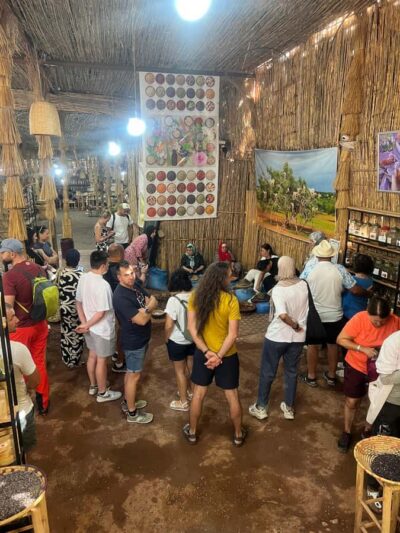
Atlas Mountains, Ourika Valley, Waterfall & Lunch
Read our review →


Quad Bike Tour to Palm Oasis and Jbilat Desert
Read our review →Browse the lists this tour appears in