
Reviewed · MARRAKECH TOURS
Marrakech: Moroccan Cooking Workshop at La Maison Arabe
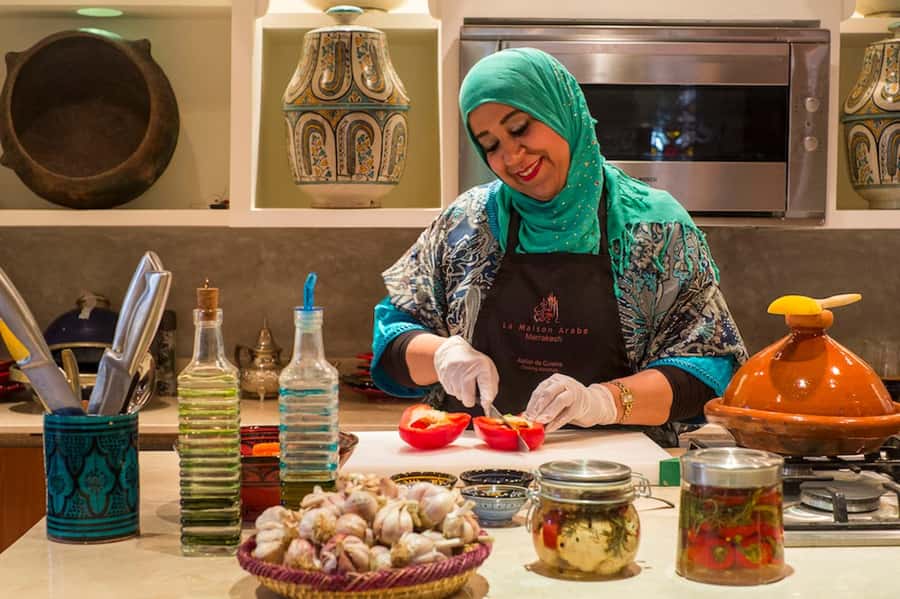
The best part of this Marrakech cooking class is that you do not simply watch a chef stir a pot. You work at your own station, prepare fresh local ingredients, and sit down to eat the Moroccan dish you made. The polished workshop near La Maison Arabe feels more like a tidy culinary studio than a rough-and-ready demonstration.
I like the small-group, hands-on format, and I like the cultural touches: a Moroccan tea ceremony, flatbread demonstration, and explanations of spices and food traditions. Chef Hayat, Wafa, Sanaa, Fatiha, and Muhammad are among the instructors praised for clear teaching and warm humor, though your cook may differ. The main drawback is price. At $35 per person, it costs more than some Marrakech cooking classes, and the one-hour option gives you only a taste of the full experience.
Key points to know before booking
- Choose your level of commitment: The express class lasts one hour and focuses on a traditional dish, while the three-hour session adds starters, a main course, dessert, bread, and tea.
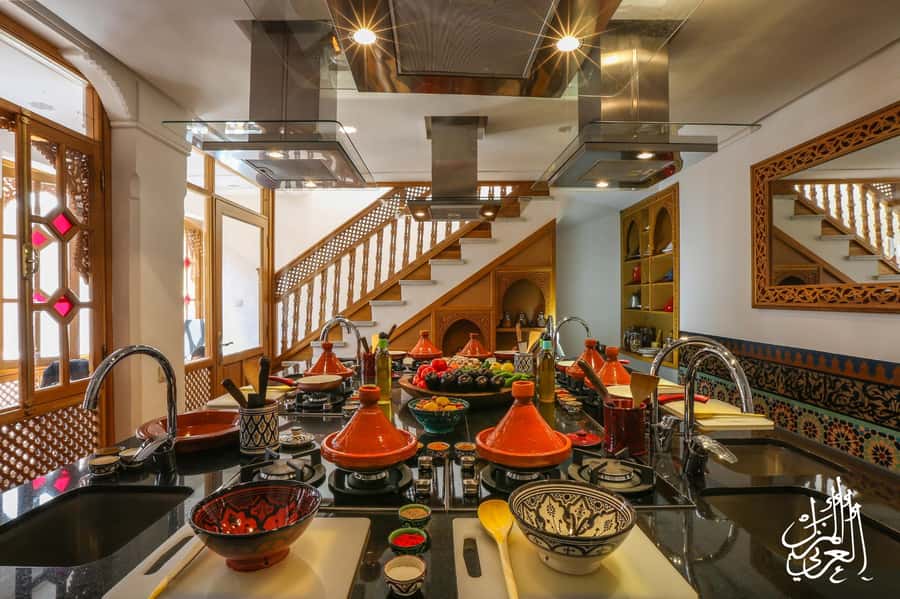
- You cook at an individual workstation: You are not standing behind a demonstration table hoping for a turn.
- Tagine is the star: Chicken tagine is commonly prepared, and you eat your own finished dish afterward.
- Tea is part of the lesson: You learn about Moroccan tea and see how the serving ritual is performed.
- The setting is unusually polished: The workshop uses clean facilities, fresh ingredients, and modern equipment close to the medina.
- Translation is built in: Instruction is available in Arabic, English, and French, with live translation when needed.
Entering the La Maison Arabe cooking school
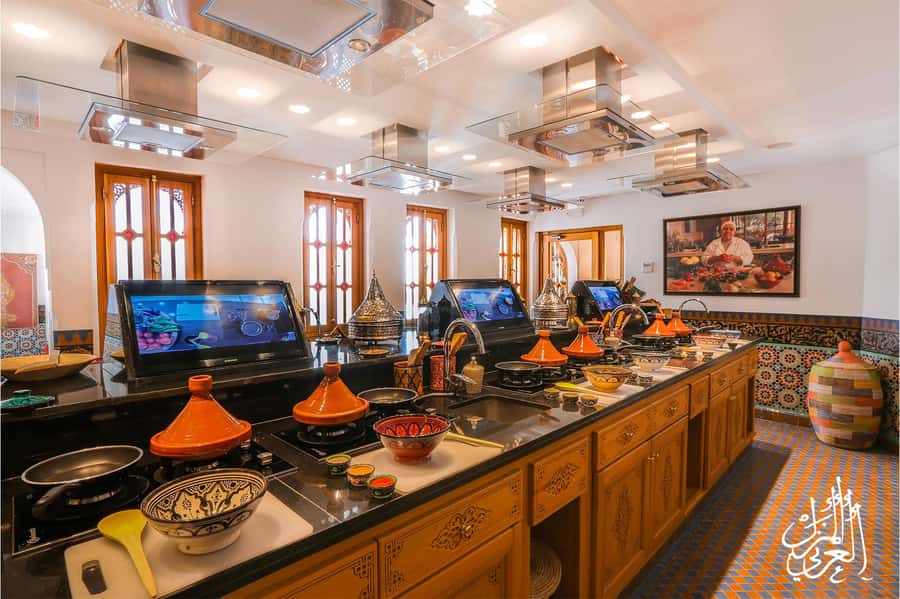
The meeting point is the front desk of La Maison Arabe, near the riad-hotel in central Marrakech. That makes the class easy to pair with time in the medina, and you do not need transport to a distant cooking school. A second setting may be offered in the hotel’s secret gardens, away from the noise and foot traffic of the old city.
This location matters. Marrakech can be tiring when every outing involves navigating narrow lanes, scooters, and persistent street activity. Here, you have a clear meeting point and a calmer place to work. The setting is also part of the pleasure, with a scenic, well-prepared workshop that feels comfortable without losing its Moroccan character.
The school uses individual workstations and modern equipment, a detail that changes the class from a passive show into a real lesson. You can chop, season, and assemble the food yourself. The facilities have repeatedly been described as clean, organized, and professional, which is especially useful when you are handling several ingredients and trying to follow instructions in a new kitchen.
You should arrive in comfortable clothes and bring water. Drinks are not allowed in the workshop, and transportation to or from other attractions is not included.
More Cooking Classes in Marrakech
- Marrakech: Moroccan Cooking Class with Pickup
★ 4.6 · 1,862 reviews - Marrakech: Traditional Moroccan Cooking Class & Market Visit
★ 4.8 · 1,861 reviews - Marrakesh: Moroccan Dishes Cooking Class with a Local Chef
★ 5.0 · 1,615 reviews
Meet the dada and learn how the class works
Your main teacher is a dada, the traditional Moroccan cook who leads the practical work. A translator helps explain the steps and cultural background in Arabic, English, or French. This shared teaching method is useful because the dada can focus on cooking while the translator keeps the instructions clear for the whole group.
The strongest teaching comes from the simple, direct method. You are shown what to do, then repeat it at your own station. The recipes are designed for ordinary home cooks, and the instructions are supported by live explanation. One session even used a screen to make the recipe easier to follow.
Instructors such as Hayat, Sanaa, Wafa, and Muhammad have been singled out for patience, energy, and clear demonstrations. Do not expect a formal chef-school lecture. Instead, expect practical tips, friendly conversation, and answers to questions about Moroccan spices, customs, food, and daily life.
That cultural exchange is one reason this is more than a meal-preparation exercise. You learn why certain ingredients are used and how food connects with Moroccan traditions. The class also gives you time to talk with people from other countries, which can make the meal afterward feel pleasantly social.
The one-hour express class: a quick taste of Morocco
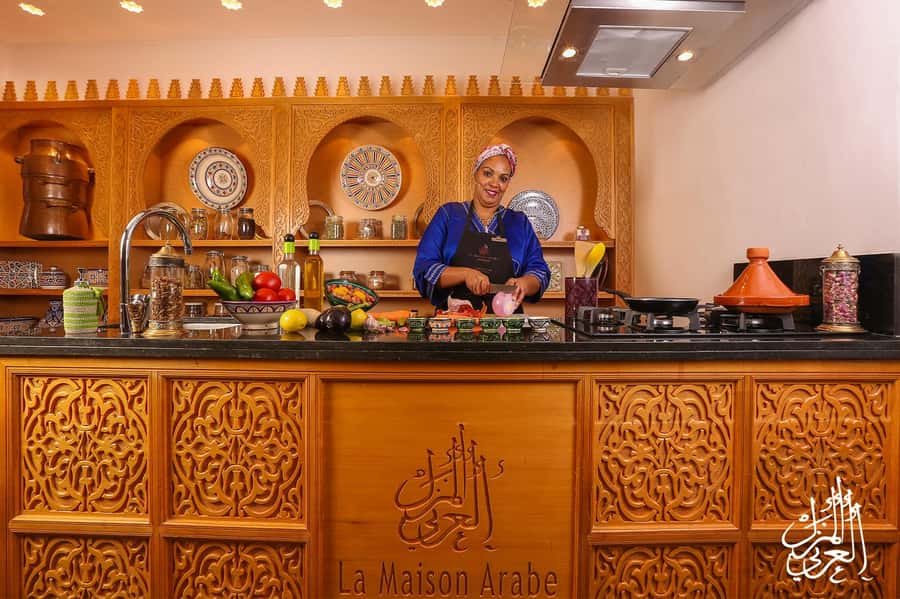
The express option is best if your Marrakech schedule is tight or you want a short activity between sightseeing stops. The class moves quickly, with little time spent on extras, and centers on a traditional dish such as chicken tagine.
You go straight into the cooking process. The instructor guides you through the main steps, from handling the ingredients to arranging the tagine for cooking. The recipes are approachable, and the short format works well for anyone who wants a practical introduction rather than a long afternoon at the school.
The reward comes at the end, when you eat the food you prepared. That makes the express class more satisfying than a cooking demonstration where the chef does all the work. The finished tagine is also a useful test of what you have learned, since you can see how a few well-chosen ingredients become a complete meal.
The limitation is clear: one hour cannot cover the full range of Moroccan cooking. You will not receive the same amount of background on food history, spices, tea, starters, and dessert included in the longer session. I would choose this version for a busy itinerary, solo visitors unsure about committing, or anyone who wants a compact activity.
The three-hour class: the better food lesson
The longer workshop gives you time to understand the rhythm of a Moroccan meal. The menu can include two starters, tagine or couscous, dessert, handmade bread, and tea. Exact dishes may vary, but the format gives you a broader look at the cuisine than the express class.
You prepare several elements rather than only one main course. That means more chopping and seasoning, but also more chances to understand how Moroccan meals are balanced. The class does not involve three straight hours of cooking. There are demonstrations, explanations, pauses, and a sit-down meal at the end.
The tea ceremony is a highlight because it adds a clear piece of local culture to the kitchen lesson. You learn about the ritual and watch the tea being prepared and served. The flatbread demonstration offers another useful contrast: it shows a basic everyday food alongside the more famous tagine.
The meal at the end is generous in experience, even if the class is not a feast built around restaurant service. You eat the dishes prepared during the session, along with the other people in the group. Some sessions allow plenty of time at the table, so you are not hurried out the moment the food is served.
For $35, the three-hour option offers strong value if it is available at that price for your date. You are paying for instruction, ingredients, a prepared meal, cultural explanation, and the use of a high-quality kitchen. It is still more expensive than some local classes, but the clean setting, organized stations, translation, and full menu help explain the difference.
More cooking classes out of Marrakesh:
- Marrakech: Moroccan Cooking Class with a Local Family
★ 4.9 · 668 reviews - Marrakech: Moroccan Cuisine Cooking Class in Local Home
★ 4.8 · 508 reviews - Marrakech: Tajine Cooking Class in a Traditional Riad
★ 4.8 · 424 reviews - Marrakech: Moroccan Cooking Class with Market Visit and Meal
★ 4.9 · 347 reviews
Tagine, spices, and the meal you make yourself
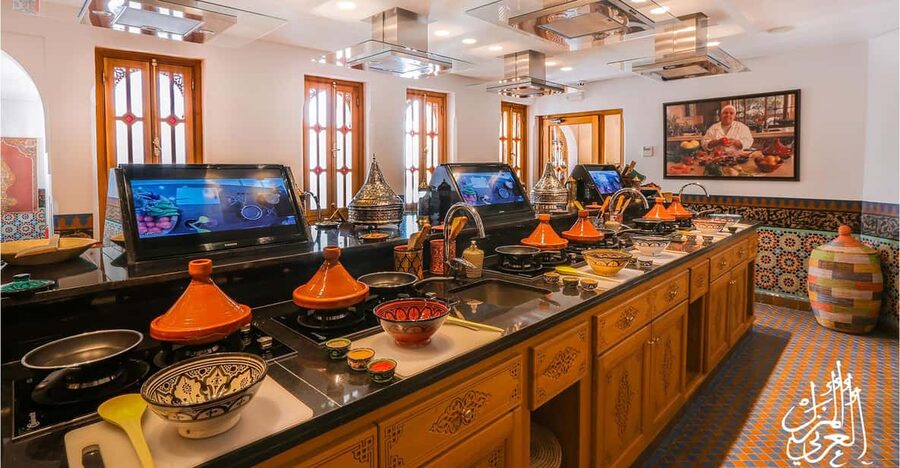
Tagine is the dish most closely linked with this experience. Chicken tagine appears frequently in the class, and it is prepared in the traditional conical cooking vessel. You do not simply receive one from the kitchen. You season and assemble it, then taste the result as your own work.
That small sense of ownership makes the meal memorable. You can watch the flavors develop and see how manageable the method is for a home cook. The class also provides a recipe, so you have a practical chance to repeat the dish after returning home.
The food is built around fresh local ingredients. The exact produce and seasoning list is not fixed in the information provided, so you should not book expecting a particular combination beyond the stated menu format. What you can count on is a focus on Moroccan cooking rather than a generic international lesson.
The meal is also a chance to compare the dish with tagines you have eaten elsewhere in Marrakech. The class gives you a better sense of technique, seasoning, and texture, instead of leaving Moroccan food as something mysterious ordered from a restaurant menu.
Vegetarian needs have been accommodated in at least some sessions, but you should confirm your requirements when booking. The provided details do not promise a particular vegetarian menu, allergy policy, or substitution list.
The people make the workshop work
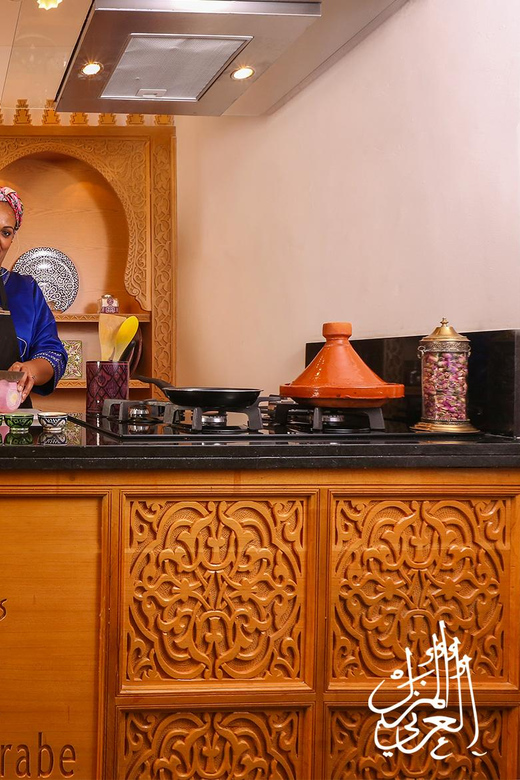
The kitchen is polished, but the instructors give the class its character. Hayat has been praised for creating a family-style feeling, while Wafa and her team are noted for being kind, lively, and inclusive. Sanaa is known for guiding people through the whole process, and Muhammad has been praised for helping make the longer class welcoming and easy to follow.
Names and staff can change by session, so treat these as examples rather than a guarantee. The consistent point is the teaching style: friendly, patient, and interactive. That matters if you are nervous about cooking in front of strangers or worried that language differences will leave you behind.
The multilingual setup is another practical strength. Arabic, English, and French are available, and translation can be provided for a group speaking a different language. One class continued smoothly even when the instructor and participants were using different main languages.
The social side is worth considering. The class suits couples, families with older children, friends, work groups, and solo visitors who enjoy meeting people over food. Children under 12 are not permitted, and the workshop is not suitable for wheelchair users.
Is the $35 price good value?
The answer depends on which format you choose. For the one-hour class, $35 is a fair price if you value the central location, clean kitchen, individual station, instruction, tea element, tasting, and recipe. If you only want to eat tagine, a restaurant will cost less and require far less time.
The three-hour session makes the stronger value case. You receive a wider meal, more cultural context, demonstrations, tea, bread, and time to eat what you prepared. The equipment and organization also remove some of the uncertainty found in cheaper, less formal classes.
I would compare the price with the total experience, not only the amount of food. You are also paying for a reliable meeting point, live language support, staff attention, and a properly arranged kitchen. The small tagine gift given at the end of some sessions is a thoughtful bonus, though it should not be treated as a guaranteed inclusion unless confirmed for your booking.
Free cancellation up to 24 hours ahead and the option to reserve now and pay later make it easier to fit the class into a changing Marrakech schedule. Availability and start times vary, so check the date before building your day around it.
Who should book this Marrakech cooking class?
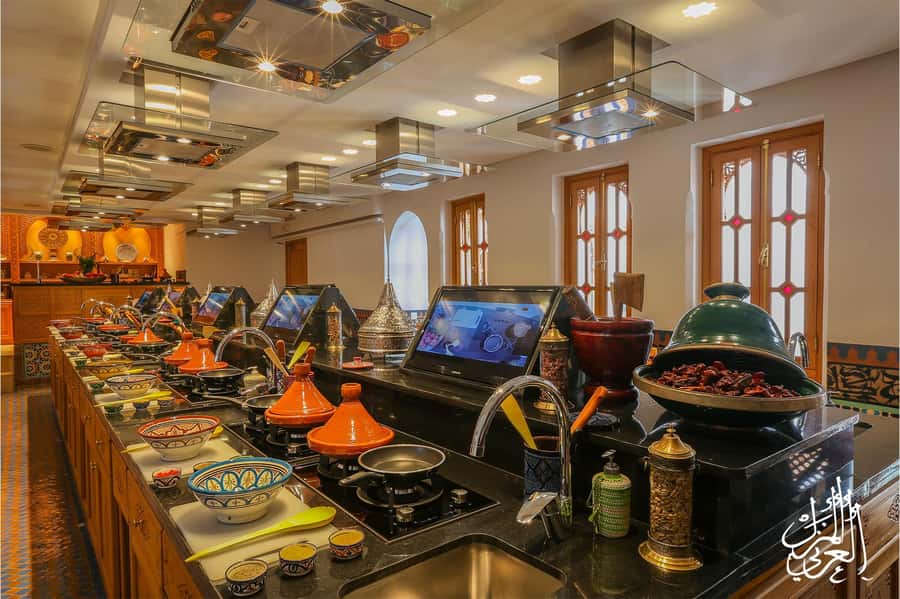
I would recommend the three-hour session to anyone who wants food, culture, and conversation in one activity. It is particularly good for first-time visitors who want a clearer understanding of Moroccan cuisine, and for people who plan to cook tagine at home.
The express class suits you if your day is packed, you prefer a short activity, or you are testing the idea of a cooking class for the first time. It gives you the key pleasure, making and eating a traditional dish, without requiring most of an afternoon.
This is not the right pick if you dislike group activities, cannot stand for practical kitchen work, or want a highly specialized chef course. The workshop is aimed at home cooks, not professionals. It is also not suitable for children under 12 or wheelchair users.
Should you book La Maison Arabe?
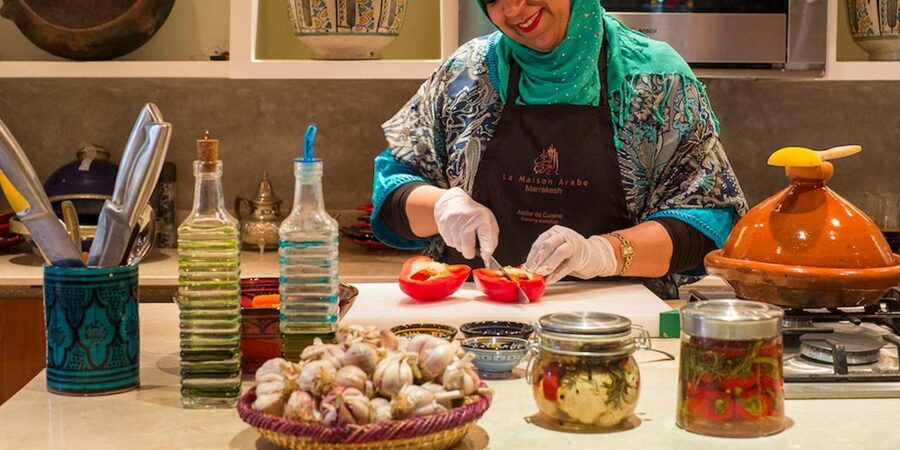
Yes, if you want to do more than photograph Moroccan food. The class gives you a real task, a clear lesson, and a meal you can enjoy afterward. The clean facilities, individual stations, language support, and warm teaching make it a dependable choice close to the medina.
Choose three hours if you have room in your schedule and want the full experience, including starters, dessert, bread, and tea. Choose one hour if you need a brisk introduction. I would accept the higher price for the longer session, especially if learning the recipe and taking it home matters to you.
FAQ
Where is the meeting point?
Meet at the front desk of La Maison Arabe. The activity may also take place in the property’s secret gardens, depending on the arrangement.
How long does the cooking class last?
You can choose between a one-hour express workshop and a three-hour cooking workshop. Check availability for the starting times offered on your date.
What food will I cook?
The class focuses on a traditional Moroccan dish, commonly chicken tagine. The three-hour option can include starters, tagine or couscous, dessert, handmade bread, and tea.
Is the food included?
Yes. Food tasting and lunch are included, and you eat the meal prepared during the workshop. Drinks are not included.
Which languages are available?
Instruction is available in Arabic, English, and French. A translator provides live translation when needed.
What should I bring?
Bring water and wear comfortable clothes. Drinks are not allowed in the workshop.
Is the class suitable for children or wheelchair users?
No. The activity is not suitable for children under 12 or wheelchair users.
More Workshops in Marrakesh
- Marrakech: Pottery Workshop with Moroccan Tea
★ 4.8 · 756 reviews - Marrakech: Atlas Mountains Cooking Class with Berber Family
★ 4.9 · 299 reviews - Marrakech: Moroccan Cooking Class for vegetarians and vegan
★ 4.9 · 156 reviews - Marrakech: Traditional Moroccan Crepes & Bread Cooking Class
★ 4.8 · 135 reviews
Just listed out of Marrakesh
- Marrakech: Ouzoud Waterfalls Trip, Guide & Boat + Lunch★ 4.7 · 33 reviews
- Marrakech: Vibrant Dinner Show at The Lotus Club★ 3.9 · 33 reviews
- From Marrakech: 3-Day Merzouga and Sahara Desert Tour★ 4.5 · 33 reviews
- Marrakech: Private Souks Tour with Tea and Traditional Snack★ 4.6 · 33 reviews
- From Marrakech: Small Group To Essaouira & Medina Day Trip★ 4.3 · 33 reviews
- Marrakech: Medina Souks, Hidden Markets and Shopping Tour★ 4.8 · 33 reviews
- 2 Days Desert Agafay and Atlas Mountains Trek From Marrakech★ 3.8 · 33 reviews
- Agadir/Taghazout : Marrakech Guided Tour old Medina & Souks★ 3.7 · 34 reviews
Marrakech Tours, compared.

Agafay Desert Sunset, Camel Ride, and Dinner Show
Read our review →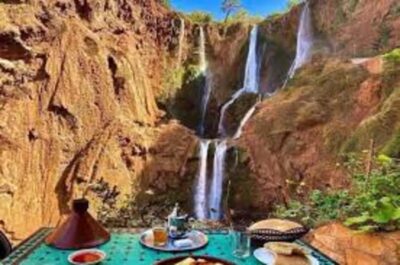
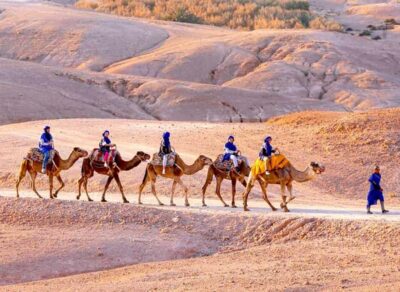
Agafay Desert Quad & Camel Rides with Dinner Show
Read our review →
Agafay Desert Quad Biking Tour with Dinner-Show
Read our review →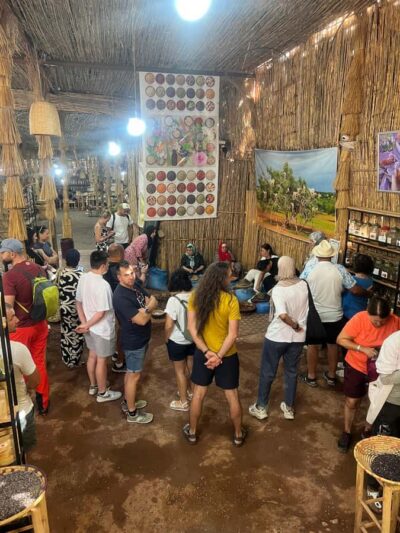
Atlas Mountains, Ourika Valley, Waterfall & Lunch
Read our review →
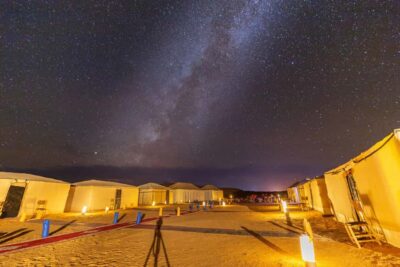
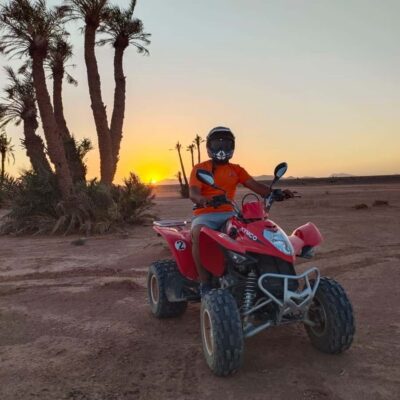
Quad Bike Tour to Palm Oasis and Jbilat Desert
Read our review →Browse the lists this tour appears in