
Reviewed · MARRAKECH TOURS
Marrakech: Medina Souks, Hidden Markets and Shopping Tour
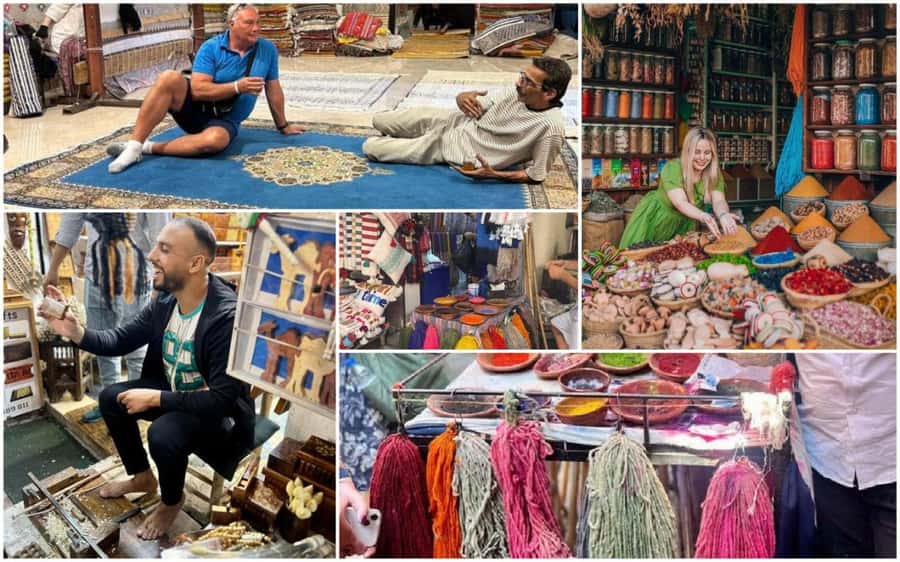
Marrakech’s souks make more sense once you leave the main lanes. This four-hour walk takes you from Jemaa el Fnaa into quieter craft quarters, where blacksmiths, spice sellers, rug merchants, leather workers, and lamp makers each have their own corner of the medina. Guides such as Ibrahim, Brahim, and Lhoussin are praised for explaining both the shopping and the culture behind it.
I like two things here: you get practical help with bargaining, and the route reaches workshops and side markets you could easily miss alone. I also like the free delivery of purchases to your hotel, a useful touch when you buy a tagine, rug, or bulky lamp. The main consideration is simple: four hours on foot through narrow alleys can be tiring, and the Ben Youssef Madrasa entrance fee is extra.
Key points to know before you book
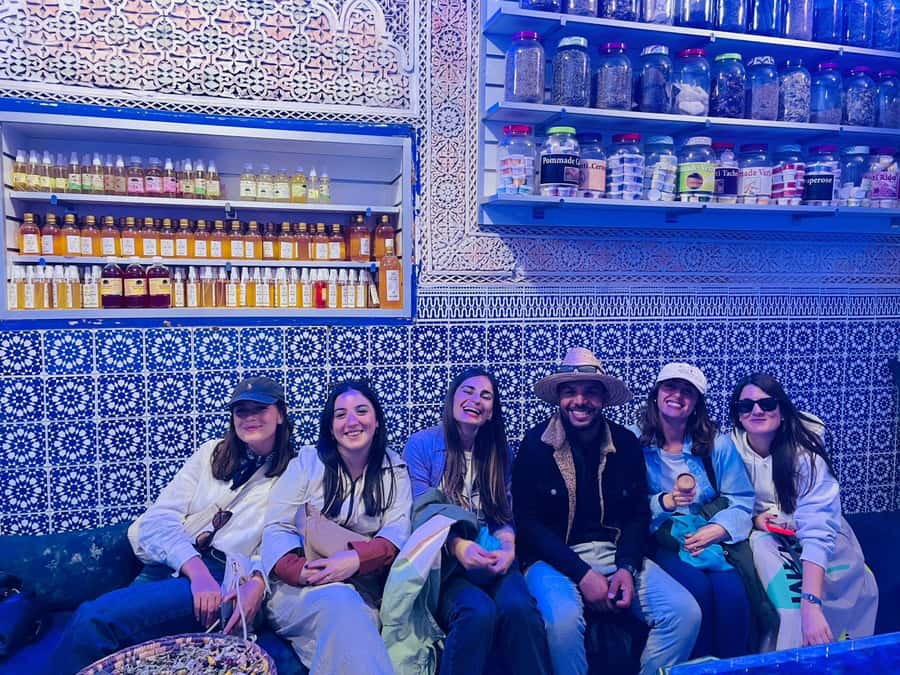
- Quieter craft quarters: Move beyond the main market lanes into specialist areas for blacksmithing, lamps, spices, textiles, leather, wood, and jewelry.
- A guide who helps you shop: Learn how to bargain and how to choose goods, with no obligation to buy from the artisan shops visited.
- A useful first-day tour: The route gives you orientation, local etiquette, and confidence for further exploring on your own.
- Ben Youssef Madrasa stop: Add a major historic sight to a shopping-focused walk, with admission costing 50 MAD for adults.
- Private or shared format: Choose a private group for a more tailored route, or a shared walking tour for the lower advertised price of $22 per person.
- Hotel delivery included: Purchases can be delivered to your hotel, and pickup is available when you book the private option with hotel pickup.
Why this souk walk is useful on your first day
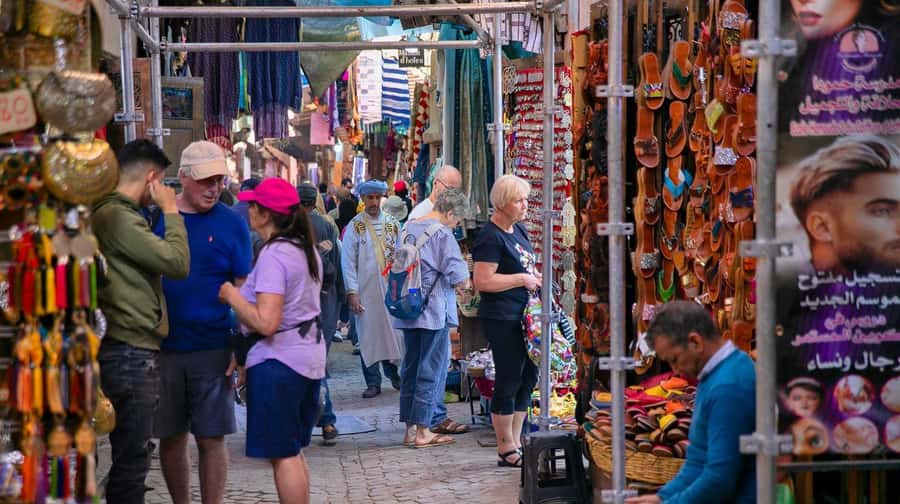
The Marrakech medina is easy to enter and surprisingly hard to read. Jemaa el Fnaa gives you a clear starting point, but the souks quickly split into lanes that look much alike. A local guide turns that confusion into a route with purpose.
You begin outside Café Argana, unless your selected option gives you another meeting point or private hotel pickup. The guide provides a short orientation, then leads you toward the old medina’s main square and deeper into the market streets.
I especially like booking this kind of walk early in a Marrakech stay. You learn where the major craft areas are, how bargaining works, and which goods deserve closer attention. Several guides also offer useful advice about Moroccan customs and etiquette, so you are less likely to feel awkward when shopping later without a guide.
The staff named in the booking information include English, French, and Arabic-speaking guides. Ibrahim, also called Brahim in some bookings, receives especially strong praise for his warmth, patience, photography help, and ability to adjust the route. Lhoussin and Elhoussine are also singled out for answering questions, suggesting the Ben Youssef Madrasa, and steering shoppers toward good-quality, ethically sourced goods.
That variation matters. Your exact guide shapes the experience more than the formal route does. The company sends a WhatsApp confirmation the day before, so use that message to confirm the meeting place and pickup details.
More Shopping Tours in Marrakech
- Marrakech: Traditional Moroccan Cooking Class & Market Visit
★ 4.8 · 1,861 reviews - Marrakech: Moroccan Cooking Class with Market Visit and Meal
★ 4.9 · 347 reviews - Marrakech: Exclusive Private Shopping Adventure in The souks
★ 4.9 · 77 reviews
Jemaa el Fnaa: start with Marrakech’s great crossroads
The tour begins at Jemaa el Fnaa, the famous central square of the medina. This is mainly a short orientation, photo stop, guided visit, and free time, lasting about 20 minutes.
The square helps you understand Marrakech’s layout. From here, your guide can explain how the open public space connects with the covered shopping lanes. It is also a sensible place to get your bearings before the streets narrow and the signs become less useful.
Do not expect the full shopping experience to happen here. The value of this first stop is context. You see the city’s central meeting place, then move into the specialist souks where the real craft work takes place.
This is also the point where a guide’s local knowledge helps. If you arrive a little lost, the company provides a WhatsApp contact, and a short delay of five to ten minutes is possible if another participant is late. Build that small cushion into your plans.
From the main lanes to specialist workshops
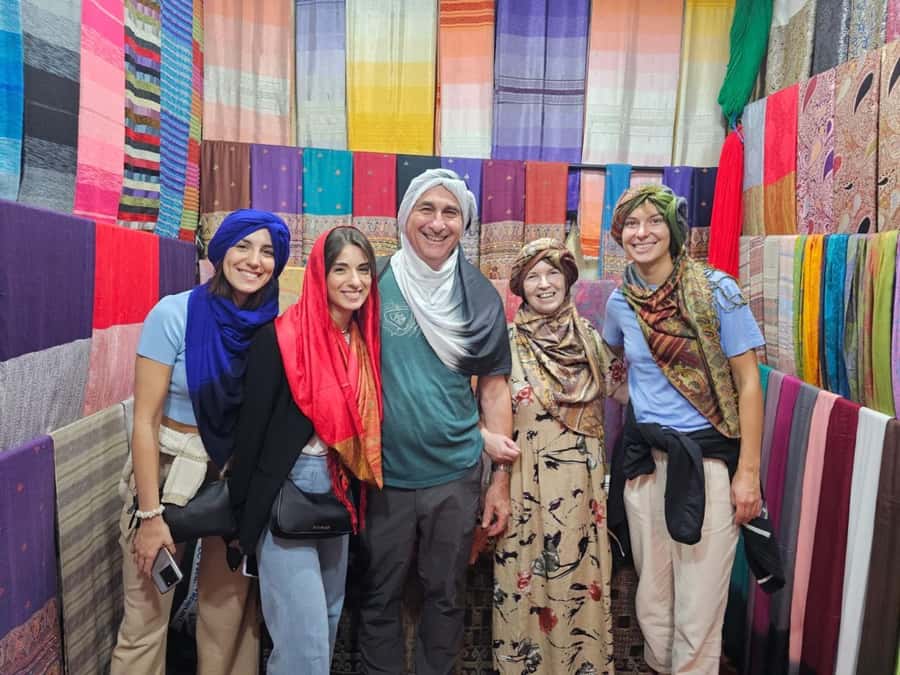
The next section, listed as hey-zefriti, takes roughly 100 minutes and forms one of the longest parts of the walk. Expect a photo stop, guided walking, shopping, and a closer look at the medina’s artisan quarters.
The route is designed to show you more than shopfronts. You might watch demonstrations of items being made, see craft areas organized by trade, and hear why particular materials matter in Moroccan daily life. The exact stops can be shaped around your interests, especially on the private version.
The shopping themes cover a wide range:
- Oils, herbs, and spices
- Berber rugs and carpets
- Leather goods
- Woodwork
- Jewelry
- Textiles and pottery
- Lanterns and handmade lamps
This is where I see the strongest value. For $22 per person, you are not simply paying to be led through a market. You are buying orientation and a buffer against the pressure that can come with shopping in an unfamiliar place. The guide can help you compare goods, explain bargaining, and point out what to avoid.
The tour does visit local artisan shops, but buying is not required. That distinction is important. You can look, ask questions, and learn the process without treating every stop as a sales obligation. If you do buy, free delivery to your hotel means you do not need to carry everything for the rest of the afternoon.
Souk Semmarine and the working medina
Souk Semmarine receives about 40 minutes. This is one of the central shopping streets, with guided sightseeing, photos, and time to browse.
Here you will find the classic medina shopping experience: closely packed shops, narrow passages, and goods arranged to catch your eye. It is a good place to compare the polished retail side of the souks with the smaller working quarters visited elsewhere on the walk.
Your guide can help you slow down. Instead of buying the first attractive item, ask about the material, origin, workmanship, and final price. A tagine purchase, for example, became easier for one participant after the guide helped with the bargaining. That kind of support is useful, especially if you are new to Moroccan haggling.
Remember that the first price is part of the conversation, not necessarily the final one. Still, do not bargain unless you have a real interest in buying. A friendly, respectful exchange is better for everyone than treating the process as a game.
A few other Marrakesh days worth comparing
- Marrakech: Bahia Palace, Saadian Tombs, Souk and Medina Tour
★ 4.7 · 4,974 reviews - Marrakech: Ben Youssef, Secret Garden, & Souks Walking Tour
★ 4.6 · 2,802 reviews - Marrakech: Colorful Medina Souks Guided Walking Tour
★ 4.7 · 2,470 reviews - Marrakech: Saadian Tombs & Bahia Palace, Medina Guided Tour
★ 4.6 · 1,989 reviews
Rahba Kedima and the Spice Square
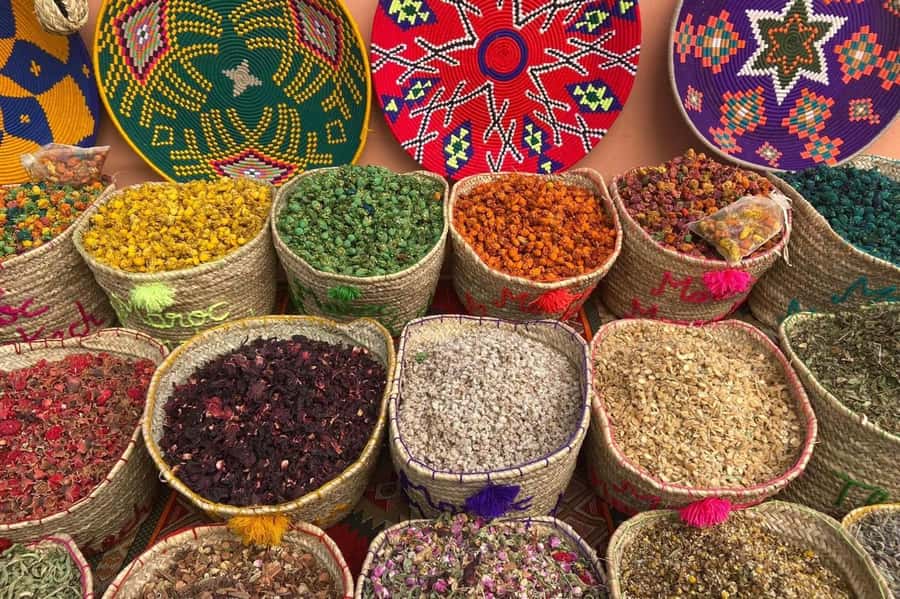
Rahba Kedima, also known as the Spice Square, gets about 50 minutes. This is one of the most sensory sections of the route, centered on oils, herbs, spices, and traditional products.
The emphasis here is not only on color and aroma. Your guide introduces the place as part of Moroccan custom and everyday culture. You can ask what products are used for, how they are prepared, and how to tell the difference between a display item and something intended for regular use.
The market’s appeal comes from its mix of shopping and social life. Stalls and small shops crowd around the square, while the surrounding lanes lead toward other craft areas. A guide makes it easier to understand the connections rather than seeing a series of unrelated stands.
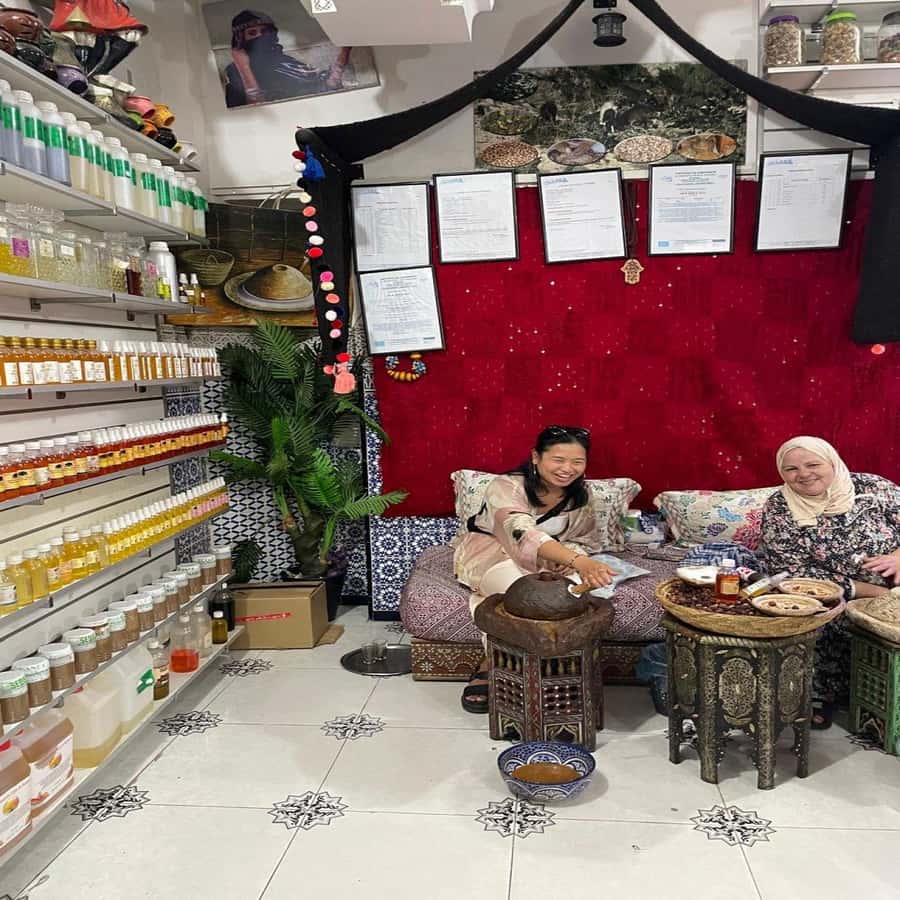
Some participants have also made argan oil themselves during a visit to an artisan stop. That possibility is worth clarifying with your guide, since exact demonstrations may vary. The broader point is that the tour aims to show production, not just finished souvenirs.
Bring cash in local currency. The booking information specifically advises carrying money for purchases and keeping 50 MAD available for the adult entry fee to Ben Youssef Madrasa. Food and drinks are not included, so plan those separately.
Ben Youssef Madrasa adds history to the shopping route
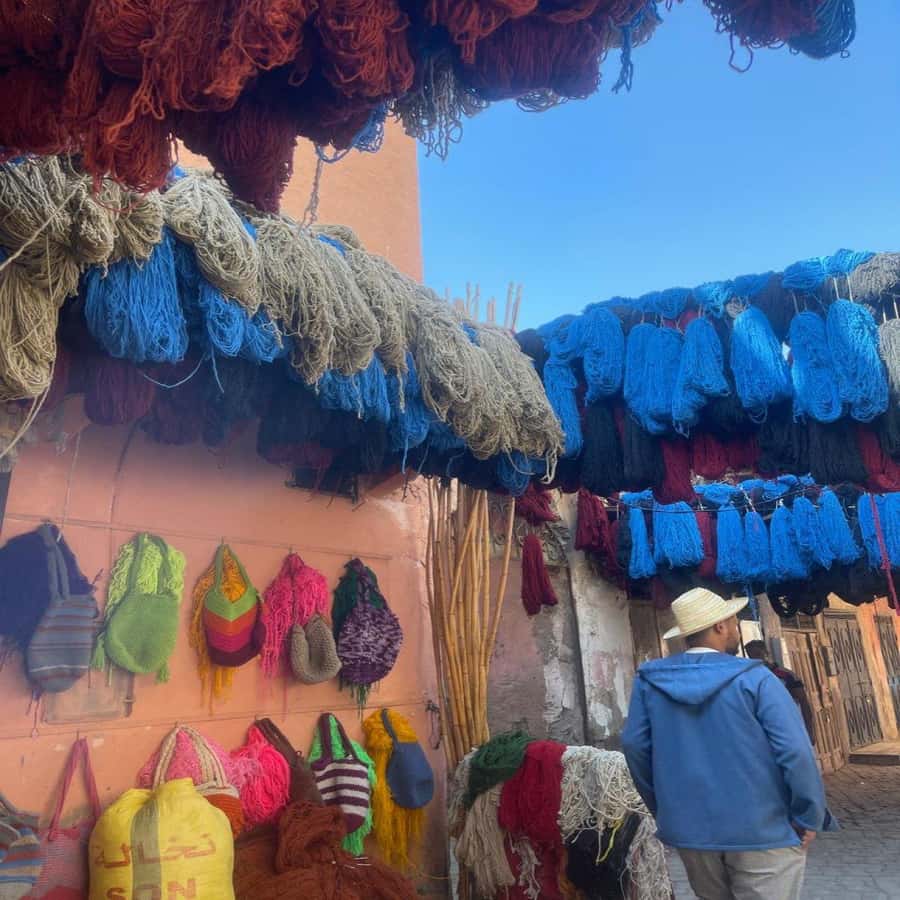
The Ben Youssef Madrasa is the main historic monument on the route. The stop includes a visit, guided explanation, sightseeing, and free time, but the duration is not specified in the schedule.
This is a welcome change of pace after the market lanes. The madrasa gives you a place to pause and consider the educational and religious traditions that shaped the old city. Guides can explain the building’s story and point out details you might pass without context.
Admission is not included. Adults pay 50 MAD, and you should have the fee in local currency. The experience advertises skip-the-ticket-line access, but you still need to pay the entrance charge.
If your main goal is shopping, this stop adds variety without taking over the day. If you care strongly about architecture and history, you may want to allow extra time in Marrakech for the madrasa beyond the tour’s scheduled visit.
The Blacksmith Souk and the sound of metalwork
The old Blacksmith Souk is described as a 12th-century craft quarter, and the route gives it a dedicated place in the walking tour. The listed visit lasts about 100 minutes, making it another substantial part of the outing.
This section shows why the medina is more than a collection of souvenir stalls. Craft districts developed around particular trades, and the blacksmith area keeps that working identity visible. You may see metalwork in progress and hear explanations of how tools, fittings, and decorative pieces are made.
The atmosphere can be busier and louder than the quieter side squares. That contrast is part of the experience, but it may not suit anyone who wants a calm, slow shopping trip. The guide helps by explaining what you are seeing and moving the group through the lanes in an organized way.
This is also a good place to ask about quality. Handmade goods can vary, and a local guide can help you understand the difference between an item made in a workshop and something simply imported or mass-produced. The tour promises access to local artisan shops, but it does not promise that every product will suit every budget.
Souk Haddadine and Marrakech’s handmade lamps
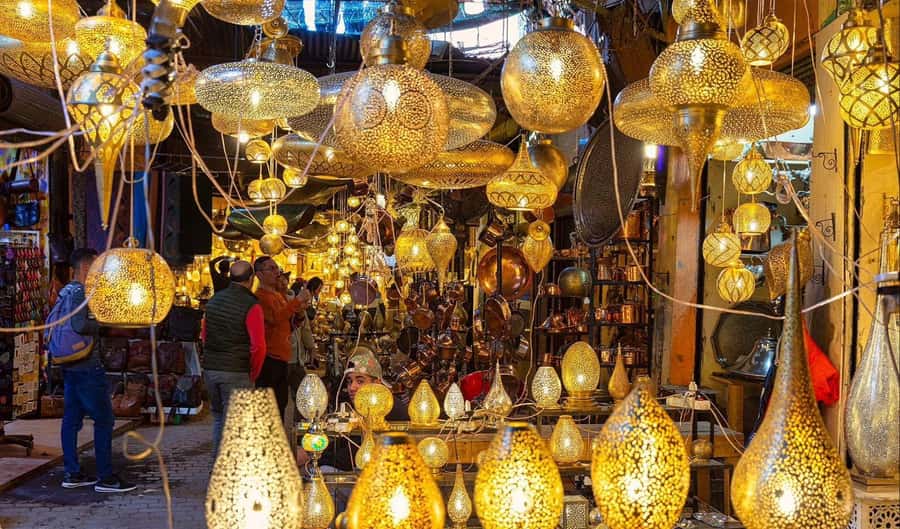
The final major shopping section is Souk Haddadine, known for lampshades and lanterns. It includes about 100 minutes of guided walking, shopping, photos, and sightseeing.
The lamp market is one of the most visually appealing parts of the route. Metalwork, cutout designs, and colored glass can look entirely different under shop lighting than they do in a hotel room, so ask how the lamp is packed and delivered before you buy.
The free hotel delivery is especially useful here. Lamps and larger craft items are awkward to carry through the medina, and delivery lets you keep walking without turning the rest of your day into a luggage exercise.
You are also free to browse without buying. The guide can help you compare styles and prices, but you remain responsible for the final purchase. Personal expenses, meals, and drinks are not covered by the $22 price.
How much walking and shopping should you expect?
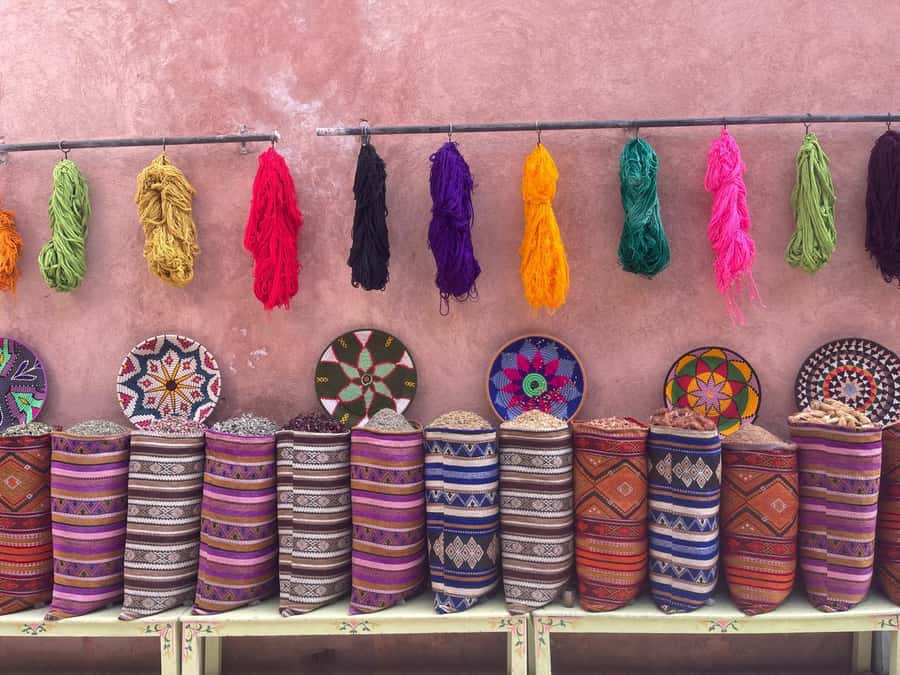
The advertised duration is four hours, but the route is not a gentle sightseeing loop. You walk through narrow alleys, covered markets, squares, and craft quarters for most of the morning or afternoon.
Wear comfortable shoes and bring sunglasses. Cash is essential for shopping and the madrasa fee. The medina can feel crowded and confusing, so keep your group together and follow the guide’s directions at turns.
The tour is listed as wheelchair accessible, and a private group is available. Because the experience uses old medina lanes and includes extensive walking, contact the provider before booking if you have specific mobility needs. The private option is also the better choice if you want a slower pace, more photo stops, or a route built around one interest, such as rugs, spices, or lamps.
Families can do well on the tour. One guide, Brahim, was particularly patient with two young children and adjusted the pace for them. Still, four hours of walking and shopping may be long for small children, so a private booking gives you more control.
Is $22 good value for Marrakech?
At $22 per person, this is an inexpensive way to get a first reading of the medina. The value comes from the guide’s time, the structured route, shopping advice, and access to craft areas that are easy to miss.
The price does not include the Ben Youssef Madrasa ticket, meals, drinks, or anything you buy. That is normal for a shopping walk, but your final cost depends on your purchases. Set a budget before you enter the souks, especially if rugs, jewelry, leather, or lamps appeal to you.
The shared tour offers the best price. The private option costs more, though the exact supplement depends on the selected booking choice. In exchange, you get a more personal route and optional hotel pickup. For couples, families, or anyone with a short stay, that extra flexibility may be worth it.
The strongest benefit is the confidence you take away. After four hours with a local guide, you should understand the basic layout, recognize several craft districts, and feel better prepared to return alone.
Who should book this medina shopping tour?
I would choose this experience if you want shopping to be tied to local craft and culture rather than treated as a simple buying trip. It suits first-time visitors, solo travelers who want help finding their way, couples, and families who prefer a guide with patience and local contacts.
It is also a smart choice if you have only one day in Marrakech. Lhoussin helped one short-stay visitor fit the madrasa into the route and make better use of limited time.
I would think twice if you dislike bargaining, crowded markets, or several hours on foot. You may also prefer a private tour if you want to avoid waiting for a group or need a very specific pace.
Free cancellation up to 24 hours before the start and reserve-now, pay-later booking make the $22 commitment fairly flexible. The provider sends WhatsApp confirmation the day before, and the customer service team can confirm accommodation pickup when that option is selected.
Should you book it?
Book this tour if you want a practical introduction to Marrakech’s souks, especially on your first day. The best parts are the specialist craft quarters, the bargaining help, the guide’s flexibility, and the chance to see how goods are made rather than simply walking past displays.
Choose the private option if your shopping list is specific, you are traveling with children, or hotel pickup matters. Choose the shared walk if you want the lowest price and a straightforward four-hour introduction.
This is not a quiet museum tour, and it is not a guarantee of the lowest possible shopping price. It is a useful way to learn the medina’s pattern, shop with more confidence, and find parts of old Marrakech you might not reach on your own.
FAQ
How long does the Marrakech souks tour last?
The tour lasts four hours and is primarily a walking experience through the old medina and its craft districts.
How much does the tour cost?
The advertised price is $22 per person.
Is the Ben Youssef Madrasa entrance included?
No. Adult admission costs 50 MAD and is paid separately in local currency.
Where does the tour meet?
The meeting point may vary by booking option. The standard meeting location is outside Café Argana, while private hotel pickup may be available if you select that option.
Can I book a private tour?
Yes. A private group option is available, and the private shopping tour can include hotel pickup.
Which languages do the guides speak?
Live guides are available in English, French, and Arabic.
Do I have to buy anything during the tour?
No. You can visit local artisan shops and learn about the crafts without any obligation to purchase.
Can my purchases be delivered to my hotel?
Yes. Free delivery of purchased products to your hotel is included.
What should I bring?
Bring sunglasses and cash. You should carry local currency for the Ben Youssef Madrasa entrance fee and personal purchases.
More Shopping Trips in Marrakesh
- Marrakech & Souk Shopping Tour.
★ 4.8 · 62 reviews - Marrakech: Hidden Souks Shopping Tour with Private Guide
★ 4.1 · 53 reviews - Moroccan Cooking Class & Marrakech Market Visit with Chef Khmisa
★ 5.0 · 1,504 reviews - Marrakesh: Guided Souk Shopping Tour with a Local Guide
★ 4.9 · 651 reviews
Just listed out of Marrakesh
- Marrakech: Ouzoud Waterfalls Trip, Guide & Boat + Lunch★ 4.7 · 33 reviews
- Marrakech: Vibrant Dinner Show at The Lotus Club★ 3.9 · 33 reviews
- From Marrakech: 3-Day Merzouga and Sahara Desert Tour★ 4.5 · 33 reviews
- Marrakech: Private Souks Tour with Tea and Traditional Snack★ 4.6 · 33 reviews
- From Marrakech: Small Group To Essaouira & Medina Day Trip★ 4.3 · 33 reviews
- 2 Days Desert Agafay and Atlas Mountains Trek From Marrakech★ 3.8 · 33 reviews
- Agadir/Taghazout : Marrakech Guided Tour old Medina & Souks★ 3.7 · 34 reviews
- From Marakkesh: Half Day Buggy Adventure in Agafay Desert★ 4.1 · 35 reviews
Marrakech Tours, compared.

Agafay Desert Sunset, Camel Ride, and Dinner Show
Read our review →

Agafay Desert Quad & Camel Rides with Dinner Show
Read our review →
Agafay Desert Quad Biking Tour with Dinner-Show
Read our review →
Atlas Mountains, Ourika Valley, Waterfall & Lunch
Read our review →


Quad Bike Tour to Palm Oasis and Jbilat Desert
Read our review →Browse the lists this tour appears in