
Reviewed · MARRAKECH TOURS
Marrakech: Guided Bike Tour with a local Guide
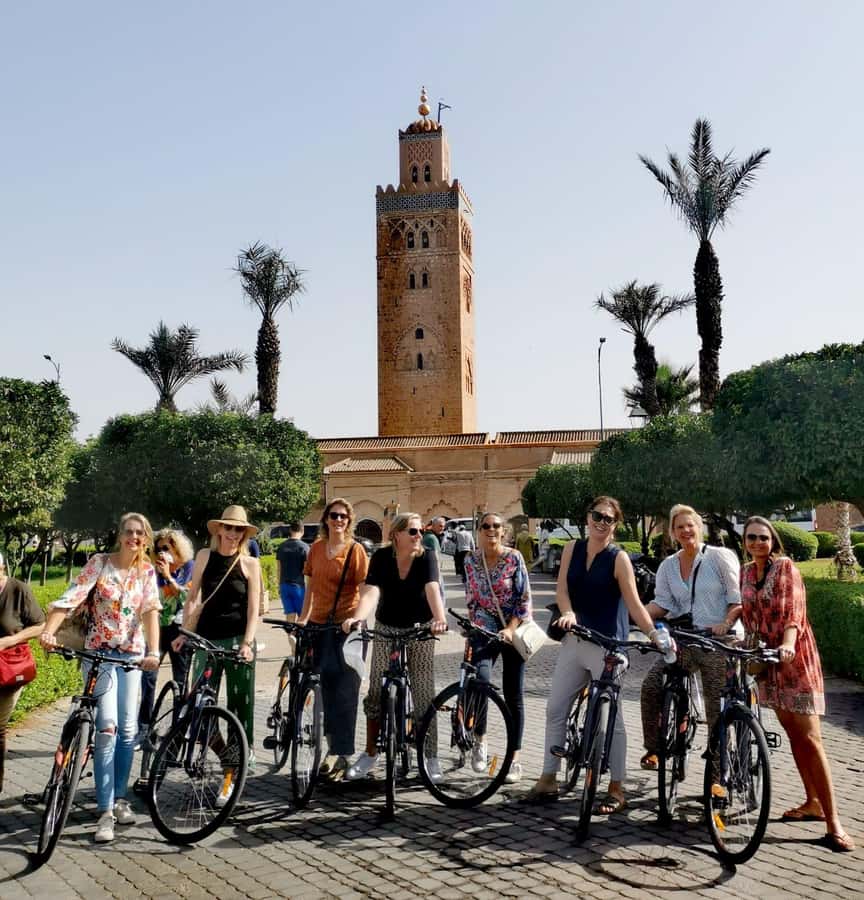
Marrakech makes more sense from a bicycle seat. You can move from modern Gueliz to the old city, pause at the Menara Gardens, and reach the Mellah and Jemaa el Fna without spending the whole morning inside a taxi. I like the mix of major sights and ordinary streets, plus the chance to hear local history from a bilingual guide rather than simply follow a map.
I also like that the bike, guide, and bottled water are included for $27. Guides such as Saadia and Meriem have been praised for warm, careful leadership, and one small group had only five people. The main consideration is traffic: you need to ride a bike confidently, stay alert, and accept that the listed stops add up to more than the advertised three hours, so the pace may vary.
Key points to know before you book
- A city-wide route in three hours: Move from Gueliz and the railway station to Menara, Koutoubia, the Mellah, and Jemaa el Fna.
- Local guidance in four languages: Tours are offered in English, French, Dutch, and Arabic.
- A good introduction to Marrakech: You see modern districts, gardens, religious architecture, old neighborhoods, and the central square in one outing.
- Small-group potential: A recent outing led by Meriem had five people, making the ride feel personal and easier to manage.
- Useful inclusions: Bike rental, bilingual guiding, and bottled water are covered in the $27 price.
- Basic cycling ability is essential: This is not a sightseeing bus with a bicycle attached. You must be able to ride confidently.
Why a bicycle works well in Marrakech
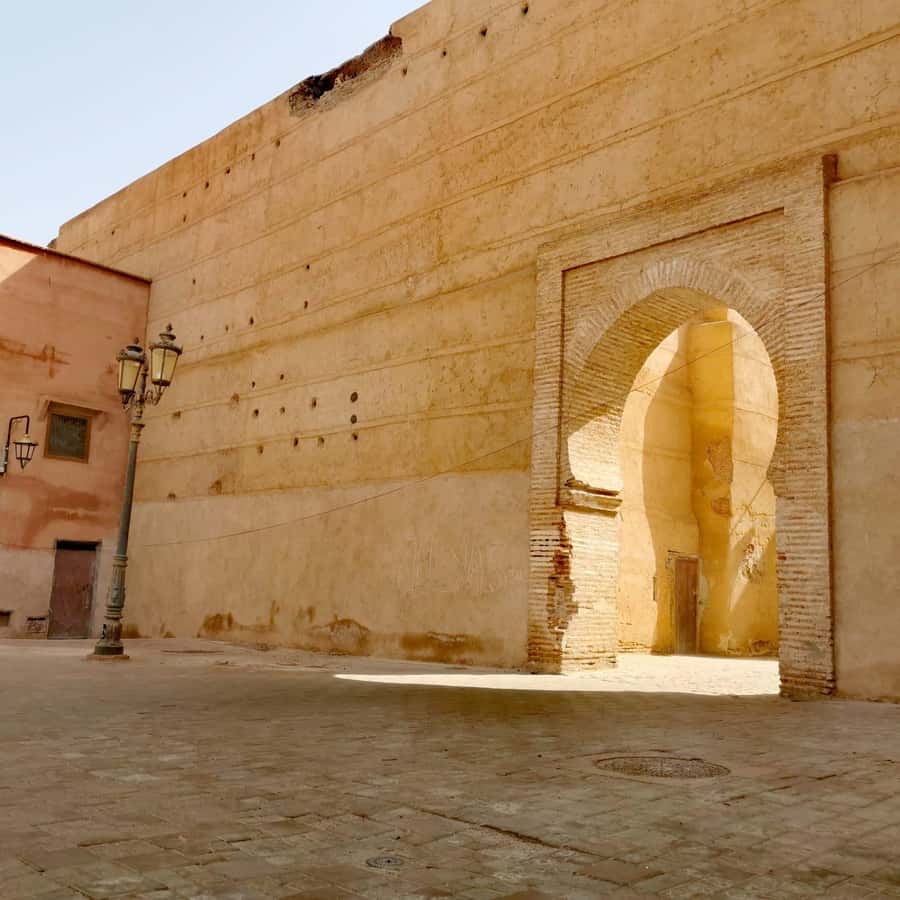
Marrakech is not a city best understood from one viewpoint. The newer Gueliz district has broad urban streets and a more modern feel, while the old quarters offer tighter streets, historic walls, shops, mosques, gardens, and daily commerce. A bicycle connects these parts quickly.
That is the central value of this outing. In three hours, you get a first look at several different sides of the city. You will not have time for a long visit inside every monument, but you can see where each place fits into Marrakech and decide what deserves a longer visit later.
The route also gives you a useful sense of scale. Menara Gardens, the Koutoubia Mosque, the Mellah, and Jemaa el Fna are not isolated postcard stops. They belong to a city that keeps changing from one street to the next. A guide helps explain those changes, especially when the ride shifts from modern Gueliz to older districts.
The tour is led by a bilingual local guide, with English, French, Dutch, and Arabic available. That language choice matters. The Dutch-speaking guides Saadia and Meriem are specifically named in the available feedback, and Meriem was praised for guiding a small group safely through the traffic. Saadia also led a notably long outing of about four hours, though the advertised duration is three hours, so you should treat the exact timing as flexible rather than guaranteed.
More Bike Tours in Marrakech
- Dutch Bike Tour in Marrakech with Local Guide
★ 4.7 · 269 reviews - Marrakech:Guided City Cycling Tour – Culture, Colors & Charm
★ 4.7 · 231 reviews - Marrakech: Cycling Tour in Palm Groove with Local Breakfast
★ 4.7 · 73 reviews
Starting in Gueliz at Morocco Toubkal Adventure
The meeting point is Morocco Toubkal Adventure in Gueliz. Tours begin at either 9 a.m. or 2 p.m. The office is on Rue Oum Errabia, behind the closed Hotel Le Marrakech and opposite Hotel Racine. It is on the same street as Mama Africa and African Chic.
This is a practical starting point because Gueliz is easier to navigate by taxi than the old city can be. If you arrive by taxi, asking for Hotel Racine should help your driver locate the area. The guide waits outside the agency, and a map link is provided for those who prefer to check the exact position before setting out.
You should arrive ready to ride. Wear comfortable clothes and shoes, and bring a hat, sunscreen, and a camera. Bottled water is included, but carrying extra water may still be sensible in hot weather. Hotel pickup and drop-off are not included, although a separate transfer can be arranged with the company if requested.
The opening section in Gueliz gives you a quick look at the newer side of Marrakech. This is useful context before the route turns toward historic districts. It also gives the guide a chance to make sure your bicycle fits and to explain how the group will move through city traffic.
The railway station and Marrakech’s modern connection
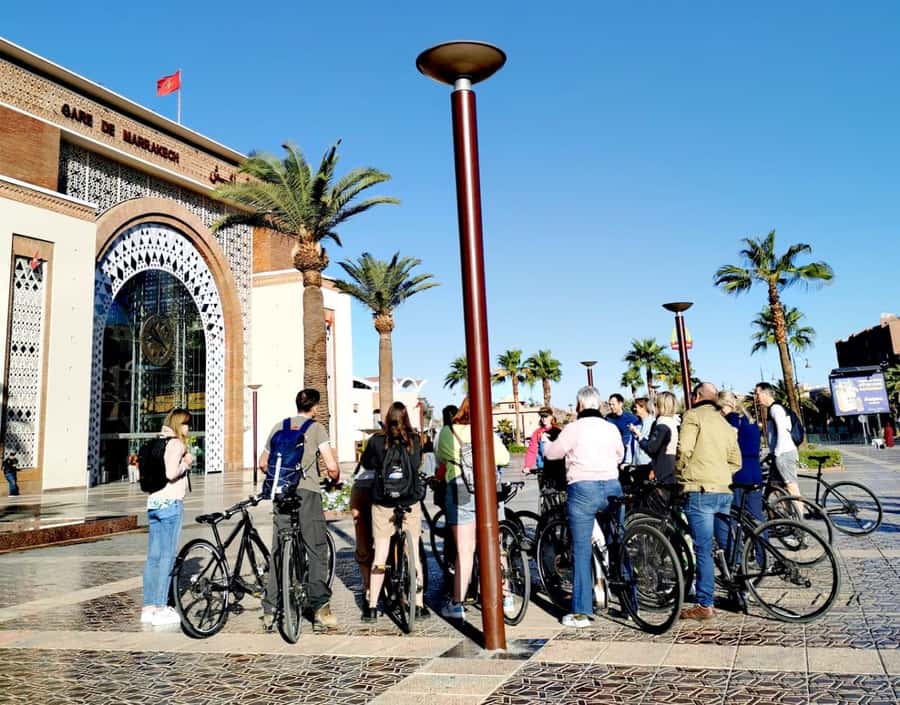
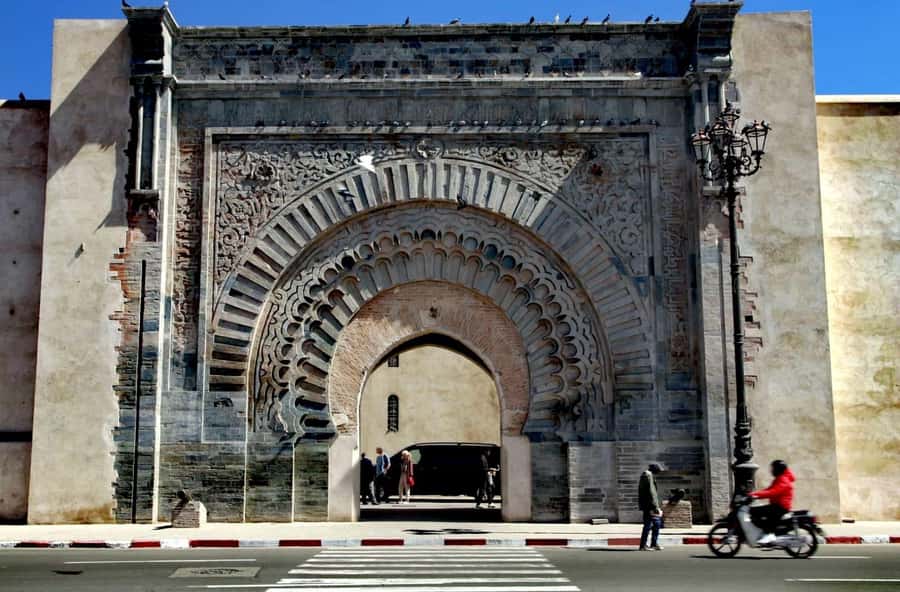
The route passes by Bab Agnaou before reaching Marrakech Railway Station. Bab Agnaou is one of the city’s historic gates, and even a pass-by gives you a taste of the old defensive edge of Marrakech. The planned time here is about 20 minutes, though this is listed as a passing stop rather than a full visit.
At the railway station, the tour pauses for photographs for around 30 minutes. The station is more than a place to catch a train. Its architecture and role in connecting Marrakech with other parts of Morocco make it a useful stop for understanding the city as both an old imperial center and a modern destination.
I like this contrast early in the ride. You begin with Gueliz and the railway station, then move toward gardens, mosques, and old quarters. The tour is not limited to the usual postcard view of Marrakech. It shows how the city links present-day movement with older streets and historic landmarks.
Do not expect a guided interior visit at the station. The stop is mainly for viewing and photographs, so your guide’s explanation is an important part of what you get here.
Menara Gardens: a quiet pause outside the old city
Menara Gardens is scheduled as a 40-minute visit and photography stop. After the noise and movement of city streets, this is the calmest part of the route. The gardens are an important symbol of Marrakech’s outdoor beauty and give you room to pause rather than constantly watch traffic.
Bring your camera, but do not forget to look up from it. The value of this stop is the change in pace. You are not simply collecting another landmark. You are seeing why gardens matter in a city known for sun, dry conditions, and busy public spaces.
The stop may suit photographers especially well, but it is also a practical break for anyone who wants a slower section during the ride. The tour is still fairly short, so the visit is designed as an introduction rather than an extended garden walk.
More bike days out of Marrakesh:
- Marrakesh: Toubkal National Park Mountain Bike Trip w/Lunch
★ 4.4 · 63 reviews - Cycling Adventure in Marrakech
★ 5.0 · 289 reviews - Marrakech’s Best Cycling Tour: Culture, Colors, and Charm
★ 5.0 · 154 reviews - Half-Day Highlights of Marrakesh Bike Tour
★ 5.0 · 84 reviews
Koutoubia Mosque and the story of the Red City
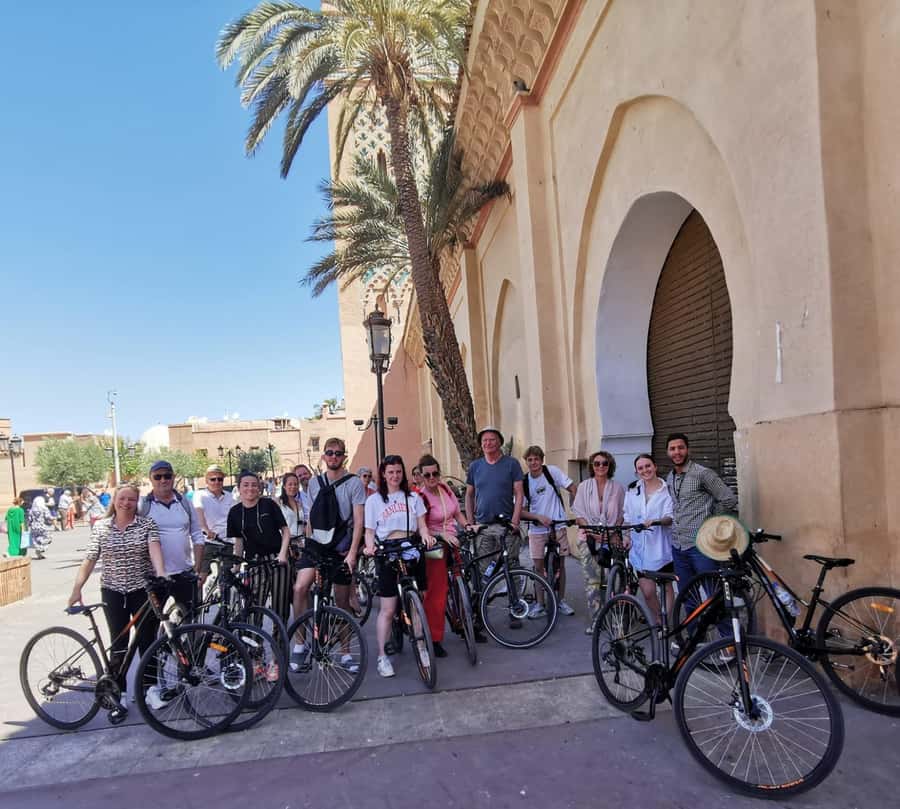
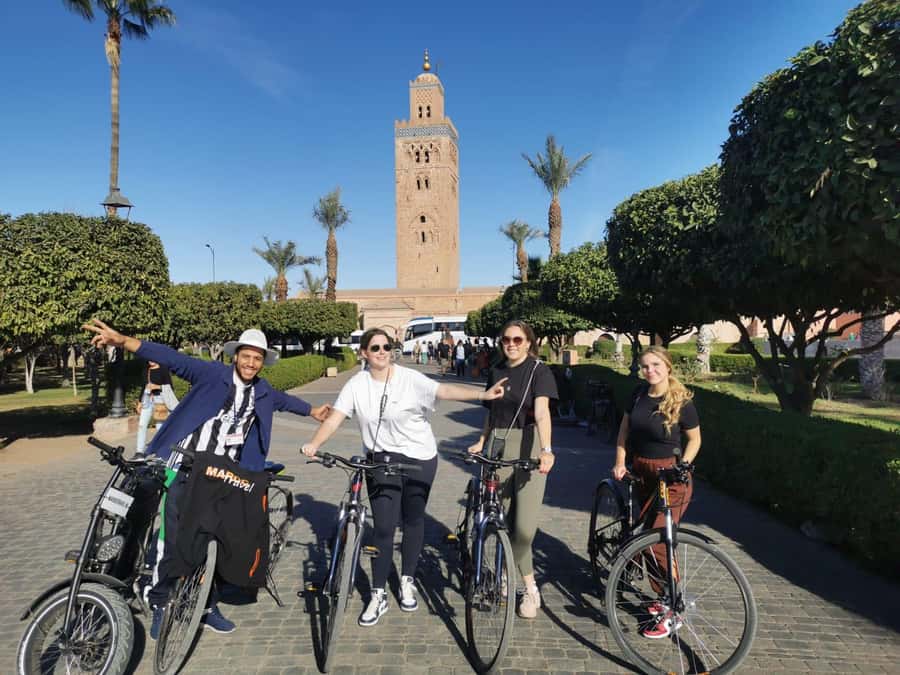
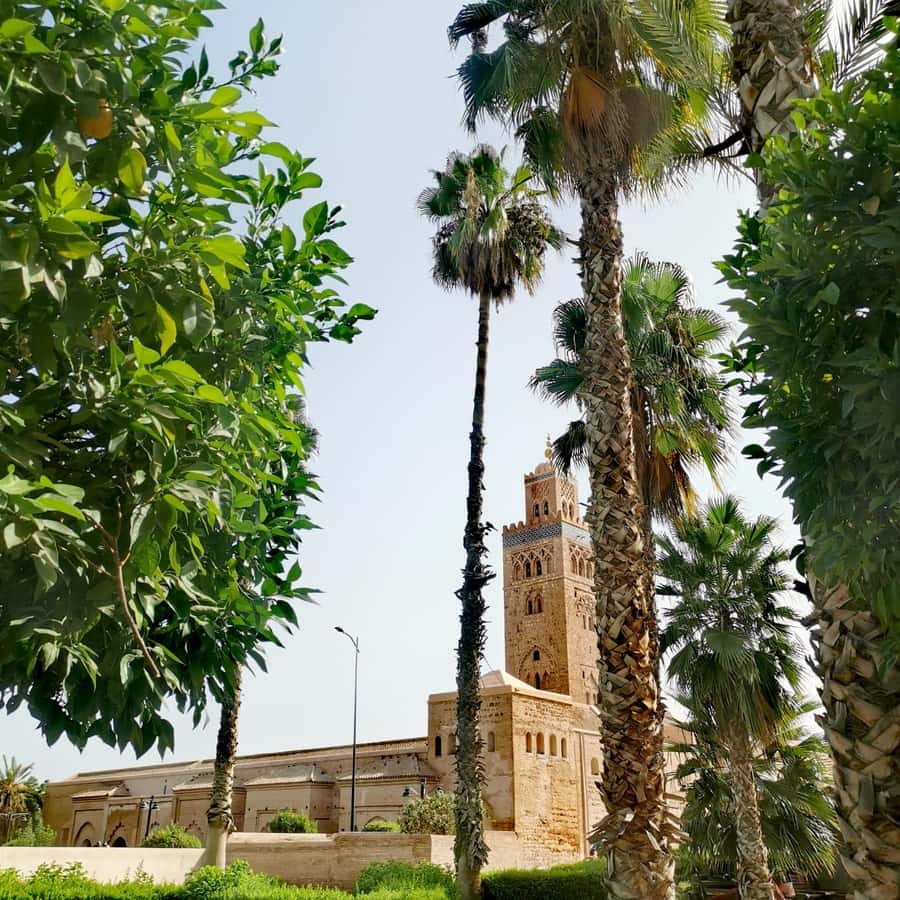
The Koutoubia Mosque receives about 40 minutes of sightseeing time. It is Marrakech’s largest mosque and one of its best-known landmarks. The guide explains its historical and cultural importance, giving you more than a quick photograph from the street.
The mosque is especially useful as a reference point. Its tower helps orient you toward the old city, and its position near Jemaa el Fna links religious, civic, and commercial parts of Marrakech. You will see the building as part of the city rather than as a separate attraction.
The tour does not include entrance fees to monuments, and the itinerary describes sightseeing rather than a paid interior visit. Plan on viewing the mosque from the accessible public areas unless your guide explains otherwise. Dress respectfully around religious sites, even though no specific clothing rule is given in the tour details.
This stop also shows why a local guide can add real value. The architecture is easy to recognize, but the reasons behind its importance are less obvious. A guide can place the building within Marrakech’s traditions and explain why it remains such a strong city symbol.
Through the Mellah, Bahia Palace, and spice shops
The Mellah is one of the most interesting parts of the route. This historic Jewish quarter brings you into a different side of old Marrakech, with streets, shops, and local traditions that do not feel like a standard modern-city sightseeing loop.
The planned break here lasts around 35 minutes. The route passes by Bahia Palace and includes the chance to see herb and spice shops. The smells, colors, and close street views make this a strong section for anyone interested in food, trade, architecture, or the everyday life of the old city.
The tour does not include entry to Bahia Palace, so you should not expect a full palace visit as part of the $27. Instead, the palace works as a landmark along the route, while the Mellah and shops provide the main street-level experience.
Cycling here requires patience. Historic streets can be tight and busy, and you may need to slow down or walk the bicycle for short stretches. The available information does not promise a specific cycling-only route, so you should expect to share space with other road users and follow your guide’s instructions closely.
That is also where the tour’s local character matters most. A guide can point out details you might pass without noticing and explain traditions connected with the quarter, herbs, spices, and commerce.
Jemaa el Fna: Marrakech’s loud central stage
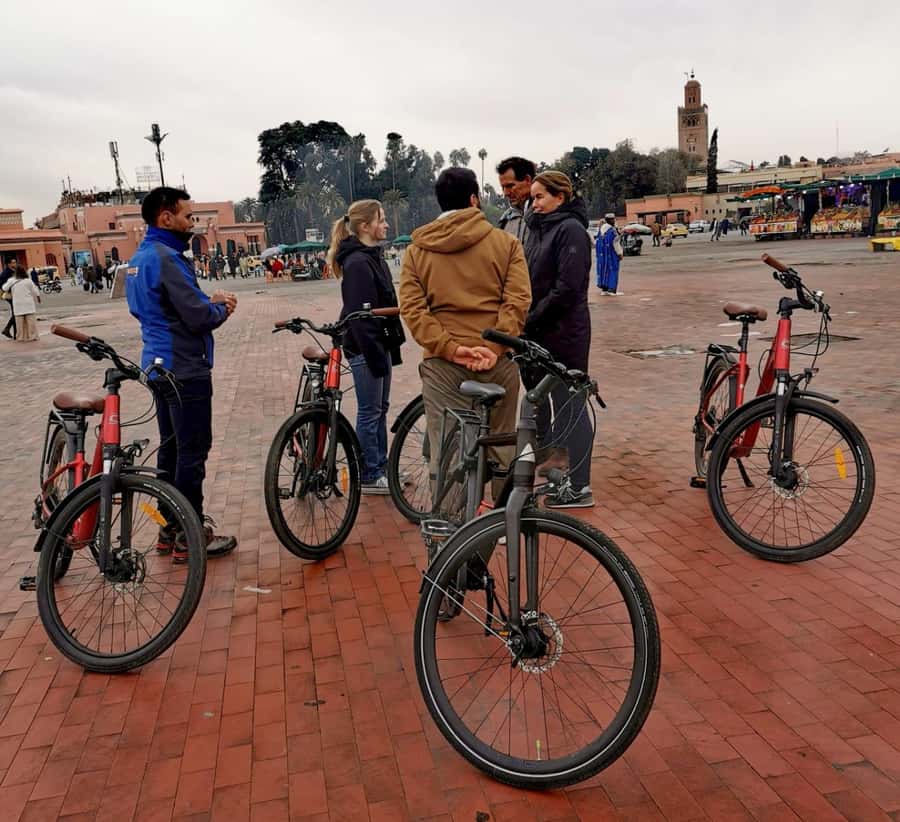
The final major stop is Jemaa el Fna, scheduled for about 20 minutes as a photography stop. This square is the public heart of Marrakech, filled with color, sound, food, movement, and changing activity. It is recognized by UNESCO for its cultural importance.
You get time to take in the scene rather than a long guided meal or shopping visit. That distinction matters. Meals are not included, and the tour does not promise time for a full food stop. If you want to eat at the square, you will need to plan another visit or confirm with the guide whether the schedule allows a brief purchase.
A bicycle is useful here because it gets you close to the square after covering more ground from Gueliz. But do not assume you will ride freely through every part of the plaza. The practical goal is to arrive, stop, look, and take photographs.
For a first visit to Marrakech, this is a fitting final sight. You have seen a garden, a mosque, an old quarter, and the modern city before reaching the place where so many parts of Marrakech meet. The square can feel intense, so the short stop keeps it manageable.
Returning to Gueliz and judging the three-hour pace
After Jemaa el Fna, the route returns to Gueliz and the Morocco Toubkal Adventure office. The final section is described as a leisurely ride, giving you time to think over the different districts you have seen.
The published stop times total more than three hours if added together, even though the activity duration is three hours. Some times are likely approximate, and a pass-by or photo stop may not use the full stated amount. Still, you should ask about the expected pace when you arrive, especially if you have another booking afterward.
The difference between the advertised three hours and the longer outing described by Frits is worth noting. Some tours may run longer depending on the guide, group, traffic, and stops. That can be a pleasant bonus, but it can also affect lunch plans or afternoon reservations.
The group size may be small. Meriem led a group of five, which made the outing feel familiar and allowed her to guide everyone safely through traffic. Group size can change, so do not assume every departure will have exactly five people.
What the $27 price really covers
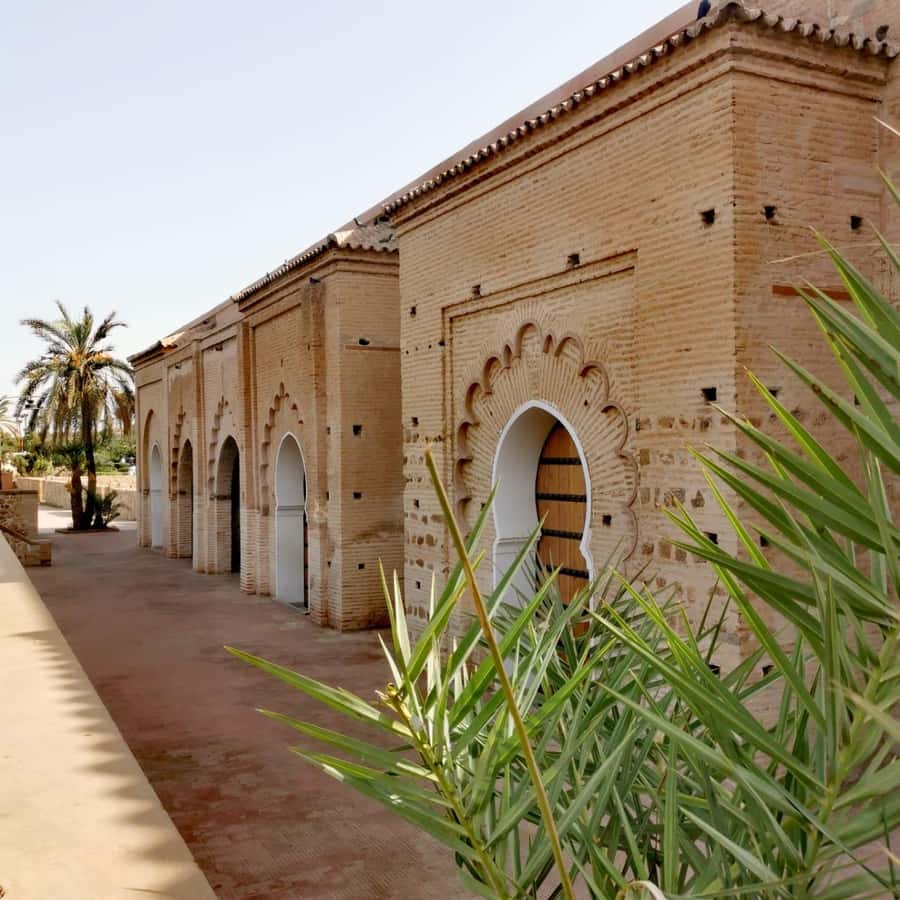
At $27 per person, this is a fairly efficient way to see several parts of Marrakech in one morning or afternoon. Your money covers the bicycle, a bilingual local guide, and bottled water. Those inclusions remove the need to rent a bicycle separately or arrange several short taxi rides.
The value is strongest if you are visiting Marrakech for the first time and want orientation. You can identify areas to revisit, learn how Gueliz relates to the old city, and see major sights without paying separate entrance fees.
The price does not cover hotel transport, meals, or monument entry. Those exclusions are reasonable for a cycling tour, but they affect your total budget. If you need a transfer to Gueliz, ask the company to arrange one. If you want to enter Bahia Palace or another monument, budget for that separately and check whether your schedule permits it.
I would think of this as a moving introduction, not a full historical tour of every stop. You pay for access to a broad route and the guide’s local explanations. You do not pay for long indoor visits or a meal.
Who will get the most from this ride
This outing suits you if you can ride a bicycle comfortably and enjoy seeing a city through several districts in one go. It is particularly useful for:
- First-time visitors who want a quick sense of Marrakech’s layout
- People who prefer active sightseeing to sitting in a vehicle
- Photographers interested in gardens, gates, architecture, and public squares
- History and culture fans who value local explanations
- Visitors staying in or near Gueliz
- Couples, friends, and small groups who want a guided city outing
It is not suitable for children under six or for anyone who cannot ride a bicycle. The traffic is another practical concern. You do not need to be a serious cyclist, but you should be comfortable starting, stopping, steering, and staying aware around other road users.
The morning departure may be preferable if you want cooler conditions, while the 2 p.m. departure leaves your morning free. The supplied details do not specify weather restrictions or exact group limits, so ask before booking if those factors matter to you.
Small details that make the outing work better
Wear shoes that will stay comfortable for three hours. A hat and sunscreen are important because the route includes outdoor stops at Menara Gardens, the Koutoubia area, and Jemaa el Fna.
Bring a camera, but keep it easy to reach. The railway station, Menara Gardens, Koutoubia Mosque, and Jemaa el Fna all provide different types of photographs. You will get more from the ride if you also listen to the guide instead of treating each stop as a quick picture break.
A bottle of water is included, but you should still arrive hydrated. Avoid alcohol and drugs, which are not allowed on the activity. Comfortable clothing is more useful than dressy clothing, though respectful attire remains sensible around the mosque and historic religious areas.
The tour allows free cancellation up to 24 hours before departure for a full refund, and you can reserve now and pay later. That flexibility is helpful when your Marrakech schedule is still changing.
Should you book the Marrakech bike tour?
I would book this tour if you want a practical first look at Marrakech and are happy to trade a little comfort for greater contact with the city. The route covers an impressive range in a short time, from Gueliz and the railway station to Menara Gardens, Koutoubia, the Mellah, and Jemaa el Fna.
The strongest reasons to choose it are the local bilingual guidance, the included bicycle and water, and the chance to see both modern and historic Marrakech in one ride. The positive rating of 4.6 from 79 bookings fits the experience described, especially the praise for enthusiastic explanations and careful traffic guidance from guides such as Saadia and Meriem.
Skip it if you dislike cycling in city traffic, need a slow architectural tour, or want included entry to palaces and monuments. For everyone else, $27 is a sensible price for a lively orientation ride, as long as you confirm the timing and arrive ready to pedal.
FAQ
How long does the bike tour last?
The advertised duration is three hours. One reported outing lasted about four hours, so the exact finish may vary with the guide, traffic, group, and stops.
Where does the tour start?
It starts at Morocco Toubkal Adventure in Gueliz, on Rue Oum Errabia. The office is behind the closed Hotel Le Marrakech and opposite Hotel Racine.
What time does the tour start?
You can meet at 9 a.m. or 2 p.m. Availability should be checked for the date you want.
Is a bicycle included?
Yes. Bike rental is included in the tour price.
Is bottled water provided?
Yes. Bottled water is included.
Which languages are available?
The live guide service is available in English, French, Dutch, and Arabic.
Does the tour include hotel pickup?
No. Hotel pickup and drop-off are not included. A separate transfer can be arranged with a driver if requested.
Are meals included?
No. Meals are not included in the price.
Are monument entrance fees included?
No. Entrance fees to monuments are not included. The route includes sightseeing and stops at places such as Koutoubia Mosque, Menara Gardens, Bahia Palace, and Jemaa el Fna.
Can children under six join the tour?
No. Children under six are not permitted, and all participants must be able to ride a bicycle.
Just listed out of Marrakesh
- Marrakech: Ouzoud Waterfalls Trip, Guide & Boat + Lunch★ 4.7 · 33 reviews
- Marrakech: Vibrant Dinner Show at The Lotus Club★ 3.9 · 33 reviews
- From Marrakech: 3-Day Merzouga and Sahara Desert Tour★ 4.5 · 33 reviews
- Marrakech: Private Souks Tour with Tea and Traditional Snack★ 4.6 · 33 reviews
- From Marrakech: Small Group To Essaouira & Medina Day Trip★ 4.3 · 33 reviews
- Marrakech: Medina Souks, Hidden Markets and Shopping Tour★ 4.8 · 33 reviews
- 2 Days Desert Agafay and Atlas Mountains Trek From Marrakech★ 3.8 · 33 reviews
- Agadir/Taghazout : Marrakech Guided Tour old Medina & Souks★ 3.7 · 34 reviews
Marrakech Tours, compared.

Agafay Desert Sunset, Camel Ride, and Dinner Show
Read our review →

Agafay Desert Quad & Camel Rides with Dinner Show
Read our review →
Agafay Desert Quad Biking Tour with Dinner-Show
Read our review →
Atlas Mountains, Ourika Valley, Waterfall & Lunch
Read our review →


Quad Bike Tour to Palm Oasis and Jbilat Desert
Read our review →Browse the lists this tour appears in