
Reviewed · MARRAKECH TOURS
Cycling Adventure in Marrakech
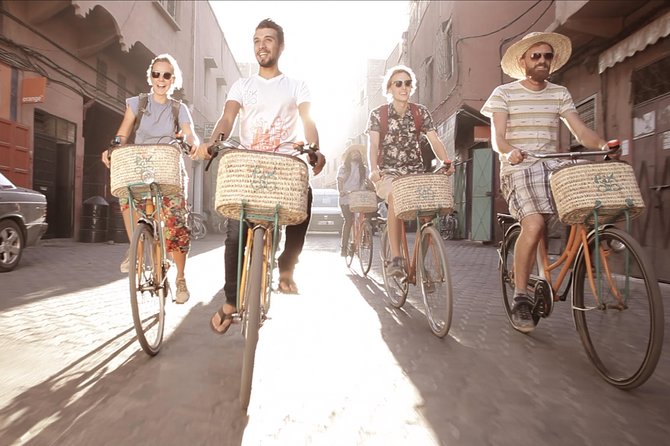
Marrakech makes you work for every turn, and that is exactly why this bike tour is so memorable. You pedal from the Medina to Gueliz, passing the Koutoubia, Kasbah, Agdal gardens, markets, workshops, and ordinary neighborhoods that most city tours skip. Local young Moroccan guides such as Yasser, Hamit, Khawla, and Zouhair add personal stories about family, religion, and modern life.
I like two things most here: the access to everyday Marrakech, including a public bakery, hammam, secondhand market, and zellij workshop, and the social purpose behind Pikala Bikes, which trains young Moroccans as cycling guides. The included juice, sweets, bread, and cafe stop make the three hours feel generous for the price.
The catch is the traffic. Riding in the Medina can be chaotic, with pedestrians, scooters, bicycles, and other vehicles sharing tight streets. You should be a confident cyclist, stay alert, and understand that this is an active city ride, not a gentle park circuit.
Key points to know before you book
- Ride through both old and new Marrakech: The route links the Medina with Gueliz, giving you a useful view of the city’s sharp contrasts.
- Meet the city through local trades: A bakery, hammam, market, and craft workshop show how daily life works beyond the major monuments.
- Expect an alert, lively ride: Narrow lanes and mixed traffic make the cycling exciting but demanding.
- Guides bring personal context: Pikala trains local young Moroccans who can discuss family, faith, growing up, and social change.
- Food and drink are included: Plan on juice, sweets, bread, bottled water, and a cafe stop during the outing.
- Small enough to feel manageable: The maximum group size is 20 people, with guides sometimes splitting groups when needed.
Why a bicycle changes your view of Marrakech
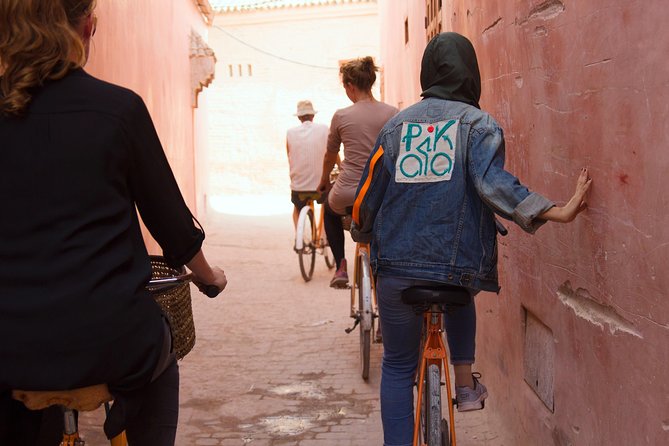
Walking through Marrakech gives you a close look at the Medina, but a bicycle lets you cover more ground and connect areas that can feel separate on a map. In roughly three hours, you move from the historic center toward newer parts of town, then return to the starting point at 29 Rue Riad Laarous.
The bike also changes your pace. You are slow enough to notice a bakery doorway, a workshop entrance, or a neighborhood gathering, but fast enough to leave the most crowded lanes behind. The route is not built only around famous sights. The Koutoubia, Kasbah, and Agdal gardens provide orientation, while the less familiar stops give the outing its real character.
I see this as a useful first or second-day activity. Early in a stay, it helps you understand how Marrakech fits together. After you have walked the Medina, it takes you into areas you likely missed on foot.
Pikala is a non-profit project, and the tour has a clear community angle. Your guide is not simply pointing at buildings. Guides are trained local young Moroccans who talk about growing up in Morocco, family expectations, religion, and the push and pull between tradition and modern life.
That personal exchange is one of the strongest reasons to choose this ride over a standard sightseeing loop. The quality of the experience depends partly on your guide, but names that have made a strong impression include Yasser, Hamit, Khawla, Kaula, Mo, Zouhair, and Achmed.
More Bike Tours in Marrakech
- Dutch Bike Tour in Marrakech with Local Guide
★ 4.7 · 269 reviews - Marrakech:Guided City Cycling Tour – Culture, Colors & Charm
★ 4.7 · 231 reviews - Marrakech’s Best Cycling Tour: Culture, Colors, and Charm
★ 5.0 · 154 reviews
Starting in the Medina at Rue Riad Laarous
The meeting point is 29 Rue Riad Laarous, Marrakesh 40000. The ride begins in the historic part of the city, so the first moments are likely to feel the most intense. You need to pay attention to the guide, watch the road, and keep enough space around your bicycle.
This is not a place for a casual, one-handed cruise while taking photographs. You will encounter tight passages and changing traffic patterns. The ride can be especially demanding if you are not used to cycling in crowded city streets.
That said, the guides are there to manage the group and make the route workable. One guide has been praised for handling a group efficiently through a maze of obstacles, and another split a group to better suit different language needs. Those details matter because good group control makes a major difference in Marrakech.
You should also allow a little patience for the equipment. Most riders have found the bicycles easy enough to use, and some specifically describe them as modern. One critical account found the bikes less satisfactory and said that the fit may not suit everyone. If you are particular about your bicycle, check it before setting off and tell the guide if something feels wrong.
Koutoubia, Kasbah, and the city’s familiar landmarks
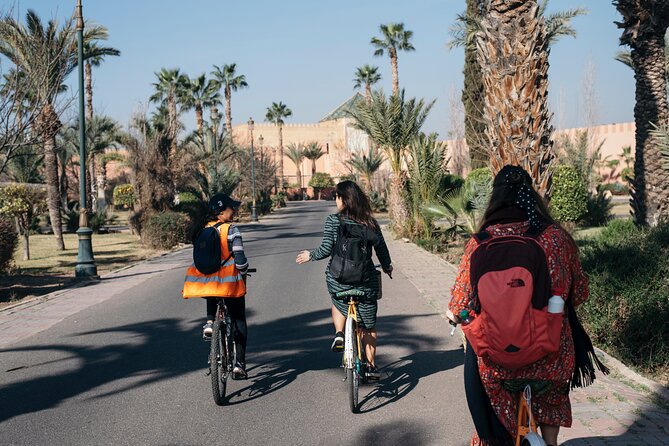
The Koutoubia and Kasbah are among the recognizable stops along the route. They give you the classic Marrakech frame, but the guide’s explanations and the surrounding streets add more than a quick photograph.
The Koutoubia helps you get your bearings in the city. The Kasbah offers a change in atmosphere from the central Medina, while the Agdal gardens provide another view of Marrakech beyond its dense lanes. These are not presented as long, formal monument visits. Think of them as useful stops within a moving city tour, with time to pause, listen, and take photographs.
You should not book this experience expecting extended entry time at every major sight. The value comes from the combination of landmarks and local areas. The famous places tell you where you are; the smaller stops help explain how people live around them.
Some outings have also included a mosque visit, though this is not specified as a guaranteed stop in the core description. Treat that as a possible part of the route rather than a promise.
A public bakery and the rhythm of ordinary work
The public bakery is one of the tour’s most useful stops because it shifts your attention from grand architecture to a service used by local residents. It shows a working side of Marrakech that is easy to miss when your day centers on palaces, gardens, and shopping streets.
The same is true of the old hammam, or traditional bathhouse. The stop offers context about a familiar part of Moroccan social life and daily routine. You may not spend a long time inside each place, but seeing these sites in sequence helps you understand the neighborhood as a lived-in community rather than a backdrop for sightseeing.
A few accounts also describe a zellij workshop and a tile-making demonstration. Since these details appear in descriptions of particular outings, they may depend on the route or the day. If craft production interests you, ask your guide what is planned when you arrive.
The guide’s explanation is the key here. A bakery or hammam on its own may take only a few minutes to see. With context about customs and daily life, the stop becomes much more useful.
More bike days out of Marrakech:
- Half-Day Highlights of Marrakesh Bike Tour
★ 5.0 · 84 reviews - Marrakech: Guided Bike Tour with a local Guide
★ 4.6 · 79 reviews - Marrakech: Cycling Tour in Palm Groove with Local Breakfast
★ 4.7 · 73 reviews - Marrakesh: Toubkal National Park Mountain Bike Trip w/Lunch
★ 4.4 · 63 reviews
Markets, Gueliz, and the contrast between two Marrakechs
The route continues through different neighborhoods, including Gueliz, the newer town. This contrast is one of the best reasons to ride rather than stay inside the Medina.
In the old city, the streets can feel compressed and unpredictable. In Gueliz, the route becomes easier for cycling and gives you a clearer sense of modern Marrakech. One especially positive account praised this part as more relaxed and attractive after the intensity of the old city.
The secondhand market adds another layer. It is described as enormous, and it gives you a look at commerce outside the polished shopping areas aimed at visitors. You may see a wide range of ordinary goods and local trade, though the tour is not designed as a shopping excursion.
The movement between old and new areas also makes the city’s social changes easier to discuss. Pikala’s guides can explain how family life, religion, and modernization meet in present-day Morocco. I find that far more useful than a list of dates about monuments.
You should keep your expectations realistic. This is a cycling route through active neighborhoods, not a quiet sightseeing path. The reward is contact with the city as it operates, while the cost is noise, obstacles, and the need to keep your attention on the road.
Cafe Clock, juice, sweets, and a welcome pause
The tour includes juice and sweets at Cafe Clock, described as a special cross-cultural cafe. Other food details include bread, cookies, iced tea, and bottled water. The exact combination may vary, but you should have a refreshment stop during the outing.
This pause matters more than it might seem. Three hours on a bicycle in Marrakech can feel demanding, particularly when part of the route runs through crowded streets. A seated drink and something sweet give you time to ask questions, chat with the guide, and reset before the final part of the ride.
One particularly appealing detail is that the cafe stop can be social rather than rushed. An outing included time to play cards, which shows the relaxed side of Pikala’s approach. You are not simply being moved from one checkpoint to another.
Food is not the main reason to book, and the included items should not be treated as a full meal. If you need substantial food, arrange that separately. Still, the refreshments add real value to a $33.28 experience.
The Seven Saints and the return to Rue Riad Laarous
The route finishes with a visit to the tomb of one of the Seven Saints of Marrakech. This offers a final cultural stop after the city’s markets, trades, landmarks, and neighborhoods.
The Seven Saints are part of Marrakech’s religious identity, and the tomb gives the guide another chance to explain local customs. You should approach the visit with respect and listen carefully to any instructions about conduct.
The activity ends back at the starting point. That is useful if you are planning the rest of your day in the Medina, since you do not need to arrange a separate return transfer. The tour does not include hotel pickup or drop-off in the details provided, so plan to reach the meeting point yourself.
How hard is the cycling?
The ride is suitable for most people who can cycle, but the setting makes it more demanding than the three-hour duration suggests. You are not climbing mountains, yet you are managing crowds, moving vehicles, narrow lanes, and frequent changes in pace.
Several strong accounts describe the experience as exhilarating, while others warn that it is not for the fainthearted. Both views can be true. The route is exciting because it puts you close to city life, but that closeness requires vigilance.
I would choose this tour if you:
- Cycle regularly and can steer, brake, and stop confidently
- Are comfortable riding in traffic
- Can handle a three-hour outing with breaks
- Want local context more than a polished sightseeing show
- Enjoy some uncertainty and movement in your day
I would think twice if you are a nervous cyclist, have trouble balancing in tight spaces, or want a calm route with little traffic. Summer may feel harder for less experienced riders, and one account specifically preferred doing the activity in the off-season.
The tour can take up to 20 people. That is not a tiny private ride, but the guide team can help manage the group. Ask about the day’s group arrangements if you are concerned about pace or language.
Is $33.28 a fair price?
At $33.28 per person, this is good value if you want more than a monument checklist. You receive about three hours of guiding, bicycle transport during the route, local neighborhood access, refreshments, and the chance to support Pikala’s training project.
The price looks even better when you consider the variety packed into the outing. You visit the Medina, Gueliz, landmarks, gardens, market, bakery, hammam, cafe, and a religious site. Not every stop receives a long visit, but the route gives you a broad picture of the city.
The value is less clear if your main goal is an easy ride or a detailed tour inside each monument. You are paying for movement, local contact, and interpretation of daily life. You are not paying for a private guide, a luxury bicycle, or a slow architectural lecture.
The 4.9 rating from 289 ratings and 98 percent recommendation rate point to very strong overall satisfaction. I would still give the safety and bicycle condition comments equal weight. A high score does not remove the need to decide if city cycling suits you.
Free cancellation is available if you cancel at least 24 hours before the start time. Changes or cancellations inside that window are not accepted for a refund, and the cut-off uses Marrakech local time.
Morning or afternoon: which departure should you choose?
You can choose a morning or afternoon departure. The supplied details do not give exact start times, so check the available option when booking.
Your choice should depend on your plans and how you handle heat and crowds. The ride requires focus, so choose the time when you are most alert and comfortable on a bicycle. If you are less confident, an off-season departure may be easier than a busy summer outing.
Allow time to reach Rue Riad Laarous before the start. The activity begins and ends there, and confirmation is provided at booking. The meeting point is near public transportation.
The guides are the heart of the ride
The strongest part of this experience is the guide relationship. Yasser has been praised for explaining local life. Hamit has been described as friendly, patient, and willing to give time for questions. Khawla and Kaula have been singled out for warmth and personal stories from childhood.
Zouhair has been praised for clear English, good cycling skills, and strong knowledge of Marrakech. Mo has made the cafe stop especially memorable by sharing facts and creating time for conversation. Zuhair and Achmed have also been praised for their conversation and command of the route.
You should not expect every guide to deliver the exact same personality or wording. That is normal in a social project staffed by different local guides. The consistent idea is direct contact with young Moroccans who can speak about their own lives, not just recite a standard script.
I recommend asking questions. Why is family so important? How do young people balance religion and modern life? What changes between the Medina and Gueliz? Those subjects are part of the tour’s purpose, and your curiosity will make the experience stronger.
Should you book the Pikala cycling tour?
Book it if you want to see Marrakech through local streets, working neighborhoods, and personal stories. It is especially useful for someone who has already walked the Medina and wants to reach parts of the city that are less obvious on foot.
The tour suits confident cyclists who enjoy a little adrenaline and do not mind traffic. It is a poor match for anyone seeking a quiet, highly controlled ride or a long visit at each major sight.
For the price, the mix is hard to beat: landmarks, local trades, Gueliz, refreshments, and a community project with a clear purpose. Check your bicycle at the start, stay alert, choose a departure time that suits your energy, and book Pikala if you want Marrakech to feel like a real city rather than a collection of attractions.
FAQ
Where does the cycling tour start?
The tour starts at 29 Rue Riad Laarous, Marrakesh 40000, Morocco.
Where does the activity end?
The cycling tour ends back at the meeting point.
How long does the experience last?
The tour lasts approximately three hours.
How much does the tour cost?
The listed price is $33.28 per person.
Is a mobile ticket available?
Yes, the activity includes a mobile ticket.
How many people can join the tour?
The maximum group size is 20 people.
Can I choose a morning or afternoon departure?
Yes, the tour offers a choice between morning and afternoon departures. Exact start times are provided when you select the available option.
What sights are included along the route?
The route passes the Koutoubia, Kasbah, and Agdal gardens, and continues through the Medina, Gueliz, local neighborhoods, markets, and other city areas.
Are food and drinks included?
Yes. The tour includes snacks and drinks such as juice, sweets, bread, and bottled water. A stop at Cafe Clock is also included in the described experience.
Can I cancel for a full refund?
Yes, if you cancel at least 24 hours before the experience start time. Cancellations or changes made less than 24 hours before the start are not accepted for a refund.
Just listed out of Marrakech
- Marrakech: Ouzoud Waterfalls Trip, Guide & Boat + Lunch★ 4.7 · 33 reviews
- From Marrakech: Ourika Valley Trip, Waterfall Hike & Lunch★ 4.4 · 33 reviews
- Magical Dinner show and Quad bike In Agafay Desert Marrakech★ 4.5 · 33 reviews
- Moroccan Hands on traditional pastries & Tea class in Marrakech★ 4.5 · 33 reviews
- Marrakech: Quad excursion to the palm grove and Jbilets desert★ 4.5 · 33 reviews
- Marrakech: Vibrant Dinner Show at The Lotus Club★ 3.9 · 33 reviews
- From Marrakech: Small Group To Essaouira & Medina Day Trip★ 4.3 · 33 reviews
- From Marrakech: 3-Day Merzouga and Sahara Desert Tour★ 4.5 · 33 reviews
Marrakech Tours, compared.

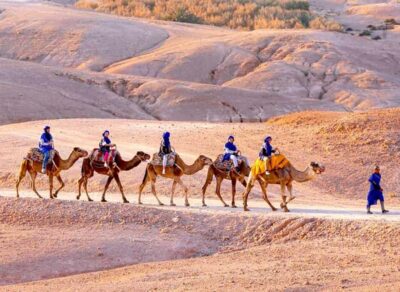
Agafay Desert Sunset, Camel Ride, and Dinner Show
Read our review →
Agafay Desert Quad & Camel Rides with Dinner Show
Read our review →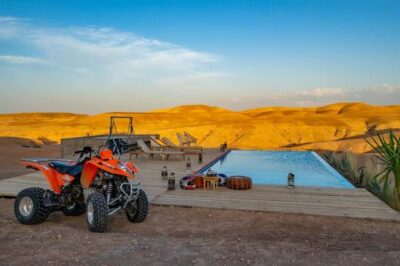
Agafay Desert Quad Biking Tour with Dinner-Show
Read our review →
Atlas Mountains, Ourika Valley, Waterfall & Lunch
Read our review →

Quad Bike Tour to Palm Oasis and Jbilat Desert
Read our review →Browse the lists this tour appears in