
Reviewed · MARRAKECH TOURS
Marrakech: Private Tour w/ Locals – Highlights & Hidden Gems
Marrakech makes more sense when someone can explain what you are seeing. This private three-hour walk connects the famous sights with quieter corners of the medina, local workshops, food stops, and stories about daily life. Guides such as Hassan, Jaafar, Adil, and Redouan have led the route, and their local knowledge is the main attraction.
I like the private format, especially if you want to ask questions or set the pace. I also like the local tasting, which may be a sweet treat, drink, or another small taste of Marrakech life. It turns a sightseeing walk into a more human introduction to the city.
The main drawback is time. Three hours can give you a strong first look, but not a leisurely visit to every stop. Bahia Palace entrance is extra, hotel pickup is not provided, and the walk is not suitable for wheelchair users or people with mobility impairments.
Key points at a glance
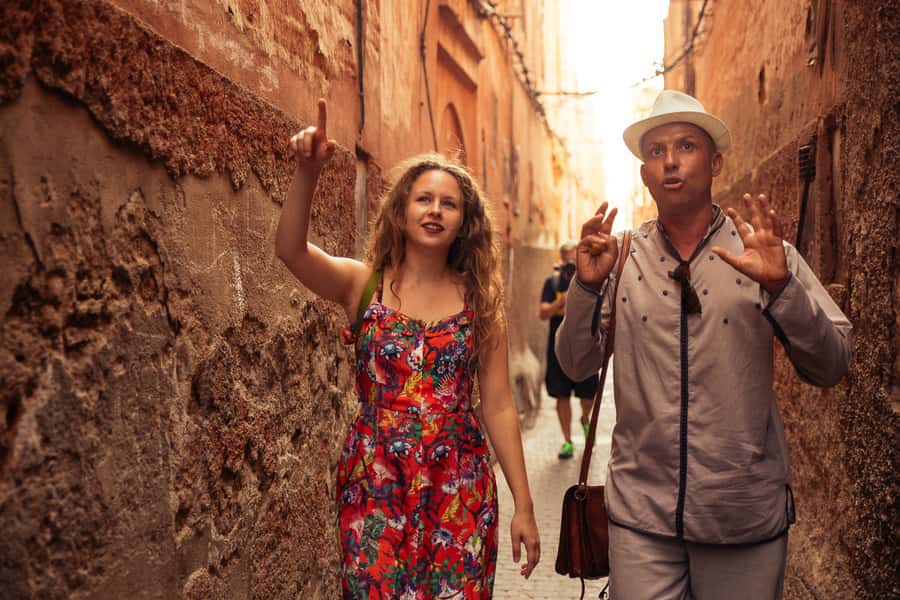
- A private walk for up to eight people: You get a guide focused on your group rather than a large crowd.
- Major sights in a compact route: The walk covers Bahia Palace, Bab Agnaou, Mellah Square, and the souks.
- Local workshops and shopping advice: You may see traditional bags, scarves, rugs, oils, and other crafts being made.
- A small taste of Marrakech included: One local drink or tasting is part of the experience.
- A useful first-day orientation: Guides can explain the medina, suggest places to eat, and offer advice about bargaining.
- A meeting point outside the medina: Find your host by the Koutoubia Mosque, beside the white dome near Mohamed the 5th Avenue.
Why three hours works well in Marrakech
Marrakech is easy to admire and easy to misunderstand. The medina is a maze of lanes, workshops, market stalls, religious buildings, and old palace walls. A short private tour gives you a framework before you return on your own.
The route is built around contrasts. You see grand architecture, then step into a smaller lane where a craft is still made by hand. You hear about royal power, religious life, trade, and family traditions, then pause for something to eat or drink.
I would book this early in your stay. The strongest practical benefit is not just seeing a list of sights. It is learning how the central parts of Marrakech fit together. Once you have walked through the souks with a guide, the medina feels less confusing later.
The walk is in English, and the group is private. The maximum group size is eight people, so a larger family or small group can stay together without joining strangers. If only two people book, the guide can spend more time answering questions and adjusting the pace.
A few other Marrakesh days worth comparing
- From Marrakech: 3-Day Sahara Tour with Private tent & Meals
★ 4.8 · 1,652 reviews - Marrakech: Private Horseback Tour in the Palm Grove with Tea
★ 4.8 · 1,092 reviews - Marrakech: Private Buggy Adventure in Agafay Desert with Tea
★ 4.7 · 532 reviews
Meeting the guide by Koutoubia Mosque
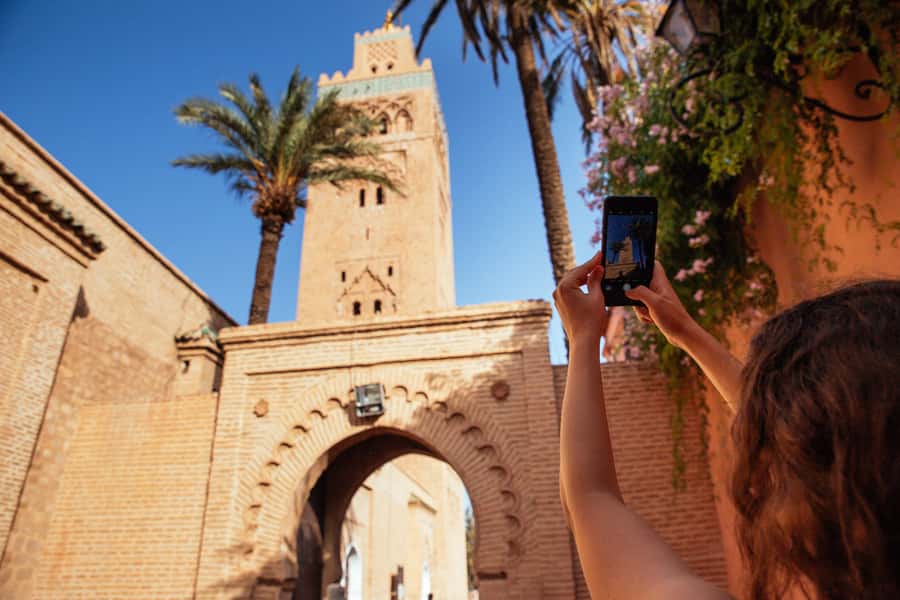
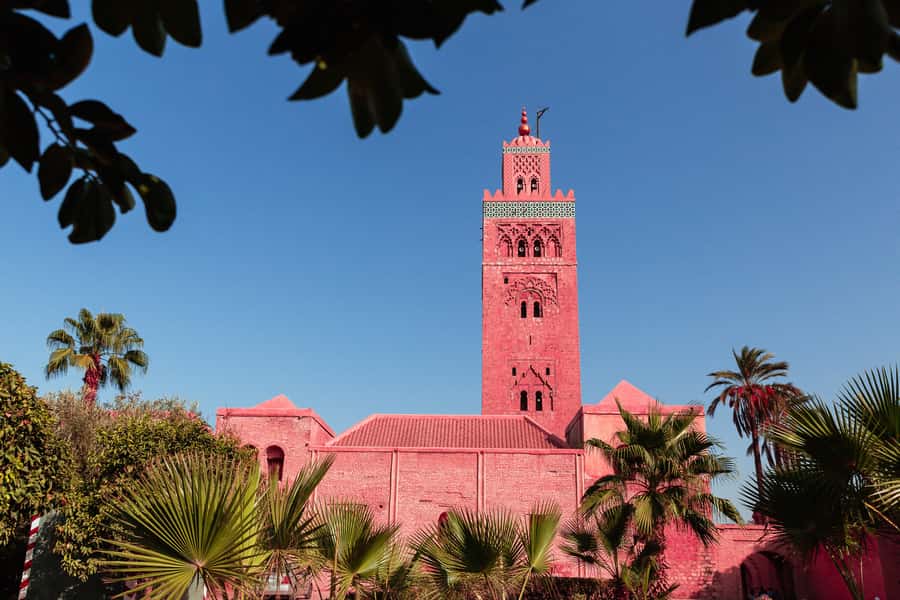
The meeting point is at Koutoubia Mosque, next to the white dome by the side of Mohamed the 5th Avenue. This is a practical landmark because the mosque is one of the clearest reference points in central Marrakech.
Allow a little time to find the exact spot. The instruction is specific, but the area can still feel busy and unfamiliar if this is your first visit. You are not getting hotel pickup, so plan your route to the mosque before the start time.
Koutoubia also gives the tour a fitting beginning. Its minaret is one of Marrakech’s best-known sights, and the area helps you understand where the modern avenues meet the old medina. From here, your guide can lead you toward the city’s historic center.
Wear comfortable shoes. This is a walking tour, and the route includes market lanes and historic areas rather than a coach ride between monuments.
Bahia Palace and the city’s royal past
Bahia Palace is one of the tour’s main classic sights. The palace is known for its decorated rooms, courtyards, and architectural details, but the value of seeing it with a guide is the context.
A guide can explain how a palace complex reflects the power and domestic life of its former residents. Look closely at the tilework, carved surfaces, painted ceilings, and the way rooms open onto courtyards. These details are easy to admire on your own, but harder to interpret without someone pointing out what matters.
The entrance ticket is not included in the tour price. That is important when calculating the total cost. Your guide can take you to Bahia Palace and explain it, but you should expect to pay the admission fee separately if you want to enter.
Because the tour lasts only three hours, the stop may be more of an introduction than a slow architectural study. If Bahia Palace is a top priority, confirm how much time your guide expects to spend there at the start.
Bab Agnaou and the old city gates
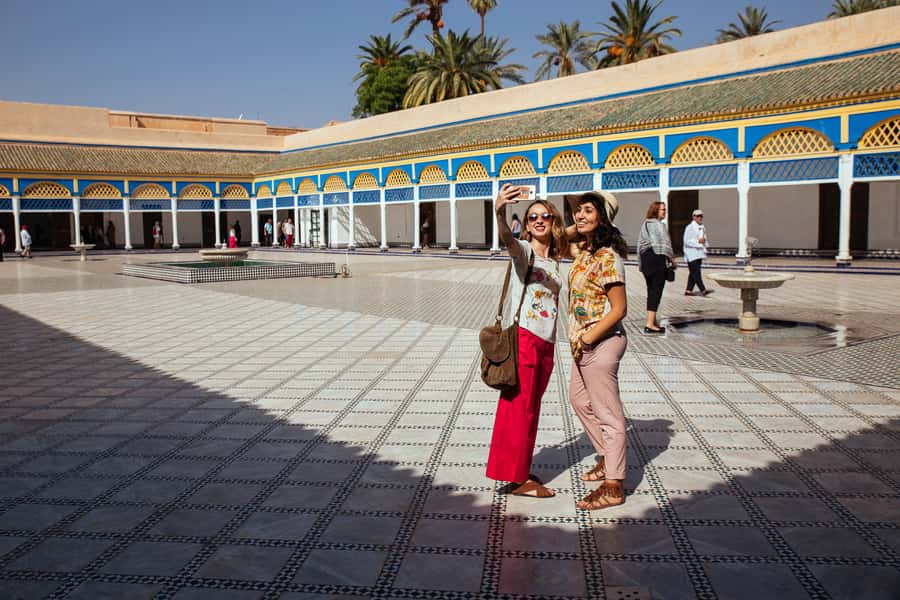
Bab Agnaou gives you a different view of Marrakech. This historic gate is a strong reminder that the old city was once protected by walls and controlled entrances.
The detail here is not only the stonework. Gates tell you how people, goods, and authority moved through the city. Your guide can connect the gate to the broader story of Marrakech and show how the old urban structure still shapes the modern visit.
For me, this kind of stop is useful because it puts the medina into scale. The souks can feel like a series of disconnected alleys. A gate such as Bab Agnaou helps you see that these lanes belong to a planned historic city, not just a market area.
The tour’s appeal is that it does not rely on one major monument. You get several landmarks, then move into everyday places where the city feels less arranged for sightseeing.
Same city, a completely different day out:
- Marrakech: Agafay Desert Sunset, Camel Ride, and Dinner Show
★ 4.6 · 35,119 reviews - From Marrakech: Ouzoud Waterfalls Guided Hike and Boat Trip
★ 4.7 · 33,630 reviews - Marrakech: Agafay Desert Quad & Camel Rides with Dinner Show
★ 4.8 · 27,382 reviews - Marrakech: Agafay Desert Quad Biking Tour with Dinner-Show
★ 4.8 · 16,569 reviews
Mellah Square and the layers of Marrakech
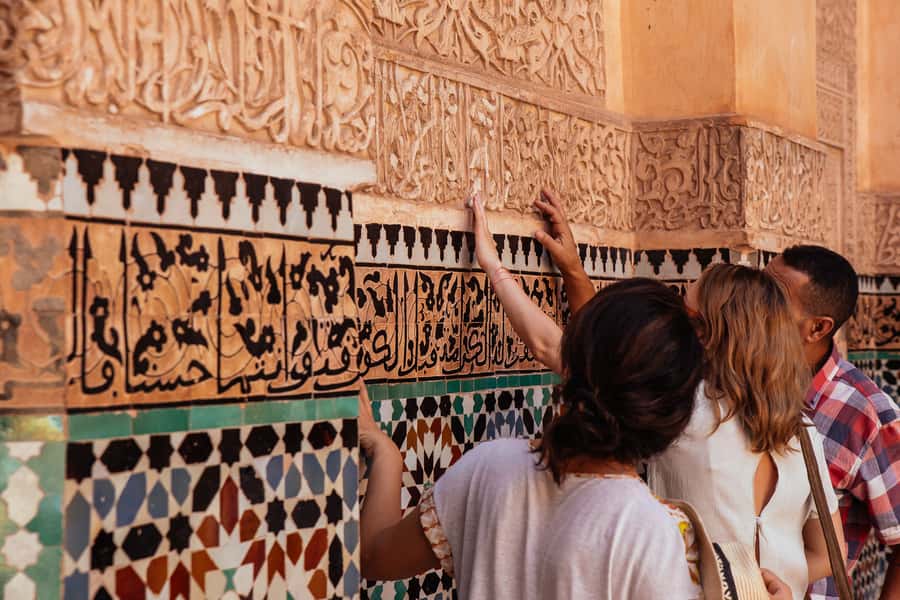
Mellah Square adds another layer to the walk. The Mellah is associated with the historic Jewish quarter of Marrakech, and the area helps show that the city’s past included different religious and social communities.
This is where a local guide can add real value. A short explanation about religious beliefs, community life, and the way neighborhoods developed can make the streets easier to read. One guide, Jaafar, was especially praised for answering detailed questions about the city’s past and present, which is useful if you want more than quick facts.
Do not expect a museum-style lecture. The route is a moving conversation, with time divided among several areas. If you have a particular interest in religion, architecture, local politics, or daily life, ask about it early so the guide can shape the discussion.
Mellah Square also works well as a change of pace from the main shopping lanes. It is part of the historic center, but the focus is more on place and people than on buying souvenirs.
Entering the souks with a local guide
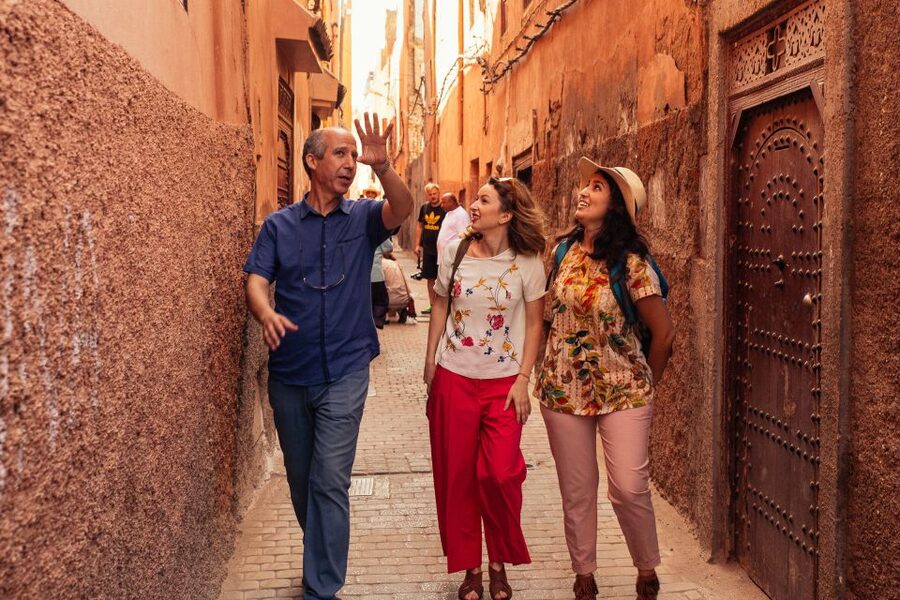
The souks are where this tour earns much of its value. Marrakech’s market lanes can be exciting, confusing, and tiring all at once. A guide helps you understand what you are seeing and how to move through the area without wasting your limited time.
You might stop at workshops where traditional bags, scarves, or rugs are made. The craft element is more useful than a simple shopping stop because you can see the work behind the finished item. Guides can also explain local products and offer advice about where to shop.
Several guides have been praised for giving practical bargaining tips. That does not mean you must buy anything. It means you can approach the market with a better sense of how to ask questions, compare goods, and avoid feeling pressured into a purchase.
The souks are also a good place to ask about local food. Your guide may point out places to eat and explain what certain products are used for. The included local tasting is a small part of the tour, but it gives you a chance to try something without having to choose a place alone.
Keep your expectations sensible. The tour does not include unlimited food or drinks, and additional purchases are your responsibility. If you want a serious shopping session, return later with more time.
Artisans, rugs, oils, and the less polished side of town
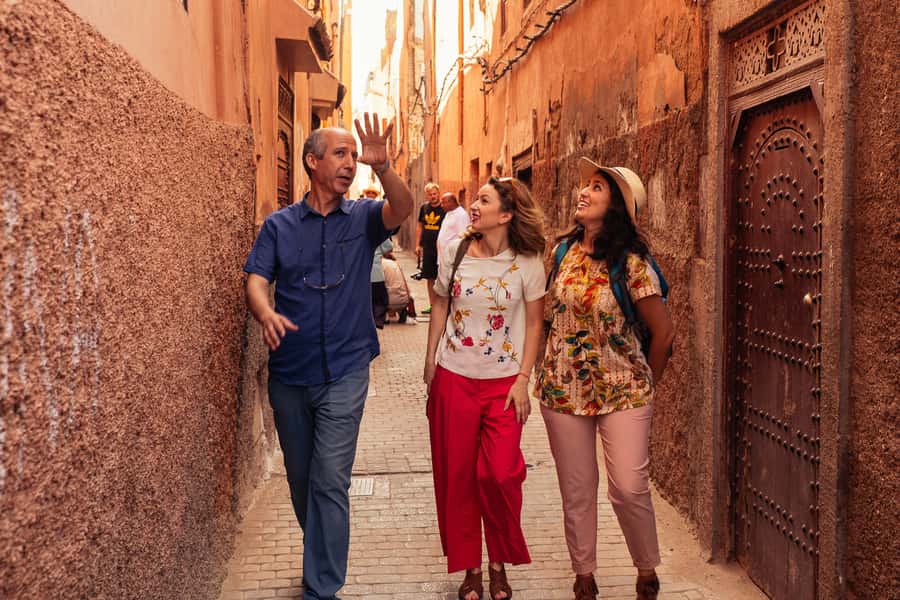
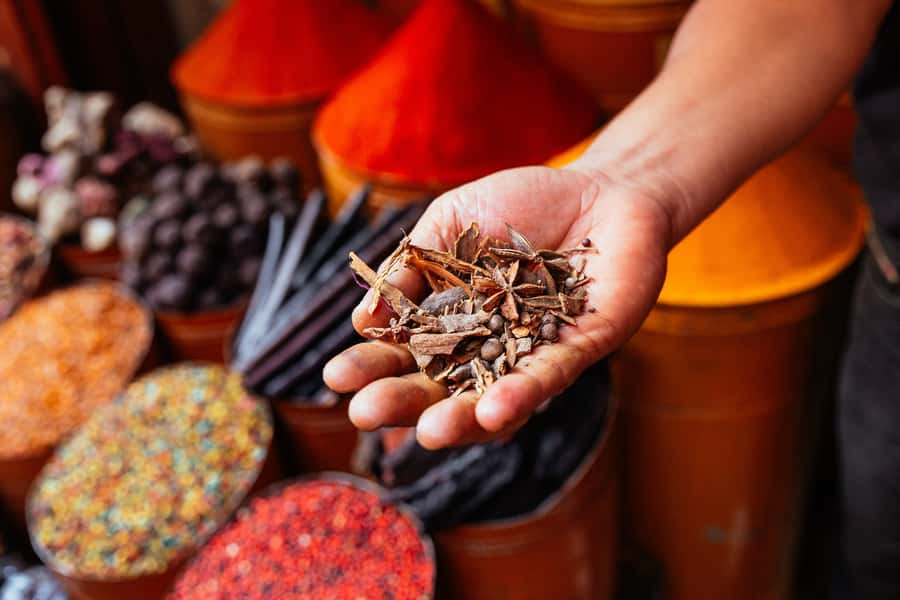
The experience goes beyond the standard monument circuit. Guides have taken people to local artisans, a herbalist, and places where argan oils can be sampled. You may also see how rugs, bags, or scarves are produced.
This is one of the more distinctive parts of the walk because it links objects in the souks to the people who make and sell them. You are not simply looking at a finished product under bright shop lights. You are getting a glimpse of the work and traditions behind it.
A stop at a herbalist can be interesting, particularly if you want to learn about oils and traditional products. Still, remember that a product explanation can turn into a sales opportunity. You are free to listen, taste, and move on without buying.
The same applies to artisan shops. Treat the visit as part of the cultural explanation, not as an obligation to spend money. A good guide should make the setting comfortable, and the private format gives you more room to say what interests you and what does not.
The included local tasting
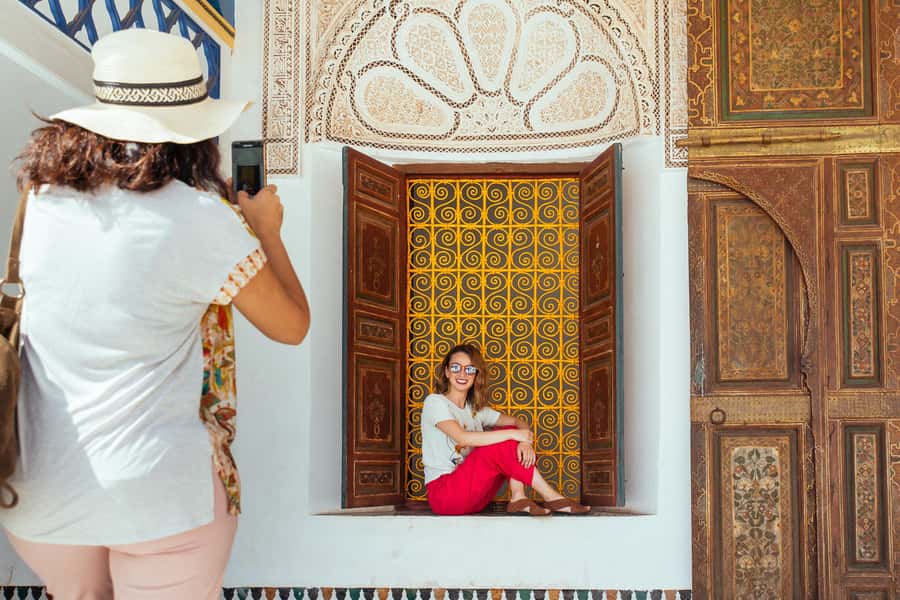
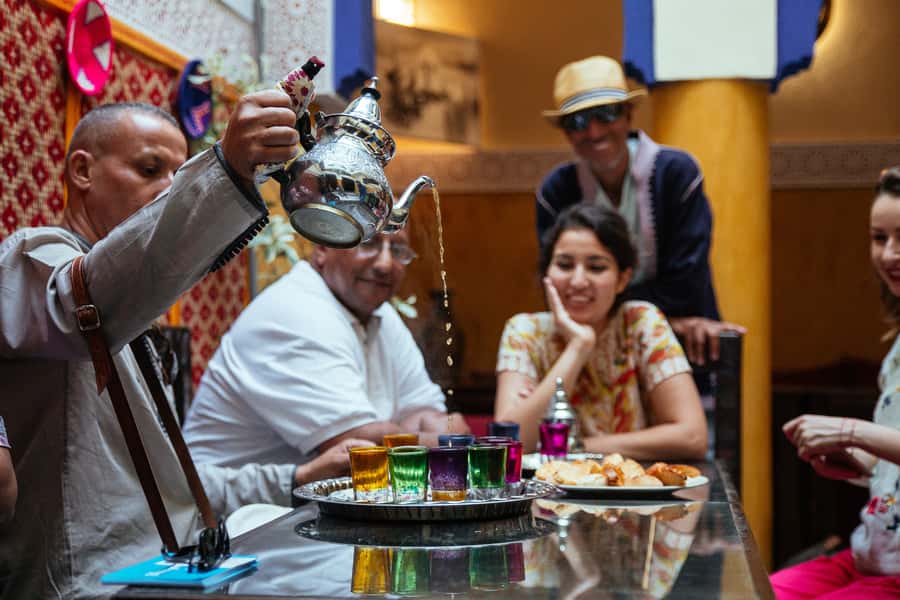
One local drink or tasting is included. The description does not promise a fixed dish, so the exact treat can vary. Past stops have included sweet treats and local food, while the formal inclusion is described as one drink or tasting.
That small distinction matters. I would see the tasting as a pleasant sample, not a meal. Have breakfast or lunch separately if you need something substantial.
Food also gives the guide an easy way to explain local habits. You can ask how the item is served, where locals eat, and what other dishes to look for during your stay. It is a modest inclusion, but it helps break up the walking and makes the experience feel less like a checklist.
Additional food and drinks are not included. Bring money if you want to order more or stop again after the tour.
What the guides add to the route
The guide is the most important variable in a private experience. The guides associated with this walk include Hassan, Redouan, Jaafar, Adil, Med, and Mohammed.
Hassan has been singled out for taking people to famous sights and local places, including bag and scarf makers and a herbalist. He is also described as friendly and enthusiastic, with a talent for explaining the city beyond the obvious stops.
Jaafar has been praised for his command of Marrakech’s past and present. He is a good fit if you enjoy asking questions, especially about religion, city life, and historical change.
Adil is known for a warm manner, city stories, photo help, advice about restaurants, and tips for bargaining. Redouan has shown flexibility when a previous tour ran late and has spent extra time around the souks, Bahia Palace, artisans, and herbalists.
You cannot assume which guide you will receive, so it is best to judge the tour by its structure rather than by one person’s style. The repeated strengths are warmth, local insight, patience, and a willingness to show places you might not enter alone.
Price, timing, and what you get for $68
At $68 per person, this is not the cheapest way to walk around Marrakech. It is also not a poor value if you use the private guide well.
You are paying for a three-hour English-language tour, a private group, a local guide, and one tasting. You are not paying for Bahia Palace admission, hotel transport, extra food, or drinks. The value is strongest for first-time visitors who want orientation, cultural context, and help finding the right parts of the medina quickly.
A private group matters here. You can ask questions, pause for photos, or tell the guide that you want more history and less shopping. With a group of up to eight, the per-person price may also make sense for families or friends traveling together.
The tour is less compelling if you already know Marrakech well or prefer to wander without a plan. You may also want a longer experience if your main goal is to study Bahia Palace, shop carefully, or spend extended time with artisans.
Free cancellation is available up to 24 hours before the tour for a full refund. You can also reserve now and pay later, which helps if your Marrakech plans are still shifting.
Who should book this Marrakech walk?
I would recommend it to first-time visitors, couples, families with older children, and small groups who want a fast but personal introduction. It also suits anyone who feels uneasy about entering the souks alone.
It is a good choice for curious shoppers who want help understanding rugs, bags, scarves, oils, and other local goods without spending the whole day in stores. It works for history fans too, provided you are happy with an overview rather than a full museum lecture.
I would be more cautious if you have limited mobility. The experience is not suitable for wheelchair users or people with mobility impairments, and the format requires walking through historic streets and market lanes.
FAQ
How long is the Marrakech private tour?
The tour lasts three hours. Starting times depend on availability when you book.
Where does the tour meet?
Your host meets you at Koutoubia Mosque, next to the white dome by the side of Mohamed the 5th Avenue.
Is hotel pickup included?
No. Hotel pickup and drop-off are not included, so you need to reach the Koutoubia Mosque meeting point yourself.
Is the tour private?
Yes. It is a private group experience, and it cannot be booked for more than eight people.
What language is the tour offered in?
The live tour guide speaks English.
Is entry to Bahia Palace included?
No. The entrance ticket to Bahia Palace is not included in the tour price.
What should I bring, and is the tour wheelchair accessible?
Bring comfortable shoes. The tour is not suitable for people with mobility impairments or wheelchair users.
Should you book it?
Book this tour if you want to get your bearings in Marrakech quickly, ask plenty of questions, and see both major sights and working local areas. The private format, practical souk advice, artisan visits, and included tasting give it more personality than a simple monument walk.
Skip it if you want a slow palace visit, a full food tour, or several hours of independent shopping. For most first-time visitors, though, three hours with a strong local guide is a sensible way to begin. You will leave with a clearer map of the medina, a few useful bargaining lessons, and better ideas for where to return on your own.
Just listed out of Marrakesh
- Marrakech: Ouzoud Waterfalls Trip, Guide & Boat + Lunch★ 4.7 · 33 reviews
- Marrakech: Vibrant Dinner Show at The Lotus Club★ 3.9 · 33 reviews
- From Marrakech: 3-Day Merzouga and Sahara Desert Tour★ 4.5 · 33 reviews
- Marrakech: Private Souks Tour with Tea and Traditional Snack★ 4.6 · 33 reviews
- From Marrakech: Small Group To Essaouira & Medina Day Trip★ 4.3 · 33 reviews
- Marrakech: Medina Souks, Hidden Markets and Shopping Tour★ 4.8 · 33 reviews
- 2 Days Desert Agafay and Atlas Mountains Trek From Marrakech★ 3.8 · 33 reviews
- Agadir/Taghazout : Marrakech Guided Tour old Medina & Souks★ 3.7 · 34 reviews
Marrakech Tours, compared.

Agafay Desert Sunset, Camel Ride, and Dinner Show
Read our review →

Agafay Desert Quad & Camel Rides with Dinner Show
Read our review →
Agafay Desert Quad Biking Tour with Dinner-Show
Read our review →
Atlas Mountains, Ourika Valley, Waterfall & Lunch
Read our review →

