Reviewed · MARRAKECH TOURS
Marrakech: Cultural Bicycle Tour with Pastry and Tea
Marrakech is easiest to understand when you leave the main tourist paths, and this three-hour bicycle tour takes you straight into the city’s everyday life. You watch bread go into a clay oven, see artisans shape zellige tiles, learn why the hammam matters, and pedal from the old medina to modern Gueliz and Hivernage.
I like the local focus, especially the chance to meet bakers and tile makers rather than only look at grand monuments. I also like Pikala Bikes’ youth-training program, which gives the tour a useful social purpose. The catch is traffic: mopeds, donkeys, carts, pedestrians, and bicycles share tight spaces, so you need to be a confident cyclist.
Key points to know before you ride
- Bread is part of daily life: Visit a traditional bakery, watch loaves bake in a clay oven, and taste fresh Moroccan bread.
- Zellige becomes real, not decorative: Meet tile artisans and see how small geometric pieces are made by hand.
- The medina requires alert cycling: The route is generally gentle and flat, but the first hour can feel demanding in narrow lanes.
- You see two Marrakechs: The ride links the old walled city with Gueliz and Hivernage’s broad streets, cafés, and hotels.
- The guide makes the difference: Guides such as Ayoub, Rabab, Hamid, Sayid, Yasmin, Kenza, and Yassir have been praised for warmth, patience, and clear explanations.
- The finish is tasty: Water, fruit, Moroccan pastries, juice, mint tea, and local snacks are included at Pikala Cafe.
Why this bicycle tour feels different from a standard city outing
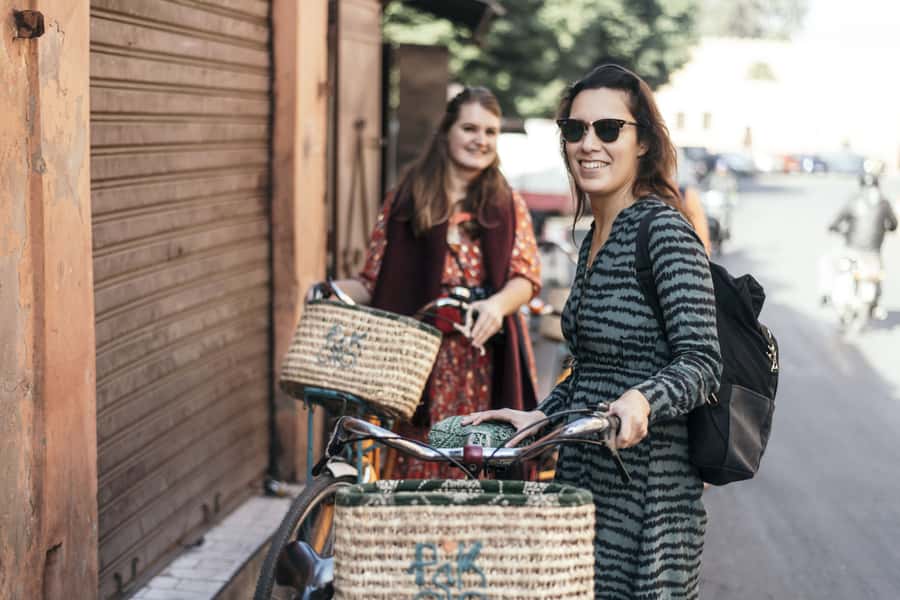
Pikala Bikes does not simply take you from one famous sight to another. The route uses Marrakech’s streets as a classroom, showing how people work, worship, wash, shop, and move around the city.
That makes the experience particularly useful early in a visit. You gain a sense of how the medina fits together, then see how sharply it changes once you reach the newer districts. Later, when you return to the souks on foot, you will have a better feel for what sits behind the shopfronts and tourist lanes.
The social side matters too. Pikala trains Moroccan young people to lead tours, giving them work experience and a way to share their own city. Your guide might be a university student or a young local who brings a personal view of Moroccan customs, political history, religion, and daily routines.
The tour receives a 4.8 rating from 583 reviews, and the strongest praise centers on the guides. That is important here. The sights are worthwhile, but the explanations and the way the guide manages the group through traffic shape the whole morning.
A few other Marrakesh days worth comparing
- Marrakech: Agafay Desert Sunset, Camel Ride, and Dinner Show
★ 4.6 · 35,119 reviews - From Marrakech: Ouzoud Waterfalls Guided Hike and Boat Trip
★ 4.7 · 33,630 reviews - Marrakech: Agafay Desert Quad & Camel Rides with Dinner Show
★ 4.8 · 27,382 reviews
Starting at Pikala Bikes and entering the medina
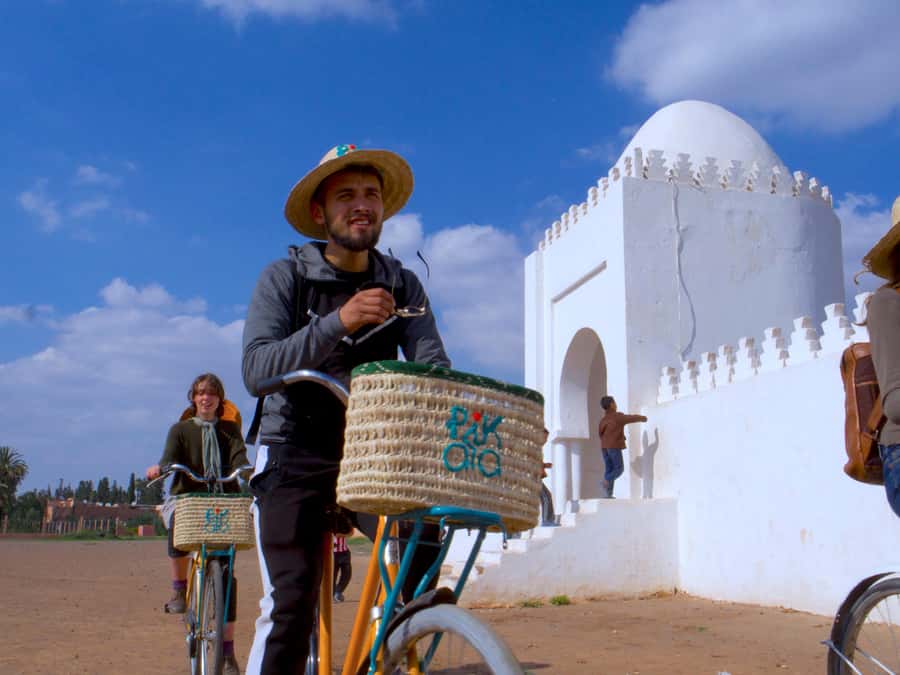
You meet at Pikala Bikes headquarters. After getting set up, the ride heads toward the old city and the Zawiya of Sidi Bel Abbas, one of Marrakech’s important religious sites.
The stop lasts about 15 minutes and works as an early introduction to the city’s spiritual side. You can pause for photos, see the setting, and hear about the religious figure and local traditions connected with the zawiya. The tour is not only about architecture, so expect the guide to place the site within ordinary Moroccan life.
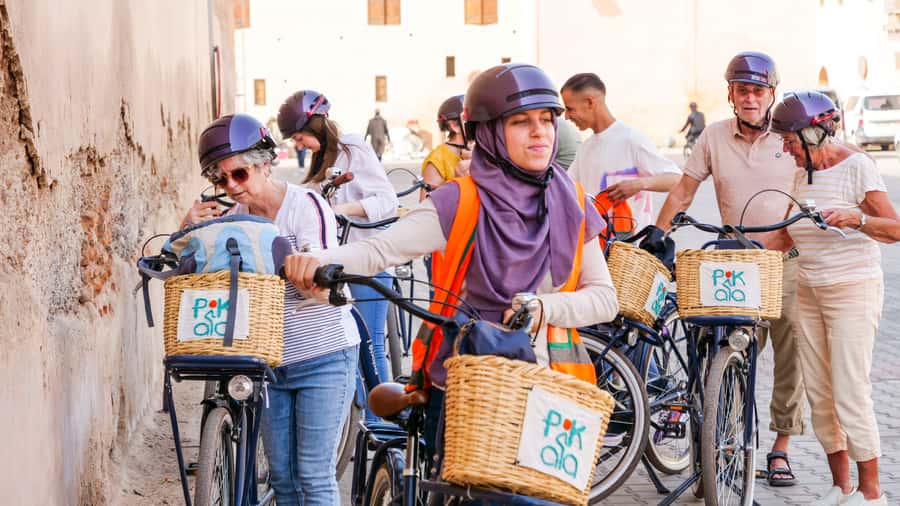
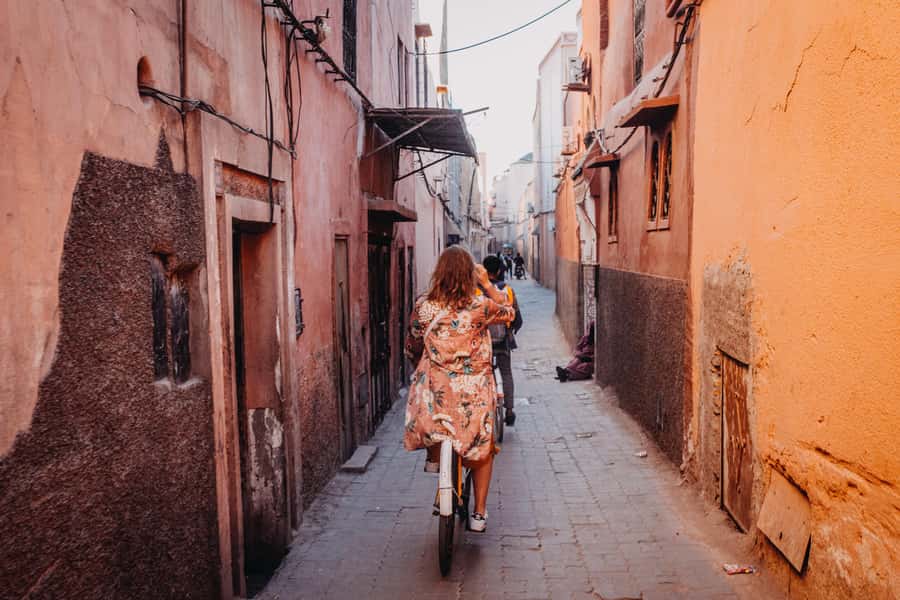
This is also where the traffic begins to feel real. In the medina, lanes can be narrow and full of movement. Mopeds may pass close by, pedestrians can step into your path, and donkeys pulling carts are part of the scene. The guide normally keeps an eye on the group and waits at crossings, but you must also ride carefully and stay alert.
The bicycles are described as solid Dutch-style bikes with comfortable saddles, though some riders find them heavy or slightly difficult to manage at first. The pace is not a race, and the route is largely flat. Still, confidence matters more than fitness. If you are comfortable steering, stopping, and judging space around other road users, you should settle in.
A clay oven and the importance of Moroccan bread
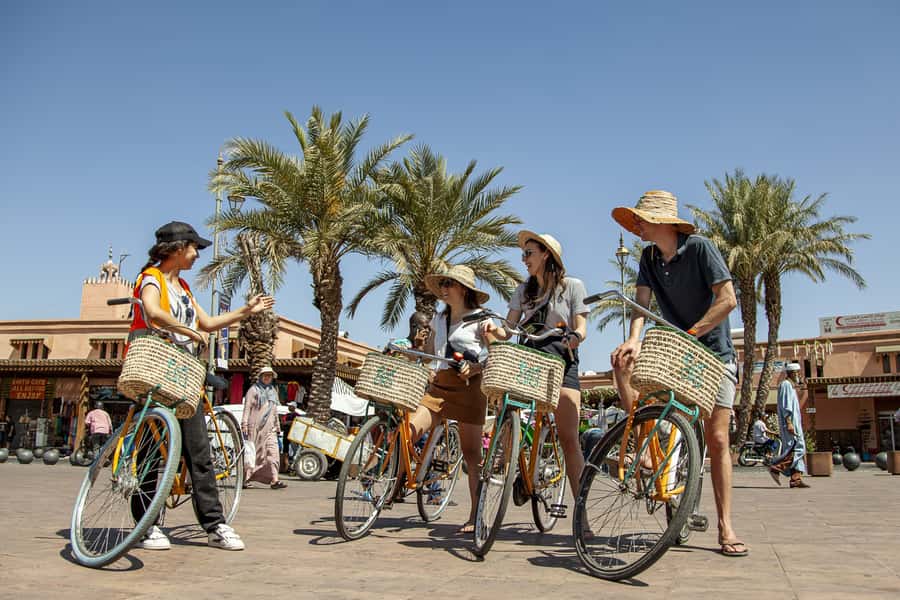
The local bakery is one of the tour’s most useful stops. You step inside, see bread being baked in a clay oven, and taste it while learning why bread has such a central place in Moroccan households.
This is the sort of stop that a sightseeing bus cannot provide. The bakery connects food with routine, work, and neighborhood life. Bread is not presented as a fancy cooking demonstration. It is a daily staple, and the visit helps explain the role of community ovens in the medina.
The stop itself is listed at about 10 minutes, so it is brief. You will not spend hours learning every stage of baking. But the short visit gives you a clear picture of how a local business operates and adds meaning to the bread you see on tables throughout Morocco.
Seeing zellige made by hand
Next comes Moroccan tile work, one of the most visually striking parts of the experience. Zellige is the geometric tile craft associated with Moroccan palaces, mosques, courtyards, fountains, and homes.
At the workshop, you meet artisans and see how the pieces are shaped and assembled. The value here is in seeing the labor behind a surface that can look effortless once installed. The patterns are precise, and the craft depends on patience and practiced hands.
You may already have admired zellige in Marrakech’s riads or monuments. This visit lets you look at those patterns differently. Instead of seeing only color and symmetry, you begin to notice the small pieces, repeated forms, and careful construction.
The itinerary also includes several short stops described as tucked-away places or scenic passages. The exact sights can vary, which is part of the appeal. Your guide may point out a courtyard, a less-visited lane, or a local business that you would probably pass without understanding on your own.
Same city, a completely different day out:
- Marrakech: Agafay Desert Quad Biking Tour with Dinner-Show
★ 4.8 · 16,569 reviews - Marrakech: Atlas Mountains, Ourika Valley, Waterfall & Lunch
★ 4.8 · 15,834 reviews - From Marrakech: 3-Day Merzouga and Sahara Desert Tour
★ 4.9 · 15,308 reviews - From Marrakech: Merzouga 3-Day Desert Safari with Food
★ 4.7 · 12,232 reviews
Place des Ferblantiers and the Royal Palace area
The route reaches Place des Ferblantiers, where you have roughly 20 minutes for a break, photos, free time, and views along the way. This gives you a little breathing room after the tight streets of the medina.
The square is associated with metalworkers and sits near the southern part of the old city. It is a useful place to pause because the surroundings feel more open and the movement is easier to watch. Your guide can help connect the square’s working traditions with the wider history of Marrakech’s crafts.
From there, the bicycles pass through more lesser-known parts of the city before reaching Mechouar El Berri, also written in the itinerary as مشور البراني. This stop lasts about 15 minutes and includes time for photos and sightseeing.
The ride also takes you past the public gardens around the Royal Palace, Dar El-Makhzen. You admire the palace from outside rather than enter it. That limitation is worth knowing, but the gardens and exterior still provide a useful look at Morocco’s monarchy and the protected spaces around the royal residence.
Do not expect a palace tour. This is a passing view with an explanation, not an interior visit. The benefit is that it fits naturally into a wider picture of the city instead of taking over the whole morning.
Koutoubia, a church, and Marrakech’s religious mix
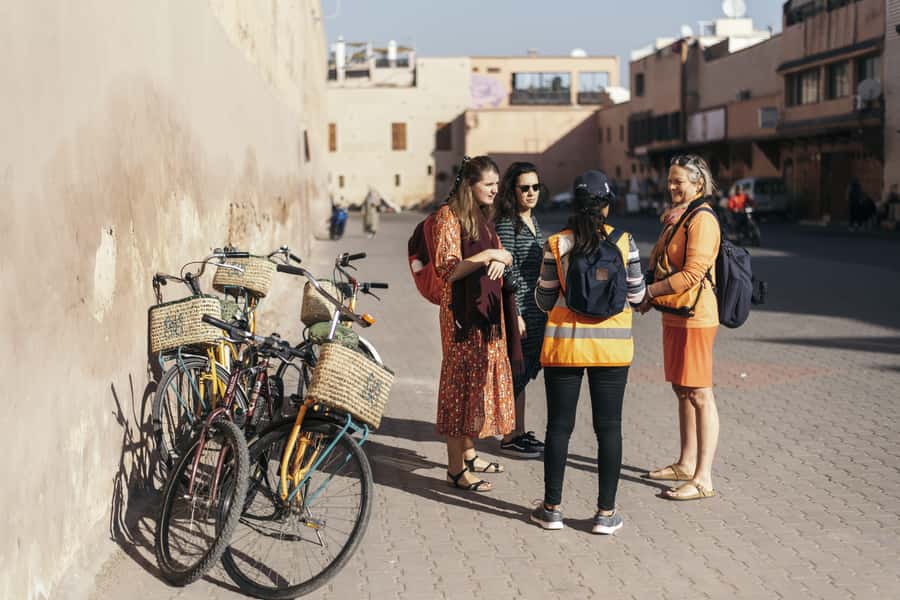
The bicycles pass the Koutoubia Mosque, Marrakech’s best-known landmark. The stop is about 10 minutes and focuses on sightseeing from the outside.
The Koutoubia is a useful reference point because its minaret helps you understand the shape of the city. The guide may also explain Muslim beliefs and practices, as one group experienced during a mosque stop. Since this is a cultural tour rather than a formal religious visit, dress and respectful behavior remain important.
The route then passes the Church of the Holy Martyrs. This creates an interesting contrast with the mosque and the earlier religious sites. You are not being asked to compare religions in a forced way. Instead, the stop adds another layer to Marrakech’s built environment and shows that the city’s story is not limited to souks and Islamic monuments.
Several participants especially valued the explanations of religion, politics, tradition, and ordinary life. That broad approach is one of the strongest reasons to choose this tour over a simple bicycle orientation ride.
The hammam stop and what it explains
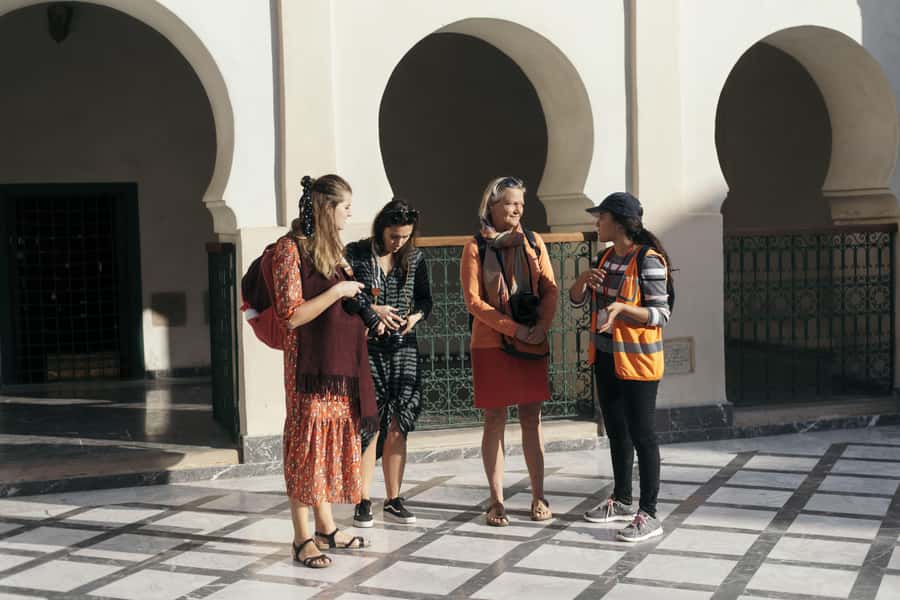
The traditional hammam visit focuses on the public bathhouse as a social institution. You learn about the routines, customs, and role the hammam plays in Moroccan daily life.
This is more useful than treating the hammam as a spa trend. In Morocco, the hammam has long been tied to washing, social contact, and regular community life. The stop helps you understand why hammams appear so often in conversations about Moroccan culture.
The information supplied does not promise a bathing session, so you should expect a cultural visit and explanation rather than a treatment. That is a good fit for anyone who wants context before booking a separate hammam experience.
Because the tour moves on a bicycle, the hammam stop is part of a wider story. You see the place where people gather, then continue through streets where daily errands and work happen around you. It feels more grounded than a staged cultural performance.
Crossing into modern Gueliz and Hivernage
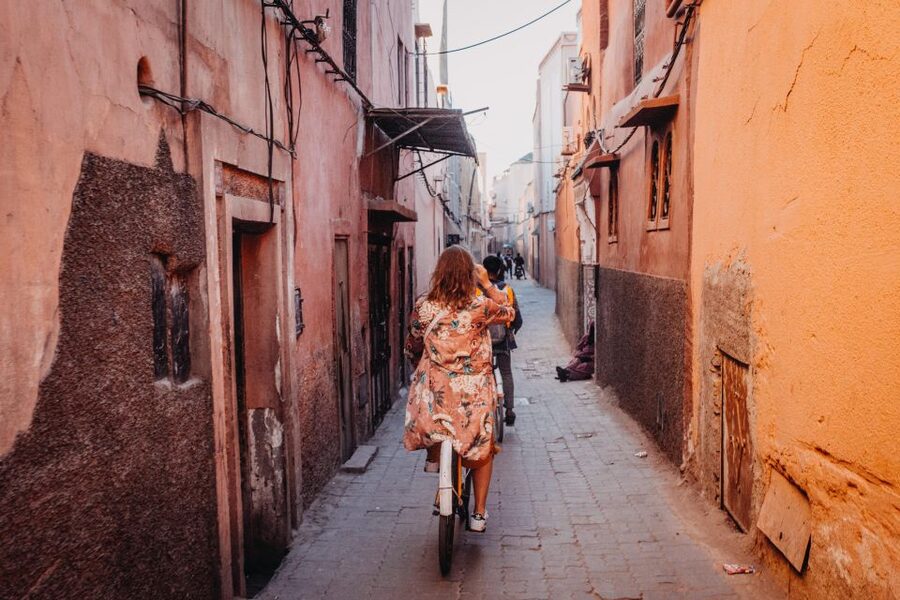
The final major contrast comes when the ride reaches modern Marrakech, especially Gueliz and Hivernage. Here, the streets widen, cafés and luxury hotels replace many of the old medina’s workshops, and the city feels less enclosed.
This section makes the tour more than a medina circuit. You see how Marrakech balances its old walls and traditional trades with newer neighborhoods shaped by broad boulevards, modern shops, restaurants, and hotels.
Some riders find the newer roads more intimidating at first than the narrow alleys. That may sound surprising, but the open streets bring faster traffic and more road crossings. The guides are expected to keep the group together, and several praised guides for turning around often, checking on everyone, and bringing the group across safely.
The traffic is best described as organized chaos. There may not be the clear pattern you are used to at home, but people adjust to one another constantly. You will need to do the same. Keep your attention on the guide, avoid sudden turns, and do not treat the relaxed pace as permission to stop watching the road.
A 9:30 a.m. departure may be worth considering if available. One participant found the roads quieter at that time. The activity page asks you to check availability for starting times, so you should choose a morning slot when possible, especially if city cycling makes you nervous.
Tea, pastries, and the Pikala Cafe finish
The ride ends back near Pikala Bikes, followed by a 20-minute stop at Pikala Cafe. Moroccan pastries, juices, mint tea, coffee, and local snacks are included.
This is a pleasant finish because it gives you time to sit down and talk through what you have seen. The spiced cookies and mint lemonade have been singled out as welcome refreshments, and one older rider’s group enjoyed the cafe enough to return later for food.
Water and fruit are also included during the activity, along with suncream and free entry to the local stops. Hotel pickup and drop-off are not included, so you need to make your own way to Pikala Bikes headquarters.
The food and drink add real value to the $34 price. You are paying for a three-hour guided ride, several cultural visits, a trained local guide, refreshments, and a small-group experience rather than a bare bicycle rental. For Marrakech, that is a fair price, especially if the tour helps you understand the city for the rest of your stay.
How difficult is the cycling?
This is not a demanding athletic ride in terms of hills or speed. The route is generally gentle and flat, with regular stops. The challenge comes from judging space in traffic, especially during the first hour through souks and narrow medina lanes.
You should be able to ride confidently without constant help. Long skirts and dresses are awkward on a bicycle, so casual clothing is the sensible choice. Comfortable clothes, practical shoes, water, and sun protection will make the experience easier.
The activity can work for mixed-age groups. One 72-year-old participant used a tandem with her mother and managed well, but that does not mean every older rider will find the route easy. If you are unsure, contact Pikala before booking to ask about bike options.
This is not the right pick if you dislike roads, cannot brake quickly, or want a calm ride on a separated cycle path. It is a city ride, and city rides involve people and vehicles. The excitement is part of the experience, but it should not be treated lightly.
Who should book the Pikala cultural ride?
I would choose this tour if you want more than photographs of Marrakech’s famous monuments. It suits curious visitors who want to understand bread ovens, tile craft, hammams, religious life, and the difference between the old city and the newer districts.
It is also a good choice for families with older children, couples, solo visitors, and anyone who enjoys meeting local guides. The small groups help, and the guides have been praised for being patient, funny, attentive, and willing to explain details at a steady pace.
You may want another type of tour if your main goal is shopping, architecture, or a slow historical lecture. This ride keeps moving, and some stops are short. It offers a broad introduction rather than an expert study of one subject.
Guide quality can vary slightly by person, but the repeated praise for Ayoub, Rabab, Hamid, Sayid, Yassir, Kenza, Yasmin, and others points to a strong team. English and French are available. The human contact is a major part of what you pay for.
You also get flexible booking terms: cancel up to 24 hours ahead for a full refund, or reserve now and pay later. Those details help if your Marrakech plans are still shifting.
Should you book it?
Book this tour if you are a confident cyclist and want to see working Marrakech, not just its postcard sights. The bakery, tile workshop, hammam explanation, Royal Palace gardens, and transition into Gueliz give you a wide view of Moroccan life in only three hours.
Skip it if traffic makes you deeply uncomfortable or if you want a completely gentle, vehicle-free outing. For everyone else, $34 buys a lively introduction, useful local context, good refreshments, and the chance to see places you would be unlikely to find by yourself. I would schedule it near the start of your stay, ideally in the morning, so the city begins to make sense before you explore it on foot.
FAQ
How long does the Marrakech cultural bicycle tour last?
The tour lasts three hours, including the bicycle route, cultural stops, and refreshments at Pikala Cafe.
Where does the tour start and finish?
You meet at Pikala Bikes headquarters, and the ride returns to Pikala Bikes at the end.
Which languages are available?
Live guiding is available in English and French.
Is hotel pickup included?
No. Hotel pickup and drop-off are not included, so you must reach Pikala Bikes on your own.
What food and drinks are included?
The experience includes water and fruit, plus juice, Moroccan pastries, tea, coffee, and local snacks at Pikala Cafe. Fresh bread is also tasted during the bakery visit.
Do I need to be an experienced cyclist?
You should be a confident cyclist because the route passes through traffic, narrow medina lanes, mopeds, donkeys, carts, pedestrians, and other cyclists. The route is generally flat and not fast, but careful road awareness is required.
Just listed out of Marrakesh
- Marrakech: Ouzoud Waterfalls Trip, Guide & Boat + Lunch★ 4.7 · 33 reviews
- Marrakech: Vibrant Dinner Show at The Lotus Club★ 3.9 · 33 reviews
- From Marrakech: 3-Day Merzouga and Sahara Desert Tour★ 4.5 · 33 reviews
- Marrakech: Private Souks Tour with Tea and Traditional Snack★ 4.6 · 33 reviews
- From Marrakech: Small Group To Essaouira & Medina Day Trip★ 4.3 · 33 reviews
- Marrakech: Medina Souks, Hidden Markets and Shopping Tour★ 4.8 · 33 reviews
- 2 Days Desert Agafay and Atlas Mountains Trek From Marrakech★ 3.8 · 33 reviews
- Agadir/Taghazout : Marrakech Guided Tour old Medina & Souks★ 3.7 · 34 reviews
Marrakech Tours, compared.
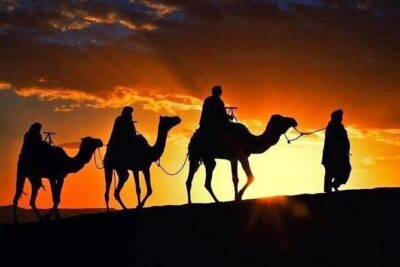
Agafay Desert Sunset, Camel Ride, and Dinner Show
Read our review →
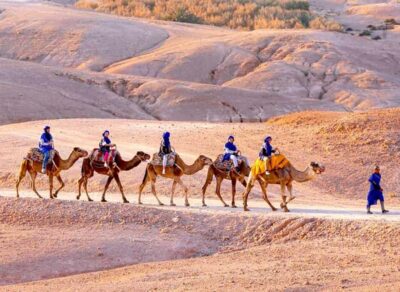
Agafay Desert Quad & Camel Rides with Dinner Show
Read our review →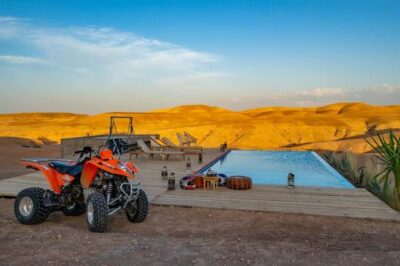
Agafay Desert Quad Biking Tour with Dinner-Show
Read our review →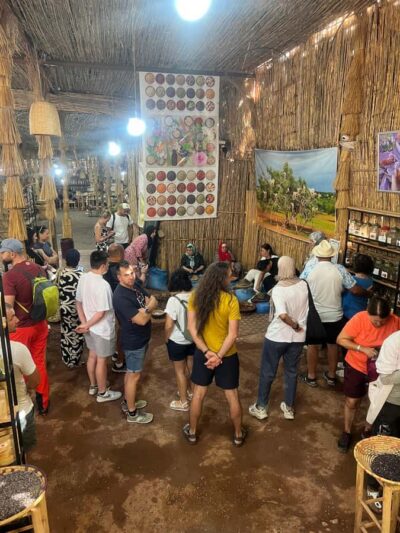
Atlas Mountains, Ourika Valley, Waterfall & Lunch
Read our review →