
Reviewed · SAHARA DESERT TOURS
From Marrakech: 3-Day Sahara Desert Adventure to Fes
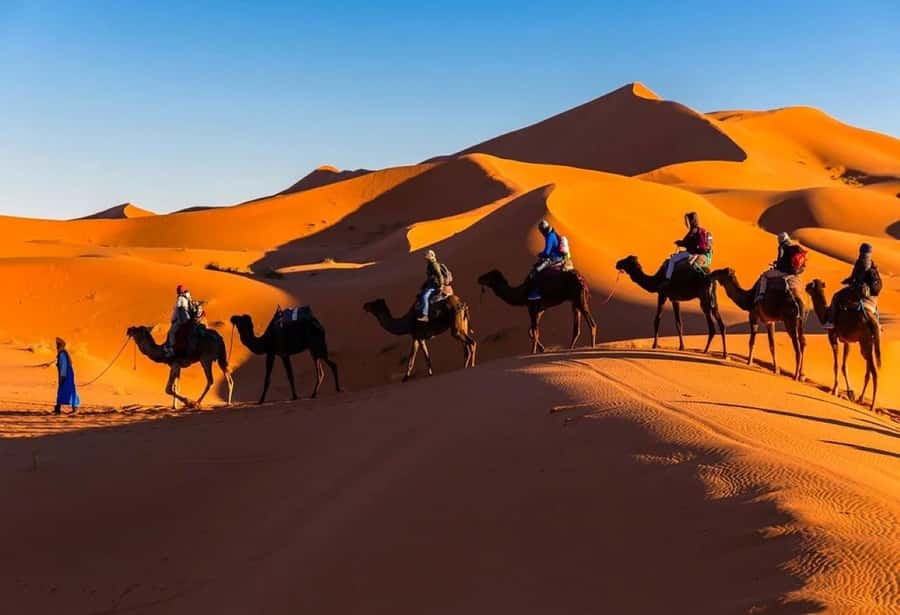
The best part of this three-day journey is the sharp change of scenery: red mountain roads, ancient kasbahs, palm-filled valleys, towering gorges, and finally the golden dunes of Erg Chebbi. You ride a camel into the Sahara at sunset, sleep in a private tent, then return to the dunes at sunrise before heading north to Fes.
I like the strong mix of places, especially Ait Ben Haddou and the Todgha Gorges. I also like the human touches: drivers such as Abderrahman Abbassi, Ajbli, Kamal, and Mohamed are often praised for safe driving, friendly help, and useful local explanations.
The tradeoff is simple: this is a lot of Morocco in only three days. Expect long hours in the minibus, basic first-night lodging, extra payments for lunches and drinks, and very cold desert nights from November through February.
Key points to know before booking
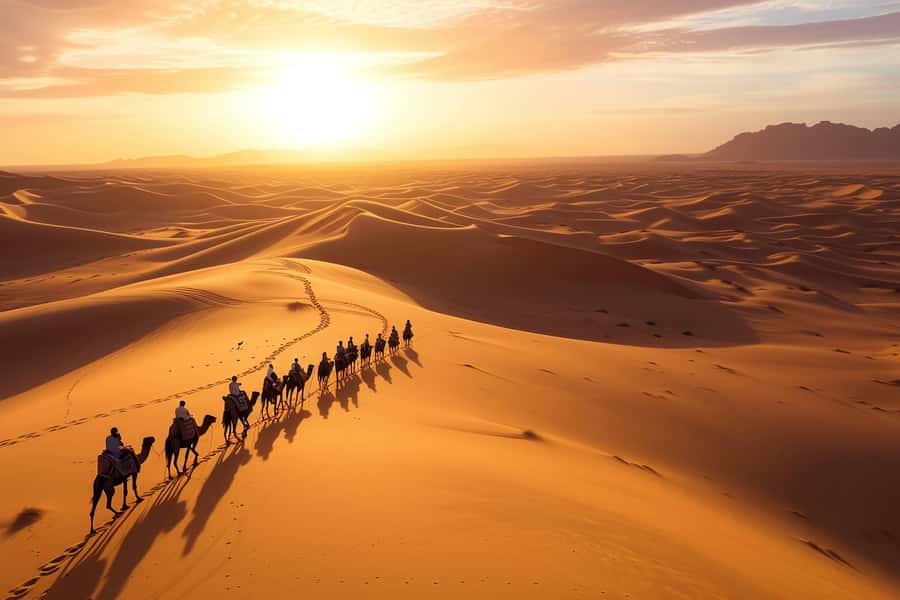
- Sunset and sunrise camel rides give you two very different views of Erg Chebbi, with warm evening light and quiet early-morning dunes.
- Ait Ben Haddou provides the strongest history stop, with a local guide leading you through its old alleys and film locations.
- The private desert tent is included in both camp categories, but only the luxury version has a private bathroom inside the tent.
- Todgha Gorges and the Tinghir oasis break up the driving with a walk among palms and huge limestone cliffs.
- The final day crosses the Ziz Valley and Middle Atlas, ending with cedar forests and possible sightings of wild apes before Fes.
- Bring cash, snacks, and warm layers, since lunches are not included, card payment may not be possible, and winter desert nights can be bitterly cold.
Is three days enough from Marrakech to Fes?
This trip works because it is not a simple transfer from one Moroccan city to another. The road from Marrakech to Fes passes through several distinct regions, and the tour uses the route to turn transport into sightseeing.
Still, the schedule is full. Day one begins around 7:00 AM in Marrakech and day three ends around 7:00 PM in Fes. You will spend many hours seated in an air-conditioned minibus or minivan, with stops for meals, toilets, photographs, and major sights.
That pace suits you if you want to see southern Morocco but have limited time. It is less suitable if you want slow mornings, long walks, or several nights in each town. The reward is variety. In a short stretch, you move from the High Atlas to kasbah country, then through dry valleys, palm groves, desert dunes, and cedar woods.
The exact group size can vary. Some departures have been small, with only six people plus the guide, while others use a fuller minibus. A small group makes the long drives easier, but you should still expect a shared road trip rather than a private tour.
A few other Marrakesh days worth comparing
- From Marrakech: 3-Day Merzouga and Sahara Desert Tour
★ 4.9 · 15,308 reviews - From Marrakech: Merzouga 3-Day Desert Safari with Food
★ 4.7 · 12,232 reviews - Marrakech: 3-Day Merzouga Desert Experience Camel & Meals
★ 4.6 · 6,252 reviews
Crossing the High Atlas from Marrakech
The first morning takes you out of Marrakech and over the High Atlas Mountains. The road is curvy, so a calm driver matters. Several drivers, including Oussama, Houssein Imlil, Noureddine, and Abderrahman Abbassi, have been praised for steady driving and for stopping when people needed a break.
Your driver-guide is more than a chauffeur, but the amount of commentary can vary. Some guides offer plenty of information about Morocco, local customs, and the places along the way. Others keep explanations shorter. If you want more context, ask questions early. Guides such as Ajbli and Kamal were especially appreciated for answering questions and keeping the group involved.
The mountain crossing is a fine opening to the trip, but do not expect a quick hop to the desert. This is a full travel day. Carry water and snacks in the vehicle. You can buy supplies along the way, but having your own small stash makes the road time easier.
Ait Ben Haddou, Morocco’s famous ksar
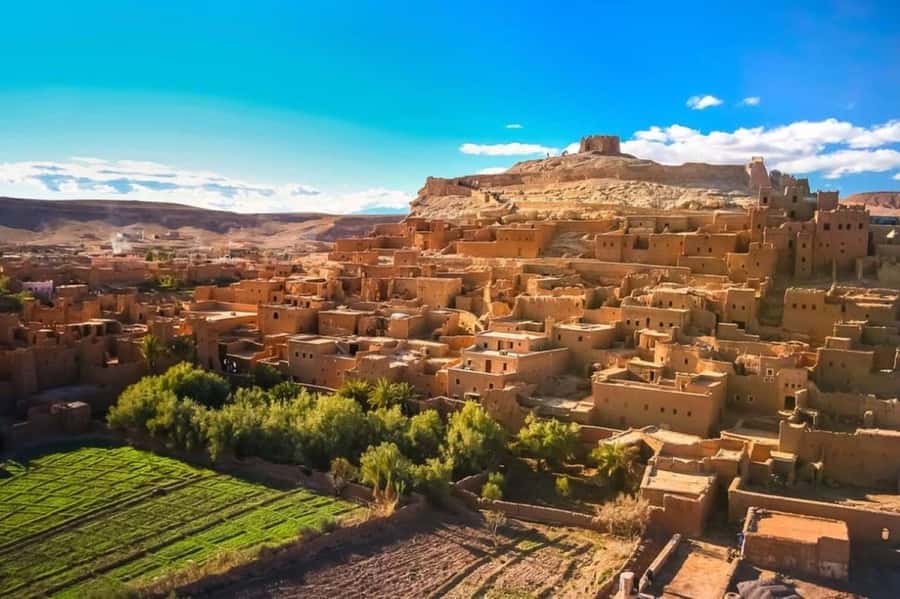
Ait Ben Haddou is the first major stop, and it deserves its place on the route. This fortified village, or ksar, is made up of earthen buildings clustered on a hillside. Its narrow passages, towers, and high viewpoints show how architecture once answered the needs of trade, defense, and desert heat.
A local guide leads the walk through the old alleys. The quality of this visit depends heavily on the person guiding you. Mohammad, who has guided visitors at Ait Ben Haddou, was praised for clear explanations and lively translations. Use the walk to ask about how the village functioned, which buildings are still in use, and how film work affected the site.
The setting is familiar from Gladiator and Game of Thrones, but the movie connection should not overshadow the place itself. The old village is the point. Film fans will enjoy recognizing locations, yet the best views come from looking beyond the screens and noticing the dry hills, river valley, and earth-colored buildings.
Lunch follows at a local café and is not included in the tour price. This is one area where value can slip. Some meals along the route are filling and traditional, while certain roadside restaurants have been disappointing. You have little choice at some stops, so bring around 300 to 400 Moroccan dirhams for lunches and small purchases. Cash is useful because card payment may not be accepted.
Ouarzazate and the road to Dades
After Ait Ben Haddou, the road continues through Ouarzazate toward Boumalne Dades. The views shift again, with broad dry valleys and old settlements appearing between the mountain roads.
You reach the Dades area in time for sunset views along the Dades River. This is a good example of the tour’s rhythm: the road itself is long, but the stops give it purpose. The evening light softens the red rock and makes the valley feel very different from the morning’s mountains.
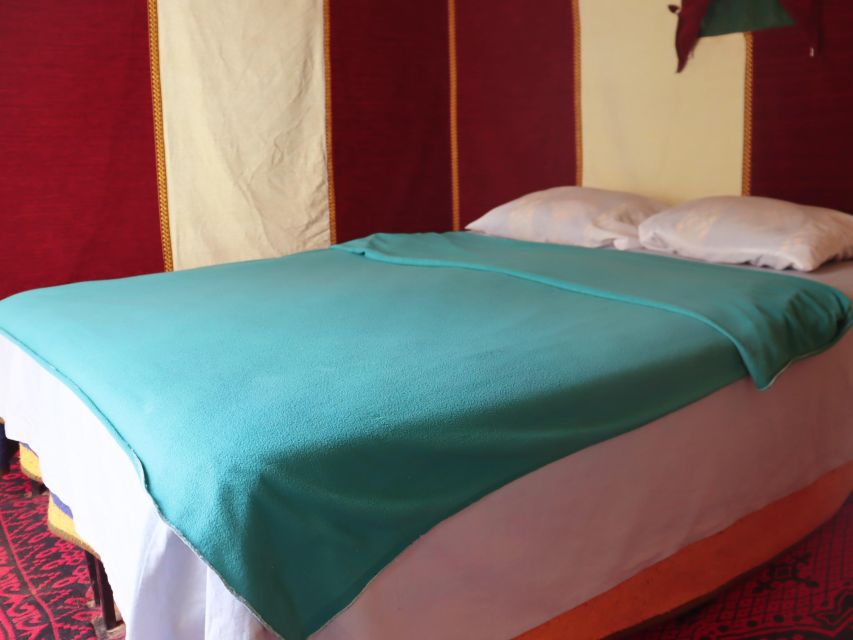
Your first night is in a hotel or kasbah-style accommodation in the Dades region, with dinner and breakfast included. In some departures, the lodging has been in the Valley of Roses or near Kalaat M’Gouna. Expect a comfortable, practical stop rather than a high-end hotel. Rooms have private bathrooms, but hot water and power can be inconsistent. A cold shower or a brief outage is possible, so keep expectations modest.
Dinner is usually Moroccan and served in generous portions, sometimes buffet-style or family-style. Vegetarian choices are available. This overnight stop matters because it breaks up the drive and gives you a proper bed before the desert night.
Same city, a completely different day out:
- Marrakech: Agafay Desert Sunset, Camel Ride, and Dinner Show
★ 4.6 · 35,119 reviews - From Marrakech: Ouzoud Waterfalls Guided Hike and Boat Trip
★ 4.7 · 33,630 reviews - Marrakech: Agafay Desert Quad & Camel Rides with Dinner Show
★ 4.8 · 27,382 reviews - Marrakech: Agafay Desert Quad Biking Tour with Dinner-Show
★ 4.8 · 16,569 reviews
Todgha Gorges and the Road of 1001 Kasbahs
Day two begins with breakfast, then follows the Road of 1001 Kasbahs. The name is poetic rather than a count, but the route does pass old villages, fortified buildings, and desert settlements that show how people adapted to a dry climate.
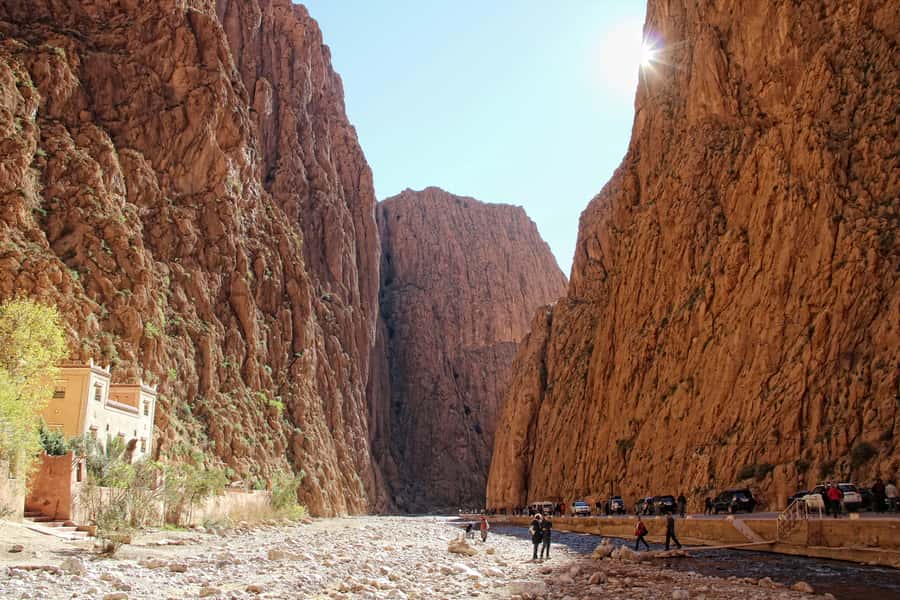
The stop at Tinghir adds a welcome change of pace. You walk through a palm-lined oasis before reaching Todgha Gorges, where limestone cliffs rise sharply on both sides. The guided hike is not presented as a difficult trek, but you should wear shoes suitable for walking on uneven ground.
Todgha is one of the most impressive natural stops on the route. After hours in the vehicle, the chance to walk beneath high cliffs feels especially welcome. Look up as you move through the canyon, where water has cut through the rock over time. The contrast between the palms, stone walls, and dry country around them makes this stop more than a quick photo break.
The schedule does not allow unlimited time here. If you are hoping for a serious hike, this is not that kind of outing. It is a guided walk that gives you a close look at the gorge while keeping the group on schedule for Merzouga.
Erg Chebbi at sunset
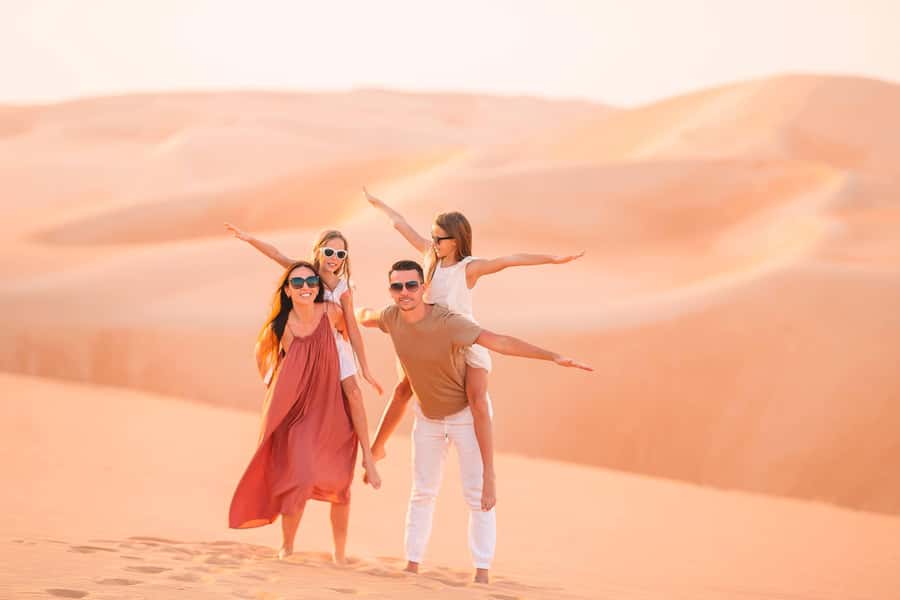
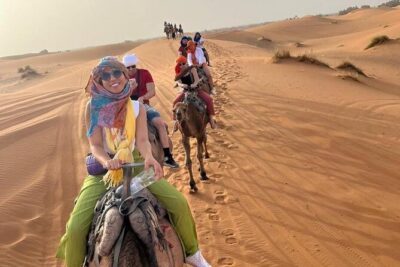
The desert portion begins near Merzouga, where you leave the vehicle and meet the camels. The ride across Erg Chebbi takes about an hour, according to the practical details supplied for the trip, though the exact timing can depend on the season and sunset.
Camel riding is included in both the standard and luxury camp options. You will cross soft sand, climb and descend dunes, and stop for the sunset. The view is beautiful, but the ride is not a soft sofa experience. The rocking motion can leave you sore, especially when the camel stands or kneels. If you are uneasy on a camel, you can walk to the standard camp or request a 4×4 transfer for an additional €50 per vehicle.
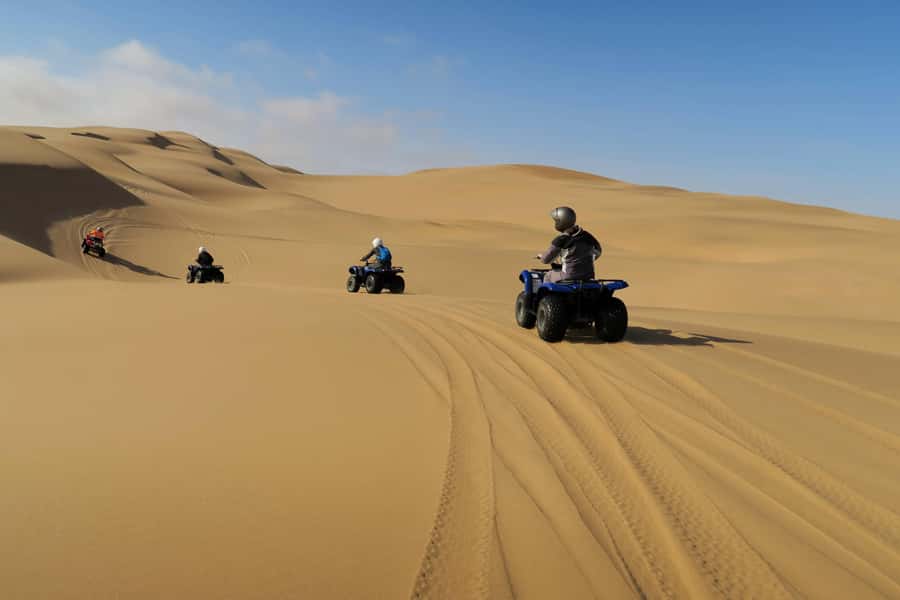
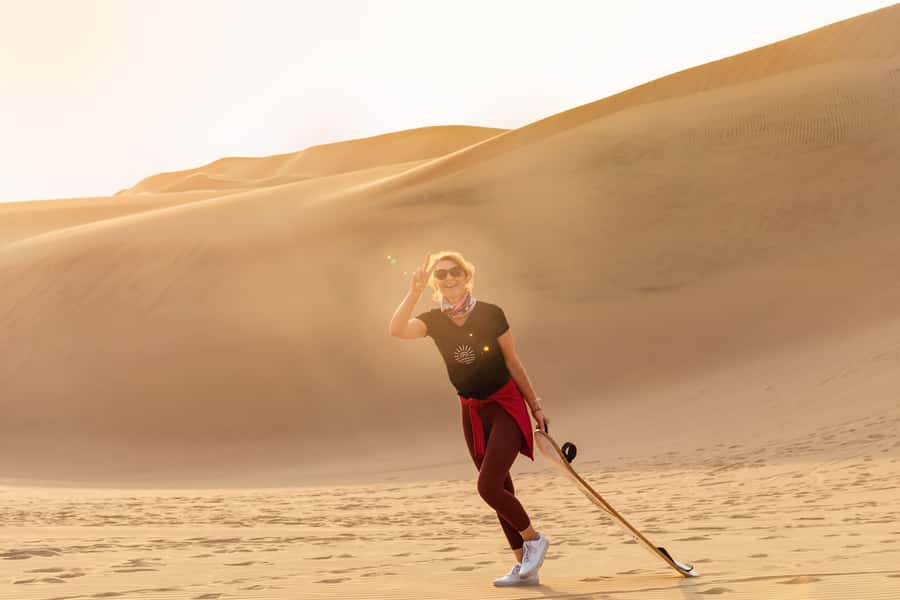
You also get time for sandboarding. The dunes provide the setting, and the activity is included rather than sold as a separate attraction. Some people add a one-hour quad-bike session for €50 per person, with at least two people required. If you enjoy active outings, the quad ride can be a strong extra. It is not needed to appreciate the desert, but it adds speed after the slow camel trek.
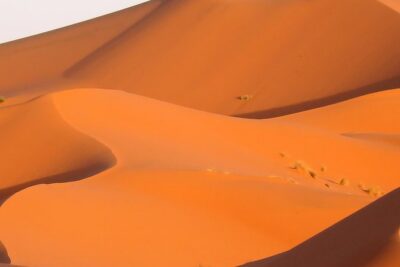
The desert is the emotional high point of the trip. The open sand, low light, and silence create a real sense of distance from city life. Keep your phone and camera handy, but do not spend the whole sunset looking through a screen.
A night in the private desert camp
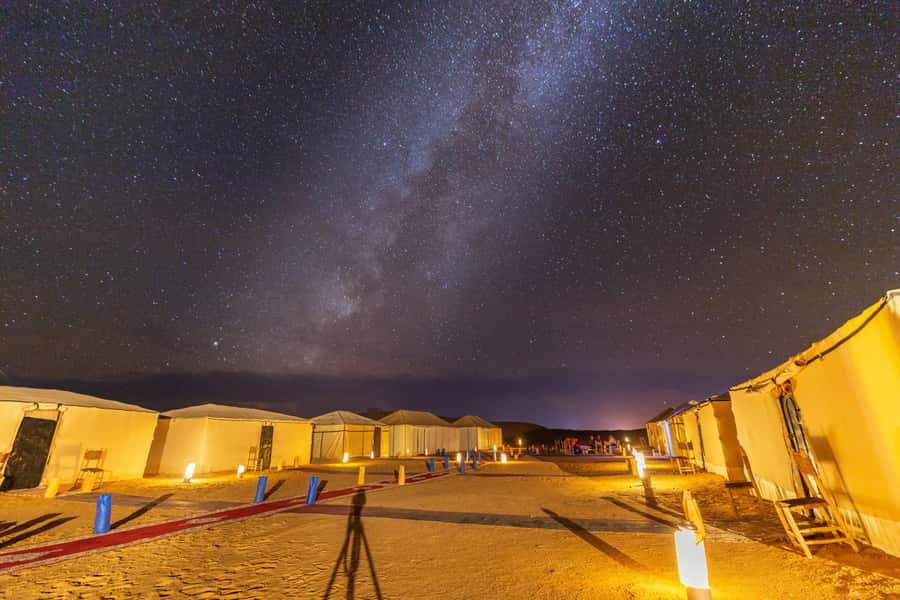
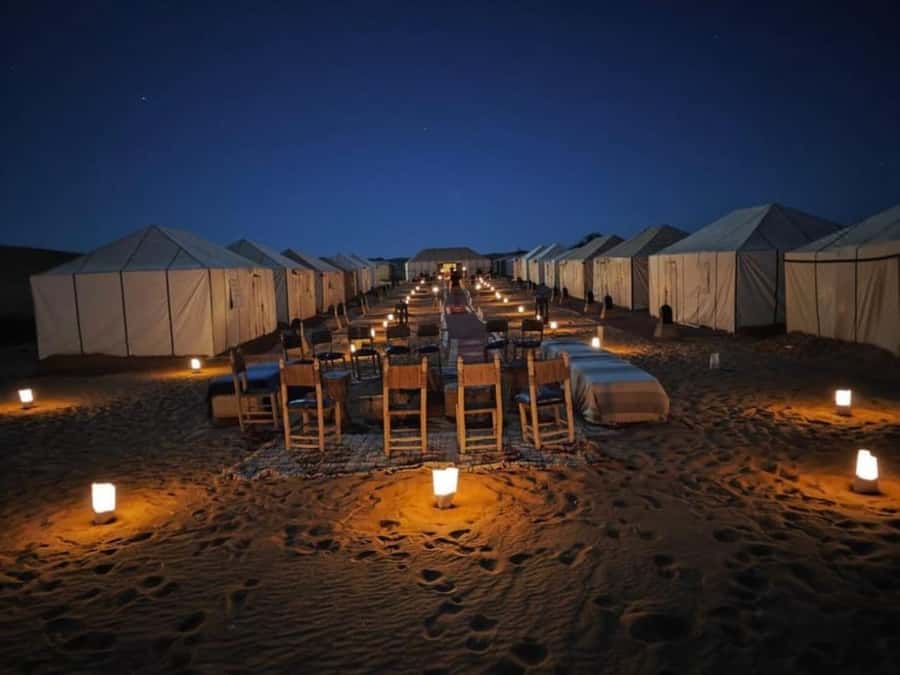
You reach camp before dark and settle into a private Nomad tent. Both standard and luxury bookings provide a private tent. The difference is practical: luxury tents have bathrooms inside, while standard tents use shared facilities nearby.
Luxury does not mean a hotel room in the sand. It means more privacy, easier access to a bathroom, and usually less need to handle your luggage. In the luxury version, luggage may be transported separately by 4×4. With the standard option, keep a small overnight bag with you because your main luggage remains in the vehicle.
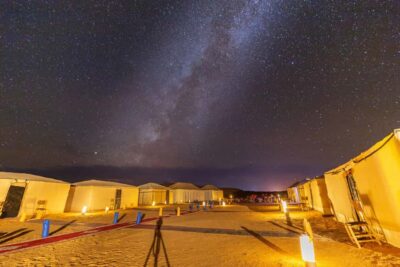
The camp meal is a traditional Moroccan dinner, followed by Berber drumming and music around the fire. This is a social evening, and the shared setting helps groups get to know each other. You may also have time to look at the stars away from the fire. Guides have sometimes taken people out for a better view of the night sky.
Temperature is the main concern. Summer days from June through September can be hot, while winter nights from November through February can be extremely cold. Several winter departures have found the tents and blankets comfortable but still struggled with the cold. Pack a warm hat, thick socks, long sleeves, and layers you can sleep in. Do not assume the tent will be heated.
Sunrise, Ziz Valley, and the Middle Atlas
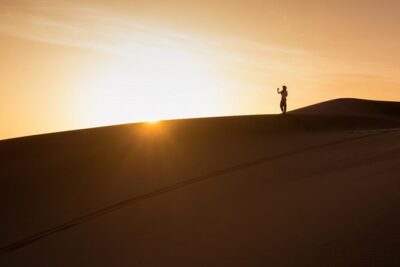
The next morning starts early with another camel ride, this time at sunrise. The light is cooler and gentler than at sunset, and the dunes are quieter. This second ride is not filler. It lets you see the desert from a different angle and gives you a final look before the long drive north.
After breakfast at camp, the route leaves Merzouga and follows the Ziz Valley. Palm groves and old villages line sections of the valley, creating a strong contrast with the sand. You stop for lunch in Midelt, a mountain town, with lunch again paid separately.
The road then continues through Erfoud and into the Middle Atlas Mountains. Erfoud is known for fossils, and the area marks another change in scenery. Dry desert gives way to greener cedar forests at higher elevations. The tour also highlights the chance to spot wild apes in the forest. Wildlife sightings cannot be guaranteed, so treat this as an opportunity rather than a promise.
This final drive is long, but it completes the geographic story of the tour. You begin among high mountains near Marrakech, spend a night in the Sahara, then pass from desert palms into wooded mountain country before reaching Fes.
How comfortable is the transport?
The air-conditioned minibus or minivan is suitable for the route, but comfort depends on your tolerance for long drives. The vehicle has onboard Wi-Fi, and drivers commonly make stops for toilets, coffee, snacks, and photographs. Still, Wi-Fi can never replace stretching your legs.
Drivers are one of the most praised parts of the experience. Names that have received especially warm feedback include Abderrahman Abbassi, Ajbli, Kamal, Mohamed Talaoul, Noureddine, Oussama, and Houssein Imlil. Your driver may be someone else, but the service includes a multilingual driver-guide in English, French, Spanish, or Arabic.
Communication about the daily schedule can be brief, so ask when the next stop is, how long you have at a site, and what time to return to the vehicle. This small habit helps you enjoy the stops without watching the clock.
Is $138 good value?
At $138 per person, the tour offers strong value for a three-day cross-country route. The price covers Marrakech pickup, Fes drop-off, transport, the first hotel night, the private desert tent, two camel rides, breakfasts, dinners, Ait Ben Haddou guiding, sandboarding, camp music, luggage handling, and Wi-Fi.
You still need money for two lunches, drinks, personal purchases, and optional activities. Add €50 per vehicle for a 4×4 transfer if you do not want to ride or walk to camp. Quad biking costs €50 per person for one hour, with a minimum of two participants.
The value is strongest if you want a broad first look at southern Morocco and do not have time to arrange transport, hotels, desert transfers, and guides separately. It is weaker if you dislike fixed meal stops or prefer to choose your own restaurants and spend longer at each attraction.
Who should book this Marrakech to Fes route?
I would choose this trip if you want the Sahara but also care about seeing Morocco beyond the dunes. Ait Ben Haddou, Todgha Gorges, the kasbah road, Ziz Valley, and cedar forests keep the journey varied.
It suits couples, solo visitors, and families who can manage long road days. A solo woman can book it, and the shared group format provides company during the drives and camp evening. Pregnant women should not book, as the camel rides and demanding road schedule are specifically unsuitable.
Pack light for the desert night. Keep your main bag organized in the vehicle and bring a small overnight bag with warm clothing, toiletries, and any medicine you need. Also bring cash, water, snacks, sunscreen, and shoes for the Todgha walk.
My verdict: book it for variety, not for a relaxed pace
I would book this tour if my priority were seeing the Sahara while ending in Fes, especially at this price. The sunset and sunrise camel rides, campfire music, Ait Ben Haddou, and Todgha Gorges give you several memorable moments rather than one desert stop surrounded by driving.
I would skip it if I wanted a leisurely desert stay, guaranteed hot showers, or complete control over meals and timing. For most people with only three days, though, the route packs in a remarkable amount of Morocco. Choose the luxury tent if a private bathroom matters, carry serious winter layers in cold months, and ask your driver questions along the way. Those small choices will make the long road much easier.
FAQ
How long is the tour from Marrakech to Fes?
The tour lasts three days. Pickup begins around 7:00 AM in Marrakech on the first day, and arrival in Fes is expected around 7:00 PM on the third day.
Are pickup and drop-off included?
Yes. Pickup is available from your hotel or riad in Marrakech, with a nearby walking meeting point arranged if the accommodation cannot be reached by car. Drop-off is provided at your hotel or riad in Fes.
What is the difference between the standard and luxury desert camps?
Both options provide a private tent and include sunset and sunrise camel rides. Luxury tents have private bathrooms inside, while standard tents use shared bathrooms nearby.
Are meals included?
Moroccan breakfasts and dinners are included, with vegetarian options available. Lunches and beverages are not included, so bring around 300 to 400 Moroccan dirhams for meals and small purchases.
Can I avoid the camel ride to the camp?
Yes. You can walk to the standard camp or request a 4×4 transfer for €50 per vehicle. The included sunset and sunrise camel rides remain part of the desert program unless you choose not to take them.
Is quad biking available?
Yes. An optional one-hour quad-bike session costs €50 per person, and at least two people are required. Sandboarding in the Sahara is included in the tour price.
Just listed out of Marrakesh
- Marrakech: Ouzoud Waterfalls Trip, Guide & Boat + Lunch★ 4.7 · 33 reviews
- Marrakech: Vibrant Dinner Show at The Lotus Club★ 3.9 · 33 reviews
- From Marrakech: 3-Day Merzouga and Sahara Desert Tour★ 4.5 · 33 reviews
- Marrakech: Private Souks Tour with Tea and Traditional Snack★ 4.6 · 33 reviews
- From Marrakech: Small Group To Essaouira & Medina Day Trip★ 4.3 · 33 reviews
- Marrakech: Medina Souks, Hidden Markets and Shopping Tour★ 4.8 · 33 reviews
- 2 Days Desert Agafay and Atlas Mountains Trek From Marrakech★ 3.8 · 33 reviews
- Agadir/Taghazout : Marrakech Guided Tour old Medina & Souks★ 3.7 · 34 reviews
Sahara Desert Tours, compared.
3 Days Desert Tour From Marrakech To Merzouga Dunes & Camel Trek
Read our review →
3-Day Marrakech to Fes Sahara Desert Tour via Merzouga
Read our review →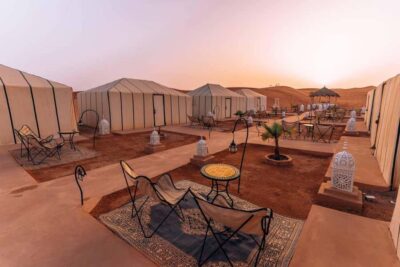
3-Day Merzouga Desert Experience Camel & Meals
Read our review →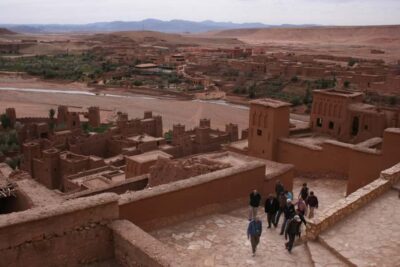
3-Day Tour to Merzouga Erg Chebbi with Food & Camel Trek
Read our review →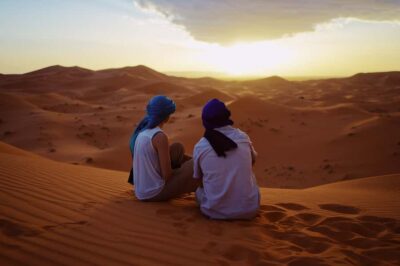
Sahara Desert 2-Day Tour with Merzouga Camp Stay
Read our review →Browse the lists this tour appears in