
Reviewed · MARRAKECH TOURS
From Agadir: 3-Day Desert Tour to Marrakech
The Sahara night near Merzouga is the star of this trip. You cross Morocco by road, trade the Atlantic coast for kasbah country and palm valleys, then ride camels into the Erg Chebbi dunes for sunset, dinner, drumming, and a sky full of stars.
I like the way the route links several major sights instead of treating the desert as a stand-alone outing. I also like the practical value: transport, two breakfasts, two dinners, accommodation, camel transfer, sandboarding, and luggage service are included for $172 per person.
The catch is the mileage. Day three, from Merzouga to Marrakech, is a long haul, and all three days follow a tight schedule. If you need slow mornings, long meals, or hours to wander alone, this will feel rushed.
Key points to know before booking
- Ait Ben Haddou opens the trip: Explore Morocco’s famous fortified village and film location before heading east.
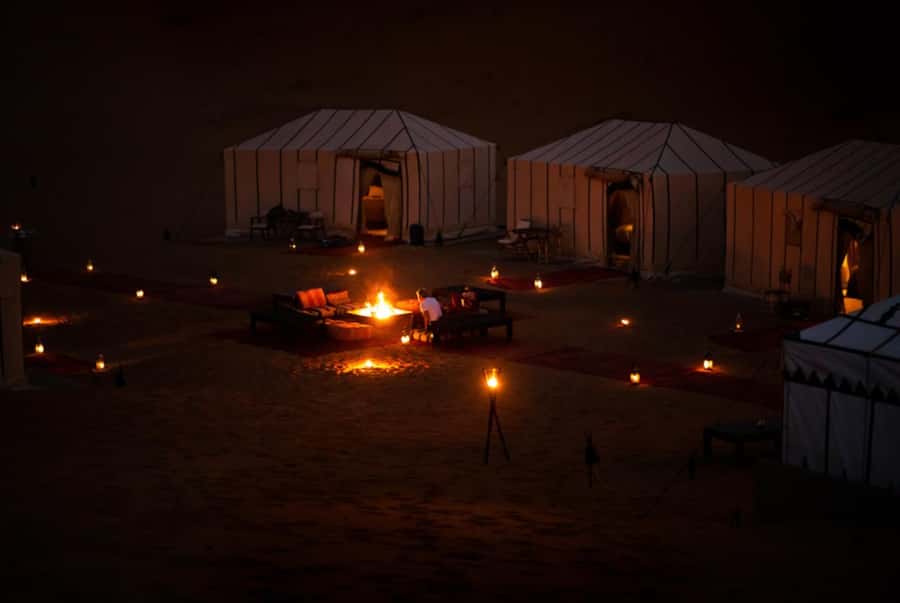
- The desert camp is the main event: Ride a camel to Erg Chebbi, sandboard near the dunes, and watch sunset before a Berber music session.
- Expect many hours in the vehicle: The scenery changes constantly, but this is a road trip, not a relaxed resort break.
- Standard and luxury camp options differ: Standard tents use shared bathrooms, while the luxury option can include a private bath and air conditioning.
- Lunch costs extra: Bring enough cash for planned meal stops, which can cost about 120 to 130 dirhams.
- Pickup needs checking: Agadir pickup is limited to accommodations within 7 kilometers of the city center, and a Medina riad may require meeting at a car-accessible point.
Why this route works from Agadir to Marrakech
Morocco is a country of sharp changes. On this trip, you leave Agadir in the morning and gradually move from coastal country toward dry mountain valleys, old kasbahs, and the Sahara. By the time you reach Marrakech, you have crossed a good slice of southern Morocco in three days.
That variety is the tour’s strongest idea. You are not simply being driven to a camp and back. The route includes Ait Ben Haddou, the Rose Valley, the Dades area, Todra Gorge, palm groves, Berber villages, Rissani, the Draa Valley, Ouarzazate, and the High Atlas Mountains.
The tradeoff is easy to understand. Morocco’s distances are large, and the itinerary cannot fit these places into three days without long road sections. I would choose this tour for a first visit when you want a broad sample of the country. I would not choose it if your main goal is a quiet desert stay with plenty of free time.
The tour costs $172 per person, which is strong value for the amount included. You receive hotel pickup in Agadir, air-conditioned transport, an English-speaking driver or guide, two nights of accommodation, two breakfasts, two dinners, the camel ride, sandboarding, evening music, luggage handling, and drop-off at your Marrakech accommodation.
Lunches and drinks are not included. That matters because lunch stops are planned along the route, and one recent estimate put the cost at roughly 120 to 130 dirhams per person. Carry water and snacks from Agadir, especially on the first morning, when breakfast is not included and the road section begins early.
A few other Marrakesh days worth comparing
- From Marrakech: 3-Day Merzouga and Sahara Desert Tour
★ 4.9 · 15,308 reviews - From Marrakech: Merzouga 3-Day Desert Safari with Food
★ 4.7 · 12,232 reviews - Marrakech: 3-Day Merzouga Desert Experience Camel & Meals
★ 4.6 · 6,252 reviews
Day one: Ait Ben Haddou and the Road of a Thousand Kasbahs
Pickup is scheduled for around 7:00 AM, though some Agadir pickup arrangements may begin earlier depending on your lodging and how the group is assembled. You travel in air-conditioned transport, but the exact vehicle experience can vary. Some people have started in a smaller car before joining the main group near Ait Ben Haddou.
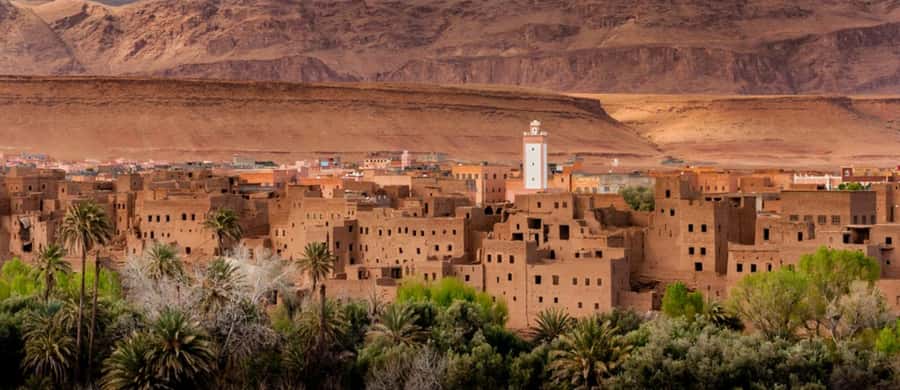
Ait Ben Haddou is an excellent first stop. This fortified earthen village, known as a ksar, rises above the surrounding area in a cluster of walls, towers, and narrow passages. It is also a famous film location, but its value is not just cinematic. The site shows how southern Moroccan communities once built with packed earth and organized life behind defensive walls.
You have time for lunch and exploration. A local guide is available for an additional €2 per person. I would consider taking that option if you want the buildings explained rather than simply photographed. Without a guide, you can still walk around, but the site makes more sense when someone points out its construction, layout, and role in local life.
After Ait Ben Haddou, the road turns toward the Rose Valley and Dades Valley along the route often called the Road of a Thousand Kasbahs. The name is not a literal count, but it gives you the right idea: this is a long stretch of southern Morocco marked by old fortified homes, villages, dry hills, and river-fed pockets of greenery.
The Rose Valley is known for its date palms and rose-growing communities. The scenery is especially striking because the vegetation appears in narrow bands beside the dry terrain. You will make sightseeing and refreshment stops along the way, but do not expect long, unplanned walks at every location.
Your first night is scheduled in Tinghir at a hotel or riad. Accommodation is described as comfortable, though the standard can vary by departure and group arrangements. One group stayed in Kalaa M’Gouna instead, with a hotel that was considered less impressive than the desert camp. That is a useful reminder to focus on the route and overall value rather than expecting boutique-hotel consistency.
Day two: Todra Gorge before the Sahara
After breakfast, you continue through the Todra Valley toward Merzouga. This section brings together two of the trip’s most appealing features: palm groves and mountain walls.
Todra Gorge is famous for its towering cliffs, which rise sharply around a narrow valley. The contrast is what makes the stop memorable. You see high, bare rock beside a greener corridor shaped by water and farming. The tour also passes Berber communities and villages such as Tinjdad, Melaab, and Erfoud, giving you glimpses of settled life far from Morocco’s major cities.
The itinerary includes time to see the gorge and the valley, but the overall day remains a road day. You may stop at a local craft or carpet workshop, and some departures include a visit to an Amazigh carpet manufacture. These stops can add cultural context, but they may also feel commercial if you prefer to spend every minute outdoors. Keep your expectations practical: organized routes often include local demonstrations because they help support communities and give you a closer look at traditional work.
Erfoud and the surrounding area mark the gradual shift toward the desert. The palms become less frequent, the open ground grows wider, and the journey begins to feel less like a valley tour and more like a passage into the Sahara.
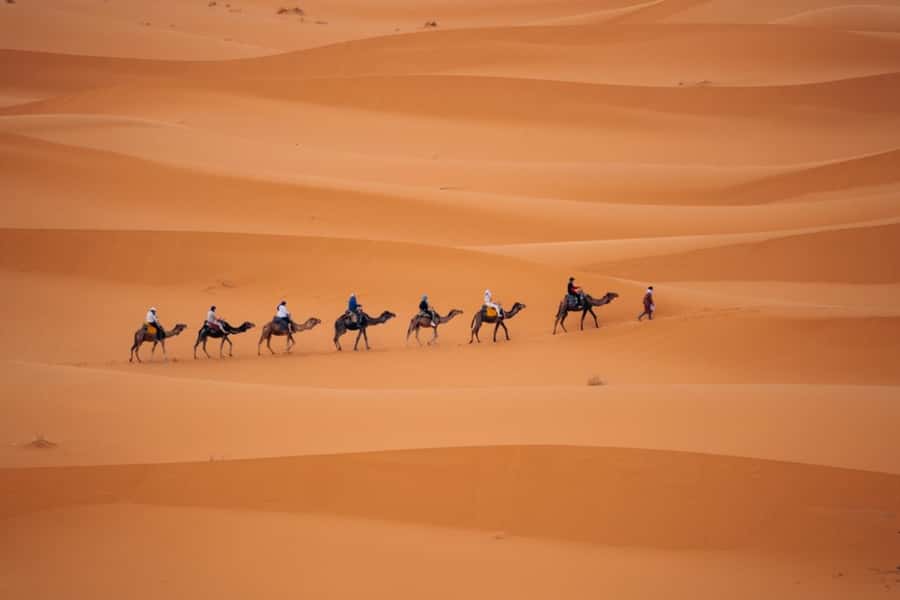
Near Merzouga, the vehicle gives way to camels for the ride toward the Erg Chebbi camp. Camel riding is not a fast or especially smooth activity. The saddle can feel awkward, and the animal’s rising and sitting movements require care, so people with back problems should think twice before booking.
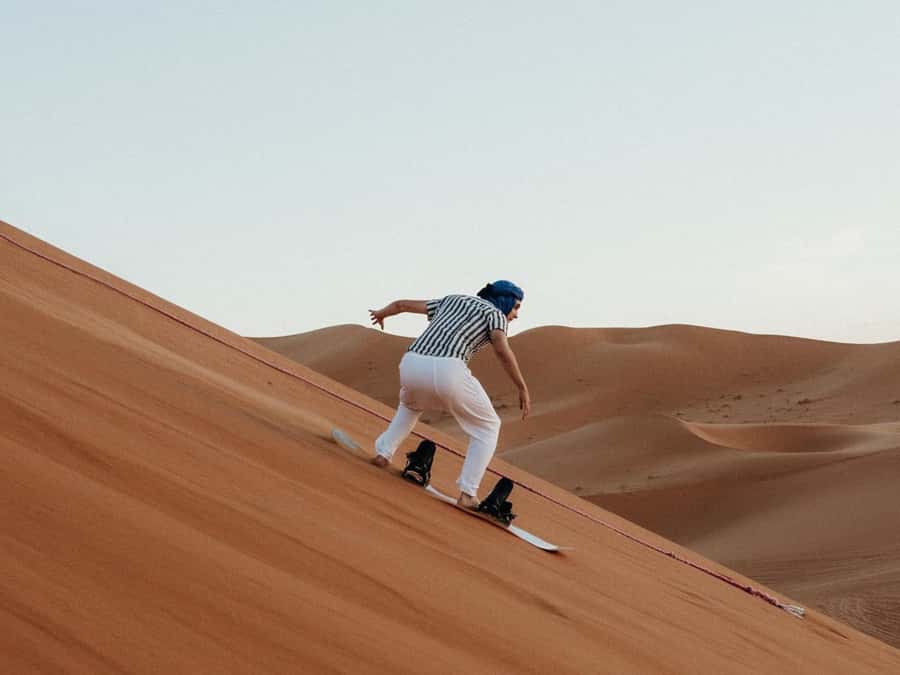
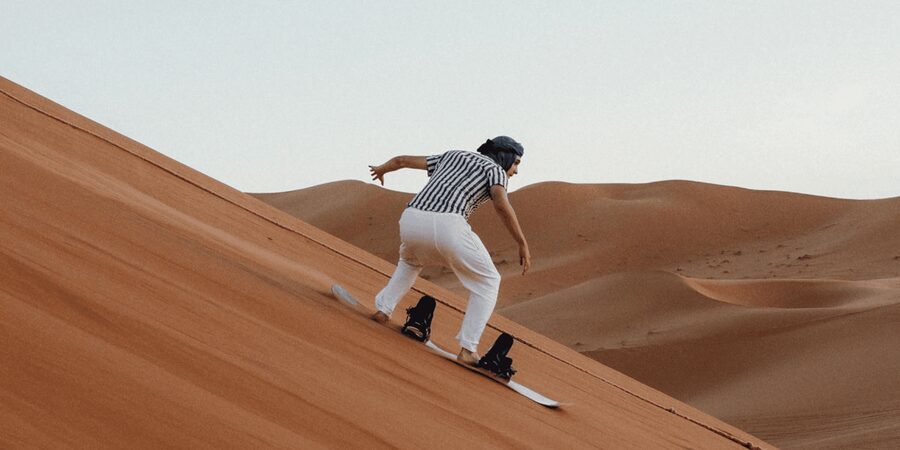
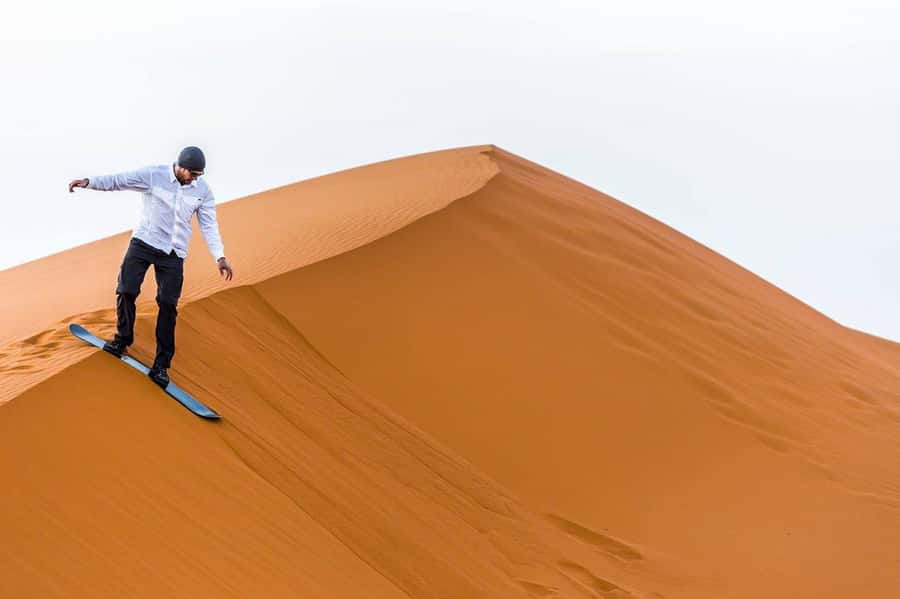
The payoff comes at sunset. The dunes catch the changing light, and the wide horizon gives you a clear sense of place. Sandboarding is included, usually as an optional activity during the wait for sunset or around camp. It is simple, good fun, and requires no special skill beyond accepting that you may spend more time sitting in the sand than standing on the board.
The camp experience varies by accommodation level. The standard option uses a private tent but shared bathrooms. One useful detail is that standard camps can be located at the edge of the desert, closer to roads and settled areas. That may reduce the feeling of isolation, but it can also give you access to ordinary toilets, showers, and warm water.
The luxury option costs more, but it can include a private bathroom and air conditioning. One departure found the luxury tent warm and comfortable at night, while standard facilities were still judged perfectly acceptable. I would pay for the upgrade if a private bath is important to you or if you are sensitive to cold desert nights.
Dinner is followed by Berber drumming and music around a bonfire. This is the social heart of the trip. You sit with the group, eat local dishes, listen to desert stories, and watch the sky darken beyond the camp lights. It is not a silent, remote wilderness experience, since several camps may be nearby, but it offers a warm introduction to desert hospitality.
Some meal feedback has been mixed on variety, so you should not expect restaurant-level choice at every stop. The food is generally Moroccan and filling, and the desert dinner is part of the experience, but people with strict dietary needs should ask ahead.
Day three: Sunrise, Rissani, and the High Atlas
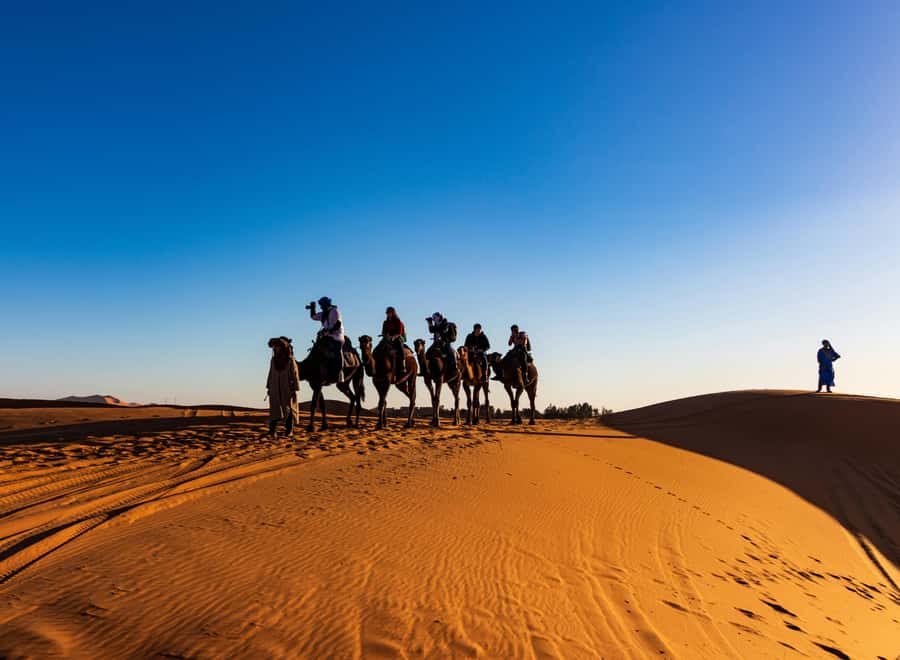
Set your alarm early. Sunrise over the dunes is one of the clearest reasons to accept the early starts and long road sections. The light changes quickly, and the cold before dawn can be sharp, so bring warm clothing even if the daytime forecast looks hot.
After breakfast, you return to Merzouga and begin the long drive toward Marrakech. The route passes through Rissani, Alnif, Tazarine, and N’kob before reaching the Draa Valley. Rissani is an important stop in the region, and the route gives you a look at the movement between desert settlements and oasis towns.
The Draa Valley is lined with date palms, villages, and old kasbahs. It is one of the most attractive parts of the return journey because the green palm corridors break up the dry hills. N’kob is known for its concentration of kasbahs, and the road through this area gives you a stronger sense of southern Morocco’s traditional architecture than a quick city visit would.
This day is also the hardest physically. The road from Merzouga to Marrakech takes many hours, even with sightseeing and meal stops. One traveler described the long drive as unavoidable but worthwhile, while another found the stopovers helped make it manageable. I agree with that assessment: the route is scenic, but you should bring patience, water, snacks, and something to read or listen to.
Lunch is arranged along the way and is not included in the tour price. Because the stops are planned, you may have little choice about where to eat. The cost can be higher than a local meal in a town, and the quality may be ordinary. Keep cash available, and do not count on finding your own restaurant during the scheduled break.
The route pauses in Ouarzazate before the final mountain crossing. Known as a center for film production and southern Moroccan architecture, Ouarzazate is a natural break point between the desert and the High Atlas. After lunch, you cross the High Atlas Mountains toward Marrakech.
The mountain views are a fitting final chapter. You move from open desert and palm oases into winding high-country roads before descending toward the city. Arrival is expected in the evening, with drop-off at your accommodation in Marrakech.
Same city, a completely different day out:
- Marrakech: Agafay Desert Sunset, Camel Ride, and Dinner Show
★ 4.6 · 35,119 reviews - From Marrakech: Ouzoud Waterfalls Guided Hike and Boat Trip
★ 4.7 · 33,630 reviews - Marrakech: Agafay Desert Quad & Camel Rides with Dinner Show
★ 4.8 · 27,382 reviews - Marrakech: Agafay Desert Quad Biking Tour with Dinner-Show
★ 4.8 · 16,569 reviews
Guides, vehicles, and group size
Your driver is a major part of the experience because so much of the tour happens on the road. Names assigned on different departures have included Abderrahman, Ali, Hicham, Hamza, Hakim, Youssef, Jawad, Simo, and others. The exact person will depend on your date, but the most praised qualities are consistent: careful driving, clear explanations, help with bags, and close attention to comfort and timing.
Communication before pickup can be uneven. Some people received clear WhatsApp instructions the day before, while others had trouble getting answers until shortly before departure. You should keep your phone available and check the pickup message carefully. The exact meeting point may arrive the day before, especially if your accommodation is in a Medina or outside the central pickup zone.
Groups have ranged from around eight people to about fifteen, plus the driver. A small group makes the long drives easier and helps the camp evening feel more social. A private group is available if you want more control over stops and pace, though the supplied price is for the standard shared arrangement.
The vehicle does not allow smoking. Expect regular stops for toilets, snacks, drinks, and sightseeing, but this is still a demanding road tour. The activity notes also list people prone to seasickness as unsuitable, although there is no sea travel in the described route. People with back problems should take the camel ride and long vehicle hours seriously.
What to pack for the desert and mountains
Pack light but prepare for changing temperatures. Warm clothing is useful for the early desert morning and cooler mountain sections, while a hat, sunscreen, water, and comfortable shoes help during outdoor stops.
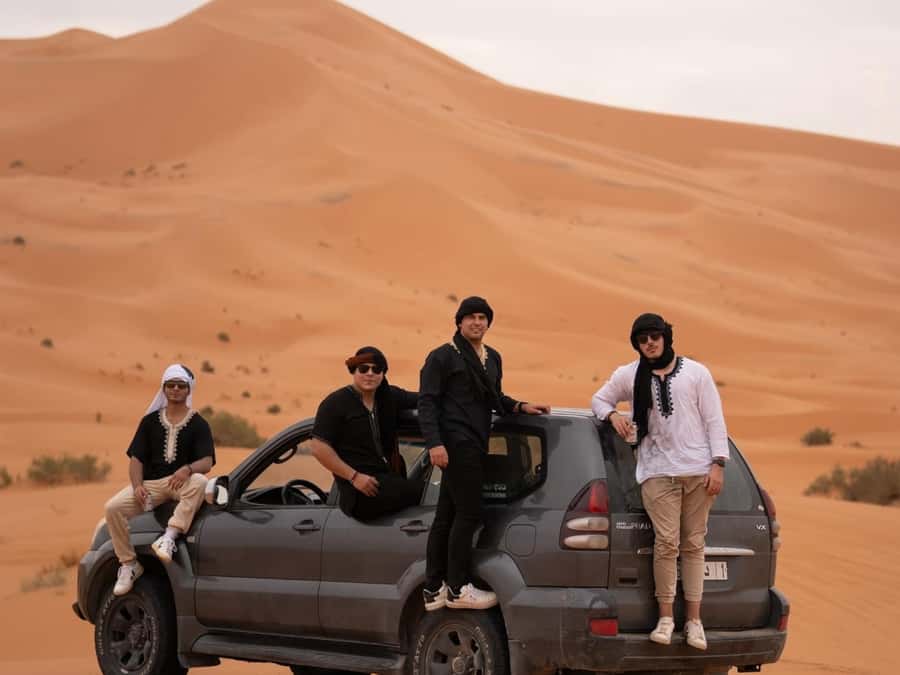
A scarf can be useful in the dunes. One person found that a purchased head covering was not essential and that an ordinary scarf worked well when the wind picked up. Bring snacks for the first morning, since breakfast is not provided before the initial drive.
A camera is worth carrying, but keep it protected from sand. You will also want space in your day bag for water and a warm layer, while the luggage service handles larger bags.
The camp experience includes animals, and camel welfare deserves attention. Follow the handler’s instructions, mount carefully, and avoid encouraging rough treatment. The ride is a cultural and scenic part of the route, but it should be conducted with respect for the camels.
Who will get the most from this tour
I would recommend this trip to a first-time Morocco visitor who wants to connect Agadir and Marrakech while seeing the desert along the way. It suits solo participants, couples, and people who enjoy meeting a temporary group and sharing a busy schedule.
It is also a good fit if you value variety. In three days, you see a UNESCO-listed ksar, valleys, kasbahs, mountain gorges, oasis palms, desert dunes, and the High Atlas. That is a lot of Morocco for the price.
I would be cautious about booking it if you dislike long drives, organized meal stops, early starts, or fixed sightseeing times. The itinerary is packed, and there is little empty space for lingering. If you can add another night to your trip, a slower desert itinerary would offer more time at the camp and less pressure on the return to Marrakech.
Is $172 a fair price?
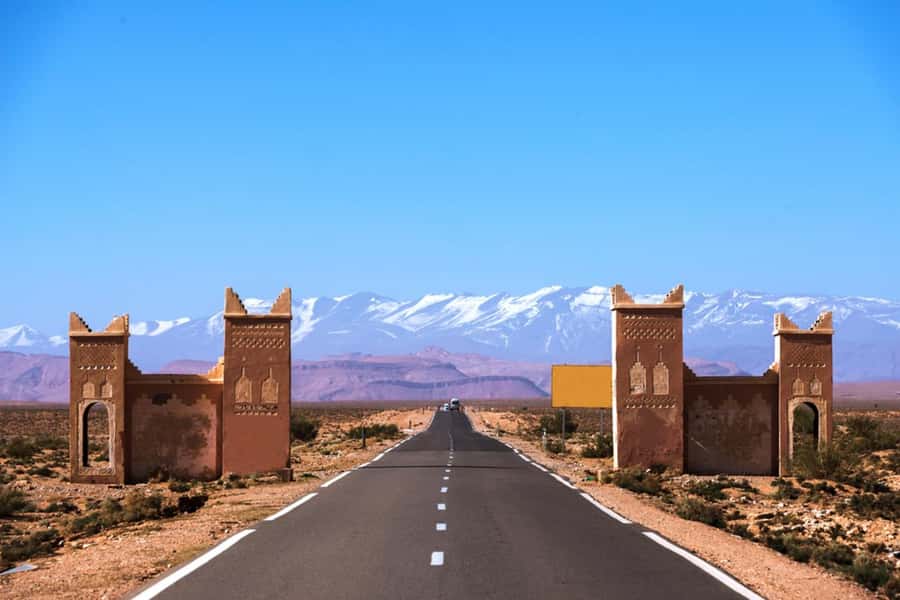
At $172, the tour offers good value because the costly parts are covered: transport across southern Morocco, two nights of accommodation, dinners and breakfasts, the camel transfer, sandboarding, camp entertainment, and two city-to-city transfers.
You should budget extra for lunches, drinks, optional upgrades, the Ait Ben Haddou guide, and any extra desert activities such as quad biking. A private bathroom and air conditioning at the camp can make the luxury option worthwhile for some people, especially in colder or hotter seasons.
The price is strongest when you view the tour as transport plus a guided route, not simply as a one-night camp stay. You are paying to connect several hard-to-reach places without arranging separate drivers, hotels, and transfers yourself.
Should you book the Agadir to Marrakech desert tour?
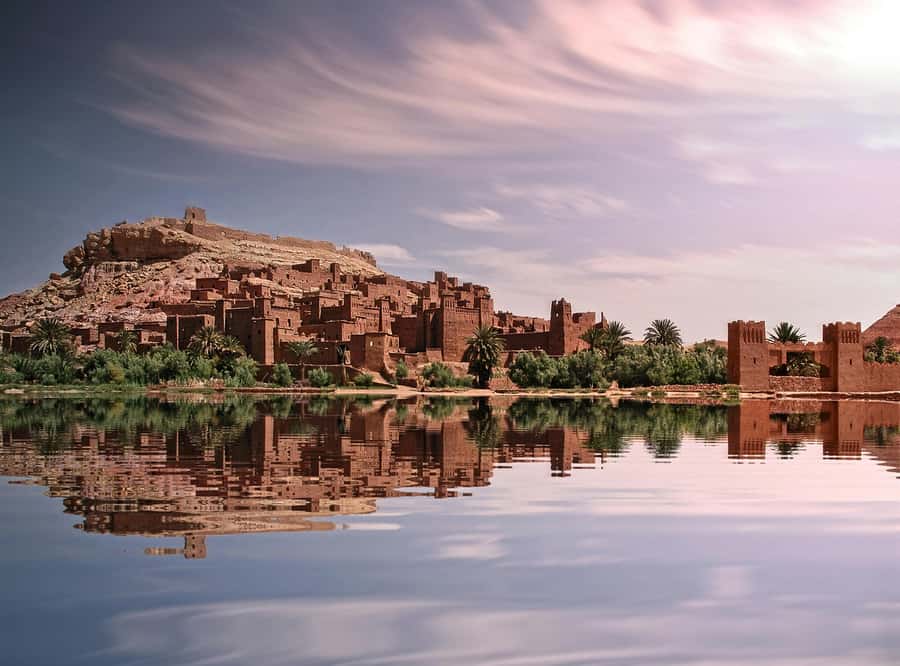
Book it if you want a busy, well-supported introduction to southern Morocco and you accept that the road is part of the adventure. The strongest moments are the camel ride at sunset, the campfire music, sunrise on the dunes, Ait Ben Haddou, Todra Gorge, and the changing scenery through the Draa Valley and Atlas Mountains.
Choose the luxury camp if a private bathroom matters, and bring cash, snacks, water, warm layers, and a scarf. Ask for the pickup point as soon as possible, especially if you stay outside central Agadir or in a Medina riad.
I would not book this trip for a slow holiday. I would book it for maximum scenery and cultural variety in minimum time, with a price that covers the essentials and a driver who helps make the long route manageable.
FAQ
How long is the tour?
The tour lasts three days, beginning with pickup in Agadir and ending with accommodation drop-off in Marrakech in the evening of day three.
What is included in the $172 price?
The price includes Agadir hotel pickup, air-conditioned transport, an English-speaking driver or guide, two breakfasts, two dinners, hotel accommodation, a desert camp tent, camel transport to the Merzouga camp, sandboarding, luggage service, Berber drumming and music, and Marrakech hotel drop-off.
Are lunches included?
No. Lunches and drinks are not included, so you should carry extra cash. Planned lunch stops may cost around 120 to 130 dirhams per person.
What is the difference between the standard and luxury desert camps?
The standard private tent uses shared bathrooms. The luxury option is available with a private bathroom, and it may also include air conditioning.
Can I book a private group?
Yes. A private group option is available. The standard tour may include roughly eight to fifteen people, depending on the departure.
Where is pickup available in Agadir?
Pickup is included for accommodations within 7 kilometers of Agadir city center. If you stay in a Medina riad, you may need to meet the driver at the nearest place that a vehicle can reach.
Just listed out of Marrakesh
- Marrakech: Ouzoud Waterfalls Trip, Guide & Boat + Lunch★ 4.7 · 33 reviews
- Marrakech: Vibrant Dinner Show at The Lotus Club★ 3.9 · 33 reviews
- From Marrakech: Small Group To Essaouira & Medina Day Trip★ 4.3 · 33 reviews
- From Marrakech: 3-Day Merzouga and Sahara Desert Tour★ 4.5 · 33 reviews
- Marrakech: Private Souks Tour with Tea and Traditional Snack★ 4.6 · 33 reviews
- Marrakech: Medina Souks, Hidden Markets and Shopping Tour★ 4.8 · 33 reviews
- 2 Days Desert Agafay and Atlas Mountains Trek From Marrakech★ 3.8 · 33 reviews
- Agadir/Taghazout : Marrakech Guided Tour old Medina & Souks★ 3.7 · 34 reviews
Marrakech Tours, compared.

Agafay Desert Sunset, Camel Ride, and Dinner Show
Read our review →

Agafay Desert Quad & Camel Rides with Dinner Show
Read our review →
Agafay Desert Quad Biking Tour with Dinner-Show
Read our review →
Atlas Mountains, Ourika Valley, Waterfall & Lunch
Read our review →


Quad Bike Tour to Palm Oasis and Jbilat Desert
Read our review →Browse the lists this tour appears in