
Reviewed · MARRAKECH TOURS
3-Day Desert Experience from Marrakech
The best part of this three-day desert trip from Marrakech comes on the second evening, when you trade the minibus for a camel and ride toward the Erg Chebbi dunes near Merzouga. Sunset, dinner at a desert camp, and a sky full of stars give this long road journey a clear payoff.
I like the smart route through Aït Benhaddou and the High Atlas, and I like that two dinners and two breakfasts are included at a price of $118.47 per person. The main drawback is the driving: this is a lot of Morocco in three days, with some long stretches and limited time at certain stops.
Key points
- Camel ride at sunset: Leave the vehicle near Merzouga and cross the dunes by camel to the desert camp.
- Aït Benhaddou visit: Spend about two hours exploring the UNESCO-listed fortified village.
- Two different overnight stays: Sleep in a private room in the Dadès area, then in nomad-style tents in the Sahara.
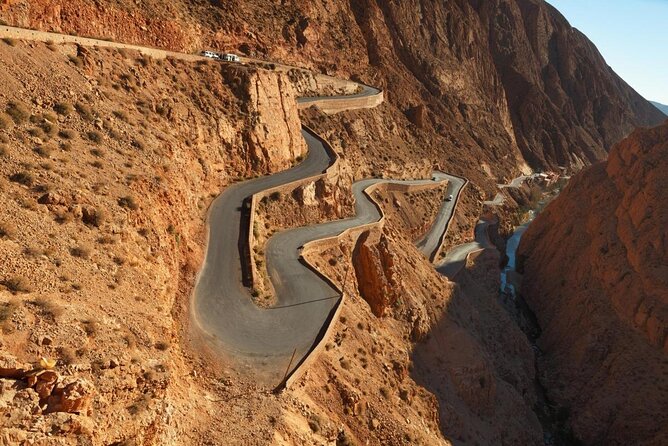
- High Atlas crossing: Travel over the 2,260-meter Tizi n’Tichka pass between Marrakech and the south.
- Small group size: The vehicle can carry up to 17 people, so this is not a private tour.
- Pack lightly for the desert: One person was specifically advised to bring only a regular backpack for the Merzouga overnight.
What $118.47 buys you across southern Morocco
At $118.47 per person, this is a strong-value way to reach the Sahara if you have only three days. The price includes hotel pickup, an air-conditioned vehicle, two nights of accommodation, two breakfasts, two dinners, and the camel ride.
Lunches and drinks are extra. That matters because the days are long, and you will need to budget for midday meals along the route. The package is not all-inclusive, but the main costly pieces of a desert trip are covered.
I would judge the value by the route, not just the final camel ride. You get a broad sample of southern Morocco: a mountain pass, a famous fortified village, film-country scenery, the rose valley, Dadès, Todra Gorge, Erfoud, and the Sahara. You do not get much time in each place, but you cover ground that would be difficult to arrange on your own in three days.
The tradeoff is comfort and depth. A private car with a flexible schedule would give you more control, while this shared trip keeps the price down. With a maximum of 17 people, expect a group outing rather than a quiet custom journey.
A few other Marrakech days worth comparing
- From Marrakech: 3-Day Merzouga and Sahara Desert Tour
★ 4.9 · 15,308 reviews - From Marrakech: Merzouga 3-Day Desert Safari with Food
★ 4.7 · 12,232 reviews - 3 Days Desert Tour From Marrakech To Merzouga Dunes & Camel Trek
★ 5.0 · 10,125 reviews
Day one: from Marrakech over Tizi n’Tichka
The first morning begins early. The supplied schedule gives both 7:00 a.m. and 8:00 a.m. as possible start times, so confirm the exact pickup time before departure. Hotel pickup is offered, and the route leaves Marrakech through the High Atlas.
Tizi n’Tichka is the first major pause. At about 2,260 meters, the pass offers a sharp change from Marrakech’s urban setting to mountain roads and high viewpoints. The scheduled photo stop lasts around 30 minutes. I would keep your camera ready, but I would not expect a full mountain walk.
The road itself is part of the day’s appeal, though it also explains why this trip feels demanding. You are crossing the Atlas, not simply driving to a nearby desert attraction. Bring water, wear comfortable clothes, and expect the day to contain plenty of time in the vehicle.
Two hours among the walls of Aït Benhaddou
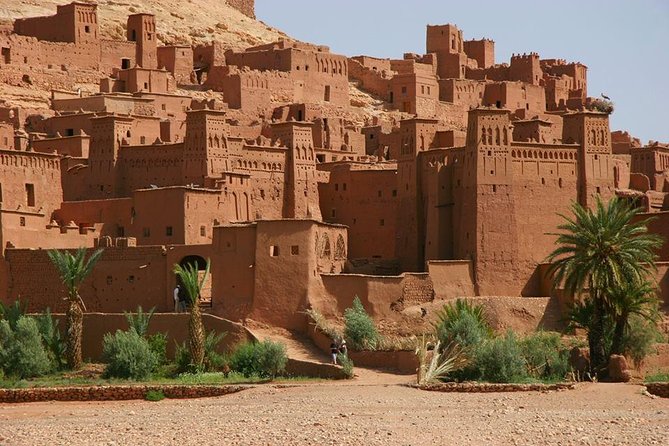
Aït Benhaddou is the day’s most important cultural stop. This fortified Berber village is listed by UNESCO and has been used as a setting for films including Lawrence of Arabia, Gladiator, and The Kingdom of Heaven.
You cross the river separating the village from the main road, then explore at leisure for about two hours. That is enough time to walk through the narrow passages, study the earthen walls, and climb for views over the surrounding area.
The film connection is fun, but it should not be the whole point. Aït Benhaddou shows how southern Moroccan settlements were built for defense and community life, with compact buildings gathered behind fortified walls. Take your time with the details rather than treating the stop as a quick photo backdrop.
The itinerary lists no admission fee for this stop. Still, the actual pace may depend on the driver and group. If you want the best photographs, stay aware of the meeting time so your exploration does not hold up the vehicle.
Ouarzazate and the business of Moroccan movie magic
The route continues to Ouarzazate, often linked with Morocco’s film industry. The schedule gives about an hour for a photography stop with a view of Atlas Studios.
This is a lighter stop than Aït Benhaddou. You are not promised a full studio tour, and the wording points to a photo opportunity rather than admission inside the sets. That distinction matters if you are a serious film fan.
Even so, Ouarzazate adds a useful piece of context. The same dry southern scenery that shaped old caravan routes has also attracted large film productions. I would enjoy this stop as a change of pace, but I would not book the trip mainly for Atlas Studios.
Same city, a completely different day out:
- Marrakech: Agafay Desert Sunset, Camel Ride, and Dinner Show
★ 4.6 · 35,119 reviews - From Marrakech: Ouzoud Waterfalls Guided Hike and Boat Trip
★ 4.7 · 33,630 reviews - Marrakech: Agafay Desert Quad & Camel Rides with Dinner Show
★ 4.8 · 27,382 reviews - Marrakech: Agafay Desert Quad Biking Tour with Dinner-Show
★ 4.8 · 16,569 reviews
Rose country and the first night near Dadès
The journey then reaches El Kelaa M’Gouna, known for the Valley of Roses. The planned stop lasts around 30 minutes and may include a view over the valley and a chance to see rose products through local associations.
Rose picking begins in April, with a three-day festival held in the first week of May. Cosmetics made with rose oil are available in the area. If your trip falls during that season, the stop may feel more connected to local farming and production. Outside it, expect a short scenic break rather than a major attraction.
The first night is in the Dadès area, in a private room on a half-board basis. Dinner is included, which is welcome after a full day on the road. The accommodation is practical rather than the main reason to choose this trip, but it breaks the Marrakech to Sahara journey into manageable sections.
You are not sleeping in the dunes yet. That comes the next night. The Dadès overnight gives you a bed and a pause before the tour turns toward Todra, Erfoud, and Merzouga.
Day two: Todra Gorge, palms, villages, and fossils
After breakfast, you leave for Todra Gorge and its nearby grove. The scheduled visit lasts about an hour. This is one of the strongest scenic stops on the route, with dramatic rock walls and a greener pocket around the water and palms.
The timing is fairly short, so do not expect a long hike or an extended exploration of the gorge. You will get a taste of the setting, take photographs, and continue toward the desert. I like the order of this day because it builds from cultivated areas and mountain rock toward the open dunes.
The road continues through Tinejdad and on to Erfoud, known here as the capital of fossils. The schedule also refers to Berber villages along the way. These are mainly passing views and road stops rather than clearly defined village visits, so keep your expectations modest.
This section is where the tour’s long-distance nature becomes most obvious. Day two combines breakfast, a gorge visit, a long desert drive, and the evening camel ride. It is rewarding, but you should be comfortable with extended time in a vehicle.
The Merzouga camel ride and desert camp
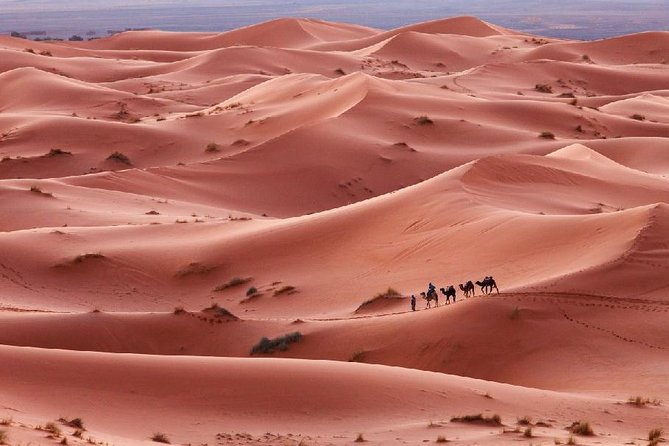
Near Merzouga, you leave the vehicle and begin the camel ride into the Erg Chebbi dunes. The timing is built around sunset, one of the strongest moments of the trip. The dunes change color as the light fades, and the slow pace of the camel ride gives you time to take in the open surroundings.
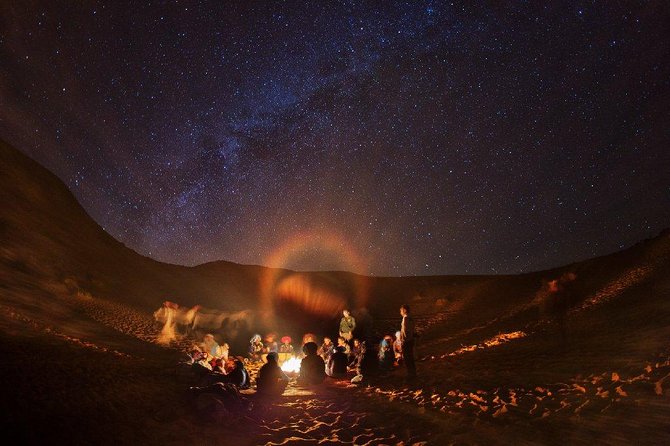
The camp night includes dinner and overnight accommodation in nomad-style tents. The quiet after dark is a major part of the appeal. You can look forward to dinner in the dunes and a star-filled sky, provided weather conditions allow clear views.
Camel riding is not a luxury form of transport. The saddle can feel awkward, especially if you have not ridden before, and the ride is part of a group movement to the camp. Still, it is a memorable way to enter the desert and one of the clearest reasons to choose this tour.
Sandboarding is listed among the highlights, but one account of the trip specifically reported that it was not available. I would confirm this with Esprit d’Aventure Marrakech before booking if sandboarding matters to you. The camel trek and camp are more reliable features of the supplied plan.
Pack with care. You may need to leave your main luggage with the vehicle and take only a regular backpack for the desert overnight. Bring the items you need for one night, but avoid an oversized bag that will be awkward on the camel or in the tent.
Day three: an early return across the Atlas
The final morning starts with an early breakfast, followed by a drive back toward the main road. The schedule again passes through El Kelaa M’Gouna, with about an hour set aside for a lunch stop in the rose valley.
Lunch is not included, so plan to pay separately. The return route then crosses Tizi n’Tichka again before reaching Marrakech. Your driver drops you at your accommodation at the end of the service.
This is the least relaxed day. You have already crossed a large part of Morocco, spent the night in the dunes, and now face the return drive. If you need to catch a flight or train immediately after arrival, I would avoid making tight connections. The tour promises a return to Marrakech, but the schedule includes mountain roads and a long drive.
The repeat crossing of Tizi n’Tichka may feel familiar, but it also gives you another chance to see the Atlas from a different direction. By this point, most people will be ready for a shower and a quiet evening.
Accommodation, meals, and what to bring
Two nights of lodging are included. The first is a private room in the Dadès area on a half-board basis. The second is a desert camp in nomad-style tents near the Erg Chebbi dunes.
Breakfast is included on both mornings, and dinner is included on both nights. Lunches and drinks are not included. I would carry water and keep some cash available for food and beverages during the road stops.
Dress for changing conditions. The tour operates in all weather, and the Atlas can feel very different from Marrakech or the desert. Practical clothing, closed shoes, sun protection, and a warm layer for the desert night make sense. Your luggage plan deserves attention too: take a compact overnight bag for Merzouga rather than assuming you can bring everything into camp.
The supplied information does not name a specific driver or guide. That means your experience may depend heavily on the person assigned to your vehicle. Some parts of the trip are self-guided or described mainly as sightseeing and photography stops, so do not expect a detailed explanation at every location.
The long drives and the group question
The group limit is 17 people. That is small enough to be more manageable than a large coach, but it is still a shared excursion. Stops may need to follow a common schedule, and the vehicle may not be able to wait for long explorations.
The route is ambitious. Marrakech to Aït Benhaddou, Ouarzazate, rose country, Dadès, Todra, Erfoud, and Merzouga is a lot to fit into three days. I would choose this trip if I value seeing several regions over spending deep, unhurried time in one place.
The strongest day is day two, when Todra Gorge leads into the desert and ends with the camel ride. Day one offers the best cultural variety, especially Aït Benhaddou. Day three is mostly transport, so think of it as the necessary price of returning to Marrakech.
The organization deserves careful attention. The supplied start time is inconsistent, giving both 7:00 a.m. and 8:00 a.m. The itinerary also gives only limited detail about what happens at some stops. Confirm the meeting time, luggage arrangement, camel ride details, and sandboarding before departure.
Who should book this desert trip?
I would recommend it to you if you have only three days, want the classic camel-and-camp experience, and are happy to trade comfort for a broad route. Families can enjoy it too, including those traveling with teenagers, as long as everyone accepts the long drives.
It suits people who want a fixed plan with hotel pickup and included dinners. It also works well if you want more than a quick desert excursion, since you will see fortified villages, mountain scenery, gorges, rose country, and fossil country along the way.
I would hesitate if you dislike long road journeys, need a carefully explained cultural tour, or want a guaranteed sandboarding session. A private trip would be better for a slower pace and more control over stops.
At $118.47, the tour offers a lot for the money. Its best moments are genuinely special: the camel ride at sunset, the desert dinner, the stars, and Aït Benhaddou’s earthen walls. Just go in knowing that the desert magic is reached by a great deal of road time.
FAQ
How long is the desert experience from Marrakech?
The experience lasts approximately three days.
What time does the tour start?
The meeting information gives a 7:00 a.m. start, while the day one itinerary says departure at 8:00 a.m. Confirm the exact pickup time before the trip.
Is hotel pickup included?
Yes. Hotel pickup in Marrakech is included, and the driver returns you to your accommodation at the end.
How much does the tour cost?
The listed price is $118.47 per person.
What meals are included?
Two breakfasts and two dinners are included. Lunches and drinks are not included.
Where do you sleep on the first night?
You spend the first night in the Dadès area in a private room on a half-board basis.
Where do you sleep on the second night?
You spend the second night at a desert camp in nomad-style tents near the Erg Chebbi dunes in Merzouga.
Is a camel ride included?
Yes. The camel ride takes you from the vehicle into the dunes near Merzouga, with the route planned around sunset.
Is sandboarding included?
Sandboarding is listed among the highlights, but it was not available on at least one reported trip. Confirm this feature with Esprit d’Aventure Marrakech before booking.
How many people can join the tour?
The maximum group size is 17 people.
Can you cancel for a full refund?
Yes, if you cancel at least 24 hours before the experience start time. Cancellations or changes made less than 24 hours in advance are not refunded or accepted.
Just listed out of Marrakech
- Marrakech: Ouzoud Waterfalls Trip, Guide & Boat + Lunch★ 4.7 · 33 reviews
- From Marrakech: Ourika Valley Trip, Waterfall Hike & Lunch★ 4.4 · 33 reviews
- Magical Dinner show and Quad bike In Agafay Desert Marrakech★ 4.5 · 33 reviews
- Moroccan Hands on traditional pastries & Tea class in Marrakech★ 4.5 · 33 reviews
- Marrakech: Quad excursion to the palm grove and Jbilets desert★ 4.5 · 33 reviews
- Marrakech: Vibrant Dinner Show at The Lotus Club★ 3.9 · 33 reviews
- From Marrakech: 3-Day Merzouga and Sahara Desert Tour★ 4.5 · 33 reviews
- Marrakech: Private Souks Tour with Tea and Traditional Snack★ 4.6 · 33 reviews
Marrakech Tours, compared.

Agafay Desert Sunset, Camel Ride, and Dinner Show
Read our review →

Agafay Desert Quad & Camel Rides with Dinner Show
Read our review →
Agafay Desert Quad Biking Tour with Dinner-Show
Read our review →
Atlas Mountains, Ourika Valley, Waterfall & Lunch
Read our review →


Quad Bike Tour to Palm Oasis and Jbilat Desert
Read our review →Browse the lists this tour appears in