
Reviewed · ATLAS MOUNTAINS DAY TRIPS
2 Day Private Tour to Toubkal Summit from Imlil
Mount Toubkal rises to 4,167 meters, making it the highest peak in North Africa. This private two-day trek takes you from Marrakech to Imlil, up the Aït Mizane Valley, past Berber villages and the sanctuary of Sidi Chamarouch, then to a refuge before the final summit push.
I like the one-to-one flexibility of a private group, and I like the steady support provided by guide Hamid and his muleteer team. The guides speak English, French, Spanish, and Arabic, and past outings show a strong focus on encouragement, food, warmth, and pacing.
The main catch is simple: this is a serious mountain trek, not a gentle village walk. You need strong physical fitness, and the early summit start, altitude, cold, and long descent can make the second day demanding. The transport from Marrakech also needs careful confirmation, since pickup is offered but private transportation is listed separately.
Key points to know before booking
- The summit sits at 4,167 meters, with broad views over the High Atlas, valleys, and Berber villages.
- The first day ends at a 3,207-meter refuge, after roughly four to five hours of walking from Imlil.
- Summit day begins around 5 a.m., with the climb starting at about 6 a.m., and possibly earlier if conditions or group pace require it.
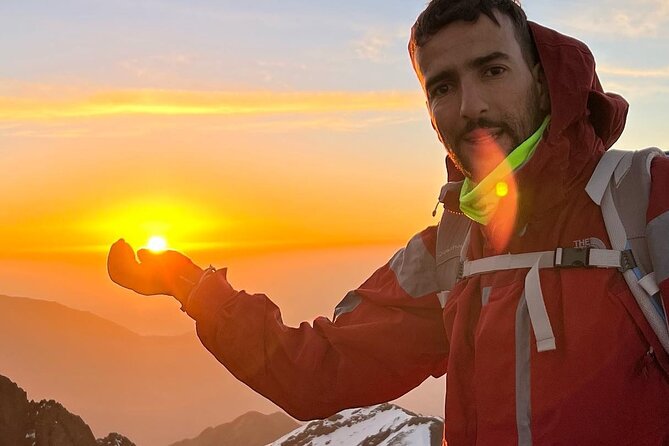
- Guide Hamid is a major part of the experience, offering encouragement, practical help, photos, and support with warm clothing when needed.
- Meals, accommodation, breakfast, a mountain guide, and muleteer support are included, while private transport is not clearly included in the advertised price.
- This is a private activity, so your group can set a more personal pace, though the climb still demands good fitness.
Why this Toubkal route works in only two days
The appeal of this trip is its directness. You do not spend several days circling the mountain or taking long side routes. After pickup in Marrakech, you head toward Imlil and begin walking almost at once.
That efficiency makes the trip attractive if you have limited time in Morocco. It also makes the schedule tough. You gain altitude quickly, spend one night at a refuge, and then attempt the summit the next morning. I would treat the two-day format as the shortest practical version of the climb, not the easiest one.
A private guide helps here. Hamid can adjust the walking rhythm to your group and stop when you need food, water, or a breather. His approach is described as caring and upbeat, with plenty of encouragement when the trail gets hard. That matters most during the final climb, when the path can feel much longer than the map suggests.
The tour is presented as suitable for different fitness levels, but the additional information asks for strong physical fitness. Trust the stricter advice. You should be comfortable walking uphill for several hours and then doing another demanding day at high altitude.
A few other Marrakech days worth comparing
- Marrakech: Atlas Mountains, Ourika Valley, Waterfall & Lunch
★ 4.8 · 15,834 reviews - Berber villages : Atlas Mountains Day Hike from Marrakech
★ 5.0 · 14,007 reviews - Marrakesh: Ourika Waterfalls, Atlas Mountains, Guide + Lunch
★ 4.9 · 9,986 reviews
From Marrakech to Imlil and the Aït Mizane Valley
The day begins with pickup from your accommodation in Marrakech. The stated start time is 7:30 a.m., while the schedule also notes a 10 a.m. departure toward the refuge. Confirm the exact pickup and driving plan before you go, since the timing is not perfectly consistent.
Imlil sits at about 1,740 meters and serves as the starting point for the trek. From there, the route enters Toubkal National Park and follows the Aït Mizane Valley toward Aremd.
This early section gives you a useful change of scene. Marrakech is busy, warm, and low-lying. Imlil feels more rural and mountain-focused, with trails leading toward steep slopes and small villages. You begin to see the local way of life before the high-altitude section takes over.
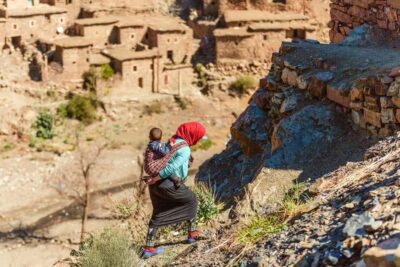
The path toward Aremd is part of what makes this more than a peak bagging trip. You walk through an area tied closely to local Berber communities, with homes, mule traffic, and mountain farming around the valley. The pace is far more personal than a quick drive to a viewpoint.
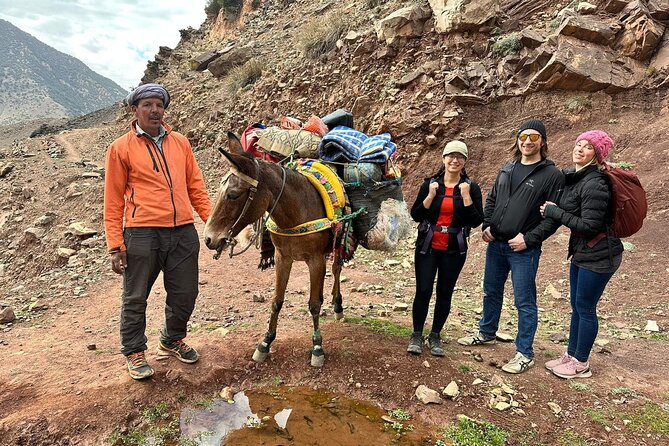
A muleteer team is included, which is important. You do not need to carry every item for the full two days on your back, although you should still bring a daypack with water, warm layers, snacks, and anything you need during the walking hours.
Sidi Chamarouch and the waterfall stop
The route continues toward the sanctuary of Sidi Chamarouch, one of the memorable points on the approach to Toubkal. A nearby waterfall adds a welcome pause beside the trail.
This is a good place to slow down and take in the valley. The sanctuary gives the walk a local cultural setting, while the waterfall breaks up the steady uphill effort. Do not think of this as a long sightseeing stop, though. The main goal is still the refuge, and the day involves several hours of walking.
The climb becomes more serious as you leave the lower valley behind. Your guide can help you avoid burning through your energy too early. A slow, even pace is much more useful than racing the first sections and struggling later.
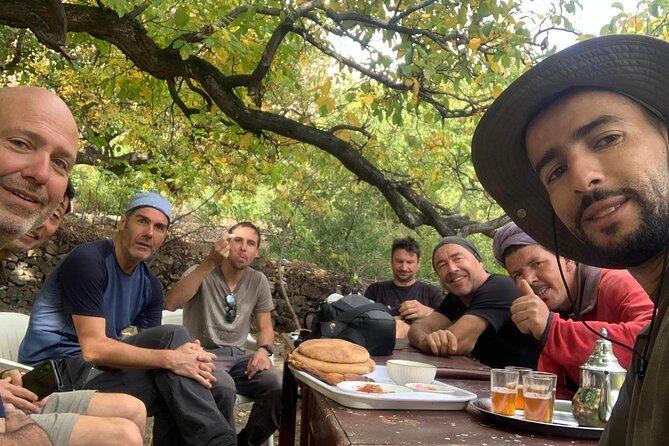
Lunch is scheduled in the open air around midday. The included meals are one of the practical strengths of the trip. Several people who climbed with Hamid specifically praised the food and the care taken with meals, drinking water, warmth, and general comfort.
Still, bring personal snacks. Mountain days are easier when you can eat small amounts often, especially if the altitude affects your appetite.
Reaching the 3,207-meter Toubkal refuge
The first day ends at the Toubkal refuge, at approximately 3,207 meters. The listed walking time is four to five hours, with arrival planned around 4 p.m.
The refuge is not a luxury hotel. It is a functional overnight base for climbers, and the important benefit is its location. Sleeping high on the mountain means you can begin the summit attempt early without starting from Imlil in the dark.
The schedule allows free time from about 4 p.m. until dinner at 8 p.m. Use it sensibly. You can rest, organize your clothing, drink water, and prepare your daypack for the morning. This is not the evening for a long wander.
Altitude may affect how well you sleep. You are already more than 3,000 meters above sea level, and the next morning takes you higher. Tell Hamid if you feel unwell. A private guide can make better decisions when you give clear information rather than trying to hide discomfort.
Accommodation is included as set out in the program. The meal details list breakfast, lunch, and dinner, though the package wording is not perfectly clear about the number of each meal. Ask the operator to confirm exactly what is served on each day and what you should budget for yourself.
Same city, a completely different day out:
- Marrakech: Agafay Desert Sunset, Camel Ride, and Dinner Show
★ 4.6 · 35,119 reviews - From Marrakech: Ouzoud Waterfalls Guided Hike and Boat Trip
★ 4.7 · 33,630 reviews - Marrakech: Agafay Desert Quad & Camel Rides with Dinner Show
★ 4.8 · 27,382 reviews - Marrakech: Agafay Desert Quad Biking Tour with Dinner-Show
★ 4.8 · 16,569 reviews
The 6 a.m. climb to Mount Toubkal’s summit
The second morning starts early. Breakfast is scheduled for 5 a.m., followed by the summit climb at around 6 a.m. Some outings have started as early as 3:30 a.m. with headlamps, so your actual departure could depend on the season, weather, and the group’s pace.
The early start has a practical purpose. It gives you more time for the ascent and descent, and it may provide clearer conditions before weather changes later in the day. It also means you should pack warm clothing that is easy to reach before leaving the refuge.
The summit route is described as a trek rather than a technical climbing expedition. You do not need rock-climbing skills for the standard ascent described here. That does not make it easy. The altitude, loose mountain paths, cold, and sustained uphill effort are the real challenges.
Your guide’s role is especially useful during this stretch. Hamid is described as experienced, strong, attentive, and able to keep the mood light without losing sight of safety. He has also lent jackets and gloves to climbers who needed extra warmth. Do not rely on that, but it is reassuring to know that practical support is part of his guiding style.
The climb is planned to take about three hours, reaching the summit around 9 a.m. That timing may vary. Take the schedule as a guide, not a promise. At 4,167 meters, the last section can slow down sharply.
Summit views across the High Atlas
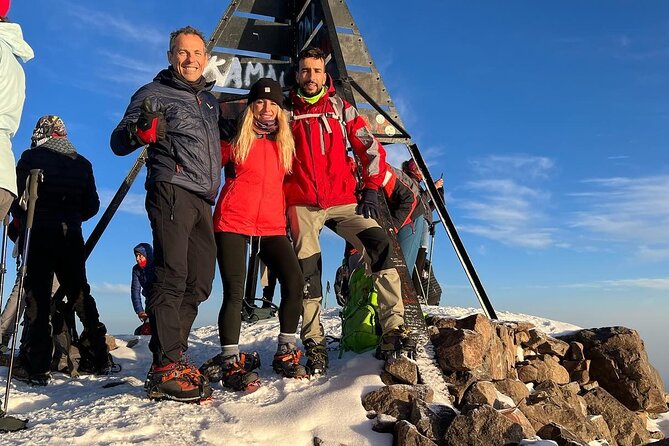
At the top, you can expect wide views over the High Atlas, valleys, and surrounding Berber villages. The summit moment is the payoff for the hard work, and the plan allows time for souvenir photos before the descent.
Bring a fully charged phone and protect it from the cold. You may also want a small power bank, since cold temperatures can reduce battery life. The guide can take photos, an especially helpful touch if you are traveling alone or want a group picture.
The summit is not the place to linger carelessly. Wind and cold can arrive quickly, and altitude symptoms can worsen when you stay high for too long. Take your photos, enjoy the views, and follow Hamid’s advice about beginning the descent.
The descent to the refuge and return to Imlil
After the summit, you descend to the refuge, with lunch planned around midday. This sounds easier than the ascent, but downhill walking can be hard on knees and thighs. Trekking poles would be useful, though they are not specifically listed as provided.
The descent is also where tiredness shows. You have already climbed to the highest point in North Africa, and you still need to return toward Imlil. Keep drinking water and stay with your guide and group.
Arrival in Imlil is scheduled for about 4 p.m. The program then mentions spending the night at a guesthouse in Armed village. That detail deserves clarification because the product is described as a two-day tour, yet the wording appears to include a guesthouse night after returning from the summit.
Ask before booking:
- Is the guesthouse night part of the price?
- Does the tour finish in Imlil or after the night in Armed?
- Is Marrakech transport included, arranged at extra cost, or paid directly?
- Are all meals on the second day included?
These are small booking questions, but clear answers prevent surprises after a long descent.
What guide Hamid adds to the climb
A good Toubkal guide does more than point up the trail. You need someone who notices when you are cold, keeps the pace sensible, explains what is ahead, and knows when encouragement is useful.
Hamid receives especially strong praise for those qualities. He is described as organized, funny, kind, and attentive. He also works with a wider team that can include another Hamid as cook and a muleteer named Abouch. That team-based approach helps with meals, bags, and the practical work behind a two-day ascent.
One useful detail is his willingness to help people who doubt they can finish. A number of outings included climbers who felt ready to stop but reached the summit with steady support. Another group completed the mountain with a 68-year-old mother on a longer three-day version.
That does not mean the two-day trip is right for every older climber or every beginner. It does show why a private guide can be valuable. You can discuss your pace and limits before the trip instead of being tied to a large group schedule.
Languages are another advantage. Support is available in English, French, Spanish, and Arabic, making it easier to explain medical concerns, food needs, or changes in how you feel.
Is the $174 price good value?
At about $174.22 per person, the price can be good value if the listed inclusions apply as expected. Breakfast, lunch, dinner, accommodation, a mountain guide, and muleteer support cover much of the cost of a guided mountain trip.
The private format adds value for couples, families, and small groups that want a personal pace. It also reduces the stress of arranging the refuge, meals, local support, and trail logistics on your own.
The weak point is transportation. Pickup is offered, but private transportation is listed under exclusions. You should get a written answer about the Marrakech to Imlil transfer and the return journey before paying. If you need to arrange a separate vehicle, add that cost to your real trip budget.
The price also represents a demanding schedule. If you prefer a slower ascent, more rest, or extra time in villages, ask about a three-day option. Several past outings used three days, including one that made the summit possible for a 68-year-old climber. The two-day version saves time, but the slower version may offer better comfort.
Who should book this Toubkal trek?
I would recommend this trip to you if:
- You want to reach Mount Toubkal with limited time in Morocco.
- You prefer a private guide rather than a large group.
- You are comfortable with long uphill walks and an early morning summit start.
- You value local support, cooked meals, and muleteer assistance.
- You want a route that includes villages, Sidi Chamarouch, a waterfall, and mountain views rather than only the summit.
I would choose a longer trek if you are new to mountain walking, worried about altitude, or unsure about doing the ascent and descent in two days. The operator says different fitness levels can be accommodated, but the formal advice still calls for strong fitness. That is the safer standard to follow.
The tour also suits people who like a guide with an encouraging personality. Hamid’s style is warm and hands-on, with a focus on safety, humor, food, photos, and morale. If you want complete solitude or a silent, highly independent climb, a private guided trip may feel more social than you expect.
Practical tips for a smoother summit attempt
Start training before you arrive. Long uphill walks, stair sessions, and sustained walking on consecutive days will help more than short bursts of intense exercise.
Bring layers. The valley can feel mild, while the refuge and summit may be cold. Pack gloves, a warm hat, sturdy walking shoes, sun protection, water, snacks, a headlamp, and a phone charger. Headlamps are especially useful if the guide sets an earlier start.
Keep your daypack light. The muleteer team can carry some equipment, but you should have immediate access to water, clothing, snacks, and personal medication.
Do not ignore altitude symptoms. Tell Hamid about headache, nausea, unusual weakness, dizziness, or breathing trouble. A summit photo is never worth pushing through a serious problem.
The tour requires good weather. If poor conditions cancel the outing, you can take a different date or receive a full refund. You can also cancel for a full refund if you do so at least 24 hours before the local start time. Changes or cancellations inside that window are not accepted.
Should you book it?
Book this two-day Toubkal trip if reaching the summit is your main goal and you have the fitness for a fast, high-altitude schedule. The strongest reasons are the private format, the support from Hamid and his team, included meals and accommodation, and the chance to experience the Aït Mizane Valley and Berber villages along the way.
Before booking, confirm the transport cost, the exact pickup time, and the question of the guesthouse night in Armed. If you want more time to adjust to altitude, choose a three-day version instead. For a fit visitor with limited time, this is a practical and personal way to tackle North Africa’s highest mountain.
FAQ
How high is Mount Toubkal?
Mount Toubkal reaches 4,167 meters and is described as the highest peak in North Africa.
How long is the walking time on the first day?
The first day includes about four to five hours of walking from Imlil to the Toubkal refuge at approximately 3,207 meters.
What time does the summit climb begin?
Breakfast is scheduled for 5 a.m., with the summit climb planned to begin around 6 a.m. Some trips may start earlier, depending on conditions and the group.
Is private transportation included?
Private transportation is listed as not included, although pickup is offered. Confirm the Marrakech to Imlil and return transport arrangements before booking.
What meals and accommodation are included?
The package includes breakfast, lunch, dinner, and accommodation according to the stated program. The exact number of included meals should be confirmed because the meal wording is not fully clear.
Can I cancel for a full refund?
Yes. You can cancel at least 24 hours before the local start time for a full refund. If poor weather causes the operator to cancel, you can choose another date or receive a full refund.
More 2-Day Experiences in Marrakech
- From Marrakech: 2-Day Sahara Tour to Zagora & Ait Ben Haddou
★ 4.4 · 1,925 reviews - From Marrakech: 2-Days luxurious experience to Zagora Desert
★ 4.9 · 1,502 reviews - From Marrakech: Zagora 2-Day Desert Safari with Food & Camp
★ 4.5 · 1,137 reviews - Mt Toubkal Ascent Express Trek 2 Days 1 Nights
★ 4.7 · 962 reviews
Just listed out of Marrakech
- Marrakech: Ouzoud Waterfalls Trip, Guide & Boat + Lunch★ 4.7 · 33 reviews
- From Marrakech: Ourika Valley Trip, Waterfall Hike & Lunch★ 4.4 · 33 reviews
- Magical Dinner show and Quad bike In Agafay Desert Marrakech★ 4.5 · 33 reviews
- Marrakech: Quad excursion to the palm grove and Jbilets desert★ 4.5 · 33 reviews
- Moroccan Hands on traditional pastries & Tea class in Marrakech★ 4.5 · 33 reviews
- Marrakech: Vibrant Dinner Show at The Lotus Club★ 3.9 · 33 reviews
- From Marrakech: Small Group To Essaouira & Medina Day Trip★ 4.3 · 33 reviews
- From Marrakech: 3-Day Merzouga and Sahara Desert Tour★ 4.5 · 33 reviews
Atlas Mountains Day Trips, compared.

Atlas Mountains, Ourika Valley, Waterfall & Lunch
Read our review →
Ourika Waterfalls, Atlas Mountains, Guide + Lunch
Read our review →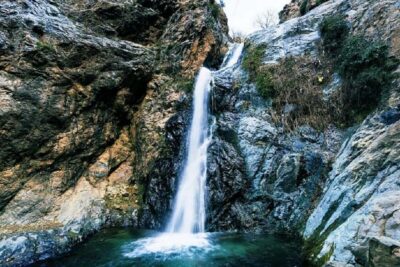
Atlas Mountains & Agafay Desert Tour w Camel Ride
Read our review →
Atlas Mountains, Waterfalls, Ourika Valley +Lunch
Read our review →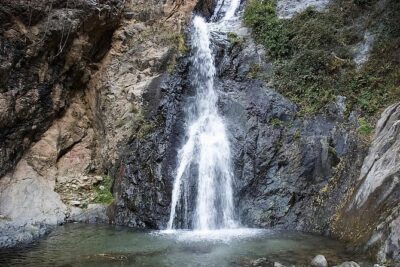
Atlas Mountains & 5 Valleys Tour from Marrakech – All inclusive –
Read our review →
Agadir or Taghazout: Paradise Valley Atlas Mountains Tour
Read our review →Browse the lists this tour appears in