
Reviewed · MARRAKECH TOURS
Historical And Cultural Experience in Marrakech City
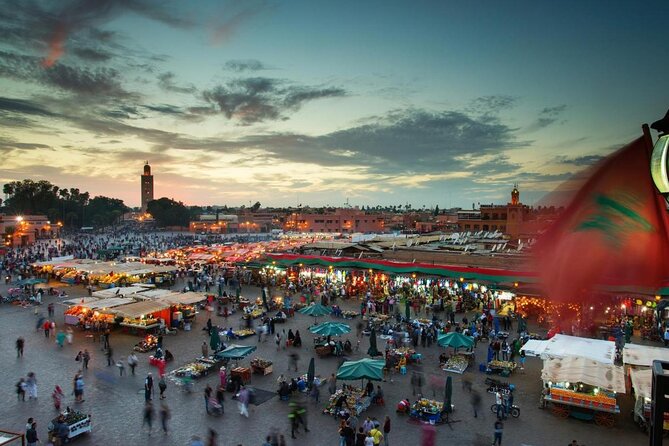
Marrakech makes more sense once you understand how its palace quarters, Jewish quarter, markets, mosques, and public squares fit together. This three-hour private walk gives you that useful first look, beginning near Tinsmiths Square and ending at Jemaa el-Fna.
I like the route for two clear reasons: it joins major sights with the smaller streets between them, and your guide can shape the pace around your interests. Guides named Noura, Ismael, and Mohamed have received especially warm praise for their history, architecture, language skills, photography help, and practical tips on restaurants, spas, and crafts.
The main drawback is cost. At $60 per person, entrance fees are not included, and much of the route is walkable on your own. The price makes more sense for a private introduction and local explanation than for transport or admission alone.
Key points to know before booking
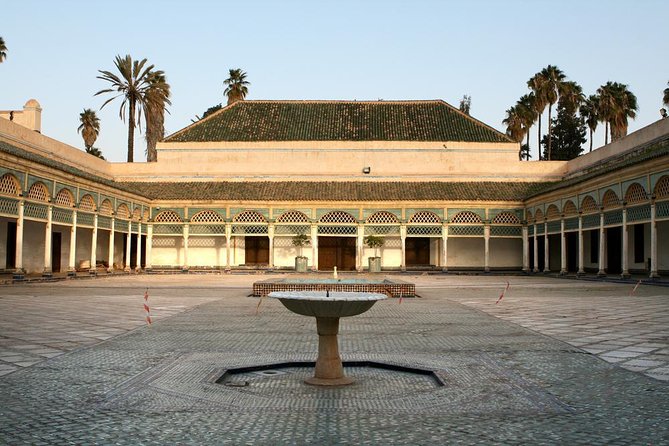
- Bahia Palace anchors the walk: Allow about an hour here, with admission paid separately.
- The Mellah adds a different side of Marrakech: See the former Jewish quarter, spice stalls, the Lazama Synagogue area, and Miaara cemetery.
- The route finishes at Jemaa el-Fna: This gives you a useful launching point for an evening in the Medina.
- You get a private guide: Only your group takes part, rather than joining a large party.
- Admissions are extra: You pay separately for Bahia Palace and the Saadian Tombs.
- This is best as an early visit: A first-day walk can help you get your bearings before exploring the souks alone.
A useful first walk through Marrakech’s Medina
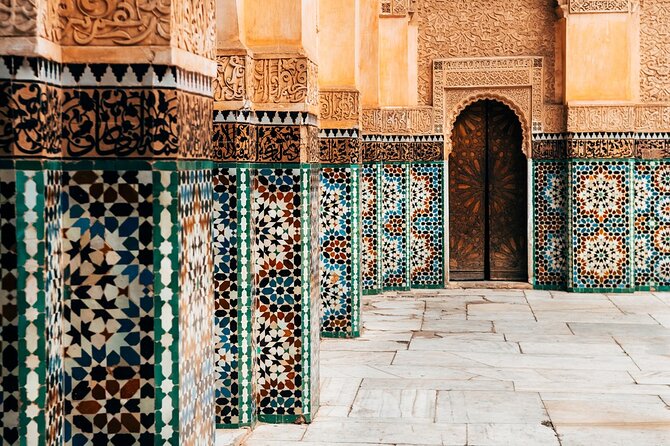
Marrakech is easier to enjoy when you have a sense of direction. The Medina is a maze of lanes, workshops, market stalls, monuments, and quieter residential corners. A guide can explain what you are seeing while you move between the main sights, instead of leaving you to treat each monument as an isolated stop.
This experience begins at Place des Ferblantiers, also called Tinsmiths Square, near the southern part of the old city. It ends at Jemaa el-Fna, the city’s best-known public square. That start and finish make practical sense: you enter near the palace and Kasbah area, then work toward the center of the Medina.
The tour lasts about three hours. That is enough time for a useful overview, but not enough for slow visits to every monument, long shopping stops, and extended time in the markets. Think of it as an orientation walk with four main stops, not a full-day historical tour.
Because this is a private activity, your group can ask questions and request a change of pace. The description also says the schedule can be adjusted. Confirm your preferred timing when booking, especially if you want a slower visit at a particular site.
More City Tours in Marrakech
- Marrakech: Private Guided Half-Day City Tour
★ 5.0 · 1,249 reviews - Marrakech Historical and Cultural Tour – Half Day City Tour
★ 4.5 · 1,180 reviews - Marrakech City Tour: Private Custom-Made
★ 4.5 · 596 reviews
Bahia Palace and the world of the grand viziers
The first major stop is Bahia Palace, with about an hour set aside for the visit. The palace began in the 1860s under Si Musa, a grand vizier serving the Alawi sultan Muhammad ibn Abd al-Rahman. His son, Si Ba Ahmed ibn Musa, expanded it between 1894 and 1900.
That date range matters. Bahia Palace is not an ancient monument from Morocco’s distant past. It belongs to a later period when powerful officials built large residences to show rank, influence, and taste. Its rooms, courtyards, decoration, and layout help explain how political power worked in Marrakech before the modern era.
I would give this stop your full attention. A short photo stop will not tell you much about why the building was created or how its spaces were used. With a guide, you can connect the architecture to court life, government, family, and the position of the grand vizier.
Admission is not included in the $60 price. That is important when comparing the tour with a self-guided walk. You are paying for the guide’s time and interpretation, then covering the site ticket separately.
The one-hour estimate is generous enough for a meaningful visit, but the exact time may shift if your group asks to linger here. If Bahia Palace is your top priority, mention that at the beginning rather than assuming every stop will receive equal attention.
The Mellah, from Jewish quarter to spice market
The walk then reaches the Mellah, the former Jewish quarter of Marrakech. This is one of the most useful parts of the route because it adds a social and religious layer that can be missed if you focus only on royal buildings and famous squares.
The narrow lanes once housed the city’s Jewish population. The route includes references to the Lazama Synagogue, known for its tiled courtyard and displays about Jewish life, as well as the Miaara Jewish cemetery, described as a quiet place within the quarter.
The synagogue and cemetery help you see the Mellah as more than a shopping district. They point to the communities that shaped Marrakech and to the changing use of the neighborhood over time. The setting is also a welcome contrast to the noise of the central markets.
You also visit the Mellah Market and the Bab Mellah Spice Souk. Here, your guide can explain herbs used as remedies and spices used in Moroccan cooking. This is a good place to ask direct questions about ingredients, household customs, and the difference between a useful local purchase and a souvenir chosen in a hurry.
The tour provider says there is no pressure to buy in the markets. Still, you should be clear with yourself about your shopping plans. If you want to browse, say so. If you prefer to focus on history and food traditions, say that instead. A good private tour works best when your priorities are clear.
This part also helps explain why a guide may take you through vendor areas. Learning about local handicrafts, herbs, spices, and market customs is part of understanding Marrakech. But you should not confuse a market explanation with compulsory shopping. You remain free to buy or not buy.
The Saadian Tombs and the royal Kasbah
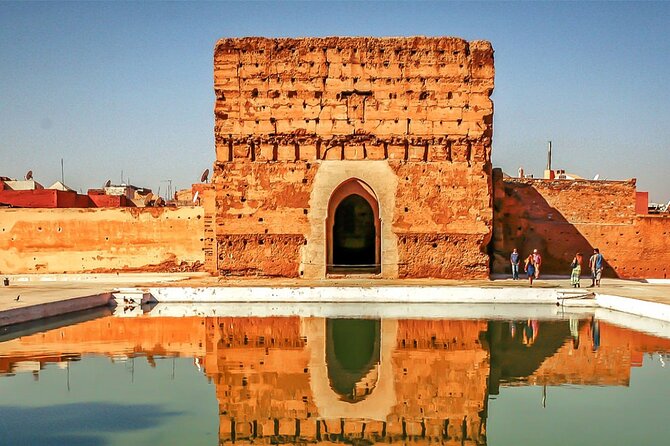
The Saadian Tombs are located inside the royal Kasbah, on the south side of the Kasbah Mosque. The visit is planned for about 30 minutes, and admission is extra.
The tombs are a compact stop, so the guide’s explanation matters. Without context, you may see a richly decorated burial site and move on quickly. With historical background, the location becomes part of the story of the Saadian rulers and the royal quarter.
Thirty minutes is a sensible estimate for this stop. It gives you time to see the site without turning the tour into a sequence of long indoor visits. If you are especially interested in royal architecture or dynastic history, ask your guide to explain how the tombs relate to the Kasbah and the nearby mosque.
Since you pay the entrance fee separately, keep a little cash available for site admissions and personal purchases. The supplied information does not give the exact ticket prices, so you should not treat the $60 as the total cost of the day.
The tombs also show why the tour has a better balance than a simple shopping walk. You move from a palace to a former Jewish quarter, then to a royal necropolis. Each stop gives you a different way to read the old city.
More Historical Tours in Marrakech
- Historical Marrakech Walking Tour
★ 5.0 · 198 reviews - Half Day Guided Tour in Marrakech History & Culture
★ 5.0 · 93 reviews - Marrakech: Historical Discovery Tour
★ 4.1 · 87 reviews - Private Cultural Tour in Marrakech City
★ 5.0 · 77 reviews
Koutoubia Mosque and the route toward Jemaa el-Fna
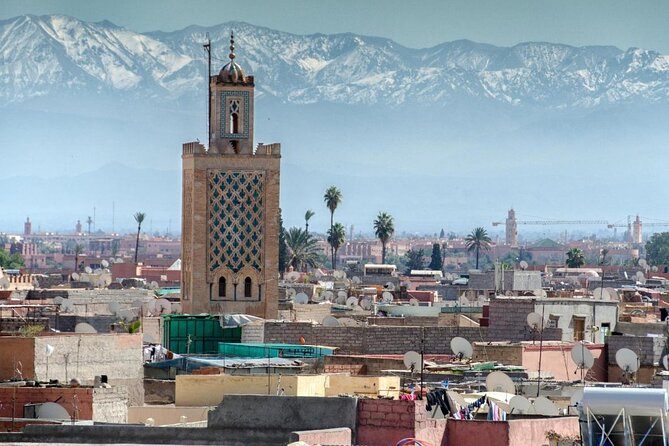
The final listed stop is Koutoubia Mosque, the largest mosque in Marrakech. It is located in the southwest part of the Medina, close to the central public areas.
The planned visit lasts about 30 minutes and is free. For many people, this is an exterior orientation stop rather than a standard interior sightseeing visit. The information provided does not promise entry inside, so you should ask your guide what access is possible on the day and plan to admire the mosque from the outside unless told otherwise.
Koutoubia is useful as a landmark. In a city of winding lanes, a major building helps you understand where you are in relation to the Medina and Jemaa el-Fna. Your guide can also connect the mosque to the wider rhythm of Marrakech, where religious buildings, markets, workshops, and public spaces sit close together.
The tour ends at Jemaa el-Fna, which is more than a convenient drop-off point. It is a natural place to continue exploring after the guide leaves. You can use the ending location to plan an evening meal, return to the souks, or simply pause and watch the square change as the day moves on.
There is no hotel pickup or drop-off. You meet at Tinsmiths Square and finish at Jemaa el-Fna. Plan your route to the meeting point before starting, and do not assume transport is part of the price.
What the private format adds at $60
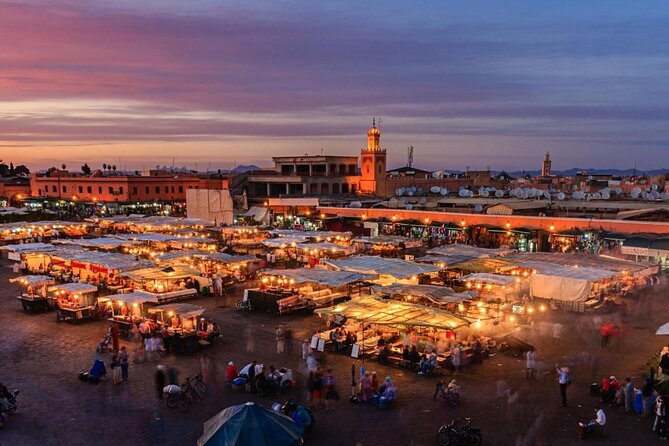
The price is $60 per person. Group discounts are available, and the activity is private, meaning only your group participates. A mobile ticket is also offered, and confirmation is received at booking.
The value depends on how you like to explore. If you are happy to navigate the Medina, research each monument, and handle the occasional market conversation alone, you may find the cost high. All four areas are connected by walkable streets, and the tour does not include entrance fees or transfers.
If you want a personal introduction on your first day, the calculation changes. A guide can explain the setting of the palace, Mellah, tombs, and mosque while also helping you understand daily life and the craft economy. You are also getting a route that ends in a useful central location, rather than returning to the starting point.
The private format is especially valuable for couples, families, or friends with different interests. You can ask for more architecture, more food information, more Jewish history, or more time in the markets without waiting for a large group.
The guide quality is central to the experience. Noura has been praised for adapting to individual needs and giving practical recommendations for restaurants, spas, and places to buy quality crafts in the souk. Ismael has been described as strong on Moroccan history, architecture, and culture, with excellent English, Arabic, and French, as well as a warm manner and good photography skills. Mohamed has also been praised for guiding in Spanish and explaining the city’s main places and traditions.
Guide assignments can vary, so do not assume one particular person is guaranteed unless the provider confirms it. Still, these examples show the kind of service to request: clear explanations, language support, useful local recommendations, and a route shaped around your group.
Who will get the most from this Marrakech walk
I would recommend this tour most strongly for a first visit to Marrakech. You get a broad introduction without spending an entire day indoors or in a vehicle. The route gives you enough structure to return later to the palace, markets, or central square on your own.
It also suits anyone who wants cultural context rather than a list of photo stops. The Mellah and spice market are particularly useful for that purpose. You see how religion, food, trade, royal power, and neighborhood life overlap in the old city.
Families may like the private setup because the pace can be adjusted. The same is true for visitors who do not want to keep up with a large walking group. People who prefer shopping without guidance should set expectations early, since the route includes market areas and craft explanations.
This is less suitable if you want extensive time inside every site. Bahia Palace receives about an hour, while the Saadian Tombs and Koutoubia Mosque each receive about 30 minutes. The total is designed for orientation, not exhaustive study.
It is also not the right choice if you mainly want transportation. No pickup or drop-off is included, and the tour is primarily a walking experience. A separate driving tour would need to be confirmed directly with the provider, since the experience described here begins and ends within the old city.
Practical details that affect your day
Wear shoes suited to several hours on foot. The supplied information does not promise a vehicle, and the route through the Medina includes narrow streets and market areas. Bring water or plan for a drink, since drinks are not included.
Keep money available for admission fees at Bahia Palace and the Saadian Tombs. The Mellah and Koutoubia Mosque are listed as free stops, but personal purchases and food are also your responsibility.
The experience is designed for most people to participate, and it is private. Confirmation arrives at booking. You can cancel for a full refund if you do so at least 24 hours before the local start time. Changes or cancellations inside that window are not accepted for a refund.
Book early enough to ask about your preferred schedule and guide language. The information confirms English, Arabic, French, and Spanish skills among guides associated with the experience, but it does not guarantee a particular language or guide for every departure.
Should you book this Marrakech experience?
Book it if you want a private first-day orientation that mixes major monuments with the Mellah, spice market, and Medina streets. The strongest reason to choose it is the guide, not the transport or admission package. A good guide can turn four walkable stops into a connected picture of Marrakech.
Skip it if you are a confident independent explorer and mainly want entry to the sights. At $60 per person, with admission fees extra, the tour is not the cheapest way to cover these locations.
For most first-time visitors who value context, flexible pacing, and practical local advice, I think the price can be fair. Ask for the guide’s name and language, confirm the meeting point at Tinsmiths Square, and tell the guide what matters most to you. That small preparation will help you get much more from the three hours.
FAQ
How long does the Marrakech cultural tour last?
The experience lasts approximately three hours.
Where does the tour begin and end?
It begins at Tinsmiths Square, also called Place des Ferblantiers, in Marrakech. It ends at Jemaa el-Fna Square.
Are entrance fees included in the $60 price?
No. Entrance fees are not included. Bahia Palace and the Saadian Tombs list admission as extra, while the Mellah and Koutoubia Mosque are listed as free stops.
Is this a private tour?
Yes. Only your group participates in the activity.
Are hotel pickup and drop-off included?
No. Pickup and drop-off are not included. You must reach Tinsmiths Square for the start and arrange your own plans after the tour ends at Jemaa el-Fna.
Can I cancel for a full refund?
Yes, if you cancel at least 24 hours before the experience’s local start time. Cancellations or changes made less than 24 hours before the start are not refunded.
More Historic Sites in Marrakech
- 1 Day Guided Tour of World Heritage Kasbah Ait Ben Haddou from Marrakech
★ 3.5 · 73 reviews - Enchanting Half-Day Journey of Marrakech into History & Culture.
★ 4.5 · 72 reviews - private VIP half journey of Marrakesh : History & Culture.
★ 4.5 · 64 reviews - Marrakech: Historical Private Tours – Half-Day
★ 4.5 · 58 reviews
Just listed out of Marrakech
- Marrakech: Ouzoud Waterfalls Trip, Guide & Boat + Lunch★ 4.7 · 33 reviews
- From Marrakech: Ourika Valley Trip, Waterfall Hike & Lunch★ 4.4 · 33 reviews
- Magical Dinner show and Quad bike In Agafay Desert Marrakech★ 4.5 · 33 reviews
- Moroccan Hands on traditional pastries & Tea class in Marrakech★ 4.5 · 33 reviews
- Marrakech: Quad excursion to the palm grove and Jbilets desert★ 4.5 · 33 reviews
- Marrakech: Vibrant Dinner Show at The Lotus Club★ 3.9 · 33 reviews
- From Marrakech: Small Group To Essaouira & Medina Day Trip★ 4.3 · 33 reviews
- From Marrakech: 3-Day Merzouga and Sahara Desert Tour★ 4.5 · 33 reviews
Marrakech Tours, compared.

Agafay Desert Sunset, Camel Ride, and Dinner Show
Read our review →

Agafay Desert Quad & Camel Rides with Dinner Show
Read our review →
Agafay Desert Quad Biking Tour with Dinner-Show
Read our review →
Atlas Mountains, Ourika Valley, Waterfall & Lunch
Read our review →


Quad Bike Tour to Palm Oasis and Jbilat Desert
Read our review →Browse the lists this tour appears in