Reviewed · MARRAKECH TOURS
Sparkling Marrakech through the eyes of your local Guide
Marrakech makes more sense when someone can explain what you are seeing. This three-hour walk links Jemaa el-Fnaa, Koutoubia Mosque, Bahia Palace, and Ben Youssef Madrasa with the narrow lanes of the Medina, local workshops, and the maze-like souks. It is not just a checklist of monuments. Your guide adds context about family life, religion, food, languages, festivals, and Moroccan customs.
I like the small-group feel reported on many departures, with groups of about three to five people feeling close to a private tour. I also like the guides’ personal approach. Abdoo, Abdul, Nasser, and Ahmed are praised for clear English, humor, patience, and practical help, especially inside the souks. The main consideration is pace: three hours covers a lot of ground, and one departure lasted more than four hours. Bring water, cash for entry fees, and comfortable shoes.
Key points at a glance
- A useful first-day orientation: The route gives you a working introduction to the Medina, major sights, shopping streets, and local customs.
- Guides who make the difference: Abdoo and Abdul are especially noted for fluent English, humor, patience, and clear storytelling. Other language options include French, German, Dutch, and Arabic.
- More than the headline sights: You visit workshops, traditional souks, and less obvious corners of the old city, not only the famous monuments.
- Entrance fees are extra: Plan on about 100 dirhams for Bahia Palace and 50 dirhams for Ben Youssef Madrasa, with prices subject to change.
- A walking tour with flexible timing: The route can be adjusted to suit your needs, although the number of stops makes comfortable footwear essential.
- Good value at $25: The price is attractive for a licensed bilingual guide, a bottle of water, hotel or riad delivery of purchased goods, and temporary connection access during the walk.
Why this Marrakech walk works as an introduction
The old Medina can be exciting, confusing, and tiring within the same ten minutes. Red walls, covered market lanes, scooters, food stalls, shopkeepers, historic doorways, and sudden quiet courtyards compete for your attention. A local guide gives the city a readable shape.
This experience begins at Café Argana by Jemaa el-Fnaa and returns there after the circuit. That makes it easy to use on your first day, when you want to learn where the main sights are before exploring on your own. You get a sense of how the square connects to Koutoubia, the southern monuments, the souks, and the northern part of the Medina.
The guide also explains life beyond architecture. You can ask about marriage and family traditions, religious practice, education, politics, eating habits, languages, festivals, and everyday manners. That broader conversation is one of the strongest reasons to choose this walk over simply following a map between monuments.
The tone is intended to be friendly and light. Abdoo is repeatedly praised for his humor and easy company, while Abdul is noted for being patient and respectful with both visitors and local people. That matters in Marrakech, where a good guide needs to manage both information and street-level practicalities.
A few other Marrakesh days worth comparing
- From Marrakech: Ouzoud Waterfalls Guided Hike and Boat Trip
★ 4.7 · 33,630 reviews - From Marrakech: Ouzoud Waterfalls Guided Trip with Boat Ride
★ 4.9 · 10,915 reviews - Marrakech: Ouzoud Waterfalls Guided Day Trip with Boat Ride
★ 4.4 · 4,995 reviews
Meeting at Argana in Jemaa el-Fnaa
Your meeting point is in front of Argana Café, near the center of Jemaa el-Fnaa. The café has a green sign and a large ice cream sculpture outside, with juice sellers nearby. Enter the square through its main entrance, walk toward the center, and look for the café storefront.
Your guide should be holding a professional guiding card or license and will check your name against the booking list. This detail is useful in a crowded square, where several cafés and food stands can look similar. Give yourself time to find the correct spot, especially if this is your first visit to Marrakech.
Jemaa el-Fnaa is worth seeing both at the beginning and later in the day. The tour includes tea here, giving you a brief pause before the walking route continues. The square changes character as the day progresses, so you may want to return independently after the tour rather than treating this first visit as your only look.
Jemaa el-Fnaa and the Koutoubia Mosque
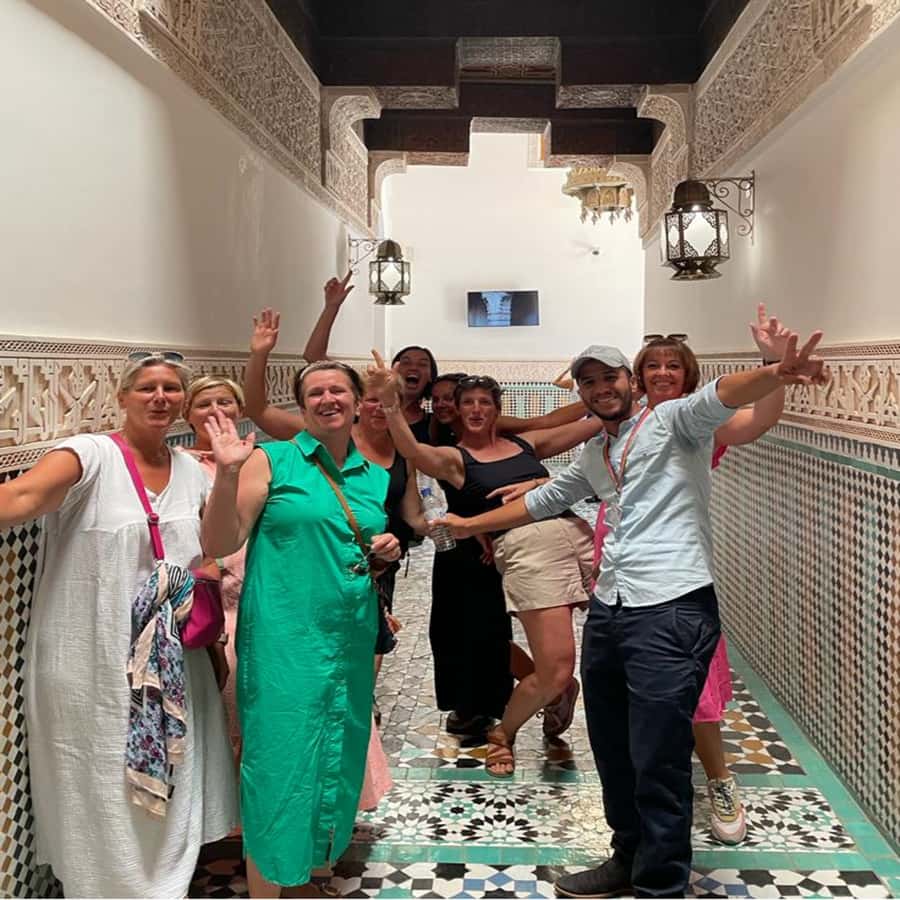
The square is the city’s great public stage, but the guide helps you look past the immediate commotion. You will learn how the square fits into Marrakech life and how its surrounding streets lead into the Medina.
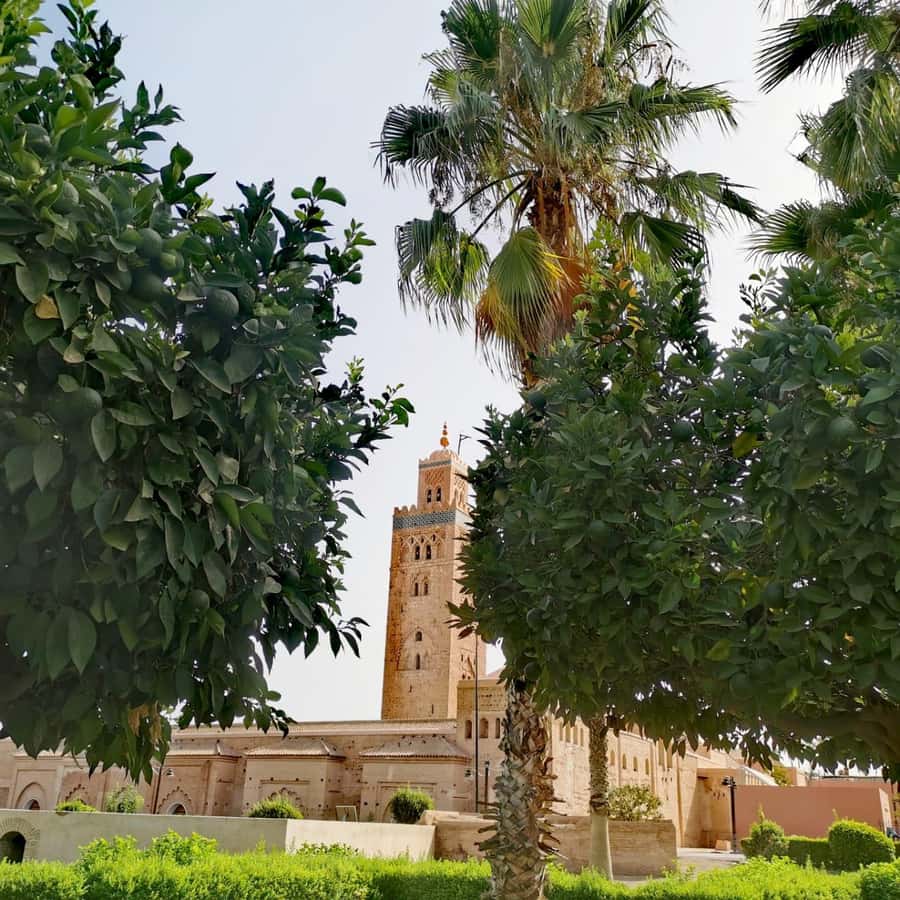
From here, the route continues to Koutoubia Mosque. You can walk around the exterior and hear about its place in the city. Non-Muslim visitors should not expect an interior mosque visit, but the building remains a central visual marker for navigating Marrakech. Its minaret is one of the easiest reference points in the old city.
A guide is useful here because the value is not limited to taking a photograph. You can ask about religious customs, architecture, and the role of the mosque in Moroccan life. The walking distance between the square and the next stops also begins to show how quickly Marrakech shifts from open public space to tight lanes.
Bab Agnaou and the southern royal quarter
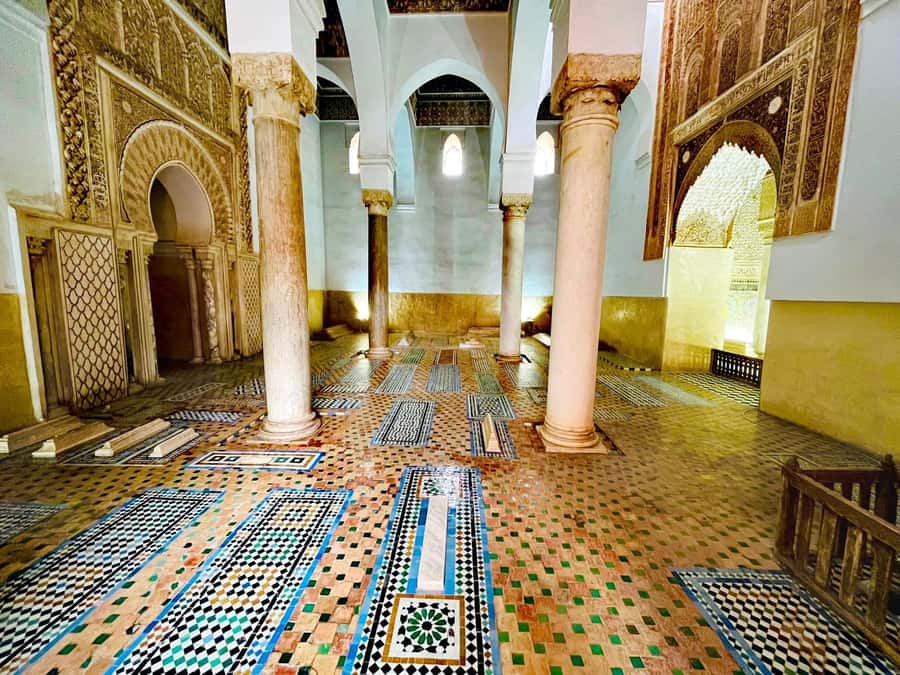
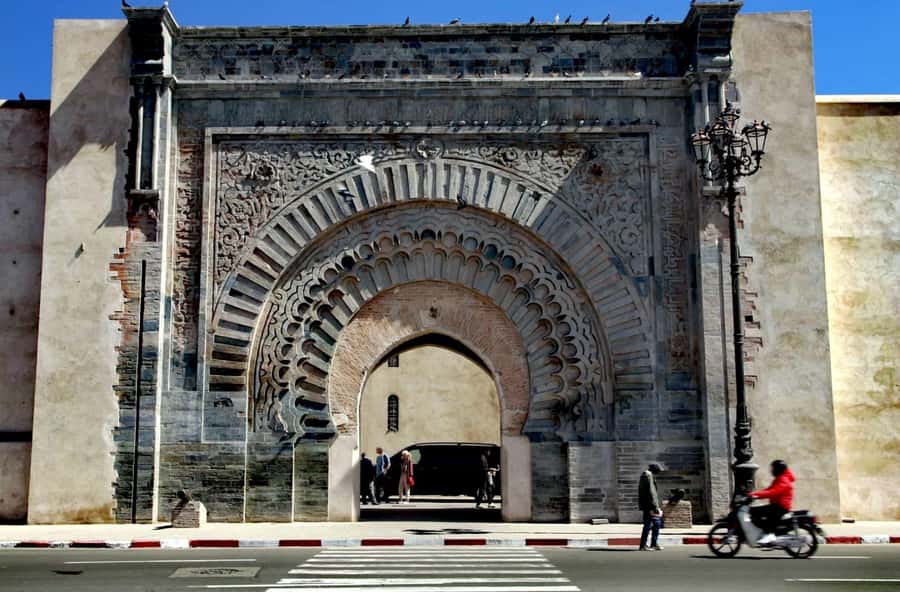
Bab Agnaou is one of Marrakech’s important historic gateways. The stop is handled as a guided walk, so you get an explanation of the gate rather than a quick pass for photographs.
The gate leads your attention toward the old royal quarter and the southern monuments. This is where the route starts to connect the city’s defensive walls, royal power, religion, and urban design. Your guide can point out details that are easy to miss when you are focused on finding your way through the streets.
The practical benefit is simple: you do not have to work out the route between the square and the southern sights yourself. That leaves more attention for the architecture and for questions about the city’s past.
Same city, a completely different day out:
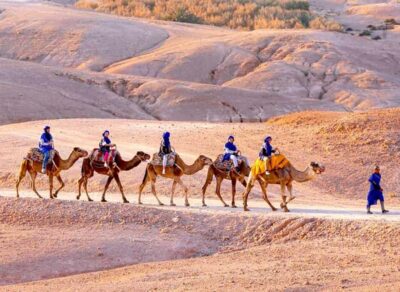
- Marrakech: Agafay Desert Sunset, Camel Ride, and Dinner Show
★ 4.6 · 35,119 reviews - Marrakech: Agafay Desert Quad & Camel Rides with Dinner Show
★ 4.8 · 27,382 reviews - Marrakech: Agafay Desert Quad Biking Tour with Dinner-Show
★ 4.8 · 16,569 reviews - Marrakech: Atlas Mountains, Ourika Valley, Waterfall & Lunch
★ 4.8 · 15,834 reviews
Bahia Palace and the cost of seeing it properly
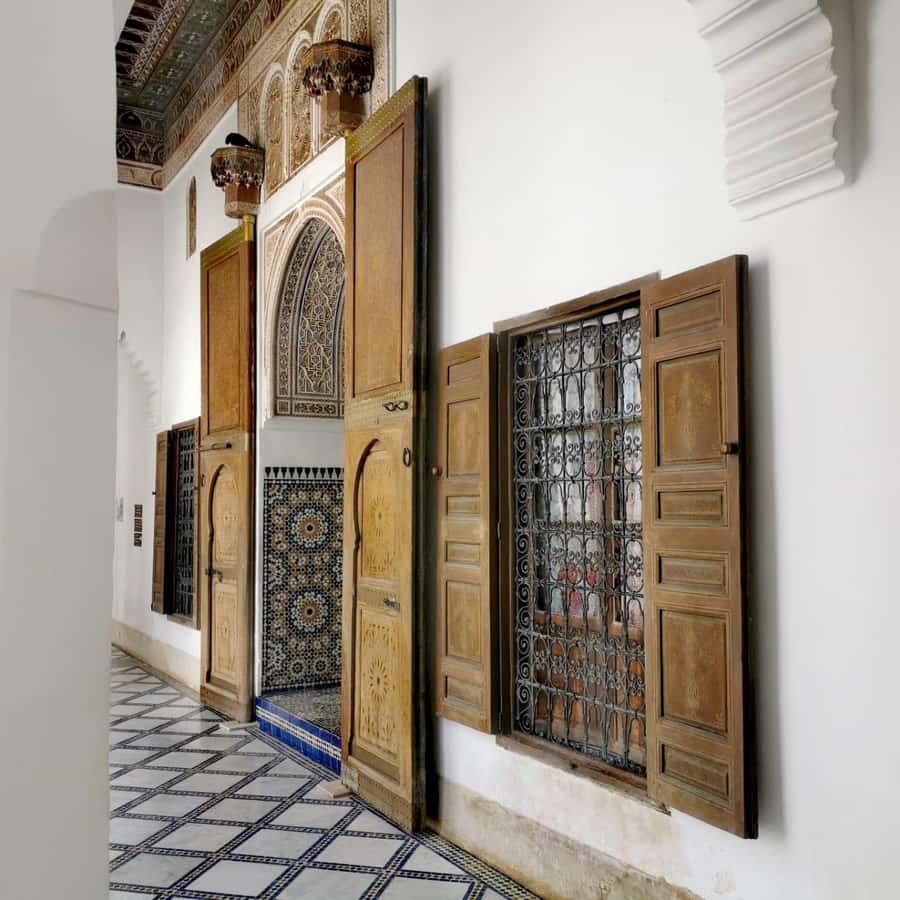
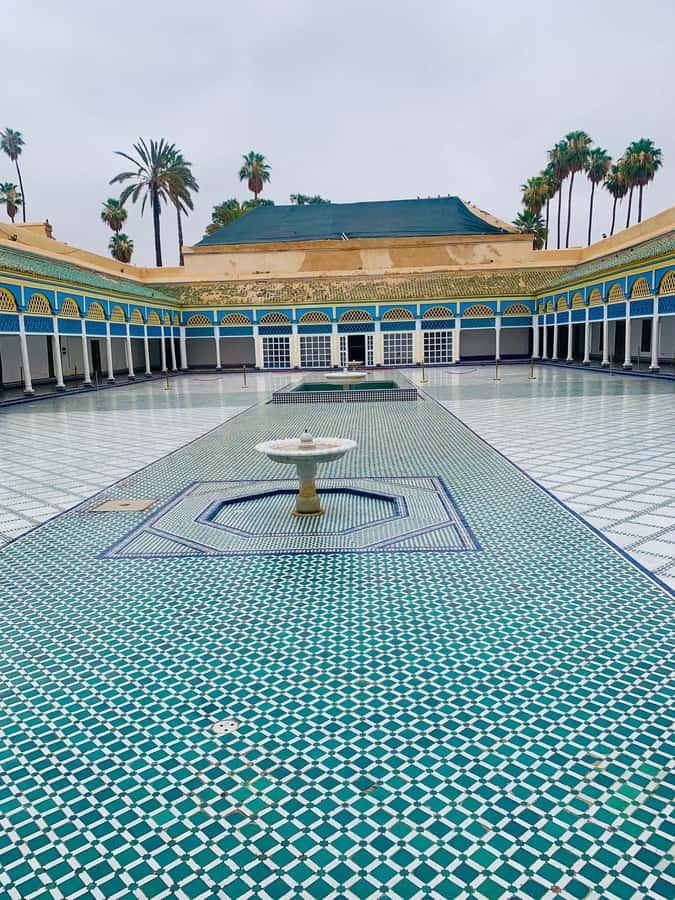
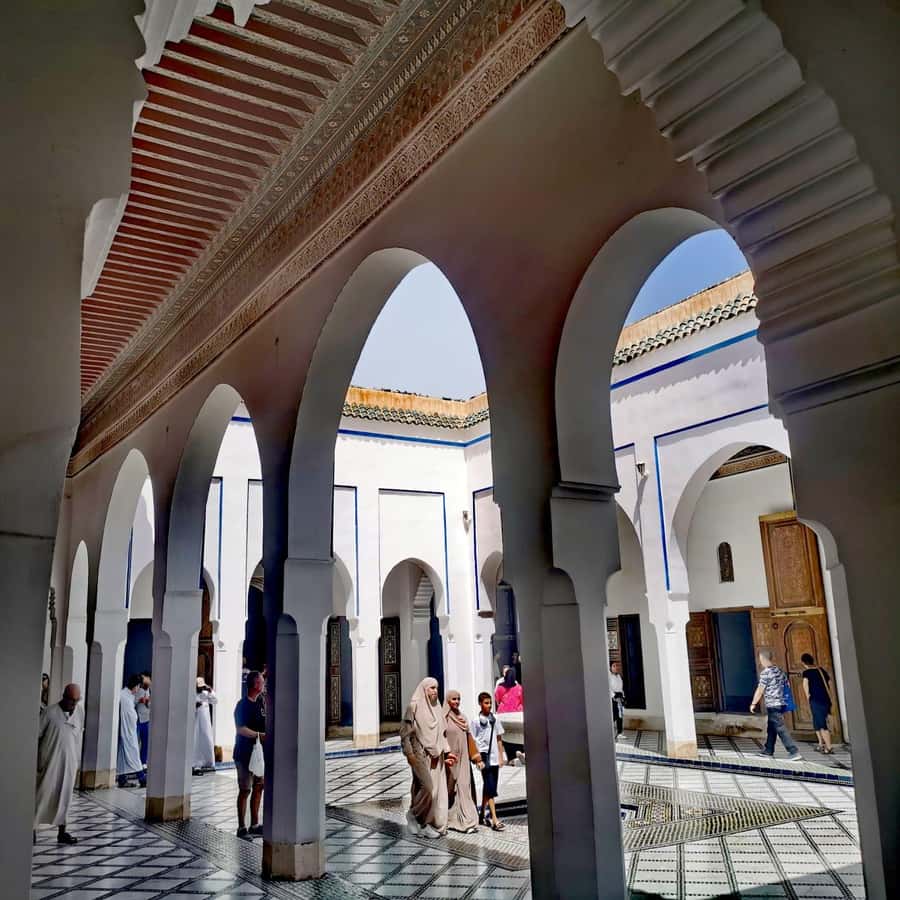
Bahia Palace is listed as a photo stop, but the building deserves more than a hurried exterior picture if time allows. The palace is known for decorated rooms, courtyards, tilework, carved wood, and the kind of detailed craftsmanship that makes Moroccan interiors so memorable.
Entry is not included. The stated price is 100 dirhams, approximately 10 euros, though you should confirm the current amount before visiting. Bring cash, since the tour specifically advises you to have enough money for monument tickets.
This is one place where the overall $25 price needs to be understood correctly. You are paying for the guide, not for every admission along the way. Add the monument costs to your budget if you want to enter Bahia Palace and Ben Youssef Madrasa.
The palace can also be a tiring point in the route if the group moves quickly afterward. One departure continued for more than four hours and included a great deal of walking and crowd movement. If you need a break, ask your guide. The itinerary is described as adaptable, and a short rest may make the rest of the walk more enjoyable.
Ben Youssef Madrasa and Moroccan design
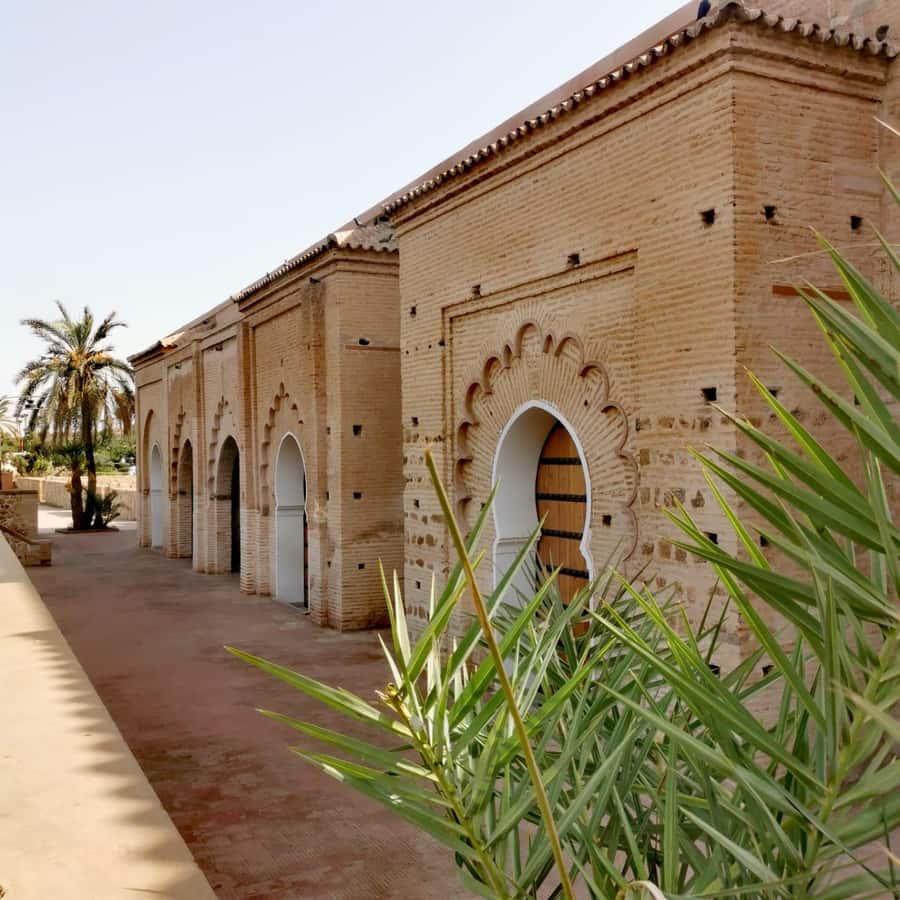
Ben Youssef Madrasa is another paid visit, with an indicated entry price of 50 dirhams, about 5 euros. It is a former religious school and one of the most rewarding architectural stops in the route.
The appeal is in the details: patterned tile, carved plaster, timber, courtyards, and the careful balance between decoration and calm. Your guide can explain how the madrasa functioned and place the building within Marrakech’s religious and educational traditions.
This is also a good stop for asking questions about education and faith in Morocco. The tour is designed to discuss religious practice and local beliefs in plain terms, so you can gain context without turning the visit into a dry architecture lecture.
The order of the palace and madrasa may change. The guide can adapt the itinerary to conditions and your interests, but you should not assume every stop will receive an identical amount of time. If one monument matters most to you, say so at the start.
Entering Souk Semmarine with a guide
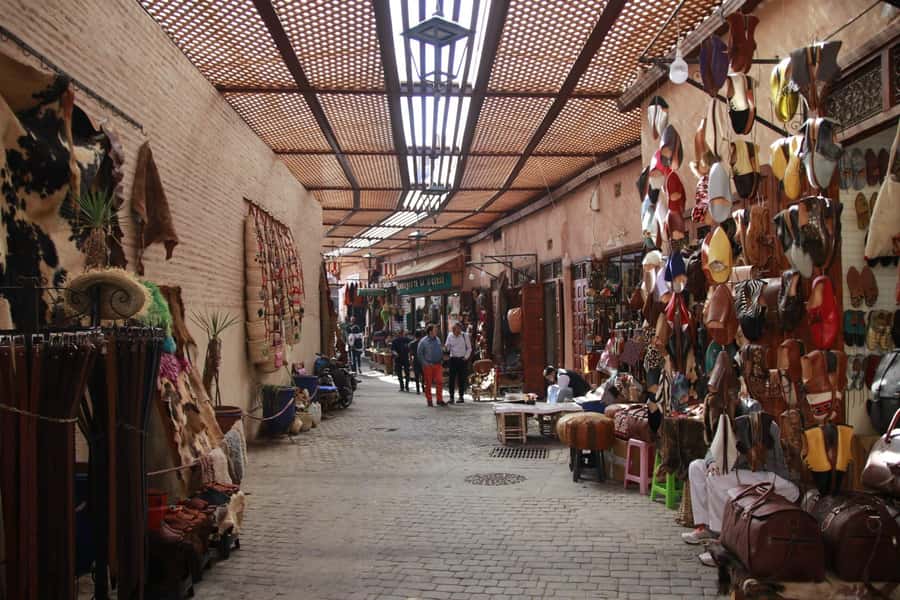
The souks are where a guide earns the walking fee. Souk Semmarine leads you into a web of shops and lanes where artisans sell leather goods, textiles, metalwork, ceramics, lamps, clothing, spices, and other Moroccan products.
The challenge is not simply avoiding a wrong turn. It is knowing how to browse without feeling pressured, understanding what you are looking at, and finding your way out when the lanes begin to look alike. Several guides, especially Abdoo, are praised for helping people navigate the souk and for offering sensible shopping advice.
You will likely visit local workshops where traditional crafts are being made. That gives you a better sense of the work behind the finished objects. You can ask about materials, techniques, and the difference between a handmade item and a mass-produced souvenir.
Shopping is part of the route, so this is not the ideal tour for anyone who wants to avoid all retail stops. At the same time, the guide is not presented as someone who simply leads you from one shop to another. The stated aim is to show both popular places and quieter corners, with room for authentic stories and local customs.
If you buy something, the provider offers free delivery of goods to hotels or riads. That is a useful service when you do not want to carry a rug, pottery, or several bags through the rest of your holiday. Transport for you is not included, so the tour itself is a walking experience.
Secret Garden and a quieter finish
Secret Garden offers a change of pace after the souks. The stop includes a visit, guided sightseeing, and walking, giving you time to look at the garden spaces and the design of the site.
Its value in this itinerary is contrast. After tight lanes, sales pitches, workshops, and crowds, a garden gives you somewhere to slow down and notice the city’s use of water, shade, planting, and enclosed courtyards. Your guide can tie these features to Moroccan architectural habits and daily life.
The route then returns to Argana Café. From there, you can continue exploring, return to your riad, or use the practical advice gathered during the walk to revisit a favorite area independently.
The guides and languages
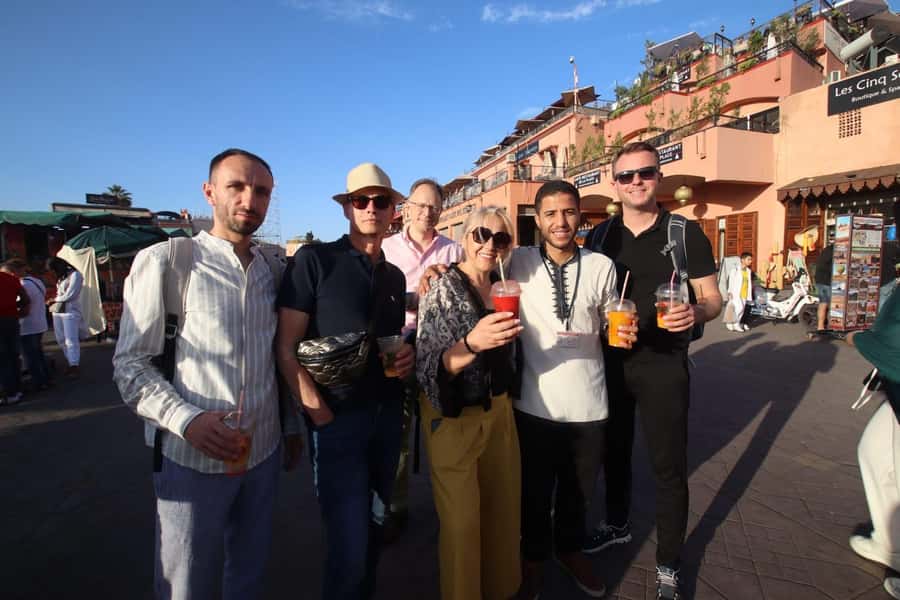
The experience is led by an official, professional guide, with live guiding available in English, German, Dutch, French, and Arabic. The exact guide may vary, but Abdoo, also referred to as Abdo, receives especially strong praise for fluent English and German, clear explanations, photography help, and a calm manner.
Abdul is also noted for being funny, polite, patient, and good at explaining Moroccan life. Nasser is praised for detailed explanations of the sites and useful shopping suggestions, while Ahmed is described as organized and effective with a small group.
You should not book this expecting a silent escort who only gives dates and names. The strength of the experience is conversation. Ask questions as you walk. If you want more detail at a palace, less shopping time, or help choosing a place for lunch afterward, make your preferences clear.
The guide may also help with practical matters. One guide bought water for the group, another helped select a typical Moroccan lunch after the formal tour, and several took photographs at good locations. These extras are not guaranteed as a fixed part of the service, but they reflect the personal style this experience aims for.
How much walking and time to allow
The advertised duration is three hours. The route includes several major sites, the souks, and Secret Garden, so expect steady walking on uneven or crowded surfaces.
Comfortable shoes are essential. A bottle of water is included, and the tour offers free connection network access during the walk, but you should still carry cash and a card. Food and other drinks are not included.
The stated route can be changed to suit your needs. Even so, this is not a slow, single-neighborhood stroll. If you have mobility concerns, children, or anyone who needs frequent pauses, tell the guide early. The tour is wheelchair accessible, but the Medina’s narrow lanes and crowds may still affect how easily the group moves from place to place.
One practical point is worth stressing: three hours is an estimate, not a hard guarantee that you will be back at exactly the three-hour mark. A departure lasted more than four hours, and an extra stop for drinks would have helped. Do not schedule a tight airport transfer or restaurant reservation immediately afterward.
What the $25 price includes
At $25 per person, this is inexpensive for a guided introduction to several of Marrakech’s main sights. The value is strongest if you are new to the city, want help in the souks, or prefer to learn about customs while walking rather than reading about them later.
Included items are:
- An official bilingual guide
- A bottle of water
- Free delivery of purchased goods to your hotel or riad
- Free connection network during the tour
You pay separately for monument entries, souvenirs, food, drinks, and transportation. The two stated admission examples add about 150 dirhams in total if you enter both Bahia Palace and Ben Youssef Madrasa.
The price also makes sense for a short stay. If you only have a day or two in Marrakech, the route compresses the city’s main themes into one organized outing. If you have a full week and enjoy exploring independently, you may prefer a shorter private guide or separate visits at your own pace.
Who should book this experience
I would choose this tour for a first visit to Marrakech, especially if you are staying in or near the Medina and want to get your bearings quickly. It suits couples, families, and small groups who enjoy asking questions and walking through busy city streets.
It is also a good match if shopping makes you nervous. A guide can help you understand the souk layout, point out craftwork, and lead you back through the maze. Families may appreciate the patient guiding style, particularly when children need extra time or explanations.
You may want another option if you dislike shopping stops, cannot walk steadily for several hours, or want a slow architectural tour with long visits at each monument. The route covers a lot, and the atmosphere can be crowded. You should also budget for tickets and leave space in your schedule in case the walk runs over.
Free cancellation up to 24 hours before the start and reserve-now, pay-later booking make the arrangement flexible. The tour is available at several starting times, subject to availability.
Should you book the Marrakech local guide walk?
Book it if you want a friendly, practical introduction to the Medina for $25, with a guide who can explain both famous buildings and ordinary Moroccan life. The strongest reasons are the small-group atmosphere, the help inside the souks, the range of languages, and guides such as Abdoo and Abdul who combine humor with clear information.
Go in prepared for extra entrance fees, plenty of walking, and a route that may take longer than three hours. Carry cash, wear sturdy shoes, and avoid booking anything urgent right afterward. For a first day in Marrakech, this is a sensible way to learn the city’s layout and customs before setting off on your own.
FAQ
Where does the tour meet?
The meeting point is in front of Argana Café in Jemaa el-Fnaa Square. Look for the green café sign, nearby juice sellers, and the large ice cream sculpture.
How long does the tour last?
The stated duration is three hours. The itinerary can be adapted, and one departure lasted more than four hours, so allow extra time if possible.
Which languages are available?
Live guiding is available in English, German, Dutch, French, and Arabic.
Are monument entrance fees included?
No. Bahia Palace is listed at about 100 dirhams and Ben Youssef Madrasa at about 50 dirhams. Prices can vary, so bring enough cash.
What is included in the $25 price?
The price includes an official bilingual guide, a bottle of water, free delivery of purchased goods to your hotel or riad, and free connection network access during the tour.
Can I cancel or pay later?
You can cancel up to 24 hours in advance for a full refund. Reserve-now, pay-later booking is also available.
Just listed out of Marrakesh
- Marrakech: Ouzoud Waterfalls Trip, Guide & Boat + Lunch★ 4.7 · 33 reviews
- Marrakech: Vibrant Dinner Show at The Lotus Club★ 3.9 · 33 reviews
- From Marrakech: 3-Day Merzouga and Sahara Desert Tour★ 4.5 · 33 reviews
- Marrakech: Private Souks Tour with Tea and Traditional Snack★ 4.6 · 33 reviews
- From Marrakech: Small Group To Essaouira & Medina Day Trip★ 4.3 · 33 reviews
- Marrakech: Medina Souks, Hidden Markets and Shopping Tour★ 4.8 · 33 reviews
- 2 Days Desert Agafay and Atlas Mountains Trek From Marrakech★ 3.8 · 33 reviews
- Agadir/Taghazout : Marrakech Guided Tour old Medina & Souks★ 3.7 · 34 reviews
Marrakech Tours, compared.

Agafay Desert Sunset, Camel Ride, and Dinner Show
Read our review →
Agafay Desert Quad & Camel Rides with Dinner Show
Read our review →
Agafay Desert Quad Biking Tour with Dinner-Show
Read our review →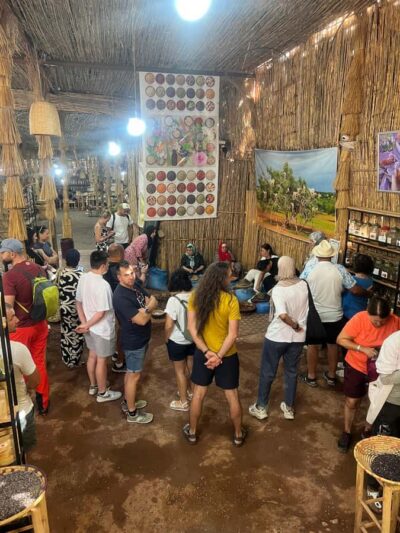
Atlas Mountains, Ourika Valley, Waterfall & Lunch
Read our review →