
Reviewed · MARRAKECH TOURS
Marrakech: Babouch Making Workshop in the Medina
The best part of this Marrakech experience is that you do not simply buy a pair of babouch slippers in the souk. You learn how they are made, with leather craftsman Youssef guiding you through the work in his medina studio. You choose the leather, cut the pieces, and help shape a useful souvenir that carries a real story.
I like the private-group format, which keeps the lesson calm and personal. I also like the mix of practical work and local hospitality: mint tea, homemade Moroccan pastries, and time to talk with a craftsman whose family has worked with leather for five generations.
The main drawback is the meeting point. The directions have caused confusion, with some people waiting under the Rue Bani Marine sign while the guide was at the entrance by the Post Maroc building. Confirm the exact spot by WhatsApp before setting out, and allow time for the walk through the souks.
Key points
- Make your own Moroccan slippers: Choose leather and color, then cut, assemble, stitch, and finish a pair of babouch.
- Learn from Youssef: The workshop offers a direct look at traditional leatherwork from a working local craftsman.
- Private and well supported: A guide such as Khaoula, Ouiam, or Yasmine helps with translation, navigation, and practical questions.
- A calm break in the medina: Tea, water, and homemade sweets give you a welcome pause from the noise and movement outside.
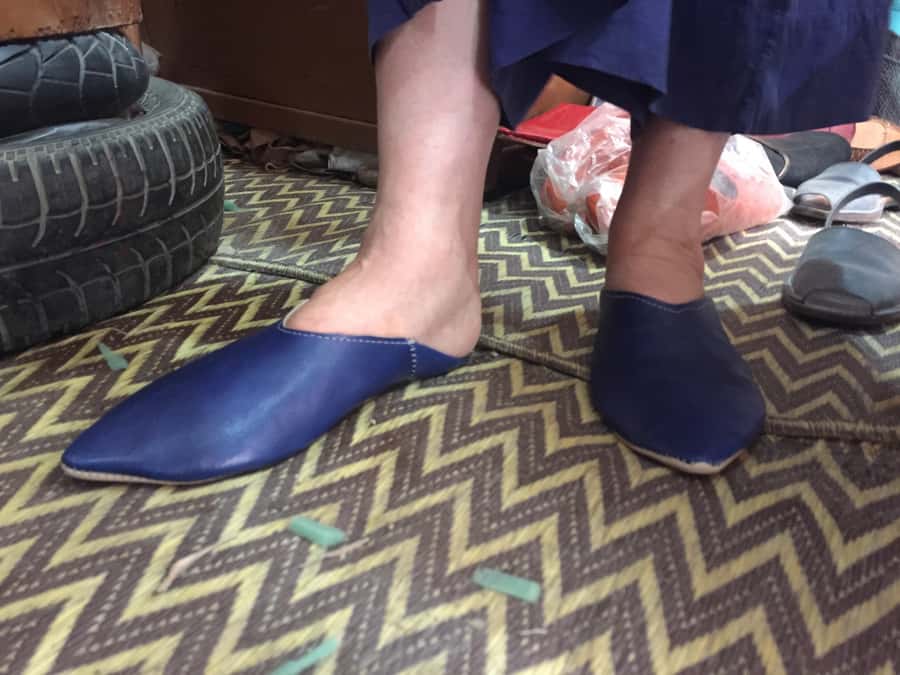
- Take home a fitted souvenir: Your pair is made for you, with adjustments possible for unusual or very small feet.
- Plan for four hours: The hands-on workshop lasts about 3.5 hours, with the full activity listed as four hours.
Why Making Babouch Beats Simply Buying Them
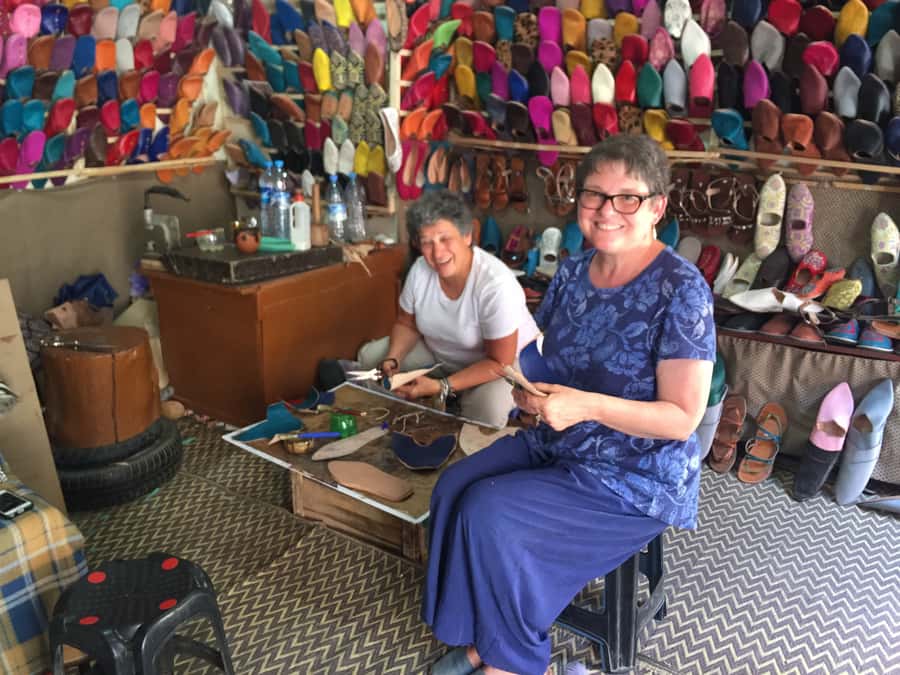
Marrakech’s souks are full of babouch, the pointed or rounded leather slippers worn across Morocco. Buying a pair is easy. The more memorable choice is to spend part of your day learning what goes into them.
This workshop turns a familiar souk product into a small lesson in patience and handwork. You see the leather before it becomes a finished shoe, then take part in several stages of production. The work includes drawing or using templates, cutting leather, gluing, hammering, stitching, turning the slipper correctly, and finishing the edges.
You are not expected to arrive with leatherworking skills. The necessary tools and raw materials are supplied, and the artisan helps you through each step. The guide stays on hand to translate, keep the session moving, and explain anything that is unclear.
I would not describe this as a quick craft demonstration. You take part in the process, but Youssef and the other artisans still handle the most demanding work. That balance is sensible. You get genuine hands-on practice without the pressure of producing a perfect shoe entirely on your own.
A few other Marrakesh days worth comparing
- Marrakech: Bahia Palace, Saadian Tombs, Souk and Medina Tour
★ 4.7 · 4,974 reviews - Marrakech: Ben Youssef, Secret Garden, & Souks Walking Tour
★ 4.6 · 2,802 reviews - Marrakech: Colorful Medina Souks Guided Walking Tour
★ 4.7 · 2,470 reviews
Meeting Your Guide Near Jamaa el Fna
The stated meeting point is in front of the post office at Jamaa el Fna Square, also referred to in some directions as the Post Maroc building on Rue Bani Marine. This is central, but the wording needs care.
The most useful tip is to look for the guide at the entrance in front of the post office, not simply stand beneath a Rue Bani Marine street sign. A few people have had trouble finding the right spot. Contact the provider in advance and keep the phone or WhatsApp number available.
You then walk with the guide through the souks to the workshop. That escort matters. The medina is a maze, and the studio lies farther into the market area, away from the main stalls near the square. The route itself gives you a quick introduction to the less polished, more workaday side of the souk.
Some participants have needed help navigating the crowded lanes, while one person was collected by bicycle after a meeting-point mix-up. You should not count on a bicycle pickup, but you should count on the guide being useful once you are inside the medina.
Guides named in past sessions include Khaoula, Ouiam, and Yasmine. The guide assigned to your booking may be different. The important point is that the guide is not just a translator. The guide helps you reach the workshop, explains instructions between you and the artisan, and can sometimes help with questions after the class, such as finding a tagine pot.
Inside Youssef’s Leather Workshop
The studio offers a change of pace from Jamaa el Fna. Outside, the souks can feel loud and confusing. Inside, the focus shifts to leather, patterns, tools, and the steady work of making something by hand.
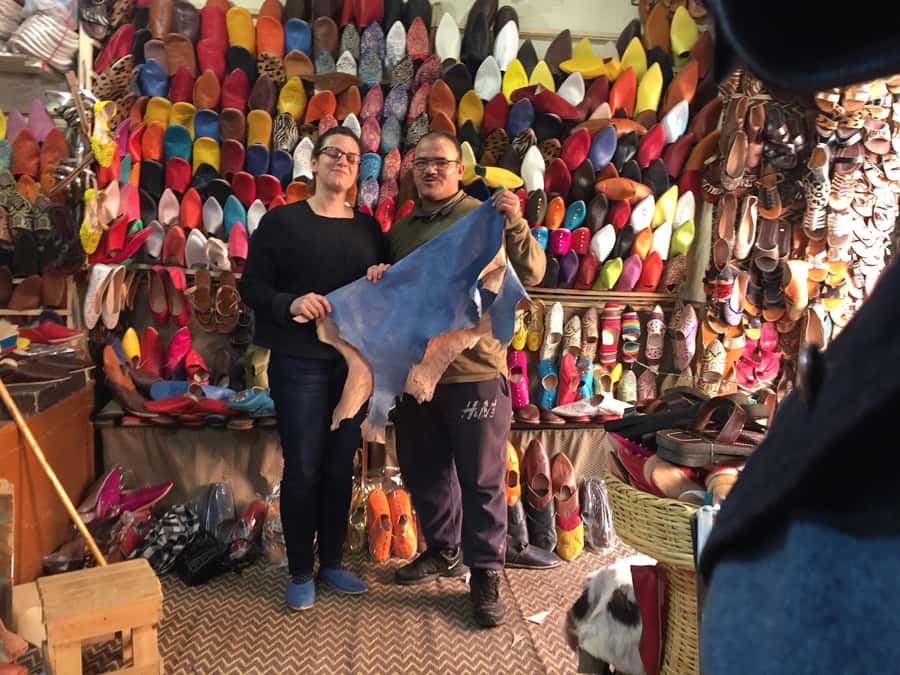
Youssef begins by explaining leather and how it is prepared for Moroccan leather goods. You get to see different types and discuss which one suits your slippers. Color and style are part of the choice, so the finished pair can feel personal rather than pulled from a shelf.
The workshop also gives you a better sense of the labor hidden inside a low-priced souvenir. A babouch may look simple, but the shape, fit, stitching, and finishing require skill. Watching an artisan stitch quickly and accurately is one of the most striking parts of the session.
English, French, and Arabic are available for the activity. Youssef has been described as comfortable speaking English and French, while the accompanying guide handles translation when needed. The language support makes this a reasonable choice even if you have no experience with craft workshops.
The atmosphere is informal. You may work while chatting about Morocco, leather, colors, or everyday life. There is even room for light conversation and jokes, which helps the session feel like time spent with local people rather than a formal classroom.
Cutting and Building Your Own Pair
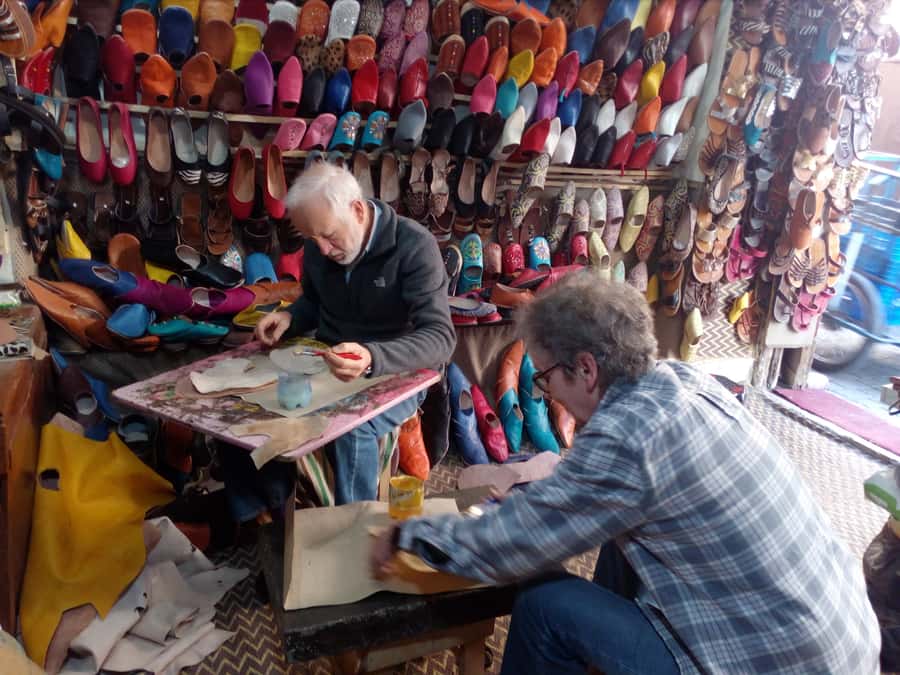
The practical section starts with selecting the style, color, and leather. You then work with templates or patterns to mark the pieces. Cutting requires care, since a small error can affect the shape of the slipper.
Next comes construction. You may glue, hammer, and assemble the leather before moving on to stitching and finishing. The guide and artisans show you how each stage works, then correct your technique when necessary.
This is the point where the workshop earns its price. You are not merely watching a demonstration and receiving a generic pair at the end. You contribute to the object you take home, and the process makes the final slippers more meaningful.
Still, keep your expectations realistic. The finished product is made with expert help. Youssef and the other artisans may complete difficult stitching or make final adjustments, especially where fit matters. Your achievement is participation in traditional production, not independent mastery of the trade in one afternoon.
The pace is described as relaxed rather than rushed. That is good news if you enjoy concentration and conversation. It also means the four-hour booking may feel long to anyone looking for a fast souvenir stop. Children can take part, too. One session worked well for an adult and an 11-year-old, though younger children may need close help with cutting and tools.
Same city, a completely different day out:
- Marrakech: Agafay Desert Sunset, Camel Ride, and Dinner Show
★ 4.6 · 35,119 reviews - From Marrakech: Ouzoud Waterfalls Guided Hike and Boat Trip
★ 4.7 · 33,630 reviews - Marrakech: Agafay Desert Quad & Camel Rides with Dinner Show
★ 4.8 · 27,382 reviews - Marrakech: Agafay Desert Quad Biking Tour with Dinner-Show
★ 4.8 · 16,569 reviews
Tea, Pastries, and a Proper Pause
A tea break is built into the workshop. You receive Moroccan mint tea, water, and homemade snacks or pastries, often described as biscuits or local sweet treats.
This is not just a bonus plate of food. The pause breaks up the careful leatherwork and gives you time to look at the materials, watch the artisan, and talk without trying to hold a tool at the same time. It also adds the simple hospitality that makes a craft visit feel personal.
The food is light, so do not treat it as lunch. Plan another meal before or after the activity if you need something substantial. A morning booking can work particularly well because it gives you a quiet, focused start before spending more time exploring the souks.
The Finished Babouch and Final Adjustments
At the end, each participant takes home a pair of babouch. The slippers are made to your size, and adjustments can be made where needed. One artisan altered a pair for particularly small feet, which is useful if standard shop sizes are a poor fit.
You also receive photographs from the session by email. These add value because they preserve the making process, not only the finished item. Check that the provider has the correct email address before leaving.
The slippers may be the main reason you book, but the better souvenir is the knowledge of the work behind them. After the class, you will look at leather goods in the souk with a more practical eye. You can see why stitching, fit, and finishing affect quality.
The workshop may also lead to other purchases. Youssef’s shop can produce bespoke leather goods, and one participant arranged a specific belt design at a reasonable price for collection a few days later. Any extra purchase is optional, and you should decide based on the design and price rather than feeling obliged.
Is $81 a Fair Price?
At $81 per person, this is not the cheapest way to acquire Moroccan slippers. In the souk, you can buy ready-made babouch for much less, depending on the leather, workmanship, and your bargaining skills.
The price makes more sense when you count what is included: about four hours of time, private-group instruction, an artisan-led workshop, tools and materials, your finished pair, a guide, translation support, tea, snacks, water, and photographs. You are paying for an activity as well as a product.
The private format is especially important. You avoid being one person in a large class, and the artisan can help with your individual fit and pace. If you are traveling as a couple or family, the session gives everyone a shared project rather than another shopping stop.
I would call it good value for someone who wants a cultural activity and a handmade keepsake. It is weaker value if you only want inexpensive slippers or have little interest in making things. The workshop’s strongest feature is participation, so the price is easiest to justify when you value time, contact, and instruction.
Who Will Enjoy This Workshop Most?
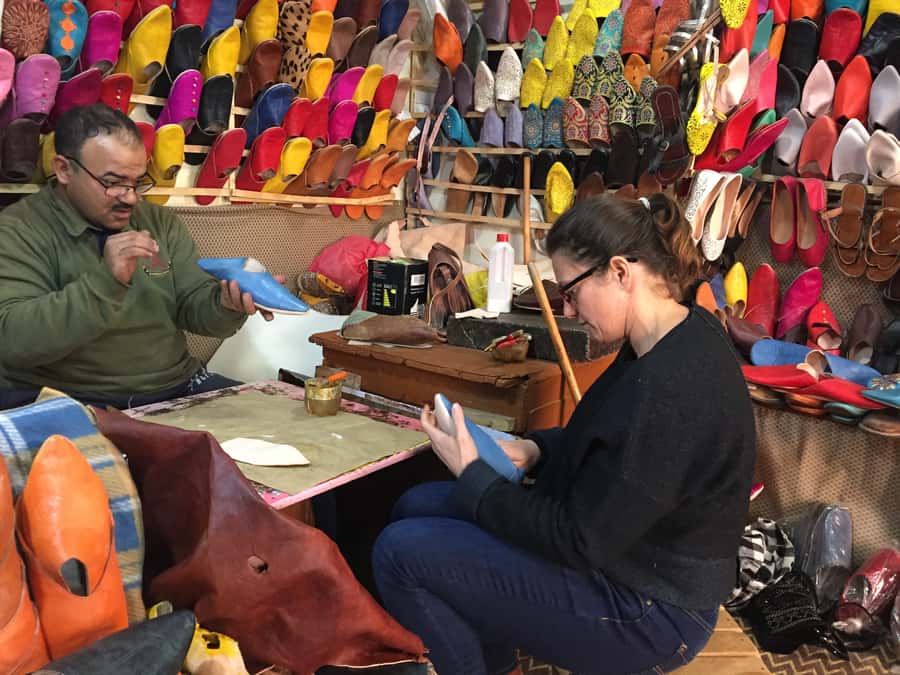
This suits couples, families with older children, and anyone who likes practical activities. It also works well for solo visitors. One person booked alone and received one-to-one attention, showing how the private setup can adapt to a small booking.
You should enjoy it if you like:
- Learning how everyday objects are made
- Meeting a local artisan in his working space
- Taking home a useful souvenir
- Spending a quiet stretch of time inside the medina
- Asking questions about leather and Moroccan craft
- Having an activity that does not depend on sightseeing or shopping
It may not suit you if you dislike close handwork, expect to make a flawless pair without assistance, or want a short activity under two hours. The session lasts roughly 3.5 hours, with four hours allowed overall.
The activity is listed as wheelchair accessible, though the route through the medina and the exact workshop layout are not described in detail. If you use a wheelchair, confirm the route and access arrangements before booking.
Timing, Cancellations, and Language
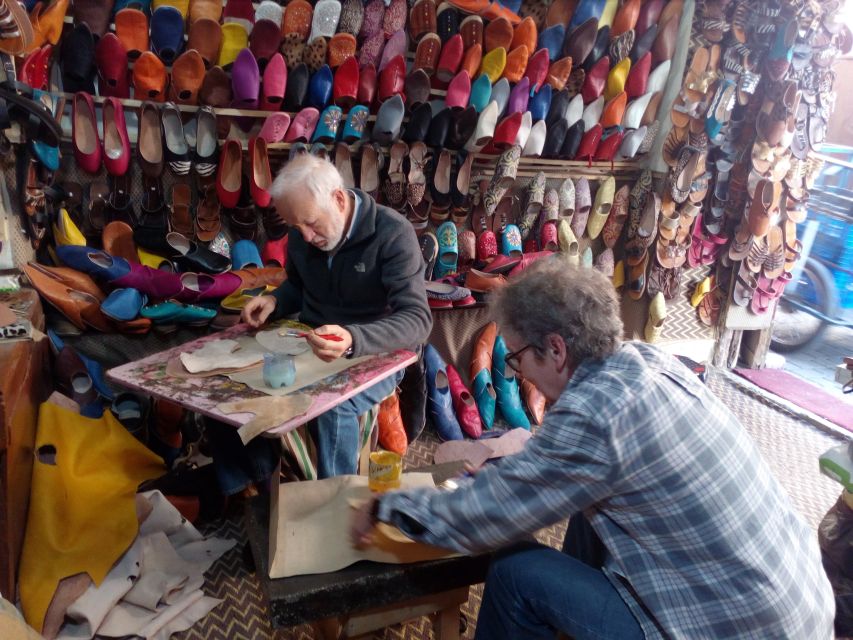
The activity runs for four hours in total, with the workshop itself described as about 3.5 hours. Starting times vary, so you need to check availability for your date.
English, French, and Arabic are offered. Translation support is part of the guide’s role, and several guides have been praised for clear English and patient explanations.
You can cancel up to 24 hours before the activity for a full refund. The reserve-now, pay-later option also lets you hold a place without paying immediately, which helps if your Marrakech schedule is still changing.
Because the meeting point can be confusing, I would not arrive at the last minute. Reach the square early, verify the post office entrance, and allow time for the walk through the souks.
Should You Book the Babouch Workshop?
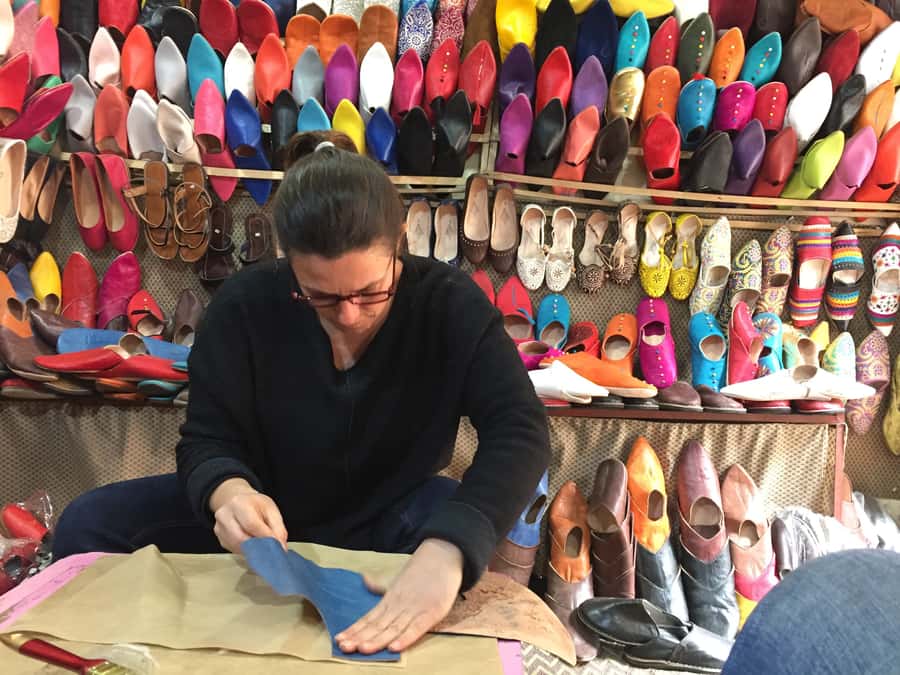
Yes, if you want a hands-on Marrakech experience with a real object to take home. The excellent rating is supported by the things that matter most here: patient instruction, warm guides, skilled artisans, a relaxed pace, and slippers fitted to you.
Book it especially if you are tired of buying souvenirs with no connection to place. You will leave with babouch, but also with a clearer idea of the cutting, stitching, and finishing that traditional leatherwork requires.
Skip it if your priority is the lowest possible price, or if four hours of careful craft sounds like too much. For everyone else, confirm the meeting point, wear comfortable shoes for the souk walk, and give yourself time to enjoy the process rather than rushing toward the finished pair.
FAQ
How long does the babouch-making workshop last?
The full activity lasts four hours. The hands-on workshop itself is described as about 3.5 hours.
Where is the meeting point?
Meet in front of the post office, also called the Post Maroc building, at Jamaa el Fna Square. The directions may refer to Rue Bani Marine. Confirm the exact entrance before you go.
What will I make during the workshop?
Each participant makes a pair of traditional Moroccan babouch leather slippers to take home.
Are leather and tools included?
Yes. The necessary tools and raw materials are provided as part of the workshop.
Is a guide included?
Yes. A guide is available to help with translation, navigation through the medina, the progress of the workshop, and general assistance.
Which languages are available?
The activity is offered in English, French, and Arabic.
Are refreshments included?
Yes. Water, a tea break, and homemade Moroccan snacks or pastries are included.
Can I cancel the booking?
You can cancel up to 24 hours in advance for a full refund. The reserve-now, pay-later option is also available.
Just listed out of Marrakesh
- Marrakech: Ouzoud Waterfalls Trip, Guide & Boat + Lunch★ 4.7 · 33 reviews
- Marrakech: Vibrant Dinner Show at The Lotus Club★ 3.9 · 33 reviews
- From Marrakech: Small Group To Essaouira & Medina Day Trip★ 4.3 · 33 reviews
- From Marrakech: 3-Day Merzouga and Sahara Desert Tour★ 4.5 · 33 reviews
- Marrakech: Private Souks Tour with Tea and Traditional Snack★ 4.6 · 33 reviews
- Marrakech: Medina Souks, Hidden Markets and Shopping Tour★ 4.8 · 33 reviews
- 2 Days Desert Agafay and Atlas Mountains Trek From Marrakech★ 3.8 · 33 reviews
- Agadir/Taghazout : Marrakech Guided Tour old Medina & Souks★ 3.7 · 34 reviews
Marrakech Tours, compared.

Agafay Desert Sunset, Camel Ride, and Dinner Show
Read our review →

Agafay Desert Quad & Camel Rides with Dinner Show
Read our review →
Agafay Desert Quad Biking Tour with Dinner-Show
Read our review →
Atlas Mountains, Ourika Valley, Waterfall & Lunch
Read our review →


Quad Bike Tour to Palm Oasis and Jbilat Desert
Read our review →Browse the lists this tour appears in