
Reviewed · SAHARA DESERT TOURS
3D Deluxe Experience: Marrakech to Merzouga w/ Quad Option
The big draw here is simple: you cross Morocco from the High Atlas Mountains to the Sahara, then sleep beside the Erg Chebbi dunes. In three days, you get kasbahs, palm groves, canyon walks, camels, sandboarding, and a night under the desert sky.
I like the mix of famous sights and local touches, especially Ait Ben Haddou and Todra Gorge. I also like that your luggage goes by 4×4 to the camp, so you do not need to drag a suitcase over the sand. The tradeoff is a long return drive to Marrakech, about eight and a half hours on the third day.
Key points at a glance
- Camel ride into Erg Chebbi: Cross the golden dunes at sunset, then return by camel after breakfast.
- Ait Ben Haddou stop: Walk through Morocco’s best-known fortified village, with an optional local guide for about €2 on shared departures.
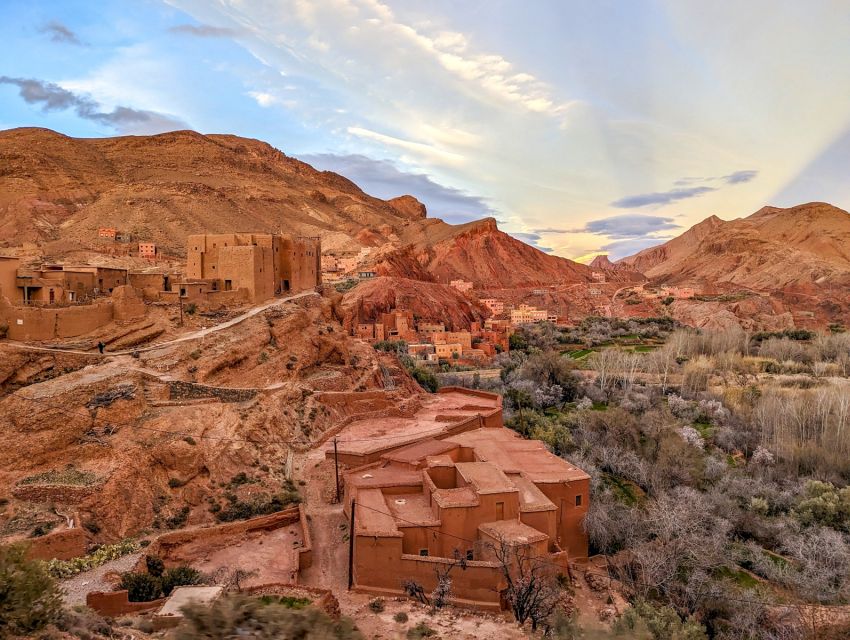
- Dades and Todra scenery: See kasbahs, rose-country villages, palm groves, gardens, and the dramatic Todra canyon.
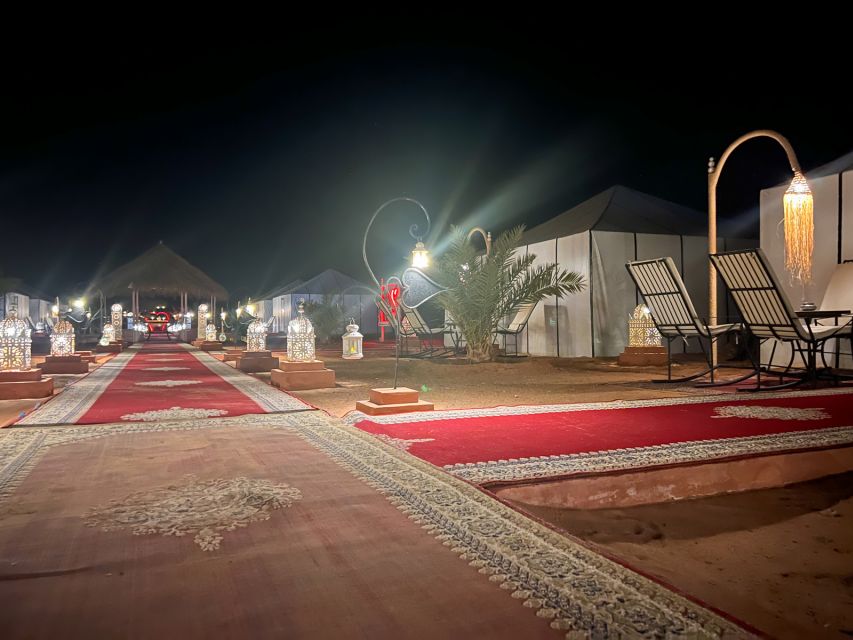
- Desert camp choices: Pick a standard camp or pay for a more comfortable luxury camp, depending on availability and booking option.
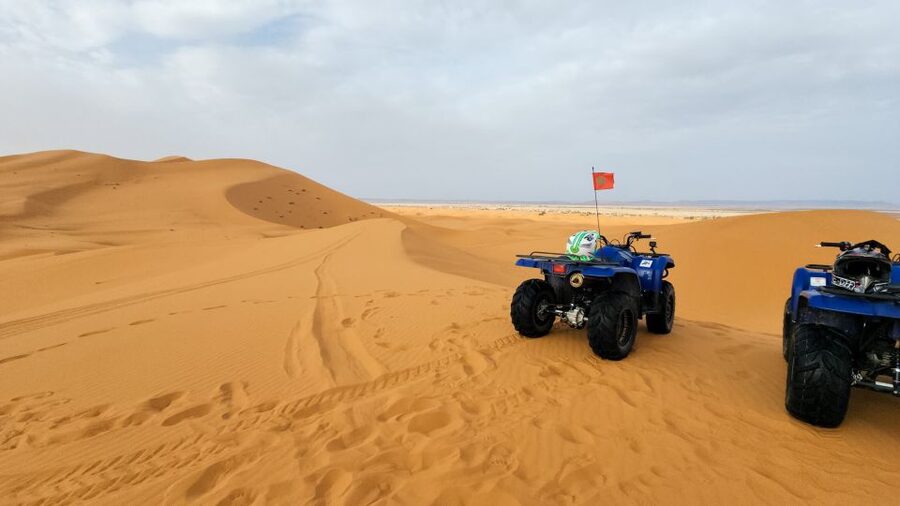
- Quad-bike option: Rent an ATV at camp for €50 solo or €60 for two people for one hour.
- Strong value at $125: Accommodation, transport, breakfasts, dinners, camel rides, sandboarding, WiFi, and luggage service are included, but lunches and drinks are not.
From Marrakech to the Sahara in three days
This is a fast-moving tour, but it covers a remarkable slice of southern Morocco. You leave Marrakech in an air-conditioned vehicle with a driver-guide and cross the High Atlas via the Tizi n Tichka Pass.
The road climbs through sharp mountain scenery and Berber villages before dropping toward the kasbah country south of the Atlas. You will want a camera ready, but do not expect a slow scenic train ride. This is a road trip, and a good portion of each day is spent in the vehicle.
The tour is available in English, French, and Spanish. Driver-guides connected with this service include Omar, Salah, Addi, Said, Hicham, Ayoub, Younes, and Ismail, though your assigned guide depends on the departure. The most important thing is a good driver who keeps the long road days comfortable and explains what you are seeing.
Pickup is arranged from your Marrakech hotel or riad. Send the exact accommodation name and a working WhatsApp number before departure. Marrakech has plenty of narrow streets and busy pickup points, so this small step can save confusion in the morning.
A few other Marrakesh days worth comparing
- From Marrakech: 3-Day Merzouga and Sahara Desert Tour
★ 4.9 · 15,308 reviews - From Marrakech: Merzouga 3-Day Desert Safari with Food
★ 4.7 · 12,232 reviews - Marrakech: 3-Day Merzouga Desert Experience Camel & Meals
★ 4.6 · 6,252 reviews
Ait Ben Haddou and the road through Ouarzazate
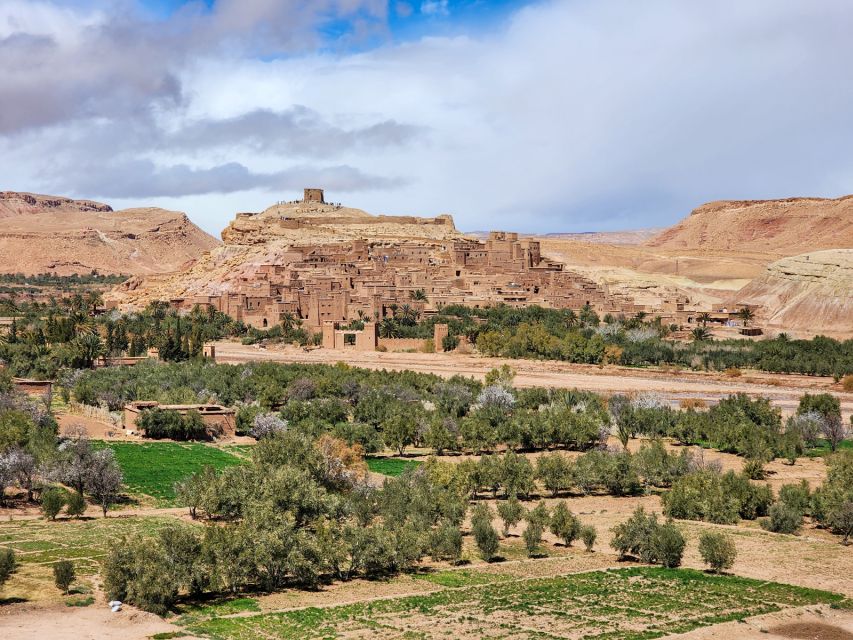
Your first major stop is Ait Ben Haddou, a UNESCO World Heritage site and one of Morocco’s most recognizable sights. The fortified settlement rises above the surrounding countryside in a cluster of earthen buildings, passageways, and defensive walls.
It has appeared in many films and television productions, but the movie connection should not be the whole point. The real interest is the building style and the way the old settlement sits along the former caravan route. You can walk through the narrow lanes, climb for views, and see how the thick earthen walls create shade and protection from the heat.
On a shared tour, a local guide is not included. You can join a group walk for about €2 per person. I recommend doing so if you want context about the kasbah’s construction and past use. Without a guide, you can still enjoy the setting, but the visit may feel like a quick photo stop.
Time here can be limited, so keep your pace steady. Wear shoes with a good grip, especially if you plan to climb to higher viewpoints. The ground is uneven in places, and summer heat makes a leisurely walk harder.
The route continues through Ouarzazate, often called the gateway to the desert. Private tours can add Ksar Taourirt, a large kasbah in town, while shared departures usually keep moving toward Skoura and the Dades area.
Skoura Palm Grove and Rose Valley
After Ouarzazate, the scenery shifts again. The road passes the Skoura palm grove, where palms and kasbahs break up the dry terrain. This is a useful reminder that southern Morocco is not just sand. Water, palms, orchards, and old settlements shape the valleys.
The route then reaches Rose Valley. Roses bloom in mid-spring, and the area is known for rose products made from the local harvest. Outside the flowering season, you will still see kasbahs and broad valley views, but do not expect fields of flowers all year.
Your first night is in the Tinghir or Dades area, at a hotel such as Hotel Saghra or Kasbah Didis, or a similar property. The room includes air conditioning and a private bathroom. Dinner and breakfast are included, and the accommodation may have a swimming pool.
That pool matters after a full day on the road. It gives you a chance to cool down and rest before the next early start. The first night is not a desert camp, but that is a benefit: you get a proper room before the more rustic night near the dunes.
Dades Valley and the Todra Gorge
Day two takes you through the Dades Valley toward Todra Gorge. The route combines dry rock formations, palm-filled stretches, small villages, and traditional kasbahs. The contrast is striking. One moment you are among bare cliffs, and the next you are looking at gardens and cultivated land.
The walking portion through the Todra Valley is one of the better cultural stops on the trip. You may see handmade carpets and traditional gardens, then continue toward the canyon itself. Todra Gorge is famous for its tall rock walls and narrow passage, and it gives you a chance to get out of the vehicle and use your legs.
The stop is scenic, but the exact amount of walking and free time depends on the day’s schedule. Wear comfortable shoes and bring water. You will also want a layer for the canyon, since shaded rock walls can feel cooler than the open road.
Some departures include a visit to an Amazigh village. This adds useful context about life in the valley, rather than treating the region as a string of viewpoints. It is one reason I prefer this route to a simple Marrakech to desert transfer.
The tour then passes through Tinjdad and on to Erfoud. The small town is known for fossils, and you may see shops or displays connected with the fossil trade. This is a short stop in the larger journey, but it helps explain why the eastern part of Morocco is important for paleontology and decorative stonework.
Same city, a completely different day out:
- Marrakech: Agafay Desert Sunset, Camel Ride, and Dinner Show
★ 4.6 · 35,119 reviews - From Marrakech: Ouzoud Waterfalls Guided Hike and Boat Trip
★ 4.7 · 33,630 reviews - Marrakech: Agafay Desert Quad & Camel Rides with Dinner Show
★ 4.8 · 27,382 reviews - Marrakech: Agafay Desert Quad Biking Tour with Dinner-Show
★ 4.8 · 16,569 reviews
Arriving at Merzouga before sunset
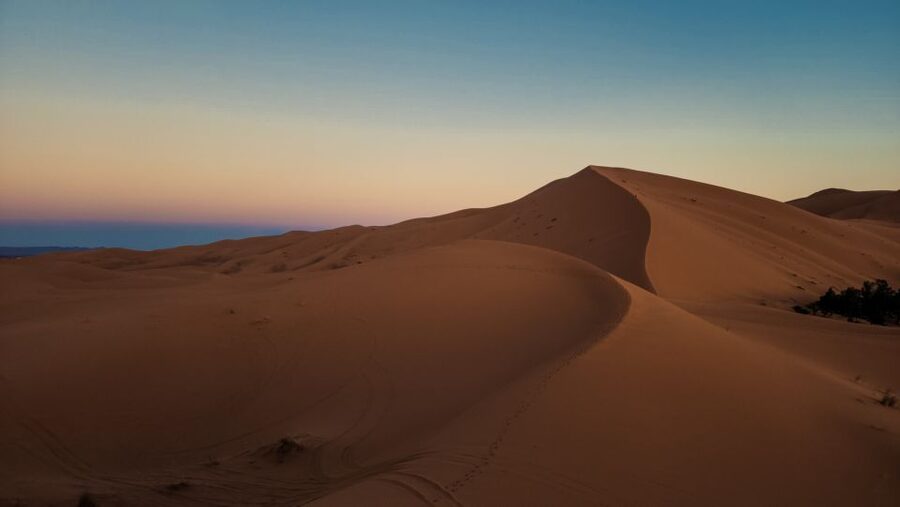
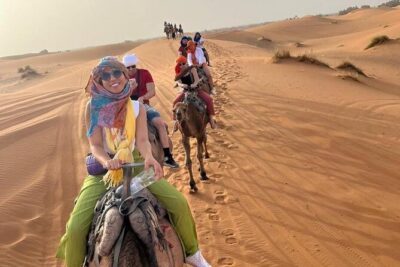
The goal is to reach Merzouga before sunset. That timing is important because the camel ride is not just transport. It is the moment when the day’s road trip changes into a desert experience.
Your luggage is carried separately by 4×4 to the camp. Take a small bag with sunscreen, water, a warm layer, and anything you need for the night. You do not want to search through a large suitcase after arriving at the dunes.
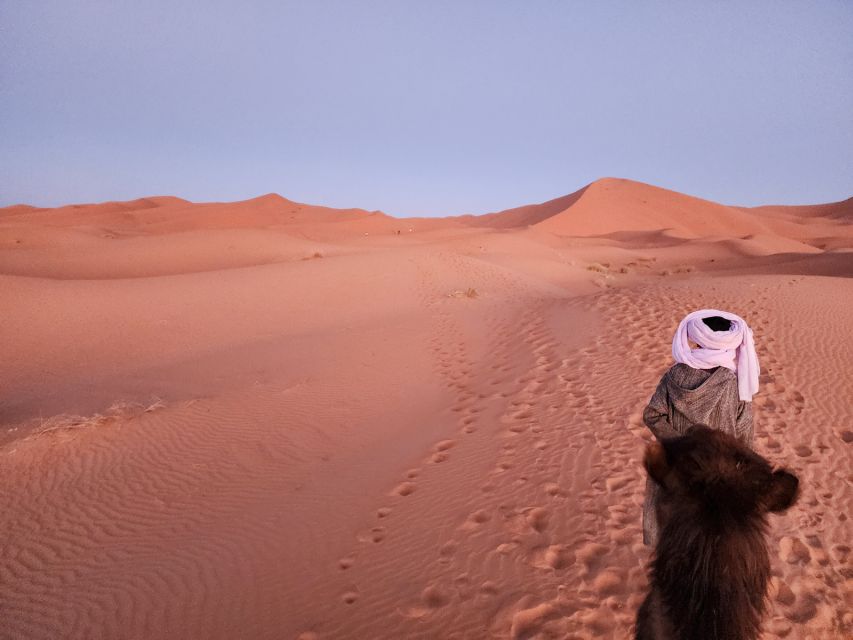
The camel ride crosses the Erg Chebbi sand dunes, with the sun dropping across the open sand. It is a memorable setting, but a camel saddle can be uncomfortable, especially for anyone unused to riding. Loose, comfortable clothing and closed shoes help. Hold on during climbs and descents, and tell the staff if you need help.
Sandboarding is included. The activity is simple and low-pressure, so you can try a run or just watch others. The optional quad ride gives you a faster way to experience the dunes. It costs €50 for one person or €60 for two people for a one-hour ride, paid separately at the camp.
If you choose the quad, ask about the timing so you do not miss the camel ride or sunset. The two activities offer very different moods. The camel moves slowly and quietly, while the ATV is noisy and energetic.
A night at the Berber desert camp
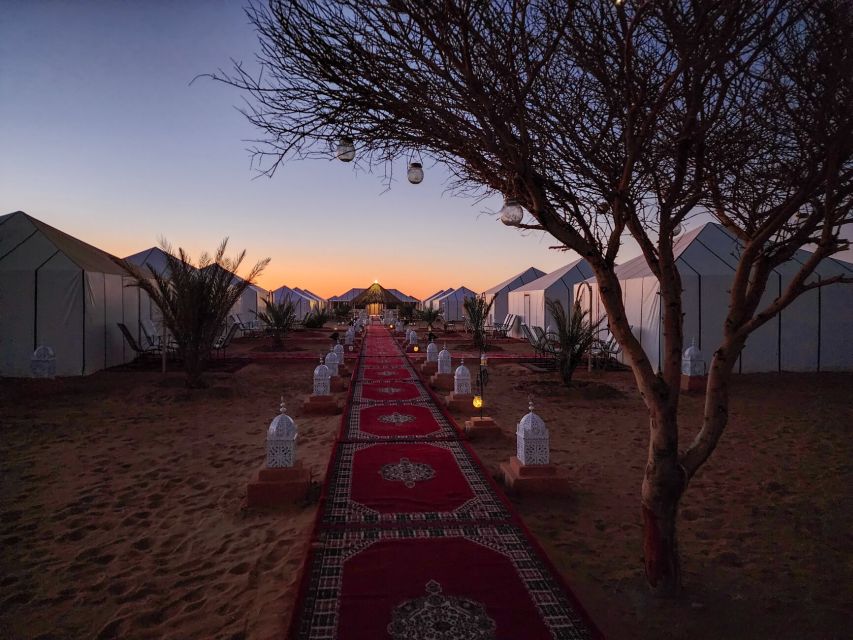
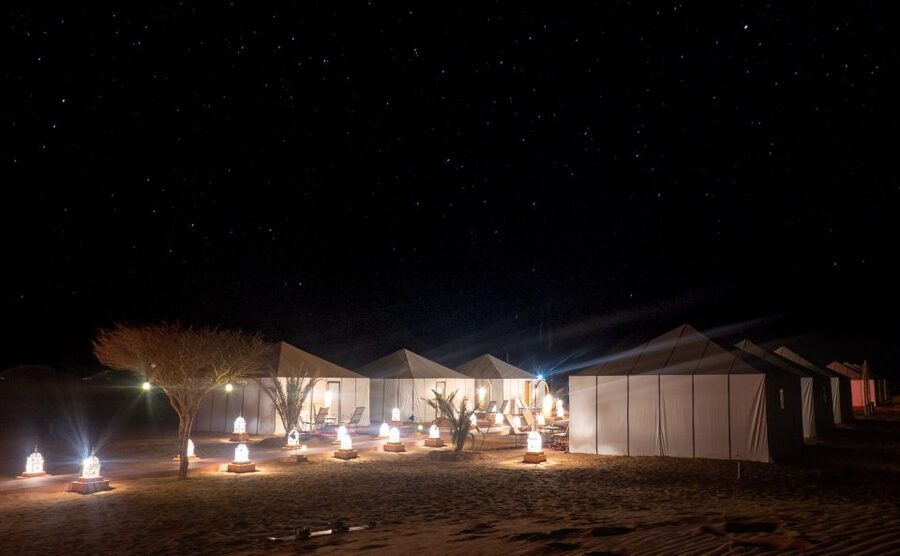
At camp, dinner is included, followed by Berber music and time outside under the desert sky. You can also try traditional Berber clothing and henna, depending on the camp’s evening program.
The standard camp includes an air-conditioned room or suite with a private bathroom according to the selected option, but actual tent facilities can vary by camp. The supplied details also describe shared showers and toilets at the shared camp, which may feel basic and busy when several groups arrive together. Check the exact camp level before paying if private facilities are important to you.
Do not expect air conditioning inside every tent. One departure specifically noted that the tents had no air conditioning, which is normal for a desert camp. The evening may cool down, while daytime heat can linger. Bring light sleepwear and a warmer layer for the night.
Breakfast follows the camp stay, then you return to Merzouga village by camel after sunrise. A 4×4 luggage service is included, so the camel ride can remain a short scenic journey rather than a pack-animal exercise.
The long return to Marrakech
Day three is the least relaxed part of the tour. You leave around 8 or 9 in the morning and drive back through the desert and across the Atlas region, reaching Marrakech around 8 or 9 at night.
The route passes through Rissani, Ouarzazate, and the changing scenery toward Marrakech. Acacia trees and open desert views gradually give way to mountain roads and more settled areas. The return is useful because you see the route from a different direction, but it is still a very long day.
Plan your final evening carefully. If you have an early flight the next morning, this return schedule could be tiring. I would add a night in Marrakech after the tour rather than booking a same-night airport connection.
Private tours can use an alternate route through Nkob, Tamnougalt, and Agdz. They can also add Telouat Kasbah, Ksar Taourirt, and more time in Tinghir. A private booking is worth considering if you want more control over photo stops, meals, or the return route.
What the $125 price really covers
At $125 per person, this tour offers strong value for a three-day desert trip. The price includes hotel or riad pickup and drop-off, air-conditioned transport, a driver-guide, WiFi, one hotel night, one desert camp night, two breakfasts, two dinners, camel rides, sandboarding, Berber music, and luggage transport.
The main extra costs are easy to overlook. Shared departures do not include lunches or drinks. Lunch stops are set along the route, and a buffet can cost about 120 Moroccan dirhams. Bring enough cash and budget for three lunches, drinks, snacks, and the optional Ait Ben Haddou guide.
The quad bike is another add-on. If you want to finish in Fes instead of Marrakech, the extra charge is €40 in cash. Private tours include a licensed Ait Ben Haddou guide and lunch each day, so their higher cost may make sense if you value convenience and more flexible sightseeing.
Vegetarian meals are available. Tell the operator in advance so meal planning is clear.
Who will enjoy this tour most
I would choose this tour if you have limited time in Morocco and want the major southern sights without arranging several separate transfers. It suits people who like a full schedule, changing scenery, and a mix of comfort and outdoor activity.
It is also a good fit for couples, friends, and solo visitors who enjoy shared experiences. The camp evening brings different groups together for music and dinner, though shared bathrooms and a busy camp can reduce privacy.
I would think twice if you dislike long drives, camel riding, early starts, or basic desert facilities. The tour covers a lot, but three days means some stops are brief. Families should consider the long third day and the comfort of children on camels and in the vehicle.
Bring comfortable shoes, sunscreen, comfortable clothes, and a small overnight bag. A scarf or hat is useful in the sun, and a warm layer helps after dark. The camp provides the main arrangements, but you will be happier with your own basic supplies.
Should you book the Marrakech to Merzouga trip?
I would book it for the combination of price, scenery, and included activities. Ait Ben Haddou, Todra Gorge, the camel ride, and a night at Erg Chebbi give you a genuine taste of southern Morocco in a short period.
Choose the standard shared option if you want the lowest price and do not mind fixed lunch stops, a shared vehicle, and basic camp facilities. Choose private travel if you want Telouat, Ksar Taourirt, the Nkob route, extra photo stops, or more control over your day.
The main question is not the desert. The desert portion is the highlight. The question is whether you are comfortable with the long drives needed to reach it. If the answer is yes, this is a practical and well-priced way to connect Marrakech with Merzouga.
FAQ
How long is the tour?
The experience lasts three days, beginning and ending in Marrakech unless you arrange the Fes option for an additional €40 in cash.
What time is pickup in Marrakech?
Pickup is generally between 7 and 8 in the morning. Provide your accommodation name and a working WhatsApp number so the pickup point can be arranged.
Is transportation air-conditioned?
Yes. The tour includes comfortable air-conditioned transportation.
Is Ait Ben Haddou entry or guiding included?
On shared departures, a local guide at Ait Ben Haddou is not included. You can join a group guide for about €2 per person. Private tours include a licensed guide.
Are lunches included?
Lunches are not included on shared departures. Private tours include lunch each day.
Are vegetarian meals available?
Yes. Vegetarian options are available.
What happens to my luggage during the camel ride?
Your luggage is carried to and from the desert camp by 4×4. You should keep a small overnight bag with items you need at camp.
Is sandboarding included?
Yes. Sandboarding is included as part of the desert camp experience.
How much does the quad bike cost?
The quad option costs €50 for one person or €60 for two people for a one-hour ride. It is paid separately at the camp.
Are drinks included?
No. Drinks and other beverages are not included, so bring cash for purchases along the route and at the accommodations.
Just listed out of Marrakesh
- Marrakech: Ouzoud Waterfalls Trip, Guide & Boat + Lunch★ 4.7 · 33 reviews
- Marrakech: Vibrant Dinner Show at The Lotus Club★ 3.9 · 33 reviews
- From Marrakech: Small Group To Essaouira & Medina Day Trip★ 4.3 · 33 reviews
- From Marrakech: 3-Day Merzouga and Sahara Desert Tour★ 4.5 · 33 reviews
- Marrakech: Private Souks Tour with Tea and Traditional Snack★ 4.6 · 33 reviews
- Marrakech: Medina Souks, Hidden Markets and Shopping Tour★ 4.8 · 33 reviews
- 2 Days Desert Agafay and Atlas Mountains Trek From Marrakech★ 3.8 · 33 reviews
- Agadir/Taghazout : Marrakech Guided Tour old Medina & Souks★ 3.7 · 34 reviews
Sahara Desert Tours, compared.


3 Days Desert Tour From Marrakech To Merzouga Dunes & Camel Trek
Read our review →
3-Day Marrakech to Fes Sahara Desert Tour via Merzouga
Read our review →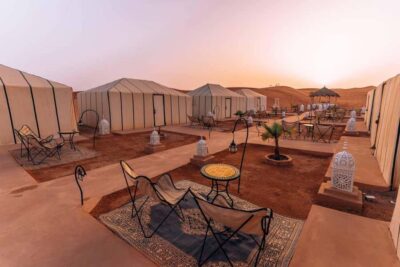
3-Day Merzouga Desert Experience Camel & Meals
Read our review →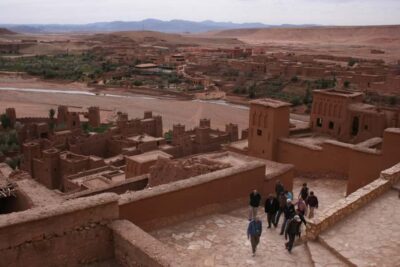
3-Day Tour to Merzouga Erg Chebbi with Food & Camel Trek
Read our review →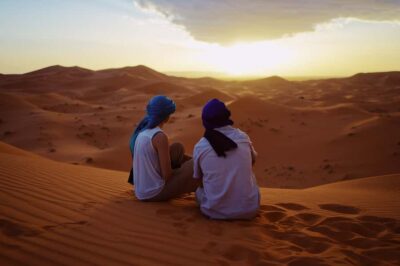
Sahara Desert 2-Day Tour with Merzouga Camp Stay
Read our review →Browse the lists this tour appears in