
Reviewed · ESSAOUIRA TOURS
Traditional Moroccan Cooking Class
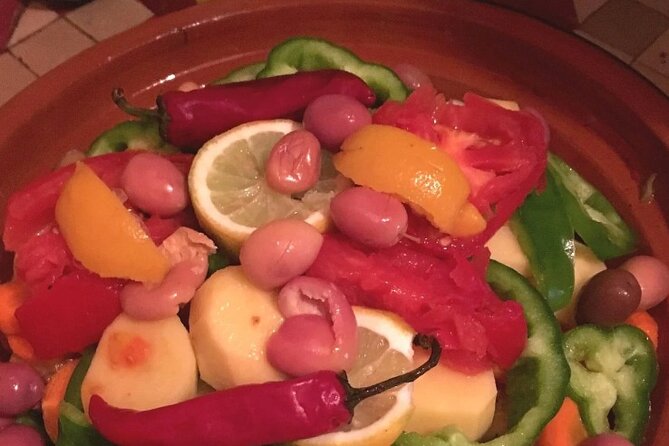
Essaouira’s best food lesson may begin before you reach the kitchen. With Fatima, you head into the local markets to choose vegetables, spices, fish, or meat, then return to her home to prepare a Moroccan meal together. I like the market stop because it shows you how food is bought here, and I like the home setting because the experience feels personal rather than staged.
The price is $39 per person, a fair deal for about four hours of shopping, cooking, and eating. Fatima’s warm welcome, patience, and practical advice are the main attractions. Just know that this may be more of a shared meal with guided preparation than a formal cooking school, especially if you want every step to be hands-on.
Key points to know before booking
- Market shopping comes first: Meet at Parking Bab Marrakech at 9:30 am and help choose the ingredients for the meal.
- Fatima hosts in her home: Mint tea, conversation, and family recipes make this feel more like a local invitation than a restaurant class.
- You may cook tagine, couscous, bread, soup, or zaalouk: The exact dishes can vary, and some meals include fresh sardines or aubergine salad.
- Pastilla is not included: It takes too long to prepare for this experience.
- The meal is part of the lesson: You prepare the food, then sit down to eat it with Berber mint tea.
- It is a private activity: Only your own group participates, although the cooking itself can be shared with other people in the home depending on the booking.
Why the market visit is half the experience
Many cooking classes begin with neatly measured ingredients waiting on a counter. This one starts at Place Bab Marrakech, where you meet Fatima before heading into the markets of Essaouira.
That first step matters. Moroccan cooking depends on the quality and balance of its ingredients, and shopping with a local cook gives you a better sense of how the meal comes together. You may help choose vegetables, spices, fish, meat, or other items for the day’s dishes. One account describes selecting a bird and watching spices being ground for the meal, while another highlights shopping at a Sunday market that opens only once a week.
The exact market route can depend on the day. That is useful to know if you are hoping for one fixed market tour with a scripted explanation. You are getting a real shopping trip instead, with Fatima selecting what is fresh and suitable for cooking.
I especially like this part for visitors who want more than a recipe. You can see the ingredients before they are cleaned, chopped, and seasoned. You can ask why one spice is chosen over another, how to judge quality, and what makes a good tagine ingredient. The information is practical because it leads straight to lunch.
The market also adds some unpredictability. Shopping may take longer than expected, and the experience is not built around a polished demonstration at every stall. If you prefer a quiet classroom with everything prepared in advance, this may feel informal. If you enjoy seeing the ordinary business of buying food, it is one of the strongest parts of the morning.
More cooking classes out of Essaouira:
- l’Atelier – Moroccan Cooking Workshop in Essaouira
★ 5.0 · 110 reviews - Essaouira: Traditional Family Style Moroccan Cooking Class
★ 5.0 · 58 reviews - Traditional Moroccan and Berber cooking classes
★ 5.0 · 40 reviews
Entering Fatima’s kitchen in Essaouira
After shopping, you go to Fatima’s home. She welcomes you with Moroccan mint tea, then the cooking begins. The home setting is important: you are not simply watching a chef perform in a commercial kitchen. You are learning recipes Fatima says she learned from her grandmother, in the place where she normally cooks.
That gives the class its character. Fatima is repeatedly described as friendly, patient, attentive, and encouraging. Her husband may also be present, and the atmosphere can include conversation with other people taking part. You have room to ask questions about ingredients, methods, and Moroccan food traditions without the feel of a large group demonstration.
The strongest praise is aimed at Fatima herself. She is the reason this activity works. Her style appears to be warm and hands-on, but not rigid. You are guided through the dishes rather than pushed through a strict timetable.
That flexibility is useful if you have a food preference or a particular dish in mind. One account says the group could choose what to cook, while other meals included vegetable tagine, fresh sardine tagine, couscous, bread, and zaalouk. You should confirm the day’s menu with Fatima if one dish matters to you.
The tradeoff is that the level of participation may vary. One person felt the activity was mainly a meal with some vegetable preparation and explanation, rather than a full cooking class. That is a fair caution. You may be chopping and preparing ingredients while Fatima handles some of the more skilled or time-sensitive work.
Cooking tagine, couscous, and Moroccan side dishes
The main lesson centers on familiar Moroccan staples. Fatima can show you how to prepare a tagine and couscous step by step, along with dishes such as Harira soup, Moroccan bread, and zaalouk, a cooked aubergine salad.
Tagine is not just a recipe. It is also a way of cooking, and Fatima explains how to use the traditional pot properly. The ingredients are arranged and seasoned so they cook slowly and develop flavor. A lesson in technique can help you avoid one of the common problems with home versions: adding too much liquid or rushing the cooking.
Couscous provides a different lesson. The description specifically promises a step-by-step explanation, and the recipes are connected to Fatima’s grandmother. If you cook couscous at home, pay close attention to how Fatima handles the grain, seasons it, and combines it with the other ingredients.
The menu is not fixed in the same way a restaurant menu is fixed. It can reflect what is available in the market and what your group wants to prepare. Fresh sardine tagine is one possibility, which makes particular sense in a coastal city such as Essaouira, though you should not assume sardines will be on every menu.
Zaalouk and aubergine salad are good additions to the meal because they show another side of Moroccan cooking. Tagine gets most of the attention, but side dishes teach you about vegetables, seasoning, and the balance between cooked and fresh textures.
Moroccan bread may also be prepared during the session. Bread adds another practical skill, though the available information does not promise a particular bread recipe every time. The same applies to Harira, a traditional Moroccan soup. These are listed as dishes Fatima teaches, but the final selection can vary.
Pastilla is specifically excluded because it takes too much time. That is not a flaw, but it is worth knowing before you book. If pastilla is the dish you most want to learn, choose another class. This experience focuses on dishes that can fit into its roughly four-hour schedule.
What the meal and tea add to the lesson
When the cooking is finished, you eat what you have made. This is not a quick taste at the end. Sharing the food is part of the experience, and it lets you judge how the ingredients, spices, and cooking method worked together.
The meal can include tagine, couscous, bread, salad, or other dishes prepared during the session. One account describes tagine and aubergine salad served together, while another mentions vegetable tagine and zaalouk. The food is repeatedly described as flavorful and delicious, but your main benefit is that you can ask questions while eating.
Fatima serves Moroccan mint tea, including Berber mint tea, and may offer biscuits as well. The tea gives the day a slower finish. It also turns the class into a social visit rather than a simple transaction: you cook, sit down, talk, and enjoy the result.
This is where the home setting has its greatest value. You get a glimpse of everyday hospitality in Essaouira, not just a lesson designed for tourists. The experience can feel relaxed and generous, though it may also run at a gentle pace. If you need to reach another activity immediately afterward, leave extra time.
A few other Essaouira days worth comparing
- Essaouira: Surf Lessons
★ 4.9 · 412 reviews - Kitesurfing Lessons in Essaouira Beach
★ 5.0 · 206 reviews - Surf Lesson in Essaouira
★ 5.0 · 179 reviews - Group Kitesurfing lesson with a Local in Essaouira Morocco
★ 5.0 · 175 reviews
A four-hour schedule that starts at 9:30 am
The meeting time is 9:30 am, and the experience lasts about four hours. The stated meeting point is Parking Bab Marrakech, Place Bab Marrakech, in Essaouira. The activity ends back at the meeting point.
The schedule generally follows this pattern:
- Meet Fatima at Bab Marrakech.
- Shop for fresh ingredients in local markets.
- Travel to Fatima’s home.
- Drink mint tea and discuss the cooking.
- Prepare one or more Moroccan dishes.
- Sit down to eat the meal together.
- Return to the meeting point.
The timing is long enough for the market and meal to feel connected. It is not a short demonstration squeezed into an hour. You have time to ask questions and take part, but you also need to accept that shopping and cooking may not follow the minute-by-minute pace of a professional kitchen.
The activity is listed as private, so only your own group is meant to participate. Some descriptions refer to joining other people at Fatima’s home, so the social arrangement may depend on how the booking is organized. The practical point is that this is not a large bus tour or a crowded class.
The meeting point is near public transportation. One account also describes taking a small taxi to the market, and another says Fatima helped with pickup. Since the official meeting point is Bab Marrakech, use the confirmed instructions you receive after booking rather than assuming hotel pickup is included.
Is $39 a good value?
At $39 per person, this is a strong value if you want three things in one outing: local market shopping, a home-cooked meal, and basic Moroccan cooking instruction.
A four-hour experience at this price gives you much more than a restaurant meal. You are paying for Fatima’s time, the market visit, ingredients, preparation, and food. You also leave with recipes and techniques you can use at home. One person specifically noted taking recipes home to make later.
The value is less clear if your priority is a formal, intensive class. You may not prepare every part of every dish yourself. Fatima appears to take the lead with some steps, and one person felt the activity was closer to a meal with preparation than a structured lesson.
Think of it as a home cooking experience with instruction, rather than culinary training. That is a worthwhile distinction. You are paying for access to a local cook and her kitchen, not for a professional certificate or a highly polished cooking studio.
The 99 percent recommendation rate and 4.9 rating from 81 reviews point to a consistently well-liked activity, with Fatima’s hospitality receiving the clearest praise. Still, the lower-scoring account is useful because it identifies the main risk: the amount of hands-on cooking may not satisfy someone expecting to make every dish from start to finish.
Who will enjoy this Essaouira cooking class?
I would choose this experience if you:
- Want to learn Moroccan food through a local home rather than a restaurant.
- Enjoy markets and want to see how ingredients are chosen.
- Like relaxed conversation and shared meals.
- Want to learn tagine, couscous, bread, Harira, or zaalouk.
- Are happy for the menu to depend partly on fresh market ingredients.
- Prefer a private, small-scale activity over a large group class.
- Want recipes you can try after returning home.
It is also a good choice for first-time visitors to Essaouira who want a break from simply walking the medina. The activity gives you a reason to visit the market and a better understanding of the food you will see across Morocco.
I would hesitate if you need a guaranteed dish, especially pastilla, or if you want a strict lesson in which you personally complete every technique. I would also ask about the menu in advance if you have dietary restrictions, since the supplied information does not explain how special diets are handled.
The experience is suitable for all participants according to the provided details, but the cooking takes place in a private home. That means the layout and equipment are likely more personal and informal than those in a purpose-built cooking school. You should be comfortable with that style.
Booking details worth keeping in mind
Confirmation is provided at booking, and the experience uses a mobile ticket. You can cancel for a full refund if you do so at least 24 hours before the 9:30 am start time. Changes or cancellations made within 24 hours are not accepted for a refund.
The experience requires a minimum number of participants. If that minimum is not met and the activity is canceled, you are offered another date or experience, or a full refund.
Because the class is run by Cooking With Chef Fatima, communication matters. Confirm the meeting point, pickup arrangement, expected menu, and any food needs before the day. The listed meeting point is Parking Bab Marrakech, even though individual arrangements may sometimes be made.
Should you book Traditional Moroccan Cooking Class?
Book it if you want a friendly, personal introduction to Essaouira through food. The market visit, Fatima’s family recipes, home setting, and shared meal make this more than a standard recipe demonstration. At $39, it offers a lot of contact with local life for a half-day.
Just set the right expectation. This is a relaxed home cooking experience, not a formal culinary course. You may prepare some ingredients while Fatima leads other steps. If that sounds like your kind of afternoon, it is an easy choice. If you want a precise menu and full control of every technique, ask questions before booking or seek a more structured class.
FAQ
Where does the cooking experience start?
It starts at Parking Bab Marrakech, Place Bab Marrakech, Essaouira 44000, Morocco.
What time does the activity start?
The start time is 9:30 am.
How long does the experience last?
It lasts approximately four hours.
Where does the activity finish?
The activity ends back at the meeting point.
What dishes might I learn to cook?
Possible dishes include tagines, couscous, Harira soup, Moroccan bread, and zaalouk. The menu may vary, and some sessions include aubergine salad or fresh sardine tagine.
Is pastilla included?
No. Pastilla is not included because it takes too long to prepare within the experience.
Is the market visit included?
Yes. You meet Fatima and shop for fresh ingredients in Essaouira’s local markets before going to her home to cook.
Is the activity private?
Yes. It is described as a private tour or activity, with only your own group participating.
Is the experience near public transportation?
Yes. The meeting point is near public transportation.
Can I cancel for a full refund?
Yes. You can receive a full refund if you cancel at least 24 hours before the experience start time. Cancellations or changes made less than 24 hours before the start are not refunded.
Just listed out of Essaouira
- The Sunday Market in Had Draa & Local Food Tasting.★ 5.0 · 33 reviews
- Horse riding on the beach of Essaouira 2 hours★ 5.0 · 34 reviews
- Explore Essaouira’s Secrets: A Guided Tour with a Local!★ 4.7 · 37 reviews
- Essaouira 1 hour discovery ride on the back of a camel★ 5.0 · 37 reviews
- Individual kitesurfing lessons in Essaouira★ 5.0 · 38 reviews
- 2 hours horse ride beach and dunes in Essaouira Morocco★ 4.5 · 38 reviews
- Private Kitesurf Lesson in Essaouira Morocco★ 5.0 · 38 reviews
- Essaouira: Area Highlights Guided E-Bike Tour★ 4.9 · 39 reviews
Essaouira Tours, compared.




Essaouira Activities: Discover Essaouira by Quad
Read our review →

Browse the lists this tour appears in