
Reviewed · MARRAKECH TOURS
Shared 4 Hours Cooking Class in Marrakesh
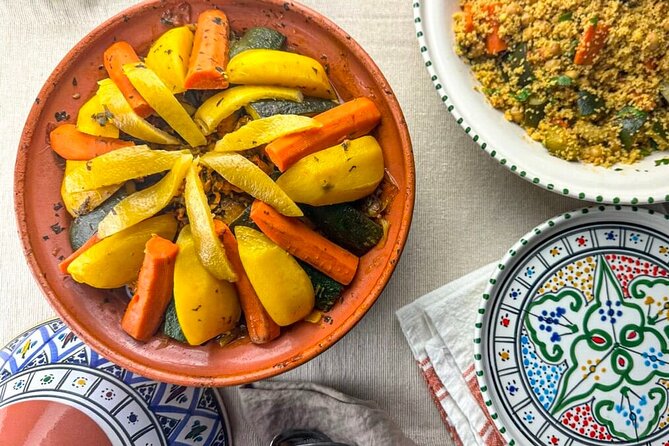
Moroccan cooking feels most meaningful when you learn it in a family home, not from a demonstration behind a restaurant counter. Here, Zohra and her daughter Fatim Zahra guide you through bread, mint tea, salads, and a slow-cooked tagine in a personal setting that connects food with everyday Moroccan life.
I like the hands-on work, especially kneading bread and learning the mint-tea ritual. I also like the choice of main dish, from chicken with preserved lemon and olives to lamb with prunes and almonds. The main consideration is simple: this is a shared class, and the home setting may feel more informal and less polished than a professional cooking school.
Key Points
- Cook in a Moroccan family home: Zohra leads the class, with Fatim Zahra helping create a friendly English and French-speaking experience.
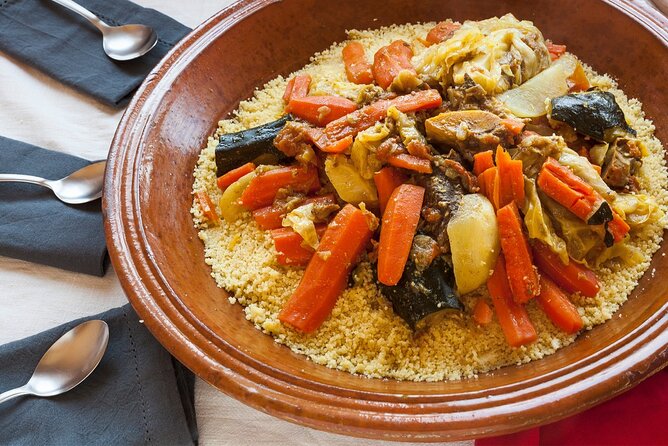
- Make a full Moroccan meal: Prepare bread, mint tea, salads such as zaalouk and taktouka, plus a tagine or couscous.
- Choose your main ingredient: The class may feature chicken, lamb, beef, fish, or a vegetarian preparation.
- Share lunch at the family table: Your four-hour session ends with the food you helped prepare.
- Keep the group small: A maximum of 10 people allows for more direct participation than a large demonstration.
- Plan for practical flexibility: Pickup is offered, the activity returns to its starting point, and cancellation is free up to 24 hours ahead.
Cooking Moroccan Food in a Real Marrakech Home
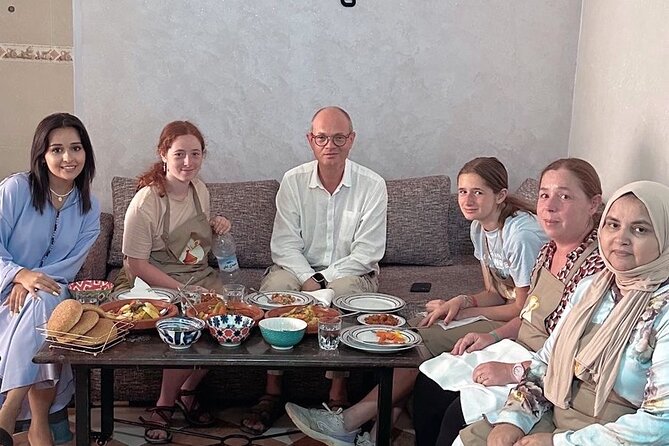
The heart of this Marrakech cooking class is the setting. You are welcomed into a Moroccan home, where the kitchen and dining table give the experience a more personal feel than a standard restaurant lesson.
Zohra takes the lead in the cooking, while Fatim Zahra helps with the conversation and keeps the session moving. The pair make a useful team: Zohra brings the family recipes and traditional methods, while her daughter adds a younger, lively presence and helps in English or French.
You should expect a friendly, relaxed class rather than a formal culinary course. The focus is on learning food you can recognize and perhaps recreate at home. You are not simply watching someone prepare a tagine. You handle ingredients, mix spices, shape bread, and take part in the work from start to finish.
The maximum group size is 10. That is small enough to make hands-on participation realistic, though the experience will feel different for a couple of two than for a full group. If you want a private lesson with every minute centered on your own questions, this may not be the right format. If you enjoy cooking beside other people, the shared setup should work well.
More Cooking Classes in Marrakech
- Marrakech: Moroccan Cooking Class with Pickup
★ 4.6 · 1,862 reviews - Marrakech: Traditional Moroccan Cooking Class & Market Visit
★ 4.8 · 1,861 reviews - Marrakesh: Moroccan Dishes Cooking Class with a Local Chef
★ 5.0 · 1,615 reviews
Bread First, Then the Moroccan Tea Ritual
Traditional Moroccan bread is one of the most useful parts of the class. Bread is not an afterthought here. It is part of the meal and an important tool for enjoying sauces and salads.
You learn to mix and knead the dough, then prepare it for baking. Several accounts of the experience describe working with hands and baking bread in a clay oven. That detail gives the lesson a strong sense of place, since the bread is tied to the equipment and habits of a real household.
Bread making also gives you a good early task. You can work with the dough while other dishes cook, and the process helps you understand the simple foundation beneath a Moroccan meal. Do not expect a bakery-style technical lesson with exact professional measurements. The value is in learning a family method and seeing how bread fits into daily dining.
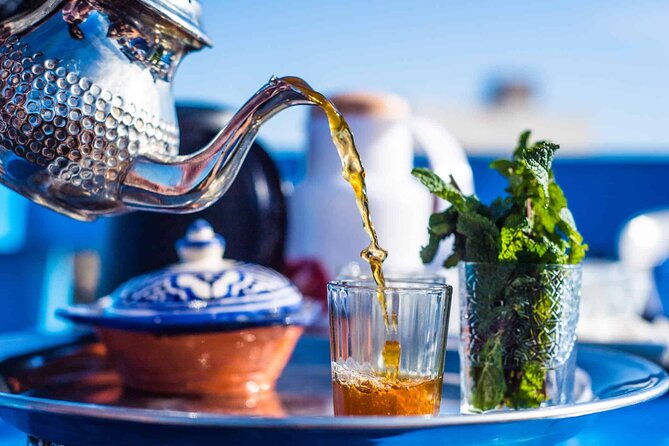
Mint tea is another central part of the session. You learn how to prepare Morocco’s famous sweet tea and why it matters in Moroccan hospitality. The ritual is as important as the drink itself. Tea welcomes people, creates time for conversation, and often begins or closes a social visit.
I would pay close attention here, even if you think you already know Moroccan mint tea. The pouring style, balance of sweetness, and use of fresh mint can vary from home to home. It is a small part of the class, but it helps explain how food and welcome are connected.
Salads That Bring Smoke, Heat, and Freshness
The salads offer a change of pace from the tagine. They are not just decorative side dishes. Together, they provide smoky, spicy, cool, and fresh flavors before the main course.
You may prepare zaalouk, a cooked eggplant salad with a smoky quality. Taktouka combines peppers and tomatoes, bringing a sharper, more savory note. A Moroccan tomato salad adds freshness and balance.
This part of the class is useful because it shows how a Moroccan meal is built. You are not relying on one large pot for everything. Several small dishes arrive at the table, each with a different texture and seasoning.
The salads also suit people who want practical recipes. A tagine takes time and depends on slow cooking, but these vegetable dishes can fit more easily into a home kitchen. Watch how the vegetables are softened, seasoned, and combined. The methods may be straightforward, but the balance of spices and acidity is where the character comes from.
If you dislike eggplant, peppers, or tomatoes, ask about the available choices before booking or at the start of the class. The advertised menu includes several salads, but the exact combination may depend on the day’s meal.
Choosing a Tagine or Couscous Main Course
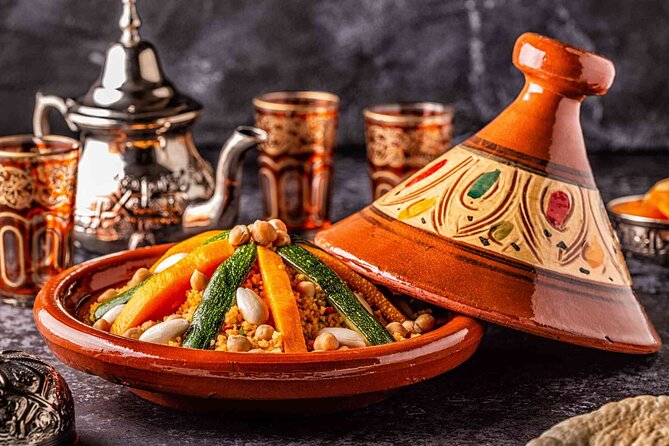
The tagine is the main event. You may prepare chicken, lamb, beef, or fish, and the experience may also include couscous. The choice makes the class more appealing to different diets and tastes, though the provided details do not promise that every option is available at every session.
The teaching centers on the slow-cooked style that gives tagine its familiar tenderness and concentrated sauce. You learn how Moroccan spices work with the main ingredient rather than simply sprinkling spice into a pot.
Chicken with preserved lemon and green olives is one likely combination. It is a classic pairing, with salty olives and sharp preserved lemon cutting through the mild meat. Lamb may come with prunes and toasted almonds, creating a sweet and savory dish. Other preparations described include beef with artichokes and peas, fish with tomatoes, garlic, and green peppers, and turkey with cinnamon and dried fruit.
Vegetarian cooking is also represented by vegetable tagine with saffron and preserved lemon. This is important if you do not eat meat, although you should confirm your preferred dish in advance because the experience description lists meat and fish choices more directly than a guaranteed vegetarian menu.
The recipes are family preparations, not a restaurant menu designed for mass production. That means the class can teach you the logic of Moroccan cooking: build flavor with onions and spices, add the main ingredients, and let time do much of the work.
The tradeoff is that you may not get a long, technical explanation of every spice. This is a four-hour shared class, and much of the time goes into preparing several dishes and eating lunch. You will leave with a better feel for Moroccan cooking, but not necessarily a chef’s certificate or a rigid recipe book.
More cooking classes out of Marrakech:
- Moroccan Cooking Class & Marrakech Market Visit with Chef Khmisa
★ 5.0 · 1,504 reviews - Half-Day Cooking Class with Local Chef Laila in Marrakech
★ 5.0 · 952 reviews - Marrakech: Moroccan Cooking Class with a Local Family
★ 4.9 · 668 reviews - Marrakech: Moroccan Cuisine Cooking Class in Local Home
★ 4.8 · 508 reviews
Lunch at the Table Makes the Lesson Matter
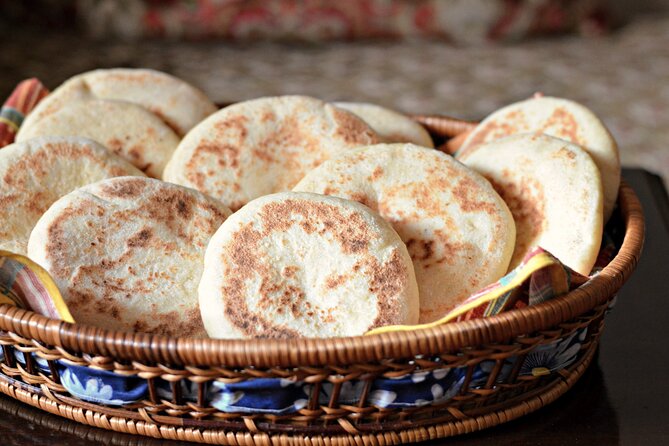
After the cooking, you sit down and eat the meal you helped make. This is more than a convenient inclusion. It gives the class a natural finish and lets you taste the effect of each step while the process is still fresh.
The meal may include bread, salads, mint tea, and the tagine or couscous preparation. Eating together also shows how Moroccan food is served in a home setting, where several dishes are shared rather than plated as separate restaurant courses.
I like this format because it turns the class into a complete half-day activity. You learn, work, talk, and eat without having to arrange a separate lunch afterward. It is especially useful on a day when you want a break from sightseeing but still want to experience Marrakech through its food.
The home setting can also make the meal feel more intimate. Zohra and Fatim Zahra are not presented as anonymous instructors. Their family takes part in the welcome and conversation, and the experience can include stories, laughter, and introductions to ordinary home life.
Still, keep your expectations realistic. A family home is not a hotel dining room. The space may be simple, the pace may change, and the session may depend on the rhythm of household cooking. That informality is part of the appeal, but it will not suit someone seeking a highly polished luxury experience.
Why This Class Costs $81.30
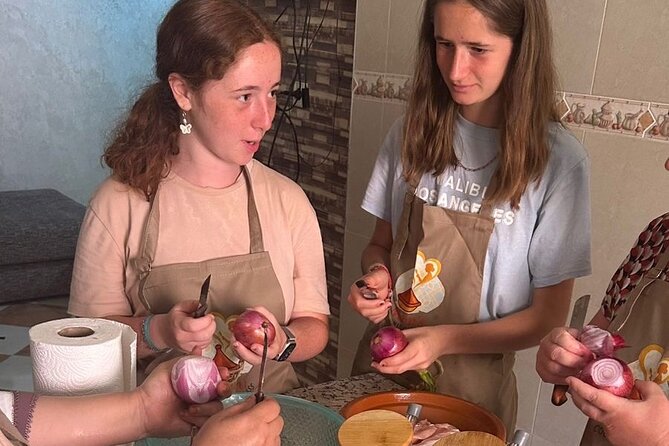
At $81.30 per person, this is not the cheapest meal in Marrakech. You are paying for more than lunch, though. The price covers about four hours of instruction, the ingredients, the meal, an air-conditioned vehicle, and an English and French guide.
The strongest value comes from the access. A restaurant meal can introduce you to Moroccan flavors, but it will not usually show you how bread is kneaded, how mint tea is prepared, or how a family builds a tagine from basic ingredients.
The price makes better sense if you take part fully. If you stand back and treat the class as a meal with a little demonstration, you may find it expensive. If you enjoy cooking and cultural exchange, four hours of personal instruction and lunch in a family setting can justify the cost.
This class is booked an average of 19 days ahead, so it is sensible to reserve early, especially if you need a particular date. The maximum of 10 people keeps the group manageable, but popular dates may fill before your arrival.
Pickup, Timing, and What to Plan For
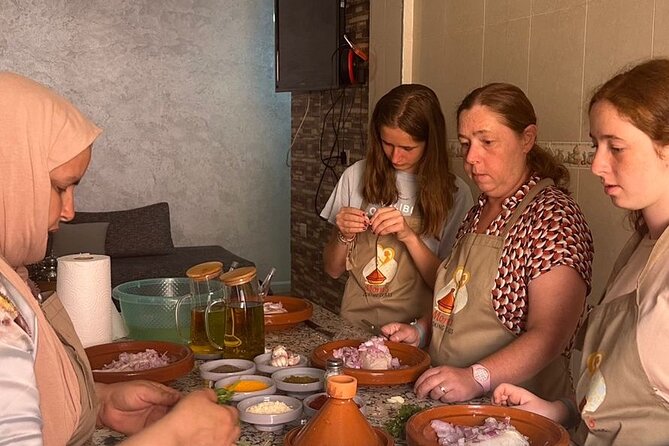
The activity lasts approximately four hours and begins in Marrakech. Pickup is offered, and the experience ends back at the meeting point. The included air-conditioned vehicle matters in Marrakech, particularly if you are staying away from the home or prefer not to deal with local transport before a cooking session.
The meeting details supplied for this experience are general rather than highly specific. Confirm the pickup point and start time when you book. You receive confirmation at the time of booking, and the activity is near public transportation if you prefer to make your own way there.
Wear clothes that can handle flour, oil, and cooking splashes. The class is practical, so comfortable clothing is more useful than anything formal. Since the menu can include chicken, lamb, beef, fish, or vegetarian dishes, tell the provider about food restrictions or preferences before the class rather than waiting until ingredients are being prepared.
Tips are not included. You can tip at your discretion if you feel the hosts and guide gave you a good experience.
Free cancellation is available when you cancel at least 24 hours before the start time. Changes or cancellations inside that window are not accepted for a refund, and the cutoff uses local Marrakech time.
Who Will Get the Most From This Marrakech Cooking Class
I would choose this experience if you want a direct connection with Moroccan food and do not mind stepping into a private family setting. It suits couples, solo visitors, and small groups who like conversation as much as cooking.
It is also a good choice for families who want an activity beyond markets and monuments, provided everyone is comfortable taking part in kitchen work. The menu offers enough range to appeal to meat eaters, fish eaters, and people interested in vegetables, though exact choices should be checked ahead.
Food lovers will appreciate the chance to learn dishes they may already have eaten around Morocco. The class gives context to preserved lemon, olives, saffron, mint, eggplant, peppers, and slow cooking.
I would be more cautious if you need a private, highly structured lesson, guaranteed access to one exact dish, or a professional kitchen with specialized equipment. The class is about Moroccan home cooking and hospitality. Its strengths come from that setting, and its limits come from it too.
Should You Book This Cooking Class?
Book it if you want to spend a half-day with a Moroccan family, cook a complete meal, and learn recipes through your hands rather than from a printed menu. Zohra’s cooking and Fatim Zahra’s warm assistance give the experience a personal center, while the small group keeps it from feeling like a large tour demonstration.
The best reasons to choose it are the clay-oven bread, the mint-tea ritual, the choice of tagine ingredients, and the chance to eat what you prepare. At $81.30, it is good value for someone who sees lunch as only one part of a wider cultural experience.
Skip it if your priority is the lowest possible food cost or a formal culinary qualification. For a genuine taste of Moroccan home life, though, this is one of the more memorable ways to spend four hours in Marrakech.
FAQ
How long does the cooking class last?
The class lasts approximately four hours.
Where does the experience take place?
The activity takes place in Marrakech, Morocco, in a Moroccan family home.
Is pickup offered?
Yes. Pickup is offered, and an air-conditioned vehicle is included.
Where does the activity end?
The experience ends back at the meeting point.
What languages does the guide speak?
The included guide speaks English and French.
How many people can join the class?
The maximum group size is 10 people.
What food do you prepare?
You prepare traditional Moroccan bread, mint tea, salads, and a tagine or couscous dish.
What main ingredients can be used in the tagine?
The available main ingredients may include chicken, lamb, beef, or fish. Vegetarian preparations are also described, including vegetable tagine.
Is lunch included?
Yes. Lunch is included, consisting of the food prepared during the class.
Are tips included in the price?
No. Tips are not included and are left to your discretion.
Can I cancel for a full refund?
Yes, if you cancel at least 24 hours before the experience start time. Cancellations or changes made less than 24 hours ahead are not accepted for a refund.
More Workshops in Marrakech
- Marrakech: Pottery Workshop with Moroccan Tea
★ 4.8 · 756 reviews - Marrakech: Moroccan Cooking Workshop at La Maison Arabe
★ 5.0 · 446 reviews - Marrakesh cooking class with chef Hassan – Local dishes
★ 5.0 · 425 reviews - Marrakech: Tajine Cooking Class in a Traditional Riad
★ 4.8 · 424 reviews
Just listed out of Marrakech
- Marrakech: Ouzoud Waterfalls Trip, Guide & Boat + Lunch★ 4.7 · 33 reviews
- From Marrakech: Ourika Valley Trip, Waterfall Hike & Lunch★ 4.4 · 33 reviews
- Magical Dinner show and Quad bike In Agafay Desert Marrakech★ 4.5 · 33 reviews
- Marrakech: Quad excursion to the palm grove and Jbilets desert★ 4.5 · 33 reviews
- Moroccan Hands on traditional pastries & Tea class in Marrakech★ 4.5 · 33 reviews
- Marrakech: Vibrant Dinner Show at The Lotus Club★ 3.9 · 33 reviews
- From Marrakech: Small Group To Essaouira & Medina Day Trip★ 4.3 · 33 reviews
- From Marrakech: 3-Day Merzouga and Sahara Desert Tour★ 4.5 · 33 reviews
Marrakech Tours, compared.

Agafay Desert Sunset, Camel Ride, and Dinner Show
Read our review →

Agafay Desert Quad & Camel Rides with Dinner Show
Read our review →
Agafay Desert Quad Biking Tour with Dinner-Show
Read our review →
Atlas Mountains, Ourika Valley, Waterfall & Lunch
Read our review →


Quad Bike Tour to Palm Oasis and Jbilat Desert
Read our review →Browse the lists this tour appears in