
Reviewed · MARRAKECH TOURS
Organic Moroccan Cooking Class At Secret Berber Garden CT
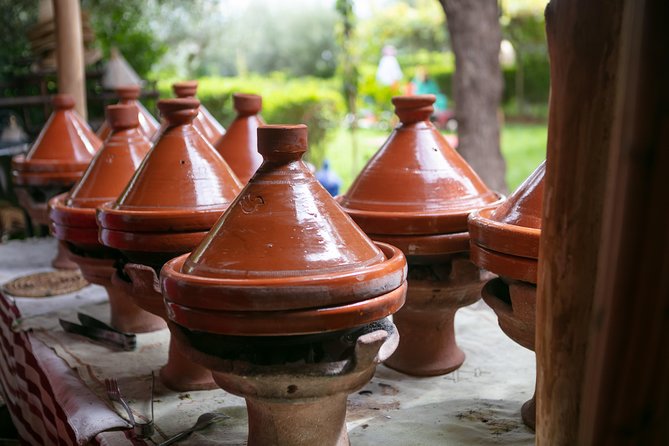
Moroccan cooking makes the most sense when you can touch the ingredients, smell the spices, and watch a tagine cook slowly over heat. This private class takes you from Marrakech to a peaceful organic farm, where you collect produce from the garden and prepare a full meal with Chef Tarik and his team. I like the farm-to-table setting and the personal instruction, which makes the class useful even if you rarely cook.
I also like that the meal is not limited to one showpiece dish. You may work on breads, salads, couscous, tagines, and mint tea, with tips on Moroccan kitchen habits along the way. The main consideration is the drive: depending on your pickup point and route, the countryside transfer can take about an hour, so this is a half-day outing rather than a quick activity in Marrakech.
Key points at a glance
- Collect produce from the organic garden: Your cooking begins outdoors, with ingredients gathered on site rather than simply laid out in a classroom.
- Learn several Moroccan staples: The menu can include bread, chicken or lamb tagine, couscous, salads, and mint tea.
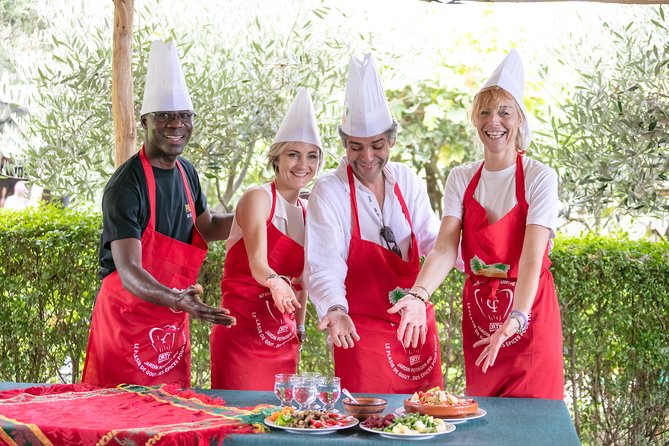
- Work with Chef Tarik’s team: Chef Siham, Chef Youssef, Rokaya, and other instructors are named in the tour material and may be part of the teaching team.
- Eat the food you prepare: Lunch and nonalcoholic beverages are included, giving the class a proper meal at the end.
- Ride from your hotel or riad: Round-trip transport is included for selected hotels, a useful feature when the farm is outside the city.
- Finish with a symbolic certificate: You receive a small keepsake marking your cooking session.
Why this Moroccan cooking class feels different
Many Marrakech cooking classes take place in a city kitchen or a riad courtyard. This one moves the lesson into the countryside, where the garden is part of the teaching. You are not only shown a recipe. You are introduced to the ingredients before they reach the cutting board.
That matters in Moroccan cooking. Herbs, vegetables, spices, bread, and slow-cooked dishes are tied to daily routines and family meals. At the organic farm, the setting helps explain why freshness and simple preparation count for so much. You may pick vegetables yourself, then see how they become part of the meal.
I especially like the practical nature of the class. The teaching is designed for beginners, but it does not sound stripped down for tourists. The chef guides you through each stage, offering small tricks about seasoning, texture, timing, and preparation. Those details are often more useful than a printed recipe.
The class is private, so only your group participates. That gives the instructors room to adjust their help to your pace. If you need extra time with shaping bread or understanding a spice blend, you are not competing with a large room full of students.
More Cooking Classes in Marrakech
- Marrakech: Moroccan Cooking Class with Pickup
★ 4.6 · 1,862 reviews - Marrakech: Traditional Moroccan Cooking Class & Market Visit
★ 4.8 · 1,861 reviews - Marrakesh: Moroccan Dishes Cooking Class with a Local Chef
★ 5.0 · 1,615 reviews
The ride from Marrakech to the farm
Pickup and drop-off are included for selected hotels and riads. This removes one of the less pleasant chores of a countryside outing: finding a taxi willing to wait for you and arranging a return ride from a rural location.
The exact drive depends on where you stay. One account places the village at about 50 kilometers from Marrakech, while another describes the farm as roughly 25 kilometers away. The practical point is simple: allow for a substantial road journey, with one description estimating about an hour each way.
I would treat the drive as part of the day rather than an inconvenience to be hidden. You leave the city behind and reach a rural setting with gardens and open scenery. If your Marrakech schedule is tightly packed, the transport time may be a drawback. If you want a change from souks, palaces, and medina streets, it gives the class a welcome sense of place.
Pickup is offered, but the details specify selected hotels only. At booking, confirm that your riad or hotel is covered and provide any location details requested. A mobile ticket is accepted, and confirmation is received at booking.
Entering the garden and meeting the cooking team
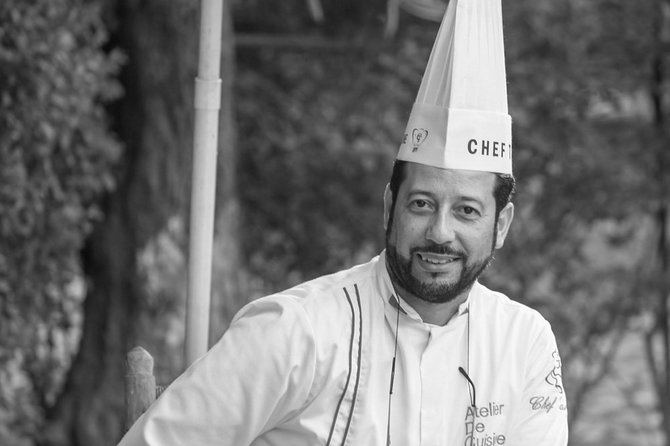
The class begins in the organic garden and kitchen area. The available details identify Chef Tarik as the leader, with Chef Siham, Chef Youssef, Rokaya, and other members of the team appearing in the teaching accounts. The staff’s role is not limited to demonstrating recipes. They guide you through the work and explain the cultural background behind the dishes.
A reported account describes mint tea being prepared with Hassan, identified as the village al qaim, or local village representative. This suggests that the welcome can include more than a standard kitchen introduction. You may get a small window into local hospitality before the cooking begins.
The setting is one of the strongest reasons to choose this class. The garden is described as lush even though the surrounding countryside is dry. That contrast makes the farm feel like a working oasis, not just a decorated cooking venue.
The program also includes a symbolic certificate at the end. It is not a professional qualification, of course, but it is a pleasant souvenir and a nice touch for families or couples who want a memento of the day.
Picking ingredients before the first recipe
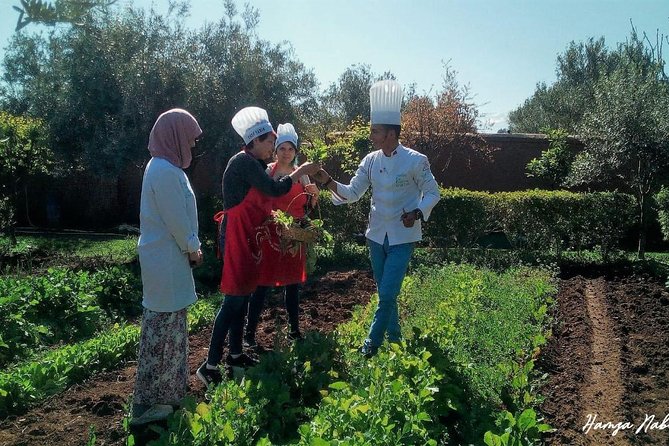
The hands-on work starts with produce from the garden. Collecting ingredients gives you a better sense of what goes into the final meal, and it makes the class feel connected to the farm rather than staged in a remote kitchen.
You should expect to handle vegetables, herbs, and other ingredients before preparing them. The supplied details do not give a fixed list of every garden item, so the exact harvest and menu may change. That is normal for a farm-based class and may depend on the season.
The instructors also discuss spices, aromas, textures, and Moroccan kitchen practices. This is where the lesson becomes more valuable than a simple cooking demonstration. You learn why ingredients are used and how they work together, not just when to add them.
Come ready to participate. You will likely spend time chopping, mixing, shaping, seasoning, and assembling. Children can attend, but they must be accompanied by an adult. The private format makes the activity workable for families, provided younger children are comfortable with a long cooking session and a lengthy transfer.
More cooking classes out of Marrakech:
- Moroccan Cooking Class & Marrakech Market Visit with Chef Khmisa
★ 5.0 · 1,504 reviews - Half-Day Cooking Class with Local Chef Laila in Marrakech
★ 5.0 · 952 reviews - Marrakech: Moroccan Cooking Class with a Local Family
★ 4.9 · 668 reviews - Marrakech: Moroccan Cuisine Cooking Class in Local Home
★ 4.8 · 508 reviews
Bread, mint tea, salads, and the main dishes
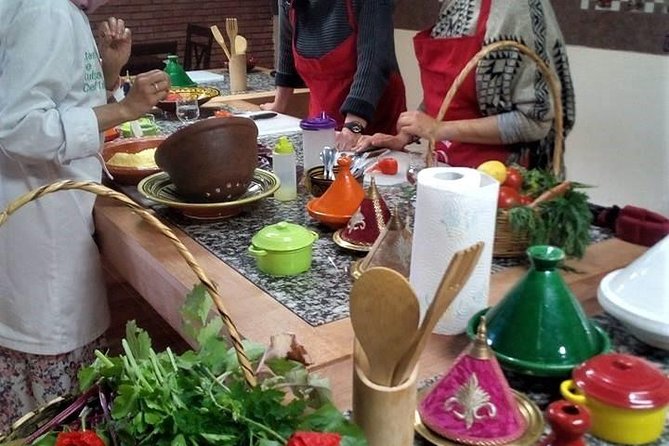
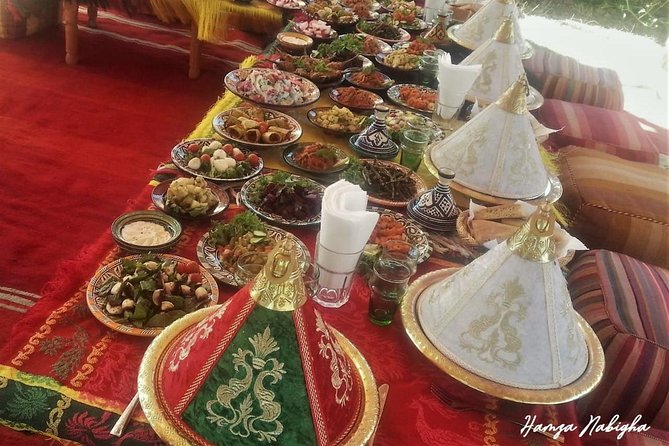
The menu is broad for a four-hour class. The specific dishes can vary, but the material names Moroccan breads, tagines, couscous, salads, and mint tea. One cooking account lists chicken and lamb tagines alongside couscous and salads, while another describes four different dishes prepared during the session.
Bread is a particularly worthwhile part of the program. It gives you a chance to work with a basic staple rather than only assembling a finished dish. A French-language account also describes hot bread coming from a traditional earth oven, with the meal prepared and cooked over embers. Those details may not appear at every session, but they show the kind of traditional preparation the class can include.
Mint tea adds a social and cultural layer. In Morocco, tea is not merely a drink served after lunch. Its preparation and presentation are part of receiving people. Learning the process gives you something you can repeat at home, even if you do not recreate the full meal.
Tagine is the likely centerpiece. The class can cover either chicken or lamb, and the slow cooking method teaches you how Moroccan flavors build over time. The chef and assistants help at each stage, so you do not need prior knowledge of Moroccan cuisine.
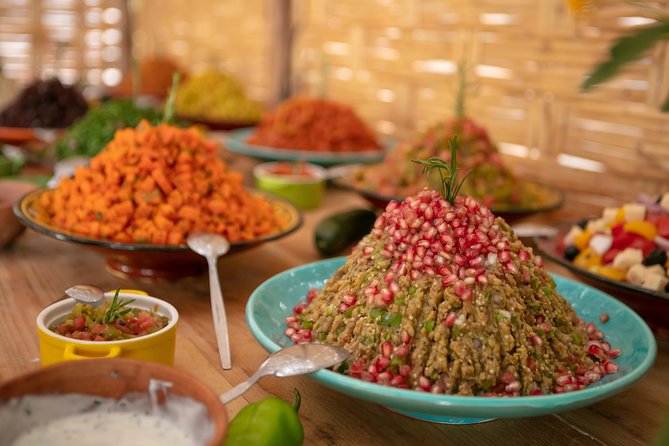
Couscous and salads round out the menu. Together, the dishes create a more complete picture of Moroccan home cooking than a class focused only on one tagine. You get contrasts in texture and pace: fresh salads, steamed or prepared couscous, baked bread, tea, and a slow-cooked main course.
Sitting down to lunch at the farm
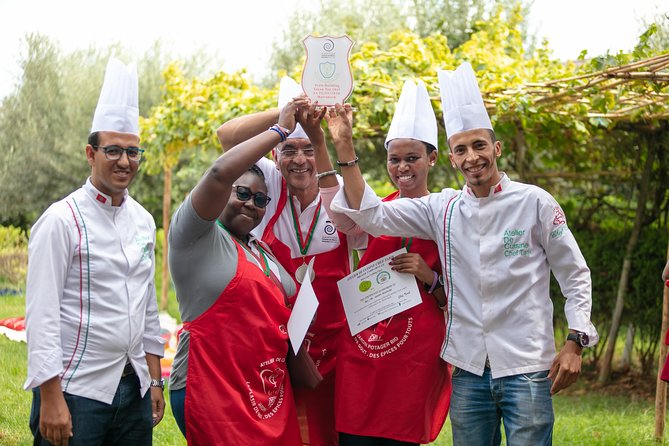
Once the food is ready, you sit down and eat what you helped prepare. Lunch is included, as are beverages, but alcoholic drinks are not. That makes the final meal part of the value rather than an extra charge.
The meal also gives the class a natural ending. You can taste the results while the instructions are still fresh, and you can ask last questions about substitutions or methods. For someone building confidence in the kitchen, this is more useful than leaving immediately after the last demonstration.
The on-site garden also welcomes diners at its restaurant by reservation. That is a separate option, not something to assume is included in the cooking class. If you want to return for a meal without taking the workshop, you would need to arrange it in advance.
What the $69.79 price includes
At $69.79 per person, the price needs to be judged as a full half-day outing, not just a cooking lesson. It includes the driver or guide, hotel pickup and drop-off for selected hotels, lunch, beverages, the private class, and the food used during the session.
The transport adds real value. A countryside cooking class can become expensive or awkward if you need to arrange a private vehicle on your own. Here, the transfer is built into the booking, which makes the rural location much easier to manage.
The private format is another important part of the price. You are not paying only for access to a kitchen. Your group receives direct help from the chef and assistants, with room for questions and adjustments. For two people, the minimum booking requirement is two participants, so couples can reserve without assembling a larger group.
The cost may feel high if you are looking only for a quick local lunch or a short demonstration. It makes more sense if you value transport, instruction, a full meal, and time in the countryside. The fact that the class is often booked about 27 days ahead is a useful planning signal, especially if your Marrakech dates are fixed.
Who will enjoy this class most
I would recommend this for couples, families with older children, and anyone who wants a practical introduction to Moroccan food. It suits people who prefer doing the work themselves instead of watching a chef prepare everything.
It is also a good fit if you have already seen the major Marrakech sights and want a slower day beyond the medina. The farm setting gives you a different view of the region, and the instructors connect the recipes with Moroccan customs.
Vegetarians can take part. A vegetarian option is available, but you must request it when booking. You should also report other dietary requirements at that time. The supplied information does not promise that every allergy or restriction can be handled, so be specific before you arrive.
This is less suited to someone with only a few hours between city tours. The transfer alone can take a significant part of the day, and the cooking session lasts about four hours. It is also not a class for someone who wants alcohol with lunch, since alcoholic drinks are excluded.
Small drawbacks to keep in mind
The main weakness is the distance from Marrakech. The countryside setting is a benefit, but it comes with road time. Pickup timing may also vary by hotel and route, so keep some flexibility in your day.
The exact menu is not presented as a fixed daily schedule. That can be a positive because the garden and season influence what you cook, but it means you should not book expecting every named dish on every visit.
The title refers to a Berber garden, yet the practical details focus on Moroccan cooking and the organic farm rather than a formal cultural performance. Choose this for the cooking, food, setting, and personal teaching. Do not treat it as a substitute for a dedicated history or village tour.
Finally, the experience requires good weather and a minimum number of participants. If the operator cancels for either reason, you are offered another date or experience, or a full refund. You can cancel for a full refund up to 24 hours before the start time, but late changes and cancellations are not refunded.
FAQ
How long does the cooking class last?
The experience lasts approximately four hours, not including the pickup and return drive from Marrakech.
Is transportation included?
Yes. Hotel pickup and drop-off are included for selected hotels, along with a driver or guide. Confirm that your accommodation is covered when booking.
What food will I prepare?
The class can include Moroccan breads, tagines, couscous, salads, and mint tea. Specific accounts also describe chicken and lamb tagines and four dishes prepared during one session.
Is a vegetarian menu available?
Yes. A vegetarian option is available, but you must request it when booking. You should also provide any other dietary requirements at that time.
Can children join the class?
Yes, but children must be accompanied by an adult. The experience requires a minimum booking of two people.
Are drinks and lunch included?
Lunch and beverages are included. Alcoholic drinks are not included.
Should you book the Secret Berber Garden cooking class?
I would book this if you want more than a recipe lesson. The strongest parts are the garden setting, the chance to gather produce, the range of dishes, and the direct help from Chef Tarik’s team. The included ride makes the rural location practical, and the final lunch gives the day a satisfying purpose.
Before booking, check your pickup location, reserve any vegetarian or special-diet menu, and leave enough time for the drive. If you can spare a half-day and enjoy hands-on food preparation, the $69.79 price offers good value for a private class, transport, drinks, and lunch in a setting far removed from Marrakech’s city center.
More Workshops in Marrakech
- Marrakech: Pottery Workshop with Moroccan Tea
★ 4.8 · 756 reviews - Marrakech: Moroccan Cooking Workshop at La Maison Arabe
★ 5.0 · 446 reviews - Marrakesh cooking class with chef Hassan – Local dishes
★ 5.0 · 425 reviews - Marrakech: Tajine Cooking Class in a Traditional Riad
★ 4.8 · 424 reviews
Just listed out of Marrakech
- Marrakech: Ouzoud Waterfalls Trip, Guide & Boat + Lunch★ 4.7 · 33 reviews
- From Marrakech: Ourika Valley Trip, Waterfall Hike & Lunch★ 4.4 · 33 reviews
- Magical Dinner show and Quad bike In Agafay Desert Marrakech★ 4.5 · 33 reviews
- Moroccan Hands on traditional pastries & Tea class in Marrakech★ 4.5 · 33 reviews
- Marrakech: Quad excursion to the palm grove and Jbilets desert★ 4.5 · 33 reviews
- Marrakech: Vibrant Dinner Show at The Lotus Club★ 3.9 · 33 reviews
- From Marrakech: Small Group To Essaouira & Medina Day Trip★ 4.3 · 33 reviews
- From Marrakech: 3-Day Merzouga and Sahara Desert Tour★ 4.5 · 33 reviews
Marrakech Tours, compared.

Agafay Desert Sunset, Camel Ride, and Dinner Show
Read our review →

Agafay Desert Quad & Camel Rides with Dinner Show
Read our review →
Agafay Desert Quad Biking Tour with Dinner-Show
Read our review →
Atlas Mountains, Ourika Valley, Waterfall & Lunch
Read our review →


Quad Bike Tour to Palm Oasis and Jbilat Desert
Read our review →Browse the lists this tour appears in