
Reviewed · MARRAKECH TOURS
Myrugy-Small Group Rug Making Workshop in Marrakech with Licensed
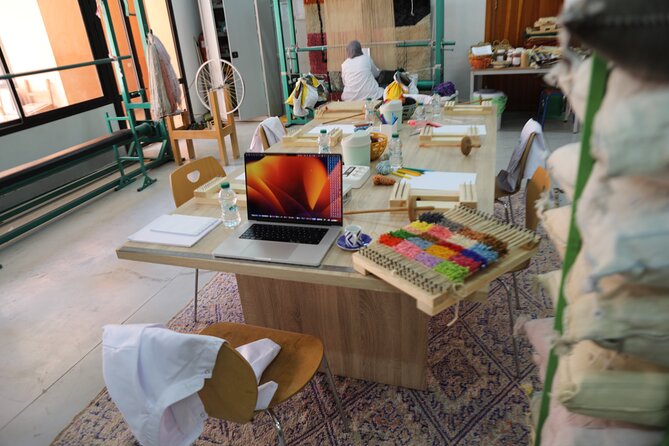
The most appealing part of this Marrakech workshop is that you do not just look at Moroccan rugs, you make one. With patient help from artisans such as Hajar and Alba, you learn the basic knotting or hooking technique, choose a design, and leave with a small handmade piece.
I like two things here: the small maximum of 10 people, which allows for real help at the loom, and the visit to a traditional weavers’ market showroom, which gives your finished rug a useful cultural context. The tea, snacks, and easy conversation add warmth without turning the activity into a sales pitch.
The main catch is time. The official estimate is about three hours, but the work can take four hours or more, especially if you want to finish carefully. Leave a generous part of your day open rather than booking this between two fixed appointments.
Key points to know before you book
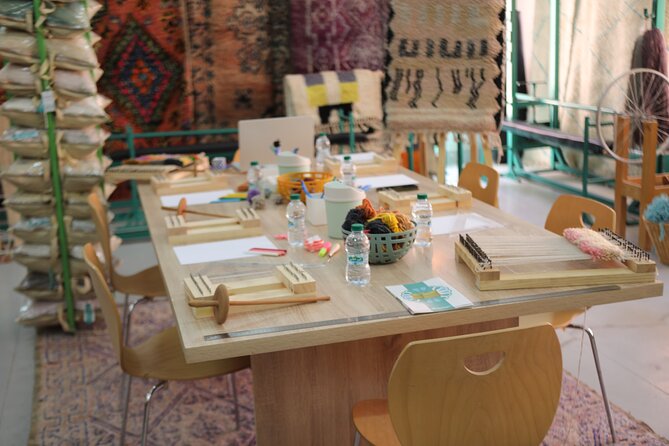
- You make a real miniature rug: Materials and tools are supplied, and your finished piece is yours to take home.
- Hajar and Alba offer patient instruction: Beginners can learn a medium-level symbol with step-by-step help.
- The group is capped at 10 people: That is a useful size for personal guidance without making the workshop feel crowded.
- The experience includes a weavers’ showroom: You see more rugs, materials, and working methods after your own hands-on session.
- English and French guidance is available: That helps when learning a technique that depends on close visual instruction.
- Plan for four hours or more: The listed three-hour duration is a rough guide, not a firm finish time.
Making a small Moroccan rug in Marrakech
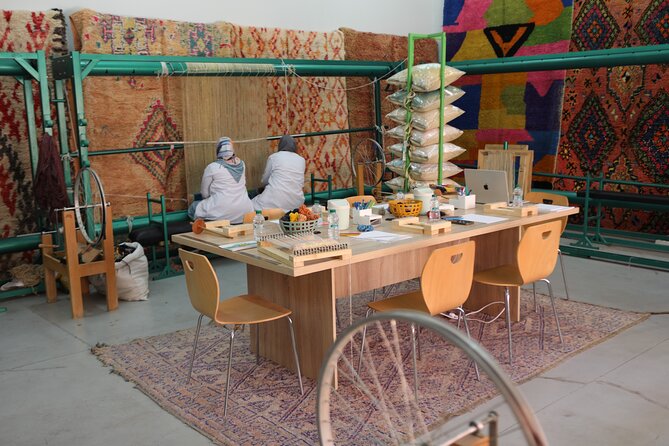
This is a craft lesson first, and a sightseeing stop second. You arrive at the Cqpat, Center Qualification Business Des Arts Traditionnels, on Rue Kbour Chou in Marrakech. The setting is described as a government-sponsored traditional art training center, which gives the workshop a practical connection to Morocco’s craft education rather than placing it solely in a shop aimed at visitors.
The session begins with an introduction to Moroccan rugs and their place in local craft traditions. You then choose a design and learn how the pattern is built. The emphasis is on making a small rug, not producing a full-size floor covering, so the project remains possible during a holiday.
You do not need previous weaving experience. The lesson is designed for beginners, and the instructors break the process into manageable steps. Expect to spend time learning how to handle the wool, follow a symbol, and keep the work even. Your first attempts may be slow. That is part of the point.
The most satisfying part is the change in your attention. Marrakech can be noisy and fast, but rug-making asks you to sit still and repeat a careful movement. The work has a calm, almost meditative quality, though it is not effortless. If you enjoy hands-on activities, you will likely find the concentration rewarding. If you want a quick demonstration and a souvenir handed to you at the end, this is not that kind of stop.
A few other Marrakech days worth comparing
- Marrakech: Moroccan Cooking Class with Pickup
★ 4.6 · 1,862 reviews - Marrakech: Traditional Moroccan Cooking Class & Market Visit
★ 4.8 · 1,861 reviews - Marrakesh: Moroccan Dishes Cooking Class with a Local Chef
★ 5.0 · 1,615 reviews
Choosing wool, color, and pattern
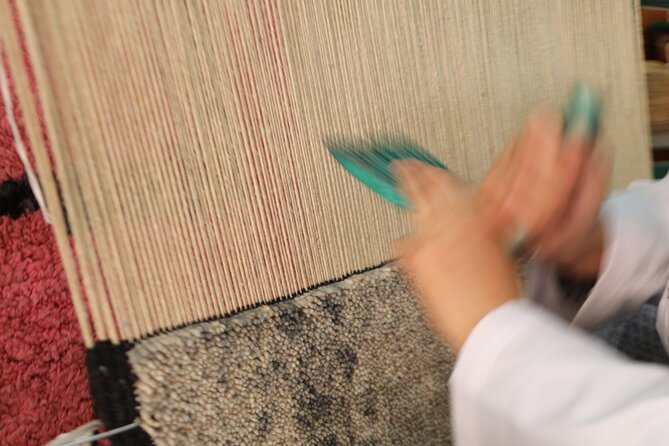
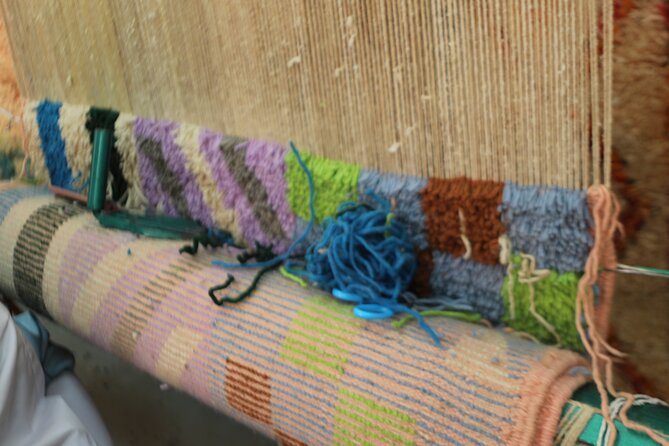
The materials supplied include naturally colored wool and a handcrafted wooden weaving tool, according to the workshop details shared by the provider. These are not just props for a quick photo. You use them while building your own small piece.
You begin by selecting a design that suits your ability and interest. Some participants have completed a medium-level symbol during the class, while others have needed longer to finish their rugs. The choice matters because a more involved pattern can add time to an already unhurried activity.
The instructors guide you through the technique rather than expecting you to understand a diagram on your own. Hajar is especially useful for beginners who need calm, repeated explanations. Guidance is available in English or French, a practical advantage when you are learning by watching hands, tools, and materials at close range.
Do not judge your work too early. A rug can look uneven while you are still forming the pattern. The value of the souvenir comes from having made it, not from matching the precision of an artisan who has practiced for years.
What the artisans add to the workshop
The people leading the class are central to the experience. The warm, conversational tone is one of its strongest features. You can ask about the craft, listen to stories about Moroccan culture, and learn why these techniques continue to matter in local life.
Alba and Hajar have been singled out for patient, hands-on assistance. Alba has also helped with practical matters after the session, including arranging help when a participant had trouble finding a taxi driver. That kind of small kindness matters in Marrakech, where meeting points and drivers can sometimes require extra coordination.
The workshop also offers a chance to speak with women who teach and practice the craft. That personal exchange gives the class more substance than a quick explanation followed by a shopping stop. You are learning directly from people connected to the work.
Still, keep your expectations sensible. A three-hour class cannot explain every Moroccan weaving tradition or produce an expert. You will gain a working introduction to one small rug technique, along with a better feel for the labor behind the finished carpets seen around Marrakech.
The weavers’ market showroom after the class
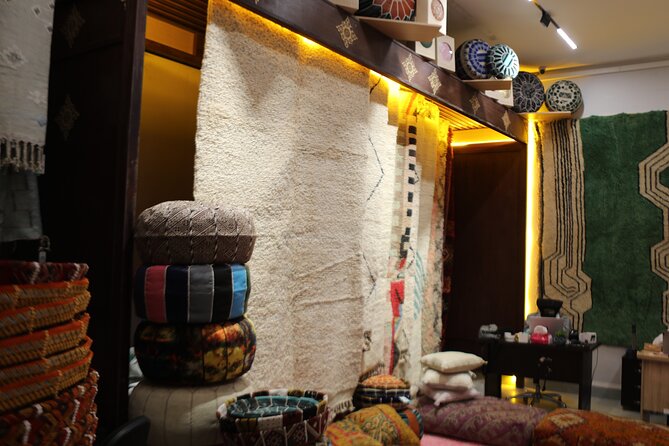
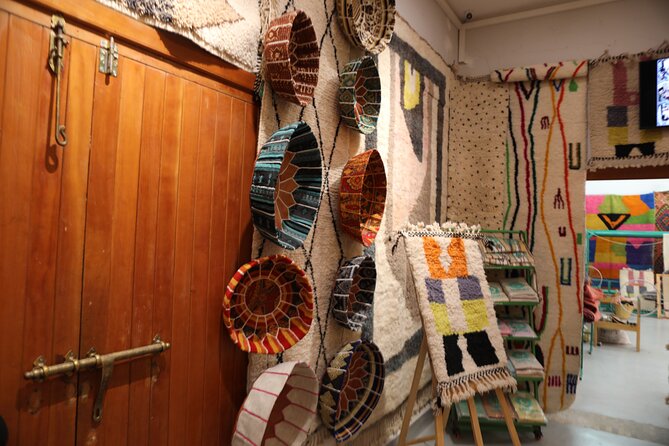
After the hands-on portion, you visit a traditional weavers’ market or showroom. This part broadens the experience. Once you have struggled with a few rows of your own rug, you can look at larger and more polished pieces with a sharper eye.
You may see a range of rugs, materials, and examples of artisan work. The visit is intended to show how the craft functions beyond the small project at your table. It also offers a chance to meet artisans and see the variety of patterns and textures connected with Moroccan carpet-making.
The showroom is useful because it puts scale into perspective. Your small rug may take several hours, yet it represents only a fraction of the work involved in a larger carpet. The visit helps you understand why handmade rugs vary in price and why a seemingly simple pattern can demand considerable patience.
You should also be alert to the usual dynamics of a traditional market setting. The supplied information presents the showroom as part of the cultural experience, not as a required purchase. Still, if you are not shopping for a full-size rug, decide in advance how much time and attention you want to give to browsing. You can appreciate the work without feeling obliged to buy.
Same city, a completely different day out:
- Marrakech: Agafay Desert Sunset, Camel Ride, and Dinner Show
★ 4.6 · 35,119 reviews - From Marrakech: Ouzoud Waterfalls Guided Hike and Boat Trip
★ 4.7 · 33,630 reviews - Marrakech: Agafay Desert Quad & Camel Rides with Dinner Show
★ 4.8 · 27,382 reviews - Marrakech: Agafay Desert Quad Biking Tour with Dinner-Show
★ 4.8 · 16,569 reviews
Tea, snacks, and a more personal connection
Moroccan tea is included as part of the welcome. Water, tea, and snacks have also been provided during sessions, adding a simple touch of hospitality. This is not a formal meal, so you should not book it expecting lunch. Think of it as a pause while you work and talk.
The tea matters less as a refreshment than as a social bridge. You have time to ask questions, compare patterns, and hear stories while the instructors explain the craft. It helps the workshop feel like a meeting around a traditional skill rather than a factory-style souvenir stop.
That atmosphere is particularly well suited to couples, families, and small groups of friends. A family session can include both children and adults, provided everyone is comfortable sitting down and working carefully. A birthday group of five has also used the activity as a creative alternative to another city tour.
How long should you allow?
The advertised duration is about three hours, including the workshop and market visit. In practice, you should plan on four hours or more if you want enough time to complete your rug without rushing.
One session lasted around four and a half hours, and another participant specifically advised allowing more than four hours for a small hooked rug. This is not necessarily a flaw. Handmade work has its own clock, and the extra time can be part of the pleasure. It becomes a problem only if you have a restaurant booking, airport transfer, or another tour immediately afterward.
I would clear the rest of the afternoon or morning. Arrive ready to stay longer if the class is going well. The experience ends back at the meeting point, so there is no separate drop-off to plan around.
The meeting location is listed as Cqpat, Center Qualification Business Des Arts Traditionnels, J2R4+8RW, Rue Kbour Chou, Marrakesh 40000, Morocco. Check the exact map pin and local meeting instructions before setting out, since the address includes both a named center and a plus code.
Is $59 a fair price?
At $59 per person, the price is reasonable if you value instruction and cultural contact rather than simply buying a souvenir. You receive a three to four-hour activity, materials, personal teaching, tea, a small rug to take home, and a visit to a weavers’ showroom.
The value improves if you would otherwise buy a small carpet from a market without understanding how it was made. Here, you put in the time yourself. The finished piece may not be perfect, but it carries a story that a ready-made souvenir cannot provide.
The price is less attractive if you mainly want a short demonstration. The class demands patience, and the real reward comes from doing the repetitive work. You are paying for access to instruction, tools, artisans’ time, and a cultural setting, not for a large rug.
Small groups also help justify the cost. With no more than 10 people, the session should allow closer attention than a large commercial demonstration. The experience may be especially good value for couples or groups who want one shared activity rather than several separate sightseeing stops.
Group discounts are available, though the exact saving is not specified. If you are booking for several people, check the final price before paying.
Who will enjoy this activity most?
You are a strong match for this workshop if you like making things, want a slower afternoon in Marrakech, or prefer meeting local artisans to moving from one landmark to another. It also suits couples and families looking for a shared activity with a physical souvenir at the end.
The workshop is friendly to beginners. You do not need to know how to weave, and the instructors provide step-by-step help. English and French support is available, and most people can participate. Service animals are allowed, and the center is near public transportation.
You may want to skip it if your schedule is packed or if you dislike repetitive handwork. The process can take longer than expected, and the small rug will not be finished instantly. Children may enjoy the creative side, but the activity still requires patience and attention.
This is also not the best choice if your main goal is to purchase a large Moroccan carpet. The showroom can help you see more rugs, but the core of the experience is making your own small one.
Practical planning for your Marrakech day
The activity begins and ends at the same meeting point. You need to arrange your own way there, so allow time to find the center and get settled. The location is near public transportation, which gives you options beyond a private taxi.
Wear something comfortable for sitting and working. The supplied information does not list a dress code or special equipment, and all materials are provided. You should not need to bring a loom, wool, or tools.
Bring a little patience along with your phone. A mobile ticket is accepted, and confirmation is received at booking. Photos can record the process, but keeping your hands free for the instruction will help you learn faster.
The group limit of 10 is worth considering when choosing a date. Since this activity is booked on average 19 days ahead, popular times may fill before your arrival. You can cancel for a full refund up to 24 hours before the start time, but changes or cancellations inside that window are not accepted.
The best souvenir is the one you make
Marrakech has no shortage of shops selling rugs. This workshop gives you a different way to understand them. You see the materials, follow a pattern, learn the basic movements, and discover why a handmade piece requires time.
Your finished rug will be small, and its edges may show that a beginner made it. That is exactly what makes it useful as a souvenir. It is light enough to carry home, personal enough to remember the afternoon, and connected to the people who showed you the craft.
The activity also gives you a better basis for shopping elsewhere in Morocco. After handling wool and working through a pattern, you can look at a larger rug with more respect for the labor behind it. You may still decide not to buy one. That is fine. Understanding the work is the main gain.
Should you book the Marrakech rug-making workshop?
I would book this if you want a personal, creative experience and can spare at least four hours. The patient instruction from Hajar, Alba, and the other artisans, the small group size, the naturally colored wool, and the showroom visit make this more than a quick craft lesson.
I would not book it as a tightly timed add-on between major attractions. The session can run well past the three-hour estimate, and rushing would spoil the very quality that makes it worthwhile.
At $59, it offers solid value for a hands-on cultural activity with a take-home rug. Choose it for the conversation, the learning, and the chance to make something imperfect but meaningful. Choose a regular market visit instead if you want to shop quickly or prefer a shorter introduction.
FAQ
How long does the rug-making workshop last?
The listed duration is about three hours, including the workshop and weavers’ market visit. You should allow four hours or more, since completing a rug can take longer.
What is included in the price?
The experience includes the workshop, all materials, instruction from local artisans, a small handmade rug to take home, traditional Moroccan tea, and a visit to a traditional weavers’ market or showroom.
Do I need previous rug-making experience?
No. The workshop is designed for all skill levels, including complete beginners. The instructors provide step-by-step guidance.
How many people can join the workshop?
The maximum group size is 10 people.
Where does the activity start and finish?
It starts at Cqpat, Center Qualification Business Des Arts Traditionnels, on Rue Kbour Chou in Marrakech. The activity ends back at the meeting point.
Can I cancel for a refund?
Yes. You can cancel at least 24 hours before the start time for a full refund. Cancellations or changes made less than 24 hours before the start time are not accepted.
Just listed out of Marrakech
- Marrakech: Ouzoud Waterfalls Trip, Guide & Boat + Lunch★ 4.7 · 33 reviews
- From Marrakech: Ourika Valley Trip, Waterfall Hike & Lunch★ 4.4 · 33 reviews
- Magical Dinner show and Quad bike In Agafay Desert Marrakech★ 4.5 · 33 reviews
- Moroccan Hands on traditional pastries & Tea class in Marrakech★ 4.5 · 33 reviews
- Marrakech: Quad excursion to the palm grove and Jbilets desert★ 4.5 · 33 reviews
- Marrakech: Vibrant Dinner Show at The Lotus Club★ 3.9 · 33 reviews
- From Marrakech: Small Group To Essaouira & Medina Day Trip★ 4.3 · 33 reviews
- From Marrakech: 3-Day Merzouga and Sahara Desert Tour★ 4.5 · 33 reviews
Marrakech Tours, compared.

Agafay Desert Sunset, Camel Ride, and Dinner Show
Read our review →

Agafay Desert Quad & Camel Rides with Dinner Show
Read our review →
Agafay Desert Quad Biking Tour with Dinner-Show
Read our review →
Atlas Mountains, Ourika Valley, Waterfall & Lunch
Read our review →


Quad Bike Tour to Palm Oasis and Jbilat Desert
Read our review →Browse the lists this tour appears in