
Reviewed · MARRAKECH TOURS
Moroccan Food Tasting Tour and Dinner
Marrakech is at its most tempting after sunset, when Jemaa el-Fnaa turns into a giant open-air dining room. This tour leads you from the square into the medina for olives, soups, pancakes, spices, pastries, and other small bites before finishing with a full Moroccan dinner.
I like the wide range of tastings, which includes less familiar items such as barbouch, or seasoned snails, pure argan oil, amlou, cactus, and chebbakia. I also like the local focus: guides such as Hassan, Ali, Mohammed, Souf, and Hussain bring you to food stalls, pastry sellers, spice shops, and family-favored places you may not find on your own.
The main drawback is the pace and physical setting. You will walk through narrow medina lanes, climb stairs, and eat several courses over three hours, so this is not the right pick if you need step-free access or prefer a quiet, slow meal.
Five things to know before you book
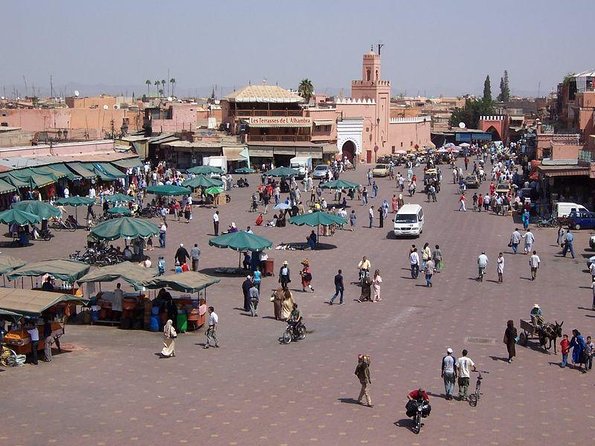
- Jemaa el-Fnaa after dark: Begin and end near Marrakech’s famous main square, when food stalls and performers fill the evening air.
- More than a dozen tastes: Plan for olives, nuts, dried fruit, soups, Moroccan pancakes, pastilla, pastries, macaroon-style sweets, and other local bites.
- A full dinner follows: The tasting leads to Moroccan salad, tanjia or tajine, dessert, Moroccan tea, coffee, and sparkling water.
- A guide-led food lesson: Hassan and other local guides explain ingredients, cooking traditions, spice choices, and the daily life of the medina.
- Private format with a central start: Only your group participates, and the meeting point is Café de France near public transportation.
Why this Marrakech food tour works best at 6 pm
The timing is one of the smart parts of the experience. Starting at 6 pm lets you see Jemaa el-Fnaa shift from a daytime square into an evening food market. The square has long been a meeting point for people arriving in Marrakech, and at night it fills with food stalls, musicians, dancers, storytellers, acrobats, and other performers.
You meet at Hôtel Restaurant Café de France, right by the square. That is a useful location if you are staying in or near the medina, and it is easy to reach by public transportation. Since the tour ends at the same place, you do not need to find a distant restaurant afterward or arrange a complicated ride across town.
I would schedule this experience early in your Marrakech stay. The food vocabulary, market layout, and basic rhythm of the medina will help you make better choices for the rest of your visit. You also get a guided introduction before attempting the evening stalls alone.
The three-hour length sounds modest, but the amount of food makes it feel substantial. This is not a quick walk with one snack and a restaurant meal. It is a rolling dinner, with small portions and stops spread across the square and souks.
A few other Marrakech days worth comparing
- From Marrakech: Merzouga 3-Day Desert Safari with Food
★ 4.7 · 12,232 reviews - Marrakech: Street Food Tour by Night
★ 4.8 · 2,838 reviews - 3-Day Tour to Merzouga Erg Chebbi with Food & Camel Trek
★ 5.0 · 1,770 reviews
Jemaa el-Fnaa: starting with Marrakech’s evening theater
The first stop lasts about 50 minutes and is focused on Jemaa el-Fnaa. Your guide helps you read the square rather than simply cross it on the way to dinner.
In the evening, the square becomes a place for alfresco eating and entertainment. You may see Gnawa musicians, dancers, storytellers, magicians, acrobats, and busy food stands sharing the same broad space. The setting can feel noisy and crowded, but that is part of the experience. This is public Marrakech in full view, not a polished restaurant designed for tourists.
Your guide’s presence matters here. A good guide can explain what you are seeing, point out food worth trying, and help you move through the square without wasting the first part of the evening. Hassan is specifically associated with this experience, and other bookings have been led by Ali, Mohammed, Souf, or Hussain. If having a particular guide matters to you, ask Sara Morocco Private Tours when booking.
The advertised skip-the-line and crowd-avoidance feature should be understood in practical terms. It may help your group move efficiently between food stops, but Jemaa el-Fnaa itself remains a public square. Expect activity, people, noise, and changing conditions.
Through the medina, where every lane has a specialty
The next hour takes you into the Medina of Marrakesh. This is where the food tour becomes more than a sequence of samples.
You visit different food shops and less obvious corners of the souks while learning how local families shop and cook. Some lanes focus on spices, others on olives, dried fruit, nuts, pastries, or ingredients used in home kitchens. The guide explains what you are looking at and why certain foods matter.
The olive stop is a strong feature. Moroccan olives are not all alike, and tasting several varieties with different marinades gives you a better sense of the country’s everyday food than simply ordering an olive plate at a restaurant. Expect olive oil, spices, and preserved flavors to appear again and again as the evening continues.
This part also gives you a chance to ask practical questions. You can ask how to recognize a useful spice blend, which dried fruits are commonly eaten, or what to buy if you want to recreate Moroccan flavors at home. The experience includes organic dried fruits, marinated olives, nuts, and other market foods, so it is worth keeping a little room in your bag for purchases if a shop catches your eye.
The drawback is the physical setting. The medina has narrow lanes and uneven movement, and one person specifically noted that there were lots of stairs. The tour is described as suitable for most people, but it is not easily accessible for everyone. Wear shoes that are comfortable for walking and do not assume that a short distance means an easy route.
The spice shop, argan oil, amlou, and mint tea
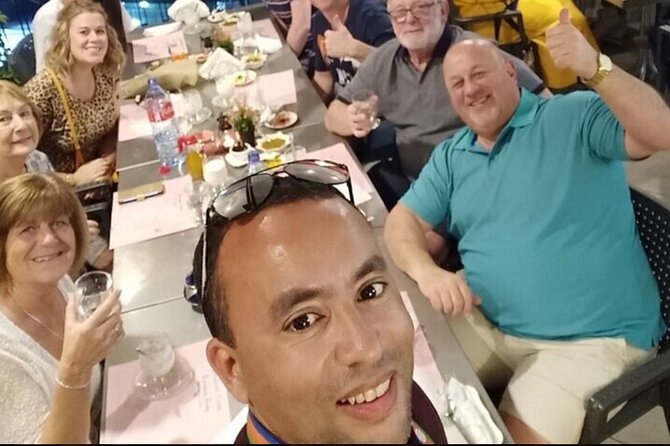
A 30-minute stop at an authentic spice shop gives the tour its clearest food lesson. This is where you learn about choosing fresh spices and how they contribute to Moroccan cooking.
Spices can be difficult to understand when you see them in open bins with unfamiliar names. A guide can connect them to dishes you have already tasted or will soon eat. That makes this stop useful for you if you want to take home spices with a purpose rather than buy attractive packets at random.
You also taste pure edible argan oil, amlou, and Moroccan mint tea. Argan oil is used in food as well as in beauty products, and amlou is a spread made from ingredients associated with Moroccan breakfasts and snacks. Tasting these items side by side helps you notice the difference between a cooking ingredient, a sweet spread, and a tea ritual.
The tour information emphasizes organic vegetables, fragrant spices, and olive oil. That does not mean every bite is light. Moroccan food can be both vegetable-based and filling, especially once bread, pastry, meat, and dessert enter the picture. You should expect strong seasoning, sweet and savory combinations, and plenty of olive oil.
Same city, a completely different day out:
- Marrakech: Agafay Desert Sunset, Camel Ride, and Dinner Show
★ 4.6 · 35,119 reviews - From Marrakech: Ouzoud Waterfalls Guided Hike and Boat Trip
★ 4.7 · 33,630 reviews - Marrakech: Agafay Desert Quad & Camel Rides with Dinner Show
★ 4.8 · 27,382 reviews - Marrakech: Agafay Desert Quad Biking Tour with Dinner-Show
★ 4.8 · 16,569 reviews
The evening food stalls and local-style bites
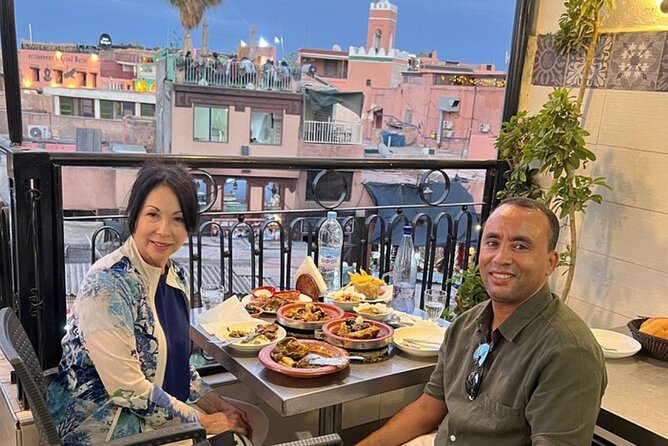
After the spice stop, you return to Jemaa el-Fnaa for about 20 minutes of additional tasting. This section focuses on evening food stalls loved by local families.
The food can include Moroccan soups served with dates and chebbakia, a sesame-coated sweet pastry. You may also try barbouch, or snails, cooked with spices. Other tastings include Moroccan pancakes with honey and cheese, or with onion and spices. Cactus, meats, nuts, figs, and other small bites have also formed part of the food selection described for this experience.
These samples are valuable because they show the range of Moroccan eating beyond the familiar tagine. Soup with a sweet pastry, a savory pancake, seasoned snails, and marinated olives create a more complete picture of how flavor works here.
You should not eat a large meal before meeting the guide. Several people who have taken the tour found the portions and number of stops generous, and the final dinner still lies ahead. A small lunch and a light afternoon snack will serve you better than arriving full.
Food stalls are also less controlled than a restaurant. Choices may vary with availability, weather, and the evening crowd. Your guide can explain what is being served and help you decide what to taste, but you should tell the guide about allergies or dietary limits before the food begins.
Souk Semmarine and the pastry finish
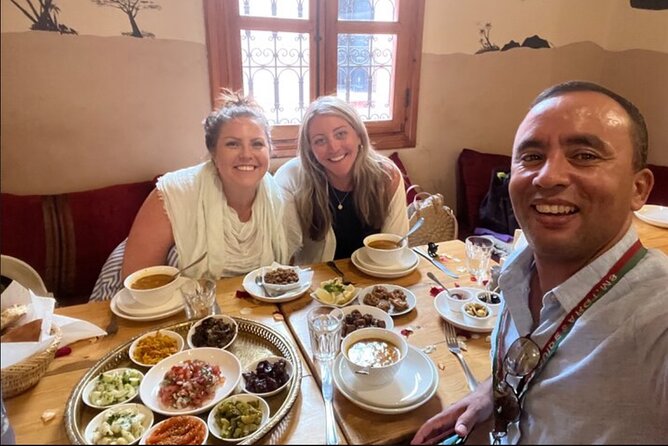
The last tasting stop takes you through Souk Semmarine for Moroccan pastries and olives. This section is especially appealing if you have a sweet tooth, since the included foods feature selected Moroccan pastries, macaroon-style sweets, and almond-based treats.
Pastilla of chicken and almonds may also be part of the sampling. It is a good example of Morocco’s love of mixing textures and flavors: crisp pastry, savory filling, sweet notes, and nuts in one dish. Moroccan pastries often use honey, almonds, sesame, dates, and aromatic spices, so this stop helps explain why dessert here can feel as substantial as a starter.
You will also revisit olives in a more specialized souk setting. That repetition is useful rather than pointless. Tasting olives at several shops lets you compare preparation styles and see how one basic ingredient can change with herbs, brine, oil, or spices.
The route through the souk is part of the meal, but it can also be distracting. Shopkeepers may be active, lanes may be tight, and the group may need to pause or regroup. If you want time to shop, ask the guide how much flexibility the schedule allows. The tour’s main purpose is tasting and explanation, not a dedicated shopping session.
The sit-down Moroccan dinner
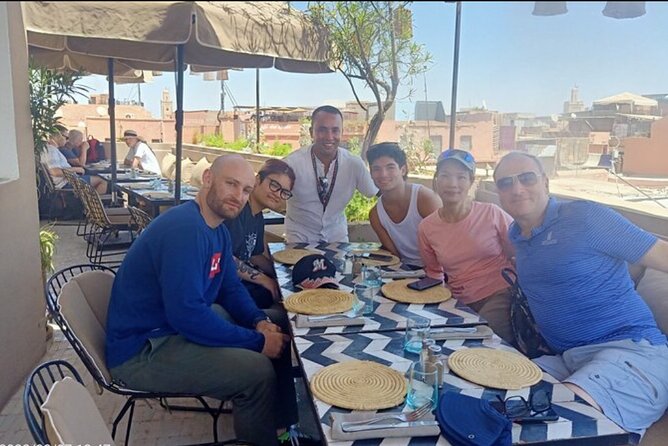
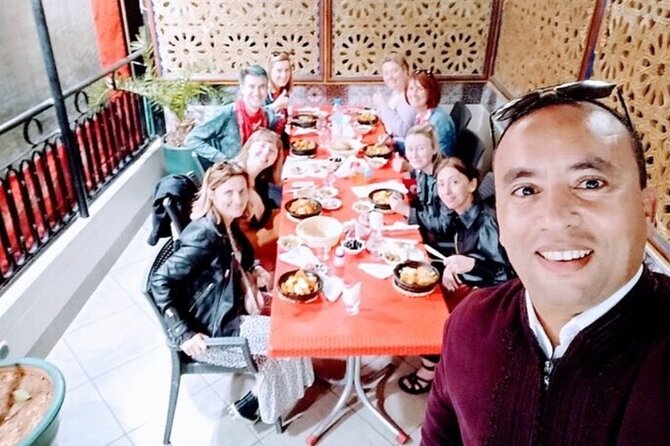
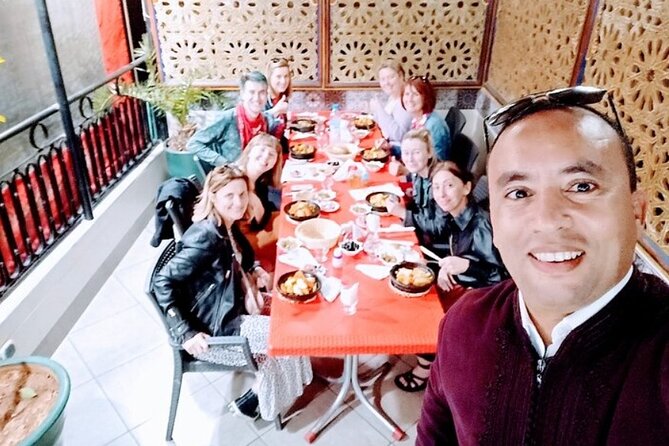
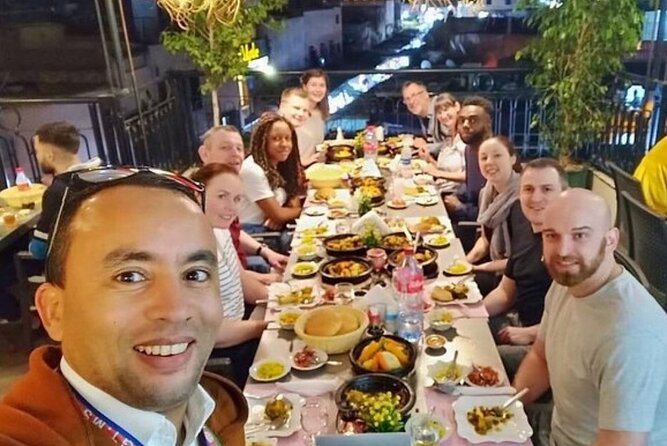
The final meal turns the tasting into a proper dinner. Included dishes are Moroccan salad, your choice of tanjia or tajine, dessert, Moroccan tea, coffee, and sparkling water.
Tanjia and tajine are not the same thing, though both are strongly associated with Moroccan cooking. A tajine is a slow-cooked dish linked to the distinctive cone-shaped cooking vessel, while tanjia is a Marrakech specialty with its own preparation and local identity. Having the choice gives you a chance to follow your preference, though the exact options and serving style can depend on the evening.
By this point, you will already have tasted more than ten items, possibly around sixteen separate bites depending on the selections available. The sit-down course is therefore not just a sample or a token ending. It is a full meal after a long stretch of tasting.
Several guides have been praised for explaining the food clearly and adjusting the experience to the group. Hassan is described as especially strong in English and good at introducing people to places they might miss on their own. Ali, Mohammed, Souf, and Hussain have also led highly rated experiences, with Hussain noted for remaining attentive even in very hot weather.
The dinner may take place on a terrace or in a local restaurant-style setting, depending on the arrangement. A terrace can be a pleasant way to slow down after the souks, while a simple local restaurant keeps the focus on food rather than decoration. Either way, do not expect a formal fine-dining service. The appeal is the menu, the setting, and the conversation.
What $174.47 represents in practical value
At $174.47 per person, this is not the cheapest way to eat in Marrakech. You can find individual snacks and inexpensive meals for far less. The price makes more sense if you treat the experience as a private guided food walk, market orientation, cultural introduction, and full dinner in one package.
You are paying for access to a planned sequence of tastings rather than guessing your way through unfamiliar stalls. You also get a local guide who can explain the food, translate questions, point out ingredients, and connect dishes to Moroccan daily life.
The private format is another part of the value. Only your group participates, so you can ask more questions and move at a pace that suits your party. The tour also offers group discounts, which may improve the price for a larger booking.
Still, value depends on what you want. If you mainly want a large restaurant dinner, you can spend less elsewhere. If you want to understand Marrakech through its food and would otherwise need to pay separately for a guide, tastings, and dinner, the combined price is easier to justify.
The experience is booked an average of 40 days ahead, so advance planning is sensible, especially for a particular evening. Confirmation is provided at booking, and cancellation is free up to 24 hours before the 6 pm start time. Bad weather can lead to a different date or a full refund.
Who should book this food experience
I would recommend it to first-time visitors who want an easy introduction to Marrakech’s medina and food culture. It also suits people who enjoy trying many small portions more than ordering one familiar dish.
You will get the most from it if you:
- Arrive hungry but not starving
- Enjoy busy public spaces and market walking
- Want explanations rather than silent sightseeing
- Are curious about spices, olives, pastries, and local specialties
- Can manage stairs and uneven walking
- Prefer a private group to a large scheduled tour
I would be more cautious if you have serious mobility limits, strict dietary restrictions, or little interest in street food. The tour includes many different foods, but the exact selection can vary. Share dietary concerns before booking rather than hoping the guide can solve them at the first stop.
Should you book the Moroccan Food Tasting Tour and Dinner?
Book it if you want a generous first taste of Marrakech and prefer guidance to trial and error. The best features are the number of samples, the direct access to medina food shops, and the chance to ask a local guide why the dishes taste and look the way they do.
Skip it if you want a quiet, independent dinner or if stairs and crowded lanes would make the evening tiring. For everyone else, schedule it near the beginning of your stay, arrive at Café de France before 6 pm, and eat lightly beforehand. You will leave with a fuller stomach and a better sense of what to order for the rest of your time in Morocco.
FAQ
Where does the Moroccan food tour begin?
The tour begins at Hôtel Restaurant Café de France, at Jemaa el-Fnaa on Rue des Banques in Marrakech.
What time does the experience start?
The start time is 6:00 pm.
How long does the food tour last?
The experience lasts approximately three hours.
Where does the tour end?
The activity ends back at the meeting point near Jemaa el-Fnaa.
What food is included?
Included foods can include Moroccan salad, tanjia or tajine, dessert, pastilla of chicken and almonds, soups with dates and chebbakia, Moroccan pancakes, seasoned snails, olives, dried fruit, pastries, macaroon-style sweets, coffee or tea, Moroccan mint tea, and sparkling water.
Is this a private activity?
Yes. Only your group participates in the activity.
Can I cancel for a full refund?
Yes, if you cancel at least 24 hours before the local start time. Cancellations made less than 24 hours before the start are not refunded, and poor weather may result in a new date or a full refund.
More Dinner Experiences in Marrakech
- Agafay Desert Package, Quad Bike, Camel Ride and Dinner Show
★ 5.0 · 4,244 reviews - Marrakech: Agafay Quad Tour with Camel Ride, Dinner & Show
★ 4.8 · 3,335 reviews - Marrakech: Agafay Desert Dinner Show with Sunset Camel Ride
★ 4.8 · 3,330 reviews - Marrakech: Dinner Show at Dar Essalam Restaurant
★ 4.6 · 2,997 reviews
More Dining Experiences in Marrakech
- Marrakech: Agafay Desert Quad & Camel Rides with Dinner Show
★ 4.9 · 10,771 reviews - Marrakech: Agafay Desert Quad, Camel Ride & Dinner Show
★ 4.7 · 10,209 reviews - Marrakech: Agafay Desert Retreat, Tent, Dinner, Show & Pool
★ 4.8 · 5,616 reviews - Marrakech: Agafay Desert Dinner Show with Quad Bike & Camel
★ 4.9 · 5,058 reviews
Just listed out of Marrakech
- Marrakech: Ouzoud Waterfalls Trip, Guide & Boat + Lunch★ 4.7 · 33 reviews
- From Marrakech: Ourika Valley Trip, Waterfall Hike & Lunch★ 4.4 · 33 reviews
- Magical Dinner show and Quad bike In Agafay Desert Marrakech★ 4.5 · 33 reviews
- Moroccan Hands on traditional pastries & Tea class in Marrakech★ 4.5 · 33 reviews
- Marrakech: Quad excursion to the palm grove and Jbilets desert★ 4.5 · 33 reviews
- Marrakech: Vibrant Dinner Show at The Lotus Club★ 3.9 · 33 reviews
- From Marrakech: Small Group To Essaouira & Medina Day Trip★ 4.3 · 33 reviews
- From Marrakech: 3-Day Merzouga and Sahara Desert Tour★ 4.5 · 33 reviews
Marrakech Tours, compared.

Agafay Desert Sunset, Camel Ride, and Dinner Show
Read our review →

Agafay Desert Quad & Camel Rides with Dinner Show
Read our review →
Agafay Desert Quad Biking Tour with Dinner-Show
Read our review →
Atlas Mountains, Ourika Valley, Waterfall & Lunch
Read our review →


Quad Bike Tour to Palm Oasis and Jbilat Desert
Read our review →Browse the lists this tour appears in