
Reviewed · MARRAKECH TOURS
Moroccan Cooking Workshop LAMAI CHEF
Moroccan food makes more sense once you understand its spices, and Lamai Chef begins there. In a beautiful Marrakech residence, you start with a spice presentation and mint tea ceremony before moving into the kitchen. It is a useful way to connect the dishes on your plate with Morocco’s long trade routes and family cooking traditions.
I like the private format, since only your group takes part, and I like the clear progression from theory to preparation to lunch or dinner. The hosts also put real care into the welcome, with Moroccan pastries, practical instruction, and a closing graduation ceremony.
The main consideration is the price, $69.52 per person, which is more than a simple market meal. You are paying for a three-and-a-half-hour activity, ingredients, instruction, and the chance to eat what you prepare. That value is strongest if you want to cook, not just watch.
Key points at a glance
- Spice lesson first: Learn how Morocco’s location along old caravan routes shaped its cooking.
- A full hands-on menu: Prepare bread, chicken tagine with preserved lemon and olives, saffron, two salads, and pancakes.
- Private group setting: Only your own group participates, making the lesson more personal.
- Mint tea and Moroccan pastries: The opening ceremony gives the class a gentle, local welcome.
- Eat what you make: The practical work ends with lunch or dinner at the residence.
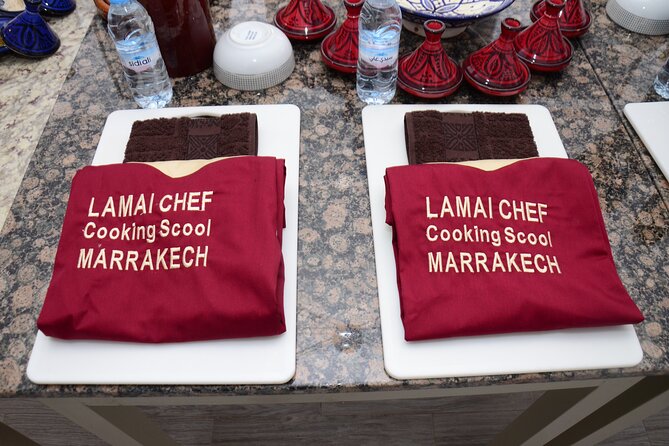
- Certificate at the end: A graduation ceremony gives the session a pleasant final touch.
Entering Lamai Chef in Marrakech
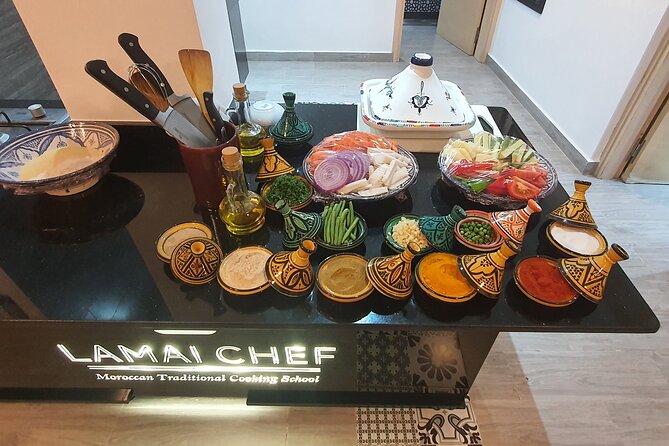
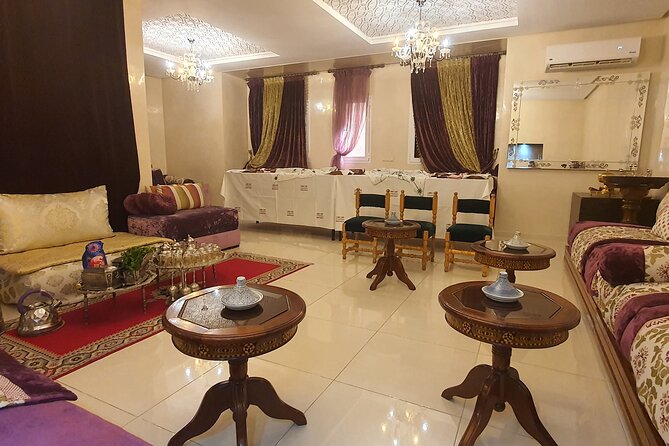
Lamai Chef operates from a residence at Marrakech 177, Lot Riad de Palais, Marrakech 40150. The setting matters. You are not being rushed through a demonstration in a large commercial kitchen. Instead, the class unfolds in a home-style environment designed around Moroccan food and hospitality.
The activity lasts about three hours and 30 minutes, so plan a substantial part of your day around it. The listed hours run from 9:00 in the morning to 10:00 at night, Monday through Sunday, during the stated operating period. That broad schedule gives you room to choose a morning session or an evening experience, depending on your Marrakech plans.
Pickup is offered, and the activity ends back at the meeting point. Since the location is also near public transportation, you have more than one way to reach it. Check the pickup details when booking, since the information provided does not state the exact pickup area or whether an extra charge applies.
The class is private, but that does not necessarily mean it is exclusive to one person or one couple. It means only your own booking group participates. That is a useful distinction if you want to cook with family or friends without being placed beside a large mixed group.
More Cooking Classes in Marrakech
- Marrakech: Moroccan Cooking Class with Pickup
★ 4.6 · 1,862 reviews - Marrakech: Traditional Moroccan Cooking Class & Market Visit
★ 4.8 · 1,861 reviews - Marrakesh: Moroccan Dishes Cooking Class with a Local Chef
★ 5.0 · 1,615 reviews
Mint tea, pastries, and the Moroccan spice lesson
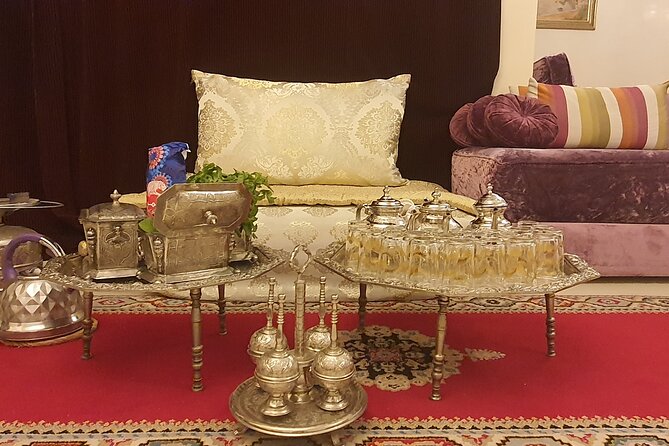
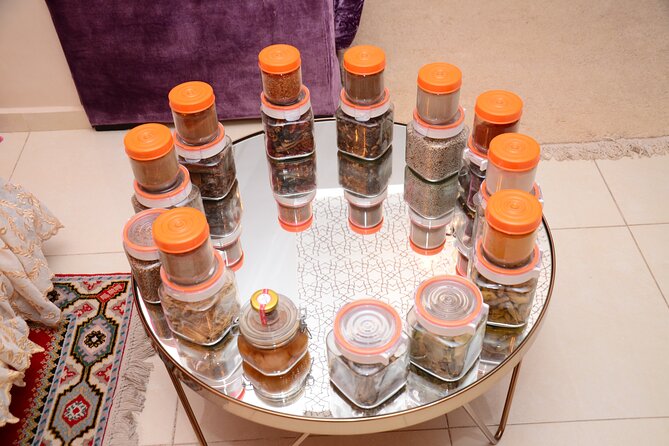
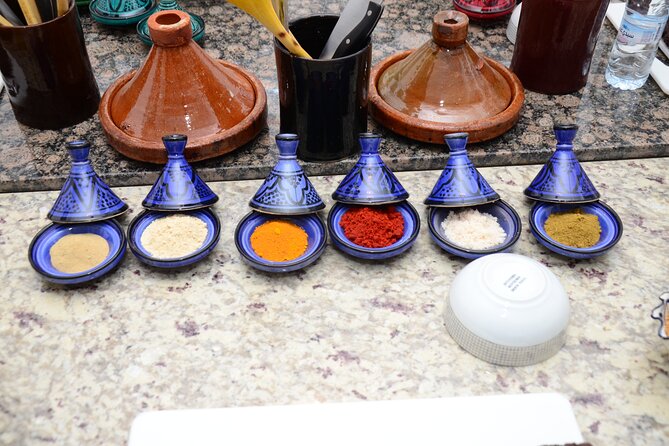
The first part is more than a quick introduction. You begin with a presentation on Moroccan spices, paired with the mint tea ceremony and Moroccan pastries. I like this order because it gives you a little context before you start chopping and stirring.
Morocco’s position along old caravan routes helped bring spices and cooking ideas into the country. The lesson uses that geography to explain why Moroccan dishes can combine sweet, floral, earthy, warm, and savory notes in one meal. You do not need to memorize a long list of spice names to get value from this section. The point is to see how seasoning works as a system.
The mint tea ceremony also sets the pace. It gives you time to arrive, meet the hosts, and understand the concept of the school before the practical work begins. The pastries make the welcome feel generous, though you may want to go easy on them if you plan to sample every dish later.
This opening should suit curious cooks who want more than a recipe card. It also works for people who know little about Moroccan cuisine but want a simple explanation of the ingredients before tasting them. If you mainly want to eat and skip instruction, this portion may feel long.
Building the meal from bread to tagine
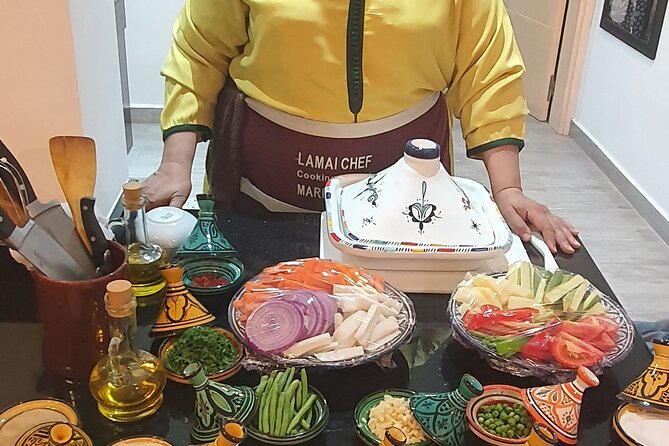
The practical session covers several dishes, so you get a broad look at Moroccan home cooking rather than a single recipe. You prepare bread, chicken tagine with candied lemon and olives, two Moroccan salads, and pancakes with honey and almonds.
Bread gives the class a useful starting point. It is a basic part of the meal, but it also shows how much Moroccan cooking depends on everyday preparation. The menu then moves toward the chicken tagine, one of the country’s best-known dishes.
The tagine combines chicken, candied lemon, olives, and Taliouine saffron. Each ingredient brings a different note. The preserved lemon adds a sharp, salty citrus flavor, olives bring depth, and saffron contributes perfume and color. Taliouine, in southern Morocco, is known for saffron, so this ingredient also connects the dish to a specific part of the country.
The recipe is appealing because it offers a clear lesson in balance. Moroccan tagine is not simply chicken with a heavy sauce. The salt, citrus, spice, and gentle cooking all need to work together. You will get more from the class if you pay attention to those relationships rather than treating the tagine as a fixed formula.
One limitation is that the supplied details do not explain exactly how much hands-on time you get with each dish. You should expect instruction and participation, but the balance between demonstration and individual preparation may vary. If you want a long, technical cooking course, this is probably too short. If you want a practical introduction with several recognizable dishes, the format makes sense.
A vegetarian Berber tagine and two contrasting salads
The class also includes a demonstration of vegetarian Berber tagine. It is listed as a demonstration rather than a dish you necessarily prepare from start to finish, so keep that distinction in mind.
That vegetarian component broadens the lesson beyond the chicken tagine. You can see how Moroccan cooking uses vegetables as the main event, not just as a side dish. The Berber tagine also adds a regional angle to the menu, giving you a look at another style of preparation within Moroccan cuisine.
Next come two salads, one cooked and one fresh. This contrast is useful. A cooked Moroccan salad can show how vegetables change when softened and seasoned, while a fresh salad brings crispness and brightness to the meal. Together, they help explain why Moroccan meals often include several small preparations rather than one large plate.
I like this part for practical reasons. You leave with more than one idea for using vegetables, and the salads should balance the richer tagine and bread. The downside is that the menu is ambitious for a three-and-a-half-hour class. You will cover a lot, but you may not receive the same level of detail on every recipe.
More cooking classes out of Marrakech:
- Moroccan Cooking Class & Marrakech Market Visit with Chef Khmisa
★ 5.0 · 1,504 reviews - Half-Day Cooking Class with Local Chef Laila in Marrakech
★ 5.0 · 952 reviews - Marrakech: Moroccan Cooking Class with a Local Family
★ 4.9 · 668 reviews - Marrakech: Moroccan Cuisine Cooking Class in Local Home
★ 4.8 · 508 reviews
Pancakes, honey, almonds, and the final meal
The final preparation is pancakes with honey and almonds. This gives the class a sweet finish and adds a simple dessert or breakfast-style recipe to your cooking notes.
Honey and almonds provide a familiar base, but the dish still fits the broader Moroccan meal. It also makes the session more useful for cooks who want to recreate a full spread at home. You learn savory dishes, vegetable preparations, bread, and something sweet rather than leaving with only one tagine recipe.
Then comes the best part for many people: you eat the lunch or dinner made during the class. This turns the activity from a cooking demonstration into a complete shared meal. You can taste the effect of the techniques while they are still fresh in your mind.
That tasting also helps you judge the recipes honestly. A dish can look impressive during preparation but need more salt, acid, or sweetness at the table. Eating everything together lets you see how the components balance one another.
The meal may be especially enjoyable for families. One review describes a mother and daughter enjoying the entire morning, while another praises the warm welcome and clear advice during a session with a son. Those details point to a class that can work across generations, provided everyone is happy to take part in the preparation.
A welcoming class with clear instruction
The human side of the activity matters as much as the menu. The feedback highlights warm hosts, professional organization, and explanations that were easy to follow. You should expect a friendly welcome rather than a stiff culinary lecture.
No individual guide names are provided, so I cannot tell you which chef will lead your particular session. What is clear is the teaching style: the class includes an explanation of the concept, a spice workshop, guided preparation, a demonstration, a meal, and a graduation ceremony.
That structure should help first-time cooks. You do not need to arrive as an expert. The praise for clear advice is particularly useful if you feel unsure about working with tagine ingredients, Moroccan spices, or bread dough.
At the same time, a private class can feel more relaxed than a large group, but it may also depend more on the chemistry of your own party. If your group has different interests, agree beforehand on how much cooking everyone wants to do. The experience is designed for participation, not passive sightseeing.
What the $69.52 price buys you
At $69.52 per person, this is not the cheapest food activity in Marrakech. A restaurant meal will usually cost less, and a market visit without cooking can take less time and money.
The comparison changes when you count what is included in the experience itself. You are buying around three and a half hours of instruction, a spice presentation, mint tea, pastries, several prepared dishes, a meal, and a private group setting. You also get the chance to ask questions and learn methods that a restaurant meal cannot show you.
I see the value as strongest for three types of people. First, it suits anyone who wants to bring Moroccan cooking home. Second, it works well for families or friends who enjoy doing an activity together. Third, it makes sense for visitors who want a cultural experience with food at its center.
The value is weaker if you are short on time or mainly want an inexpensive meal. It is also less compelling if you already know Moroccan cooking well and want advanced instruction. The workshop appears aimed at an accessible, welcoming introduction rather than professional culinary training.
The perfect rating of 5 from 252 ratings and a 100 percent recommendation record suggest strong satisfaction, but you should still match the format to your interests. A cooking class always asks you to trade some sightseeing time for participation.
Who should book this Marrakech cooking class
I would recommend Lamai Chef to families, couples, and small groups of friends who want a shared activity with a clear beginning and end. The private format is a real advantage for those groups, especially if you prefer not to cook beside strangers.
It also suits first-time visitors to Morocco who want a useful introduction to local food. The spice lesson, tea ceremony, pastries, and meal give you several cultural touchpoints without requiring a full-day excursion.
Food-focused visitors will find plenty to enjoy, especially in the chicken tagine with candied lemon, olives, and Taliouine saffron. Vegetarians may also appreciate the Berber tagine demonstration and the two vegetable salads, though the listed hands-on menu centers partly on chicken.
You may want to skip it if you dislike group participation within your own party, have very limited time, or want a highly technical course. The class covers a generous menu, but its short duration means the teaching must keep moving.
Book at least a few weeks ahead if possible. The experience is booked an average of 28 days in advance, which suggests that popular dates may fill before your trip. You receive confirmation at booking, and free cancellation is available if you cancel at least 24 hours before the start time. Cancellations inside that window are not refunded, and changes are not accepted.
Should you book Lamai Chef?
Book this experience if you want to cook, taste, and learn in one sitting. The spice workshop adds context, the menu gives you a broad sample of Moroccan home food, and the private setting makes it a good fit for a family or small group.
I would choose it over a standard food tour when your goal is to understand how Moroccan dishes are made. I would not choose it simply because you need a quick lunch. At $69.52, the price makes sense for the hands-on lesson, the full meal, and the personal setting, not for the food alone.
FAQ
Where does the Moroccan cooking workshop take place?
The workshop takes place at Lamai Chef Marrakech, 177, Lot Riad de Palais, Marrakech 40150, Morocco.
How long does the activity last?
The activity lasts approximately three hours and 30 minutes.
What are the operating hours?
The listed hours are Monday through Sunday, from 9:00 AM to 10:00 PM, during the stated operating period from May 26, 2023, through June 18, 2026.
Is pickup available?
Pickup is offered. The provided information does not specify the pickup area or any possible additional cost, so check those details when booking.
Is this a private activity?
Yes. Only your own group participates in the activity.
What food will I prepare?
The practical session includes bread, chicken tagine with candied lemon and olives with Taliouine saffron, two Moroccan salads, and pancakes with honey and almonds. You also receive a demonstration of vegetarian Berber tagine.
Is a meal included?
Yes. You eat the lunch or dinner prepared during the workshop.
Can I cancel for a full refund?
Yes, if you cancel at least 24 hours before the experience start time. Cancellations made less than 24 hours before the start time are not refunded, and changes inside that period are not accepted.
More Workshops in Marrakech
- Marrakech: Pottery Workshop with Moroccan Tea
★ 4.8 · 756 reviews - Marrakech: Moroccan Cooking Workshop at La Maison Arabe
★ 5.0 · 446 reviews - Marrakesh cooking class with chef Hassan – Local dishes
★ 5.0 · 425 reviews - Marrakech: Tajine Cooking Class in a Traditional Riad
★ 4.8 · 424 reviews
Just listed out of Marrakech
- Marrakech: Ouzoud Waterfalls Trip, Guide & Boat + Lunch★ 4.7 · 33 reviews
- From Marrakech: Ourika Valley Trip, Waterfall Hike & Lunch★ 4.4 · 33 reviews
- Magical Dinner show and Quad bike In Agafay Desert Marrakech★ 4.5 · 33 reviews
- Marrakech: Quad excursion to the palm grove and Jbilets desert★ 4.5 · 33 reviews
- Moroccan Hands on traditional pastries & Tea class in Marrakech★ 4.5 · 33 reviews
- Marrakech: Vibrant Dinner Show at The Lotus Club★ 3.9 · 33 reviews
- From Marrakech: Small Group To Essaouira & Medina Day Trip★ 4.3 · 33 reviews
- From Marrakech: 3-Day Merzouga and Sahara Desert Tour★ 4.5 · 33 reviews
Marrakech Tours, compared.

Agafay Desert Sunset, Camel Ride, and Dinner Show
Read our review →
Agafay Desert Quad & Camel Rides with Dinner Show
Read our review →
Agafay Desert Quad Biking Tour with Dinner-Show
Read our review →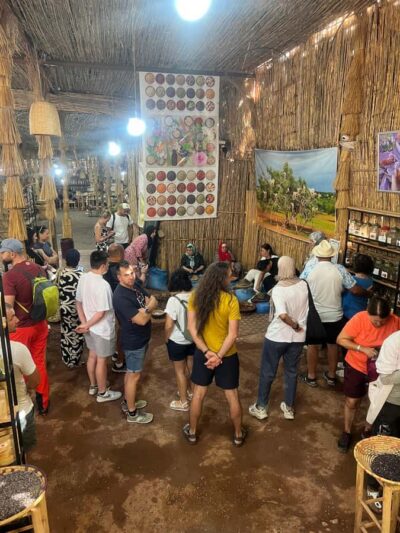
Atlas Mountains, Ourika Valley, Waterfall & Lunch
Read our review →

Quad Bike Tour to Palm Oasis and Jbilat Desert
Read our review →Browse the lists this tour appears in