
Reviewed · MARRAKECH TOURS
Moroccan Cooking Workshop in Marrakech
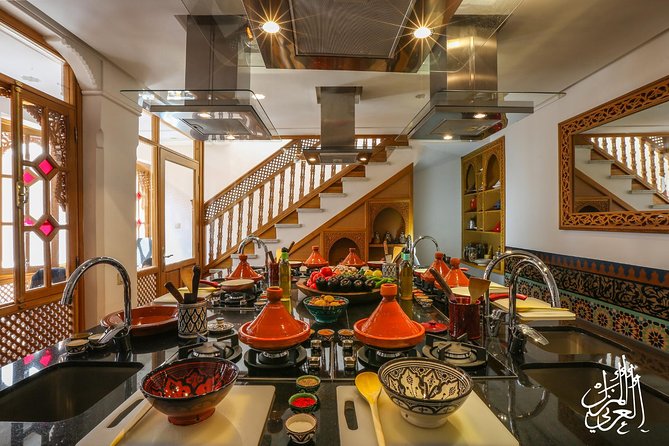
The best part of this Marrakech experience is simple: you do not just eat Moroccan food, you learn how to make it. At La Maison Arabe, a traditional cook leads you through local ingredients, spices, bread, tea, and a cooked meal you can try again at home. Your own workstation gives the class a calm, personal feel.
I like the ceremonial Moroccan tea and the chance to adjust the food to your taste, including the amount of garlic. I also like the practical format: the class is short enough for a busy Marrakech schedule, yet you still cook and eat your own meal. The main consideration is timing. One hour goes quickly, so choose a longer class if you want more recipes and a slower pace.
Key points to know before booking
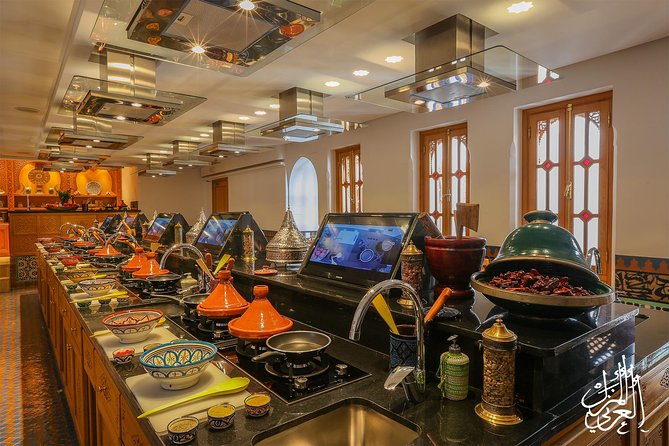
- You cook at your own station: La Maison Arabe gives participants individual workspaces rather than asking everyone to crowd around one counter.
- Tea begins the lesson: The experience includes a Moroccan tea ceremony, not just a quick welcome drink.
- Bread is part of the show: You see how Moroccan bread is made before starting the main cooking work.
- A Dada leads the cooking: The traditional Moroccan cook, known as a Dada, teaches the hands-on portion with help from an interpreter.
- You eat what you prepare: The session ends with a tasting of the dishes, with Moroccan wine available as an option.
- The class suits adults and older children: Children under 12 are not permitted for security reasons, and the stated maximum is two participants.
Cooking Moroccan food instead of only ordering it
Marrakech is an easy place to eat well. You can order tagine, couscous, salads, bread, and mint tea in many settings. But a cooking class answers the questions a restaurant meal cannot: how the spices are used, how the bread is shaped, and how the tagine comes together.
That makes this activity useful beyond the hour itself. You leave with a method, not just a memory. Several participants found the tagine easy enough to repeat at home, and one solo participant appreciated being able to season the dish to personal taste. That practical touch matters. Moroccan food is not one fixed formula, and the class lets you understand how flavor can be adjusted.
The setting is La Maison Arabe, a well-known hotel and restaurant at 1 Derb Assehbi in Marrakech. The cooking school has a polished setup, with individual stations and staff who help when a step causes trouble. You are not left to guess what to do next.
The teaching team may include a French or English interpreter and a multilingual guide. Names associated with the instruction include Mohammad, Hasna or Hasina, Wafa, Fatiha, and Dada Habiba. The exact team may vary, but the format is clear: a Dada teaches the cooking, while an interpreter helps explain the process and the cultural background.
More Cooking Classes in Marrakech
- Marrakech: Moroccan Cooking Class with Pickup
★ 4.6 · 1,862 reviews - Marrakech: Traditional Moroccan Cooking Class & Market Visit
★ 4.8 · 1,861 reviews - Marrakesh: Moroccan Dishes Cooking Class with a Local Chef
★ 5.0 · 1,615 reviews
The tea ceremony sets the tone
The class begins with a welcome and an introduction from a French and/or English interpreter. Then comes Moroccan tea. This is more than a beverage included with the booking. The ceremony gives you a first look at the care and rhythm behind Moroccan hospitality.
You learn how mint tea is prepared and served in the traditional way. The tea portion also helps place the cooking in a wider cultural setting. Moroccan food is closely tied to welcoming people, sharing time, and sitting down together, so starting with tea makes sense.
The timing of this opening is worth noting. The listed duration is about one hour, and the tea ceremony takes part of that window. I see this as a strength if you want a compact cultural activity, but a limitation if your goal is a long, detailed cooking course. You will get a taste of the customs, not a full seminar on Moroccan tea.
If you arrive early, the hotel has a pleasant setting where you can have a coffee, tea, or cold drink before the class. That is a sensible plan, especially if you are coming from the medina and want a few quiet minutes before the lesson begins. These drinks before or after the class are not part of the included package.
Bread first, then hands-on cooking
After the tea, you see a demonstration of Moroccan bread making. Bread can look like a small part of the meal, but it is an important introduction to the cooking style. It shows you how a familiar staple is handled before you move on to the more complex dish.
The format is demonstration followed by guided work. You have your own preparation area, and the instructors come around to assist with individual steps. That arrangement works especially well for a solo participant or a pair who want to stay focused rather than watch from the back of a large group.
The class is not designed as a professional chef course. You will not be working through every part of Moroccan cuisine in an hour. Instead, the lesson gives you a clear, usable entry point. You learn enough about ingredients, preparation, and seasoning to understand what is happening in the pot or tagine.
The personal workstations are one of the stronger details here. They offer privacy and make it easier to follow along. You can work at your own pace within the group, ask for help, and make small choices about seasoning. That is more useful than simply watching a chef prepare a finished dish.
The Dada’s cooking lesson and the Moroccan spice cupboard
The central portion is taught by the Dada, the traditional Moroccan cook. The lesson focuses on local ingredients and the techniques behind the dishes. The instructors explain the role of Moroccan spices, and the teaching includes cultural details rather than treating the food as a list of steps.
Spices are a major reason to take this class. At home, it is easy to buy a blend and sprinkle it into a pot without knowing how the flavors work together. Here, the lesson gives you a better sense of the ingredients used in Moroccan cooking and how they affect the final dish.
Tagine is the dish most clearly connected with the class. Participants have prepared chicken tagine, and the dish has been singled out as a highlight. The important point is not only that you cook tagine, but that you learn how the dish is built and can adjust it to your preference.
The staff help when a particular step is difficult. That matters in a short class, where one missed instruction could leave you behind. The tone appears warm and patient, with the interpreter available to explain details in French or English. If you want a lesson with formal culinary theory, this may feel light. If you want to cook a Moroccan meal during your holiday, it fits the purpose well.
Some sessions have included a starter, a main course, and a side dish, while the staff prepared the dessert. The exact menu can vary, so do not book expecting a guaranteed list of dishes unless the provider confirms it. The reliable promise is the guided preparation of Moroccan food followed by a tasting.
More cooking classes out of Marrakech:
- Moroccan Cooking Class & Marrakech Market Visit with Chef Khmisa
★ 5.0 · 1,504 reviews - Half-Day Cooking Class with Local Chef Laila in Marrakech
★ 5.0 · 952 reviews - Marrakech: Moroccan Cooking Class with a Local Family
★ 4.9 · 668 reviews - Marrakech: Moroccan Cuisine Cooking Class in Local Home
★ 4.8 · 508 reviews
Sitting down to taste your own meal
The meal at the end gives the class a satisfying finish. You sit down and eat what you helped prepare, rather than leaving with a recipe and no sense of the final result.
That tasting also lets you judge the balance of spices, texture, and seasoning while the instructions are still fresh. If you made a tagine, you can see how the preparation choices shaped the dish. This is where the workshop becomes more than a demonstration.
Moroccan wine can be offered as an optional part of the meal. Drinks are otherwise listed as excluded, so you should not assume that wine, soft drinks, or other beverages are included in the $34.76 price. Afternoon tea, food tasting, and lunch are included in the stated package.
The ending can feel social, particularly when the class includes several dishes and everyone sits down together. At the same time, the one-hour version may leave only a short period for eating. If sharing a relaxed meal is as important to you as learning the recipes, ask about the longer class options.
Is $34.76 good value?
At $34.76 per person, this is not the cheapest way to eat lunch in Marrakech. You can find a less expensive meal elsewhere. But the fee covers instruction, ingredients, the tea ceremony, bread demonstration, your workstation, and the food tasting, so the comparison should be with a meal plus a cultural activity.
I consider the price fair for someone who wants a hands-on experience in a professional setting. The individual station is a real benefit, and the food is not simply served to you. You take part in preparing it, then eat the result.
The value is stronger if you plan to cook Moroccan food at home. The lesson covers spices, tagine preparation, bread, and tea, giving you several ideas to carry forward. A recipe book may also be available for purchase, which could help if you want to recreate the dishes after returning home.
The one-hour version is best for a tight itinerary. The listing also refers to choices involving different class lengths, and one participant who enjoyed the short lesson returned for a three-hour session. Choose the longer option if you have time and want a fuller menu, more explanation, and a more relaxed meal.
Who will enjoy this workshop most?
I would recommend it to couples, solo visitors, and food-focused families with children aged 12 or older. The personal workstations make it comfortable for a solo booking, and the stated maximum of two people gives couples a more private setup.
It is also a good match for anyone who enjoys learning through doing. You chop, season, prepare, and taste. You do not need to be an experienced cook, since the instructors provide help during the process.
The workshop may be less suitable if you want a long market visit, a full culinary tour, or a broad survey of many Moroccan regions. Transportation to and from other attractions is not included, and the experience begins and ends at La Maison Arabe. Plan your own route there using Marrakech public transport or another local option.
There is one point worth confirming before you book. The stated maximum is two participants, but a separate account describes a class of 14 people. That could reflect a different session or format. If group size is important to you, contact La Maison Arabe and confirm the arrangement for your date.
Timing your class in a Marrakech itinerary
The workshop lasts about one hour, so it can fit neatly between sightseeing plans. It begins at Hotel La Maison Arabe and ends at the same meeting point. You do not need to arrange a separate transfer as part of the activity, but transportation to and from attractions is not included.
The one-hour course is useful on a departure day, and one couple chose it because they had a flight later that day. Still, leave enough time for the class, the meal, and your journey onward. Confirmation is sent within 48 hours of booking, subject to availability, so do not wait until the last minute if your schedule is fixed.
The experience is generally booked about 21 days ahead. That does not guarantee that every date will sell out, but it is a good reason to reserve early during a busy Marrakech visit.
Children under 12 cannot take part for security reasons. The experience may be operated by a multilingual guide, and French and English interpretation is part of the stated program.
How the experience compares with a restaurant meal
A restaurant gives you more time to sit back and sample several dishes. This workshop gives you more control and a better understanding of what is on your plate.
You also gain small details that can change how you cook later. The class covers the ceremony of Moroccan tea, bread making, spice use, and tagine. Those pieces connect the meal to daily customs instead of presenting Moroccan food as an exotic menu with unfamiliar names.
The trade-off is comfort versus participation. You will spend part of the hour preparing food, and the class may move quickly. If you want a quiet lunch with no work, choose a restaurant. If you want to understand how the meal is made, this workshop offers more lasting value.
Should you book the La Maison Arabe cooking class?
Book it if you want a short, hands-on introduction to Moroccan food and you like the idea of eating a meal you helped prepare. The tea ceremony, bread demonstration, individual workstation, and guided tagine lesson give the hour a clear shape.
I would choose the one-hour version for a compact itinerary or a departure day. I would choose a longer option if you want several courses, more time with the Dada, or a slower meal afterward.
At $34.76, the experience is worth it for food-minded visitors, solo participants, and couples who want more than another restaurant lunch. Just confirm the class size, available language, menu, and drinks if those details matter to you. Free cancellation is available up to 24 hours before the start time, while cancellations or changes within 24 hours are not refunded.
FAQ
Where does the Moroccan cooking workshop begin?
It begins at Hotel La Maison Arabe, 1 Derb Assehbi, Marrakech 40000, Morocco.
Where does the experience end?
The activity ends back at the meeting point, Hotel La Maison Arabe.
How long does the cooking class last?
The listed experience lasts about one hour. Longer cooking class options are also available.
What does the class include?
The stated inclusions are afternoon tea, food tasting, and lunch. The program also includes commentary and live entertainment.
Are drinks included?
Drinks are listed as not included. Moroccan wine may be available as an optional part of the meal.
Are children allowed to join?
Children under 12 are not permitted in the cooking classes for security reasons.
How many people can join the class?
The stated maximum is two participants. Because class formats may vary, confirm the group size when booking if this is important to you.
Can I cancel for a full refund?
Yes. You can cancel at least 24 hours before the experience start time for a full refund. Cancellations or changes made less than 24 hours before the start time are not refunded.
More Workshops in Marrakech
- Marrakech: Pottery Workshop with Moroccan Tea
★ 4.8 · 756 reviews - Marrakech: Moroccan Cooking Workshop at La Maison Arabe
★ 5.0 · 446 reviews - Marrakesh cooking class with chef Hassan – Local dishes
★ 5.0 · 425 reviews - Marrakech: Tajine Cooking Class in a Traditional Riad
★ 4.8 · 424 reviews
Just listed out of Marrakech
- Marrakech: Ouzoud Waterfalls Trip, Guide & Boat + Lunch★ 4.7 · 33 reviews
- From Marrakech: Ourika Valley Trip, Waterfall Hike & Lunch★ 4.4 · 33 reviews
- Magical Dinner show and Quad bike In Agafay Desert Marrakech★ 4.5 · 33 reviews
- Marrakech: Quad excursion to the palm grove and Jbilets desert★ 4.5 · 33 reviews
- Moroccan Hands on traditional pastries & Tea class in Marrakech★ 4.5 · 33 reviews
- Marrakech: Vibrant Dinner Show at The Lotus Club★ 3.9 · 33 reviews
- From Marrakech: Small Group To Essaouira & Medina Day Trip★ 4.3 · 33 reviews
- From Marrakech: 3-Day Merzouga and Sahara Desert Tour★ 4.5 · 33 reviews
Marrakech Tours, compared.

Agafay Desert Sunset, Camel Ride, and Dinner Show
Read our review →

Agafay Desert Quad & Camel Rides with Dinner Show
Read our review →
Agafay Desert Quad Biking Tour with Dinner-Show
Read our review →
Atlas Mountains, Ourika Valley, Waterfall & Lunch
Read our review →
Quad Bike Tour to Palm Oasis and Jbilat Desert
Read our review →Browse the lists this tour appears in