
Reviewed · MARRAKECH TOURS
Marrakech street food tour with a local
The best thing about this Marrakech tour is its refusal to serve the usual tourist menu. You skip couscous and tagine and instead follow a local guide through the Medina for eight or nine generous tastings, from airy sfenj donuts to grilled liver and steamed sheep’s head. I like the way the food leads you into alleys and neighborhood spots you might not find alone, and I like having a guide to explain the dishes and answer questions as you eat.
This is a casual street-food walk, not a polished restaurant crawl. That is part of its charm, but it also means the pace, stops, and exact dishes can vary with taste preferences and local availability. Come hungry, and be ready to try foods that may be unfamiliar.
Key points at a glance
- Eight or nine local dishes: Food and drinks are included, with no extra tasting fees along the way.
- A break from tagine: The menu focuses on Moroccan pancakes, soup, grilled meat, fruit, sweets, and herbal drinks.
- Real Medina wandering: You walk from Café de France through local alleys and eating spots around Jemaa el-Fnaa.
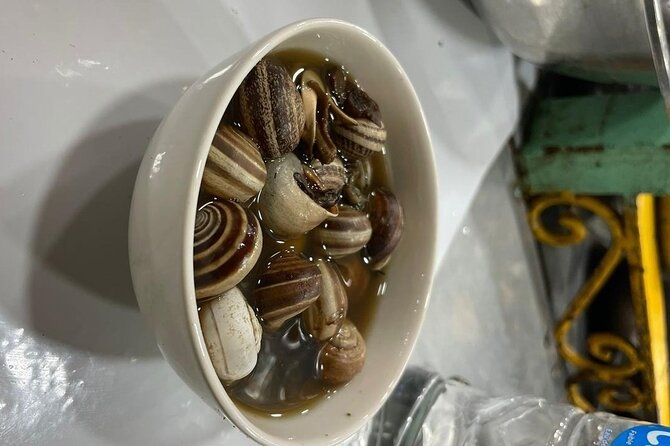
- Unusual options: Sheep’s head, cactus fruit, snail soup, liver, and Moroccan herbal tea may all enter the picture.
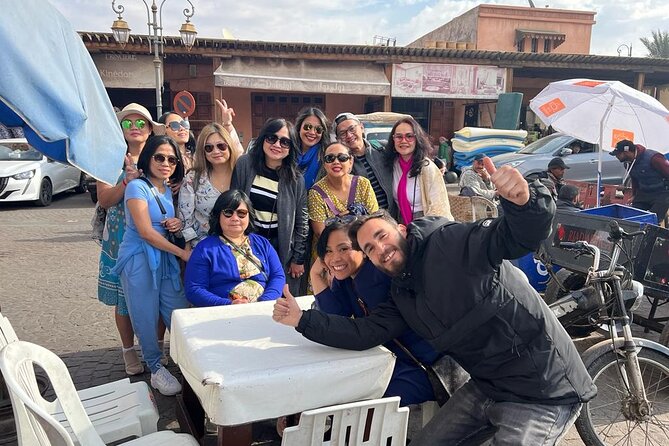
- Small maximum group: The tour accepts up to 15 people, which gives you a better chance to speak with the guide.
- Three hours of eating: Pace yourself carefully. Several small portions add up quickly.
Why this food walk feels different from a standard Marrakech tour
Many first meals in Morocco revolve around couscous and tagine. Both deserve their place, but they only tell part of the story. This tour takes you toward the food people grab in the street, share at simple local stops, or eat between errands in the Medina.
You meet at Café de France, beside Jemaa el-Fnaa, the large central square that serves as Marrakech’s main meeting point. From there, the guide leads you into the surrounding lanes. The route is not simply a march from one restaurant to the next. You move through the old city while eating, watching the square and side streets change around you.
I like this format because food becomes your reason to explore. A guide can point out a place you would probably pass without noticing, then explain what is being cooked and how it fits into Moroccan food culture. Previous guides have included Mohamed, Ismail, and Lhoussaine, although your assigned guide may be different.
The maximum group size is 15 people. That is not a private tour, but it is still small enough for a guide to keep the group together and respond to questions. Ismail, in particular, has been praised for guiding people through the busy square and even part of the way home, a useful quality in an area that can feel confusing after dark or during peak activity.
A few other Marrakech days worth comparing
- From Marrakech: Merzouga 3-Day Desert Safari with Food
★ 4.7 · 12,232 reviews - Marrakech: Street Food Tour by Night
★ 4.8 · 2,838 reviews - 3-Day Tour to Merzouga Erg Chebbi with Food & Camel Trek
★ 5.0 · 1,770 reviews
Starting with msemen, soup, and sweets
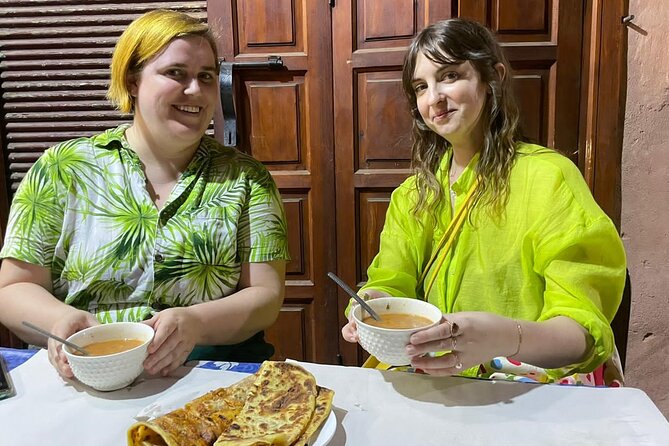
One likely early stop is msemen Amer, a traditional Moroccan pancake that may come with a savory filling. Msemen is chewy, flaky, and substantial. It gives you something warm in your stomach before the later tastings begin.
You may also try harira with chebakia. Harira is a Moroccan soup often made with tomatoes, legumes, herbs, and spices. Chebakia is a sweet, sticky pastry, so the pairing brings together a savory bowl and a sugary bite.
This is a useful introduction to the tour’s general approach. You are not just checking off dishes. You are tasting combinations that make sense in local eating habits. The soup can feel filling, so take a modest portion if the guide allows it. There are still many stops ahead.
The precise food order may change. The menu says dishes depend partly on your preferences, and the tour asks you to report allergies or dietary restrictions in advance. The guide will try to provide alternatives, but that accommodation is described as best effort rather than guaranteed.
Makkla bel kefta, sfenj, and fruit in the Medina
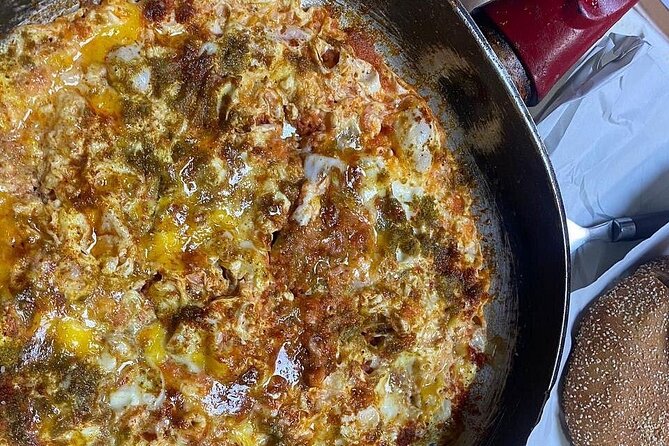
Makkla bel kefta is presented as Marrakech’s version of shakshuka, with eggs, tomato, and spiced meat in a pan-style dish. It is the sort of food that shows how familiar ingredients can take a different form from one country to the next.
Sfenj follows the savory food with something lighter. These Moroccan donuts are airy and usually eaten fresh. They are less dense than many Western donuts, though the combination of several fried or bread-based stops can still become heavy over three hours.
You may also receive lhnidiya, the Moroccan name given here to cactus fruit. It is cool, juicy, and refreshing, with small seeds that you need to manage as you eat. This kind of stop is one reason I value food walks: you get a taste of produce and snacks that you might not think to order on your own.
Panaché provides another fresh note. It is a smoothie made from seasonal fruits. The fruit selection can change, so do not expect one fixed recipe. After soup, pancakes, fried dough, and meat, the drink offers a welcome reset.
Grilled meat and the more challenging bites
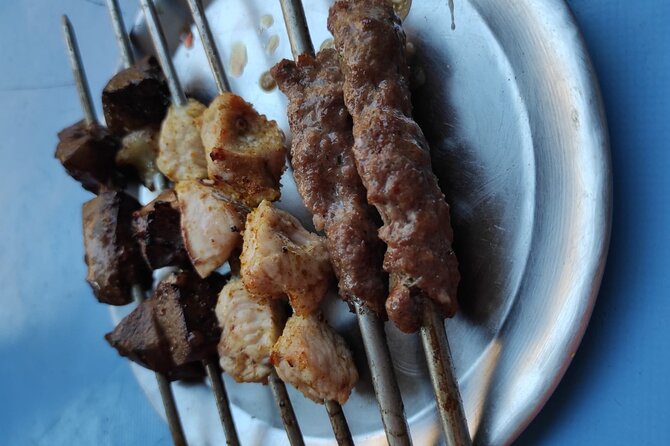
Chwa is the heartier part of the route. It includes grilled meat such as beef, turkey, and liver. You may receive skewers or other simple grilled portions, depending on the stop and your preferences.
Grilled food is often where the street setting matters most. You can eat it hot, shortly after it leaves the grill, rather than receiving a version that has been sitting in a restaurant kitchen. The simple preparation also lets the seasoning and smoke do most of the work.
The more adventurous tasting is rass mbekher, steamed sheep’s head seasoned with cumin. This is not a token mention on the menu. It is a genuine traditional delicacy, and the description makes clear that it may be part of the food selection.
You do not have to pretend every dish will suit you. If sheep’s head, liver, or unfamiliar textures are not for you, tell the guide. Still, I would encourage you to try at least a small bite when possible. One reason to book this tour instead of a standard Moroccan dinner is the chance to understand foods that do not usually appear on an introductory menu.
The supplied highlights also mention snail soup. It does not appear in the numbered nine-dish list, so you should treat it as a possible tasting rather than a promise. The same applies to exact meat choices and other substitutions.
Same city, a completely different day out:
- Marrakech: Agafay Desert Sunset, Camel Ride, and Dinner Show
★ 4.6 · 35,119 reviews - From Marrakech: Ouzoud Waterfalls Guided Hike and Boat Trip
★ 4.7 · 33,630 reviews - Marrakech: Agafay Desert Quad & Camel Rides with Dinner Show
★ 4.8 · 27,382 reviews - Marrakech: Agafay Desert Quad Biking Tour with Dinner-Show
★ 4.8 · 16,569 reviews
Herbal tea and the final taste of Marrakech
Khoudenjal is a hot herbal infusion made with eucalyptus. It is described as a drink that clears the senses and helps digestion. After several tastings, a warm herbal drink makes a sensible finish.
This is not the mint tea ceremony many visitors expect. Khoudenjal has its own herbal character, and eucalyptus gives it a sharper taste. If you enjoy herbal drinks, it can be one of the more memorable stops. If you prefer mild tea, ask the guide what is in the cup before drinking.
The tour also includes Moroccan frozen yogurt among its highlights, although it is not listed in the nine-item sequence. Again, the exact offerings may vary. The important point is that you receive a broad mix of soup, sweets, grilled food, fruit, drinks, and fried snacks rather than one long meal.
Food and drinks are included in the $40.71 price. That matters because the cost is not simply paying for a guide to walk you around the square. You are also covering up to nine tastings, which can amount to a full meal and several snacks. For someone who wants to sample widely, the price is reasonable.
The value is weaker if you eat very little, avoid meat, or want only familiar dishes. Dietary alternatives may be offered if you give advance notice, but the menu is built around local street food, not a fully customizable vegetarian or allergy-specific program.
What the three-hour route is really like
The tour lasts about three hours and returns to the starting point. That makes it easy to fit into a day of sightseeing around the Medina. You can use it early in your Marrakech stay to learn what foods to look for later, or book it near the start of your visit so the guide can help you get oriented around Jemaa el-Fnaa.
The walk takes place in the Medina’s busy alleys. You should expect uneven movement through crowded streets and frequent pauses for eating. The experience is not designed for someone who wants to sit in one place or follow a strict restaurant timetable.
A mobile ticket is provided, and confirmation arrives at booking. The meeting point is Café de France at Argana, listed at J2H6+CPV Jamâa el-Fnna, number 18, Znikat Rahba, Marrakech 40000. It is worth copying the meeting details into your phone before you leave, since the square has several cafés and many people moving through it.
The tour is near public transportation, but it begins and ends at the same meeting point. No hotel pickup is included in the information provided, so plan to reach Café de France yourself.
How to pace yourself through nine tastings
The most useful advice is simple: do not finish every serving quickly at the first two stops. The experience can include eight or nine dishes, and the portions may feel generous when combined.
I would use this approach:
- Eat a small amount at the opening stops, especially if you start with msemen or harira.
- Save room for the grilled meat and fruit.
- Ask questions before accepting a full portion of an unfamiliar dish.
- Drink water during the walk if you have it available.
- Tell the guide early about allergies or dietary restrictions.
The instruction to come hungry is serious. This is not a short sampling of two or three bites. Past groups have spent nearly the full three hours eating soup, skewers, snacks, fruit, dessert, and drinks.
That abundance is one of the tour’s strongest features, but it is also the main practical drawback. If you have a small appetite, you may need to share, take smaller portions, or politely decline some food. The guide can explain what is coming next, so ask before you fill up.
The human side of the tour
The food is only half the point. The route gives you time to speak with someone from Marrakech about recipes, ingredients, and local habits. A good guide can turn a plate of grilled meat or a bowl of soup into a conversation about daily life.
The experience is intentionally informal. You should not expect elaborate commentary, staged entertainment, or a glossy presentation. The appeal is the chance to stop at simple places and ask direct questions while standing or sitting among local customers.
That informality will suit you if you like a little unpredictability. It may not suit you if you want a carefully scripted culinary lesson, formal restaurant seating, or detailed written information about every ingredient.
The hosts named in the feedback include Mohamed, Ismail, and Lhoussaine, and the strongest praise centers on their friendliness, care, and ability to explain each food. The tour’s quality will naturally depend on the guide working that day, but the format gives a personable guide plenty of room to improve your experience.
Who should book this Marrakech food tour?
I would recommend it to first-time visitors who want a quick introduction to Marrakech food beyond the famous dishes. It is also a good match for repeat visitors who have already eaten tagine and couscous and want something less familiar.
Adventurous eaters will get the most from the tour. Rass mbekher, liver, cactus fruit, snail soup, and unusual herbal drinks are not the safest choices for a cautious palate, but they are exactly what makes the route memorable.
It can also suit families and mixed groups if everyone understands that this is a walking food tour with unfamiliar dishes. The maximum of 15 people keeps it from becoming a huge group, though anyone who dislikes crowds should remember that Jemaa el-Fnaa and the Medina can be intense.
I would be more cautious if you have strict dietary needs. The guide will try to accommodate allergies and restrictions when told in advance, but the advertised foods include meat, dairy, wheat, and ingredients that may be difficult to replace at every stop.
Booking, cancellation, and timing advice
The tour costs $40.71 per person and is booked, on average, 19 days ahead. That advance pattern suggests you should reserve before arrival if your Marrakech schedule is fixed, especially if you want a particular day.
Free cancellation is available until 24 hours before the start time for a full refund. Cancellations or changes made inside that 24-hour window are not refunded or accepted. The cut-off uses Marrakech local time.
The experience requires a minimum number of participants. If that minimum is not reached and the tour is canceled, you can receive a full refund or be offered a different date or experience.
Should you book it?
Book this tour if you want a generous, informal food walk that gets beyond Morocco’s familiar restaurant dishes. The strongest reasons are the number of tastings, the chance to try foods such as sfenj, chwa, cactus fruit, and sheep’s head, and the local guidance through the lanes around Jemaa el-Fnaa.
Skip it if you want a quiet seated meal, a fixed menu, or a polished culinary presentation. Also think twice if you have a very limited diet or a small appetite.
For most curious eaters, the $40.71 price offers solid value because it combines a three-hour Medina walk with food and drinks at up to nine stops. Arrive hungry, pace yourself, and tell the guide about restrictions before the first pancake arrives.
FAQ
Where does the Marrakech street food tour start?
The tour starts at Café de France at Argana, listed at J2H6+CPV Jamâa el-Fnna, number 18, Znikat Rahba, Marrakech 40000, Morocco.
Where does the tour finish?
The activity ends back at the same meeting point where it begins.
How long does the tour last?
The tour lasts approximately three hours.
How many foods will I try?
You can expect up to eight or nine local dishes, depending on your taste preferences and the food available during the route.
Are food and drinks included?
Yes. All food and drinks are included in the price.
Does the tour include tagine and couscous?
No. The tour is specifically built around other Moroccan foods and does not focus on tagine or couscous.
What happens if I have an allergy or dietary restriction?
You should tell the provider in advance. The guide will try to offer alternative dishes, but the information describes this as a best-effort accommodation.
What is the cancellation policy?
You can cancel at least 24 hours before the start time for a full refund. Cancellations or changes made less than 24 hours before the start time are not accepted and are not refunded.
Just listed out of Marrakech
- Marrakech: Ouzoud Waterfalls Trip, Guide & Boat + Lunch★ 4.7 · 33 reviews
- From Marrakech: Ourika Valley Trip, Waterfall Hike & Lunch★ 4.4 · 33 reviews
- Magical Dinner show and Quad bike In Agafay Desert Marrakech★ 4.5 · 33 reviews
- Marrakech: Quad excursion to the palm grove and Jbilets desert★ 4.5 · 33 reviews
- Moroccan Hands on traditional pastries & Tea class in Marrakech★ 4.5 · 33 reviews
- Marrakech: Vibrant Dinner Show at The Lotus Club★ 3.9 · 33 reviews
- From Marrakech: Small Group To Essaouira & Medina Day Trip★ 4.3 · 33 reviews
- From Marrakech: 3-Day Merzouga and Sahara Desert Tour★ 4.5 · 33 reviews
Marrakech Tours, compared.

Agafay Desert Sunset, Camel Ride, and Dinner Show
Read our review →

Agafay Desert Quad & Camel Rides with Dinner Show
Read our review →
Agafay Desert Quad Biking Tour with Dinner-Show
Read our review →
Atlas Mountains, Ourika Valley, Waterfall & Lunch
Read our review →


Quad Bike Tour to Palm Oasis and Jbilat Desert
Read our review →Browse the lists this tour appears in