
Reviewed · MARRAKECH TOURS
Marrakech: Private Souk Tour & Traditional Workshops
Marrakech’s souks make more sense when someone helps you read them. This private walk leads you from Jemaa el-Fnaa into lanes filled with carpets, pottery, lanterns, spices, dyes, and handworked metal. You get a look at the trades behind the colorful displays, not just a fast march past shops.
I like the private format, since your group can focus on the crafts that interest you and move at a shared pace. I also like the route’s variety: it links famous public spaces with working souk quarters where artisans continue old techniques. The main drawback is time. Three hours goes quickly, and this is a walking tour through narrow lanes, not a relaxed half-day workshop.
Key points to know before you book
- A private walk for your group: Only your party takes part, with a local guide leading the way.
- A useful route through the medina: The walk connects Jemaa el-Fnaa, Rahba Kedima Square, Souk Semmarine, and several trade-focused souks.
- Crafts are central: Expect carpets, pottery, lanterns, spices, dyes, and metalwork, with chances to speak with artisans.
- A three-hour introduction: The tour gives you a broad first look rather than long, hands-on time at one workshop.
- Simple meeting point: You begin and end at Hôtel Restaurant Café de France beside Jemaa el-Fnaa.
- Good booking flexibility: Free cancellation is available up to 24 hours before the start time.
Why a private souk walk helps in Marrakech
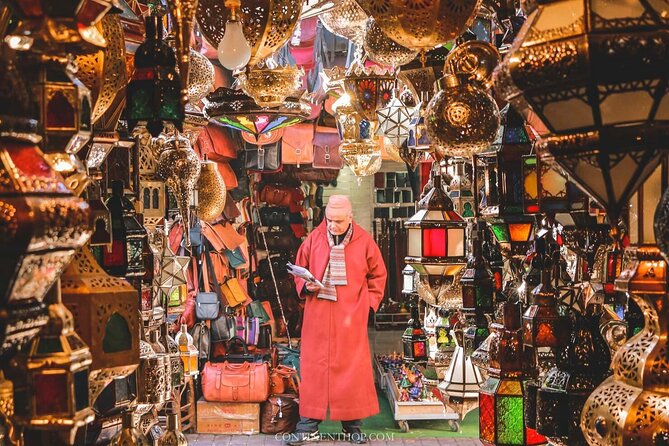
The medina can feel like a maze even when you have a map. Lanes twist, shop displays spill into the walkway, and one souk often blends into another without a clear sign. A guide gives you a thread to follow and helps explain what you are seeing as you go.
That matters most if this is your first visit to Marrakech. You can wander alone, of course, but it is easy to see only the sales pitch: buy this carpet, smell this spice, admire this lantern. A local guide can put the objects in context by pointing out the type of work being done and introducing you to people who make or sell it.
This tour is not built around grand monuments. Its subject is everyday craft and commerce. You get the feel of Marrakech through its narrow lanes, work areas, market squares, colors, smells, and conversations. For me, that makes the experience more useful than a quick shopping stop.
The private setup is particularly helpful for couples, families, or a small group of friends. You are not sharing the walk with strangers, and the guide can spend more time answering your questions. The tour still has a set route, but a private group usually makes it easier to pause when a particular craft catches your eye.
A few other Marrakech days worth comparing
- Marrakech: Bahia Palace, Saadian Tombs, Souk and Medina Tour
★ 4.7 · 4,974 reviews - Marrakech: Ben Youssef, Secret Garden, & Souks Walking Tour
★ 4.6 · 2,802 reviews - Marrakech: Colorful Medina Souks Guided Walking Tour
★ 4.7 · 2,470 reviews
Starting at Café de France and Jemaa el-Fnaa
The meeting point is Hôtel Restaurant Café de France on Rue des Banques, beside Jemaa el-Fnaa. This is a practical place to start because the square is one of the clearest reference points in the old city. You return here at the end, so you do not need to learn a second meeting point after the walk.
The first stop at Jemaa el-Fnaa lasts about 10 minutes. The square is Marrakech’s great public stage, and it gives you a quick sense of how the medina works. You can expect a busy open space, food stalls, local activity, and plenty of movement before the route narrows into the souks.
Ten minutes is enough for orientation, but not for a long visit. Think of this stop as a starting frame for the rest of the walk. Your guide can help you understand where the old market lanes lead and how the square connects to them.
A small practical point: Café de France is easy to identify, but the square can be crowded. Arrive with the meeting point saved on your phone and allow time to find the café. The tour offers a mobile ticket, which keeps the booking information close at hand.
Rahba Kedima Square and the first market lanes
From Jemaa el-Fnaa, the route continues to Rahba Kedima Square for about 15 minutes. This space provides another look at the medina’s market life, with stalls and displays arranged around a public square rather than along one tight passage.
The stop is short, but it helps you see how Marrakech’s trading areas are organized. You may find spices, small craft goods, and other market items here, though the exact displays can change. The point is less about checking off one product and more about learning how to look at the souks.
I would pay attention to the guide’s explanations at this stage. This is where a little background can make later stops easier to understand. Instead of treating each shop as a random collection of goods, you begin to connect the objects with the people and trades that produce them.
The narrow lanes also demand basic courtesy. Keep close to your group, step aside when possible, and watch where you place your feet. The souks are working market streets, not a quiet museum corridor.
Souk Haddadine and the sound of metalwork
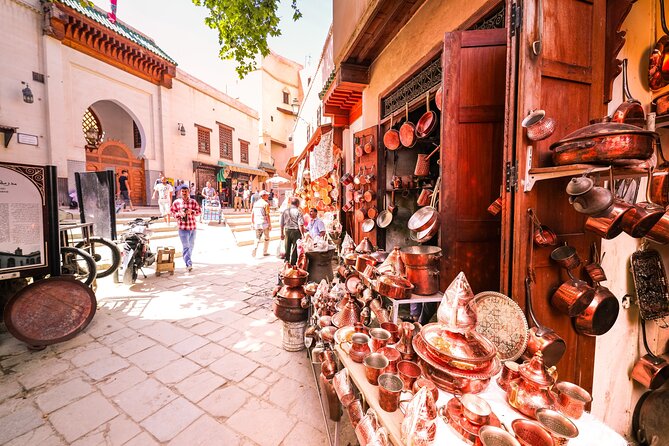
Souk Haddadine is scheduled for about 15 minutes. The name points to the metalworkers’ quarter, making this one of the more trade-specific sections of the walk. Here, your attention shifts from general shopping to the practical work behind lanterns, tools, and decorative metal pieces.
The value of this stop is that it gives you a chance to see craft as labor. A finished lantern may look simple on a shop shelf, but the work involved in shaping and decorating it is another matter. If artisans are working during your visit, you can ask about their methods and see how traditional skills remain part of the market.
Do not expect a long demonstration based on the published schedule. Fifteen minutes passes quickly, and the tour covers several other areas. Still, even a short stop can be worthwhile if you use it to ask focused questions rather than simply browse.
This is also one of the places where haggling becomes part of the experience. Bargaining is a normal feature of souk shopping, but it is better approached as a social exchange than a contest. Ask the price, stay polite, and buy only if you genuinely want the item.
Same city, a completely different day out:
- Marrakech: Agafay Desert Sunset, Camel Ride, and Dinner Show
★ 4.6 · 35,119 reviews - From Marrakech: Ouzoud Waterfalls Guided Hike and Boat Trip
★ 4.7 · 33,630 reviews - Marrakech: Agafay Desert Quad & Camel Rides with Dinner Show
★ 4.8 · 27,382 reviews - Marrakech: Agafay Desert Quad Biking Tour with Dinner-Show
★ 4.8 · 16,569 reviews
Walking through the Medina of Marrakesh
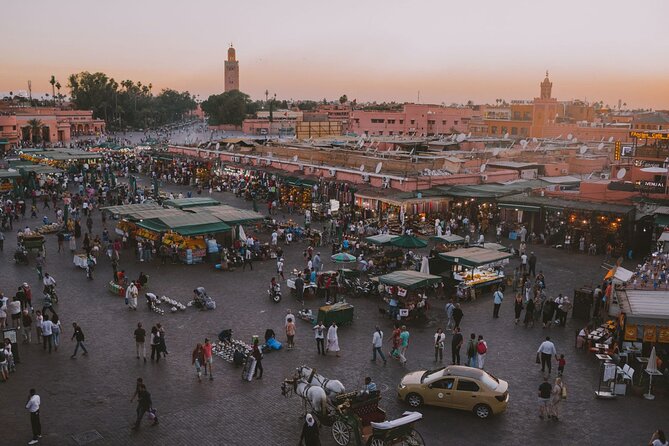
The central medina section lasts about 30 minutes, the longest single portion of the route. This gives you time to connect the individual souks and understand the old city as a whole rather than as a series of separate stalls.
The medina is where the walk’s sensory side comes together. You may notice dyed fabrics, cooking smells, pottery, woven goods, lanterns, and spices within a short distance of one another. The colors and aromas are part of the appeal, but the crowded lanes can also be tiring.
A guide is useful here because the route can be confusing. You can focus on what is around you instead of constantly checking directions. The guide also helps separate a genuine craft area from a shop that is simply presenting goods for sale.
This portion is a good time to discuss shopping plans. If you want a carpet, lantern, pottery item, or spice selection, tell the guide. Since the activity is private, your interests can shape the questions and pauses more easily than on a large group tour.
Still, keep your expectations sensible. The tour includes visits to traditional craft areas, but the supplied details do not promise that you will make an object yourself or receive a lengthy workshop lesson. Think of it as guided access to the working souks, with conversations and explanations along the way.
Souk des Dyeuriers and the color of the market
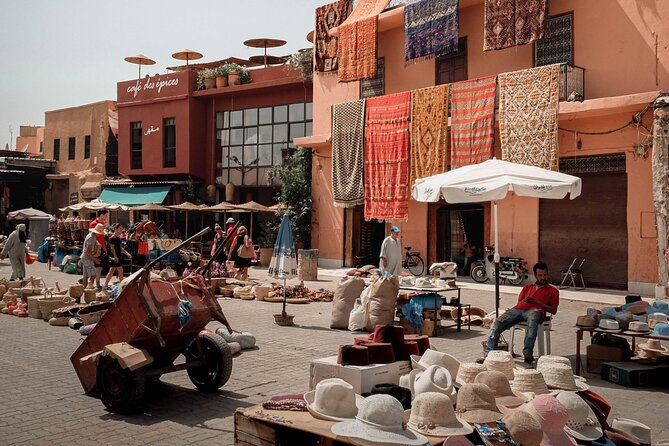
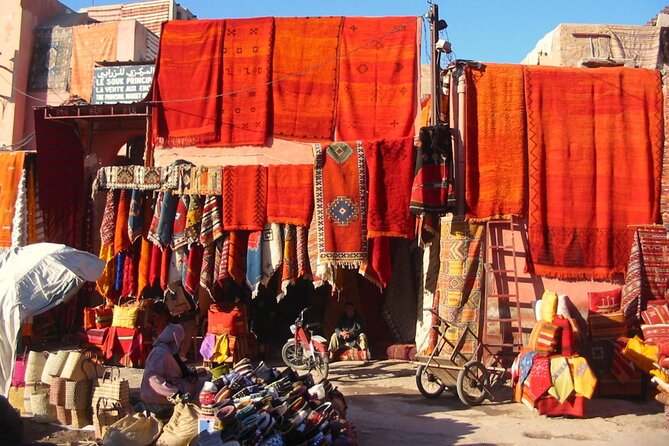
The route then reaches Souk des Dyeuriers for roughly 15 minutes. This is the dyers’ souk, where color and textile work take center stage. It adds a different layer to the craft story, moving beyond finished products to the processes that give fabrics their appearance.
For me, this is the kind of stop that makes a souk walk more than a shopping trip. You can look at the goods in stores on your own, but a guide can help you notice how dyes, cloth, and finished textiles relate to one another. If dyeing work is taking place, you may have the chance to ask about materials and technique.
Again, the visit is brief. You will not have unlimited time to compare every color or textile. Use the stop to observe, ask questions, and decide which products you might want to examine later.
If you are sensitive to strong smells, the market’s food, spice, and dye aromas may be intense. That is part of the setting, but it is worth knowing before you book. Comfortable shoes and light clothing will make the walk easier, especially in warm weather.
Souk Semmarine and the broadest shopping stop
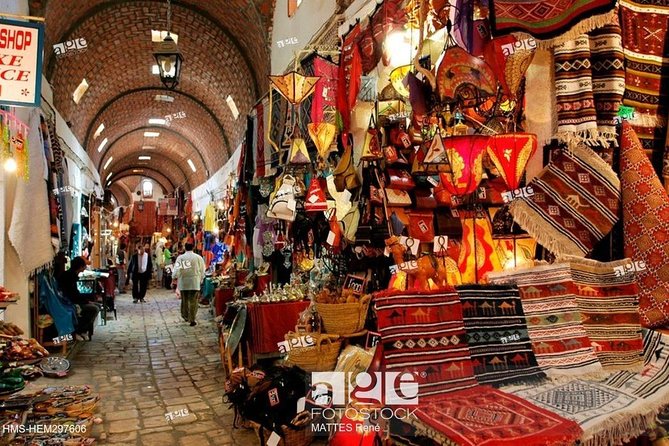
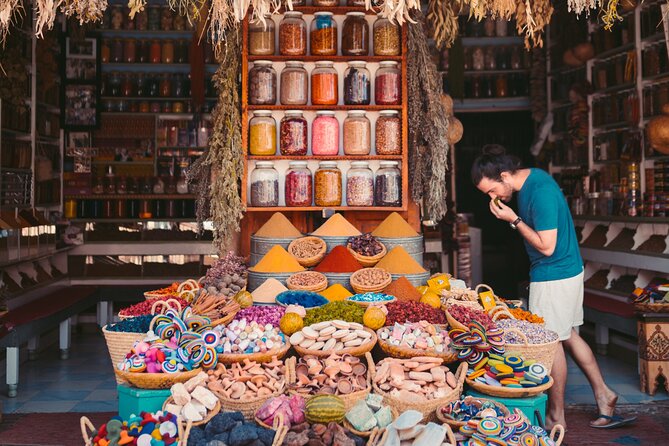
Souk Semmarine receives about 30 minutes, tying the medina section for the longest stop. This is one of the main shopping lanes, with a broad mix of goods and stalls. You might see carpets, pottery, leather items, lanterns, textiles, spices, and other Moroccan crafts, depending on the shops open that day.
The longer stop gives you the best chance to compare products and ask about prices. It is also where the difference between browsing and buying becomes important. The guide can explain local customs and help you understand the bargaining process, but you remain responsible for deciding what you want and what price feels fair.
I would avoid making a major purchase in a rush. Use the early craft stops to learn what you like, then use Souk Semmarine to look more carefully. Ask whether an item is made locally, how it was produced, and how it should be carried or cared for.
The tour does not include soda or other refreshments. Food stalls and market tastes are part of the wider souk setting, but the only stated inclusion is the guided tour with a local guide. Bring water and consider a small snack if you know you get hungry during a three-hour walk.
What the three-hour schedule really means
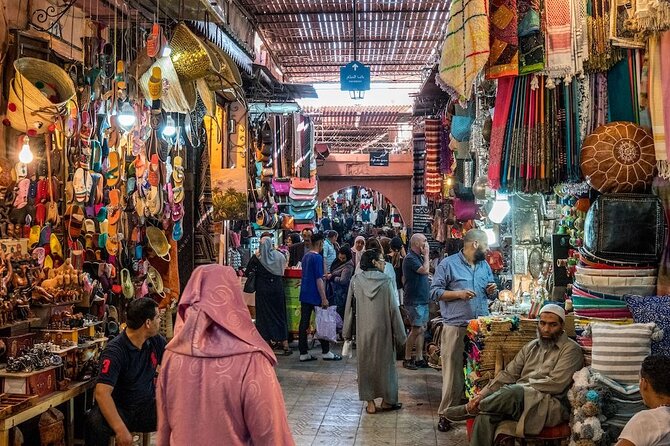
The named stops add up to about 115 minutes: 10 minutes at Jemaa el-Fnaa, 15 at Rahba Kedima Square, 15 at Souk Haddadine, 30 in the medina, 15 at Souk des Dyeuriers, and 30 at Souk Semmarine. The remaining time is used for walking between areas, introductions, explanations, and pauses along the way.
That is a useful way to judge the pace. You are getting a broad tour of the souks, not 30 minutes of uninterrupted instruction at each workshop. If you want a full craft class, this is probably not the right product. If you want orientation, local context, and a manageable first walk through the medina, the timing makes sense.
The private format can also affect the pace. Your group may move faster if everyone is fit and focused, or slower if you stop to ask questions and inspect goods. The activity is listed as suitable for most people, but it still involves walking through narrow market lanes for around three hours.
I would book it near the start of your Marrakech stay if you can. The information you gain about souk layout, craft areas, and haggling can help you return later with more confidence. Since the experience is often reserved about 30 days ahead, planning early is sensible if your dates are fixed.
Is $30.23 a fair price?
At $30.23 per person, the value depends heavily on your group size and your goals. You are paying for a private guide, not transportation, meals, or a long hands-on class. For a solo visitor, the cost is higher per person than for a couple or family, but the private arrangement still buys personal attention and a clear route.
Group discounts may improve the price for larger parties, although the exact savings are not provided. If you are traveling with friends, compare the total cost rather than looking only at the individual rate. A private walk can be a good use of money when it prevents a lost afternoon or helps you avoid buying something you do not understand.
The strongest value comes from the human side of the experience. The guide can connect you with craftspeople, explain local techniques, and give you a better sense of how the souks function. If you only want to stroll and browse, you may prefer to explore on your own. If you want structure and background, the fee is easier to justify.
Who should book this Marrakech experience?
I would recommend this walk to first-time visitors who want a clear introduction to the medina without joining a large group. It also suits people who enjoy crafts, shopping, local trades, and short conversations with artisans more than formal monument tours.
Families may appreciate the private format because the group can take short pauses without holding up strangers. Couples and friends can also use the guide to focus on specific interests such as textiles, lanterns, pottery, spices, or metalwork.
This is less suitable if you dislike crowds, narrow lanes, bargaining, or strong market smells. It is also not the best choice if your main goal is a long practical workshop where you produce an item yourself. The available details promise visits to traditional craft areas and contact with artisans, not a guaranteed make-your-own session.
The tour returns to its starting point at Café de France. That makes it easy to continue exploring Jemaa el-Fnaa afterward, though the activity itself ends back at the meeting point rather than including additional sightseeing.
Booking, cancellation, and practical details
Confirmation is provided when you book, and the activity uses a mobile ticket. Only your group participates, which is the key difference from a standard shared walking tour.
Free cancellation is available if you cancel at least 24 hours before the start time. Inside that 24-hour window, the amount paid is not refunded, and changes are not accepted. The cut-off follows Marrakech local time, so check the clock carefully if you are arranging plans from another country.
The listed meeting point is Hôtel Restaurant Café de France, J2G7+G2G, Jemaa el-Fnaa, Rue des Banques, Marrakech 40000, Morocco. Since the square is active and crowded, plan to arrive early enough to locate the café and meet the guide without rushing.
Should you book the private souk tour?
Book it if you want a well-shaped first look at Marrakech’s markets, especially if you value craft traditions and personal guidance. The route covers six useful stops, the private format keeps the experience focused, and the price is reasonable for a small group seeking an introduction.
Skip it if you want a quiet walk, a full workshop, or a tour centered on major monuments. The souks can be crowded and intense, and three hours gives you a strong overview rather than a slow study of every trade.
For most first visits, I see this as a practical way to get your bearings fast, learn how the markets work, and return later with better judgment. Book early if your schedule is fixed, wear comfortable shoes, and leave room in your day for the medina to surprise you.
FAQ
Where does the tour begin?
The tour begins at Hôtel Restaurant Café de France beside Jemaa el-Fnaa on Rue des Banques in Marrakech.
Where does the tour end?
The activity ends back at the original meeting point at Café de France.
How long does the tour last?
The tour lasts approximately three hours.
Is this a private activity?
Yes. Only your group participates in the activity.
What places does the tour visit?
The route includes Jemaa el-Fnaa, Rahba Kedima Square, Souk Haddadine, the Medina of Marrakesh, Souk des Dyeuriers, and Souk Semmarine.
What is included in the price?
A guided tour and a local guide are included.
Are drinks included?
No. Soda and other drinks are not included.
Can most people participate?
Yes. The activity information states that most people can participate.
Can I cancel for a full refund?
Yes, if you cancel at least 24 hours before the experience start time. Cancellations made less than 24 hours before the start time are not refunded.
Just listed out of Marrakech
- Marrakech: Ouzoud Waterfalls Trip, Guide & Boat + Lunch★ 4.7 · 33 reviews
- From Marrakech: Ourika Valley Trip, Waterfall Hike & Lunch★ 4.4 · 33 reviews
- Magical Dinner show and Quad bike In Agafay Desert Marrakech★ 4.5 · 33 reviews
- Moroccan Hands on traditional pastries & Tea class in Marrakech★ 4.5 · 33 reviews
- Marrakech: Quad excursion to the palm grove and Jbilets desert★ 4.5 · 33 reviews
- Marrakech: Vibrant Dinner Show at The Lotus Club★ 3.9 · 33 reviews
- From Marrakech: Small Group To Essaouira & Medina Day Trip★ 4.3 · 33 reviews
- From Marrakech: 3-Day Merzouga and Sahara Desert Tour★ 4.5 · 33 reviews
Marrakech Tours, compared.

Agafay Desert Sunset, Camel Ride, and Dinner Show
Read our review →

Agafay Desert Quad & Camel Rides with Dinner Show
Read our review →
Agafay Desert Quad Biking Tour with Dinner-Show
Read our review →
Atlas Mountains, Ourika Valley, Waterfall & Lunch
Read our review →


Quad Bike Tour to Palm Oasis and Jbilat Desert
Read our review →Browse the lists this tour appears in