
Reviewed · ATLAS MOUNTAINS DAY TRIPS
From Marrakesh: 4-Day Private Atlas Mountains & Desert Tour
The best part of this four-day Morocco tour is the steady change of scenery. You leave Marrakesh behind, cross the High Atlas, pass Berber villages and palm groves, sleep near the Sahara dunes, and return through some of southern Morocco’s most striking old kasbahs. The camel ride at sunset and night in the Erg Chebbi desert are the big moments, but the road between them is what gives the trip its character.
I like the private format, which gives you more control over photo stops, meal breaks, and the pace. I also like the human touch provided by guides such as Mahmoud, Reda, Aziz, and Ali, who have been praised for careful driving, local knowledge, patience with children, and help when plans change. The main caution is simple: you will spend five to eight hours in the car on some days, and comfort depends on the vehicle assigned to you.
Key points at a glance
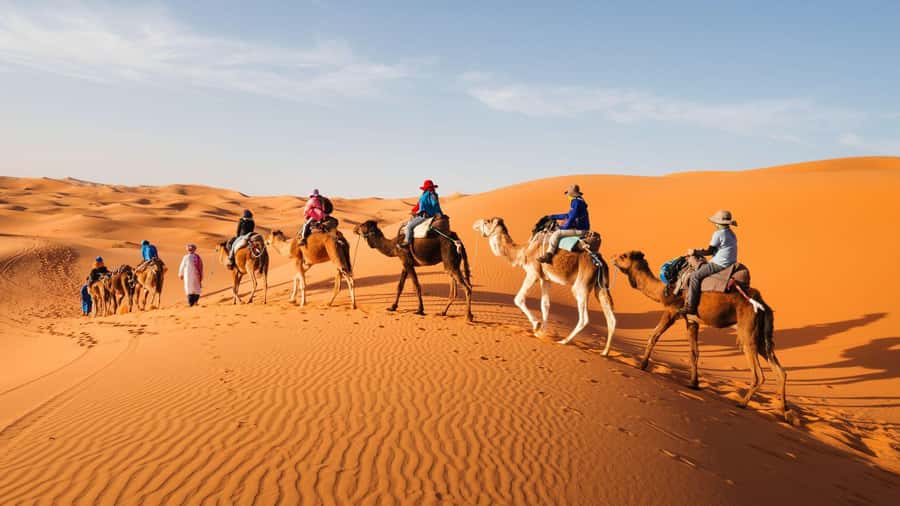
- Sunset by camel at Erg Chebbi: Ride across the dunes toward camp, then return to the sand for sunrise the next morning.
- Aït Ben Haddou and Ouarzazate: See a UNESCO-listed fortified village and the film studios that earned Ouarzazate its nickname, Hollywood of Africa.
- Private, flexible touring: Your driver and guide can allow extra viewpoints and adjust stops when weather or road conditions require it.
- Southern Morocco by road: The route links the Atlas Mountains, Dades Valley, Skoura, Todra Gorge, Rissani, and the Drâa Valley.
- Three included nights: Sleep in a guest house, a desert camp, and a hotel, with meals and bottled water included.
- Strong value at $452 per person: The price covers transport, accommodation, meals during the tour, a local English-speaking guide, and the camel experience.
Why four days works better than a rushed desert trip
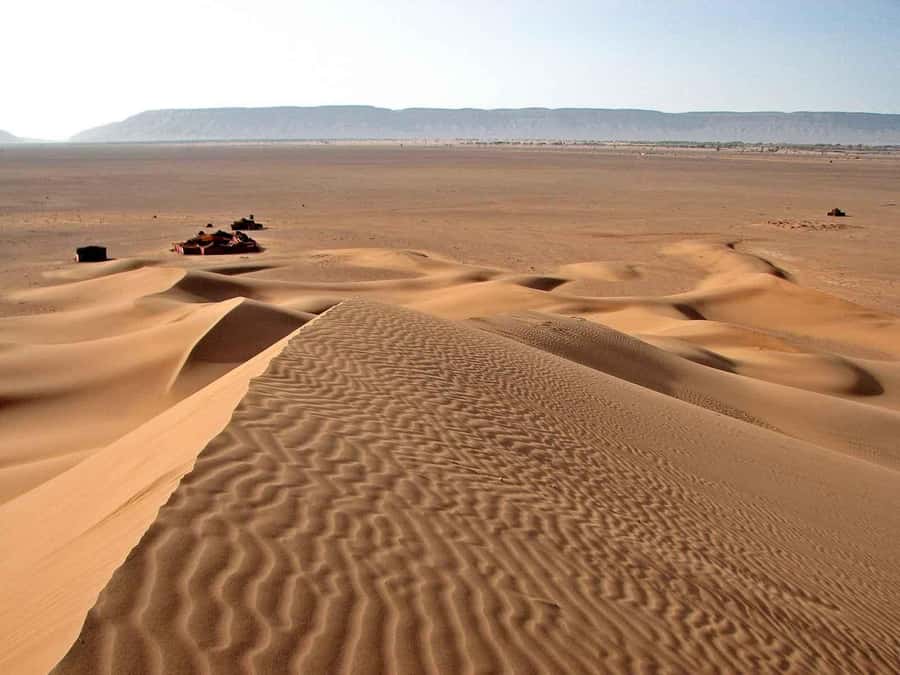
A three-day desert outing from Marrakesh can look tempting on price, but the distance to Merzouga is considerable. This four-day plan breaks up the drive with a night in the Dades Valley and another in Ouarzazate, giving you more time for gorges, kasbahs, and village visits.
I think the extra day is worth paying for. At $452 per person, you are not just buying a transfer to the desert. You are paying for a private vehicle, three nights of accommodation, meals during the tour, a guide, bottled water, and a route through several distinct parts of Morocco.
That value depends on the size of your party and your expectations. For a couple or family sharing a private vehicle, it can be a sensible way to reach the Sahara without arranging hotels, meals, and desert transfers yourself. If you expect luxury transport and polished restaurants at every stop, you may find the experience less consistent.
The accommodation has received particularly strong praise overall. The Dades guest house, including Riad Gabsi du Dades for some departures, can be a highlight in its own right. The desert camp is described as comfortable, and some departures use large luxury tents with private bathrooms. Standards can vary, so it is wise to view this as a comfortable road trip rather than a high-end escorted holiday.
A few other Marrakesh days worth comparing
- Marrakech: Atlas Mountains, Ourika Valley, Waterfall & Lunch
★ 4.8 · 15,834 reviews - From Marrakech: Atlas Mountains Full-Day Hiking Trip w Lunch
★ 4.8 · 7,417 reviews - From Marrakech: Atlas Mountains Day Trip with Camel Ride
★ 4.8 · 4,709 reviews
Day 1: Crossing Tizi n’Tichka to the Dades Valley
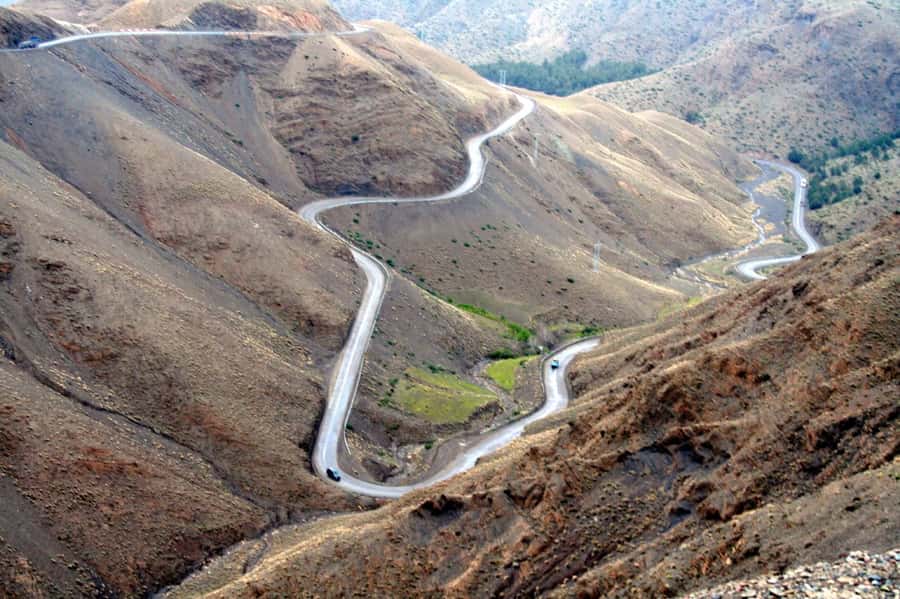
Pickup is from your accommodation in Marrakesh. The first major stretch takes you over the Tizi n’Tichka pass in the High Atlas, where the road climbs through changing colors, bare mountain slopes, and small Berber settlements.
This is a scenic day, but it is also a long one. The mountain road contains plenty of bends, so anyone prone to motion sickness should prepare. Guides including Yassin, Aziz, and Mahmoud have received praise for smooth and careful driving, an important detail on a route with steep drops and frequent curves.
The road then descends toward Ouarzazate, a useful pause point. You may have free time for the Taourirt Kasbah and lunch. Taourirt gives you an early look at the earthen architecture that appears throughout southern Morocco, with narrow passages, decorated rooms, and walls shaped from local materials.
Ouarzazate is also the center of Morocco’s film industry. Depending on the schedule and entrance arrangements, you can tour the Atlas film studio or other movie-related sites. The town has supplied backdrops for major productions, and a studio visit adds a playful layer to the history and scenery.
From Ouarzazate, the route continues toward Skoura and the Dades Valley. Skoura is known for its palm groves and kasbahs, and the green strip of palms is a welcome change after the dry mountain country. The Valley of Roses adds another rural scene, although the exact stop and timing can vary.
You spend the night at a guest house in or near the Dades Valley. This is a smart overnight location because it breaks the long journey before the Todra Gorge and Merzouga. Dinner is included, and the guest house gives you a more personal setting than a standard roadside hotel.
Day 2: Kasbahs, Todra Gorge, and the Sahara dunes
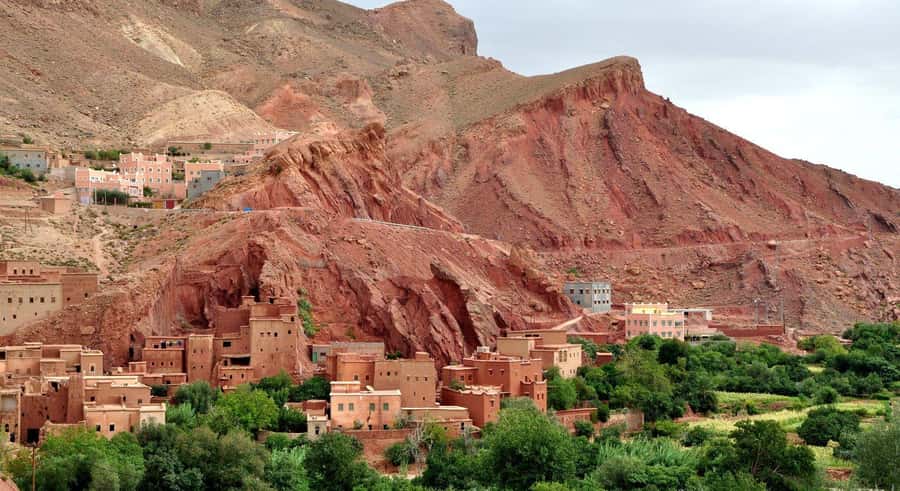
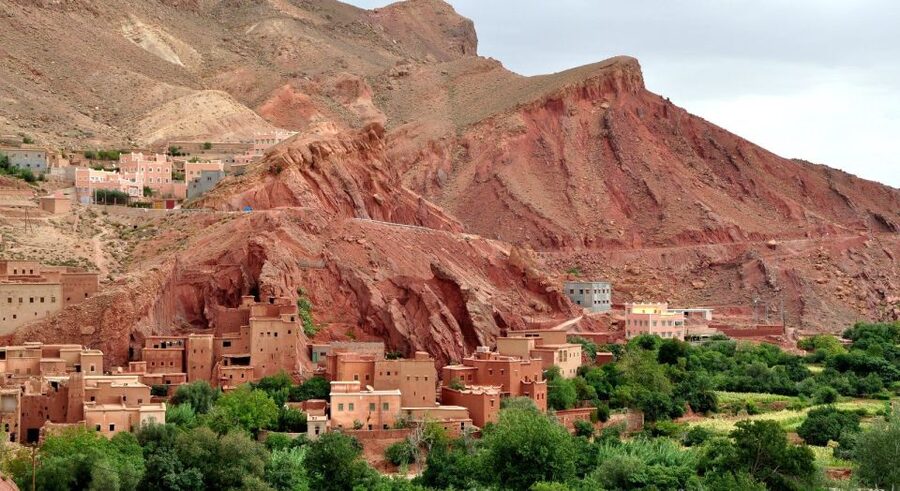
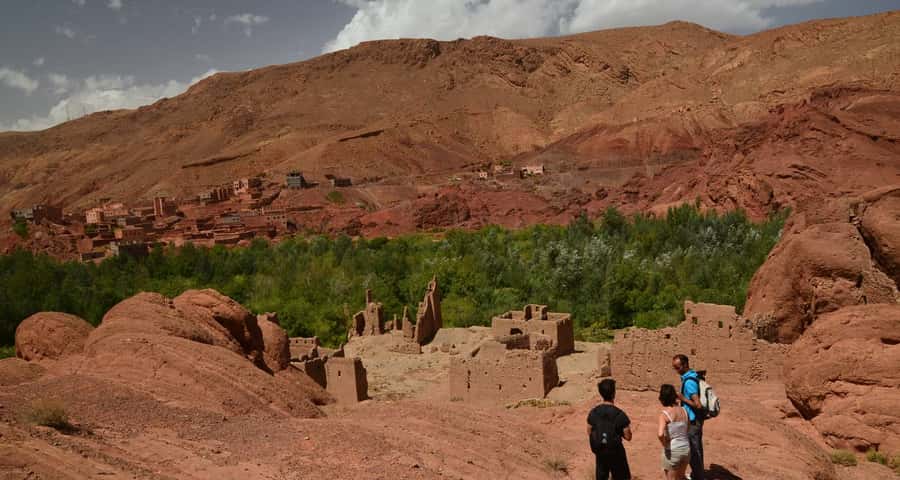
After breakfast, you follow the route often called the Road of a Thousand Kasbahs. The name is not a promise that you will count a thousand fortresses, but it accurately describes the repeated sight of mud-brick villages, old compounds, and fortified homes along the valleys.
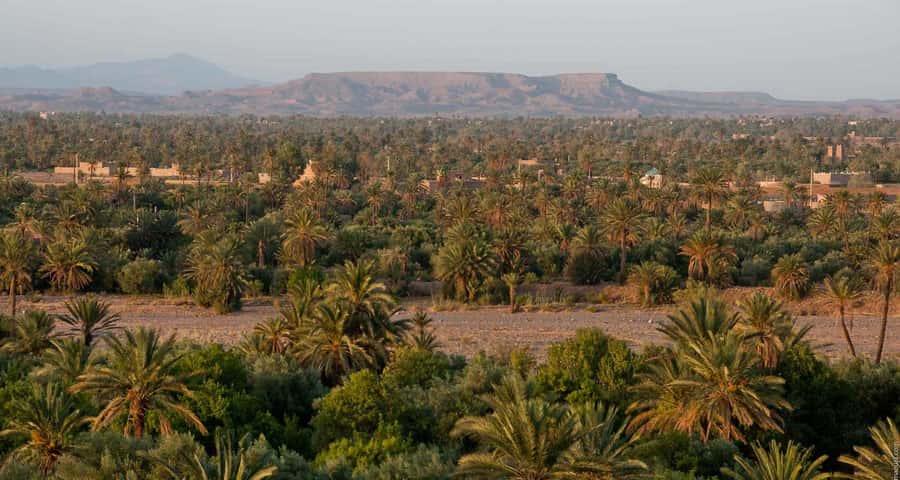
The route reaches Tinghir, where palm groves stretch through the dry valley. Water makes these green corridors possible, and the contrast between palms, reddish rock, and dusty slopes is one of the pleasures of this part of Morocco.
The next major stop is Todra Gorge. The cliffs rise dramatically above the river, and the itinerary allows time for a walk or short hike. You do not need to be a serious hiker to appreciate the gorge, but you should bring sensible shoes and take care on uneven ground. The description of trekking high above the canyon is aimed at adventurous visitors, not at anyone seeking a gentle stroll.
After Todra, the road continues east toward Merzouga and Erg Chebbi. This is one of the longest driving days, so the private setup matters. You can ask for a photo stop, a stretch of the legs, or a short pause when needed, though the overall route still has to cover a great distance.
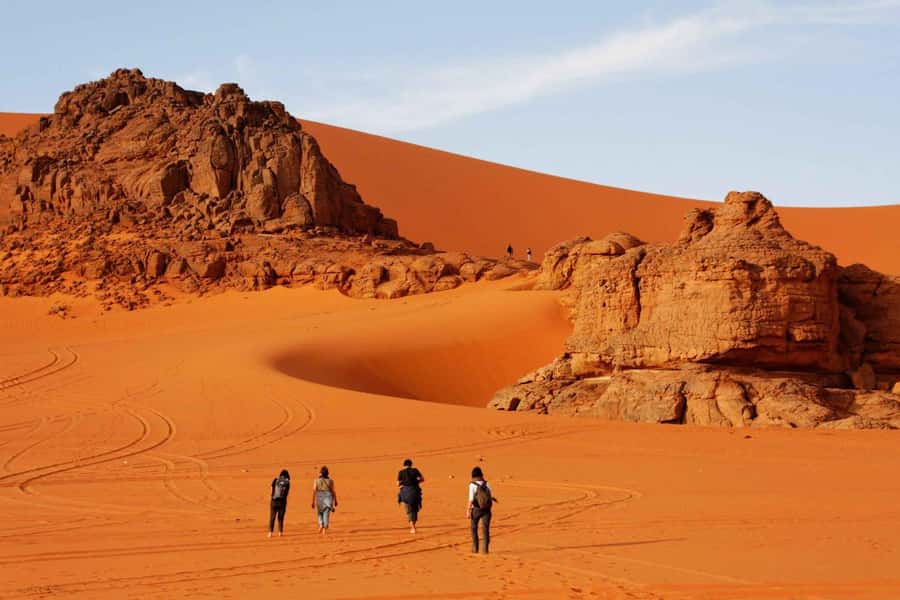
The payoff comes late in the day. At the edge of the dunes, you leave the vehicle and mount a camel for the ride to camp. The ride is not a full-day expedition, but it gives you enough time to feel the sand under the camel’s feet and watch the dunes change color as the sun drops.
The desert camp is the emotional center of the trip. Dinner is included, and evening activities can include drums, singing, and time around the fire with local hosts. You may sleep in a nomadic-style tent or, depending on the camp, under the stars. Some departures use surprisingly comfortable tents with large, clean bathrooms, while others may offer a simpler setup.
Pack a warm layer even if the afternoon is hot. Desert temperatures can change quickly after sunset. In midsummer, daytime heat can reach around 46 to 50 degrees Celsius, so the most pleasant time for the camel ride is usually the cooler evening period.
Day 3: Sunrise, Rissani, and the road back west
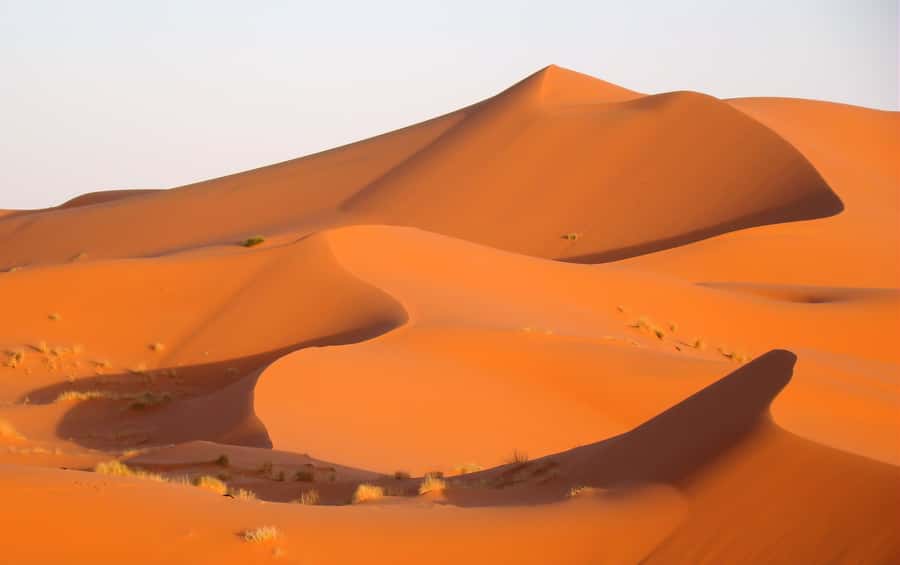
Set an alarm for sunrise. The dunes around Erg Chebbi are worth seeing in the soft early light, when footprints and ripples show clearly across the sand. After breakfast, you return to the hostel or meeting point by camel before taking a shower and continuing by road.
This return journey is not simply a repeat of the outward route. You stop at Rissani, a southern Saharan town with a fossil workshop among the possible visits. Fossils are a major local product, and the stop offers a look at how regional crafts and geology become part of the tourist economy.
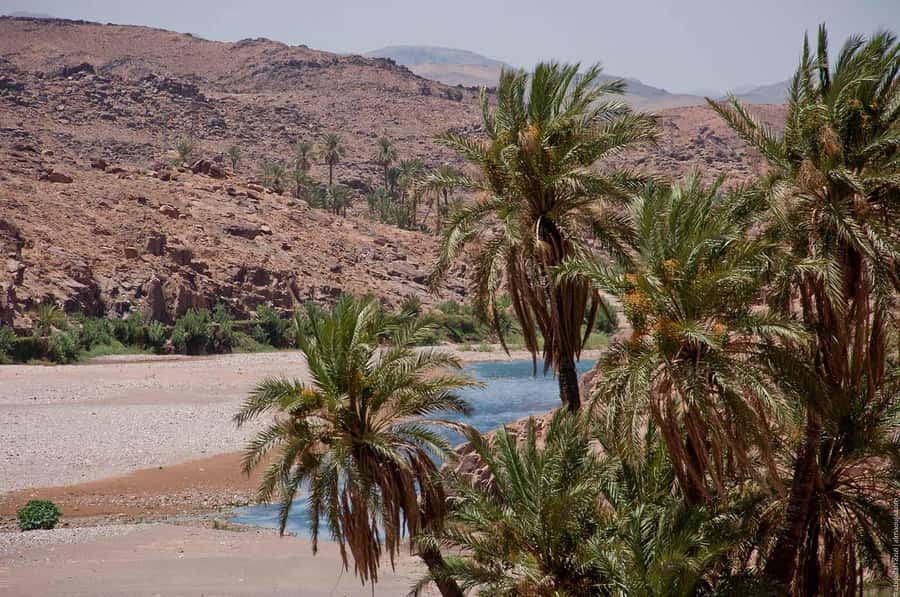
The route then heads through Tazarine and toward Agdz, where the Drâa and Agdz valleys meet. The Drâa region is known for long palm-filled corridors, dry hills, and old settlements. It is a quieter part of the trip, with the view from the car doing much of the work.
You spend the night in Ouarzazate with dinner included. Some departures include a guided tour here, while the main Ouarzazate film-studio visit is scheduled for the following day. Confirm the exact order when you meet your guide, since road conditions and opening times can affect the sequence.
The third day is less dramatic than the desert evening, but it is useful. You get a shower after the camp, a proper hotel night, and a gradual return toward Marrakesh rather than one punishing final drive.
Same city, a completely different day out:
- Marrakech: Agafay Desert Sunset, Camel Ride, and Dinner Show
★ 4.6 · 35,119 reviews - From Marrakech: Ouzoud Waterfalls Guided Hike and Boat Trip
★ 4.7 · 33,630 reviews - Marrakech: Agafay Desert Quad & Camel Rides with Dinner Show
★ 4.8 · 27,382 reviews - Marrakech: Agafay Desert Quad Biking Tour with Dinner-Show
★ 4.8 · 16,569 reviews
Day 4: Film sets, Aït Ben Haddou, and the return to Marrakesh
Ouarzazate is often called the Hollywood of Africa because of its film studios and desert settings. A studio tour can include props, sets, and reminders of films shot in the region. It is worth making time for this stop if you enjoy cinema or want a change from kasbahs and natural scenery.
The cultural high point is Aït Ben Haddou. This fortified ksar is a UNESCO World Heritage site made up of earthen buildings, narrow lanes, and defensive walls rising above the surrounding area. The setting has appeared in films including Gladiator, Indiana Jones, and Lawrence of Arabia.
Aït Ben Haddou is not just a film backdrop. The compact lanes and layered buildings show how communities once organized homes, storage, and protection within a fortified settlement. You will likely walk uphill over uneven ground, so bring water, a hat, and shoes with a firm sole.
The final route passes through the mountains via Telouet before reaching Marrakesh. Telouet adds another kasbah stop and gives you one last look at the old caravan routes that linked the interior valleys with the plains.
The return can be tiring. After four days of roads, you may be ready for a quiet dinner in Marrakesh rather than another viewpoint. Still, the route provides a satisfying arc: mountain pass, kasbah country, palm valleys, gorge, desert, film history, and mountain return.
The guide can make or break the road hours
Your guide is also your driver or works closely with the driver, depending on the departure. Names that appear on different departures include Mahmoud, Reda, Aziz Talaoul, Ali, Youssef, Lahcen, Bader, and others, so you cannot book a specific personality unless the operator confirms it.
The strongest part of the guiding service is its personal attention. Mahmoud has been praised for extra viewpoints, good photographs, smooth driving, and patience with children. Reda is noted for local stories, music during long drives, and a flexible approach. Aziz Talaoul is repeatedly associated with careful driving, practical advice, and strong local connections.
That last point matters. A good guide can turn five hours in a vehicle into a useful introduction to southern Morocco. You can ask about Berber language, local customs, music, farming, and village life. Some guides also arrange visits to local homes, where meals and tea can be more memorable than a standard restaurant stop.
The guiding standard may not be identical on every departure. One assessment found the accompanying guide friendly but less informed than expected, with local guides filling in at certain sites. If detailed historical explanation is essential to you, ask how guiding works at Aït Ben Haddou, the kasbahs, and the film studio.
Food, hotels, and the practical trade-offs
Meals during the tour are included, but extra food and drinks are not. Bottled water is included, which is useful on long hot drives, but budget for additional drinks and entrance fees.
Food quality can vary. Tajine, especially a final meal served in a Berber home on some departures, has been praised as one of the best meals of the trip. Other stops may feel repetitive, with meat-heavy dishes and basic restaurant choices.
If you are vegetarian, raise the issue before departure. One family found that dietary requirements had not been requested and that many prearranged meals contained meat. The provided information does not promise a vegetarian menu, so do not leave this until the first lunch.
Accommodation is generally considered good for the price, with a particularly comfortable desert camp. The Dades guest house can offer a warm, local atmosphere, while the Ouarzazate hotel provides a practical final night before the drive to Marrakesh.
The vehicle is the least predictable part of the package. Many people have had a comfortable, clean car and felt safe with their driver. One family found the vehicle old and dirty, and another reported limited comfort and basic seat belts. If you are a group of four or more, ask what vehicle will be supplied. A larger car can make the long hours much easier.
Who should book this Morocco desert tour?
I would choose this trip if you want to see far more than Marrakesh but do not want to plan a complicated route yourself. It suits couples, families, and small private groups that value flexibility and personal attention.
It also works well for first-time visitors. In four days, you get a broad introduction to southern Morocco without changing hotels every night. Families with children as young as three have managed the route, but the driving time is the key issue. Bring snacks, entertainment, and patience.
You should think twice if you dislike long road journeys, hot weather, early starts, or basic local facilities. The desert camp may be comfortable, but this is still an outdoor experience. The roads between the major sights are part of the deal, not empty time that can be removed.
The tour is also not designed for anyone over 95, according to the stated restrictions. A passport, towel, and camera are listed as items to bring. Comfortable shoes, sun protection, and a warm evening layer are sensible additions based on the route and desert conditions.
Free cancellation is available up to 24 hours before departure, and you can reserve now and pay later. Those terms make it easier to hold a place while you confirm your Marrakesh schedule.
Should you book it?
Book this tour if the Sahara is a priority and you want the comfort of a private route with transport, accommodation, meals, and a guide arranged in one package. The strongest reasons are the camel ride at sunset, the desert night, Aït Ben Haddou, Todra Gorge, and the chance to meet local hosts along the way.
I would pay particular attention to the vehicle and food arrangements before booking. Ask about group size, car type, dietary needs, and which entrances are extra. If you accept the long drives and variable meal stops, the $452 price offers a practical way to see a large slice of southern Morocco in four days.
FAQ
Where does the tour start and finish?
The tour starts with pickup from your accommodation in Marrakesh and returns to Marrakesh on the fourth day.
How long does the tour last?
The experience lasts four days and includes three nights of accommodation.
Which major places does the tour visit?
The route includes Tizi n’Tichka, Ouarzazate, the Dades Valley, Skoura, Tinghir, Todra Gorge, Erg Chebbi, Merzouga, Rissani, the Drâa and Agdz valleys, Aït Ben Haddou, and Telouet.
Is the camel ride included?
Yes. The itinerary includes a camel ride at sunset toward the desert camp at Erg Chebbi, followed by a return camel ride after sunrise.
Where do I sleep during the tour?
The itinerary includes a guest house in the Dades Valley, a desert camp near Erg Chebbi, and a hotel in Ouarzazate.
Are meals included?
Meals during the tour are included. Extra food and drinks not listed in the itinerary are not included.
What languages can the guide speak?
Live guiding is available in English, French, Spanish, and Arabic.
What should I bring?
You should bring your passport, a towel, and a camera. Comfortable walking shoes and clothing suited to hot days and cool desert evenings are also useful for this route.
Just listed out of Marrakesh
- Marrakech: Ouzoud Waterfalls Trip, Guide & Boat + Lunch★ 4.7 · 33 reviews
- Marrakech: Vibrant Dinner Show at The Lotus Club★ 3.9 · 33 reviews
- From Marrakech: Small Group To Essaouira & Medina Day Trip★ 4.3 · 33 reviews
- From Marrakech: 3-Day Merzouga and Sahara Desert Tour★ 4.5 · 33 reviews
- Marrakech: Private Souks Tour with Tea and Traditional Snack★ 4.6 · 33 reviews
- Marrakech: Medina Souks, Hidden Markets and Shopping Tour★ 4.8 · 33 reviews
- 2 Days Desert Agafay and Atlas Mountains Trek From Marrakech★ 3.8 · 33 reviews
- Agadir/Taghazout : Marrakech Guided Tour old Medina & Souks★ 3.7 · 34 reviews
Atlas Mountains Day Trips, compared.

Atlas Mountains, Ourika Valley, Waterfall & Lunch
Read our review →
Ourika Waterfalls, Atlas Mountains, Guide + Lunch
Read our review →
Atlas Mountains & Agafay Desert Tour w Camel Ride
Read our review →
Atlas Mountains, Waterfalls, Ourika Valley +Lunch
Read our review →
Atlas Mountains & 5 Valleys Tour from Marrakech – All inclusive –
Read our review →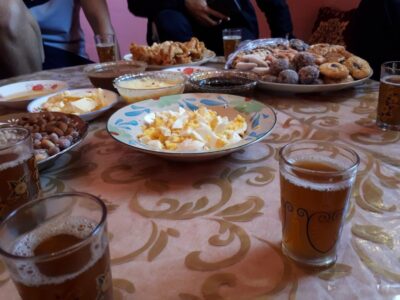
Agadir or Taghazout: Paradise Valley Atlas Mountains Tour
Read our review →Browse the lists this tour appears in