
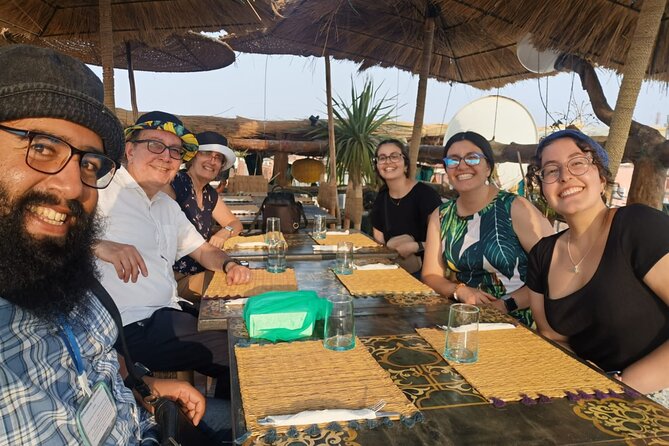
Reviewed · MARRAKECH TOURS
3-Hour Walking Food Tour in Marrakech
The best part of this Marrakech food tour is the sheer range packed into three hours. You move from sweet pastries and fresh juice to harira, snails, msemmen, olives, and a proper Medina dinner with tanjia. It gives you a useful first taste of the city without asking you to spend a full day at a table.
I like two things here. First, the food is not limited to the usual tagine-and-couscous script. Second, guides such as Hanyn add practical help along the way, including answers about Marrakech and, when requested, photos of the experience. The main drawback is that the 5:30 pm start and evening meal make this less useful if you want a morning market tour or an early night.
Quick points to know before booking
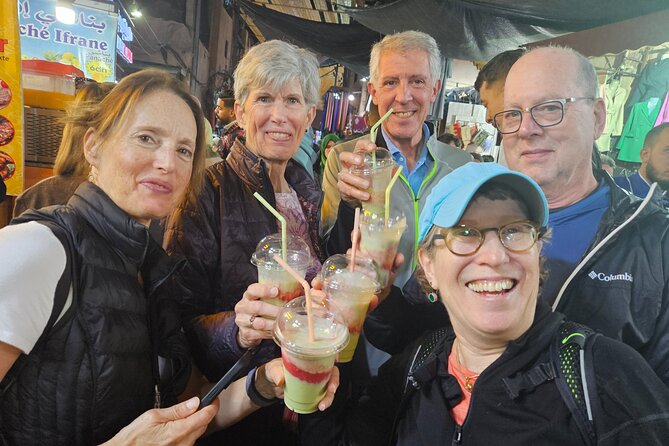
- Ten or more Moroccan specialties: Expect pastilla, pastries, harira, babbouche, msemmen, olives, dried fruit, juice, tea, and more.
- A full dinner is included: The final meal features fresh Moroccan salad and tanjia, with other main-course choices available.
- The Medina is the setting: You begin at Poste du Maroc and finish back at the same meeting point.
- Hanyn is a named guide to look for: He is praised for friendly conversation, city advice, photos, and keeping the food coming.
- Small enough to feel manageable: The group is capped at 15 people, with group discounts available.
- Plan for a substantial meal: This is not a few token bites. You are advised to arrive hungry.
Why this three-hour tasting works in Marrakech
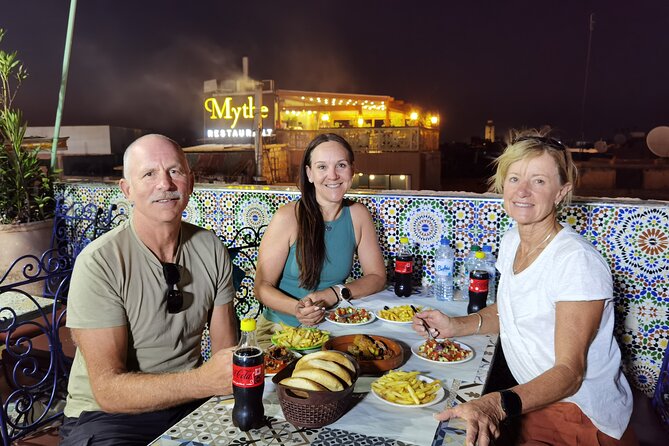
Marrakech can be hard to read at first. The Medina throws food smells, shop signs, scooters, narrow lanes, and unfamiliar dishes at you all at once. A food tour gives you a reason to walk through it with purpose, and each stop helps explain what you are seeing.
This is also a practical introduction to Moroccan food because it moves beyond one famous dish. You get savory pastry, soup, bread-like pancakes, preserved and dried foods, fruit, olives, and a slow-cooked specialty. That range matters. It lets you work out what you like before ordering larger meals during the rest of your stay.
The format is a group walk with a maximum of 15 people. That is not a private tour, but it is smaller than a large coach outing. I would expect the pace and conversation to depend partly on the group, though the listed size should still allow the guide to answer questions and keep everyone together.
The tour is priced at $68.53 per person. That is not the cheapest way to eat in Marrakech, but the price includes more than samples. You receive 10 or more specialty foods at several stops, tea or coffee, a full dinner, and a certified local guide. If you would otherwise pay for dinner and several independent tastings, the value becomes easier to see.
More Walking Tours in Marrakech
- Marrakech: Ben Youssef, Secret Garden, & Souks Walking Tour
★ 4.6 · 2,802 reviews - Marrakech: Colorful Medina Souks Guided Walking Tour
★ 4.7 · 2,470 reviews - Marrakech: Medina by Night Walking Tour with Moroccan Tea
★ 4.6 · 586 reviews
Meeting at Poste du Maroc at 5:30 pm
The tour begins at Poste du Maroc on Rue Beni Marine at 5:30 pm. You should allow enough time to reach the meeting point, since the activity does not include hotel pickup or drop-off. The location is near public transportation, which helps, but you still need to make your own way there.
The evening timing suits Marrakech well. You can spend the earlier part of your day at other sights, then use the food walk to see the Medina as the day winds down. It also means the experience builds toward dinner rather than ending with a final pastry in the middle of the afternoon.
One point to keep in mind: the food starts before the final restaurant meal. You should not arrive stuffed from a late lunch. The best approach is a light afternoon snack, if needed, and a willingness to eat steadily over the three-hour route.
The advertised end point is the original meeting point. That is useful if you need to plan your way back to your lodging, but it also means you should not assume the tour will drop you at your hotel or another part of Marrakech.
Pastilla, pastries, and the first wave of tastes
The opening food section introduces several dishes rather than settling into one restaurant. The first major bite is chicken and almond pastilla, a savory pie linked with special gatherings. It combines a crisp pastry shell with a filling that brings together meat, almonds, and sweet-spiced notes.
Pastilla is a good example of why a guide helps. Its appeal is not simply that it tastes good. The dish shows how Moroccan cooking can put savory and sweet elements together without treating them as separate courses. If you usually prefer one flavor direction at a time, this is one of the more interesting things to try early in the evening.
The pastry stop includes briwate, kaab ghzal, and other local sweets from a bakery described as one of the city’s oldest. You may find that these are small items, but they add up quickly across the route. They also give you a chance to compare pastry textures and fillings rather than treating Moroccan sweets as one generic category.
I like this part for practical reasons. Bakeries and pastry counters reveal what people buy for ordinary enjoyment and festive sharing. They also make easy souvenirs in your memory, even if you do not carry food home.
Harira, babbouche, and the dishes you might not order alone
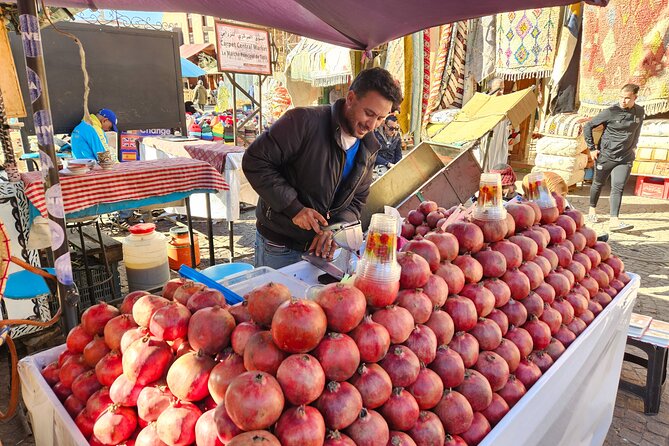
The next group of tastes takes you toward more unusual local food. Harira is a Moroccan soup especially associated with Ramadan, and it gives the tour a warm, everyday dish that contrasts with the special-occasion pastilla.
Babbouche, Moroccan snails cooked in an aromatic broth, is the more adventurous stop. If you have never eaten snails, trying them with a guide and a prepared serving is less intimidating than ordering an unfamiliar dish on your own. You can sample the broth and decide how far you want to go.
The tour is not built only for cautious eaters. It includes foods that may challenge your habits, but the small-stop format gives you room to test them. You do not need to make one strange dish the centerpiece of your dinner.
Dietary information is not specified in the supplied details, so you should ask about suitable choices when booking or at the start. The same applies to allergies. The presence of chicken, nuts, dairy, soup, pastries, and other mixed dishes makes it sensible to raise concerns before eating.
A few other Marrakech days worth comparing
- Marrakech Monuments & Souks 3-Hour Tour
★ 3.8 · 1,540 reviews - Marrakech: 3H Traditional Hammam & Massage & Hotel Transfer
★ 3.9 · 1,262 reviews - 3h Private Sidecar Ride / Secrets of Marrakech
★ 5.0 · 478 reviews - Marrakech: 3H Traditional Hammam, Massage & Hotel Transfer
★ 4.6 · 133 reviews
Msemmen, mint tea, and the social side of Moroccan food
Msemmen is a pan-fried Moroccan pancake served with honey and cheese. It is a filling, comforting stop, and it helps explain why you need to arrive hungry. After several pastries and perhaps soup, this may feel more like a small meal than a sample.
Moroccan mint tea is included, and it is one of the most familiar parts of the country’s food culture. Here it acts as both a drink and a pause between tastes. You can use the tea stop to ask the guide about dishes you have already tried or about places to eat later in your visit.
Fakya, a mix of dried fruits and nuts for festive sharing, adds another texture and purpose to the route. It is less about a single cooked dish and more about the habit of putting food out for people to share. The olives market does something similar in a different form, with several olive flavors available to compare.
I particularly like the olives stop because it is easy to overlook olives when planning a Moroccan food itinerary. A market tasting turns a familiar food into a small lesson in local variety. You may discover that you prefer one briny, spiced, or mild style over another.
Fresh juices before the final meal
Seasonal fruit juices provide a lighter break in the middle of a food-heavy evening. The exact fruit selection is not specified, so you should expect the choice to depend on what is available rather than on a fixed menu.
This stop matters because the tour has a lot of solid food. A cold juice changes the pace and gives you a fresh flavor after pastries, soup, pancakes, and olives. It also brings the focus back to the produce sold around Marrakech, rather than only to cooked dishes.
The published tasting list is a guide to the experience, not a guarantee that every item will appear in exactly the same form. The description says these are the flavors you can expect, so seasonal or local availability may affect the final selection. If one item is especially important to you, ask the guide early in the tour.
A one-hour Medina dinner with tanjia
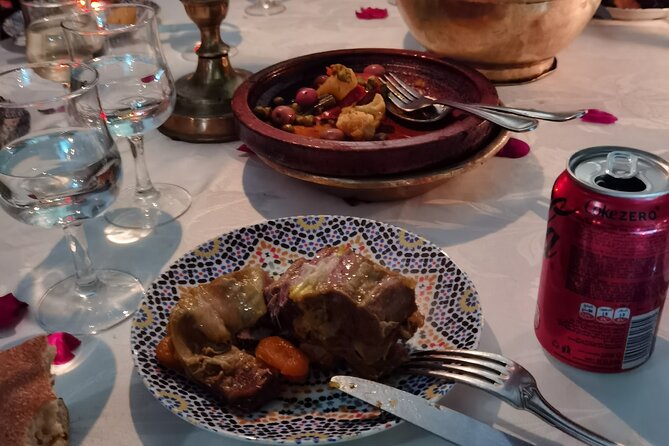
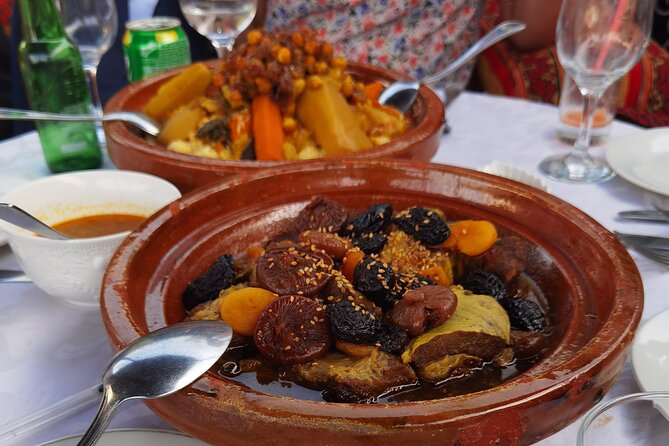
The final hour is set aside for dinner at a local restaurant in the Medina. You begin with a fresh Moroccan salad, then move to a main course led by tanjia, with other options available.
Tanjia is a traditional Marrakech dish slow-cooked until tender. It is closely tied to the city’s food identity, so including it gives the final meal a clear sense of place. After sampling many small portions, sitting down to a planned dinner also brings a useful rhythm to the evening.
The dinner is included, which strengthens the value of the $68.53 price. You are not paying for a walk that ends just when you need to find food. You get a meal at the end, and you can use the guide’s presence to ask about the dish, the city, or other places to eat.
The menu is not presented as a fixed list beyond salad and tanjia. Other main courses are available, but the details are not given. If you have strong food preferences, confirm the choices with the guide or restaurant rather than assuming every alternative will be available that night.
The guide can make the route much better
The most highly praised part of this experience is the guiding. Hanyn is specifically praised for keeping conversation easy, helping with questions about Marrakech, taking photos, and leading the group to good food stops. Those details matter because a food tour can otherwise become a sequence of anonymous bites.
You should think of the guide as part food host and part city helper. The value is not only in knowing where to eat. It is also in learning how a dish fits into local life and getting answers while you are already walking through the Medina.
One note in the feedback describes a six-year-old enjoying the experience, which suggests the tour can work for at least some families. Still, three hours of walking and repeated eating may be tiring for young children. The group format and evening timing are worth considering if you are bringing kids.
The tour has a top rating from 53 reviews and is marked as recommended by 100 percent of respondents. That points to consistent satisfaction, especially with the food quantity and guide service. I would still treat the fixed route as a group experience, not a custom private food crawl.
Who will get the most from this food walk?
I would choose this tour for a first evening in Marrakech, particularly if you want help getting oriented in the Medina. You will encounter a broad list of foods without having to research every bakery, market, and restaurant yourself.
It also suits you if you enjoy tasting small portions and want to try dishes you might not recognize. Babbouche, tanjia, fakya, and the different pastries offer more variety than a standard Moroccan dinner.
Families may find the clear structure helpful, and the maximum group size of 15 keeps the outing from becoming enormous. The tour is listed as suitable for most participants, but the information does not give a detailed accessibility description. If mobility support is important, ask the operator before booking.
This is less suited to you if you want a private experience, a quiet sit-down meal from the start, or a tour built around a strict dietary plan. It may also be too much food if you prefer light evening meals.
Practical value, timing, and what to bring
The experience lasts about three hours, split into roughly two hours of tastings around Marrakech and one hour for dinner in the Medina. That is a good length for an evening activity. You get enough time to sample widely without committing an entire day.
Wear comfortable walking shoes and arrive ready to eat. The tour includes several stops, but the meeting point, end point, and route require you to handle your own transportation. A mobile ticket is available, and confirmation is sent at booking.
Group discounts may improve the price for people booking together. Cancellation is free if you cancel at least 24 hours before the 5:30 pm start time. Changes or cancellations made later are not refunded, so keep that cutoff in mind when setting your plans.
Gratuities are not included. They are optional, so you can decide at the end based on the guide’s help, pacing, and care with your group.
Should you book this Marrakech food tour?
Book it if you want an efficient, food-first introduction to Marrakech with a real dinner at the end. The strongest reasons are the wide selection of Moroccan specialties, the inclusion of tanjia, the small maximum group size, and the personal help associated with guides such as Hanyn.
Skip it if you want a private route, a morning activity, or detailed dietary arrangements that are confirmed in advance. For most visitors who can meet at Poste du Maroc, eat generously, and walk through the Medina for three hours, the $68.53 cost is fair because it covers both the tasting route and dinner.
FAQ
How much does the 3-Hour Walking Food Tour in Marrakech cost?
The price is $68.53 per person. Group discounts are available.
How long does the food tour last?
The experience lasts approximately three hours. About two hours are devoted to food tastings around Marrakech, followed by one hour of dinner in the Medina.
What time and where does the tour start?
The tour starts at 5:30 pm at Poste du Maroc, Rue Beni Marine, Marrakech 48000, Morocco.
Where does the tour end?
The activity ends back at the original meeting point.
What food and drinks are included?
The tour includes coffee or authentic Moroccan mint tea, dinner, and samples of more than 10 specialty foods. These can include pastilla, local pastries, harira, babbouche, msemmen, dried fruits and nuts, olives, and fresh juice.
How large is the group?
The activity has a maximum of 15 participants. Most people can participate, and the meeting point is near public transportation.
Just listed out of Marrakech
- Marrakech: Ouzoud Waterfalls Trip, Guide & Boat + Lunch★ 4.7 · 33 reviews
- From Marrakech: Ourika Valley Trip, Waterfall Hike & Lunch★ 4.4 · 33 reviews
- Magical Dinner show and Quad bike In Agafay Desert Marrakech★ 4.5 · 33 reviews
- Moroccan Hands on traditional pastries & Tea class in Marrakech★ 4.5 · 33 reviews
- Marrakech: Quad excursion to the palm grove and Jbilets desert★ 4.5 · 33 reviews
- Marrakech: Vibrant Dinner Show at The Lotus Club★ 3.9 · 33 reviews
- From Marrakech: Small Group To Essaouira & Medina Day Trip★ 4.3 · 33 reviews
- From Marrakech: 3-Day Merzouga and Sahara Desert Tour★ 4.5 · 33 reviews
Marrakech Tours, compared.

Agafay Desert Sunset, Camel Ride, and Dinner Show
Read our review →

Agafay Desert Quad & Camel Rides with Dinner Show
Read our review →
Agafay Desert Quad Biking Tour with Dinner-Show
Read our review →
Atlas Mountains, Ourika Valley, Waterfall & Lunch
Read our review →


Quad Bike Tour to Palm Oasis and Jbilat Desert
Read our review →Browse the lists this tour appears in