
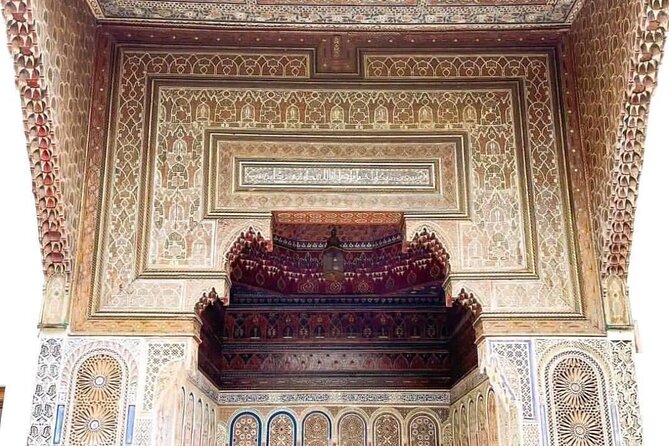
Reviewed · MARRAKECH TOURS
Marrakech madina, Bahia Palace & Ben Youssef madrsa
Marrakech reveals itself best on foot, one narrow lane at a time. This four-hour walk links Jemaa el-Fnaa, Bahia Palace, and Ben Youssef Madrasa with the Jewish quarter, souks, craft workshops, and Koutoubia Mosque. It gives you a useful first look at the old city rather than treating each monument as an isolated stop.
I like the route for two clear reasons: it mixes major sights with everyday craft and market scenes, and a certified guide helps you find your way through the medina’s twisting streets. Guide Yassine is specifically praised for making the early part of a Marrakech stay easier, especially if you want to get your bearings fast.
The main catch is cost planning. The $15.85 tour price covers the walking guide and free time, but Bahia Palace and Ben Youssef Madrasa require separate admission tickets. You should also expect a group walk, with as many as 15 people.
Key points to know before you book
- A useful first-day orientation: The route helps you understand how Jemaa el-Fnaa, the souks, palaces, madrasa, and Koutoubia Mosque fit together.
- Two major monuments, tickets extra: Bahia Palace receives about an hour, while Ben Youssef Madrasa receives about 30 minutes.
- A look at Jewish Marrakech: The walk begins sightseeing around the former Jewish quarter, adding cultural context beyond the usual market route.
- Hands-on craft stops: You visit an artisan workshop where leather, metalwork, and textiles are made using traditional methods.
- Small enough to stay manageable: The maximum group size is 15, a useful middle ground between a private tour and a large crowd.
- Good value for orientation: At $15.85 per person, the tour is inexpensive if you want context and navigation help, but monument fees raise the actual cost.
Why this walk works well at the start of your Marrakech stay
Marrakech’s medina can feel confusing at first. Its alleys turn quickly, signs are not always obvious, and the difference between a market lane, a monument entrance, and a quiet residential passage is not always clear. A guided walk gives you a basic mental map before you return on your own.
The route begins at Café de France, at 72 Rue des Banques, near Jemaa el-Fnaa. That is a practical meeting point because the square is one of the city’s best-known reference points. The activity ends back at the same meeting point, so you do not need to work out a second pickup location or arrange transport across town.
The tour lasts about four hours. That is long enough to see several important sites, but short enough to leave time for lunch, a slower return through the souks, or an evening visit to Jemaa el-Fnaa. The pace will still involve plenty of walking, standing, and moving through narrow streets, so comfortable shoes matter.
I would choose this walk early in a stay, especially if you are sleeping inside or near the old city. One of the strongest practical benefits is not simply seeing the monuments. It is learning where the main square, palace district, market lanes, and major mosque sit in relation to each other.
A few other Marrakech days worth comparing
- Marrakech: Agafay Desert Sunset, Camel Ride, and Dinner Show
★ 4.6 · 35,119 reviews - From Marrakech: Ouzoud Waterfalls Guided Hike and Boat Trip
★ 4.7 · 33,630 reviews - Marrakech: Agafay Desert Quad & Camel Rides with Dinner Show
★ 4.8 · 27,382 reviews
Jemaa el-Fnaa: start with Marrakech’s great public square
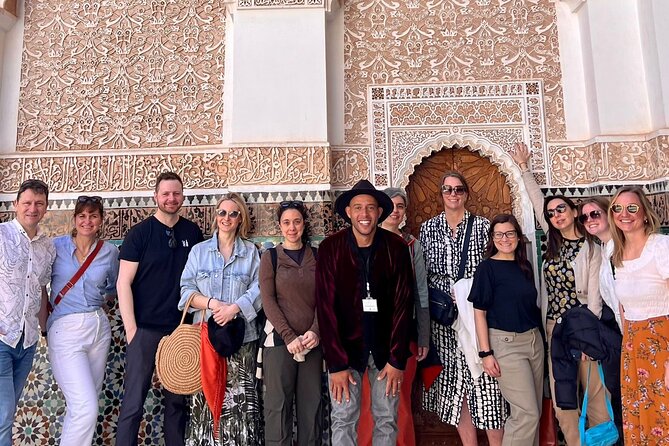
The first stop is Jemaa el-Fnaa, with about 20 minutes to look around. The square is a UNESCO World Heritage Site and serves as the natural starting point for understanding Marrakech’s public life.
During the day, it can feel open and spacious compared with the lanes behind it. As the day changes, the square changes with it. One account of the tour points out that Jemaa el-Fnaa takes on a different atmosphere once the evening market begins. That is useful advice: a morning or afternoon walk gives you one version of the place, while a later return can show you another.
The tour does not charge an entry fee for the square. Your guide can help explain its role as a gathering place and show you how the surrounding lanes connect to the rest of the medina. Do not expect the opening 20 minutes to explain every corner of Marrakech. Think of it as a quick orientation before the route moves into more detailed sites.
I like starting here because it gives the walk a clear anchor. If you return later by yourself, Café de France and the square provide an easy point from which to retrace your steps.
The Jewish quarter and spice market add needed context
The sightseeing begins around the Jewish quarter, an area that adds an important layer to Marrakech’s story. The route connects this part of the medina with the Bahia Palace and nearby market streets, so you are not seeing the city only through royal buildings and shopping lanes.
The experience description also highlights the area’s spice market. You can expect market smells, displays of local goods, and the close trading atmosphere that makes the medina feel so different from a modern shopping district. The point is not simply to buy something. It is to see how traditional commerce works alongside historic buildings and religious sites.
The tour also takes you through souk lanes where local craft products and souvenirs are sold. You might find leather goods, metalwork, textiles, and other artisan products. The guide can help explain what you are seeing and offer advice, but remember that shopping remains your choice. A short guided visit is not the same as a dedicated shopping tour, so you should not expect long bargaining sessions at every stall.
That balance suits me. You get a taste of the market without losing the main focus on history and architecture. If you want to shop seriously, use the free time or return later, when you can compare prices without holding up the group.
Bahia Palace: allow a full hour for tile, stucco, and gardens
Bahia Palace is the longest monument stop, with about one hour. The 19th-century complex includes decorated rooms, gardens, stucco work, paintings, and mosaics. Its appeal is visual, but the guide’s historical explanation helps you see more than a sequence of pretty surfaces.
Look closely at the craftsmanship. Zellij tilework creates repeated geometric patterns, while carved stucco and painted details fill walls and ceilings. The building is made for slow looking. A rushed visit would reduce it to a few photographs, so the hour is welcome.
The palace also includes gardens, which give the route a change of pace after the market lanes. You move from the close, noisy feel of the souk into a more ordered setting. That contrast helps you understand how different parts of the medina served different purposes.
Admission is not included. This is the first major extra expense to keep in mind when you compare the low tour price with the total cost of the outing. The supplied information does not give the current ticket price, so check it when booking or at the entrance.
The guide’s role matters here. Without context, it is easy to look at decoration and move on. With an explanation of the palace’s cultural and architectural importance, you have a better reason to notice the layout, gardens, and repeated design work.
Same city, a completely different day out:
- Marrakech: Agafay Desert Quad Biking Tour with Dinner-Show
★ 4.8 · 16,569 reviews - Marrakech: Atlas Mountains, Ourika Valley, Waterfall & Lunch
★ 4.8 · 15,834 reviews - From Marrakech: 3-Day Merzouga and Sahara Desert Tour
★ 4.9 · 15,308 reviews - Berber villages : Atlas Mountains Day Hike from Marrakech
★ 5.0 · 14,007 reviews
Ben Youssef Madrasa: concentrated detail in a short visit
The route next reaches Ben Youssef Madrasa, an Islamic college in the heart of the medina. The school was once among the largest theological colleges in North Africa and may have housed as many as 900 students. It closed in 1960, was refurbished, and reopened to the public as a historic site in 1982.
The planned visit lasts about 30 minutes. That is enough for a focused look, but it is shorter than the time at Bahia Palace. If you care most about architecture, keep your attention on the central courtyard and the craftsmanship around it.
The building is known for zellij tilework, stucco decoration, and carved wood. These details reward close inspection. The patterns are not random decoration. They show the care given to surfaces in a place built for religious study and daily student life.
The madrasa also helps balance the palace visit. Bahia Palace presents an elite residential setting, while Ben Youssef Madrasa reflects an educational and religious institution. Seeing both in one walk gives you a broader picture of old Marrakech.
Admission is extra here as well. Since the visit is only about half an hour, I would make sure the ticket price fits your priorities. If you are especially interested in Moroccan architecture, the extra fee is likely easier to justify. If you mainly want a quick introduction to the city, you may prefer to spend your free time in the souks instead.
The artisan workshop: useful, but brief
The craft stop is scheduled for about five minutes, and admission is included. You visit a traditional handicraft workshop where artisans work with leather, metal, and textiles using techniques passed down through generations.
Five minutes is enough to see the idea of the stop, but not enough for a long demonstration or a detailed lesson in each craft. Keep your expectations modest. This is a short window into local production, not a full workshop class.
The stop can still be worthwhile because it connects the goods in the souks with the people and methods behind them. When you see a leather item or metal object for sale later, you have a better sense that it may reflect skilled handwork rather than a generic souvenir.
As with many market routes, shopping pressure can vary by the workshop and the day. The supplied details do not promise a purchase-free visit or a particular demonstration. If you want to browse, do so politely and remember that the guide must keep the group moving.
Koutoubia Mosque: finish with Marrakech’s landmark minaret
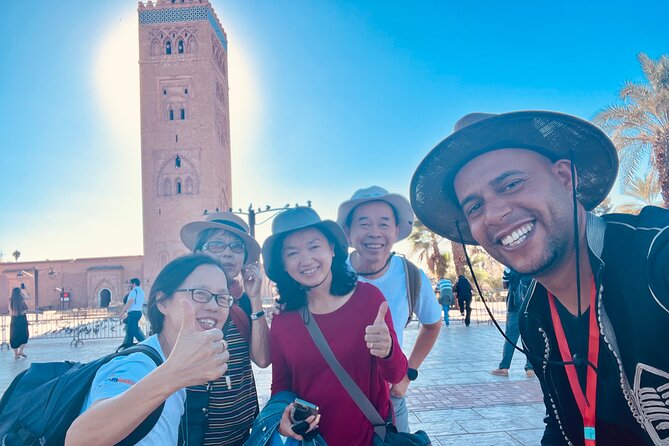
The final sightseeing stop is Koutoubia Mosque, with about 10 minutes. The mosque dates from the 12th century, and its minaret is described as the highest structure in Marrakech. Along with Jemaa el-Fnaa and the Menara Gardens, it is one of the city’s key symbols.
The short stop is mainly about orientation and exterior viewing. The information provided does not promise an interior visit, so you should not book this walk expecting a full mosque tour. Instead, use the time to understand the mosque’s place in the city and to take in the minaret’s importance as a landmark.
Koutoubia works well at the end because it brings the route back toward the major public spaces around the medina. After several hours of lanes, rooms, courtyards, markets, and workshops, the mosque offers a clear visual reference point.
The stop is free, but the time is limited. If you want photographs or a closer look, you may need to return independently after the tour. Since the activity finishes back at Café de France, you can also use the end point to continue exploring nearby.
What the $15.85 price really buys you
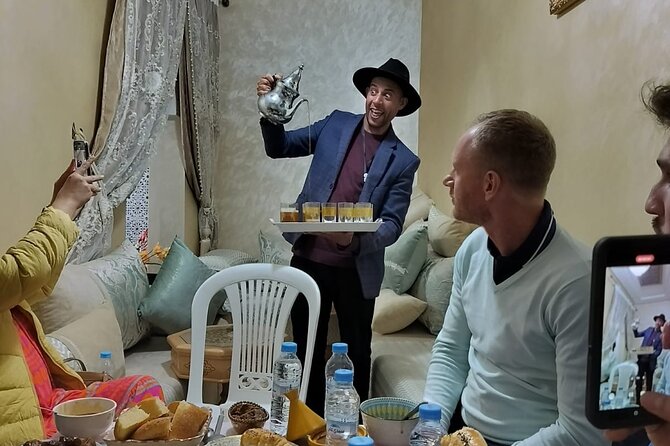
At $15.85 per person, this is a low-cost guided introduction to the medina. The price includes a certified tour guide, walking services, advice, and free time to explore the monuments. It does not include entry tickets to Bahia Palace or Ben Youssef Madrasa, and tipping is not included.
That makes the tour best value for someone who wants explanation and route-finding help. You are paying for access to a guide’s structure and local context, not for an all-inclusive attraction package. Once you add the two monument tickets and any tip you choose to give, your final spend will be higher.
Group discounts may be available, which could make the price more attractive for families or friends booking together. The group can reach 15 people. That is not a private experience, but it is still more manageable than a large coach group, especially in narrow medina lanes.
The booking pattern suggests that people often reserve about 15 days ahead. You do not necessarily need to plan that far in advance, but popular dates may fill. Mobile tickets and confirmation at booking make the practical side simple.
Who will get the most from this four-hour walk
I would recommend this experience to first-time visitors who want a fast introduction to old Marrakech without arranging several separate visits. It is also a good fit if you are staying in the medina and want help with basic navigation before exploring on your own.
You will get the most from it if you enjoy architecture, markets, local craft, and short historical explanations in the same outing. The mix is broad. It does not spend four hours on one palace or one museum, so it suits a curious general audience more than a specialist seeking exhaustive architectural detail.
The tour can work for families and most people because the information says most participants can take part, and service animals are allowed. Still, you should be ready for a walking route through alleys and narrow streets. The description does not promise a fully accessible route, so anyone with specific mobility needs should confirm details before booking.
This is less suitable if you want a private guide, a relaxed photography walk, or a shopping-only experience. The group schedule keeps the route moving. The five-minute craft stop and ten-minute Koutoubia stop also show that several parts are brief by design.
Guide quality and the value of a good introduction
A guide can make or break a medina walk. The experience includes a certified guide, and Yassine is specifically named in the available feedback as a friendly choice for helping visitors understand where things are and how to get around. Another account describes a guide who shared Moroccan history and stories in a warm, approachable way.
I would treat that as a reason to consider the tour, not a guarantee that Yassine will lead every departure. The provider is Morocco Sunny Days, but the supplied details do not promise a specific guide for every booking. If having Yassine matters to you, ask before confirming.
The strongest reported qualities are friendliness, useful stories, and orientation. Those are exactly the traits you want on a first medina walk. You need someone who can explain what you are seeing without turning four hours into a lecture, and who can keep the group moving through crowded lanes.
The tour is rated 5 out of 5 from 44 ratings, with 100 percent recommending it. That is a strong record, though the number is still modest. I would give the most weight to the specific practical praise: the tour helps at the beginning of a stay, and Jemaa el-Fnaa feels different when the evening market starts.
Timing, weather, and cancellation details
The experience requires good weather. If poor weather cancels the activity, you are offered another date or a full refund. That matters because the route is outdoors and depends on walking through the medina rather than moving between indoor attractions by vehicle.
You can cancel for a full refund up to 24 hours before the start time. Cancellations made within 24 hours are not refunded, and changes inside that period are not accepted. Cutoff times follow local Marrakech time.
I would book this for the first or second full day if possible, then leave enough flexibility for weather. Starting early in your trip gives the orientation more value, while returning to Jemaa el-Fnaa later lets you notice how the square changes after dark.
Should you book the Marrakech medina walk?
Book it if you want a reasonably priced, guide-led introduction to Marrakech’s old city, with both major monuments and ordinary market life in the same route. The best reasons are the practical orientation, the Bahia Palace and Ben Youssef Madrasa combination, and the chance to see Jewish-quarter streets, spices, and traditional crafts without planning every turn yourself.
Skip it if you want monument admission included, a private pace, or a detailed visit inside Koutoubia Mosque. You will need to budget separately for the two main entry tickets, and some stops are short.
For most first visits, I think the tour makes sense early in your stay. It gives you a map in your head, useful cultural context, and enough free time afterward to return to the places that caught your attention.
FAQ
How long does the Marrakech medina tour last?
The activity lasts approximately four hours.
Where does the tour begin?
It begins at Café de France, 72 Rue des Banques, Marrakech 40000, Morocco.
Where does the tour end?
The activity ends back at the meeting point at Café de France.
Are monument entrance tickets included?
No. Entry tickets to Bahia Palace and Ben Youssef Madrasa are not included. Tipping is also not included.
How large is the tour group?
The activity has a maximum of 15 travelers.
Can I cancel for a full refund?
Yes. You can cancel at least 24 hours before the start time for a full refund. Cancellations or changes made within 24 hours are not refunded or accepted.
Just listed out of Marrakech
- Marrakech: Ouzoud Waterfalls Trip, Guide & Boat + Lunch★ 4.7 · 33 reviews
- From Marrakech: Ourika Valley Trip, Waterfall Hike & Lunch★ 4.4 · 33 reviews
- Magical Dinner show and Quad bike In Agafay Desert Marrakech★ 4.5 · 33 reviews
- Marrakech: Quad excursion to the palm grove and Jbilets desert★ 4.5 · 33 reviews
- Moroccan Hands on traditional pastries & Tea class in Marrakech★ 4.5 · 33 reviews
- Marrakech: Vibrant Dinner Show at The Lotus Club★ 3.9 · 33 reviews
- From Marrakech: Small Group To Essaouira & Medina Day Trip★ 4.3 · 33 reviews
- From Marrakech: 3-Day Merzouga and Sahara Desert Tour★ 4.5 · 33 reviews
Marrakech Tours, compared.

Agafay Desert Sunset, Camel Ride, and Dinner Show
Read our review →

Agafay Desert Quad & Camel Rides with Dinner Show
Read our review →
Agafay Desert Quad Biking Tour with Dinner-Show
Read our review →
Atlas Mountains, Ourika Valley, Waterfall & Lunch
Read our review →

