
Reviewed · MARRAKECH TOURS
Marrakech: Make Your Own Moroccan Zellige Mosaic Masterpiece
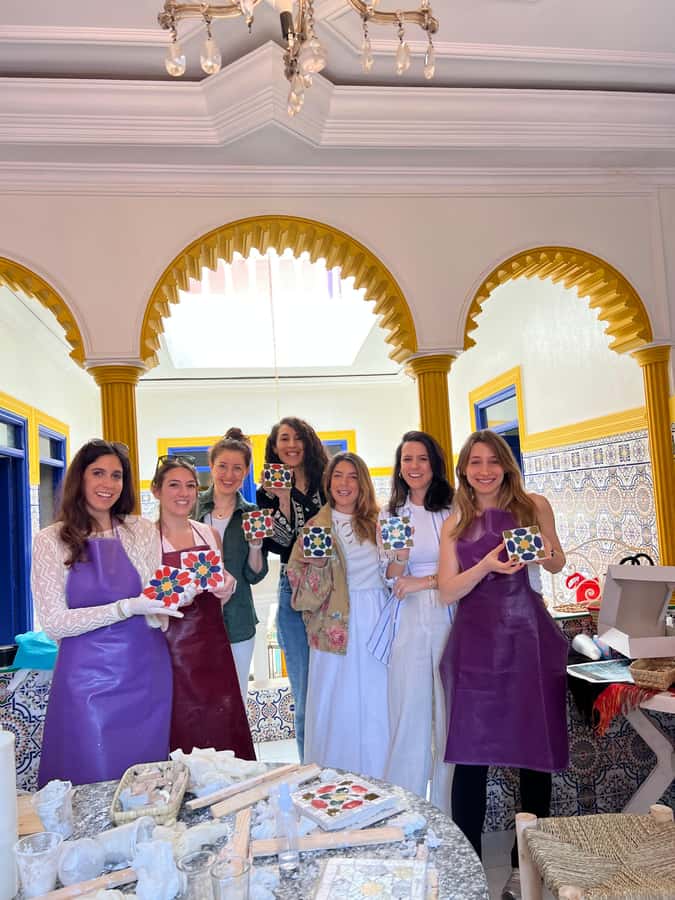
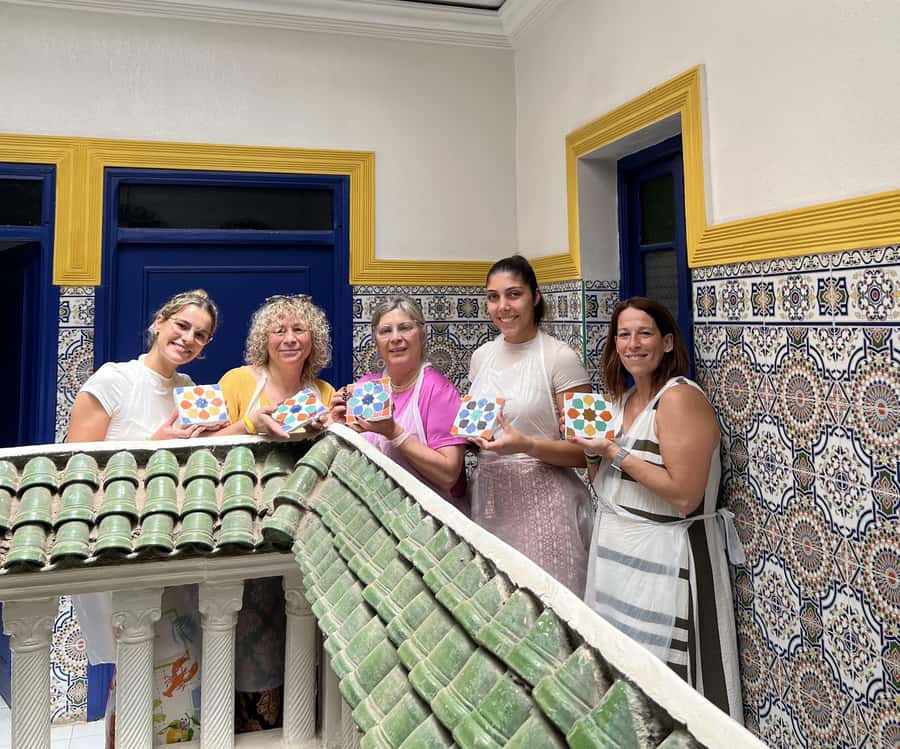
Moroccan zellige is not just decoration. It is geometry, color, patience, and a little surrender to the fact that your first pattern may not behave. In this two-hour Marrakech workshop, you arrange pre-cut tiles into a personal mosaic, learn how the craft works, and leave with a handmade piece.
I like the tangible souvenir and the calm, creative setting. Tea and Moroccan pastries add a gracious local touch, while instructors including Salma, Leila, and Laila are praised for patient help, including writing names in Arabic on the back of finished tiles. The main consideration is that you assemble prepared pieces rather than shape and glaze raw tiles yourself, and the color selection may feel limited if you expect a full artisan workshop.
What makes this workshop worth your time
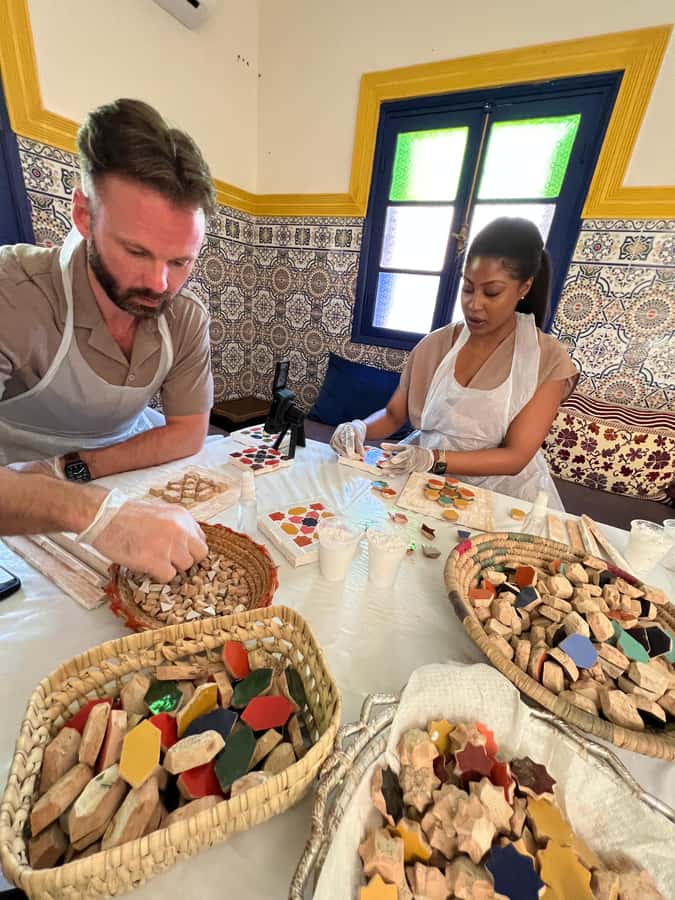
- A handmade Marrakech souvenir: You create and take home your own zellige tile instead of buying another shop item.
- A gentle introduction to Moroccan craft: The class covers zellige history, design ideas, and practical tile placement.
- Helpful instructors: Salma, Leila, and Laila are noted for clear explanations and patient support.
- A small-group feel: One session had six people, though another had a larger group where one instructor still worked hard to assist everyone.
- Tea and pastries included: The break gives you a pleasant pause while you look at your developing pattern.
- A useful rainy-day plan: The spacious, ventilated studio is air-conditioned, making this a good indoor choice.
Entering a Medina studio for a hands-on craft
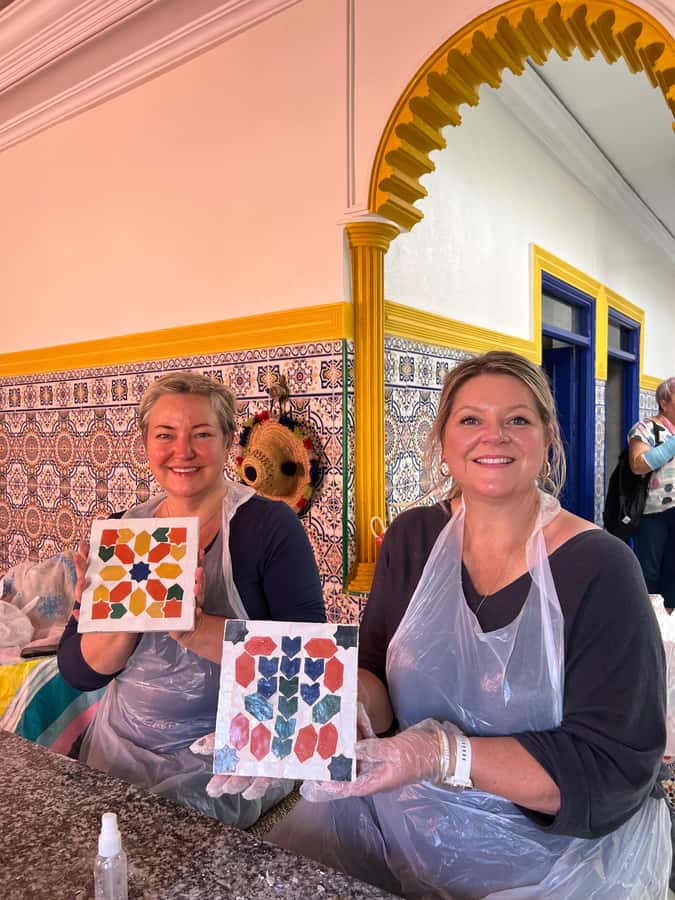
The workshop takes place in the heart of Marrakech’s Medina Old Town, in a rustic Moroccan setting reached through a side street off a souk. That location matters. You are not simply sitting in a generic craft classroom on the edge of town. The surroundings give the activity a clear connection to the tilework you see across Moroccan homes, palaces, fountains, and religious buildings.
The studio is described as spacious, well ventilated, and air-conditioned. That is welcome in Marrakech, where a cool indoor activity can give you a useful break from the heat. It also makes the class a sensible choice on a rainy afternoon, when outdoor sightseeing loses some of its appeal.
Plan to arrive 15 minutes early. You will have time to settle in, find your place, and get ready without cutting into the two-hour class. Wear comfortable clothes suitable for crafting, and bring water. Smoking is not allowed.
Transportation is not included, so you need to make your own way to the workshop. The activity is not suitable for children under five or wheelchair users. Those details are easy to overlook when planning a day in the Medina.
A few other Marrakesh days worth comparing
- Marrakech: Agafay Desert Sunset, Camel Ride, and Dinner Show
★ 4.6 · 35,119 reviews - From Marrakech: Ouzoud Waterfalls Guided Hike and Boat Trip
★ 4.7 · 33,630 reviews - Marrakech: Agafay Desert Quad & Camel Rides with Dinner Show
★ 4.8 · 27,382 reviews
Learning why zellige depends on pattern and precision
The class begins with an introduction to zellige, the traditional Moroccan mosaic technique. You learn about its history, the principles behind its designs, and the practical steps involved in assembling a piece.
This background gives the hands-on work more meaning. The finished tile is not merely a collection of colorful shapes. Moroccan zellige depends on repeated geometry, careful placement, and the relationship between empty space and crowded pattern. Even a simple design can look demanding once you start fitting the pieces together.
You do not need previous artistic experience. The workshop is designed for beginners as well as people who already enjoy making things. The instructors explain the process and provide examples to follow, so you are not expected to arrive with a plan or a practiced hand.
That said, you should set your expectations correctly. Based on the activity description and the practical feedback available, you work with pre-cut tiles and arrange them into proposed patterns. You are learning the assembly process and design choices, not completing every stage of traditional zellige production from raw clay to finished tile.
For most people, that is a good trade-off in a two-hour class. Shaping, glazing, firing, cutting, and assembling tiles would require far more time. Here, you get to focus on the part you can complete during a short visit.
Choosing colors and building your own pattern
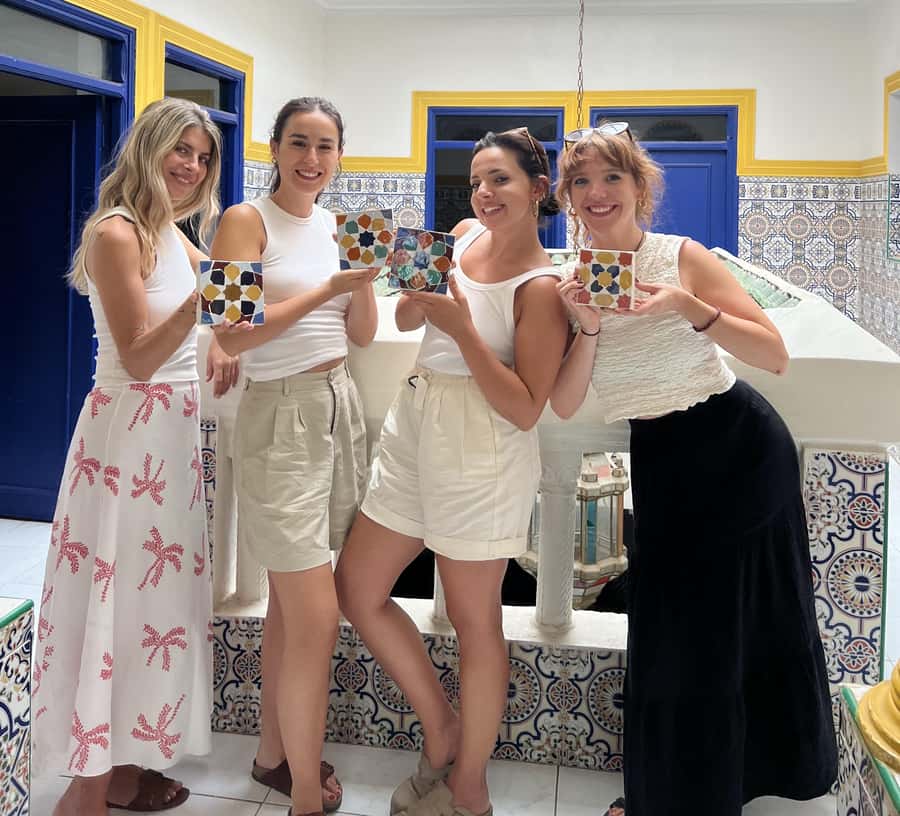
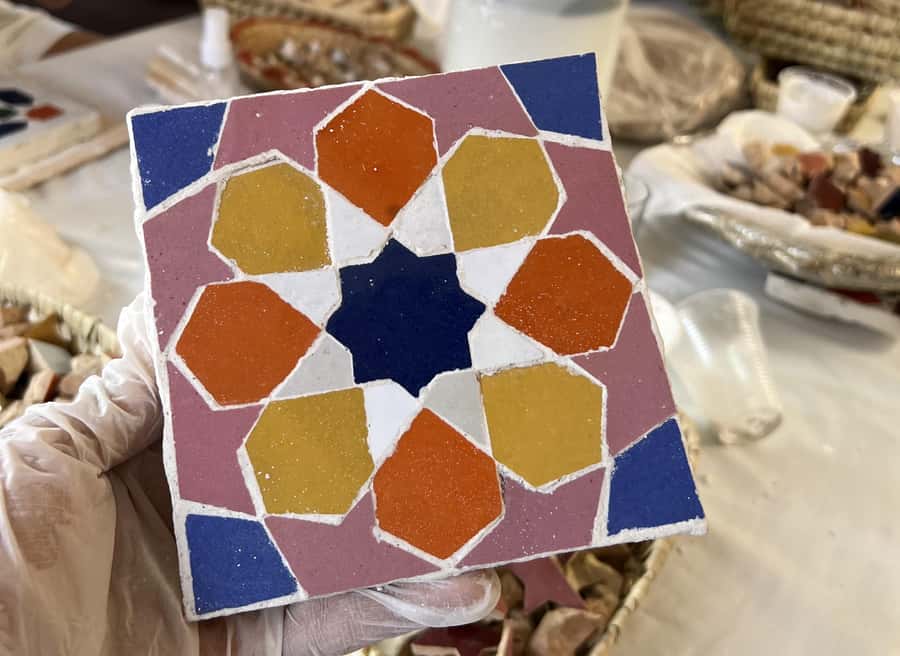
After the introduction, you choose from the available colors and begin arranging your design. Examples and suggested patterns help you get started, but the activity still leaves room for personal decisions.
You might prefer a neat, balanced design, or you may mix colors in a way that feels more personal. The process is approachable because the pieces are already cut, yet it still requires attention. A tile that seems to fit may need to be turned, shifted, or placed beside a different color to make the pattern work.
This is where the class becomes more than a demonstration. You are making choices and watching a design take form under your hands. For couples, families, and friends, the activity also creates an easy shared project without requiring everyone to have the same level of artistic confidence.
Color choice is one area where the experience may not satisfy every creative instinct. The available range can feel more limited than expected, and guidance on matching colors may be light. If you want a fully open-ended design with many shades and shapes, ask yourself if a guided, prepared-tile format suits you.
I see this limitation as part of the workshop’s beginner-friendly design. Too many options can slow the class and make the first steps harder. The trade-off is less freedom, but a better chance of finishing a good-looking tile in two hours.
Getting help from Salma, Leila, or Laila
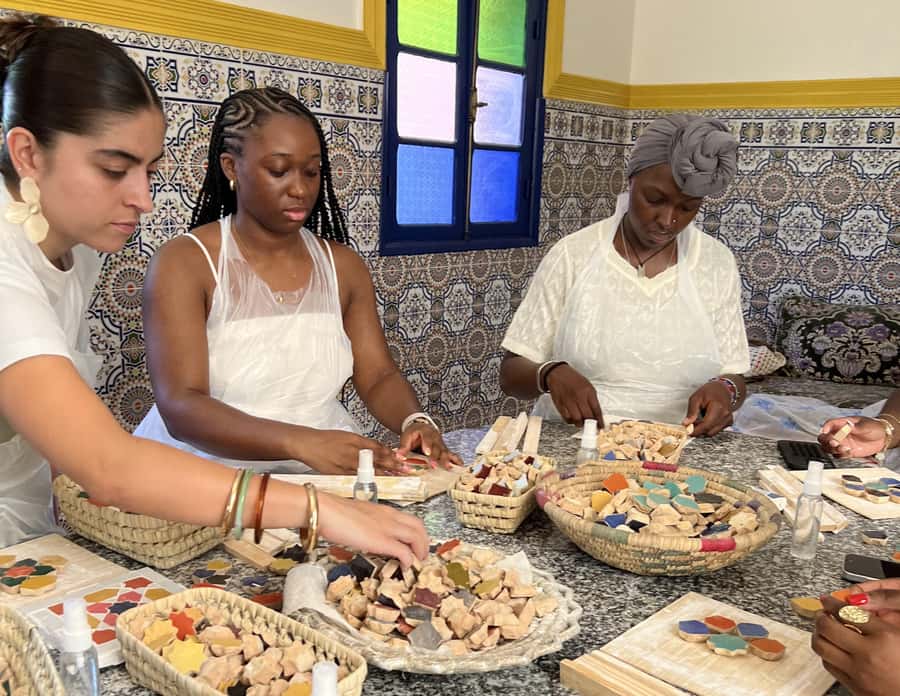
The instructor makes a big difference here. Salma is praised for explaining the history and techniques clearly, while Leila and Laila are described as friendly, encouraging, and patient with beginners. One instructor even added a participant’s name in Arabic on the back of the mosaic, a small detail that turns a craft project into a more personal keepsake.
You can expect guidance as you arrange the pieces. If you become muddled, the instructor can help you understand the placement rather than simply fixing the work for you. That is important. The pleasure comes from seeing your pattern develop, not from receiving a tile assembled entirely by someone else.
The class is offered in Arabic, French, and English. English-language instruction has been described as clear, which helps if you want to understand the design logic rather than simply copy an example.
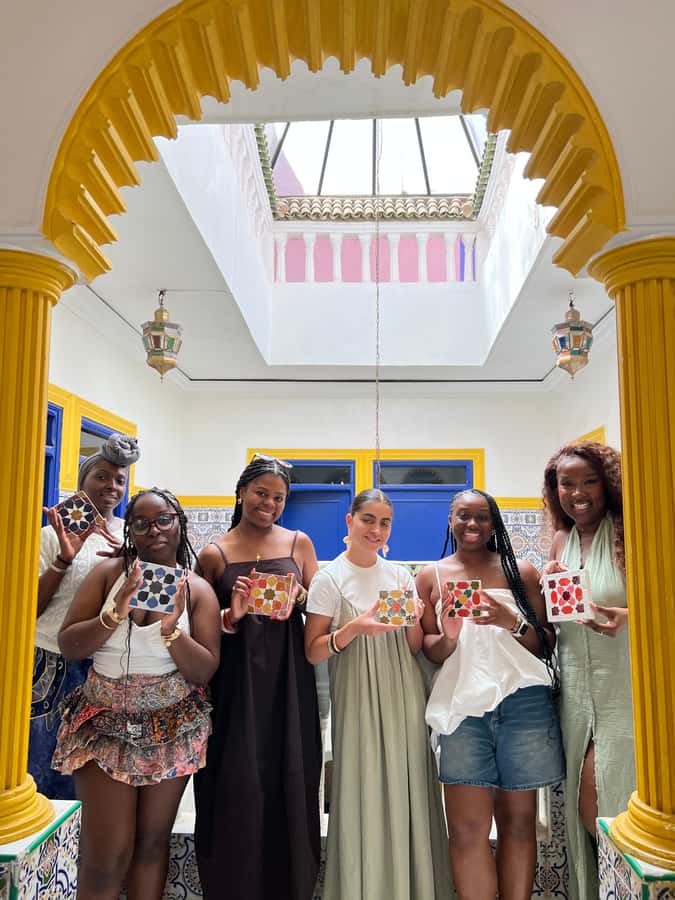
Group size can vary. A six-person session offers a naturally personal feel, while a larger group may require more patience as the instructor moves between workstations. One session still received attentive help despite a large group, though having two hosts might have made the pace easier.
If you are a complete novice, say so early. The instructors are accustomed to helping beginners, and speaking up gives them a chance to explain the tricky parts before you have to undo a section.
Same city, a completely different day out:
- Marrakech: Agafay Desert Quad Biking Tour with Dinner-Show
★ 4.8 · 16,569 reviews - Marrakech: Atlas Mountains, Ourika Valley, Waterfall & Lunch
★ 4.8 · 15,834 reviews - From Marrakech: 3-Day Merzouga and Sahara Desert Tour
★ 4.9 · 15,308 reviews - From Marrakech: Merzouga 3-Day Desert Safari with Food
★ 4.7 · 12,232 reviews
Tea, pastries, and a welcome pause
Tea and Moroccan pastries are included, and they are more than a line in the booking details. The break gives your eyes and hands a rest after concentrating on the pattern. It also adds a small piece of Moroccan hospitality to a practical workshop.
You can use this pause to look at your work from a little distance. A design that seemed uncertain while you were placing each piece often makes more sense once you stop fussing with it. The tea break also gives couples and families a natural chance to compare colors and patterns.
This is not a meal, so do not arrive expecting lunch. Meals are not included, and you should bring water. For a two-hour activity, though, the refreshments are a thoughtful addition.
Finishing a tile you can actually pack
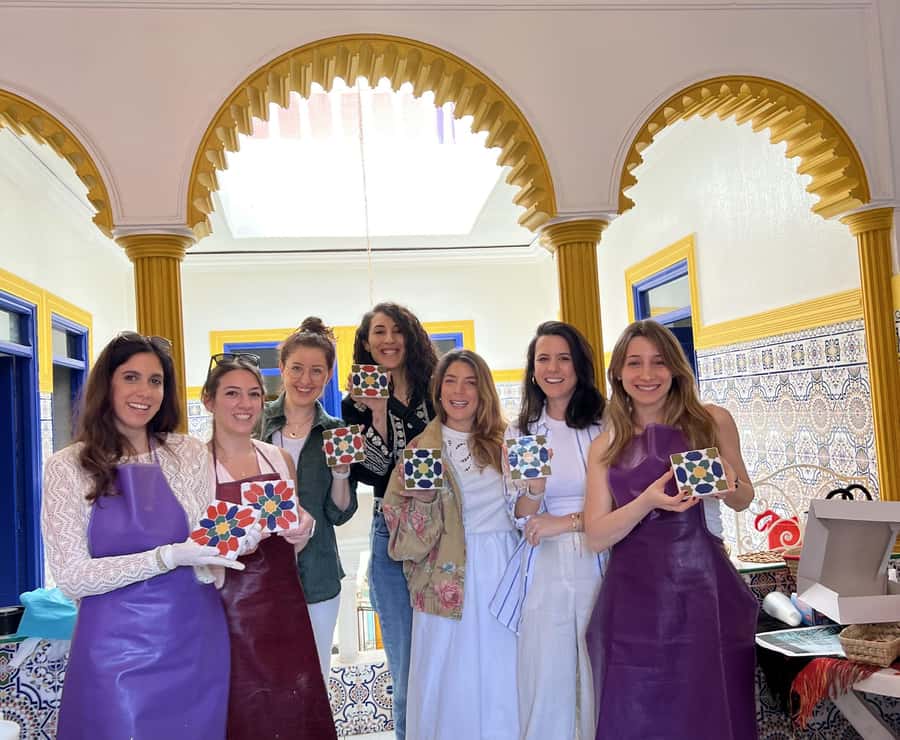
The best feature of the workshop is that you leave with your own zellige artwork. It is a small but meaningful souvenir, especially if you have already spent time admiring Moroccan tilework at places such as the Bahia Palace.
A handmade tile also avoids the problem of buying a decorative object without knowing how it was made. You have handled the pieces, made the design decisions, and watched the pattern develop. The result may not look like the work of a master artisan, and it does not need to. Its value comes from the connection to your time in Marrakech.
The finished tile is also practical as a gift or memory. Families can make one each, couples can create matching or contrasting designs, and older children can take part if they can work carefully. The minimum age is five, but younger children may still find the precision required difficult.
Pack the piece with care for your journey home. The supplied information confirms that you take your artwork with you, but it does not specify special packing or shipping arrangements. If you are concerned about luggage space, ask the workshop staff about the best way to protect it before leaving.
What two hours and $42 really buy you
At $42 per person, this is not the cheapest way to spend two hours in Marrakech. You can see Moroccan tilework for free in many public spaces, and you can buy ready-made ceramics in the souks for less than the cost of a class.
The value comes from the combination of instruction, materials, refreshments, and a finished piece. You are paying for an activity rather than simply an object. The price also covers expert help, which matters when the pattern becomes confusing or your first arrangement does not fit.
I consider it good value if you want a cultural activity that is both social and practical. It is especially worthwhile for a couple or family looking for something different from sightseeing. You also get a useful indoor option during hot or wet weather.
The value is less clear if you are already an experienced mosaic artist or expect professional-level training. The class is an introduction, and the use of pre-cut tiles keeps the work manageable. Someone seeking a full technical study of traditional zellige may find the process too limited.
The two-hour length is well judged for most visitors. It is long enough to explain the craft, make a considered design, take a refreshment break, and finish a tile. It is short enough to fit around palace visits, souk wandering, and an evening meal.
Who will enjoy this most
I would recommend this workshop to:
- Couples who want a shared activity and a personal souvenir
- Families with children over five who can work carefully
- First-time visitors interested in Moroccan architecture and decorative arts
- Creative people who like choosing colors and arranging patterns
- Anyone needing a relaxed indoor plan in Marrakech
- Visitors who prefer experiences that produce something tangible
I would be more cautious if you have mobility needs, since the activity is not suitable for wheelchair users. I would also think twice if you want to cut and shape clay yourself, since the class focuses on arranging pre-cut tiles.
The atmosphere suits people who enjoy patient, focused work. It is not a fast-paced sightseeing stop. You will spend time looking closely, making small adjustments, and accepting that symmetry takes effort.
Booking details that matter in Marrakech
The experience costs $42 per person and lasts two hours. Starting times depend on availability, so check the schedule before building the rest of your day around it.
You can reserve now and pay later, which helps if your Medina plans are still shifting. Cancellation is free up to 24 hours in advance for a full refund. Transportation and meals are not included, so factor in your route and food plans separately.
The workshop is run by Khmisa Workshops. Instructors speak Arabic, French, and English. Bring a camera if you want to record your design process, though the finished tile itself will be the main souvenir.
One practical note: the workshop location is in the Medina, where finding a side-street studio can take longer than expected. Arriving early is sensible, especially if you are walking from another sight or navigating the souk for the first time.
Should you book the Marrakech zellige workshop?
Book it if you want a friendly, creative break from monuments and shopping, especially if you like taking home something you made yourself. The patient instruction from Salma, Leila, and Laila, along with tea, pastries, and a relaxed studio setting, gives the activity a warm local character.
Skip it if you want a full artisan apprenticeship, a huge range of colors, or the chance to produce every part of a tile from scratch. For most visitors, though, the prepared pieces are a sensible format. At $42, you get a focused introduction to Moroccan mosaic work and a personal reminder of Marrakech that no shop-bought souvenir can quite match.
FAQ
How long does the zellige workshop last?
The workshop lasts two hours. You should arrive 15 minutes early to settle in before the activity begins.
What is included in the $42 price?
The price includes expert instruction, all workshop materials, your finished zellige artwork to take home, Moroccan tea, and pastries.
Do I need previous mosaic-making experience?
No. The workshop is designed for all skill levels, including beginners. The instructors explain the process and help you arrange the pieces.
Which languages are spoken?
The instructors offer the workshop in Arabic, French, and English.
Can children take part?
Children under five are not suitable for this activity. The supplied information does not give a maximum age or additional child restrictions.
Is transportation included?
No. You are responsible for getting to and from the workshop.
Can I cancel the booking?
Yes. You can cancel up to 24 hours in advance for a full refund. You can also reserve now and pay later.
Just listed out of Marrakesh
- Marrakech: hot-air balloon flight with view of the Atlas Mountains and Berber breakfast★ 4.3 · 32 reviews
- Ourika Valley Waterfalls Day Trip From Marrakech★ 5.0 · 32 reviews
- Marrakech Full-Day Guided Tour with Lunch★ 4.0 · 32 reviews
- Atlas mountains, Ourika valley, berber villages trip & Guide★ 5.0 · 33 reviews
- Marrakech: Ouzoud Waterfalls Trip, Guide & Boat + Lunch★ 4.7 · 33 reviews
- Marrakech: Vibrant Dinner Show at The Lotus Club★ 3.9 · 33 reviews
- From Marrakech: Small Group To Essaouira & Medina Day Trip★ 4.3 · 33 reviews
- From Marrakech: 3-Day Merzouga and Sahara Desert Tour★ 4.5 · 33 reviews
Marrakech Tours, compared.

Agafay Desert Sunset, Camel Ride, and Dinner Show
Read our review →

Agafay Desert Quad & Camel Rides with Dinner Show
Read our review →
Agafay Desert Quad Biking Tour with Dinner-Show
Read our review →
Atlas Mountains, Ourika Valley, Waterfall & Lunch
Read our review →

