
Reviewed · MARRAKECH TOURS
4-Days Adventures from Marrakech to Fez via Gorges & Desert
The best part of this four-day Marrakech to Fez journey is the change of scenery. You leave the red walls of Marrakech, cross the High Atlas, pass mud-brick kasbahs and rose-growing villages, walk through narrow gorges, and reach the Sahara by camel. It is a lot of Morocco in a short time.
I like the route for two reasons: Ait Ben Haddou and the desert camp give you memorable places with real character, and the one-way trip saves you from returning to Marrakech. I also like that breakfast, dinner, hotel pickup, and transport are included.
The trade-off is the pace. Long road days are unavoidable, and the schedule leaves limited time at several stops. Vehicle comfort can also vary, with one departure changing from a roomy Ford-style minivan to a tighter SUV partway through the trip.
Key points to know before booking
- The route crosses the Tizi-n-Tichka Pass at 2,260 meters, with mountain villages and high Atlas views along the way.
- Ait Ben Haddou is the first major stop, a UNESCO World Heritage site and famous film setting.
- The itinerary includes both Dades and Todra Gorges, with short walks in each area.
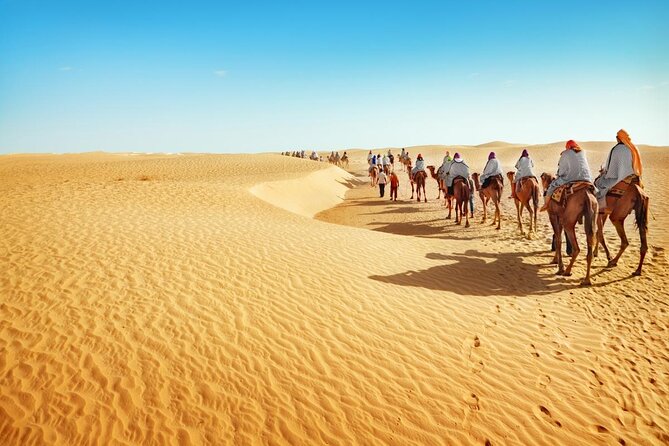
- You spend a night in Erg Chebbi after a sunset camel ride, then return by camel the next morning.
- The trip ends in Fez, making it useful if your Moroccan route runs from Marrakech toward northern Morocco.
- The advertised group maximum is 17 people, though some departures operate with six or fewer participants.
Crossing the High Atlas from Marrakech
Your pickup begins in Marrakech, with the exact hotel meeting arrangement handled at booking. From the city, the road climbs toward the High Atlas on the Tizi-n-Tichka Pass. At 2,260 meters above sea level, this is the first big change in scenery, from the broad Marrakech plain to steep mountain slopes and small Berber villages.
The route is scenic, but it is not quick. Mountain roads mean bends, stops, and a full day in the vehicle. If you get carsick, sit near the front and bring water. Comfortable walking shoes matter more than stylish clothes, since the stops involve uneven ground and short walks.
A tea stop on the pass is part of the usual plan. This is a useful pause, not just a photo stop. You can stretch your legs, take in the mountain views, and have mint tea before continuing toward the kasbah country.
A few other Marrakech days worth comparing
- Marrakech: Agafay Desert Sunset, Camel Ride, and Dinner Show
★ 4.6 · 35,119 reviews - From Marrakech: Ouzoud Waterfalls Guided Hike and Boat Trip
★ 4.7 · 33,630 reviews - Marrakech: Agafay Desert Quad & Camel Rides with Dinner Show
★ 4.8 · 27,382 reviews
Ait Ben Haddou and Ouarzazate
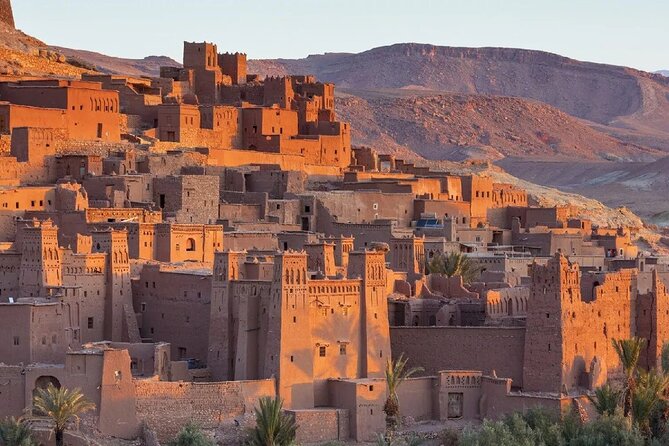
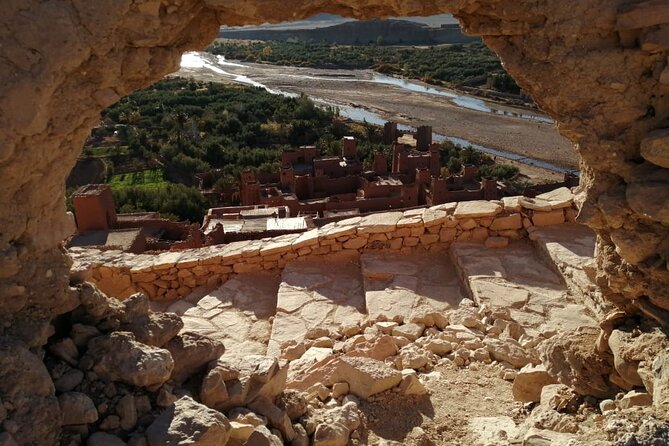
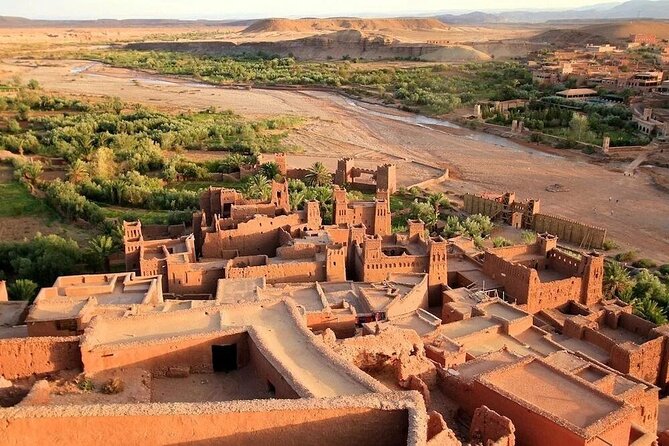
Ait Ben Haddou is the first major cultural stop, and it earns its place on the route. The fortified settlement is made of earthen buildings grouped along the hillside, with narrow lanes and open views across the surrounding countryside. Its UNESCO designation reflects the importance of this type of southern Moroccan architecture.
The kasbah has also served as a setting for films including Gladiator, Babel, Lawrence of Arabia, The Legionary, and The Sheltering Sky. The film connection may draw you in, but the place is more interesting when you look past Hollywood. The walls, towers, and compact lanes show how a fortified trading settlement was built from local earth.
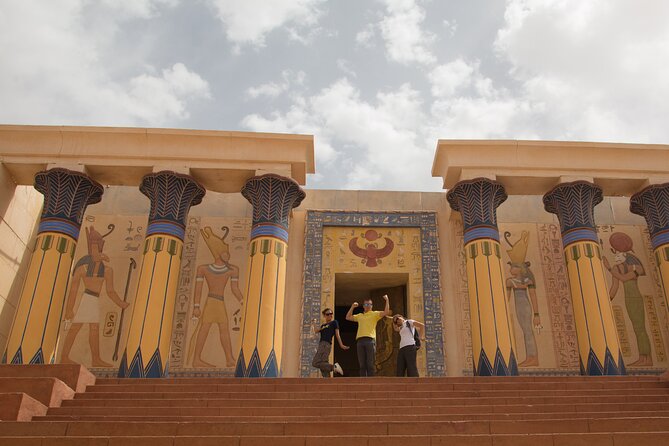
After lunch, the journey continues to Ouarzazate. The plan includes the Kasbah of Taourirt and Atlas Studios, described as the largest and most famous film studio in Africa. Atlas Studios costs an extra 8 euros, so decide ahead of time if the visit interests you. If you are keen on cinema, it adds a distinctive stop. If not, you may prefer to save the fee for food, drinks, or other entrance charges.
This part of the day combines architecture, film, and mountain scenery, but it also helps explain the long driving time. You are covering a large stretch of southern Morocco rather than spending several hours at one attraction.
Rose Valley and the Dades Gorge
From Ouarzazate, the road heads through the Valley of Roses and toward the Dades Valley. The name refers to the rose-growing area, and the route offers a change from the bare mountain views around the pass. The scenery becomes more layered, with valley settlements, kasbahs, and rocky slopes.
You should reach the Dades Gorge in time for dinner and an overnight stay at Auberge Panorama or a similar property. The listed accommodation is simple regional lodging, not a luxury hotel. That fits the route, since the purpose is to sleep near the next day’s sights rather than settle into a resort.
On the second morning, you walk through the Dades Gorge. The walk is one of the more active parts of the trip, but the stated fitness requirement is moderate rather than strenuous. Wear shoes with a good grip and expect uneven surfaces.
The Dades stop gives you time outside the vehicle, which is important after the first long day. Still, do not expect a long hike or a quiet day in the valley. This is a short guided visit before the road continues.
Todra Gorge and the Road of a Thousand Kasbahs
After the Dades walk, you drive along the route often called the Road of a Thousand Kasbahs. The name points to the many fortified homes and settlements scattered through the valleys. You pass through Tinghir and continue toward Todra Gorge, arriving around lunchtime.
Todra is known for its tall canyon walls and narrow passage. The planned visit includes a walk through the gorge after lunch. Like Dades, this is a chance to see the area on foot instead of from a minibus window. The two gorges are close enough in the schedule to feel connected, but they have different shapes and moods.
The limitation is time. This tour gives you a taste of both gorges, not a full walking holiday in either one. If you want long hikes, quiet photography sessions, or several nights in the canyon area, you need a slower itinerary.
From Todra, the road continues east through Erfoud toward Merzouga. You spend the night at Ksar Merzouga or a similar hotel before the desert camp. Dinner and Saharan drums are included, giving you a comfortable pause before the overnight in the dunes.
Same city, a completely different day out:
- Marrakech: Agafay Desert Quad Biking Tour with Dinner-Show
★ 4.8 · 16,569 reviews - Marrakech: Atlas Mountains, Ourika Valley, Waterfall & Lunch
★ 4.8 · 15,834 reviews - From Marrakech: 3-Day Merzouga and Sahara Desert Tour
★ 4.9 · 15,308 reviews - Berber villages : Atlas Mountains Day Hike from Marrakech
★ 5.0 · 14,007 reviews
Rissani, El Khamlia, and the Saharan edge
The third day adds local stops around Merzouga. After breakfast, you pass through small villages and visit El Khamlia, an oasis community known for Saharan music. The music stop adds a human element to the route, since the desert is not only about sand and sunsets.
You also visit Rissani, described as the first capital of the Alaouite dynasty. The plan includes historic kasbahs and the local market. Rissani is a practical place to see how the desert region functions beyond the camp experience.
Lunch is not included, but you have the chance to try Berber pizza, a local specialty associated with the area. Bring some Moroccan dirhams for meals, drinks, and small purchases. The tour includes three breakfasts and three dinners, but lunches and drinks are your responsibility.
After returning to Merzouga, you can relax with mint tea before meeting the camels. This break matters because the route has already involved several stops and road hours. The camel ride begins in the late afternoon, taking you across the Erg Chebbi dunes as the sun drops.
Sunset by camel and a night in an Erg Chebbi tent
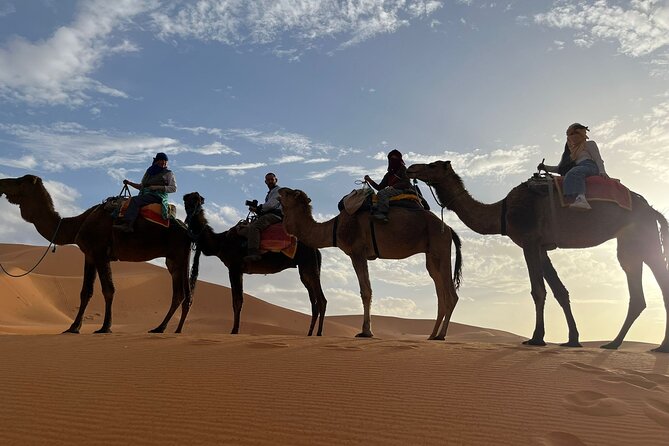
The camel ride lasts about an hour before you reach the desert camp. It is a slow way to enter the dunes, with time to watch the light change and take in the open surroundings. If you have never ridden a camel, expect an unusual seat and a gentle but noticeable rocking motion.
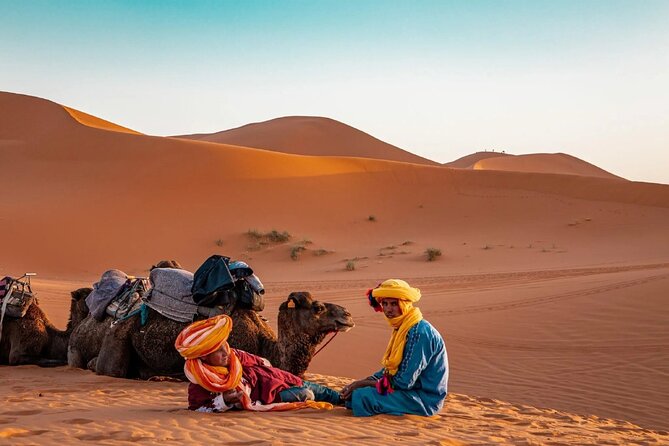
At camp, the camels are hobbled, mint tea is served, and dinner follows. The evening includes Saharan drums and time to look at the stars. The accommodation is a standard desert camp, so keep your expectations practical. You are choosing location and atmosphere over hotel-style convenience.
The desert night is the emotional center of the trip. It gives you a clear break from the road and a setting that feels very different from Marrakech, the mountains, and the kasbah valleys. It is also the part most likely to make the long driving days feel worthwhile.
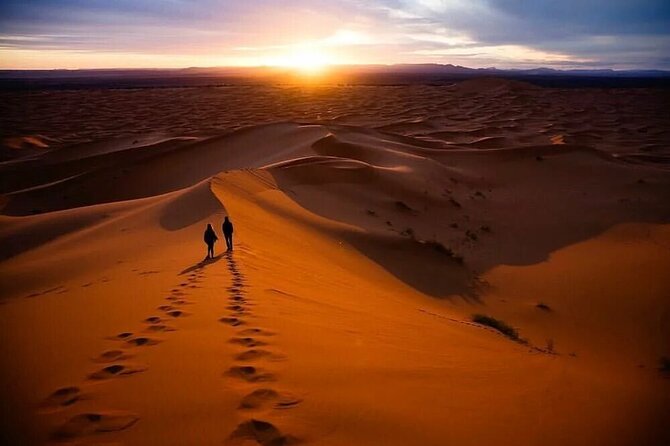
The next morning starts early so you can walk over the dunes for sunrise. The itinerary places the sunrise near the Algerian border, about 50 kilometers from Merzouga. Afterward, you take the camels back to the hotel for a shower and some time to rest.
That shower is especially welcome after the camp night. Pack a small overnight bag with toiletries, a phone charger, and warm layers rather than carrying all your luggage into the desert.
The long final run to Fez
After the desert, the route heads north through the Ziz Valley, Berber villages, the Middle Atlas Mountains, and the Cedars Forest. This is another long driving day, but it gives you a final change in scenery before Fez.
The road from the dry desert toward the Middle Atlas is part of the appeal of a one-way tour. You do not simply return along the same route. Instead, the journey links several parts of Morocco that are difficult to connect without arranging transport yourself.
Arrival in Fez is expected in the afternoon, followed by drop-off at your accommodation. The tour ends there, so plan your Fez lodging in advance. The listed end point is Fez, Morocco, not a return to Marrakech.
Guides, vehicles, and group size
The included driver is English-speaking, and guide assignments can vary. Mohammed, Mustafa, Hassan, and Driss are names connected with past departures, but you should not assume a particular person will lead your trip. The strongest part of the service is meant to be the driver-guide relationship, since the same person helps with timing, route details, and day-to-day comfort.
A maximum of 17 people is listed, but some departures have operated with six or fewer. A smaller group can make stops easier and give you more direct contact with the driver. Ask about the expected group size if that will affect your decision.
Transport is by air-conditioned minibus. Vehicle quality and space may differ by departure. One party experienced a switch from a comfortable Ford minivan style vehicle to a cramped Highlander style SUV. That does not mean every group will face the same issue, but it is a fair reason to ask what vehicle is planned.
The tour is designed for people with moderate physical fitness. You will walk through gorges, mount and dismount camels, cross uneven ground, and spend long hours sitting in a vehicle. Children must be accompanied by an adult, and the child rate applies only when sharing with two paying adults.
What the $350 price really covers
At $350 per person, the price is strong for a four-day, one-way route if you value convenience. You receive three nights of accommodation, three breakfasts, three dinners, hotel pickup and drop-off, an English-speaking professional driver, local taxes, and air-conditioned transport.
The price does not include lunch, drinks, or entrance fees. The clearly listed entrance charge is 8 euros for Atlas Studios, but other site fees may apply. Keep extra cash available rather than assuming every stop is covered.
The value is not just the number of included meals. You are paying to connect Marrakech and Fez while visiting Ait Ben Haddou, Ouarzazate, both major gorges, Rissani, El Khamlia, and Erg Chebbi. Organizing that route on your own would require several hotel bookings, desert arrangements, transfers, and careful timing.
The compromise is that you give up control. Stops are set by the itinerary, and the road days are long. I would choose this tour for efficient route coverage, not for a relaxed pace.
What to pack and how to prepare
Wear casual clothes and comfortable walking shoes. For the gorges and kasbahs, shoes with solid soles are more useful than sandals. Bring sunglasses, sunscreen, a hat, and a light layer for the desert evening.
Carry a small bag for the tent night. Your main luggage may be less convenient to take into the dunes, and the provided information specifically includes a camel transfer to camp rather than a standard hotel arrival.
Tell the operator about dietary requirements when booking. Breakfast and dinner are included, but lunch is not, and drinks are always separate. A refillable water bottle is practical for the long road sections.
Free cancellation is available up to 24 hours before the start time for a full refund. The trip requires good weather and a minimum number of participants. If poor weather or low enrollment cancels the departure, you are offered another date or experience, or a full refund.
Who should book this route
I would recommend it to you if you have limited time in Morocco and want to travel from Marrakech directly to Fez while seeing the Atlas, kasbahs, gorges, and Sahara. It suits first-time visitors who prefer a planned route and do not want to arrange several transfers.
It is also a good match for couples, friends, and small groups who enjoy a mix of short walks, cultural stops, road scenery, and outdoor sleeping. The camel ride and desert camp give the trip a clear highlight, while the gorges keep the route from becoming only a dune excursion.
I would be more cautious if you dislike long drives, need generous personal space, or want to set your own pace. Families should consider the road hours, moderate fitness requirement, and camel transfers before booking.
Should you book the Marrakech to Fez desert tour?
Book it if you want the most direct way to connect two major Moroccan cities while fitting in the country’s classic southern route. The combination of Ait Ben Haddou, Dades, Todra, Rissani, and Erg Chebbi gives you a broad introduction in four days.
Skip it if you have enough time for a slower trip. Three nights is not enough to explore every stop deeply, and the schedule can feel demanding. At $350, though, the included transport, meals, accommodation, and desert arrangements make it a practical choice for a compact Morocco itinerary.
FAQ
Where does the tour start?
The tour starts in Marrakech, in the Marrakech-Safi region. Hotel pickup is included.
Where does the tour end?
The tour ends in Fez, where you are returned to your accommodation.
How long is the tour?
The tour lasts approximately four days and includes three nights of accommodation.
Is a camel ride included?
Yes. The camel ride takes you from Merzouga across the Erg Chebbi dunes to the desert camp, with a return camel ride the following morning.
Is the desert camp included?
Yes. The third night is spent at a standard desert camp in Erg Chebbi.
Which meals are included?
Three breakfasts and three dinners are included. Lunches and drinks are not included.
Is transportation air-conditioned?
Yes. Transport is provided in an air-conditioned minibus.
How large is the group?
The maximum group size is 17 people. Some departures may operate with six or fewer participants.
Can I cancel the tour?
You can cancel up to 24 hours before the experience starts for a full refund. Cancellations or changes made less than 24 hours before the start time are not refunded or accepted.
Just listed out of Marrakech
- Marrakech: Ouzoud Waterfalls Trip, Guide & Boat + Lunch★ 4.7 · 33 reviews
- From Marrakech: Ourika Valley Trip, Waterfall Hike & Lunch★ 4.4 · 33 reviews
- Magical Dinner show and Quad bike In Agafay Desert Marrakech★ 4.5 · 33 reviews
- Moroccan Hands on traditional pastries & Tea class in Marrakech★ 4.5 · 33 reviews
- Marrakech: Quad excursion to the palm grove and Jbilets desert★ 4.5 · 33 reviews
- Marrakech: Vibrant Dinner Show at The Lotus Club★ 3.9 · 33 reviews
- From Marrakech: Small Group To Essaouira & Medina Day Trip★ 4.3 · 33 reviews
- From Marrakech: 3-Day Merzouga and Sahara Desert Tour★ 4.5 · 33 reviews
Marrakech Tours, compared.

Agafay Desert Sunset, Camel Ride, and Dinner Show
Read our review →

Agafay Desert Quad & Camel Rides with Dinner Show
Read our review →
Agafay Desert Quad Biking Tour with Dinner-Show
Read our review →
Atlas Mountains, Ourika Valley, Waterfall & Lunch
Read our review →

