
Reviewed · SAHARA DESERT TOURS
3 days Merzouga desert trip from Marrakech
The best part of this three-day Morocco trip is the change of scenery: red mountain roads, mud-brick kasbahs, a narrow gorge, and finally the broad dunes of Erg Chebbi. You ride camels to a desert camp, eat dinner under the stars, and return to Marrakech by a long but scenic route.
I like that the price includes both nights, two dinners, two breakfasts, transport, and camel rides. I also like the small maximum group size of 17, plus the personal touch that drivers such as Hassan, Muhammed, Mustapha, Karim, Ghassan, and Rashid have been praised for being attentive and helpful.
The catch is the distance. This is a lot of Morocco in three days, with driving days of about 10, 8, and 11 hours. If you want slow mornings and long visits at each stop, this will feel rushed. If you want to reach the Sahara from Marrakech without arranging every piece yourself, it offers good value.
Key points to know before booking
- Ait Ben Haddou comes first: Cross the 2,260-meter Tizi-n-Tichka pass before visiting the UNESCO-listed kasbah.
- The desert night is the main event: Ride camels across Erg Chebbi, watch the sunset, eat dinner, and spend the night at a traditional camp.
- Todra Gorge adds variety: Walk beneath canyon walls that rise about 300 meters above you.
- The return to Marrakech is long: Expect an early start and roughly 11 hours on the road on day three.
- The $173.79 price covers the basics: Transport, fuel, tolls, two hotel and camp nights, breakfasts, dinners, and camel rides are included.
- Bring money for extras: Lunches, drinks, entrance fees, and a local guide at Ait Ben Haddou are not included.
Why this route works in only three days
Morocco’s desert is far from Marrakech. A direct trip to Merzouga involves long hours on the road, so this tour works by turning the journey into a sequence of worthwhile stops. You do not simply spend three days in the back of a van, but you should accept that driving is a major part of the experience.
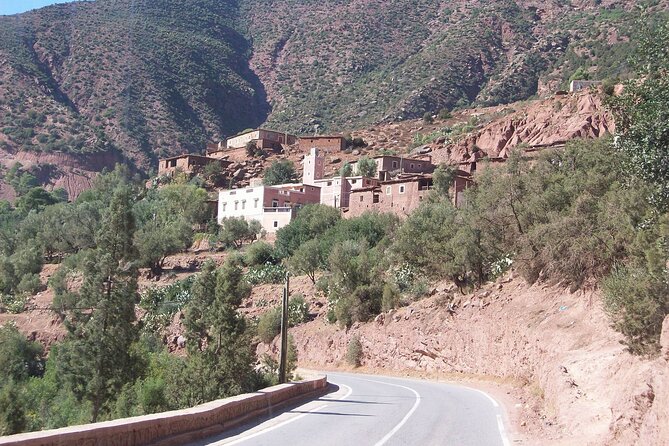
The route crosses the High Atlas, passes through southern Moroccan valleys, reaches the Todra Gorge, and then heads east to Merzouga. Along the way, you see terraced fields, Berber villages, mountain streams, walnut and oak trees, palm groves, adobe buildings, and desert acacia.
The tour begins at 7:30 a.m. from Hôtel Restaurant Café de France near Jemaa el-Fnaa. The vehicle is air-conditioned, and fuel, tolls, and related transport costs are included. The group can reach 17 people, so this is not the same as a private custom trip, but it is smaller than the large coach tours that can make road stops feel impersonal.
A few other Marrakech days worth comparing
- From Marrakech: 3-Day Merzouga and Sahara Desert Tour
★ 4.9 · 15,308 reviews - From Marrakech: Merzouga 3-Day Desert Safari with Food
★ 4.7 · 12,232 reviews - 3 Days Desert Tour From Marrakech To Merzouga Dunes & Camel Trek
★ 5.0 · 10,125 reviews
Day one: crossing Tizi-n-Tichka to Ait Ben Haddou
Your first day is the mountain day. Leaving Marrakech, the road climbs toward Tizi-n-Tichka, one of Morocco’s best-known mountain passes. At 2,260 meters, it offers wide views across steep slopes, terraced farmland, scattered villages, and changing plant life.
The road is famously twisty. That makes for good views, but it also means a long ride with plenty of bends. Winter can bring snow at the pass, so conditions and timing may vary with the weather. The air-conditioned vehicle helps, though anyone prone to motion sickness should prepare for the curves.
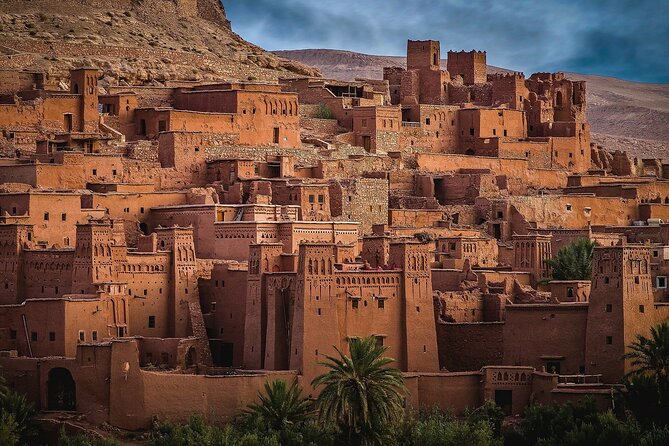
The great reward is Ait Ben Haddou, a fortified mud-brick settlement near Ouarzazate. Its clustered towers and earthen walls are instantly recognizable, helped by appearances in films such as Lawrence of Arabia, Gladiator, and The Mummy. Even without the movie connection, the kasbah is worth seeing for its construction, position, and strong contrast with the open mountain country around it.
Admission is listed as free with the tour, but a local guide is not included. That matters. You can look around on your own, but a guide can add detail about the buildings, local traditions, and filming history. Set aside some cash if you want that extra help, and remember that entrance fees elsewhere are also excluded.
The first day takes about 10 hours. That sounds demanding because it is. You get a memorable cultural stop and striking mountain views, but not an afternoon for leisurely wandering. At the end of the day, you stay in a hotel in the Dades Valley, with dinner and breakfast included.
The Dades Valley night and what it means for comfort
The first night is practical rather than luxurious in the information provided. You receive a hotel room, dinner, and breakfast in the Dades Valley, giving you a proper bed before the desert portion begins.
This overnight stop breaks up the route and keeps the next day from becoming an even longer push. Meals are included, but lunches and drinks are not. I would carry water and some snacks so you are not dependent on every roadside stop.
The operation has received especially strong praise for its drivers and guides. Hassan has been described as punctual and kind, while Muhammed was noted for keeping an eye on the group and adjusting to its mood. Mustapha was praised for explaining places along the way and stopping for photographs, and Karim was remembered for being warm, funny, and informative.
Those details matter on a route with so many hours in a vehicle. A careful driver and a person who communicates clearly can make the long transfers much easier. Still, guide quality can vary by departure, so treat the named drivers as examples rather than a guarantee of who will be assigned to you.
Day two: Todra Gorge and the road to Merzouga
After breakfast, you travel toward Todra Gorge, about 14 kilometers from Tinghir. The gorge is the day’s main stop before the Sahara. Its walls rise roughly 300 meters, creating a narrow corridor of rock that you can explore on foot.
This is a welcome change from sitting in the vehicle. The walk is short enough to fit the schedule, yet the canyon gives you a sense of the scale of southern Morocco. Bring shoes that are comfortable for walking, and use the stop to stretch after the previous day’s mountain drive.
From Todra Gorge, the road continues through the southern oases and toward Merzouga. The scenery shifts again, with palm groves, dry mountains, and acacia trees replacing the greener upper slopes near the Atlas. The attraction here is not one single monument. It is watching Morocco become more spare and open as you approach the dunes.
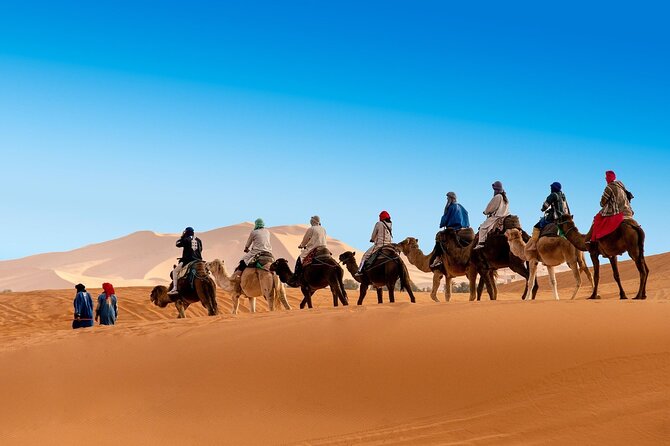
Day two takes about eight hours, followed by the trip into Erg Chebbi. On arrival in Merzouga, you leave the vehicle and mount a camel for the ride to camp. The camels carry you across the sand, usually with a stop along the way for sunset when timing allows.
The camel ride is included, but it is worth knowing what kind of activity this is. You are crossing the dunes at a steady walking pace, not racing through them. The ride gives you time to watch the light change across the sand and to feel the distance from towns and roads. If you find camel riding uncomfortable, the experience may be physically demanding, but the route to camp is part of the appeal.
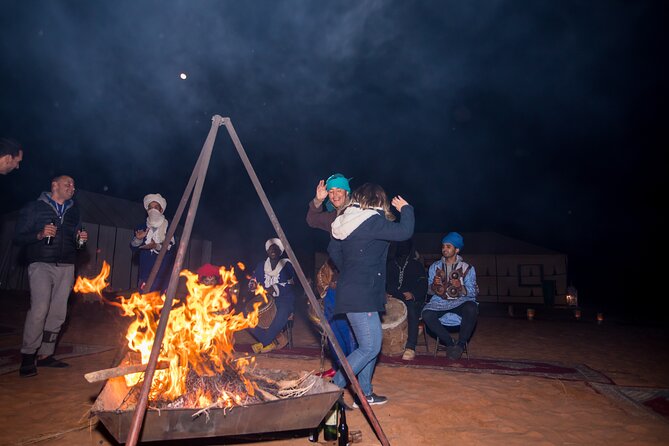
By dusk, you reach the desert camp, receive tea, and are shown to your tent. You have time to settle in before dinner. After the meal, musicians perform beside the fire, and you can walk up the nearby dunes to look at the night sky.
The desert night is the emotional high point of the trip. The silence, open sky, and lack of city lights offer something you cannot get from a quick stop in a desert town. You may see shooting stars, though no tour can promise them. The temperature can drop sharply, and one useful warning from the available information is that some camp tents may not have heaters. Pack warm layers, especially outside the hottest months.
Food at the camp is included, as is dinner at the Dades hotel. Expectations should be sensible. Meals are part of the package and convenient after a long day, but they are not the main reason to book this trip. The desert setting is the prize.
Same city, a completely different day out:
- Marrakech: Agafay Desert Sunset, Camel Ride, and Dinner Show
★ 4.6 · 35,119 reviews - From Marrakech: Ouzoud Waterfalls Guided Hike and Boat Trip
★ 4.7 · 33,630 reviews - Marrakech: Agafay Desert Quad & Camel Rides with Dinner Show
★ 4.8 · 27,382 reviews - Marrakech: Agafay Desert Quad Biking Tour with Dinner-Show
★ 4.8 · 16,569 reviews
Day three: sunrise, Rissani, and the long ride home
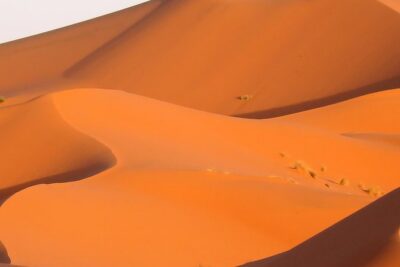
The third day begins early with sunrise in the dunes. You eat breakfast, then ride the camels back to the vehicle. This return ride gives you a second view of Erg Chebbi, this time in the cooler morning light.
From Merzouga, the route reaches Rissani, an oasis town whose older name was Sijilmasa. Its adobe kasbahs and palm groves give you another look at settled life in the desert region. Rissani is a useful stop because it shows how communities have grown around water and trade routes rather than simply presenting the Sahara as empty sand.
After Rissani, the itinerary describes a roughly 150-kilometer detour toward Tinghir through mountains and acacia country, followed by lunch in one of the villages on the way to Ouarzazate. Then the vehicle crosses the Atlas Mountains again and returns to Marrakech in the early evening.
This is an 11-hour day, so do not plan an important dinner reservation or evening activity soon after the expected return. The road portion is tiring, but it lets you see the route from a different angle and provides more views of southern Morocco than a simple out-and-back desert transfer.
Lunch is not included. You pay for your own meal, along with drinks and any entrance fees. The tour includes two breakfasts and two dinners, not three of each, so check your plans before assuming every meal is covered.
What the $173.79 price really includes
At $173.79 per person, the tour is priced as a budget-friendly way to reach a distant part of Morocco. The value comes from having transport, fuel, tolls, two nights, four included meals, and camel transfers bundled together.
The included overnight stays are important. Booking a hotel in the Dades Valley and a desert camp independently can take time, especially when you are coordinating arrival and departure times with the camel transfer. Here, those pieces are arranged as one route.
The price does not cover everything. Budget separately for:
- Lunches on all three days
- Drinks
- Entrance fees
- A local guide at Ait Ben Haddou
The group can contain up to 17 people. That helps keep the cost down, but it also affects flexibility. You may not be able to stop whenever you want, linger at a viewpoint, or change the route. Drivers associated with this company have been praised for allowing photo stops and looking after the group, but a shared tour still follows a fixed schedule.
The guide can shape the whole trip
On a route this long, your driver is more than the person behind the wheel. You spend many hours together, and the best guides add context, answer questions, and notice when the group needs a short break.
Drivers named in connection with this tour include Hassan, Muhammed, Mustapha, Karim, Ghassan, Rashid, and Mustapha Ouassou. Their reported strengths include punctuality, friendliness, patience, cultural explanations, careful driving, and a willingness to stop for photographs. Some have also shared local traditions and Berber culture in a personal way.
You should still clarify at pickup who your driver is and what the day’s schedule looks like. The experience depends partly on that human connection. A quiet driver may leave you with scenery and logistics only, while a more engaged guide can help tie together the kasbahs, oases, villages, and desert camp.
Packing advice for changing temperatures
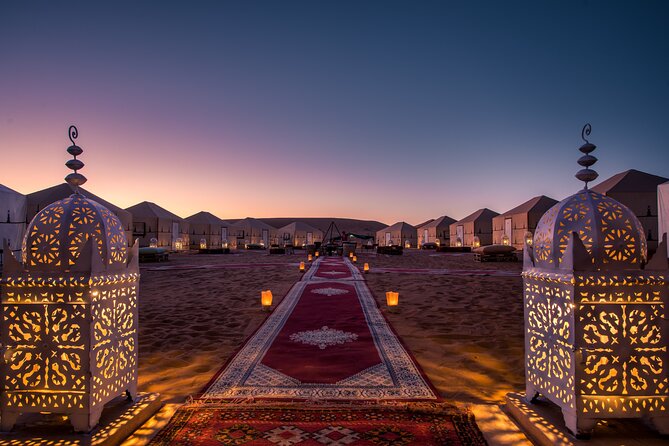
The tour moves through several climates in a short time. The Atlas pass can be cold, the desert can be hot during the day, and the camp can feel cold after dark.
Pack layers rather than one heavy item. You will also want comfortable walking shoes for Ait Ben Haddou and Todra Gorge, sun protection for the dunes, and a small bag with water, snacks, and personal items. Since lunches and drinks are extra, keep some Moroccan dirhams available.
A phone charger or power bank is sensible for the long road days, though the supplied details do not confirm vehicle charging facilities. If you want music during the drive, one practical tip is to bring a cable or adapter that works with your phone. One past departure made good use of a personal music connection in the vehicle.
Who should book this desert trip?
I would choose this tour if you have limited time in Marrakech and want a first taste of Morocco’s south without arranging transport, lodging, and camel logistics yourself. It suits people who value variety: one day of mountains and kasbahs, one day of gorge and dunes, and one day of oasis country and return views.
It also suits social travelers who enjoy sharing a vehicle and camp with a small group. The maximum of 17 is manageable for a group trip, though it will not feel private.
I would hesitate if you dislike long drives, get carsick on winding roads, or want extended time at each sight. A private trip with more days would be better for a slower pace, but it would likely cost more. This three-day plan is best understood as an efficient sampler, not a restful desert holiday.
Should you book it?
Book it if the camel ride, desert sunset, campfire music, and sunrise are high on your Morocco list. The package includes the costly and awkward parts of reaching Merzouga, and the route adds Ait Ben Haddou, Todra Gorge, Rissani, and the Atlas Mountains rather than treating the desert as the only stop.
Skip it if you need generous free time or dislike spending most of two days on the road. At $173.79, the value is strong for the inclusions, but the price comes with a demanding schedule. Cancel at least 24 hours before the 7:30 a.m. start for a full refund. Poor weather or failure to meet the minimum group size can also lead to a date change or refund.
FAQ
Where does the tour start?
The tour starts at Hôtel Restaurant Café de France near Jemaa el-Fnaa in Marrakech. The listed start time is 7:30 a.m.
Where does the tour end?
The activity ends back at the starting meeting point in Marrakech.
How many people can join the tour?
The maximum group size is 17 people.
Are accommodation and meals included?
Yes. The package includes one night with dinner and breakfast at a hotel in the Dades Valley, plus one night with dinner and breakfast at a desert camp in Merzouga. Two breakfasts and two dinners are included overall.
Are camel rides included?
Yes. Camel rides to the desert camp and back to the vehicle the following morning are included.
What is not included in the price?
Lunches, drinks, entrance fees, and a local guide at Ait Ben Haddou are not included.
Can I cancel for a full refund?
Yes, if you cancel at least 24 hours before the experience start time. Cancellations or changes made less than 24 hours before the start are not refundable.
More 3-Day Experiences in Marrakech
- 3-Day Marrakech to Merzouga Desert Tour: Camel Rides & Overnights
★ 5.0 · 8,734 reviews - 3-Day Marrakech to Fes Sahara Desert Tour via Merzouga
★ 5.0 · 6,546 reviews - Marrakech: 3-Day Merzouga Desert Experience Camel & Meals
★ 4.6 · 6,252 reviews - From Marrakech: Unforgettable 3-Day Desert Tour to Fes
★ 4.9 · 2,614 reviews
Just listed out of Marrakech
- Marrakech: Ouzoud Waterfalls Trip, Guide & Boat + Lunch★ 4.7 · 33 reviews
- From Marrakech: Ourika Valley Trip, Waterfall Hike & Lunch★ 4.4 · 33 reviews
- Magical Dinner show and Quad bike In Agafay Desert Marrakech★ 4.5 · 33 reviews
- Moroccan Hands on traditional pastries & Tea class in Marrakech★ 4.5 · 33 reviews
- Marrakech: Quad excursion to the palm grove and Jbilets desert★ 4.5 · 33 reviews
- Marrakech: Vibrant Dinner Show at The Lotus Club★ 3.9 · 33 reviews
- From Marrakech: Small Group To Essaouira & Medina Day Trip★ 4.3 · 33 reviews
- From Marrakech: 3-Day Merzouga and Sahara Desert Tour★ 4.5 · 33 reviews
Sahara Desert Tours, compared.
3 Days Desert Tour From Marrakech To Merzouga Dunes & Camel Trek
Read our review →
3-Day Marrakech to Fes Sahara Desert Tour via Merzouga
Read our review →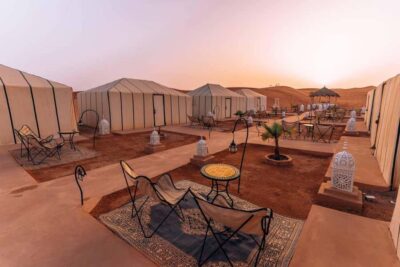
3-Day Merzouga Desert Experience Camel & Meals
Read our review →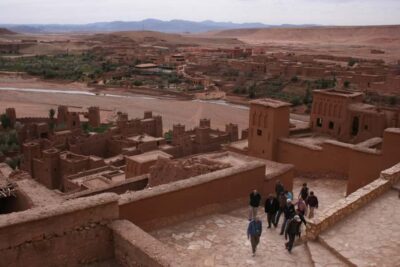
3-Day Tour to Merzouga Erg Chebbi with Food & Camel Trek
Read our review →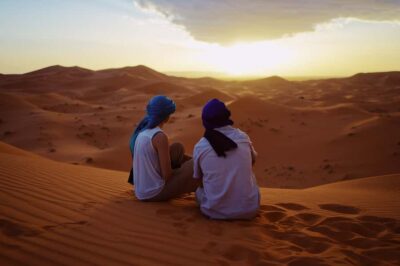
Sahara Desert 2-Day Tour with Merzouga Camp Stay
Read our review →Browse the lists this tour appears in