
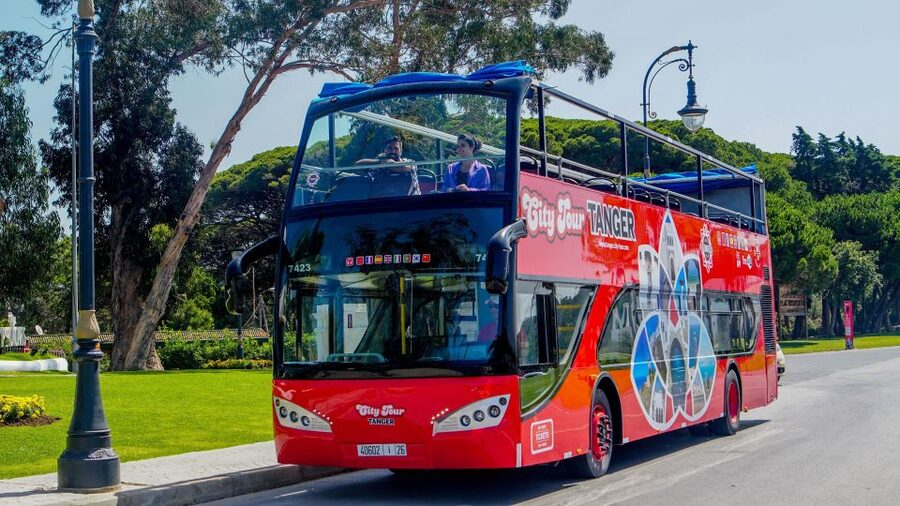
Reviewed · TANGIER & NORTHERN MOROCCO DAY TRIPS
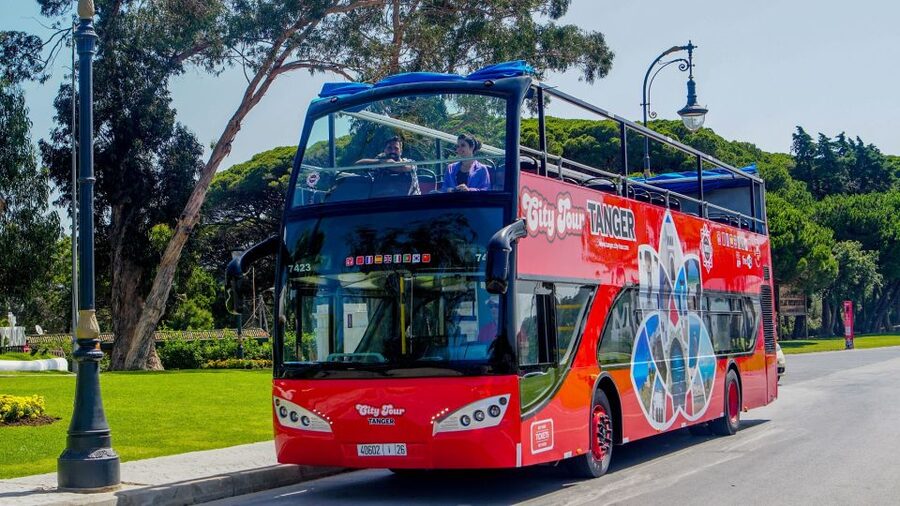
Tangier: Hop-On Hop-Off Sightseeing Bus
Tangier’s best feature is its two-route design. One loop handles the old city and modern center, while the longer route carries you out to Cap Spartel and the Hercules Caves. It is a practical way to get your bearings before walking into the medina.
I like the generous 48-hour ticket, which gives you time to ride both routes without turning the day into a race. I also like the easy audio commentary, the comfortable buses, and the chance to reach places outside central Tangier without arranging a taxi. The main catch is the wait: buses may come every 30 to 60 minutes on the city route, and the outer route has only five to seven departures a day.
Key points
- Two routes cover different sides of Tangier: the Tanger Ville loop focuses on historic and modern city sights, while the Grottes d’Hercule route reaches the coast and Cap Spartel.
- A 48-hour ticket gives you breathing room: ride both complete routes, then get off where you want to explore.
- The city loop takes about one hour: it begins and ends at the Port of Tangier and makes 12 stops.
- The outer loop takes about two hours: its main stops include Parc Perdicaris, Cap Spartel, and the Caves of Hercules.
- Audio commentary comes in eight languages: English, Spanish, French, Italian, Chinese, Portuguese, Korean, and Arabic.
- The price is $15 per person: that is good value if you use both routes, but less so if you only ride once and never get off.
Two bus routes, two very different Tangier days
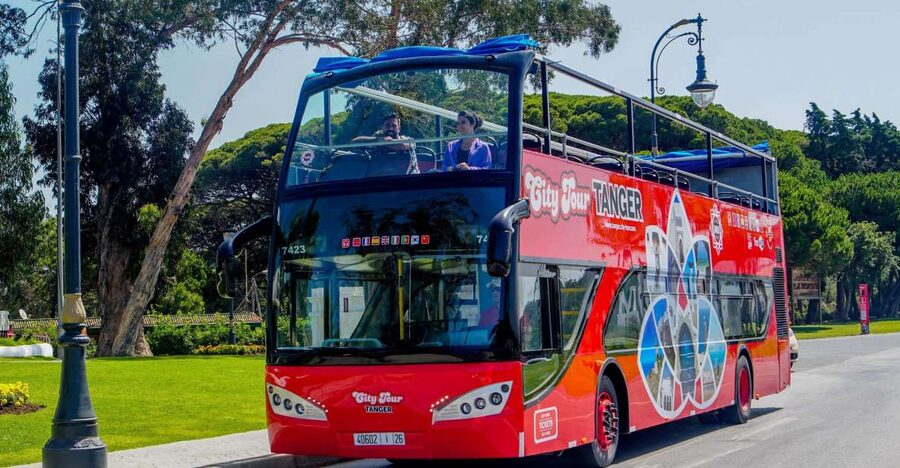
This is not one sightseeing circuit repeated with minor changes. The two routes show you separate sides of Tangier, and that is the strongest reason to book.
The Tanger Ville Route takes about one hour and stays within the city. It links the port, historic center, medina area, kasbah viewpoints, newer shopping districts, and parts of the old international city. The Grottes d’Hercule Route takes about two hours and heads into the outskirts, forest areas, coastal viewpoints, and the far western end of the peninsula.
You can use the ticket for 48 hours, so you do not need to force every stop into one hot afternoon. I would use the first ride as an overview, then decide which places deserve a longer visit. The audio guide helps you connect the sights as you go, though you will still want to look out the window rather than treat the ride as a lecture.
The buses operate daily. From October through March, service runs roughly from 9 a.m. to 5 p.m. From April through September, it runs from 9 a.m. to 6 p.m. Traffic can affect the timetable, so keep a little spare time if you have a ferry, train, or other fixed departure.
A few other Tangier days worth comparing
- From Tangier: Chefchaouen Day Trip with Local Guide
★ 4.8 · 3,287 reviews - From Tangier: Cap Spartel and Hercules Cave with Camel Ride
★ 4.7 · 1,157 reviews - From Tangier: Special Day Trip to Chefchaouen and Tetouan
★ 4.6 · 816 reviews
Start at the Port of Tangier and get oriented
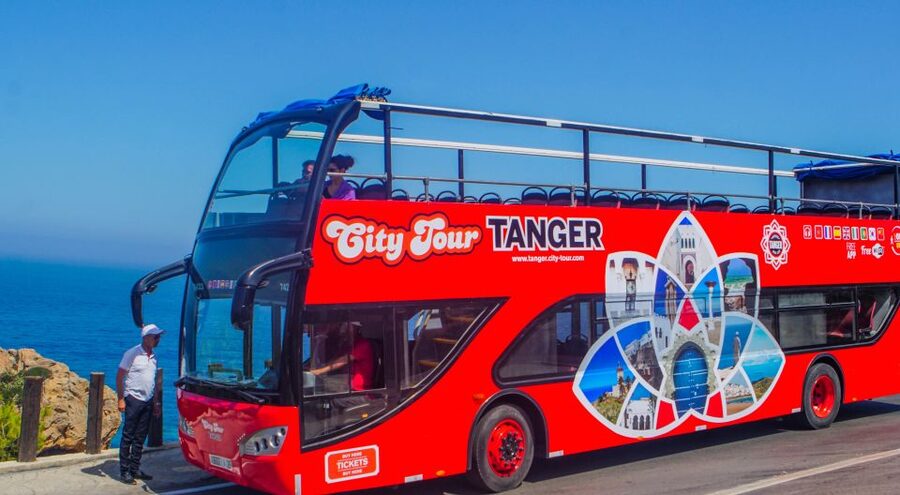
The port is the most useful starting point for many people, especially if you arrive by ferry. You can also board at any listed stop by showing your voucher as you get on. Other boarding points include Place 9 Avril, Palais Moulay Hafid, the Phoenician tombs, Place Faro, Sahet El Oumane, Tanger City Mall, Vila Harris, Monopolio, and Marina.
Beginning at the port gives you an immediate sense of Tangier’s geography. From here, the bus helps separate the waterfront, old city, newer commercial areas, and western coastal sights. That first ride is valuable if you have only a short stay and want to decide where to return on foot.
The buses have an audio system and free Wi-Fi. The commentary is offered in eight languages, including English, Spanish, French, Italian, Chinese, Portuguese, Korean, and Arabic. One useful detail is that the audio generally follows the sights as the bus reaches them, so you can listen and watch at the same time.
The buses are adapted for people with reduced mobility. Pets are not allowed. On hot days, the open upper deck offers the best views, but it also offers the least shade. The lower deck is cooler and more protected, yet it may fill quickly. Bring water and consider moving between decks rather than staying in direct sun for the whole loop.
The 12 stops on the Tanger Ville Route
The city route takes about an hour if you stay aboard. It begins and ends at the Port of Tangier and includes 12 stops, each offering a different reason to pause.
Port
The port is more than a pickup point. It is your reference point for the entire system, and returning here makes the route easy to understand. If you are connecting with a ferry, leave a generous buffer because service can slow in traffic.
Same city, a completely different day out:
- From Tangier: Chefchaouen Day Trip with Local Guide
★ 5.0 · 632 reviews - Tangier: Sunset, Tea, Sweets, Camel Ride, and Hercules Caves
★ 4.9 · 575 reviews - From Tangier: Day Trip to Chefchaouen and Akchour Waterfalls
★ 4.7 · 465 reviews - luxury 4 Hour Private Tour of Tangier
★ 5.0 · 455 reviews
Place 9 Avril
Place 9 Avril is a key approach to the old city and medina. It is a useful stop for starting a walk through the older parts of Tangier. From here, you can leave the bus and let the smaller streets take over, then return to the stop when the next bus comes around.
Palais Moulay Hafid
The route lists Palais Moulay Hafid twice, allowing the bus to serve this area in both directions. The palace stop adds a look at Tangier’s royal and architectural side, away from the main port traffic. Check the direction of the bus before getting off, since the two listings are part of the loop rather than two separate attractions.
Phoenician and Roman Necropolises
The necropolises, also listed as the Punic-Roman tombs, point to Tangier’s long past. This is one of the more historically significant stops, but you should allow enough time to explore rather than assume the bus will return in a few minutes. The city route is not a rapid shuttle, and the next bus may take up to an hour.
Mosquée Mohammed V
This stop brings you into the modern religious and civic side of the city. It works well as part of the broader loop, especially if you want to see how Tangier shifts from old medina streets to newer urban districts.
Place Faro
Place Faro is known for its broad views and is one of the stops where getting off can make sense. The city route gives you an overview, but a short pause lets you take in the setting without watching it pass through a bus window.
Sahet El Oumane
This central stop continues the route through Tangier’s city core. It can be convenient for breaking up the ride, but timing matters. If you leave the bus here, you may need to wait for the next circuit, so it is best for a flexible schedule rather than a tightly planned morning.
Tanger City Center
Tanger City Center represents the newer commercial part of town. It is a useful contrast with the medina, kasbah, and older international districts. If you want shopping or a modern city setting, this is the stop to consider.
Villa Harris
Villa Harris links the route with the northern side of the city and the area around the former Villa Harris. It is also a useful point for seeing how Tangier spreads beyond the tight old center.
Monopolio
Monopolio is another city stop on the return section of the loop. It is mainly valuable as a practical boarding and drop-off point, especially if your accommodation or walking plan lies in this part of town.
Marina
Marina brings you back toward the waterfront and port area. It can be a pleasant place to end a city circuit, particularly if you want to continue along the seafront rather than return straight to the port.
The Grottes d’Hercule Route reaches Cap Spartel

The outer route is the more distinctive part of the experience. It takes around two hours and travels through wooded areas and the outskirts before reaching the Caves of Hercules and Cap Spartel, where the Atlantic and Mediterranean meet.
The route leaves from the Port of Tangier and includes Socco Alto, Parc Perdicaris, Jardins Donabo, Cap Spartel, Grottes d’Hercule, Golf, and the return stops in reverse order. The repeated stop names indicate that the bus serves these places in both directions.
Socco Alto
Socco Alto is the first outer-city stop listed on the route. It marks the move from central Tangier toward the western outskirts. You can use it as a boarding point if you are already in that part of town, but most short-stay visitors will find the port the simplest place to begin.
Parc Perdicaris
Parc Perdicaris brings you into the greener outer area of Tangier. This is a good place to get off if you want a pause away from traffic and city streets. Since buses are not frequent, check the next departure before leaving the vehicle.
Jardins Donabo
The Jardins Donabo stop continues through the outer areas and provides another option for breaking up the journey. Its value is less about a single headline sight and more about giving you access to Tangier’s surroundings without hiring a car.
Cap Spartel
Cap Spartel is the route’s big payoff. The cape marks the meeting point of the Atlantic and Mediterranean, and its coastal position gives you a broad, memorable view. The bus may pause for photos, but do not assume a long stop unless the schedule allows it.
I would give Cap Spartel priority if you only have time for one outer-route stop. The setting is the reason to take this route, and the bus removes much of the transport hassle involved in reaching the cape.
Grottes d’Hercule
The Caves of Hercules are the other major stop. You can get off and explore the area, but the ticket does not include another service or admission beyond the bus tour. You do not need to book a separate excursion just to appreciate the area around the caves, and you can enjoy the coastal views even if you keep your visit simple.
Allow enough time here. The route has limited scheduled departures, particularly from October through March, when there are five daily departures at noon, 1 p.m., 2 p.m., 3 p.m., and 4 p.m. From April through September, there are seven departures, at 11 a.m. and hourly from noon through 5 p.m.
Golf and the return journey
The Golf stop comes later on the outer route and helps complete the circuit through Tangier’s western side. You may not choose to get off here, but it shows how much ground the route covers beyond the old city.
The bus then returns through Jardins Donabo, Parc Perdicaris, and Socco Alto before reaching the port. If you want to make several stops, write down the departure time or ask staff for help. Waiting close to an hour can turn a simple hop-on, hop-off ride into a long afternoon.
How the schedule affects your plan
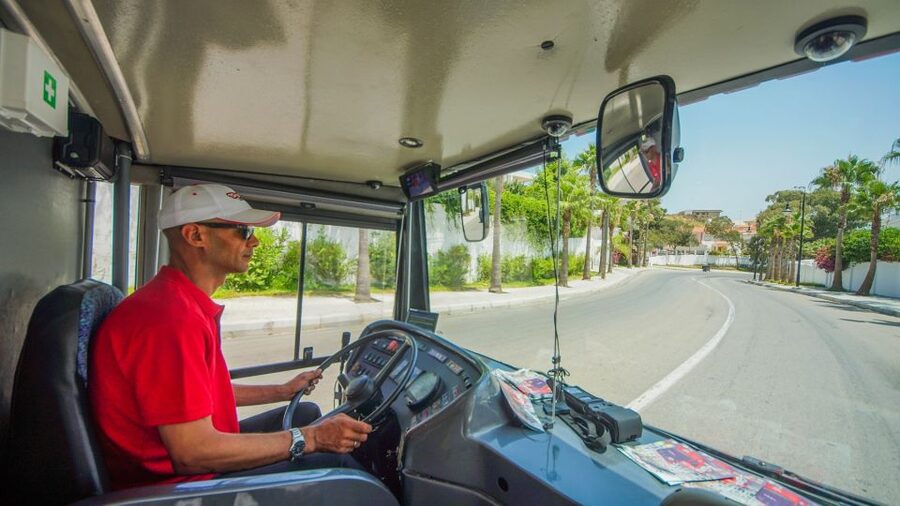
The city route runs every 30 to 60 minutes. That range matters. In the best case, you may see a bus soon after finishing at a stop. In the slower case, you could wait close to an hour.
The outer route is more structured. Five departures operate in the cooler months, and seven operate from April through September. That makes the Grottes d’Hercule route less spontaneous than the city loop, but it also makes planning easier if you note the timetable before leaving Tangier.
I would not use this bus for a rushed ferry connection or a tight train schedule. Delays caused by traffic or other conditions are possible, and waiting times can stretch. If you have a full day, the timetable is manageable. If you have only a few hours, stay aboard for an overview and choose one carefully timed stop.
One helpful trick is to stay on the same bus when possible. The vehicle can change from one route to the other, and one rider found that remaining aboard made it easier to complete both circuits. Still, confirm with the driver or staff before assuming the bus is continuing on your desired route.
What the $15 price really buys you
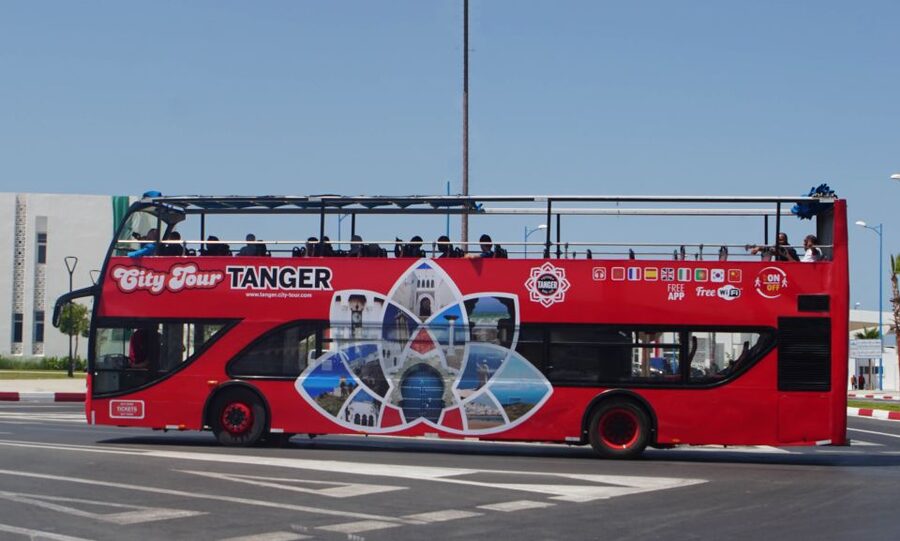
At $15 per person, this is a strong value if you use the full 48-hour ticket. You get both routes, an audio guide, a city map and stop brochure, Wi-Fi, and transportation to the cape and caves. Reaching those outer sights independently could require negotiating taxi prices or arranging separate transport.
The value drops if you only ride the one-hour city loop once. A single circuit can give you a useful overview, but the ticket is designed for hopping off, walking, and returning later. Use it as transport and orientation, not simply as a one-hour narrated ride.
I especially like that the ticket covers the city and the outskirts. Many city sightseeing buses are useful only for a quick orientation. Here, the outer route reaches places that are genuinely inconvenient to combine with a walk from the medina.
The bus is also a practical choice on a very hot day. You can sit, listen, and let the vehicle handle the distance. The tradeoff is exposure on the upper deck and crowding when demand is high. If the top is full or too sunny, the lower deck may be the better choice even if the view is less open.
Who will get the most from this bus
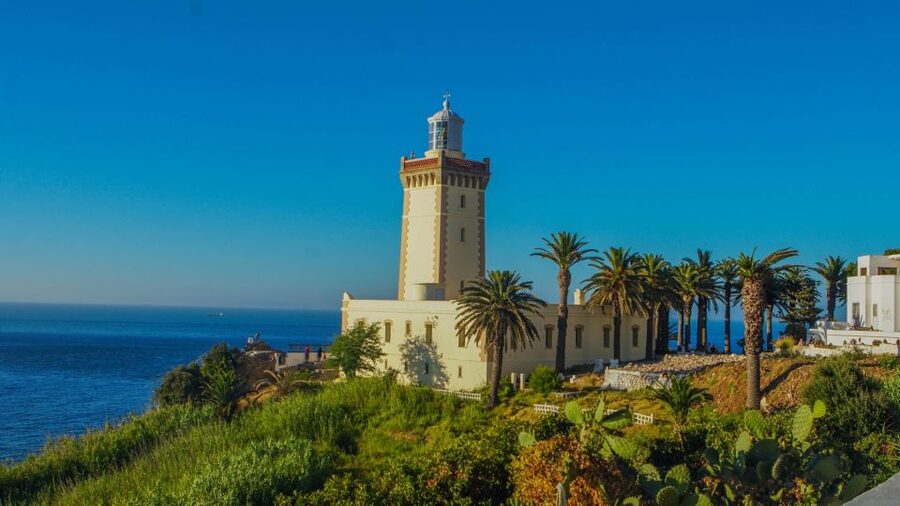
I would recommend it to first-time visitors who want a clear picture of Tangier before exploring on foot. It is also useful for families, older visitors, and anyone who prefers not to arrange separate taxis for Cap Spartel and the caves.
The tour suits you if you have at least a full day, or better, two days. The 48-hour validity gives you room to ride the city loop one day and the outer route another day. You can also repeat a circuit if you miss part of the commentary while taking photos.
It is less suitable if you dislike waiting or have a packed timetable. Tangier’s traffic can affect the schedule, and the long gaps between buses reduce the freedom suggested by the phrase hop-on, hop-off. You also need to be comfortable with direct sun if you want the best upper-deck views.
Staff can help with tips, and the audio guide is generally clear and well timed. The eight-language choice is broad, but German is not included. If you need German commentary, check the language list before booking.
Practical tips for a smoother ride
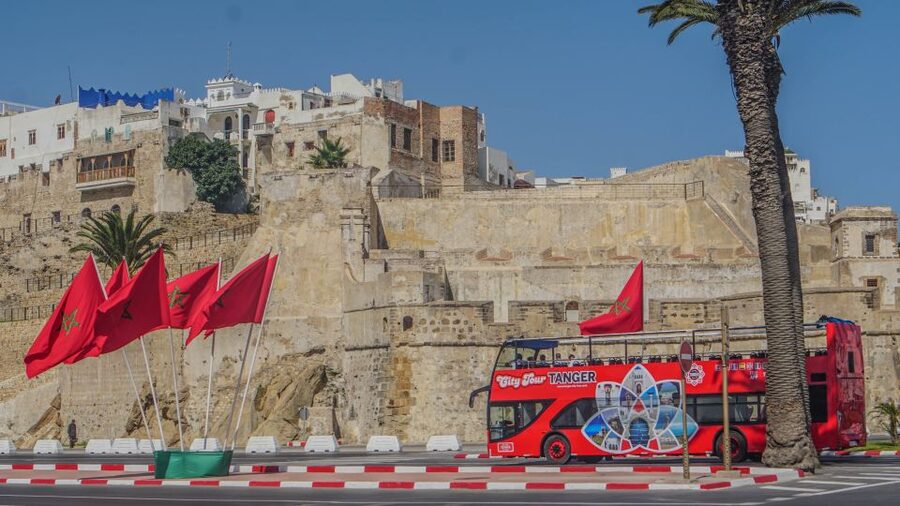
Show your voucher when boarding at any designated stop. Keep the map and stop brochure handy, since the printed route details help you judge how much time you need before the next bus.
Start early if you want both routes. The first city buses begin at 9 a.m., while outer-route departures vary by season. In the warmer months, the first Grottes d’Hercule departure is listed at 11 a.m. In the cooler months, it begins at noon.
For the best balance, I would make the city circuit first, then take the outer route after checking its departure time. That gives you a quick sense of the medina, port, and modern center before committing two hours to the cape and caves.
Bring water, sun protection, and a phone charger if needed. Some buses include USB charging points, a useful touch on a long ride, though you should not depend on every small amenity being available every time.
Plan your return carefully if you get off at Cap Spartel or the caves. The route is not designed around a bus arriving every 10 or 15 minutes. A missed departure can cost you a large part of the afternoon.
Should you book the Tangier sightseeing bus?
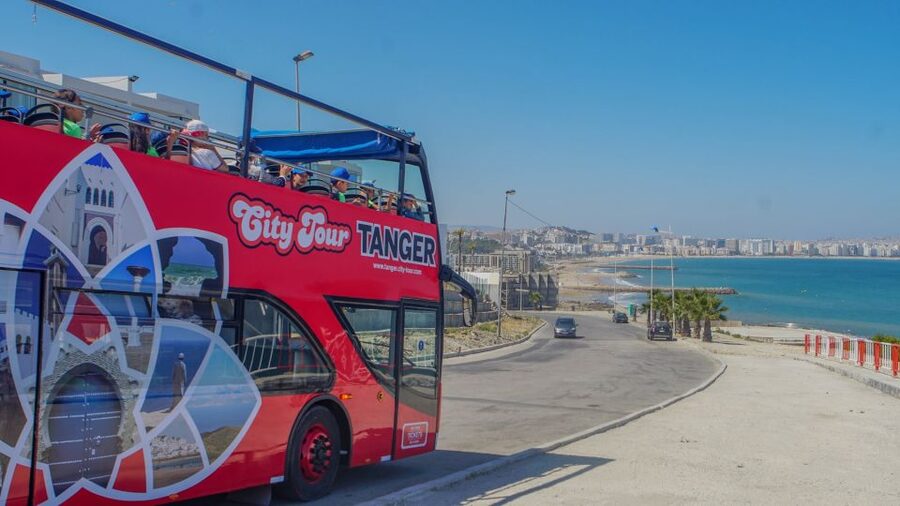
Book it if you want an easy overview of Tangier plus transport to Cap Spartel and the Caves of Hercules. The 48-hour ticket and two-route coverage make $15 a fair price, especially for a first visit or a hot day when walking long distances is not appealing.
Skip it if you have only a short window before a ferry or train, or if you want a fully guided walking experience inside the medina. The bus shows you the city well, but it cannot replace time on foot in the smaller streets.
For most visitors with a flexible schedule, I would take both routes. Stay aboard once for orientation, then hop off at the medina area, Cap Spartel, or the caves when you know where you want to spend time. That approach makes the bus more than a sightseeing loop: it becomes a simple way to connect Tangier’s old center with its striking Atlantic edge.
FAQ
How long is the Tangier Ville Route?
The Tanger Ville Route takes approximately one hour and makes 12 stops, beginning and ending at the Port of Tangier.
How long is the Grottes d’Hercule Route?
The Grottes d’Hercule Route takes approximately two hours and travels through Tangier’s outer areas, including Parc Perdicaris, Cap Spartel, the Caves of Hercules, and Golf.
How long is the ticket valid?
The ticket is valid for 48 hours, allowing you to use both routes and hop on or off during that period.
Where can I board the bus?
You can board at any designated stop by showing your voucher. Stops include the Port of Tangier, Place 9 Avril, Palais Moulay Hafid, the Phoenician tombs, Place Faro, Sahet El Oumane, Tanger City Mall, Vila Harris, Monopolio, and Marina.
How often does the city bus run?
The Tanger Ville Tour operates approximately every 30 to 60 minutes. Traffic and other conditions can affect the actual frequency.
How often does the Grottes d’Hercule bus run?
From October through March, there are five daily departures at noon, 1 p.m., 2 p.m., 3 p.m., and 4 p.m. From April through September, there are seven daily departures at 11 a.m., noon, 1 p.m., 2 p.m., 3 p.m., 4 p.m., and 5 p.m.
Which languages are available on the audio guide?
The audio guide is available in Spanish, English, Korean, French, Italian, Chinese, Portuguese, and Arabic.
Just listed out of Tangier
- Full Day Private Tour to Tetouan and Chefchaouen★ 5.0 · 33 reviews
- Tangier: Private City Walking Tour with Pickup★ 4.8 · 33 reviews
- Tangier City Tour★ 4.5 · 34 reviews
- Private Tangier Tour from Ferry or Cruise Ship Including Lunch★ 5.0 · 34 reviews
- private tour of Tangier included (Camel Ride) and Beautiful View)★ 5.0 · 34 reviews
- Half-Day Tangier Private Tour & Camel Ride & Colorful Markets★ 5.0 · 34 reviews
- Tangier: Guided Day Trip to Chefchaouen★ 4.3 · 35 reviews
- Tangier Private Full-Day Tour: Explore Top Sights & Local Culture★ 5.0 · 35 reviews
Tangier & Northern Morocco Day Trips, compared.


Sunset, Tea, Sweets, Camel Ride, and Hercules Caves
Read our review →

Browse the lists this tour appears in