
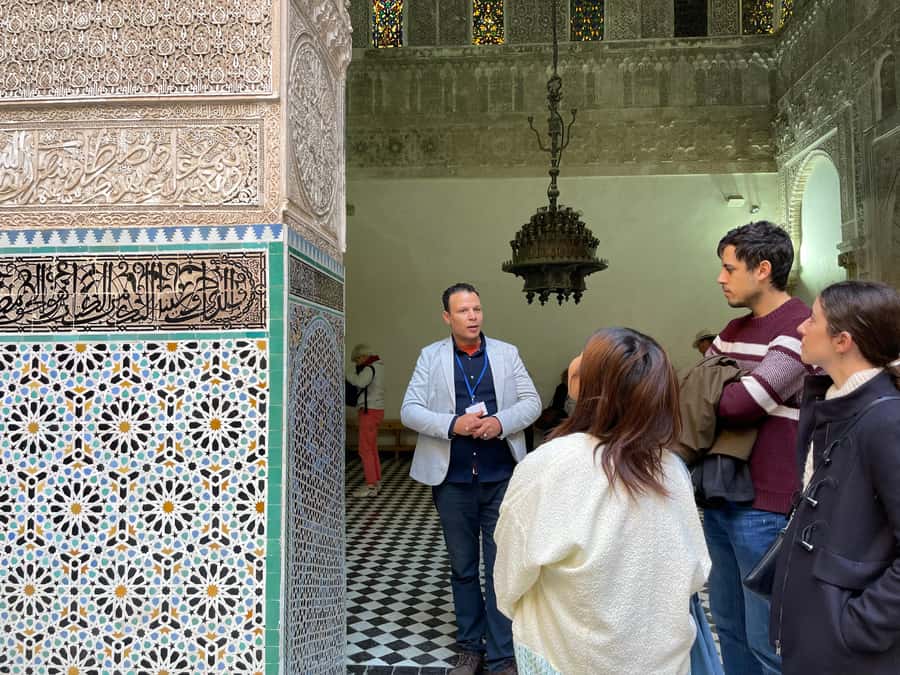
Reviewed · FEZ TOURS
Fes: Medina Guided Tour with Local
Fes Medina is a maze of narrow lanes, covered markets, old schools, workshops, fountains, and sudden courtyards. A local guide such as Mohammed can turn that maze into a readable city, showing you the famous sights while also pointing out the everyday details you would likely pass by alone. I especially like the local, personal approach and the clear promise of no forced shopping, two things that make a big difference in Fes.
The tour is also flexible. A three-hour walk can cover the main sights at a good pace, while the longer option adds the Jewish Quarter, Royal Palace, pottery and mosaic work, and views from Bab Guissa and the Marinid Tombs. The main consideration is physical: this is a walking tour through uneven, crowded lanes, so it is not suitable for people with mobility impairments.
Key points to know before booking
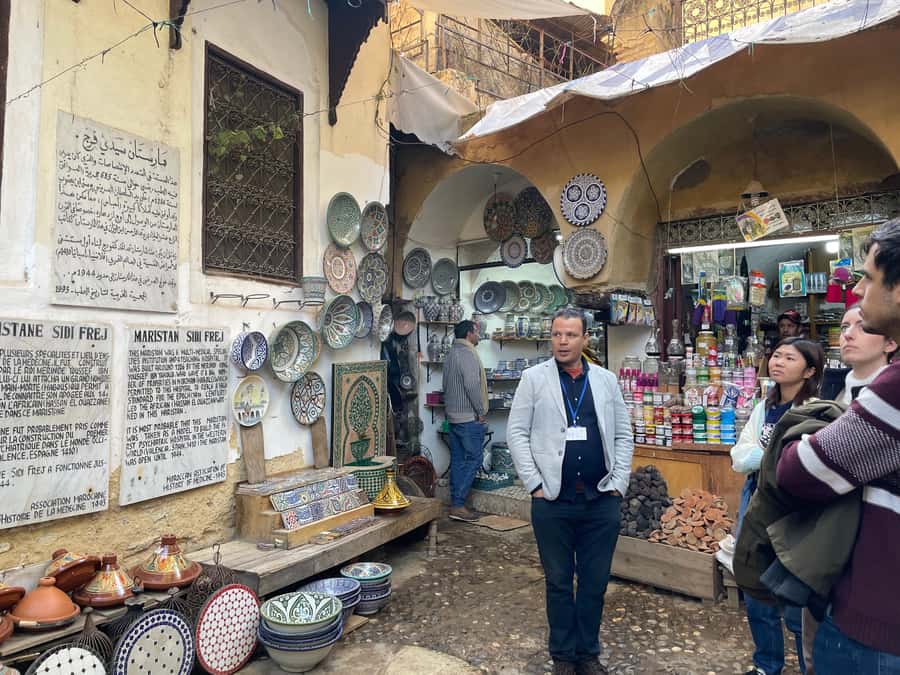
- Start at Bab Boujloud: The famous Blue Gate is an easy landmark and a natural introduction to the old city.
- See the working Medina: Along with monuments, you pass herbal shops, souks, bronze workshops, tanneries, pottery makers, and local bakeries.
- Choose your length carefully: The half-day route lasts three hours, while the full-day option gives you more time for crafts, views, and the Jewish Quarter.
- Expect a guide from Fes: Mohammed was born and raised in the Medina and is described as a licensed official guide. Some past tours were led by Rachid, so confirm your guide when booking.
- Shopping pressure is not the focus: The tour is designed around the city and its crafts, not visits to shops where you are expected to buy.
- Bring extra cash: Entrance fees are not included. The stated cost is €4 for the Madrasa and Museum, while some tour users advise allowing roughly 40 to 60 Moroccan dirhams per person for entry costs.
Why a guide helps in Fes Medina
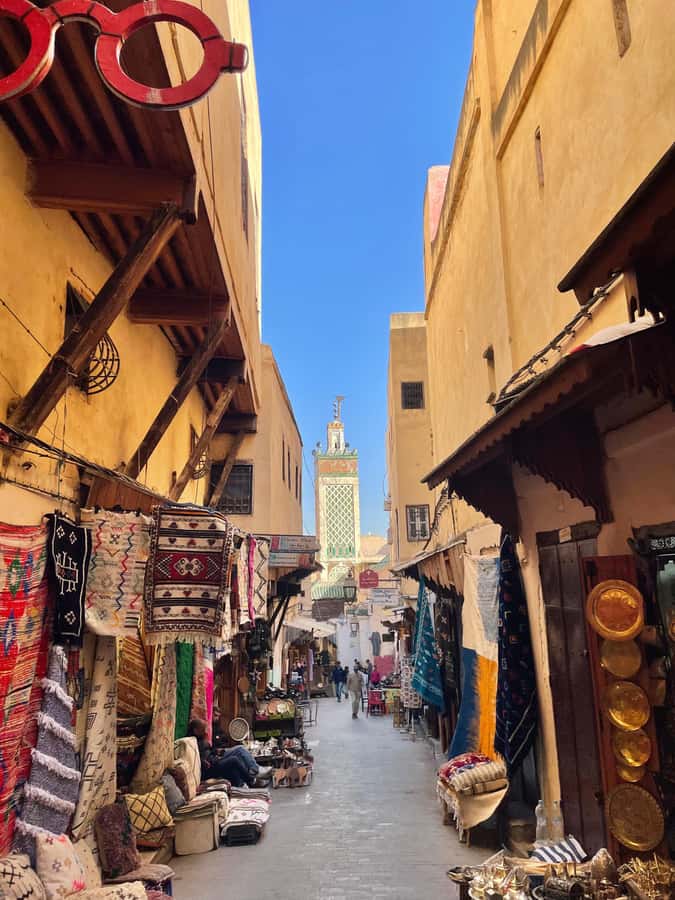
Fes el Bali is not a museum district with a neat row of numbered attractions. It is a living old city, and its lanes change character quickly. One minute you are on Talaa Kebira, the main street, and the next you are following a small passage toward a fountain, workshop, school, or market that you would never have found from a map.
I like guided walks here because a good guide does more than point at buildings. Mohammed grew up in Fes, knows the Medina as his home, and has a personal connection with local crafts. His explanations cover architecture, religion, customs, daily life, and the meaning behind the work being done around you.
The human side matters, too. Past outings describe him greeting people as he walks, introducing visitors to artisans, and sharing local anecdotes. That gives you a look at Fes as a neighborhood rather than a backdrop for photographs.
You should still set your expectations correctly. This is not a quiet museum tour. Donkeys, pedestrians, shopkeepers, craftsmen, and narrow lanes are part of the experience. The guide helps you manage the flow, but he cannot make the Medina feel orderly or spacious.
A few other Fes days worth comparing
- Fez Medina Guided Tour
★ 4.6 · 2,079 reviews - Fes: Museum, Al Attarine Madrasa & Tannery and Medina Tour
★ 4.6 · 1,655 reviews - Explore Fes: Unforgettable Guided Walking Tour of the Medina
★ 4.7 · 1,339 reviews
Starting at Bab Boujloud and Talaa Kebira
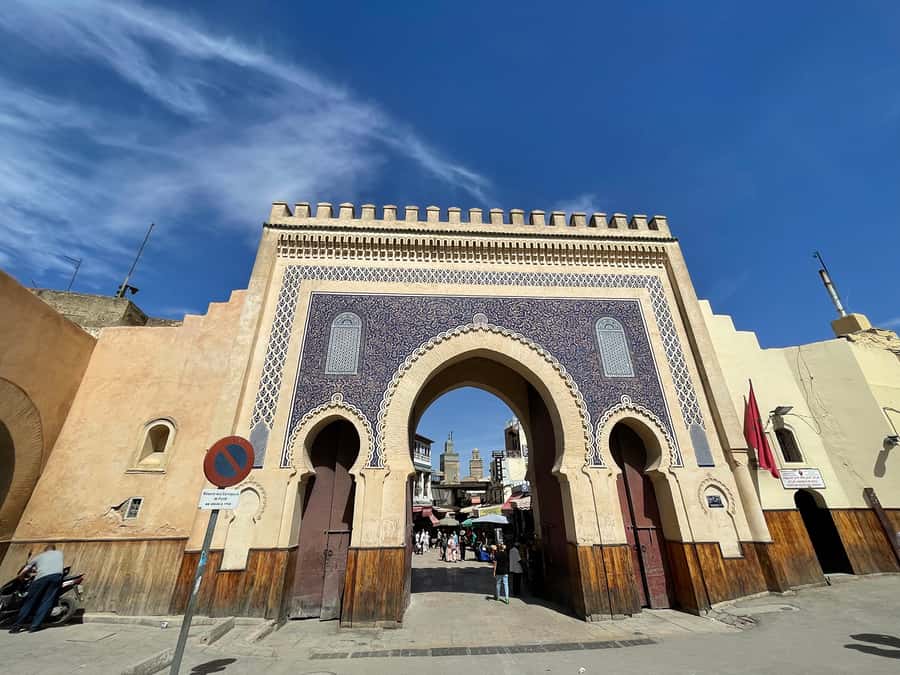
The usual starting point is Bab Boujloud, commonly called the Blue Gate. It is one of Fes’s best-known landmarks and a useful place to begin because the gate gives you a clear transition from the modern city into Fes el Bali.
From the gate, you turn onto Talaa Kebira, the main street of the old Medina. This first stretch introduces the feel of Fes: local souks, herbal shops, food stalls, and handicraft stores packed into a long, narrow route.
The value of having Mohammed here is orientation. You do not have to spend your first hour stopping at every shop or wondering if a lane leads somewhere useful. Instead, you can focus on the details around you and ask questions as the street changes.
The route is not only about architecture. Herbal shops offer a glimpse of traditional remedies and trade, while handicraft shops show how much of Fes’s economy still depends on skilled manual work. If you enjoy craft, this opening section sets up much of what follows.
Bou Inania Medersa and the old water clock
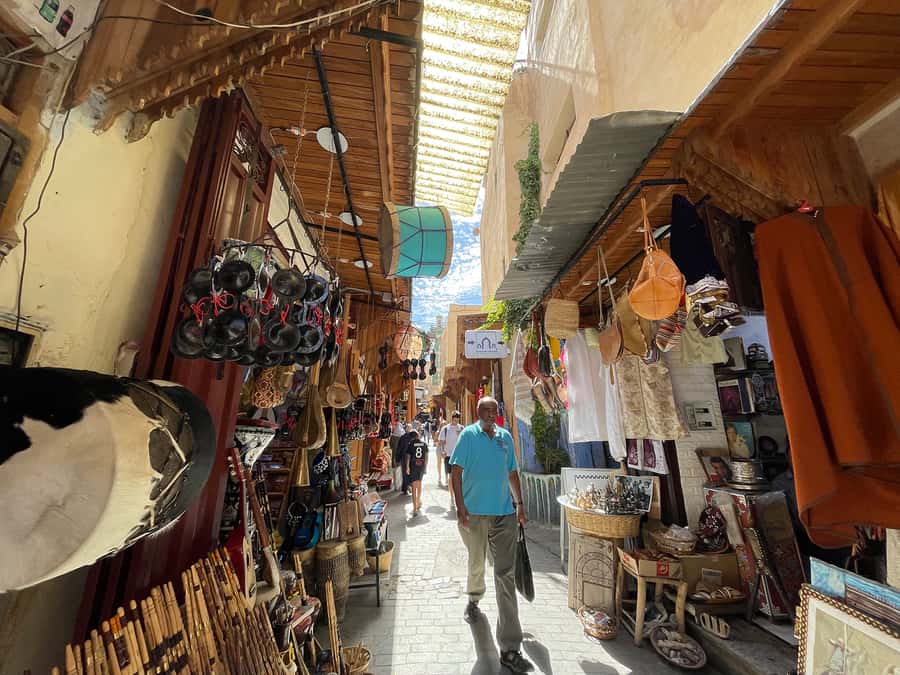
The walk includes the historic water clock and Bou Inania Medersa. The medersa, or religious school, is one of the major architectural stops in the Medina, with the kind of carved plaster, tile work, and wood detail that makes Fes so rewarding for anyone who pays attention to surfaces.
Mohammed’s background in tile and plaster work adds useful detail here. You can ask about how the decorative pieces are made, how the patterns fit together, and why the work takes so much care. This is where a simple visit becomes more than a quick photograph.
The entrance fee for the Madrasa is not included. The stated cost is €4 for the Madrasa and Museum, but you should check the current amount when booking or at the meeting point. Carry Moroccan dirhams as well, since some past visitors planned on roughly 40 to 60 DH per person for entry costs.
The water clock is a smaller stop, but it helps show how the old city once organized public life and movement. It is easy to overlook when you are focused on the larger buildings, which is exactly why a guide is useful.
Kairaouine and the heart of the Medina
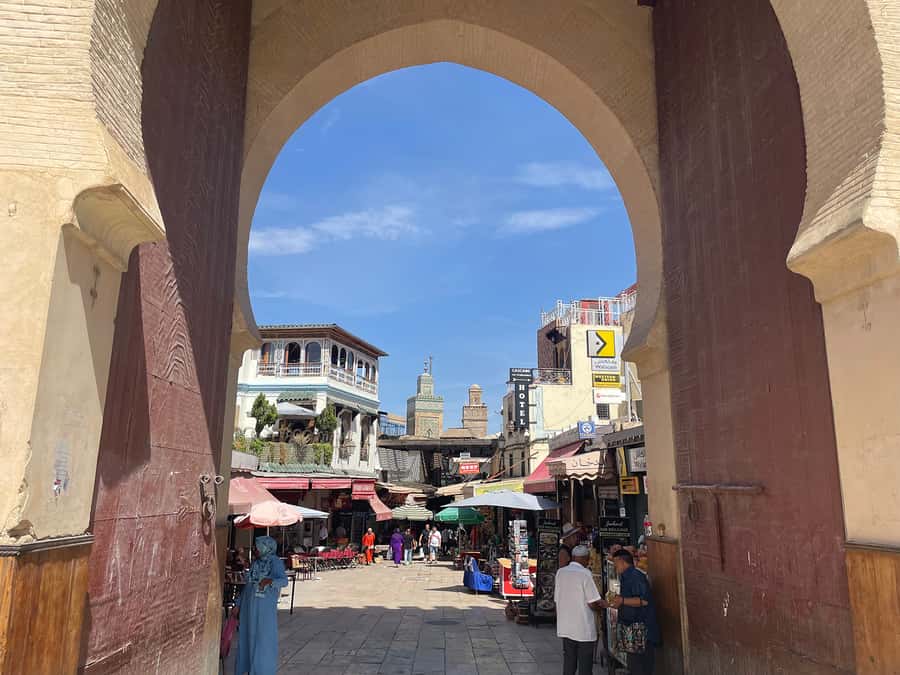
The route continues toward the Mosque and University of Kairaouine, one of Fes’s most important religious and cultural landmarks. The tour takes you around this central area and returns here near the end, giving the walk a natural sense of place.
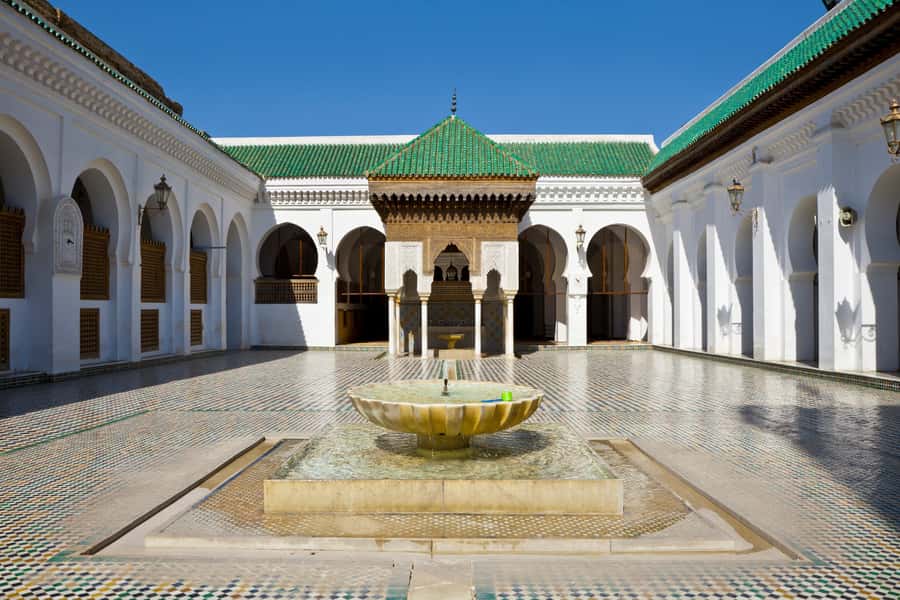
Access to religious buildings can be restricted, so you should not assume that every interior is open to every visitor. Even from the surrounding lanes and viewpoints, the complex helps explain why this part of Fes has long been a center of study, worship, and civic life.
The guide’s role is especially helpful here because the significance of Kairaouine is not always obvious from the street. You get context about its place in Fes and Moroccan culture rather than simply hearing a date and moving on.
This section can feel crowded and slow at busy times. Stay close to your guide, especially at turns and market crossings. The Medina has thousands of lanes, and a local who knows the shortcuts saves both time and frustration.
Same city, a completely different day out:
- Chefchaouen Day Trip from Fez (Shared Group Tour)
★ 4.6 · 2,394 reviews - Fes: Volubilis Roman Ruins, Mouly Idriss, & Meknes Day Trip
★ 4.6 · 2,375 reviews - Blue City magic: Affordable Day Trip from Fez to Chefchaouen
★ 4.6 · 1,960 reviews - From Fez: Sahara Desert 2-Day Tour with Merzouga Camp Stay
★ 4.8 · 1,716 reviews
Andalusian Mosque, Nejjarine Fountain, and Museum Nejjarine
The Andalusian Mosque adds another important stop to the walk. Along with Kairaouine, it shows that Fes is not defined by one monument or one neighborhood. Different quarters have their own religious buildings, markets, trades, and local character.
The Nejjarine Fountain is a more intimate architectural sight. Its tile work and carved detail reward a slower look, especially if your guide explains the materials and the labor behind them. This is one of the places where Mohammed’s interest in craftsmanship can make a real difference.
Museum Nejjarine provides a change of pace from the lanes. The museum focuses on traditional woodwork and is set in a former funduq, a type of building once used by merchants and visiting tradespeople. The entrance fee is extra, so decide in advance if you want to spend time inside or simply see the fountain and surrounding square.
I would include the museum if you care about Moroccan craft and design. If you have only three hours and prefer street life to displays, you may want to keep moving and use your time in the souks.
Henna Souk and Attarin Market
The tour passes through several markets, including the Henna Souk and Attarin Market. These are working commercial areas rather than staged attractions, so you can expect a mix of goods, smells, conversation, and narrow passages.
The Henna Souk is linked with traditional products and herbal trade. Attarin Market brings you closer to the practical side of the Medina, where shopping is part of daily life rather than a performance for sightseers.
This is also where a guide can help you read the difference between browsing and buying. Mohammed’s style, as described by past users, is to explain what you are seeing and offer shopping advice when asked, without steering you into stores. That is a meaningful advantage in a city where a shop visit can easily take more time than planned.
You may still encounter normal sales pitches. A guide cannot remove every seller from the route, but he can help you move on politely and understand how local bargaining works. If you want to shop, ask for advice. If you do not, say so clearly at the start.
Place Seffarine and the sound of bronze
Place Seffarine is one of the most distinctive stops because it is tied to bronze and copper work. You can watch craftsmen producing metal goods, hear the repeated tapping, and see how a traditional trade remains part of the Medina’s daily rhythm.
This is the sort of stop that is easy to miss if you are simply walking toward the headline monuments. It also gives you a better sense of why Fes is famous for handmade goods. The city is not only preserving old buildings. People are still making things in the same dense urban setting.
Nearby, Saffarin Madrasa adds another architectural stop. The combination of active workshops and historic buildings is one of the strongest parts of the tour. You see both the city’s past and its continuing craft culture within a few minutes of walking.
Chaouwara Tannery and the realities of the visit
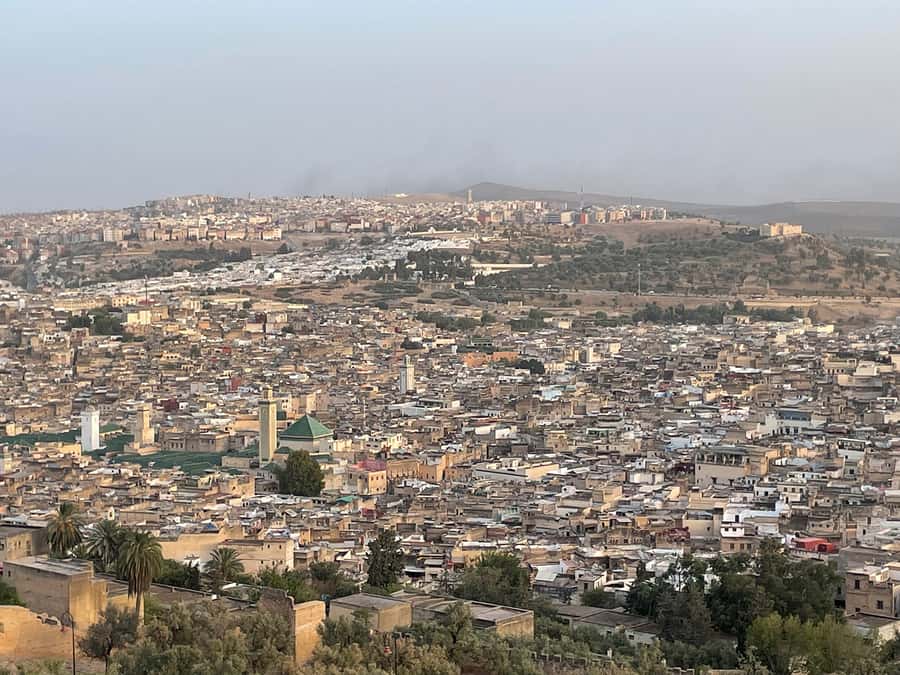
Chaouwara Tannery is the largest tannery in Fes and one of the most recognizable sights in the Medina. From the surrounding terraces, you may see the stone dyeing vats and workers handling leather through the traditional process.
This is a memorable stop, but it comes with a few practical points. The smell can be powerful, and the usual viewing areas are connected to leather shops. You may be offered mint leaves or encouraged to look at products. That does not mean you must buy anything.
The experience is much better if you decide beforehand what you want. If you are interested in the tanning process, ask your guide to explain it. If you want photographs only, make that clear and keep the visit short.
The tour description includes the tannery, and past outings indicate that the guide can help make the stop less uncomfortable and less sales-focused. Still, no tannery visit is completely free from commercial surroundings. Treat it as a working site, not a polished attraction.
The full-day addition: Jewish Quarter and Royal Palace
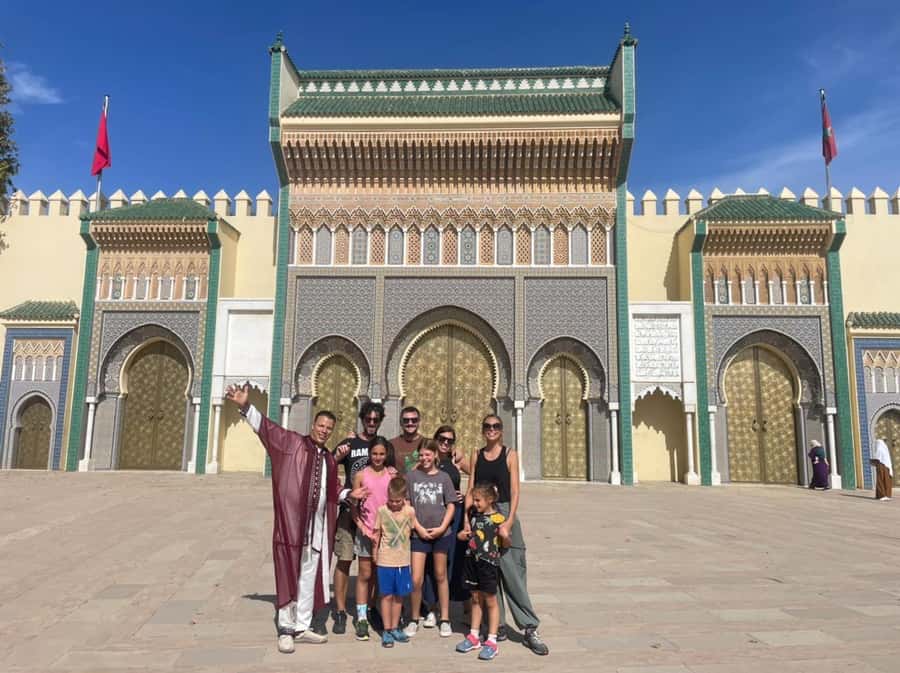
The longer tour leaves the central Medina for the Jewish Quarter and the Royal Palace. This gives you a broader view of Fes beyond the main market lanes.
The Jewish Quarter, or Mellah, adds an important part of the city’s social and cultural story. The streets and buildings differ from the core Medina, and a guide can explain how the quarter fits into the history of Fes and Morocco.
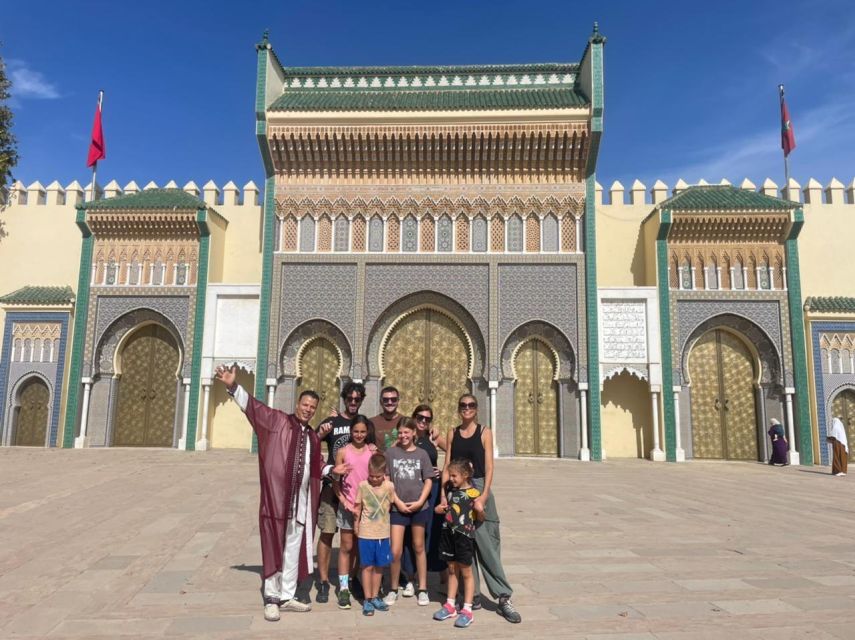
The Royal Palace is another major landmark, though visitors generally view its impressive exterior gates rather than touring the palace interior. It is a worthwhile addition if you want to understand the city beyond souks, mosques, and craft workshops.
The full-day route is best for first-time visitors who want a broad introduction and do not want to plan separate outings. It also suits you if you prefer time for questions, photography, and slower explanations. If your interest is mainly shopping and monuments within the old city, the three-hour option may be enough.
Pottery, mosaic work, and views from above
The full-day tour includes a factory producing mosaic and pottery. This is a useful follow-up to the earlier architectural stops because you can connect the tile patterns on old buildings with the work of present-day artisans.
If you are interested in zellige tilework, ask the guide to explain how the pieces are shaped and assembled. The reviews describe Mohammed as an artisan with a strong interest in tile, plaster, and carving, so this part may be especially rewarding for design-minded visitors.
The day also includes panoramic views from Bab Guissa and the Marinid Tombs. These viewpoints help you understand the scale of Fes. From above, the dense lanes of the Medina make more sense as a connected city rather than a collection of confusing turns.
The views are a strong reason to choose the longer option, but remember that the route involves more walking and changes in elevation. Wear practical shoes and pace yourself. The tour lasts three to six hours depending on the option, and some past outings ran longer when the group wanted extra time.
Guide style, group size, and pace
The experience is offered as a private tour or in a small group. That matters in Fes because a small party can stop in a narrow lane without blocking everyone else, and you can ask more questions without losing the thread.
Mohammed is the main guide named in the available information. He is a licensed official guide, was born and raised in Fes, and speaks English. Some feedback also names Rachid, so you should confirm who will lead your departure rather than assuming every date has the same guide.
The strongest feature is the personal style. Mohammed is described as warm, humorous, patient, and happy to adjust the route to your interests. He has also been praised for taking photographs, helping with shopping questions, and giving restaurant suggestions when asked.
The pace is not rigid. A three-hour booking has sometimes stretched closer to four or five hours when the group wanted more explanations or extra stops. That sounds like good value, but allow spare time afterward if you have a train, transfer, or dinner reservation.
Price and practical value at $22
At $22 per person, this is a strong-value introduction to Fes, especially if you are visiting for only a day or two. You are paying for a licensed local guide who can cover many major sights, explain the city, and help you avoid getting lost in a difficult-to-read old quarter.
The price is less of a bargain if you want a slow, highly detailed visit to every museum and monument. Entry fees, food, and drinks are not included, and the half-day tour is still an active walking experience.
I would budget for the stated €4 entry charge for the Madrasa and Museum, plus some Moroccan dirhams for other possible admissions or small tips. You do not need to buy crafts to make the tour worthwhile, which helps protect the value of the experience.
Free cancellation up to 24 hours before the start and reserve-now-pay-later terms add useful flexibility. More important, the private and small-group choices let you match the format to your budget and interest in personal attention.
Meeting at Dar Sunrise
The meeting point is Dar Sunrise, house number 10, in an alley off Talaa Kebira. From Bab Boujloud, cross through the Blue Gate, turn into the first street on the left, and walk for about three minutes until you see Made in M cafe with blue paint. The alley beside it leads to the house.
From Ain Zliten Parking, enter Talaa Kebira and walk uphill for about one minute. Made in M cafe should be on your left, with the meeting alley beside it.
Fes Medina is easy to misunderstand on a map, so arrive early. If you get lost, do not keep wandering while the start time approaches. Use the supplied directions and allow extra time to find the alley and house number.
Private tours can include hotel pickup and drop-off, but you need to send the hotel name and address after booking. The standard meeting instructions apply to the listed starting point unless your selected option says otherwise.
Who should book this Fes walking tour?
I would recommend it to a first-time visitor who wants to see the main sights without spending a day guessing at directions. It is also a good fit for anyone interested in Moroccan architecture, tilework, plaster carving, metalwork, leather, or everyday life in the Medina.
The tour suits curious people who like to ask questions. Mohammed’s value is not just in getting you from one monument to another. His strongest contribution is the explanation of how buildings, crafts, customs, and local relationships fit together.
It is less suitable for anyone who dislikes walking, narrow lanes, uneven ground, or the noise and sales activity of a working market. People with mobility impairments should choose another way to see Fes.
If you have only a short stay, book the walk early in your visit. You will learn the basic layout of the Medina and can return later to places that caught your eye. If you have a full day available, add the Jewish Quarter, Royal Palace, pottery, and viewpoints for a fuller picture of the city.
Should you book it?
Book this tour if you want Fes explained by someone who lives there, not just a checklist of monuments. The strongest reasons are the local connection, the emphasis on crafts and daily life, and the reported lack of pressure to shop.
Choose the three-hour option if you want the essential Medina route at a modest price. Choose the longer outing if you want the city’s wider story, panoramic views, and more time with the guide.
I would book it for a first visit, especially if you value history, architecture, local stories, and practical help in the souks. Just wear comfortable shoes, carry cash for entry fees, arrive early at Dar Sunrise, and leave room in your schedule in case the walk runs longer than planned.
FAQ
How long does the Fes Medina tour last?
You can choose a three-hour half-day tour or a longer option lasting about three to six hours. Check the available starting times and selected option when booking.
What language does the guide speak?
The tour is conducted in English.
Who is the guide?
Mohammed is a licensed official guide who was born and raised in Fes. Some available tour details also name Rachid in connection with a past departure, so confirm your guide when booking.
Where does the tour meet?
The meeting point is Dar Sunrise, house number 10, in an alley beside Made in M cafe on Talaa Kebira.
Can I start at Bab Boujloud?
The directions explain how to reach Dar Sunrise from Bab Boujloud. The exact starting point depends on the option you select.
What does the half-day route include?
It includes Bab Boujloud, Talaa Kebira, local souks, herbal shops, handicraft shops, the water clock, Bouanania Medersa, Kairaouine, the Andalusian Mosque, Nejjarine Fountain, Museum Nejjarine, Henna Souk, Attarin Market, Place Seffarine, Saffarin Madrasa, and Chaouwara Tannery.
What does the full-day option add?
After the Medina route, the longer option adds the Jewish Quarter, Royal Palace, a mosaic and pottery factory, and panoramic views from Bab Guissa and the Marinid Tombs.
Are entrance fees included?
No. Food, drinks, and entrance fees are not included. The stated fee is €4 for the Madrasa and Museum.
Is hotel pickup available?
Hotel pickup and drop-off are offered for private tours. You need to send the hotel name and address after booking.
Is the tour suitable for people with mobility impairments?
No. The activity is listed as unsuitable for people with mobility impairments because it involves walking through the Medina.
Just listed out of Fes
- Moroccan Crepes & Pastries Kitchen★ 4.9 · 34 reviews
- Exclusive Fez Medina Walking Tour with a local Guide★ 4.9 · 35 reviews
- Fez: Half-Day Sightseeing Tour★ 4.6 · 36 reviews
- Creative Painting on Fes Pottery★ 4.9 · 38 reviews
- From Fez: 2-Days Desert Tour to Marrakech via Merzouga★ 4.3 · 40 reviews
- Fez: 2 Day-1 Night Luxury Sahara Desert Trip to Fez/Marakech★ 4.7 · 41 reviews
- Fes City Tour: Discover the Medina’s Treasures★ 4.8 · 42 reviews
- From Fes: Day trip to Sefrou & Bhalil★ 4.8 · 51 reviews
Fez Tours, compared.
Chefchaouen Day Trip from Fez (Shared Group Tour)
Read our review →
Volubilis Roman Ruins, Mouly Idriss, & Meknes Day Trip
Read our review →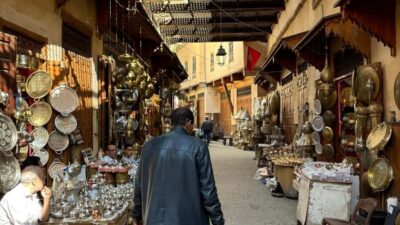
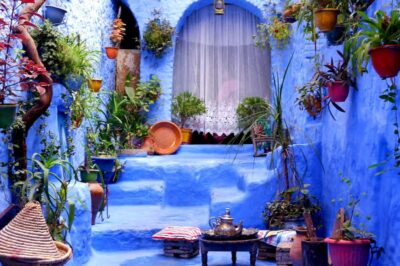
Blue City magic: Affordable Day Trip from Fez to Chefchaouen
Read our review →
Sahara Desert 2-Day Tour with Merzouga Camp Stay
Read our review →
Museum, Al Attarine Madrasa & Tannery and Medina Tour
Read our review →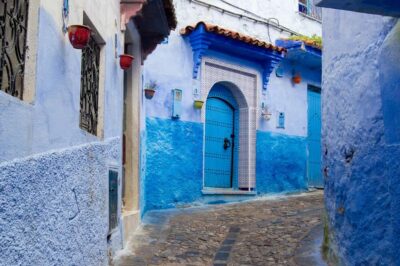
Volubilis, Moulay Idriss, & Meknes Full-Day Trip
Read our review →Browse the lists this tour appears in