
Reviewed · ATLAS MOUNTAINS DAY TRIPS
toubkal ascent from Marrakech 2 Days
Mount Toubkal is not a gentle day trip from Marrakech. This two-day summit push takes you from the city to Morocco’s highest point at 4,167 meters, with a night in a basic mountain refuge and a pre-dawn climb over steep, loose rock. The reward is a sunrise above the High Atlas, with Berber villages and broad valleys far below.
I like two things right away: the guide stays with you throughout, and the whole trip is arranged from your Marrakech hotel or riad to the trailhead and back. I also like the practical support, including cooked meals, refuge accommodation, summit photographs, and the option to rent poles, sleeping bags, crampons, or an ice axe.
The catch is simple: this is a very fast ascent. You should be fitter than moderately fit, and you need to be comfortable walking for roughly nine to ten hours on summit day. The route is not described as highly technical, but altitude, cold, steep ground, and loose scree make this a serious mountain outing.
Key points before you book
- 4,167-meter summit: You climb Morocco’s highest mountain, with the best views arriving near sunrise.
- Imlil to the refuge: The first day is uphill through Berber villages and past Sidi Chamhrouch before reaching the refuge at about 3,200 meters.
- Pre-dawn start: Breakfast is scheduled around 5:00 a.m., with the summit climb beginning around 5:30 a.m. Some groups have started closer to 3:30 a.m. for sunrise.
- Experienced local guides: Hassan, Mohamed, Abdellah, Abderrahim, Ibrahim, and Ouassim are among the guides named in the supplied details. Guides adjust the pace and help with footing.
- Equipment rental: Poles, sleeping bags, winter crampons, and ice axes can be rented if needed, but rental costs are not included.
- Private format: Only your group takes part, but the experience is not available to a solo booker.
What the two-day Toubkal ascent is really like
This trip compresses a mountain climb into a tight schedule. You leave Marrakech after breakfast, reach Imlil by vehicle, walk uphill to the refuge, climb Toubkal before or around sunrise the next morning, then descend all the way to Imlil before returning to Marrakech.
That makes the trip efficient, but it also removes much of the spare time that helps with altitude. You are not easing into a long trek over several days. You are asking your legs and lungs to handle the main climb, summit ascent, and long descent in a short window.
I would choose this trip for a strong hiker who has limited time in Morocco. If you want a relaxed mountain holiday, this is not the right format. The two-day plan is best viewed as a concentrated challenge with excellent scenery, not as a restful Atlas Mountains escape.
A few other Marrakech days worth comparing
- Marrakech: Atlas Mountains, Ourika Valley, Waterfall & Lunch
★ 4.8 · 15,834 reviews - Berber villages : Atlas Mountains Day Hike from Marrakech
★ 5.0 · 14,007 reviews - Marrakesh: Ourika Waterfalls, Atlas Mountains, Guide + Lunch
★ 4.9 · 9,986 reviews
From Marrakech to Imlil at 1,740 meters
The day begins with pickup at your hotel or riad in Marrakech. The listed start time is 9:00 a.m., although the actual pickup depends on your accommodation and the day’s arrangements, so confirm the precise time when booking.
The drive takes you toward Imlil, a small Berber village in the High Atlas about 67 kilometers southwest of Marrakech. Imlil is the practical gateway for the walk. Here you meet your mountain guide, check that you have the basic gear, and rent any equipment you need.
The supplied route information gives Imlil’s elevation as 1,740 meters, while one account describes meeting the guide near 2,000 meters. The useful point is that you begin well below the refuge, with a substantial uphill day ahead. Do not treat the vehicle transfer as the start of the mountain effort. The walking begins in earnest once you leave the village.
The guide is especially valuable at this stage. Hassan is repeatedly named as a warm and attentive guide, while Abdellah, Abderrahim, Mohamed, Ibrahim, and Ouassim are also praised for setting a manageable pace and keeping groups together. Names can change with availability, but you are assigned an English or French-speaking mountain guide.
Day one: Berber villages, Sidi Chamhrouch, and the refuge
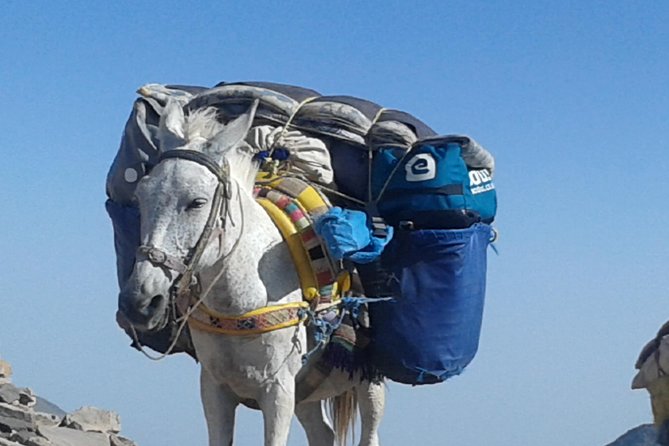
From Imlil, you follow a mule track through the mountain villages. The first part gives you a close look at the settled side of the High Atlas, with homes, local paths, and small places to stop for a drink or rest.
The route then continues toward Sidi Chamhrouch, a well-known shrine area at about 2,500 meters. This is a natural pause in the climb and a useful marker of how much higher you still need to go. From here, the trail becomes more exposed and more demanding as it heads toward the Toubkal refuge.
The first day is described as roughly 20 hours in the supplied itinerary, but that figure is clearly a schedule label rather than walking time. The practical walking estimate from Imlil to the refuge is around five to seven hours, depending on your pace and stops. One detailed account described about three to four hours from a lunch stop to the refuge.
You should expect an all-uphill day. That sounds obvious, but it matters: there is no easy warm-up followed by a flat section. Breaks are important, and a good guide will slow the pace before you burn through your energy.
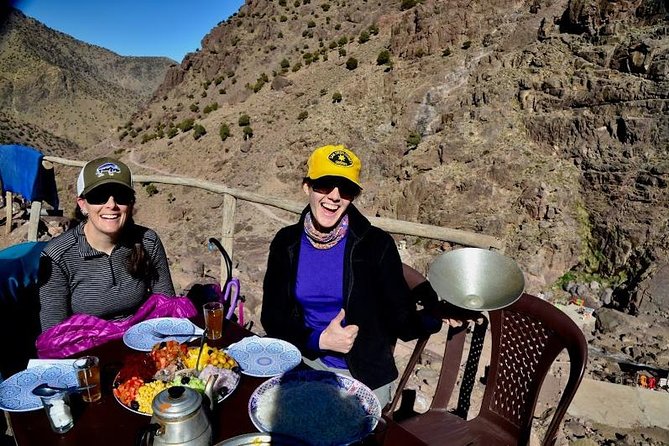
Meals are prepared for you during the trip, and the food is presented as included in the experience. Accounts describe plentiful meals, good lunches, and vegetarian food being accommodated. Still, bring snacks you know you will eat, since familiar food is useful when you are tired or have less appetite at altitude.
The route includes places where you can buy water, but carry cash and small change. One useful tip from the supplied information is to expect water purchases along the trail at a little over one euro. Prices can change, so treat that as a guide rather than a fixed rate.
A basic night at the Toubkal refuge
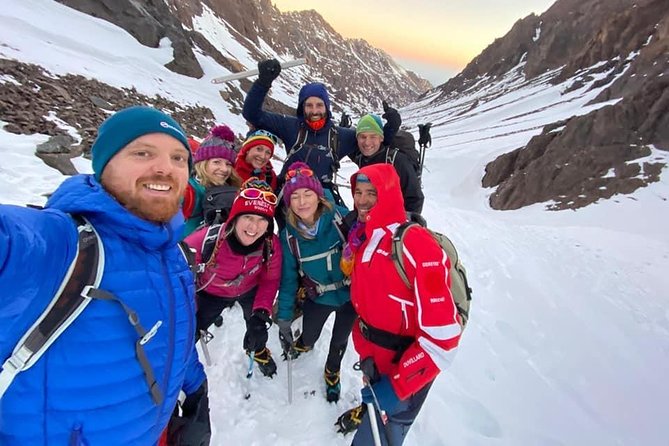
The refuge sits at approximately 3,200 meters. It is clean and simple rather than luxurious, with shared dormitory rooms, shared bathrooms, and communal dining.
That setting is part of the appeal. You sleep on the mountain instead of spending hours returning to Marrakech, and you meet other people attempting the summit. The tradeoff is privacy and comfort. Pack with the expectation of a basic shared mountain stay, not a hotel room.
Your guide helps arrange the sleeping space and meals. Hassan is specifically praised for making sure groups had what they needed at the refuge, and other guides are described as attentive both on and off the trail.
Keep your evening quiet and use it to rest. At 3,200 meters, you may feel the altitude even if you are normally fit. The summit plan depends on an early alarm, and the second day is much harder than the first.
Same city, a completely different day out:
- Marrakech: Agafay Desert Sunset, Camel Ride, and Dinner Show
★ 4.6 · 35,119 reviews - From Marrakech: Ouzoud Waterfalls Guided Hike and Boat Trip
★ 4.7 · 33,630 reviews - Marrakech: Agafay Desert Quad & Camel Rides with Dinner Show
★ 4.8 · 27,382 reviews - Marrakech: Agafay Desert Quad Biking Tour with Dinner-Show
★ 4.8 · 16,569 reviews
Summit morning: steep ground before sunrise
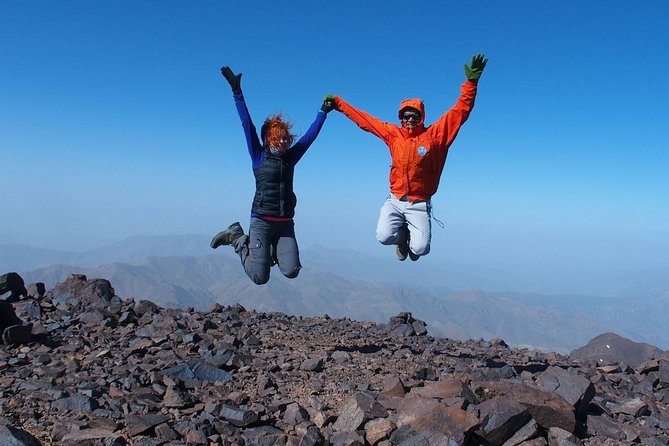
The summit climb begins in darkness. The published plan calls for breakfast around 5:00 a.m. and departure around 5:30 a.m., while some accounts describe waking at 3:00 or 3:45 a.m. to reach the top for sunrise.
That variation is worth noting. Your exact departure depends on the season, weather, pace, and the guide’s judgment. Ask the operator what start time is planned for your date, especially if seeing sunrise from the summit is important to you.
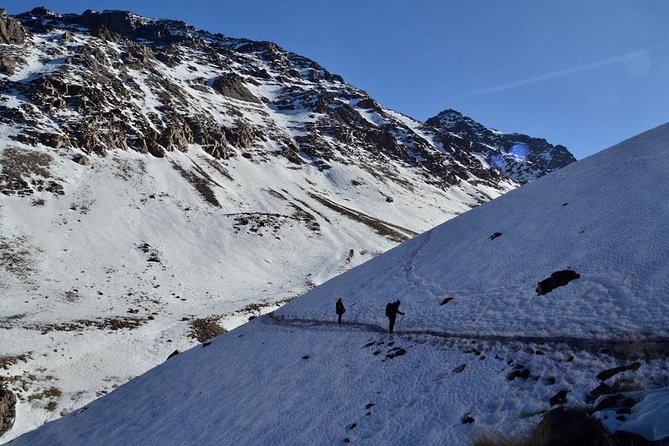
The trail above the refuge is steep and rocky. You may encounter loose stones, scree, and short scrambles where careful foot placement matters. This is where a guide earns the fee. Abdellah is described as pointing out the more stable routes, and several guides are praised for adjusting their pace to the group rather than racing ahead.
The ascent takes about three to four hours for many groups, but that is not a promise. Altitude affects people differently, and the conditions can make the same route feel very different from one day to the next.
Your aim is not simply to walk quickly. Use the slow, steady rhythm your guide sets. Stop for water and short rests before you are exhausted. In winter, crampons and an ice axe may be needed, and those can be rented, but the rental cost is extra.
The 4,167-meter summit and the sunrise payoff
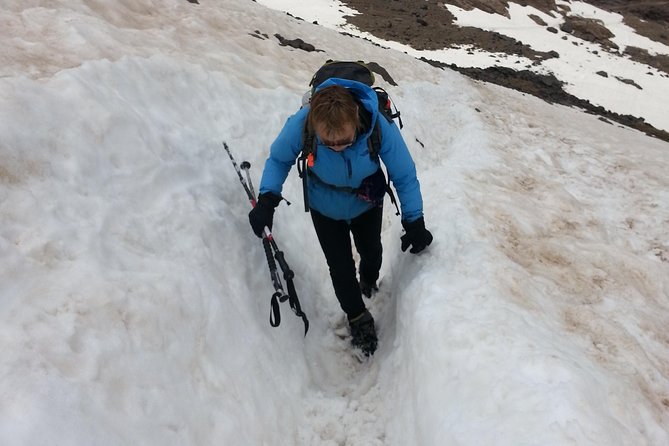
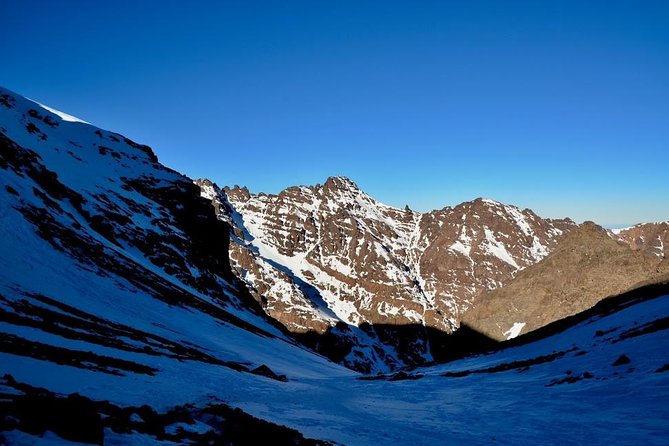
At the top, you reach Toubkal’s 4,167-meter summit, or 13,671 feet. On a clear morning, you can look across the High Atlas and down toward green valleys and Berber villages. The descriptions of the view are not exaggerated in one important sense: after a dark, tiring climb, the sudden spread of mountains below feels dramatic.
Summit time is limited. One account describes staying for about 15 minutes, enough for photographs and a short rest before wind and cold became too much. Your guide can help take summit pictures, but bring gloves that let you handle your phone or camera.
Sun protection matters even on a cold morning. At this altitude, the sun can be harsh once it appears. Pack sunscreen, sunglasses, and a hat, and do not assume that cool air means you are protected.
The summit is the emotional high point, but do not spend all your energy getting there and then forget the descent. The way down is also demanding, especially on loose rock. Tired legs and downhill scree are a poor combination, so follow the guide’s line and take your time.
Down to the refuge, lunch, and Imlil
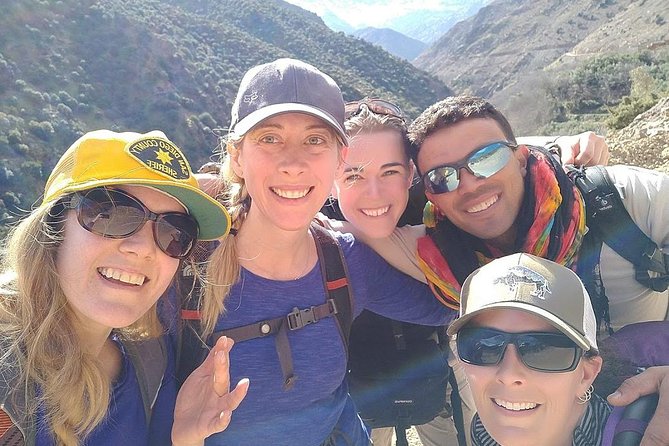
After the summit, you return to the refuge for food and a short break. A cooked lunch is included in the trip description, and the refuge meal gives you a chance to replace some energy before the long descent.
Then you continue downhill toward Imlil. This is a substantial day, with approximately nine to ten hours of walking listed for the summit route and return. The detailed accounts describe the descent as almost as challenging as the ascent because of unstable stones and the sheer distance.
You may be exhausted by the time you reach the lower trail. One account describes being offered the option of riding a mule from the refuge toward Imlil for a reasonable extra fee. That can be a sensible backup if your legs are finished, but the mule ride is not included in the listed price.
The driver meets you in Imlil for the return to Marrakech. Hotel or riad drop-off is included, which is welcome after a full day on your feet. You arrive tired, dusty, and likely very pleased to have left the mountain under your own effort, or with a little help on the final section.
Guides, safety, and the value of local support
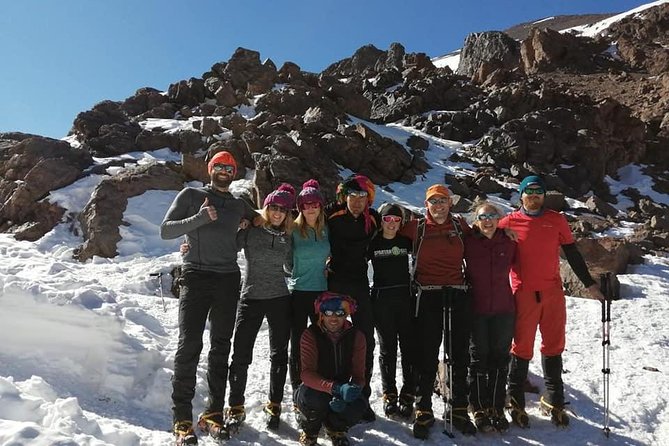
The strongest part of this experience is the guide service. Hassan is singled out for his humor, patience, encouragement, and calm handling of difficult conditions. Mohamed is described as leading confidently in the dark, singing along the route, and serving hot tea at the summit. Abdellah is praised for adapting the pace and giving clear advice on loose ground.
You should not assume a particular guide is guaranteed unless the operator confirms it. The important feature is the continuous presence of a mountain guide who knows the route, checks your pace, and remains with your group.
A guide is also required for access according to the supplied details. One account notes a police checkpoint where a passport and guide were needed. Carry your passport and keep it accessible, rather than buried at the bottom of your main bag.
The tour is private, meaning only your group participates. That is useful if you are booking with friends or family and want the pace shaped around your group. It also means you should discuss fitness levels honestly before booking. A stronger member cannot assume everyone will enjoy the same speed.
The safety support is reassuring, but it does not remove the mountain’s demands. Guides can help with route choice and encouragement, but you still need suitable clothing, footwear, water, sun protection, and enough fitness for the schedule.
What to pack and what costs extra
The price is listed at $186.10 per person. For a private two-day trip from Marrakech, that covers several useful services: hotel pickup and drop-off, the mountain guide, one night in the refuge, and prepared meals according to the trip description.
It is good value if you need a simple, organized way to reach Toubkal without arranging transport, accommodation, a guide, and food separately. The value is strongest for a pair or small group that wants private support and has little time.
Budget for extras. Rental equipment such as winter crampons, sleeping bags, walking poles, and ice axes is not included. Water purchases are also extra, and the possible mule ride from the refuge toward Imlil costs more.
Bring:
- Broken-in hiking shoes or boots
- Warm layers for the refuge and summit
- Sun protection, sunglasses, and a hat
- Water and small snacks
- Cash and coins for water
- A sleeping bag if you do not plan to rent one
- Gloves suitable for cold, windy conditions
- A small bag you can carry comfortably uphill
Do not overpack. You will feel every unnecessary item on the climb to the refuge and again on summit morning.
Who should book this Toubkal trek
You should book this if you already hike regularly, want to reach Morocco’s highest summit, and can accept an early start and a hard second day. It also suits people who value a local guide, cooked meals, and door-to-door transport more than private rooms or a leisurely schedule.
You should think twice if you have little hiking experience, dislike loose rock, or want time to adjust gradually to altitude. The supplied details specifically call for strong physical fitness, and one account makes the useful distinction that you should be fitter than merely moderate to complete the summit in two days.
This is not presented as a technical mountaineering route for specialists. In good conditions, the main challenge is endurance, altitude, steep ground, and scree. Winter conditions can change the equation, bringing crampons and an ice axe into play.
The operator also lists group discounts, but the tour is not available to one person alone. It requires at least two participants, and a minimum number of participants applies to the operation. Free cancellation is available up to 24 hours before the start time, with the usual restriction that later cancellations or changes are not refunded or accepted.
Should you book it?
Book this two-day Toubkal ascent if you want a demanding, tightly organized summit attempt and you are prepared to work for the view. The best reasons to choose it are the experienced local guide support, the efficient Marrakech transfers, the refuge night, and the chance to reach the summit at sunrise.
Do not book it simply because the price looks low or because the trip lasts only two days. The short schedule is exactly why it is tough. If your fitness is solid, your expectations are realistic, and you bring the right gear, this is a strong-value way to turn a Marrakech stay into a genuine High Atlas adventure.
FAQ
How high is Mount Toubkal?
The summit is 4,167 meters high, or 13,671 feet. It is the highest mountain in Morocco.
Where does the trek begin?
The walking section begins in or near Imlil, a Berber village listed at about 1,740 meters above sea level and roughly 67 kilometers southwest of Marrakech.
Is accommodation included?
Yes. The trip includes one night at the Toubkal refuge. The accommodation is basic, with shared dormitory rooms, shared bathrooms, and communal dining.
Are meals included?
The experience description states that meals are prepared for you during the trek. The supplied details describe breakfast, lunch, and dinner as part of the mountain service. You should still bring personal snacks and money for water.
Can I rent hiking equipment?
Yes. Poles, sleeping bags, winter crampons, and ice axes can be rented if required. Rental equipment is not included in the tour price.
Is hotel pickup included?
Yes. Pickup and drop-off at your Marrakech hotel or riad are included. The listed start time is 9:00 a.m., but confirm the exact pickup time for your accommodation.
Just listed out of Marrakech
- Marrakech: Ouzoud Waterfalls Trip, Guide & Boat + Lunch★ 4.7 · 33 reviews
- From Marrakech: Ourika Valley Trip, Waterfall Hike & Lunch★ 4.4 · 33 reviews
- Magical Dinner show and Quad bike In Agafay Desert Marrakech★ 4.5 · 33 reviews
- Moroccan Hands on traditional pastries & Tea class in Marrakech★ 4.5 · 33 reviews
- Marrakech: Quad excursion to the palm grove and Jbilets desert★ 4.5 · 33 reviews
- Marrakech: Vibrant Dinner Show at The Lotus Club★ 3.9 · 33 reviews
- From Marrakech: Small Group To Essaouira & Medina Day Trip★ 4.3 · 33 reviews
- From Marrakech: 3-Day Merzouga and Sahara Desert Tour★ 4.5 · 33 reviews
Atlas Mountains Day Trips, compared.

Atlas Mountains, Ourika Valley, Waterfall & Lunch
Read our review →
Ourika Waterfalls, Atlas Mountains, Guide + Lunch
Read our review →
Atlas Mountains & Agafay Desert Tour w Camel Ride
Read our review →
Atlas Mountains, Waterfalls, Ourika Valley +Lunch
Read our review →
Atlas Mountains & 5 Valleys Tour from Marrakech – All inclusive –
Read our review →
Agadir or Taghazout: Paradise Valley Atlas Mountains Tour
Read our review →Browse the lists this tour appears in