
Reviewed · FEZ TOURS
Private Guided Walking Tour in Fez Medina
Fez Medina is best understood on foot, and this private tour puts a local guide beside you as you work through its maze of lanes, shrines, souks, and old schools. Chouara Tannery and the decorated Bou Inania Medersa give the walk its strongest visual moments, while the smaller alleys provide the real sense of old Fez.
I like the private format, since your group can ask questions and move at a useful pace. I also like the hotel or riad pickup, plus the chance to see working artisan shops rather than only polished monuments. Guides including Yassine, Adil, Moundire, and Abdul have been praised for their patience, local insight, flexibility, and ability to add stops when time allows.
The main caution is the commercial side of the route. Artisan workshops can be interesting, but some visitors have felt that shop visits turned into high-pressure sales stops, especially at rug stores. Set your expectations early: you can look, learn, and say no.
Key points to know before booking
- The private guide matters in Fez Medina: Narrow lanes, changing street names, and limited vehicle access make local help especially useful.
- Three major interiors cost extra: Bou Inania Medersa, Nejjarine Museum, and Al-Attarine Madrasa each charge 20 DH per person.
- The tour includes hotel or riad transfers: Pickup and drop-off are offered from most Fez accommodations, removing the need to find a taxi to the old city.
- The route mixes monuments with daily trade: Expect spices, carpets, ceramics, leatherwork, and artisan workshops alongside religious buildings.
- Non-Muslims view some sacred sites from outside: The Kairaouine Mosque, Andalusian Mosque, Zaouia of Moulay Idriss II, and Sidi Ahmed Al-Tijani shrine do not allow non-Muslim entry.
- The strongest guide qualities are patience and flexibility: Yassine, Adil, Moundire, and Abdul have been praised for clear explanations, friendly manners, and adapting the walk to individual interests.
Why a private walk helps in Fez Medina
Fez el-Bali is not a place where a map tells the whole story. The old city is a maze of narrow lanes, covered passages, market streets, and small turns that can look much alike. Cars are limited in many sections, and the medina is full of visual noise: fruit stands, spice displays, carpets, pottery, leather goods, and people moving in every direction.
That is where this tour earns its $30 price. You are not paying only for a list of monuments. You are paying for a local person who can point out a doorway, workshop, shrine, or architectural detail that you could easily pass without noticing.
The private setup is especially useful if you want to stop for questions. Several guides connected with this experience have been praised for giving patient explanations and adjusting the pace. Yassine has also been praised for spending extra time on requested sights, while Adil is known for guiding guests through side passages and sharing local stories.
The advertised walk lasts about three to four hours. That is long enough to cover the main sights without turning the day into an exhausting march, though Fez Medina is still a demanding place to walk. Wear shoes with good grip, keep your hands free, and expect uneven pavement and frequent stops.
More Walking Tours in Fez
- Explore Fes: Unforgettable Guided Walking Tour of the Medina
★ 4.7 · 1,339 reviews - Exclusive Fez Medina Walking Tour with Private Guide
★ 5.0 · 392 reviews - Fez: Guided Walking Tour of the Historic Medina
★ 5.0 · 359 reviews
Starting at Bab Boujloud
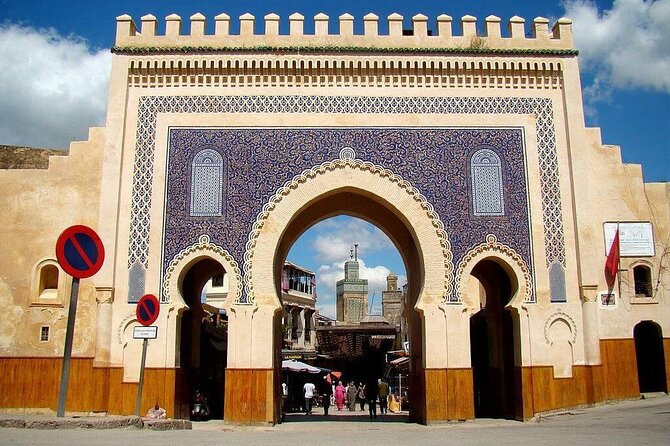
Bab Boujloud is a natural meeting point for the old city. Its blue and green ceramic decoration gives you an immediate introduction to Fez’s love of pattern and color. The gate also helps you understand the basic geography of the medina before the lanes become tighter.
This opening section can also include several sights outside or around the main walking route: the Mellah, the 17th-century Ibn Danan Synagogue, the Kings Palace, the Merinid viewpoints, Borj North and Borj South, and a ceramic factory. The exact balance may depend on your pickup location, timing, and guide.
The Mellah offers a different side of Fez from the Muslim quarters. The synagogue is an important reminder of the city’s former Jewish community, while the royal palace area shows another face of Moroccan power and ceremony. The hilltop forts and viewpoints can help you see how the old city fits together, though the supplied schedule gives only about 10 minutes to this first stop.
The ceramic factory is more practical than historical. You can see how Moroccan pottery and tile work are presented, and it may be a good place to understand the craft before encountering goods in the market. It is also one of the points where you should clarify whether you want a demonstration only or are open to shopping.
Bou Inania Medersa and Marinid design
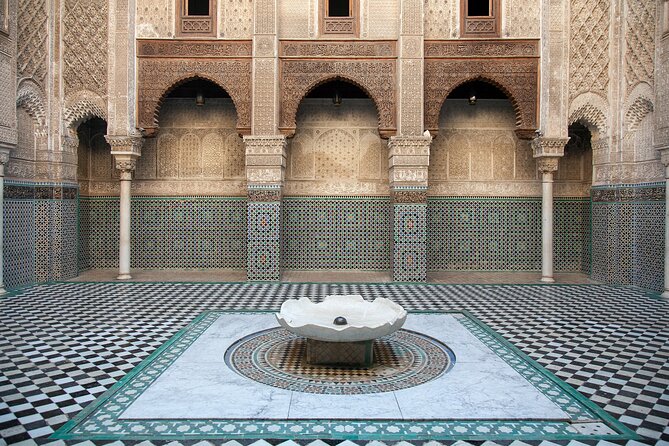
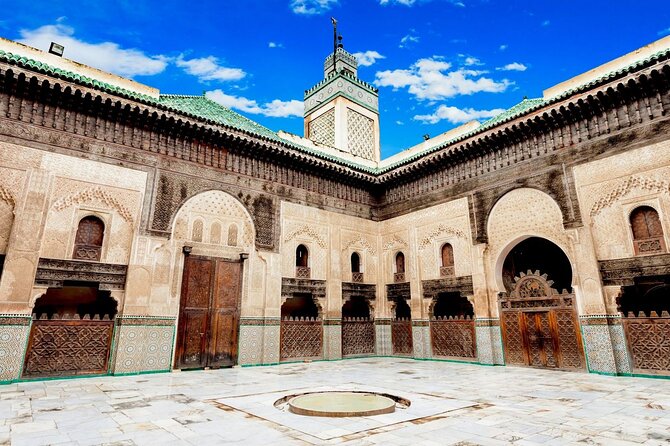
The Bou Inania Medersa is one of the tour’s best architectural stops. Founded by Abu Inan Faris between 1350 and 1356, this religious school is known for the precise decoration associated with Marinid and Moroccan design.
You will have about 15 minutes here, so do not expect a long museum visit. Use the time to look closely at the carved plaster, woodwork, tile patterns, and layout. A guide can explain how a medersa functioned as a place of religious study and why its decoration matters.
The entry fee is 20 DH per person and is not included. That is a modest charge, but you should keep Moroccan dirhams available because several stops have separate admission costs. This medersa is not just a quick photo stop. It provides a useful visual key for details you will see later in doors, fountains, and courtyards around the medina.
Nejjarine Museum and the old funduq
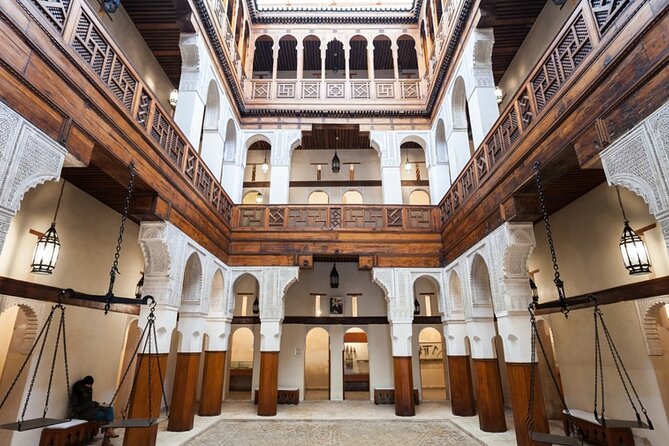
The Nejjarine Museum occupies Funduq al-Najjarin, a former riad-style building in the center of the medina. The building itself is part of the attraction. Its courtyard architecture gives you a chance to see how a traditional urban structure could combine practical lodging, trade, and decorative design.
The visit lasts about 25 minutes. That gives you more time than at Bou Inania, though the charge is again separate at 20 DH per person. If you are mainly interested in architecture, this may be one of the most rewarding paid stops because the building helps you read the medina as a collection of courtyards and working spaces, not just a market.
The name is linked to the carpenters’ area, and the museum is associated with traditional arts. Your guide can help connect what you see inside with the crafts sold in the surrounding lanes. That context is useful, since the medina can otherwise feel like one continuous stream of shops.
A few other Fez days worth comparing
- Fez Medina Guided Tour
★ 4.6 · 2,079 reviews - Fes: Museum, Al Attarine Madrasa & Tannery and Medina Tour
★ 4.6 · 1,655 reviews - Fes: Royal Palace, Madrasa, Tannery & Souks and Medina Tour
★ 4.5 · 508 reviews - Fez Medina 4-Hour Guided Walking Tour
★ 4.5 · 248 reviews
One hour in the medina lanes
The longest timed section is the walk itself, about one hour. This is the part that makes the tour more than a checklist. You move through narrow streets lined with fresh fruit, spices, Berber carpets, ceramics, textiles, and other Moroccan goods.
I would treat this hour as a chance to slow down. Look above eye level at carved doors and tilework. Notice the changes between a busy market lane and a quieter residential passage. Ask your guide how the streets are organized and which crafts are tied to particular parts of the old city.
A private guide can also make the walk less stressful. You do not have to keep checking a phone or worry about losing the route. Adil, in particular, has been praised for knowing the lanes well and for being familiar with people throughout the old city. That local connection can make the medina feel less like a maze and more like a living neighborhood.
The tradeoff is that market streets are active commercial spaces. You may be approached by sellers, and the guide may take you to workshops or cooperatives. This is normal for a craft-centered Fez experience, but it is fair to say clearly that you are not shopping.
Sacred sites viewed from the street
The Zaouia of Moulay Idriss II is an important shrine in Fes el-Bali. It contains the tomb of Idris II, a key founder of Fez and a revered figure in the city. Non-Muslims cannot enter, but an outside view still gives the site meaning, especially when your guide explains its place in local religious life.
The Kairaouine Mosque, also called Quaraouiyine, is another major landmark. It was founded in 859 by Fatima el Fihri and is connected with the intellectual life of Fez. Non-Muslims cannot enter the mosque, so this portion is about exterior views and explanation rather than interior architecture.
The route also points out the Andalusian Mosque, dating from 860. Again, entry is not permitted to non-Muslims. These restrictions are important to understand before you book. You will see several of Fez’s most important religious buildings, but some will remain outside-only sights.
The Sidi Ahmed Al-Tijani Zawiya provides another look at Fez’s Sufi tradition. Its shrine draws religious importance from the saint associated with it, but non-Muslim access may be restricted. The guide’s explanation is the main value here, along with the chance to observe the architecture and atmosphere from the lane.
Chouara Tannery and the smell of leather
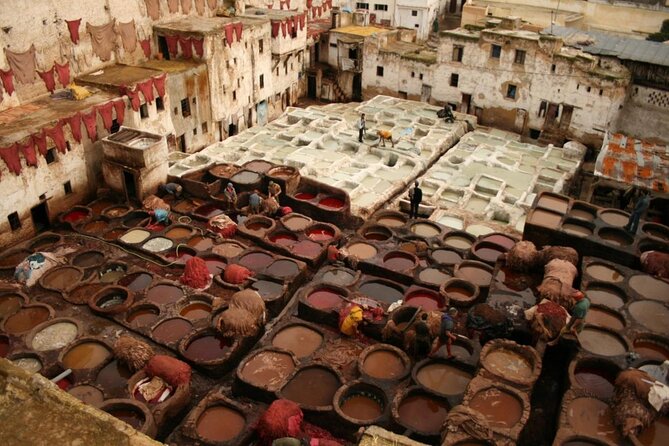
Chouara Tannery is one of Fez’s most memorable stops. The tanning industry here still uses traditional methods, and the work takes place in open vats that create a striking pattern of color and activity.
The visit lasts about 25 minutes. You will likely be shown the tannery from a nearby viewing point rather than walking through the working vats. This is a place to watch carefully and ask questions about the process, the role of leather in Moroccan craft, and how the work fits into the medina economy.
There is no admission charge listed for the tannery, but the experience can include strong smells. That is part of the reality of the craft, not a flaw in the tour. If you are sensitive to odors, be prepared. The tannery is still worth seeing because it connects the finished leather goods in the shops with the labor behind them.
This is also a good point to remember that Fez is not a museum frozen in time. The old city remains a place of work, worship, trade, and residence. The tour works best when you approach it as a look at a functioning city, not just a parade of old buildings.
Al-Attarine Madrasa near the spice market
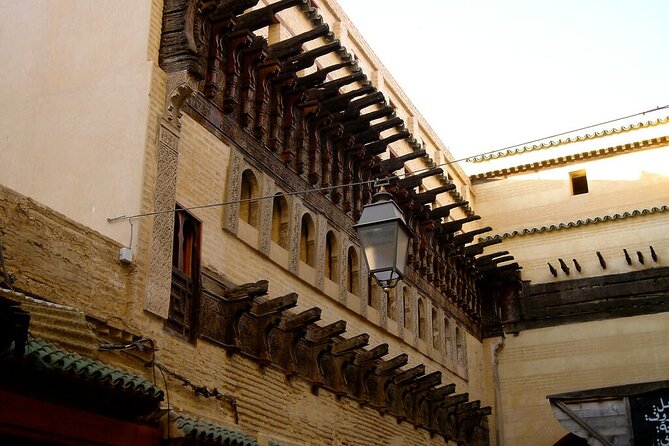
Al-Attarine Madrasa was completed by Abu Said Uthman II in 1325. Its name means Madrasa of the Perfumers, reflecting its position near a historic market for perfumes and spices.
You have about 20 minutes here, with a 20 DH entry fee per person. Like Bou Inania, this is a compact visit where the details matter. Look for the calm courtyard, tilework, carved surfaces, and the contrast between the quiet interior and the noisy market outside.
The madrasa served high-achieving male students, many of whom continued their studies at the nearby Kairaouine institution. That connection helps place the building within Fez’s educational tradition. Your guide can also explain why the location beside perfume and spice sellers was practical as well as atmospheric.
Of the paid interiors, this may appeal most to visitors who enjoy decorative architecture. The Nejjarine Museum offers a broader craft setting, while Al-Attarine focuses your attention on the beauty of a religious school.
Shops, tea, and the right attitude to buying
Coffee or tea is included, and one guide, Moundire, has treated guests to Moroccan tea and small biscuits during the walk. That pause can be a welcome break after several hours on foot and gives you a simple taste of local hospitality.
Shopping is part of the route, but it deserves an honest warning. You may visit ceramic workshops, cooperatives, carpet sellers, leather merchants, or other artisan shops. Some guides handle this lightly and let you browse without pressure. One account of the experience described a pleasant walk but objected strongly to high-pressure sales tactics, especially around rugs and claims about cooperatives.
You can protect your day by stating your position at the start. Say that you want to learn about the craft but are not planning to buy, or tell the guide which products interest you. A private tour gives you more room to negotiate the route than a large group excursion.
If you do want to shop, ask about materials, production, origin, and shipping before discussing price. A guide may help explain the product, but you should still make the final decision yourself. The best part of these stops is often the chance to see skills that are easy to miss when goods are displayed only as souvenirs.
Price, transfers, and what is not included
At $30 per person, this is good value if you want a private introduction to Fez Medina. The price includes a professional local guide, hotel or riad pickup and drop-off, and coffee or tea. For a private activity, the cost is reasonable, especially if several people share the experience.
You need to budget separately for admission. Bou Inania Medersa, Nejjarine Museum, and Al-Attarine Madrasa each list a 20 DH fee per person, for a possible total of 60 DH. Taxes and other fees are not included, and lunch is also your responsibility.
The transfer matters more than it may first appear. Fez Medina is not a simple place to reach by car, and pickup from most hotels and riads removes one small but annoying task. Confirm your accommodation details when booking so the meeting plan is clear.
Group discounts are offered, and only your group participates. That makes this a practical choice for families or friends who want to ask plenty of questions. One account specifically praised the guide’s flexibility with a child and stroller, though the medina’s narrow, uneven routes may still make movement difficult in places.
Who should book this Fez Medina tour?
I would choose this tour for a first visit to Fez, especially if you have only half a day to understand the old city. It suits people who want history, architecture, crafts, and daily life in one walk rather than a series of separate taxi rides.
It is also a good fit for families and small groups. The private format lets you pause, ask for clearer explanations, or request an extra sight if the guide has time. Guides have been praised for speaking several languages, including Italian, and for explaining Moroccan culture in a friendly way.
You may want a different plan if you dislike shopping stops or want to visit interiors at your own pace. Tell the guide before setting out that you want the focus on monuments and streets. Also remember that several major religious buildings are outside-only for non-Muslims, so this is not the right tour if entering every landmark is your main goal.
Free cancellation is available up to 24 hours before the start time. Changes or cancellations inside that window are not accepted for a refund.
Should you book it?
Book this private Fez Medina walk if you want help finding your way, clear cultural context, and a practical look at the city’s crafts. The strongest reasons are the private pacing, included transfers, and guides such as Yassine, Adil, Moundire, and Abdul, who have been praised for patience, local familiarity, and flexibility.
Go in with two boundaries: keep extra dirhams for the three paid sights, and make your shopping preferences clear at the beginning. If you can accept that some religious sites are viewed from outside and that artisan stops may be part of the route, $30 is a sensible price for a first look at Fez’s extraordinary old city.
FAQ
How long does the private Fez Medina tour last?
The tour lasts approximately three to four hours.
What is the price of the tour?
The listed price is $30 per person. Group discounts are offered.
Is hotel or riad pickup included?
Yes. Pickup and drop-off are offered from most hotels and riads in Fez.
Is this a private tour?
Yes. Only your group participates in the activity.
Are entrance fees included?
No. Entrance fees are paid separately. Bou Inania Medersa, Nejjarine Museum, and Al-Attarine Madrasa each list an admission fee of 20 DH per person.
Can non-Muslims enter the Kairaouine Mosque?
No. Entry is not permitted to non-Muslims. The tour provides an exterior view and an explanation of the mosque’s importance.
Can non-Muslims enter the Zaouia of Moulay Idriss II?
No. Entry is not possible for non-Muslims, but the guide explains the shrine’s significance from outside.
Is lunch included?
No. Lunch is not included.
Can I cancel for a full refund?
Yes, if you cancel at least 24 hours before the experience start time. Cancellations made less than 24 hours in advance are not refunded.
Just listed out of Fez
- Fez Cooking Class★ 5.0 · 33 reviews
- Fez Street Food Tour★ 4.5 · 33 reviews
- Discover Fes: Culture, handicraft & Hidden Treasures★ 5.0 · 33 reviews
- Moroccan Crepes & Pastries Kitchen★ 4.9 · 34 reviews
- Discover Fez and its hidden secrets★ 5.0 · 34 reviews
- Discover Fez with a local★ 5.0 · 34 reviews
- Fes Guided Tours★ 5.0 · 34 reviews
- Fes Guided Sightseeing Tour with Luxury Car All Inclusive Tickets★ 4.5 · 34 reviews
Fez Tours, compared.
Chefchaouen Day Trip from Fez (Shared Group Tour)
Read our review →
Volubilis Roman Ruins, Mouly Idriss, & Meknes Day Trip
Read our review →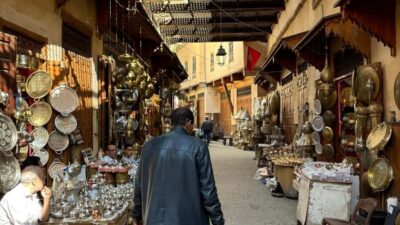
Blue City magic: Affordable Day Trip from Fez to Chefchaouen
Read our review →
Sahara Desert 2-Day Tour with Merzouga Camp Stay
Read our review →
Museum, Al Attarine Madrasa & Tannery and Medina Tour
Read our review →
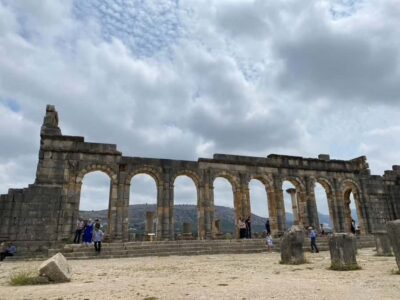
Volubilis, Moulay Idriss, & Meknes Full-Day Trip
Read our review →Browse the lists this tour appears in