
Reviewed · CASABLANCA TOURS
10 Day Desert Tour From Casablanca via the Imperial Cities
The heart of this trip is the journey from Morocco’s Atlantic coast to the Sahara dunes of Merzouga, then back west through the Dades Gorge and Atlas Mountains to Marrakech. Along the way, you get Roman ruins, blue-painted streets, medieval souks, kasbahs, oases, and two camel rides timed for sunset and sunrise.
I like the range of experiences packed into ten days, especially the contrast between the Fez medina and the desert camp. I also like that the tour includes guided city visits, breakfasts, dinners at selected stops, transport, and nine nights of lodging. The catch is simple: many days involve six or seven hours in a vehicle, and the camel ride can be uncomfortable if you are not used to riding.
Key points to know before booking
- Casablanca to Marrakech by road: This is a full Morocco circuit, not a short desert add-on.
- Two nights around Merzouga: You get time for nomadic villages, oases, Khamlia, Erg Chebbi, and a desert camp.
- Sunset and sunrise by camel: Each person receives one camel for both rides, with sandboarding also included.
- Fez and Marrakech touring: Both cities include guided sightseeing, though monument entry fees are extra.
- Small maximum group: The vehicle can carry up to 14 people, with a professional driver and included fuel.
- Strong value at $1,394.61: Lodging, transport, breakfasts, three dinners, city tours, and desert activities are bundled together.
Why this route works for a first Morocco trip
This itinerary gives you a broad look at Morocco without asking you to arrange separate trains, drivers, hotels, and desert transfers. You begin in Casablanca, reach the north, cross to Fez, continue through the Middle Atlas and Sahara, and finish in Marrakech before airport transfer.
That route is valuable because Morocco changes quickly from one region to the next. Casablanca feels modern and coastal. Rabat brings royal monuments and old defensive walls. Chefchaouen offers blue streets and mountain-town charm. Fez is a maze of workshops and religious schools. The desert brings open sand and quiet nights, while Marrakech finishes the trip with gardens, palaces, and street performers.
The price of $1,394.61 per person is not a budget backpacker fare, but it covers a great deal. You receive a comfortable vehicle with fuel, a driver, nine nights in riads or four-star hotels, a luxury desert tent, ten breakfasts, three dinners, camel rides at two key times of day, sandboarding, and guided tours in Fez and Marrakech.
The value depends on how much you want handled for you. If you prefer independent rail travel and simple hotels, you can probably spend less. If you want a private-style road itinerary with accommodation and desert arrangements already in place, the package is easier to justify.
A few other Casablanca days worth comparing
- From Marrakech: Casablanca Tour with Hassan II Mosque Visit
★ 4.7 · 4,756 reviews - Casablanca: Hassan II Mosque Premium Tour with Entry Ticket
★ 4.5 · 2,971 reviews - Casablanca City Tour with Hassan II mosque ticket
★ 5.0 · 2,480 reviews
Casablanca begins with Hassan II Mosque
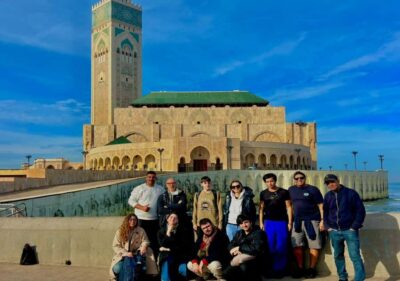
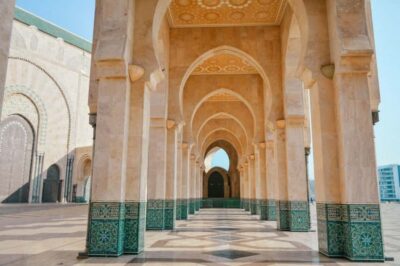
The first day starts with airport pickup and a hotel transfer, followed by a visit to Hassan II Mosque. It is Morocco’s largest mosque and one of the largest in the world, making it a fitting opening sight.
The planned first day lasts about five hours, but the actual amount of sightseeing depends on your arrival time. You should not treat this as a full Casablanca city tour. The mosque is the clear focus, with the remaining time used for arrival and hotel arrangements.
Casablanca is useful as a starting point because it gives you a short look at modern Morocco before the route turns toward older royal cities. The tour does not include monument entrance fees, so budget separately for any paid visits.
Rabat and the blue streets of Chefchaouen
Day two takes you toward Rabat, where the main stops are the Kasbah of the Udayas, Hassan Tower, and the Mausoleum of Mohammed V. These sites provide a strong introduction to Morocco’s royal and religious architecture.
The Kasbah of the Udayas is especially suited to a short visit, with old walls and narrow lanes overlooking the coast. Hassan Tower is an unfinished minaret and one of Rabat’s best-known landmarks. The mausoleum adds polished marble, carved details, and a formal royal setting.
After Rabat, you continue to Chefchaouen, famous for its blue-painted streets and buildings. The color makes the town photogenic, but the appeal is more than taking pictures. Wandering the compact lanes gives you a slower evening after the first long transfer days.
This day is listed at about five hours, though driving and stops can make the day feel longer. You spend the night in Chefchaouen, which is a smart choice. It means you can see the town without trying to force it into a rushed stop between Casablanca and Fez.
Volubilis adds a Roman chapter before Fez
After breakfast, the route heads to Fez through Volubilis, an ancient Roman city. The ruins offer a sharp change from Morocco’s Islamic architecture, with open ground, stone remains, and Roman-era traces spread across the site.
The visit is paired with an explanation of the area and its past before you continue to Fez. The route reaches Fez around 4 p.m., according to the schedule, and you spend the night in a riad.
This is one of the itinerary’s better pairings. Volubilis breaks up the drive and gives you a historical site that is very different from the medinas ahead. It is also worth remembering that the pace is not leisurely. The day is planned at about six hours, and the transfer to Fez takes up much of it.
Same city, a completely different day out:
- Casablanca: City Tour with Hassan II Mosque Entry Ticket
★ 4.6 · 1,137 reviews - Private Tour of Casablanca with Hassan II Mosque Entry Ticket
★ 5.0 · 1,102 reviews - Marrakech Day Trip with Camel Ride from Casablanca
★ 5.0 · 740 reviews - Casablanca: Hassan II Mosque & City Highlights Tour
★ 4.5 · 573 reviews
Fez deserves your full guided day
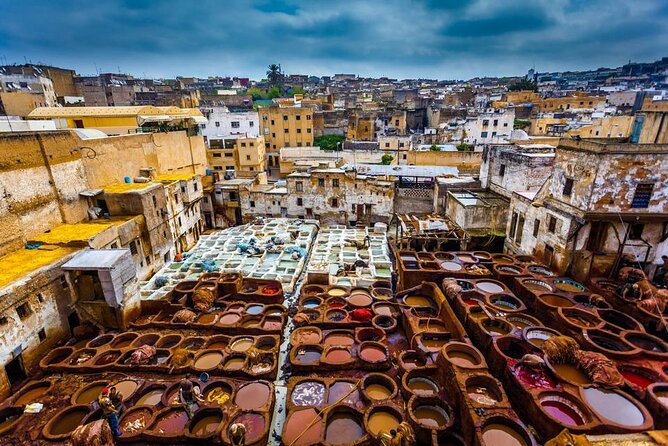
Fez is the cultural center of the itinerary, and day four gives it the attention it needs. The guided visit begins in the old medina, a UNESCO World Heritage Site since 1981, where ramparts, narrow lanes, workshops, and old religious buildings create a dense web of sights.
You visit the Bou Inania and Attarine madrasas, both built in the early 14th century. Their carved and decorated surfaces show the care given to religious schools and public buildings during Fez’s medieval period.
The route also includes the Karaouine Mosque, the Nejjarine marble fountain, the Boujloud gate, and the royal palace. Some places may be viewed from outside, and monument entrance fees are not included, so ask your guide which visits require payment before you commit.
After a lunch break at a Moroccan restaurant, the afternoon continues through the souk. This is where the visit becomes especially practical and human. You see craftspeople working with leather, copper, pottery, and jewelry, and you can decide if a purchase feels worthwhile without having to search for the area on your own.
A full day in Fez is essential because the medina is not easy to understand from a quick walk. The listed sightseeing time appears shorter than a full day, so confirm the exact schedule with the operator. The medina can be tiring, especially in warm weather, and comfortable shoes are more useful than stylish ones.
The Middle Atlas turns the road into part of the trip
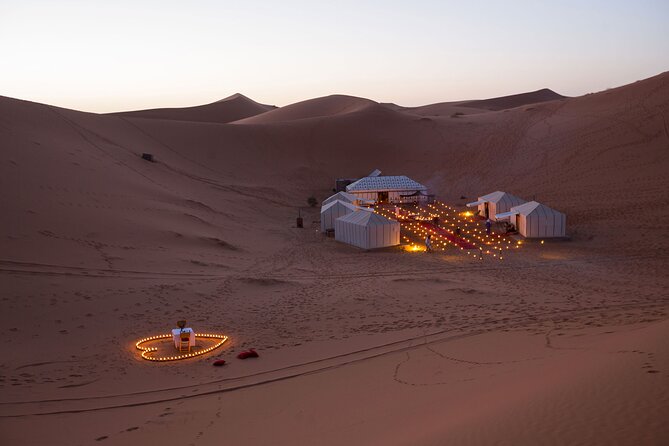
Day five is the first major transfer toward the Sahara. You leave around 8 a.m. and cross the Middle Atlas, a mountain range stretching roughly 350 kilometers from southwest to northwest.
The road passes through Ifrane, known for its European-style architecture and its nickname, Moroccan Switzerland. You then reach Azrou, associated with Morocco’s Amazigh, or Berber, culture, before continuing through Midelt, the Ziz Valley, and Erfoud.
This is a day for watching Morocco change through the window. The route moves from mountain towns to dry valleys and eventually toward desert country. The scenery is a major part of the experience, but the long ride is also the tour’s clearest drawback.
From Erfoud, the vehicle takes a desert track toward Merzouga. You spend the night at a hotel near the desert entrance rather than going straight to the camp. That overnight stop breaks up the route and leaves the next day for the actual desert activities.
Merzouga gives you a full desert day
The second Merzouga day is the main event. You head into the desert area to see nomadic villages, oases, and the dunes of Erg Chebbi. The schedule also includes Khamlia, a village known for Gnawa music.
The Gnawa tradition connects Morocco with communities whose ancestors came from sub-Saharan Africa. Hearing the music in Khamlia gives the desert section a cultural focus beyond dunes and photographs.
The desert outing lasts about five hours before you return to the hotel for the camel ride. At dusk, you take one camel per person into the dunes and continue to a Berber camp. Dinner and the night are spent there.
Sandboarding is included, though the details of how long you have to use the boards are not specified. The camp is described as a luxury tent, but you should still expect a desert setting rather than a conventional hotel room. Comfort matters here, yet the main reward is being surrounded by dunes after dark and waking early for the next ride.
The camel rides are widely praised, but you should take the physical side seriously. One ride takes place at sunset and another at sunrise. Sitting on a camel can cause soreness, especially on the knees and lower back, and one direct account described the ride as painful. Wear practical clothing, hold on during the camel’s rise and fall, and bring water.
Rissani, fossils, and the road to Dades
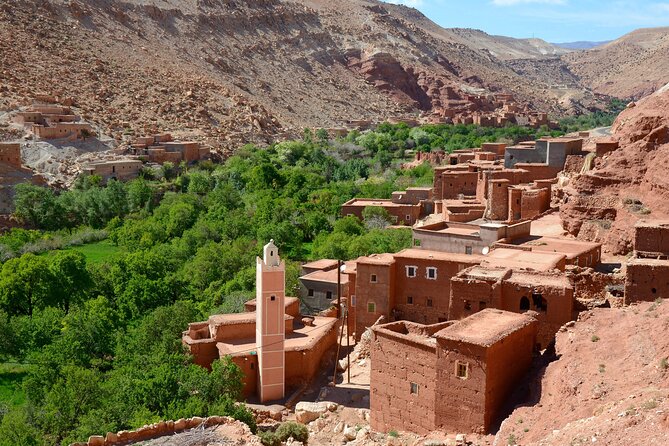
After breakfast at the desert camp, day seven takes you toward Boulmane Dades. The first major stop is Rissani, the traditional capital of the Tafilalet region.
You visit the animal market and souk, then continue through the Ziz Valley toward Erfoud. Erfoud is known for fossil work, and the tour includes a visit to a fossil quarry and a workshop showing how fossils become tables, washbasins, and other decorative pieces.
This stop can be interesting if you want to understand how local materials become saleable crafts. It can also feel commercial, so look carefully before buying and remember that personal expenses are not included.
The day finishes at the Dades Gorges, where you have dinner and spend the night. The drive is listed at about six hours. It is another long road day, but the stops make it more varied than a straight transfer.
Dades Gorges and the road to Marrakech
The next morning brings a closer look at the Dades Gorges. The valley begins with green oases fed by the Dades River, then tightens between tall limestone walls. The contrast between cultivated greenery and bare rock is one of the trip’s strongest scenic moments.
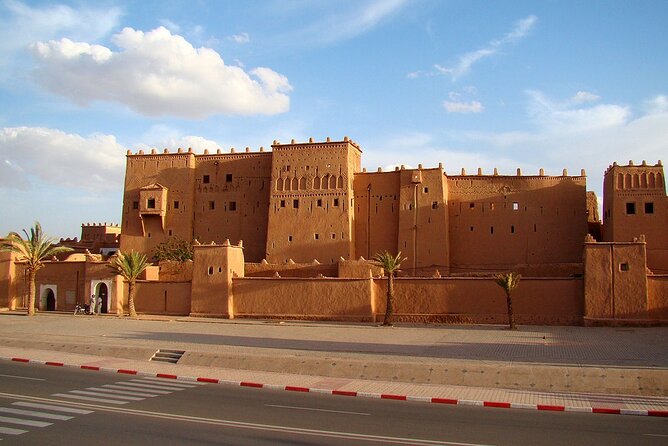
The route continues by road and then includes about 12 kilometers on a track over the Amgoun mountain area. It passes the Valley of the Roses and the palm grove of Skoura, where kasbahs add old earthen architecture to the view.
You reach Marrakech in the afternoon and transfer to your hotel. The day is planned at about seven hours, so do not expect much free time for Marrakech on arrival. The scenery does much of the work, but the ride can feel demanding after the previous desert days.
Marrakech finishes with palaces, gardens, and Jemaa el Fna
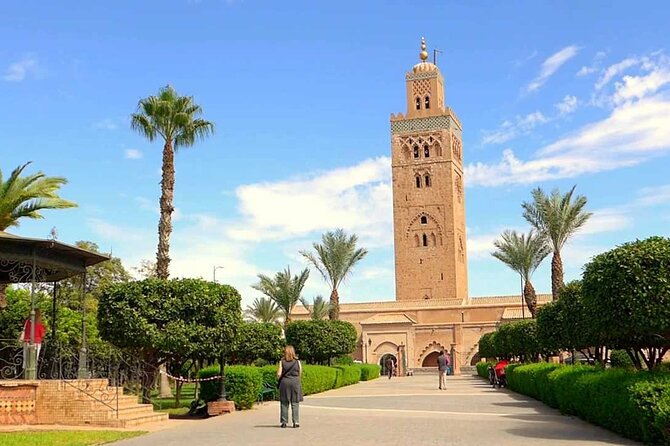
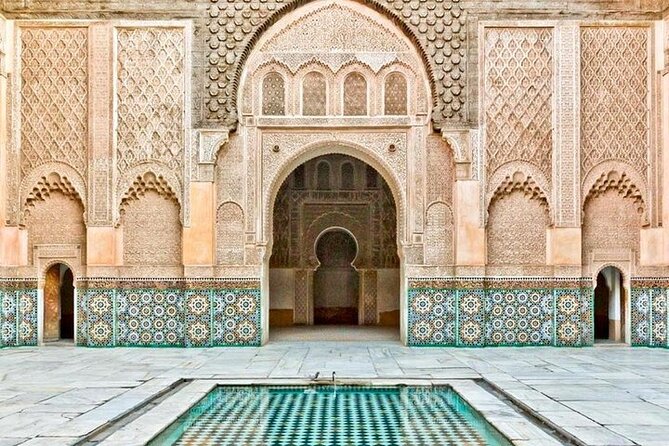
Day nine is your main Marrakech sightseeing day. The route includes the Saadian Tombs, Bahia Palace, Ben Youssef Madrasa, and the Koutoubia Minaret.
The Saadian Tombs are known for delicate Granada-style decoration. Bahia Palace brings courtyards and ornament, while Ben Youssef Madrasa provides another look at the design of Morocco’s religious schools. Koutoubia Minaret is the city’s most recognizable Islamic monument and a useful landmark when you are finding your way around.
Lunch is planned at Ksar el Hamra, followed by Majorelle Garden later in the day. You then visit Jemaa el Fna, Marrakech’s famous square, where musicians, storytellers, acrobats, dancers, and other performers gather around shifting circles of spectators.
The square is best approached with curiosity and sensible caution. Keep personal belongings secure, agree on prices before accepting anything, and remember that dinner in Marrakech is not included. Dinner is also not included in Casablanca or Fez, so those city meals add to the total cost.
The final night depends on your flight. You may stay in Marrakech and transfer to Marrakech airport, or transfer to Casablanca airport and spend the night there, depending on your departure time on day ten. Confirm this arrangement before booking flights around the tour.
Lodging, meals, and what the price really covers
The package includes nine nights in riads, four-star hotels, or a combination of both, plus a luxury desert camp. The exact property names are not provided, so the standard may vary from one stop to another.
Riads can be a highlight because they place you in traditional Moroccan buildings, but room size, stairs, and amenities differ. A desert tent will not feel like a city hotel, even when described as luxury. If a private bathroom, air conditioning, or a particular room setup matters to you, ask before departure.
Breakfast is included each day, and three dinners are included. Lunch is never included, and city dinners in Casablanca, Fez, and Marrakech are also extra. Drinks cost from about 1 euro and up, while tips and personal purchases are your responsibility.
The vehicle, fuel, and professional driver are included. The maximum group size is 14, which is small enough to keep the group manageable but not intimate in the private-car sense. The most praised staff names are Hassan Amiri, Yassine, Hicham, and Hassan, with repeated appreciation for Hassan Amiri’s friendliness, care, and ability to keep long drives pleasant.
Who will enjoy this ten-day route
I would choose this tour if you want Morocco’s major sights in one organized sweep and do not want to negotiate every transfer yourself. It suits people who value variety, enjoy road scenery, and see the Sahara as the main goal.
It also works well for friends or couples who want a ready-made plan with a social group. The music in Khamlia, shared meals, and camp night add a group feel that independent desert arrangements may not provide.
I would hesitate if you dislike long drives, need lots of unplanned free time, or want deep exploration of every city. Fez and Marrakech receive guided sightseeing, but the overall route is ambitious. You see many places, yet you do not linger everywhere.
Confirmation is provided at booking, pickup is offered, and the activity begins at 7 a.m. Most people can participate, but the camel rides and repeated long drives call for reasonable mobility. Free cancellation is available up to 24 hours before the start time. Changes or cancellations inside that window are not accepted for a refund.
Should you book this Morocco desert circuit?
Book it if you want a wide-ranging first visit to Morocco with the major cities, Roman ruins, Atlas crossings, and Sahara camp all joined into one plan. The strongest parts are the two desert days, the Fez medina, the sunset and sunrise camel rides, and the changing scenery between the imperial cities.
Think twice if a slow pace matters more than coverage. The route asks you to spend many hours on the road, and meals, monument fees, drinks, tips, and the optional 4×4 desert tour can increase the final bill.
At $1,394.61, I see solid value for a ten-day package that includes transport, lodging, breakfasts, selected dinners, city guides, camel rides, and sandboarding. For an active visitor who wants Morocco’s highlights without building the trip piece by piece, this is a sensible choice.
FAQ
How long is the tour?
The experience lasts approximately 10 days and includes 9 nights of accommodation.
Where does the tour start?
The tour starts in Casablanca, with airport pickup offered.
Where does the tour end?
The final transfer may go to Casablanca airport or Marrakech airport, depending on your flight departure time on day 10.
What cities and regions are included?
The route includes Casablanca, Rabat, Chefchaouen, Fez, Merzouga, Rissani, Erfoud, the Dades Gorges, and Marrakech.
Are camel rides included?
Yes. Camel rides for sunset and sunrise are included, with one camel per person.
Are meals included?
Ten breakfasts and three dinners are included. Lunches and dinners in Casablanca, Fez, and Marrakech are not included.
Is the group size limited?
Yes. The maximum group size is 14 people.
Just listed out of Casablanca
- Religious Casablanca: Private Spiritual Tour Including Hassan II Mosque Visit★ 5.0 · 33 reviews
- Private Day Trip to Rabat Departure from Casablanca★ 5.0 · 33 reviews
- Private Casablanca Market Tour and Cooking Class with Chamsi★ 5.0 · 33 reviews
- Sunset Camel Ride in the Palm Grove Of Marrakech★ 5.0 · 34 reviews
- Private Full-Day Tour in Casablanca with Pickup★ 5.0 · 34 reviews
- Casablanca: 6-Day Tour To Marrakech Via Chefchaouen & Desert★ 4.7 · 34 reviews
- 3 Days Chefchaouen and Fez from Casablanca Private Tour★ 5.0 · 34 reviews
- Casablanca Private Full-Day Highlights Tour★ 5.0 · 34 reviews
Casablanca Tours, compared.
Hassan II Mosque Premium Tour with Entry Ticket
Read our review →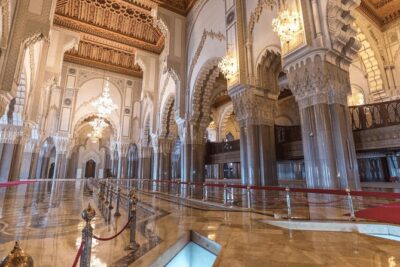
Casablanca City Tour with Hassan II mosque ticket
Read our review →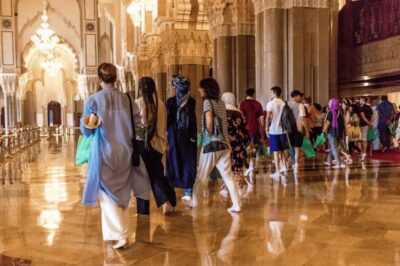
Private Tour of Casablanca with Hassan II Mosque Entry Ticket
Read our review →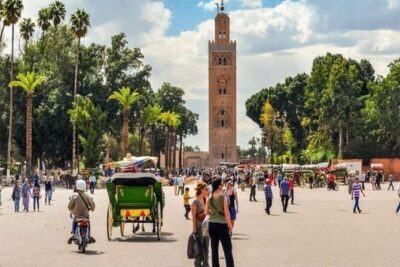
Marrakech Day Trip with Camel Ride from Casablanca
Read our review →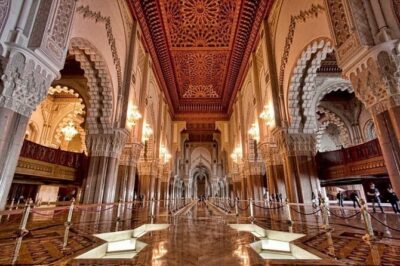
Browse the lists this tour appears in