
Reviewed · CASABLANCA TOURS
10D 9N Private Morocco Tour From Casablanca By Imperial Cities And South Desert
The best part of this 10-day private Morocco tour is its sweep. You move from Casablanca’s Atlantic coast to blue-painted Chefchaouen, Roman ruins, imperial capitals, cedar forests, Sahara dunes, mud-brick kasbahs, and Marrakech. Few trips give you so many different sides of Morocco without changing tour groups.
I like the private vehicle and the chance to adjust the route, hotel level, extra activities, or arrival and departure city. I also like the desert section: a camel ride at sunset, a private tent with a toilet and shower, dinner, music by the fire, and a dawn departure for sunrise. The main drawback is the pace. You cover a lot of ground, and several days include long drives.
Key points at a glance
- A genuine cross-country route: Casablanca, Rabat, Chefchaouen, Fez, the Sahara, the Dades Valley, Ait-Ben-Haddou, and Marrakech all fit into one journey.
- A private driver-guide for your party: You avoid a large coach and can discuss timing, stops, hotel choices, and route changes as you go.
- A full desert night: Your camel ride leads to a private luxury Berber-style tent with dinner, a shower, and a toilet.
- Strong local contact: The route includes tea with nomad families and a visit to Khamlia, known for its black Berber community and music.
- Two guided medinas: Local guides are included in Fez and Marrakech, where narrow lanes and major monuments are easier to understand with help.
- Good value for a 10-day private trip: At $1,221.24 per person, the price includes transport, fuel, nine nights, breakfast, three dinners, water, guides, and the camel ride, but not lunches, most monument fees, or tips.
What the 10 days actually feel like
This is not a relaxed, stay-in-one-place holiday. It is a moving tour, with a new visual surprise almost every day. You will spend time walking in old medinas, but you will also spend many hours in the vehicle crossing Morocco’s mountains and desert roads.
That mix is the point. You see how sharply Morocco changes from north to south. Chefchaouen feels cool and Spanish-influenced. Fez is dense, old, and intense. The Sahara is open and quiet. Marrakech brings the trip back to a more energetic city setting.
The private format helps with the pace. You can ask the driver-guide to stop for photographs, adjust some timing, or discuss accommodation choices. The provider says the route can be changed to include more or fewer days, different three- or four-star accommodations, extra activities, excursions, or a different starting and ending city.
The advertised price is per person, and the tour offers group discounts. Since transport and accommodation are already arranged, the cost can be attractive for couples, families, or a small group that would otherwise need to book a private car, hotels, desert transport, and guides separately. You still need to budget for lunches, drinks, entrance fees, some dinners, and tips.
A few other Casablanca days worth comparing
- Private Tour of Casablanca with Hassan II Mosque Entry Ticket
★ 5.0 · 1,102 reviews - Private Chauffeur Service – 100% Exclusive
★ 5.0 · 516 reviews - Private Guided Tour of Casablanca Including Mosque Entrance
★ 5.0 · 395 reviews
Casablanca to Rabat, then north to Chefchaouen
Your arrival in Casablanca is handled with a pickup from Mohammed V Airport, the port, or your hotel, depending on your plans. The first day is mainly a transfer into the city and a hotel check-in, so do not expect a full sightseeing day if you arrive late.
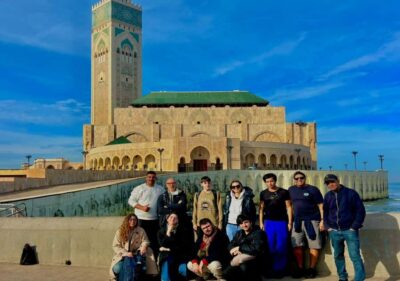
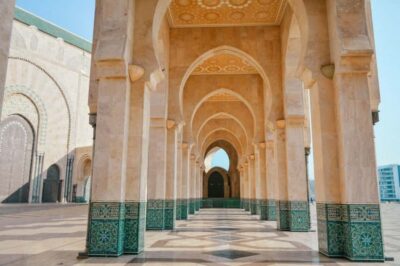
On day two, the Hassan II Mosque is the major Casablanca stop. It is open to non-Muslims, which gives you a rare chance to see one of Morocco’s most important religious buildings from inside. Admission is not included, so ask about the current fee and visiting schedule before you arrive.
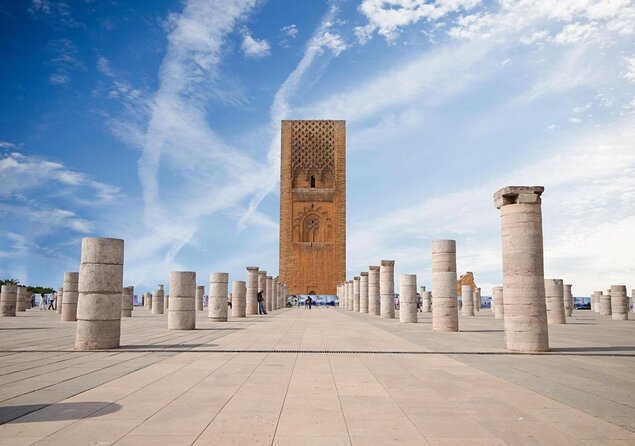
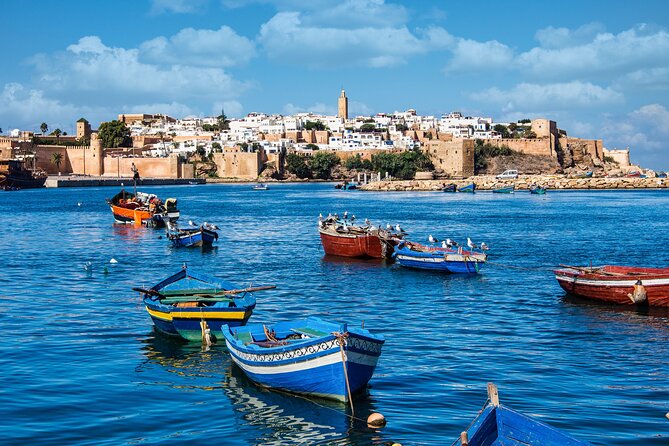
From Casablanca, you continue to Rabat, the administrative capital. The planned stops include the Kasbah of the Oudayas, Hassan Tower, and the Mausoleum of Mohammed V. These sites make a useful introduction to Morocco’s royal and religious traditions, and Rabat is a calmer first walking stop than Fez or Marrakech.
After lunch, the route turns north through Ouazzan and the foothills of the Rif Mountains to Chefchaouen. This is a long day, and the driving matters. You get three major stops in one stretch, but your time in each place is limited.
Chefchaouen’s blue lanes and the Roman ruins at Volubilis
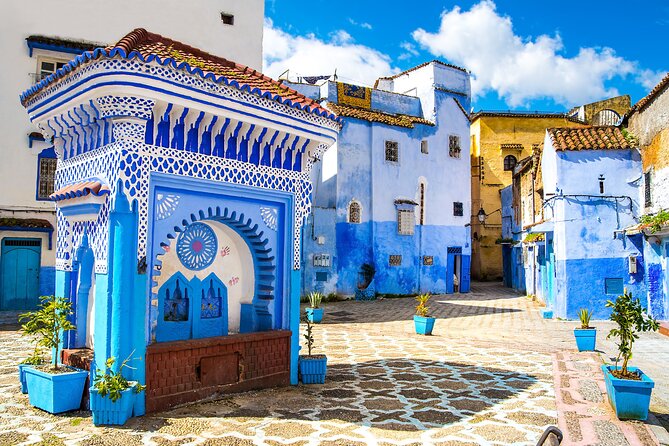
Chefchaouen deserves its own morning. The old medina is compact enough to explore on foot, with steep cobbled streets, blue doors, whitewashed walls, and mountain views. Plaza Utta el-Hammam is the natural place to pause, and the restored kasbah gives you a more historical counterpoint to the famous blue streets.
The route also includes the Ras el-Ma spring, where water flows from the mountain into town. You can browse the souks, meet local people, and take photographs without needing to rush through a huge city. Chefchaouen was occupied by Spain, and Spanish and Moorish influences are part of its character.
After leaving the Rif Mountains, you reach Volubilis, a UNESCO World Heritage site and one of Morocco’s most important Roman remains. The mosaics, basilica, temple, and triumphal arch give you a clear sense of the Roman presence in North Africa. Entrance fees are not included.
Moulay Idriss, a holy town and pilgrimage destination for Moroccans, follows Volubilis. Then you continue to Meknes for Bab Mansour, the granary, the Swani basin, the old medina, and Place el-Hedim. The day finishes with a drive to Fez and a night in a traditional riad in the medina.
This is a rewarding day, but also one of the busiest. If you want more time at Volubilis or Chefchaouen, discuss it with the driver before setting out. The private format gives you a better chance of making that change than a fixed group departure.
Fez, with a local guide inside the medina
Day four is devoted to Fez, and this is where the included local guide matters most. Fez el-Bali is a maze of old lanes, workshops, religious buildings, markets, and courtyards. A guide can help you understand what you are seeing and make the walk less confusing.
The tour begins outside the medina at the Royal Palace Gate and the Mellah, the Jewish Quarter dating from the 14th century. You also visit a ceramics cooperative, where traditional Moroccan craft techniques are on display.
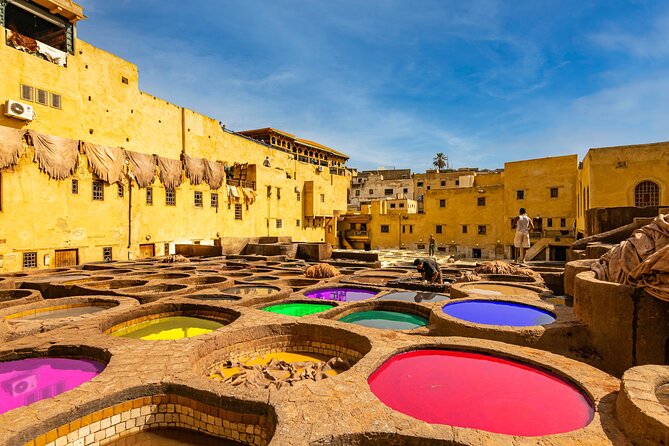
Inside Fez el-Bali, the planned sights include the Bou Inania Medersa, the Blue Gate, the Karaouiyine Mosque, the Chouara Tanneries, Medersa Seffarin, Attarin Medersa, and the Nejjarine Fountain. The tanneries are one of the city’s most memorable sights, though the smells can be strong. The medina is a working part of the city, not just a museum, so expect narrow passages and active workshops.
The day ends at the Merenid tombs, where you can look over the rooftops and lanes of the old city. You sleep another night in a riad. Riad rooms vary widely in size and layout, so ask about the specific property if that matters to you.
Same city, a completely different day out:
- From Marrakech: Casablanca Tour with Hassan II Mosque Visit
★ 4.7 · 4,756 reviews - Casablanca: Hassan II Mosque Premium Tour with Entry Ticket
★ 4.5 · 2,971 reviews - Casablanca City Tour with Hassan II mosque ticket
★ 5.0 · 2,480 reviews - Casablanca: City Tour with Hassan II Mosque Entry Ticket
★ 4.6 · 1,137 reviews
Across the Middle Atlas to the Sahara
Day five is the first major transition south. You pass through Ifrane, a tidy mountain town often compared with a Swiss resort, then continue through the Middle Atlas and a large cedar forest. The forest is home to Barbary macaques, and you may have the chance to feed them and take photographs.
After lunch in Midelt, the road continues through the Talghomt Pass toward the Ziz Valley. The panoramic stop over the palm-filled oasis is one of the best views on the route. It shows how water supports green palm groves in an otherwise dry region.
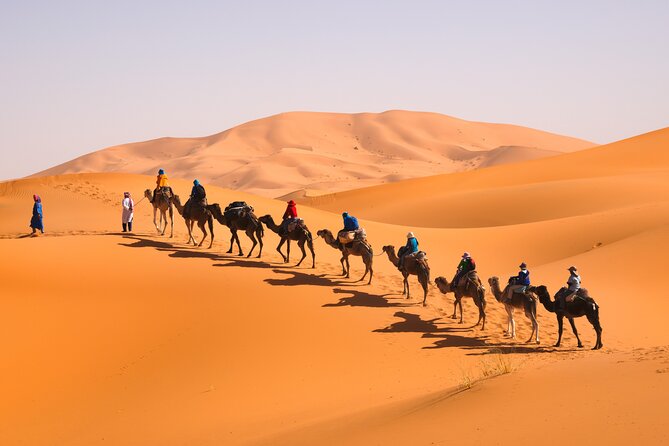
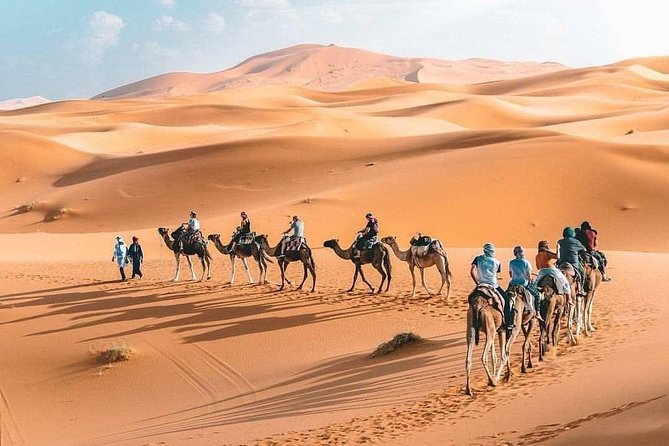
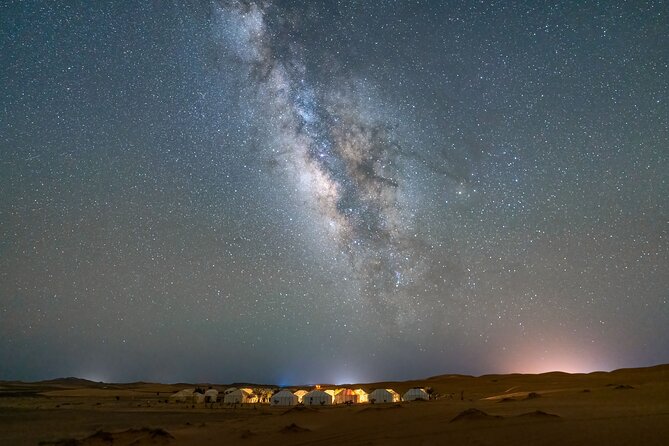
The day finishes at Merzouga, on the edge of the Sahara. After some time to rest, you ride camels across the golden dunes of Erg Chebbi. The timing aims for sunset from a high dune, followed by a trek to camp.
The camp includes a private luxury nomad-style tent with a toilet and shower. Dinner is included, as is Berber music around the fire under the stars. This is the tour’s signature night, but keep your expectations practical. A desert camp is still a desert camp, and the setting matters as much as the facilities.
Rise early on day six for sunrise. The schedule calls it a must, and I agree. You will need to trade sleep for the view, but the changing light over the dunes is the reason to spend the night here rather than make a quick desert excursion.
Nomad life, Khamlia, and a full Merzouga excursion
After breakfast, you explore the wider Merzouga area by vehicle. The day includes the lake at Merzouga, where exotic birds may be seen, and a visit to nomad families living with their animals in the desert.
Tea with a nomad family is valuable because it puts the desert in human terms. You are not only looking at dunes from a camel. You are seeing how people still live in this difficult environment. Keep the visit respectful, and follow your guide’s lead about photographs and conversation.
The route also follows the track used by the Paris-Dakar Rally and reaches the Mifis mines, once exploited by France. At Khamlia village, you meet members of a black Berber community with roots in Mali and Niger, and hear their music.
This is one of the strongest cultural days on the tour. It goes beyond the usual camel ride and sunset photograph. At the same time, some stops are informal, and the exact experience can depend on timing and local conditions. The private vehicle makes it easier to spend more time at a place that interests you.
Rissani, fossils, Todra Gorge, and Dades Valley
On day seven, you leave the desert for Rissani, once an important stop on the trans-Saharan caravan route. If your visit falls on Tuesday, Thursday, or Sunday, you can visit the regional souk. Check the day carefully, since the market visit depends on the calendar.
Erfoud follows, known for fossils, crystals, and precious stones. A marble workshop is open to visitors, and stalls sell polished fossil pieces. This can be an interesting look at local industry, but it is also a shopping stop. You do not need to buy anything.
The route then reaches Todra Valley and Todra Gorge. The gorge has sheer cliffs rising about 300 meters on both sides, with a narrow passage that attracts climbers. You have time for a walk and lunch in the town.
Later, you continue into Dades Valley, where the rock formation called Monkey’s Fingers and mud kasbahs provide more striking scenery. Your overnight hotel overlooks the valley. This day is another long one, but the sights change often enough to keep the road interesting.
Rose country, Skoura, and Ait-Ben-Haddou
Day eight follows the valley toward El Kelaa M’Gouna, known as Rose Town. More than 400 tonnes of rose petals are gathered each spring for rosewater and perfume production, and the town’s Rose Festival takes place each May.
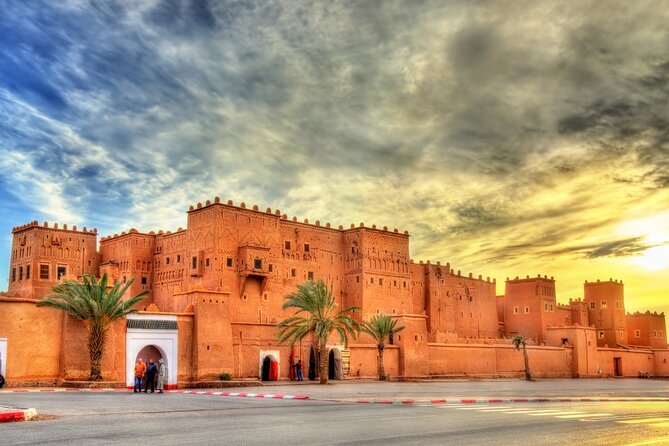
From there, the road reaches Skoura, surrounded by palm groves and kasbahs. The planned visit to Kasbah Amridil gives you a close look at southern Moroccan architecture. Admission is not included, so carry some local currency for site fees.
You continue to Ouarzazate, often called the Hollywood of Africa because of its film studios, then on to Ait-Ben-Haddou. This fortified village is a UNESCO World Heritage site and one of Morocco’s most photographed kasbahs. Take time to walk through the settlement and look back across the surrounding area from higher ground.
The final drive crosses the High Atlas through a pass at about 2,260 meters, with mountain views and Berber villages on the slopes. You reach Marrakech in the evening. It is a full day, and the mountain road can feel tiring after so many stops, but it delivers a memorable finish to the southern section.
Marrakech monuments and Jemaa el-Fnaa
Your Marrakech city tour begins with the Bahia Palace, Saadian Tombs, Ben Youssef Koranic School, and the traditional souks. A local guide is included for the medina, which is useful when you want to understand the buildings rather than simply wander past them.
After lunch near the main square, the route includes the Koutoubia Tower and Majorelle Garden. Entrance fees are not included, and the schedule lists the garden as a separate stop on the final morning, so confirm the timing with your guide. The tour description places you in a central hotel or riad, making it easy to spend time near the old city.
Jemaa el-Fnaa is the city’s great public square and the natural place to end the sightseeing day. Go with an open mind and pay attention to your belongings. It is a lively public space, and the experience is more about watching city life than checking off one monument.
The final morning is a transfer to Marrakech or Casablanca airport, depending on your flight. If your departure is from Casablanca, allow plenty of time for the long road transfer and confirm the pickup hour in advance.
Guides, comfort, and the practical details
The tour provides a professional driver-guide throughout the route, plus local guides in the Fez and Marrakech medinas. The driver is especially important here because the trip involves mountain passes, desert roads, city traffic, tolls, and frequent changes in scenery.
Specific guides praised in the supplied feedback include Said, Khalil, Abraham, Hssaine, and Omar. The strongest repeated praise centers on punctuality, safe driving, patience, flexibility, local knowledge, and warm treatment of families. One family particularly valued Omar’s care with children, while other accounts describe guides adding photo stops or small route adjustments.
Your party travels privately, so only your group participates. Pickup and drop-off are available at the airport or hotel, and the listed start time is 9 a.m. Most people can take part, and service animals are allowed.
Nine nights of accommodation are included in hotels or traditional riads. Breakfast is listed as included for the trip, along with three dinners. The desert night includes dinner, while lunches, drinks, some dinners, monument admission, personal spending, and tips are extra.
The tour offers fresh bottled mineral water on board. That is a small but useful inclusion on the long driving days, especially between Midelt, Merzouga, the Dades Valley, and Marrakech.
Free cancellation is available up to 24 hours before the start time for a full refund. Changes made inside that period are not accepted, and poor weather can lead to a new date or a full refund.
Who should book this Morocco route?
I would choose this tour if you want a broad first look at Morocco and prefer a private car to a large coach. It suits couples, families, and small groups that value personal attention, hotel flexibility, and the ability to request changes.
It is also a strong choice if the Sahara is a priority. You get more than a camel ride: sunset, a private camp, sunrise, a desert excursion, nomad tea, mines, Khamlia, and the surrounding dunes.
I would think twice if you dislike long drives, early mornings, or changing hotels. The route is ambitious. You will not have several free days in each city, and the most important sights often share a day with substantial road time.
At $1,221.24 per person, the package offers solid value for a private 10-day trip, particularly if your party can use the group discount. Before booking, ask for the proposed hotel names, clarify which entrance fees apply, and confirm the final airport transfer. Those details will help you judge the real cost.
Final call
Book this tour if you want Morocco’s major contrasts in one well-supported journey: Atlantic city, royal capitals, blue mountain town, Roman ruins, medinas, cedar forest, Sahara camp, nomad life, gorges, kasbahs, and Marrakech.
Skip it only if you need a slow schedule. For most first-time visitors with limited time, the private format, local guides, and desert overnight make the packed route manageable and worthwhile.
FAQ
Is this a private Morocco tour?
Yes. Only your party participates, and private transportation is provided throughout the journey.
Where does the tour start and finish?
The tour begins in Casablanca, with pickup from Mohammed V Airport, the port, or a hotel. Departure can be from Marrakech or Casablanca airport, depending on your plans.
Are nine nights of accommodation included?
Yes. Nine nights in hotels or traditional riads are included. The itinerary also includes one night in a private luxury nomad-style desert tent.
Is the camel ride included?
Yes. A camel ride across the Erg Chebbi dunes is included, along with the desert camp stay.
Which meals are included?
Breakfast is included throughout the tour, and three dinners are included. Lunches, drinks, and some dinners are not included.
Are guides provided in Fez and Marrakech?
Yes. Local guides are included for the Fez and Marrakech medinas, in addition to the driver-guide who accompanies you around Morocco.
Can the itinerary be changed?
Yes. The tour can be adjusted for the number of days, accommodation level, extra activities, excursions, arrival or departure city, and other preferences.
Just listed out of Casablanca
- Religious Casablanca: Private Spiritual Tour Including Hassan II Mosque Visit★ 5.0 · 33 reviews
- Private Day Trip to Rabat Departure from Casablanca★ 5.0 · 33 reviews
- Private Casablanca Market Tour and Cooking Class with Chamsi★ 5.0 · 33 reviews
- Sunset Camel Ride in the Palm Grove Of Marrakech★ 5.0 · 34 reviews
- Private Full-Day Tour in Casablanca with Pickup★ 5.0 · 34 reviews
- Casablanca: 6-Day Tour To Marrakech Via Chefchaouen & Desert★ 4.7 · 34 reviews
- 3 Days Chefchaouen and Fez from Casablanca Private Tour★ 5.0 · 34 reviews
- Casablanca Private Full-Day Highlights Tour★ 5.0 · 34 reviews
Casablanca Tours, compared.
Hassan II Mosque Premium Tour with Entry Ticket
Read our review →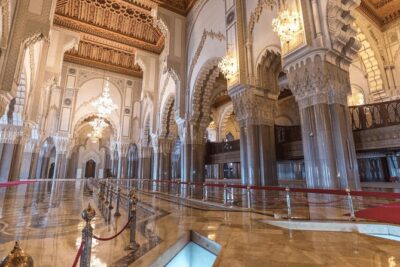
Casablanca City Tour with Hassan II mosque ticket
Read our review →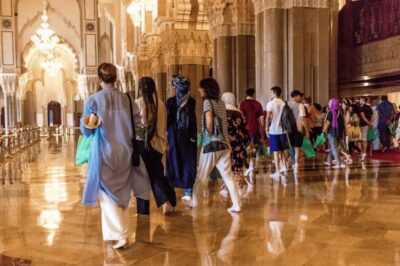
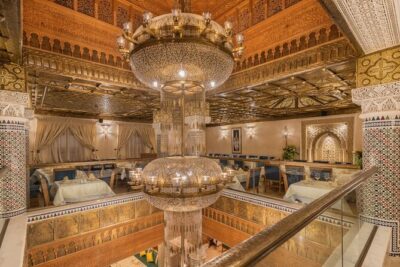
Private Tour of Casablanca with Hassan II Mosque Entry Ticket
Read our review →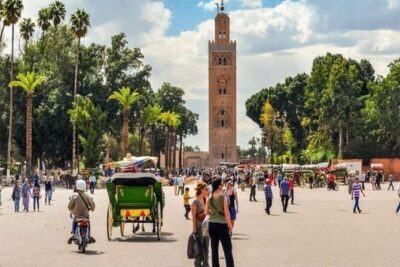
Marrakech Day Trip with Camel Ride from Casablanca
Read our review →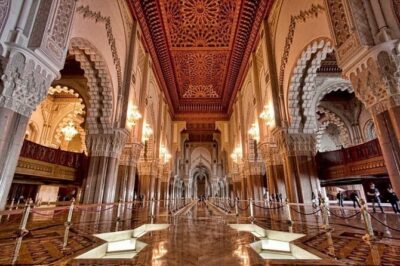
Browse the lists this tour appears in