
Reviewed · CASABLANCA TOURS
10 Days from Casablanca: The Best of Morocco
Morocco packs an astonishing amount into ten days: Atlantic coast, imperial cities, Roman ruins, mountain passes, desert dunes, kasbahs, and Marrakech’s famous square. The best part of this private tour is the contrast. You can spend a morning tracing Roman mosaics at Volubilis, then sleep beneath Sahara skies a few days later.
I like the private format, which lets your group travel at its own pace instead of following a large coach. I also like the carefully chosen route, especially the run from Fes through the Middle Atlas and Ziz Valley to Merzouga. The main drawback is clear: several days involve long drives, and the schedule moves quickly.
Key points at a glance
- A true north-to-south Morocco route: Casablanca, Rabat, Chefchaouen, Fes, Meknes, the desert, kasbah country, and Marrakech all appear in one trip.
- Two major guided city tours: Local guides lead you through the medinas of Fes and Marrakech, where a guide helps make sense of the lanes and monuments.
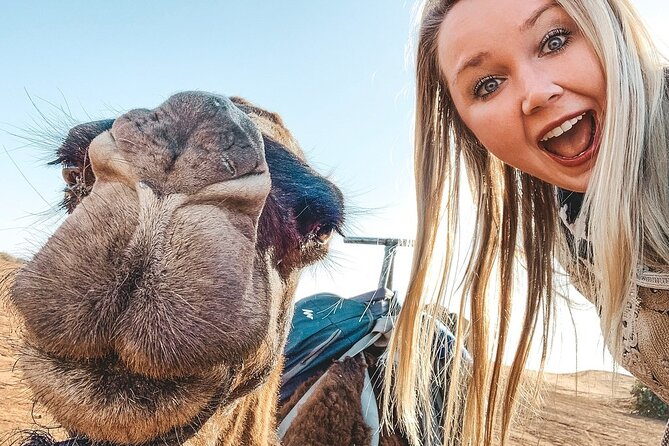
- A full Sahara experience: You ride a camel to the dunes, watch sunset, sleep in a luxury desert camp, and rise early for sunrise.
- Plenty of scenery between stops: The route crosses the Rif Mountains, Middle Atlas, High Atlas, cedar forests, date groves, gorges, and open desert.
- Good inclusions for the price: At $1,269 per person, the package covers transport, accommodation, breakfasts, two dinners, entrance fees, guides, taxes, camel riding, and airport pickup.
- A private trip with room to adjust: Day nine in Marrakech can be used for rest, an Essaouira excursion, or a cooking class and hammam experience.
Casablanca begins with Morocco’s grandest mosque
Your trip starts at Mohamed V Airport, where a Deep Morocco Tours guide and driver meet you and take you into Casablanca. That airport pickup matters after a long flight. You do not need to work out a taxi, negotiate a fare, or find your hotel on your own.
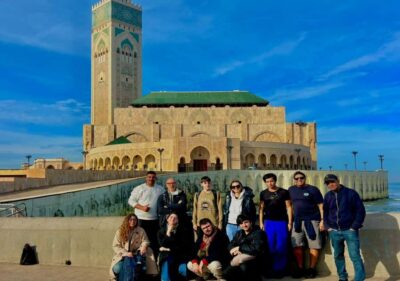
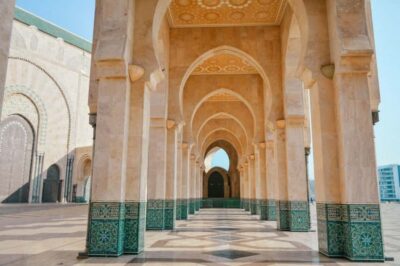
The first major stop is the Hassan II Mosque, set beside the Atlantic Ocean. Its size is hard to grasp until you see the prayer hall and broad outdoor space. The minaret rises 689 feet, and the mosque can hold 105,000 worshipers across its interior and exterior areas.
The visit is listed at about two hours, with admission included. You may also visit the Museum of Moroccan Judaism, an unusual addition that gives the opening day more cultural range. Morocco’s Jewish communities have played an important part in the country’s story, and this stop offers a useful counterpoint to the usual palace and mosque visits.
You may finish with a meal or drink at Rick’s Café. That name comes from the film Casablanca, not from a real location in the movie, but it is an entertaining way to close your first evening if you still have the energy.
Your first night is at Hotel Val D’Anfa or a similar property, with breakfast included. Since the tour begins on arrival day, try to treat day one as a gentle start rather than a full sightseeing marathon.
A few other Casablanca days worth comparing
- From Marrakech: Casablanca Tour with Hassan II Mosque Visit
★ 4.7 · 4,756 reviews - Casablanca: Hassan II Mosque Premium Tour with Entry Ticket
★ 4.5 · 2,971 reviews - Casablanca City Tour with Hassan II mosque ticket
★ 5.0 · 2,480 reviews
Rabat, Chefchaouen, and a long ride north
After breakfast, you drive toward Chefchaouen by way of Rabat, Morocco’s administrative capital. Rabat gives you a strong early look at the country’s royal and political past without the pressure of a huge medina.
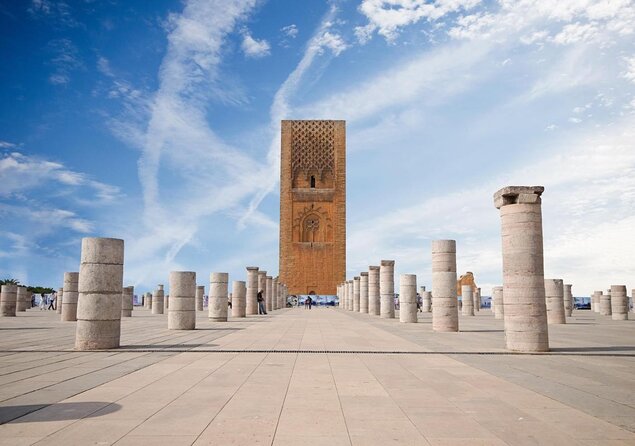
The Hassan Tower is the city’s most recognizable monument. It was intended to become part of a vast mosque commissioned by Almohad ruler Yacoub al-Mansour, but construction stopped after his death. The unfinished tower and nearby Mausoleum of Mohammed V create a spacious, orderly historic site.
You also visit the Chellah, spelled Shallah in the supplied schedule, and the Oudays Kasbah. The Chellah combines older Roman and medieval remains, while the Oudays Kasbah offers whitewashed lanes and views toward the river and coast.
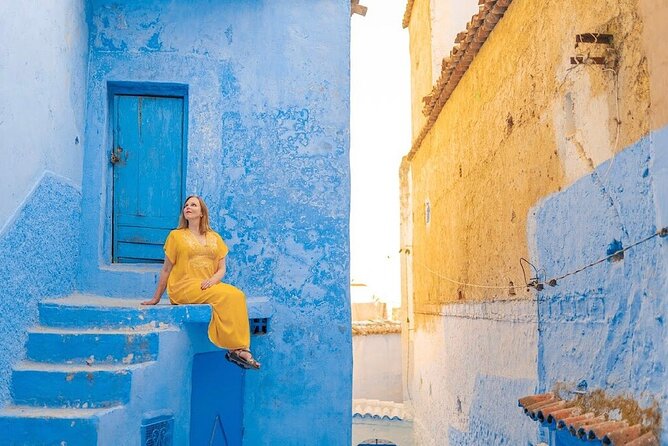
Then comes the long drive into the Rif Mountains. Chefchaouen is known for its blue doors, blue walls, and steep lanes. It is a photogenic place, but do not reduce it to a backdrop for pictures. The town’s location in the Rif and its connection with Spain give it a distinct feel from the Moroccan cities farther south.
The schedule gives about one hour to the Rabat stop, but the overall day is much longer because of the drive to Chefchaouen. You should be ready for time in the vehicle. The advantage is that your route links two very different places in one day, and a private car gives your group a more comfortable way to handle the distance.
Volubilis and Meknes connect Roman and Moroccan history
Day three takes you from the north toward Fes, with Volubilis and Meknes breaking up the journey. Volubilis is one of the most rewarding historic stops on the route because it shifts your view of Morocco beyond its Islamic cities.
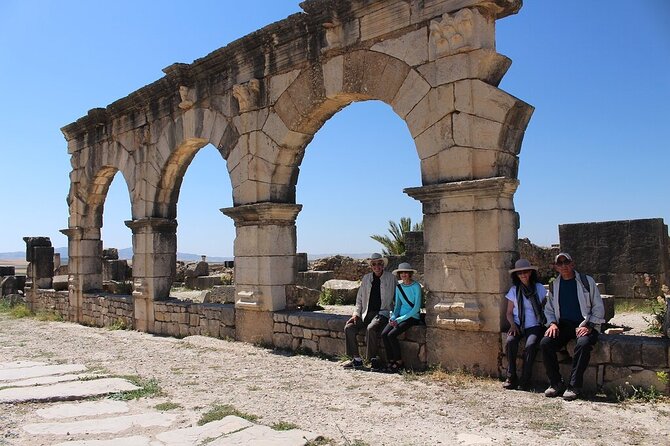
The Roman site dates to 225 BC and is known for well-preserved mosaics, including scenes that still show remarkable detail. A guided visit is included and lasts about three hours. Wear practical shoes, since the experience involves walking through an open archaeological site rather than simply viewing monuments from a road.
Meknes was the capital of the Alaouite sultan Moulay Ismail and is often overshadowed by Fes and Marrakech. That is one reason I like its place in this itinerary. At Bab Mansour, you see one of Morocco’s most impressive monumental gates, decorated with tilework and built under Moulay Ismail’s rule.
The day also includes the royal granary, Sahrij Souani, and the Mausoleum of Moulay Ismail. The granary and waterworks show the practical side of imperial power. A grand capital needed food storage and water systems as much as it needed ceremonial gates.
After Meknes, you continue to Fes by highway. This is another substantial road day, but it has a good rhythm: ancient Roman remains, imperial architecture, then arrival in Morocco’s best-known spiritual and intellectual center.
Fes rewards a full morning on foot
Day four is devoted to Fes, and this is where the local guide becomes especially useful. The medina is a maze of alleys, workshops, courtyards, religious buildings, and small market streets. You can walk through it alone, but it is easy to lose your sense of direction and miss the meaning behind what you are seeing.
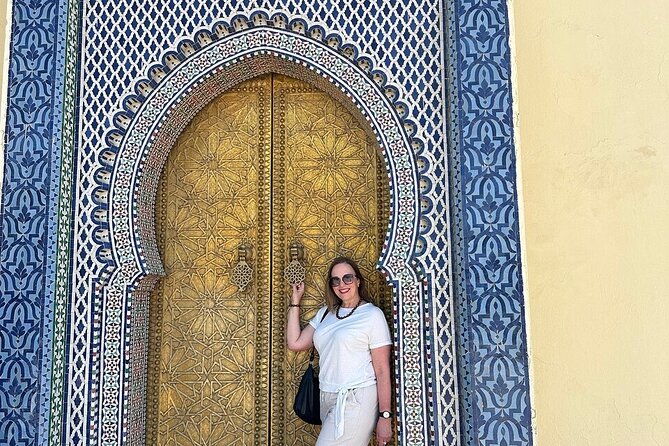
The tour includes Al Karaouine Mosque and University, the Bouanania Madrasa, the tanneries, the Nejjarine Fountain, and the Jewish quarter, known as the Mellah. Al Karaouine is one of the world’s oldest centers of learning, and the Bouanania Madrasa shows the refined tilework and carved plaster associated with Moroccan religious architecture.
The tanneries are one of Fes’s most memorable sights. From an overlook, you can watch leather workers using traditional methods in the dyeing vats. The smell can be strong, so take the offered mint sprig if one is provided. The scene is historic and visually striking, but it is also working craft, not a staged museum display.
After lunch, you leave the medina to see the Royal Palace gate, return to the Mellah, and visit a pottery cooperative. The cooperative adds a practical craft element to the day. You see how local artisans make and decorate ceramics, though you should expect the usual opportunity to buy something.
The day ends at a fortress viewpoint above Fes. From there, the medina spreads below in a dense pattern of roofs and minarets. This is the moment when the city’s size and layout finally make sense.
Six hours of sightseeing is a substantial amount of walking. Bring water, wear shoes with good grip, and expect uneven surfaces. Fes is not a quick photo stop. It asks for attention, but it gives you one of the strongest cultural days on the tour.
Same city, a completely different day out:
- Casablanca: City Tour with Hassan II Mosque Entry Ticket
★ 4.6 · 1,137 reviews - Private Tour of Casablanca with Hassan II Mosque Entry Ticket
★ 5.0 · 1,102 reviews - Marrakech Day Trip with Camel Ride from Casablanca
★ 5.0 · 740 reviews - Casablanca: Hassan II Mosque & City Highlights Tour
★ 4.5 · 573 reviews
The Middle Atlas road to Merzouga
Day five is the great changeover from cities to desert. You leave Fes and follow old caravan routes toward Merzouga, with scenery changing steadily along the way.
The first stop is Ifrane, often called Little Switzerland of Africa. Its appearance differs sharply from the cities you have already seen, and it serves as an introduction to the Middle Atlas. You then continue toward Midelt and stop in the cedar forest, described as Morocco’s largest. Barbary macaques may be visible there, although wildlife sightings cannot be guaranteed.
From the cedar forest, the road crosses the Middle Atlas and opens into high desert. This long drive is one of the tour’s biggest tradeoffs. You cover a great distance, but you also watch Morocco change from mountain woodland to dry plateau, then to palm-filled valleys.
Near Er Rachidia, the Ziz Valley brings a strip of green into the dry surroundings. The Tafilalet date palm grove is another important stop, tied to date cultivation and to the Alaouite royal dynasty. These palms are not just scenery. They show how water and agriculture support life in an otherwise arid region.
At Merzouga, you trade the vehicle for a camel. The ride takes you into the Erg Chebbi dunes for sunset. Camel riding is not the smoothest form of transport, especially when mounting and dismounting, but it gives the desert arrival a memorable pace. If you have back or mobility concerns, ask the operator about alternatives before booking.
Sunrise, Todra Gorge, and the Dades Valley
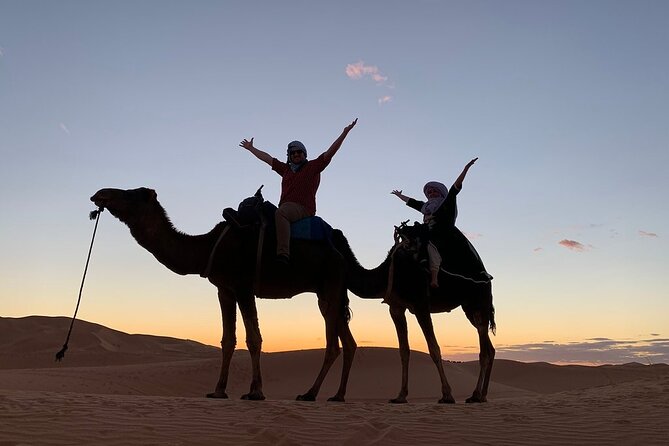
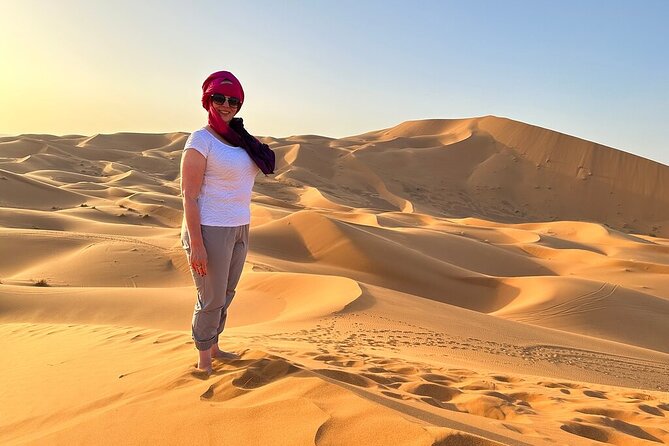
The desert morning starts early. You are woken for sunrise, then have breakfast at camp before returning to the village of Merzouga. The Erg Chebbi dunes change color and shape as the light moves, so the same sand you saw at sunset can look entirely different a few hours later.
The package includes a luxury camp, camel ride to sunset, breakfasts, and two dinners overall. The precise camp style can vary, but the supplied details describe a glamping-style stay. You should still remember that this is a desert night, not a standard hotel night. Pack a small overnight bag and keep your larger luggage organized for the vehicle.
From Merzouga, the route heads toward Tinghir and the Todra Gorge. The gorge is known for its tall, narrow rock walls, and the stop includes admission. Lunch is taken in the gorge area, followed by a drive through the Dades Valley.
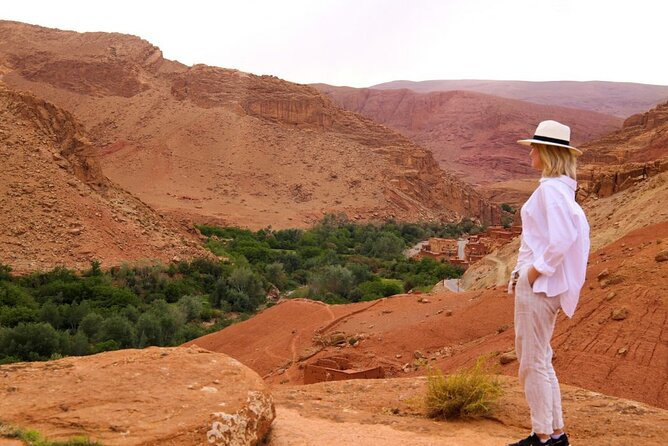
The Dades Valley is famous for unusual rock formations, including shapes called monkey toes, as well as earthen structures sometimes described as sand castles. This part of Morocco is a delight for anyone who likes geology and rural scenery. It also provides a needed pause after the desert road.
Again, expect a long day with a mix of driving and short walks. The reward is the sequence itself: dunes at sunrise, a palm and mountain region, a dramatic gorge, and the red rock formations of Dades.
Ait Ben Haddou and the High Atlas crossing
Day seven follows the old caravan route toward Marrakech, once linked with the route from Marrakech to Timbuktu. The highlight is Ait Ben Haddou, a fortified earthen settlement that looks especially striking from a distance.
The site is connected with the Glaoui family and was built under the Berber chieftain El Hami El Glaoui. You get time for photographs and for seeing the kasbah’s clustered buildings. The structures are made from earth-based materials, so the site’s appearance depends on ongoing care and the dry climate.
The road then climbs toward the Tizi n’Tichka Pass in the High Atlas, reaching 2,260 meters. You stop along the way for mountain views and Berber villages built into the high Atlas range.
This crossing can be one of the most scenic drives in Morocco, but it may also be tiring. Mountain roads take time, and conditions can affect the journey. The itinerary requires good weather, so a change may be offered if weather prevents the planned experience.
Marrakech’s monuments, medina, and evening square
Day eight brings a guided morning tour of Marrakech, often called the Red City because of the color of its walls and buildings. The route includes the Koutoubia Minaret, Saadian Tombs, Bahia Palace, and Ben Youssef Koranic School.
These stops give you different views of the city. Koutoubia is the great landmark visible from many parts of Marrakech. The Saadian Tombs show the care given to royal burial places, while Bahia Palace is a maze of decorated rooms and courtyards. Ben Youssef adds a religious and educational dimension to the morning.
You then walk through medina lanes lined with artisans before reaching Jemaa el-Fna. The square changes through the day. At night, food sellers, musicians, storytellers, magicians, and other performers create a loud, theatrical scene.
After lunch near the square, the schedule includes Majorelle Garden and a short tour of Gueliz, the newer part of Marrakech. This pairing is useful. The garden offers a calmer setting, while Gueliz shows the city beyond the old walls.
Marrakech is the busiest and most commercial-feeling stop on the route. That is part of its appeal, but it can also be tiring after the quiet of the desert. Keep your expectations practical. The medina is a place for atmosphere, shopping, craft, and people-watching, not just a checklist of monuments.
A flexible final day in Marrakech
Day nine is deliberately open. You can rest, take a day trip to Essaouira, or arrange a cooking class and hammam experience. This flexibility helps balance the packed first week.
Essaouira gives you an ocean setting and a slower coastal mood, while the cooking class and hammam offer hands-on and traditional experiences. The schedule says the team can help arrange these options, but the supplied price details do not state that they are included. Ask for the exact cost and timing before committing.
If you are tired, resting is not wasting a day. This route contains several long drives, an early desert morning, and full city tours. A quiet day in Marrakech may leave you happier than adding another packed excursion.
On day ten, you have time for last-minute shopping and mint tea near the square before returning to the airport where the tour began. Confirm your flight timing with the operator, since the schedule only says the tour ends at the airport after breakfast and shopping time.
What the $1,269 price really covers
At $1,269 per person, the value depends on how many people share your private vehicle, but the inclusions are substantial. You receive airport pickup, an air-conditioned vehicle for the full route, accommodation or similar hotels, nine breakfasts, two dinners, historical-site entrance fees, local guides in Fes and Marrakech, tourist taxes, and the desert camel ride and camp.
The private format is the key value. You are not paying only for a string of hotel rooms. You are paying for a driver and guide throughout a route that would be difficult to organize by public transport, plus local guiding at the two most complicated medinas.
Travel insurance is not included, and anything not listed is your responsibility. The operator confirms bookings within 48 hours, subject to availability. Cancellation is free up to three full days before the start time. After that point, the payment is not refunded, and late changes are not accepted.
Who should book this Morocco tour
I would choose this trip if you want a broad first look at Morocco and prefer to have transport, hotels, guides, and desert arrangements handled for you. Families and small private groups are a particularly good fit, since the tour can feel personal and the driving day can be discussed with your own guide.
It also suits people who want history and scenery in equal measure. You get Roman ruins, royal monuments, Jewish heritage, artisan work, mountain forests, date palms, dunes, gorges, kasbahs, and the ocean option in Essaouira.
I would hesitate if you dislike long road days or want a slow holiday based in only two or three places. The route is ambitious. Chefchaouen, Fes, Merzouga, Dades, Ait Ben Haddou, and Marrakech are not close together, and the vehicle time is part of the price of seeing them all.
Deep Morocco Tours is a family-run operation, and the team connected with the experience includes guides and drivers such as Said, Omar, Brahim, and Amar. Your assigned guide is not specified in advance, so ask who will accompany your group and which language they speak. That small step can make a big difference on a private tour.
Should you book it?
Book this tour if you want Morocco’s greatest variety in ten days and are willing to accept a few demanding driving days. The strongest features are the private transport, the included Sahara night, the local city guides, and the chance to move from Atlantic Casablanca to the dunes and then to Marrakech.
Skip it if you want long stays in each city, independent travel, or a relaxed schedule with little time in the car. For everyone else, this is a well-rounded route with enough structure to remove logistical stress and enough open time in Marrakech to catch your breath.
FAQ
Where does the Morocco tour begin?
The tour begins at Mohamed V Airport in Casablanca, Morocco, with airport pickup provided.
How long does the experience last?
The tour lasts approximately 10 days and ends at the airport where you were met on the first day.
Is this a private tour?
Yes. Only your group participates in the private activity.
Are meals included?
Nine breakfasts and two dinners are included. Other meals are not specifically listed as included.
Is the camel ride included?
Yes. The package includes a camel ride to sunset in the Sahara desert and a stay at a luxury desert camp.
Which cities have local guided tours?
Local guides are included where required in Fes and Marrakech. The itinerary also includes sightseeing in Casablanca, Rabat, Meknes, and other locations.
Can I cancel for a full refund?
You can receive a full refund if you cancel at least three full days before the experience start time. Cancellations or changes made less than three full days in advance are not refunded or accepted.
Just listed out of Casablanca
- Religious Casablanca: Private Spiritual Tour Including Hassan II Mosque Visit★ 5.0 · 33 reviews
- Private Day Trip to Rabat Departure from Casablanca★ 5.0 · 33 reviews
- Private Casablanca Market Tour and Cooking Class with Chamsi★ 5.0 · 33 reviews
- Sunset Camel Ride in the Palm Grove Of Marrakech★ 5.0 · 34 reviews
- Private Full-Day Tour in Casablanca with Pickup★ 5.0 · 34 reviews
- Casablanca: 6-Day Tour To Marrakech Via Chefchaouen & Desert★ 4.7 · 34 reviews
- 3 Days Chefchaouen and Fez from Casablanca Private Tour★ 5.0 · 34 reviews
- Casablanca Private Full-Day Highlights Tour★ 5.0 · 34 reviews
Casablanca Tours, compared.
Hassan II Mosque Premium Tour with Entry Ticket
Read our review →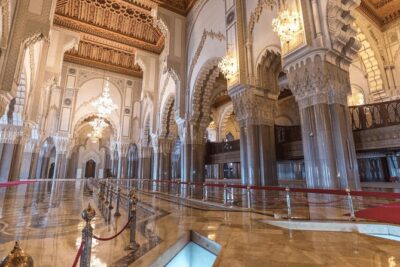
Casablanca City Tour with Hassan II mosque ticket
Read our review →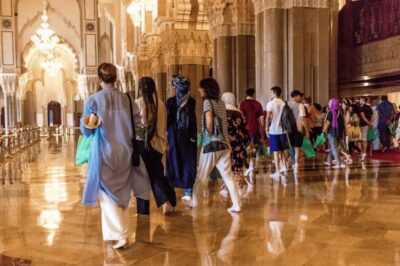
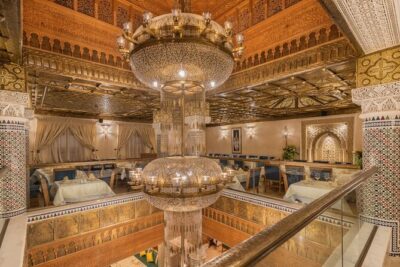
Private Tour of Casablanca with Hassan II Mosque Entry Ticket
Read our review →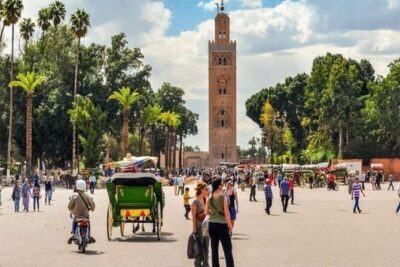
Marrakech Day Trip with Camel Ride from Casablanca
Read our review →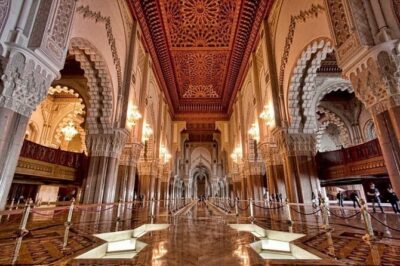
Browse the lists this tour appears in