
Reviewed · CASABLANCA TOURS
8 Days Morocco Private Tour; Imperial Cities and the Desert
The best part of this 8-day private Morocco tour is its sweep. In one trip, you move from Casablanca’s Atlantic coast to Roman ruins, medieval Fez, cedar forests, the Sahara, cliff-lined gorges, mud-brick kasbahs, and Marrakech’s busy souks. Your private car lets you stop for photos, food, or a leg stretch when you need it.
I like the flexible private format, especially for families and small groups. I also like the desert overnight at Moonlight Desert Camp, where your luggage goes ahead by 4×4 and you reach camp by camel. The main drawback is the pace: several days include six or more hours on the road, and the route description has a day-by-day overlap that you should clarify before booking.
Key points to know before you book
- Camel ride into Erg Chebbi: Reach Moonlight Desert Camp by camel, then watch the dunes after sunset and, weather permitting, sit around a fire with Berber and Touareg music.
- Four major Moroccan settings: See Casablanca, Meknes, Fez, and Marrakech, with desert valleys and mountain passes between them.
- A genuinely private trip: Your group gets its own car, rooms, camp accommodation, and the freedom to request stops along the road.
- Two especially strong days: Fez gives you a full day of history and city life, while Ait Ben Haddou and the High Atlas provide some of the route’s finest scenery.
- Good for custom plans: The operator can arrange vehicles and accommodation for solo visitors, families, and large groups, with vegetarian, vegan, and gluten-free meals available if requested in advance.
- Watch the inclusions: Lunches and most drinks are extra. Historic-site admission is also described inconsistently, so confirm exactly what is covered.
What this Morocco route really covers
This is not a relaxed city break. It is a cross-country route designed to give you a broad taste of Morocco in eight days. You begin in Casablanca, spend time in the old imperial cities, cross the Middle and High Atlas ranges, sleep in the Sahara, then head west through gorges and kasbah country to Marrakech.
The private car changes the feel of the trip. You are not tied to a large group’s timetable, and you can ask to stop when a mountain view catches your eye. That matters on long drives, when a ten-minute pause can make the day much easier.
The tour includes an English-speaking driver-guide, private rooms at each hotel and at the desert camp, seven breakfasts, and two dinners. Lunches, drinks, and dinners in Casablanca, Fez, and Marrakech are extra. At $1,546.98 per person, the value depends heavily on how many people share the vehicle and rooms. For a couple, it is a substantial private-tour price. For a family or group, the cost can make more sense because transportation, guides, hotels, and desert arrangements are bundled together.
A few other Casablanca days worth comparing
- Private Tour of Casablanca with Hassan II Mosque Entry Ticket
★ 5.0 · 1,102 reviews - Private Chauffeur Service – 100% Exclusive
★ 5.0 · 516 reviews - Private Guided Tour of Casablanca Including Mosque Entrance
★ 5.0 · 395 reviews
Casablanca and the road to Meknes
Your first day is simple. You are collected at Mohammed V Airport and driven about 40 minutes to your Casablanca accommodation. There is no major sightseeing scheduled, which is sensible if your flight arrives late or after a long journey.
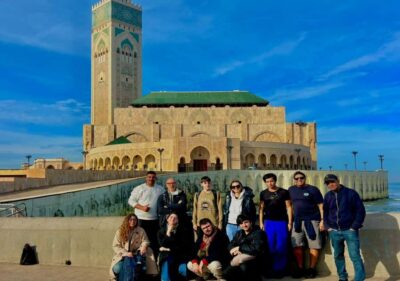
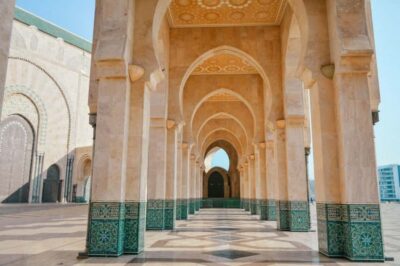
On day two, Casablanca gets a short but worthwhile look. The Hassan II Mosque is the clear highlight. Its 210-meter minaret is the tallest in the world, and the complex can hold up to 105,000 worshipers. The tour lists admission as extra, so ask about the current ticket arrangement before you arrive.
You also pause for photographs at Rick’s Cafe, the Casablanca-themed restaurant associated with the famous film. This is a quick movie reference rather than a major historical stop, but it gives you a fun contrast with the mosque’s religious and architectural importance.
From Casablanca, the route turns inland to Meknes. Thick ramparts surround the old city, once the capital under Moulay Ismail. Two hours here gives you enough time to walk, see the walls, and get a first taste of Morocco’s imperial past without trying to cover every corner.
After lunch, you continue to Volubilis, the country’s major Roman ruin site. A one-hour visit is enough to see the broad remains and mosaics, though anyone fascinated by Roman archaeology may wish for more time. You then continue to Fez, with four to five hours of driving on the day, plus lunch and sightseeing stops.
This is a demanding start. Casablanca, Meknes, and Volubilis are three different experiences packed into one day. I would treat it as a useful introduction, not a slow exploration.
Fez, Morocco’s most rewarding walking day
Day three gives you six hours in Fez, and that full day is important. The old city is made for walking, with narrow alleys and small streets that a car cannot enter. A local guide makes a real difference here because the route includes several places that are easy to miss on your own.
The day begins near the Royal Palace gate and continues to the Jewish quarter, known as the Mellah. This was the first Mellah built in Morocco, dating from the 16th century. The stop adds social and religious context that you would not get from simply wandering through the market lanes.
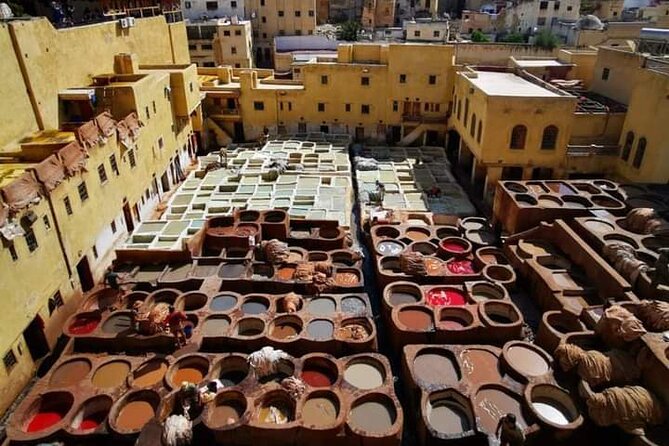
You also visit Al Karaouine University, the Attarine Museum, the Mulay Idriss mausoleum, and the famous tanneries. The tanneries are one of Fez’s most memorable sights, but the smell can be strong, especially in warm weather. Historic sites charge entrance fees, while entry to the medina itself is free.
After lunch, the route includes a tiles cooperative and a panoramic viewpoint over the medina. The cooperative may be interesting if you want to see Moroccan craftwork, but keep your buying instincts in check. You should feel free to browse without treating a sales stop as an obligation.
The Fez guide is one of the most important parts of the whole trip. Names associated with the company include Youssef, Hamid, Mustafa, Aziz, and other supporting guides, so ask ahead who will handle your city walks. Past guests have especially valued guides who stayed close, helped with practical problems, and offered restaurant and sightseeing advice.
Crossing the Middle Atlas to the Sahara
Day four is the tour’s longest road day, listed at about 12 hours including stops. You leave Fez for the desert by way of Ifrane, Azrou, Midelt, Erfoud, and the Ziz Valley before reaching Merzouga.
The first section crosses the Middle Atlas. Cedar forests, mountain villages, and views of Berber communities give you a very different Morocco from the cities. Ifrane is known as a ski resort, while Azrou has a long connection with cedar woodwork. The schedule allows photo and comfort stops, which you will appreciate.
Midelt is the lunch stop, positioned between the Middle and High Atlas ranges. From there, the road follows the Ziz Valley, one of Africa’s largest oases, toward Erfoud. A short fossil stop is included in Erfoud. It can be an interesting look at local stone and fossil work, though the time is brief.
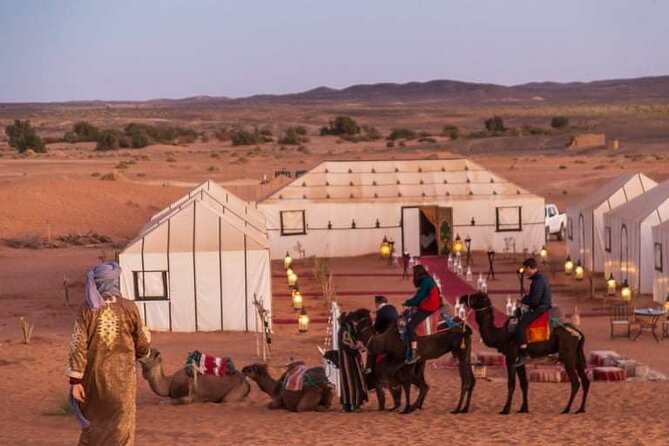
The desert arrival is handled well in principle. Your main luggage goes to camp by 4×4, so you do not need to load it onto a camel. You ride into the Erg Chebbi dunes for about an hour, then settle into your private room at Moonlight Desert Camp.
This is a memorable transition, but the long drive needs honest consideration. You are sitting in the car for much of the day, and the camel ride can be uncomfortable for some people. It is not recommended for pregnant visitors. If you have back, knee, or mobility concerns, ask whether a 4×4 transfer can replace part or all of the camel ride.
Same city, a completely different day out:
- From Marrakech: Casablanca Tour with Hassan II Mosque Visit
★ 4.7 · 4,756 reviews - Casablanca: Hassan II Mosque Premium Tour with Entry Ticket
★ 4.5 · 2,971 reviews - Casablanca City Tour with Hassan II mosque ticket
★ 5.0 · 2,480 reviews - Casablanca: City Tour with Hassan II Mosque Entry Ticket
★ 4.6 · 1,137 reviews
A night at Moonlight Desert Camp
The desert camp is one of the strongest reasons to choose this route. You get a private room rather than a shared tent, along with dinner and a night beneath the stars. After the meal, the camp may build a fire, depending on weather, with drum playing and songs associated with Berber, Touareg, and southern Moroccan traditions.
You can climb a dune, try sandboarding, or simply sit outside and watch the sky. None of these activities is presented as a complicated add-on, which keeps the evening easy and informal.
Set your alarm for sunrise. The morning light over the dunes is one of the few moments on this tour that rewards being quiet and unhurried. You return toward Merzouga by camel, with luggage again transferred by 4×4.
The next stop is the Rissani market. On market days, it becomes a large trading center with spices, vegetables, cloth, and handmade wood and metal goods. The schedule allows only about 40 minutes, so you should see it as a quick local-market visit rather than a long shopping session.
Dades, Todra, and the road of kasbahs
After Rissani, the route heads toward the Dades Valley. You pass palm groves and stop at an old khettara irrigation system. The underground channels no longer carry water, but they show how farmers once moved water through this dry region.
The day includes lunch in a Berber town and then the Todra Gorge. The gorge is the main attraction, with steep rock walls rising on both sides of the canyon floor. You get time for a walk, although the listed schedule is fairly short.
There is an important scheduling point here. The supplied route places the Dades Valley, Ait Ben Haddou, and Marrakech across days five and six in a way that appears to overlap. Day five is labeled as going from Dades Valley to Ait Ben Haddou and Marrakech, while day six begins again in the Dades Gorges before continuing to Marrakech. Ask the operator for the exact overnight locations and driving order. A private tour should be able to adjust this clearly before departure.
The next route section passes through the Valley of the Roses and Skoura, along the road often called the Road of a Thousand Kasbahs. Ouarzazate, nicknamed the Hollywood of Morocco, offers a possible film-studio visit. The listing gives about an hour there, but admission details should be confirmed because some site entries are marked as extra and others as included.
Ait Ben Haddou and the Tichka Pass
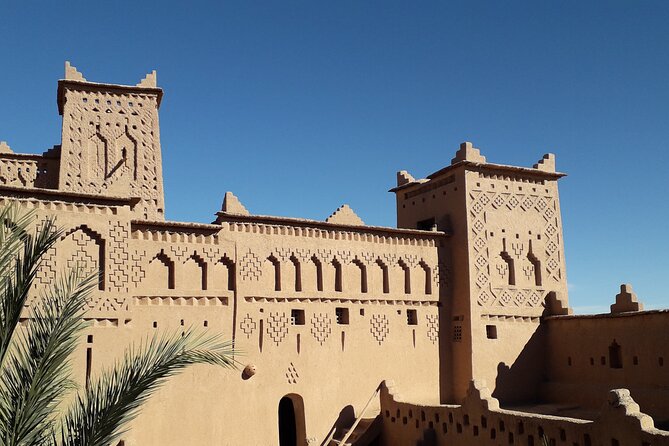
Ait Ben Haddou is a highlight for good reason. This protected UNESCO World Heritage site is an old desert village built in earthen architecture, with homes and walls climbing toward a hilltop. Films including Gladiator and Lawrence of Arabia used the setting, but the village is more than a movie backdrop.
You can walk upward through the settlement and reach a high point with wide views. Wear shoes with a firm sole, since the route is uneven in places. Lunch is planned in the village, and two hours here gives you enough time to walk, eat, and take photographs without racing through.
The road then crosses the Tichka Pass, the highest pass through the High Atlas. Mountain villages appear along the route, and the scenery changes sharply as you cross from the desert side toward Marrakech.
The route requires patience. Mountain roads can make the journey feel longer than the map suggests, and the day includes several hours of driving. Still, this is the kind of road trip where the movement between places is part of the experience, not just wasted time.
Marrakech: gardens, palaces, and the souks
Your final full day begins at Jardin Majorelle, a 2.5-acre botanical and artistic garden once owned by Yves Saint Laurent. It offers a calm break from Marrakech’s noise and traffic. Admission is not included in the listed price, so plan for an additional ticket.
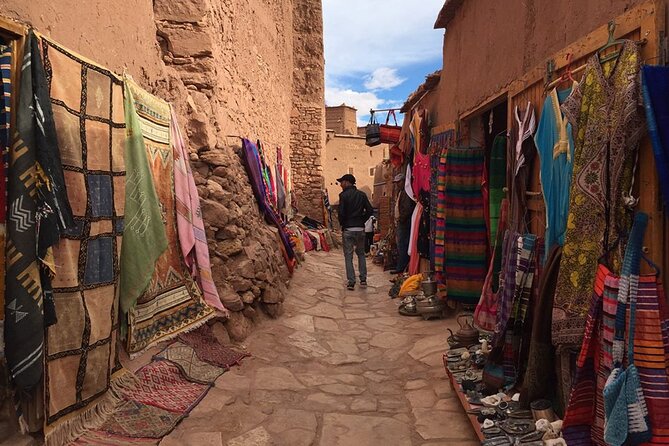
The afternoon focuses on the medina and its major sights. You see the Koutoubia Tower, Saadian tombs, and Bahia Palace, then stop for lunch near the main square. Lunch is not included, and the rest of the day is left for the souks and personal exploration.
This arrangement works well. A guide can help you understand the main monuments and get you oriented, then you can wander at your own pace. The medina itself has no entry fee, but historic sites charge admission.
Marrakech is also where the tour’s schedule becomes less structured. If you enjoy shopping, food, and people-watching, use the free time well. If you prefer a quieter final day, ask to shorten the medina visit or add a longer break at the hotel.
On day eight, the company transfers you to Casablanca’s Mohammed V Airport. The listed drive takes about two hours. If your flight leaves from another airport, the operator can change the order of the days to fit your departure.
What the private format is worth
The private setup is the tour’s practical advantage. You can stop for coffee, photographs, comfort breaks, and meals when needed. That is especially helpful on the Atlas and desert roads, where fixed group departures can feel rigid.
It also suits families. The company has arranged trips for groups with young children and for larger birthday gatherings, and it can provide vehicles and rooms for groups of different sizes. You should still tell the operator the ages and needs of everyone in your party.
Dietary requirements such as vegetarian, vegan, and gluten-free meals can be accommodated when you state them at booking. Do not wait until arrival, since the itinerary includes several long road days and meals in smaller towns.
The price includes a private air-conditioned vehicle, an English-speaking driver-guide, guided city visits in Fez and Marrakech, seven breakfasts, two dinners, and the desert camel experience. It does not include flights, insurance, lunches, drinks, most city dinners, or optional extras such as cooking classes, ATVs, hammams, spas, and hot-air balloon rides.
One wording issue deserves attention: the inclusions say entrance fees to historic sites and museums are covered, while individual stops list admission as not included. Get a written answer before paying, especially for Hassan II Mosque, Jardin Majorelle, Fez monuments, and museums.
Who should book this tour
I would choose this trip if you want Morocco’s biggest contrasts in one organized route and do not want to handle long-distance driving yourself. It is particularly suitable for couples, families, and groups who value private rooms and the ability to change the pace.
You should think twice if you want slow mornings, long stays in each city, or extensive time in the Sahara. Eight days covers a lot, but it does so through several long drives. Adding days would make the route easier, especially around Fez, the desert, and Marrakech.
The company can also tailor the itinerary. Some past arrangements added northern Morocco, coastal cities, or Chefchaouen, but those changes would require extra time. Ask for a revised day-by-day plan rather than assuming every requested stop can fit into the standard eight days.
Should you book it?
Book this tour if you want a well-supported first trip to Morocco with the country’s main visual and cultural stops: Hassan II Mosque, Meknes, Volubilis, Fez, the Atlas ranges, Erg Chebbi, Todra Gorge, Ait Ben Haddou, and Marrakech.
The best reasons to book are the private vehicle, the desert camp, the flexible stops, and the strong personal attention offered by guides such as Youssef, Hamid, Mustafa, and Aziz. The main cautions are the heavy driving schedule, extra meal costs, optional activities, and unclear admission wording.
Before you commit, confirm the driver’s name, the exact overnight plan for days five and six, all entrance fees, and how the final airport transfer matches your flight. If those details are clear, this is a practical way to see a large slice of Morocco without managing the roads yourself.
FAQ
Is this Morocco tour private?
Yes. Only your group participates, and you travel in a private car with private rooms at each hotel and at the desert camp.
Does the tour include airport pickup?
Yes. Pickup is offered from Casablanca Mohammed V Airport, with an initial transfer of about 40 minutes to your Casablanca accommodation.
Is the camel ride included?
Yes. The camel ride into the Erg Chebbi dunes is included, as is the return camel trek the next morning. Your luggage is transferred by 4×4.
Are meals included?
Seven breakfasts and two dinners are included. Lunches, drinks, and dinners in Casablanca, Fez, and Marrakech are not included.
Can dietary restrictions be accommodated?
Yes. Vegetarian, vegan, gluten-free, and other dietary requirements can be accommodated when you provide the information during booking.
What is the cancellation policy?
You can receive a full refund if you cancel at least three full days before the experience start time. Cancellations or changes made less than three full days before the start are not accepted for a refund.
Just listed out of Casablanca
- Private Day Trip to Rabat Departure from Casablanca★ 5.0 · 33 reviews
- Religious Casablanca: Private Spiritual Tour Including Hassan II Mosque Visit★ 5.0 · 33 reviews
- Private Casablanca Market Tour and Cooking Class with Chamsi★ 5.0 · 33 reviews
- Sunset Camel Ride in the Palm Grove Of Marrakech★ 5.0 · 34 reviews
- Private Full-Day Tour in Casablanca with Pickup★ 5.0 · 34 reviews
- Casablanca: 6-Day Tour To Marrakech Via Chefchaouen & Desert★ 4.7 · 34 reviews
- 3 Days Chefchaouen and Fez from Casablanca Private Tour★ 5.0 · 34 reviews
- Casablanca Private Full-Day Highlights Tour★ 5.0 · 34 reviews
Casablanca Tours, compared.
Hassan II Mosque Premium Tour with Entry Ticket
Read our review →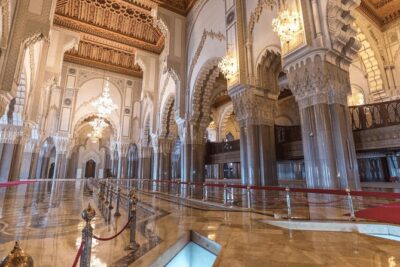
Casablanca City Tour with Hassan II mosque ticket
Read our review →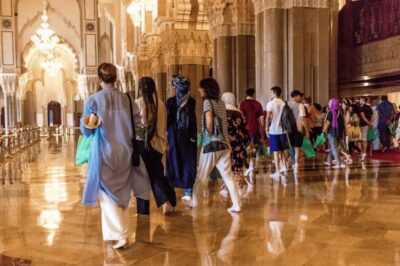
Private Tour of Casablanca with Hassan II Mosque Entry Ticket
Read our review →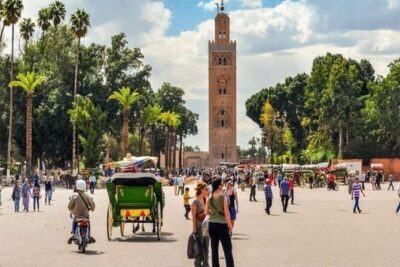
Marrakech Day Trip with Camel Ride from Casablanca
Read our review →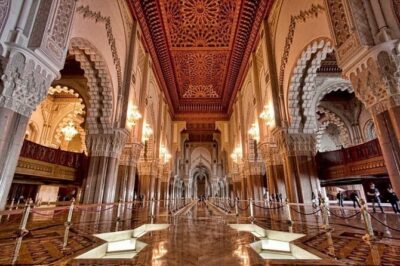
Browse the lists this tour appears in